
An Electron and a Positron System Surroundings e
- Slides: 33
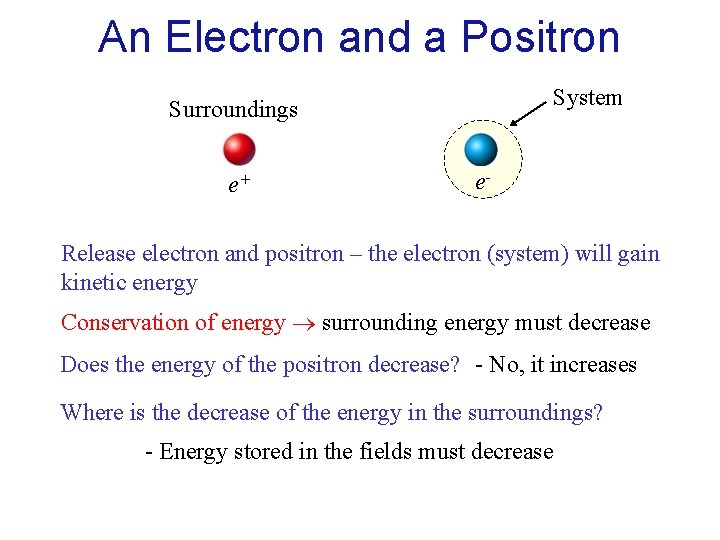
An Electron and a Positron System Surroundings e+ e- Release electron and positron – the electron (system) will gain kinetic energy Conservation of energy surrounding energy must decrease Does the energy of the positron decrease? - No, it increases Where is the decrease of the energy in the surroundings? - Energy stored in the fields must decrease
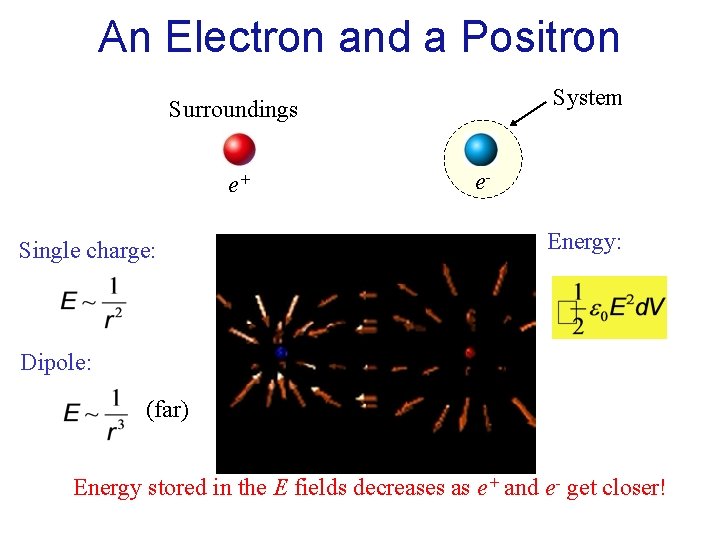
An Electron and a Positron System Surroundings e+ Single charge: e. Energy: Dipole: (far) Energy stored in the E fields decreases as e+ and e- get closer!
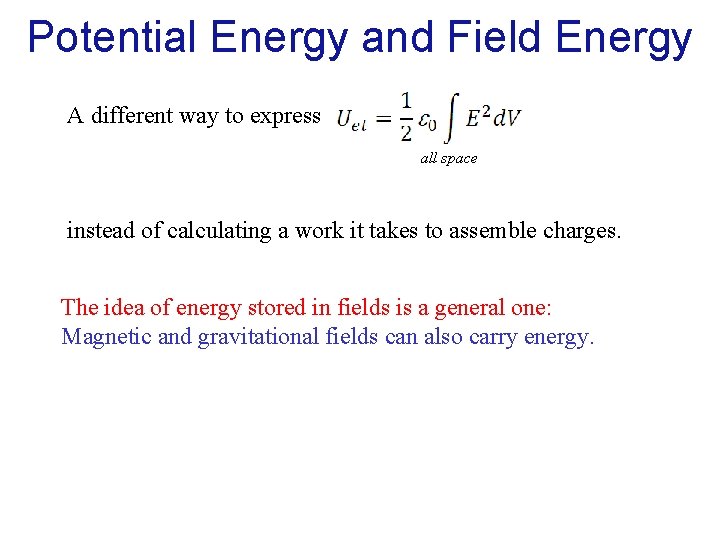
Potential Energy and Field Energy A different way to express all space instead of calculating a work it takes to assemble charges. The idea of energy stored in fields is a general one: Magnetic and gravitational fields can also carry energy.
Chapter 18 Magnetic Field
Magnetic Field 5 th century BC. Greeks. Some rocks attract pieces of iron. These rocks are plentiful in the district of Magnesia. 1100 AD Chinese. Used needles of magnetite to make compasses. 16 th century Gilbert – earth is a giant magnet. 1820 rsted – magnetic needle responds to current in the wire.
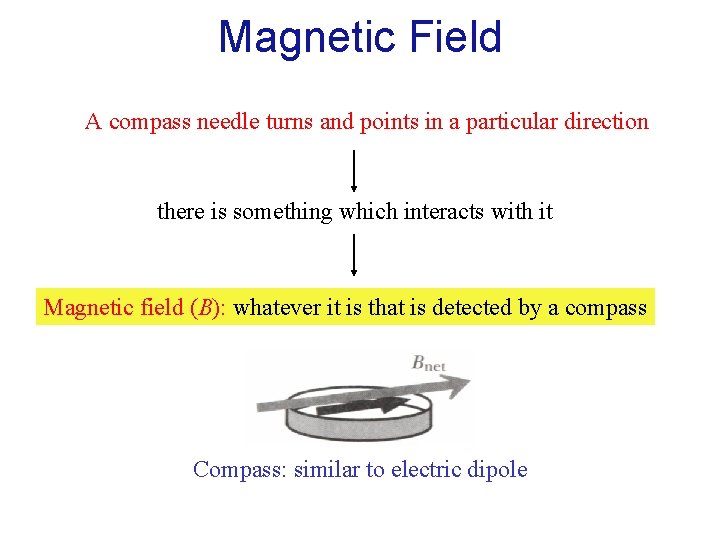
Magnetic Field A compass needle turns and points in a particular direction there is something which interacts with it Magnetic field (B): whatever it is that is detected by a compass Compass: similar to electric dipole
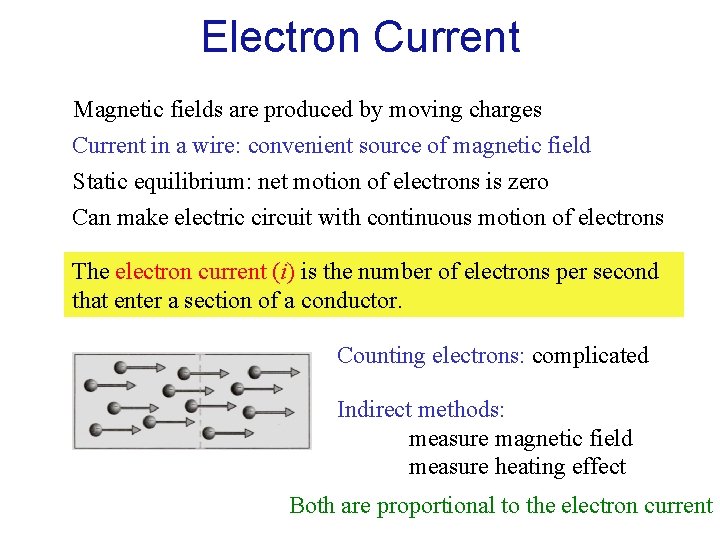
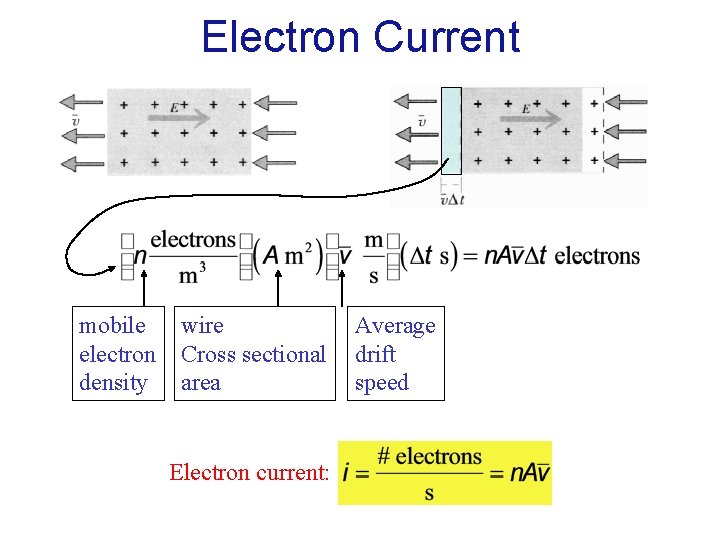
Electron Current Magnetic fields are produced by moving charges Current in a wire: convenient source of magnetic field Static equilibrium: net motion of electrons is zero Can make electric circuit with continuous motion of electrons The electron current (i) is the number of electrons per second that enter a section of a conductor. Counting electrons: complicated Indirect methods: measure magnetic field measure heating effect Both are proportional to the electron current
Detecting Magnetic Fields We will use a magnetic compass as a detector of B. How can we be sure that it does not simply respond to electric fields? Compass needle: Interacts with iron, steel – even if they are neutral Unaffected by aluminum, plastic etc. , though charged tapes interact with these materials Points toward North pole – electric dipole does not do that
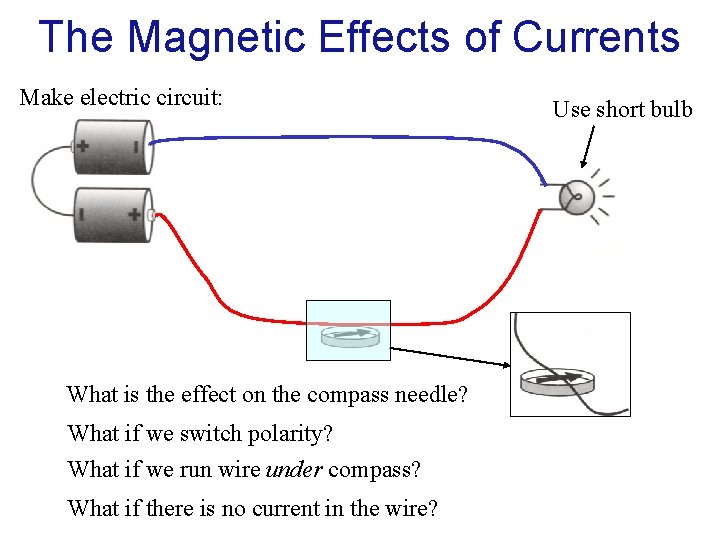
The Magnetic Effects of Currents Make electric circuit: What is the effect on the compass needle? What if we switch polarity? What if we run wire under compass? What if there is no current in the wire? Use short bulb
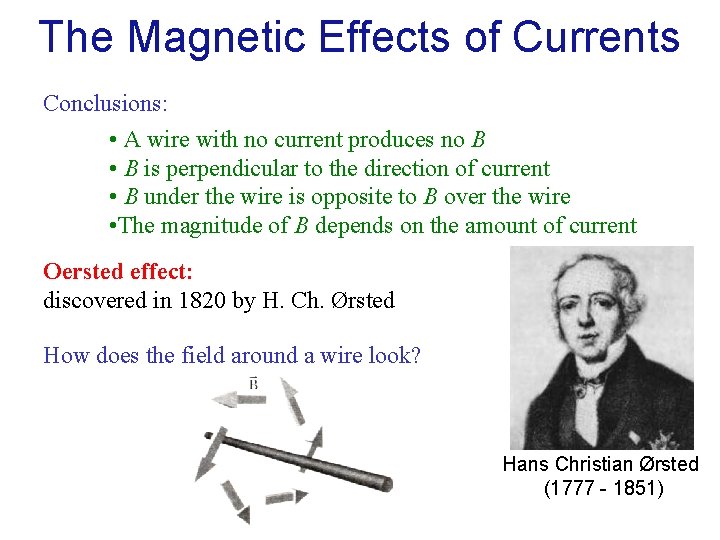
The Magnetic Effects of Currents Conclusions: • A wire with no current produces no B • B is perpendicular to the direction of current • B under the wire is opposite to B over the wire • The magnitude of B depends on the amount of current Oersted effect: discovered in 1820 by H. Ch. Ørsted How does the field around a wire look? Hans Christian Ørsted (1777 - 1851)
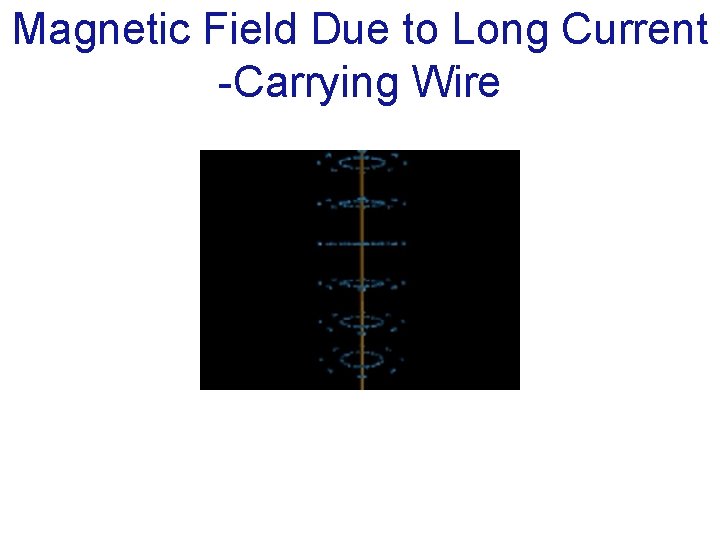
Magnetic Field Due to Long Current -Carrying Wire
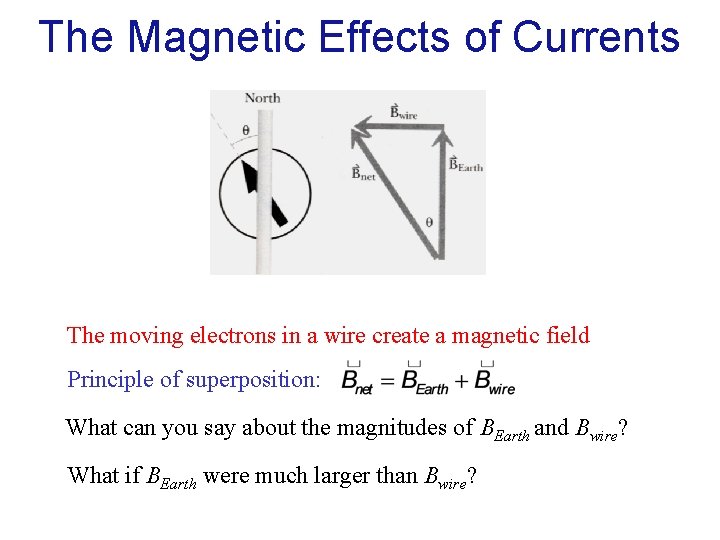
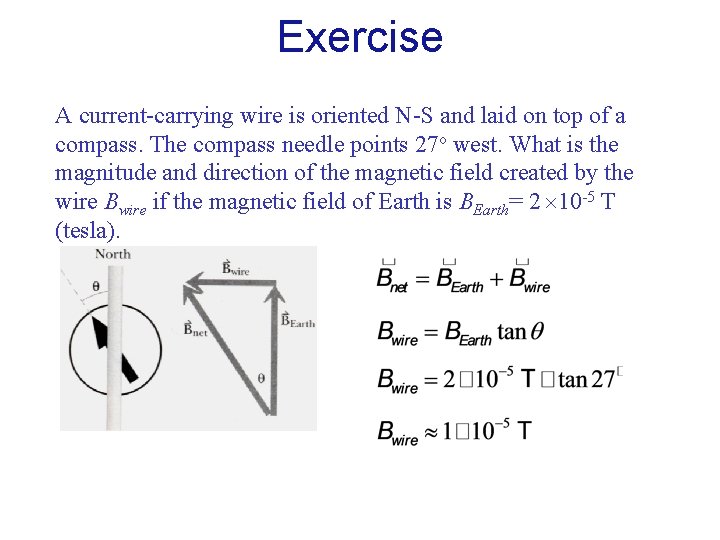
The Magnetic Effects of Currents The moving electrons in a wire create a magnetic field Principle of superposition: What can you say about the magnitudes of BEarth and Bwire? What if BEarth were much larger than Bwire?
Exercise A current-carrying wire is oriented N-S and laid on top of a compass. The compass needle points 27 o west. What is the magnitude and direction of the magnetic field created by the wire Bwire if the magnetic field of Earth is BEarth= 2 10 -5 T (tesla).
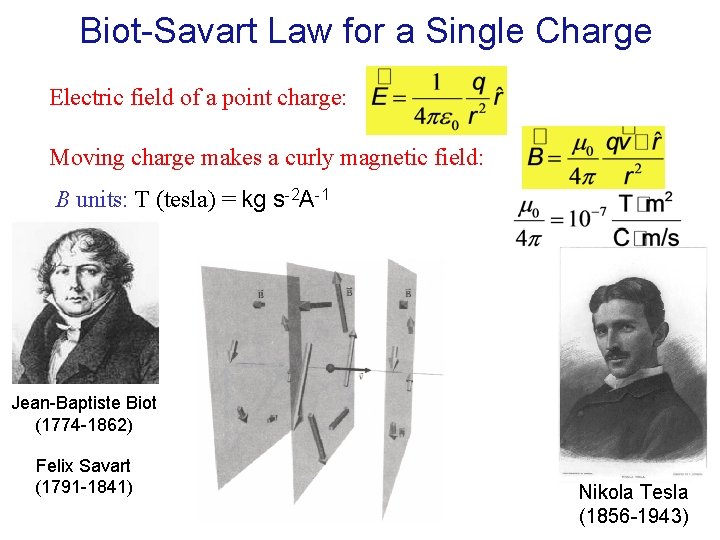
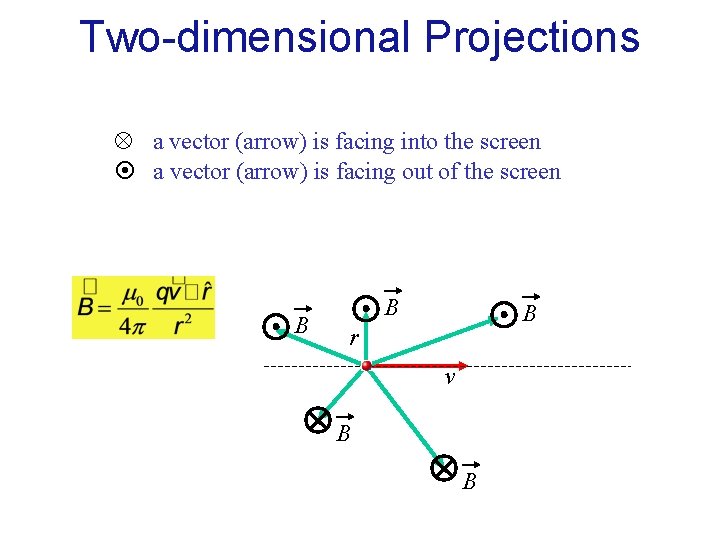
Biot-Savart Law for a Single Charge Electric field of a point charge: Moving charge makes a curly magnetic field: B units: T (tesla) = kg s-2 A-1 Jean-Baptiste Biot (1774 -1862) Felix Savart (1791 -1841) Nikola Tesla (1856 -1943)
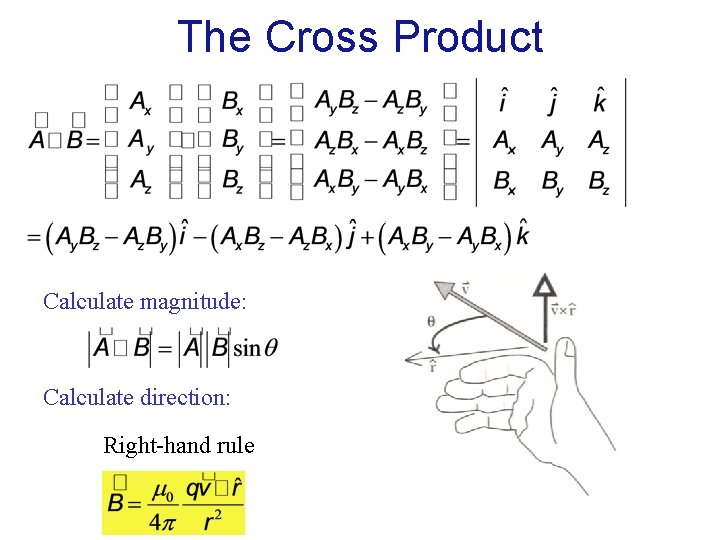
The Cross Product Calculate magnitude: Calculate direction: Right-hand rule
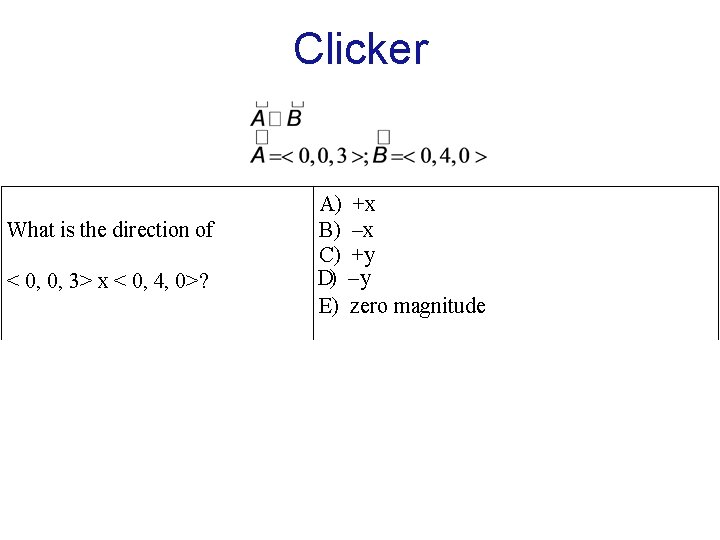
Clicker What is the direction of < 0, 0, 3> x < 0, 4, 0>? A) +x B) –x C) +y D) –y E) zero magnitude
Two-dimensional Projections Ä a vector (arrow) is facing into the screen a vector (arrow) is facing out of the screen B B B r v B B
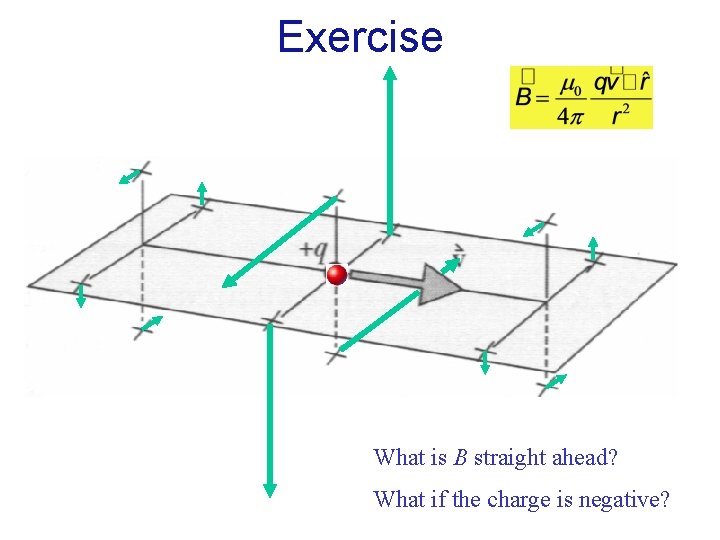
Exercise What is B straight ahead? What if the charge is negative?
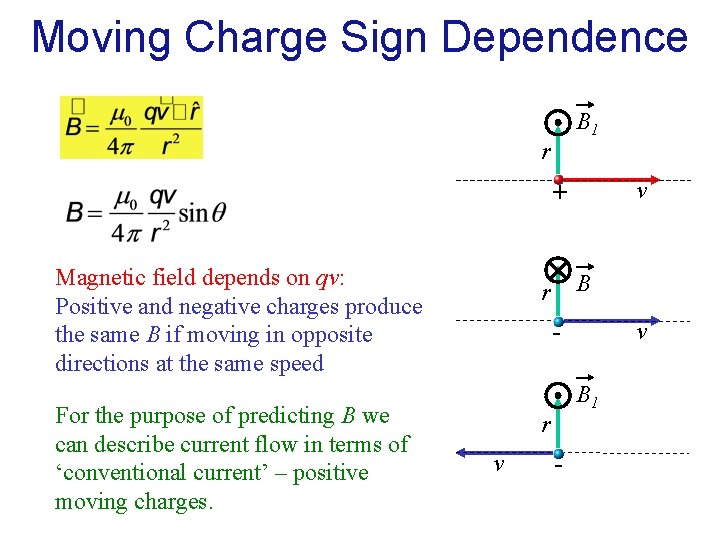
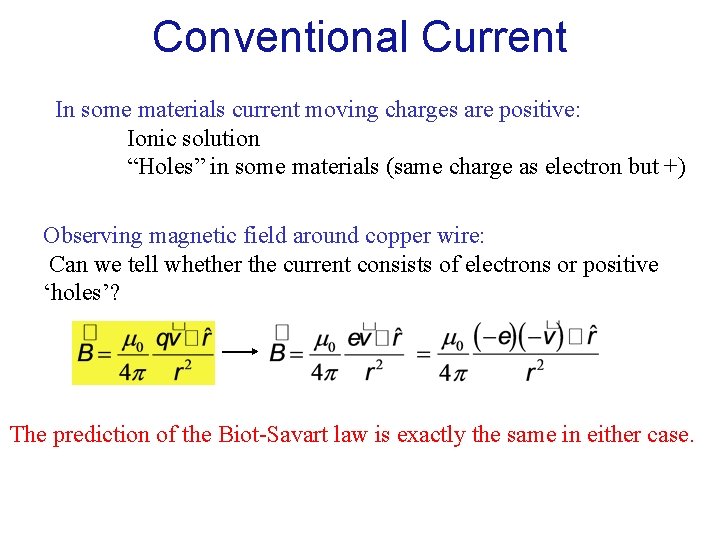
Moving Charge Sign Dependence B 1 r v + Magnetic field depends on qv: Positive and negative charges produce the same B if moving in opposite directions at the same speed For the purpose of predicting B we can describe current flow in terms of ‘conventional current’ – positive moving charges. B r - B 1 r v v -
Electron Current A steady flow of charges in one direction will create a magnetic field. How can we cause charges to flow steadily? Need to find a way to produce and sustain E in a wire. Use battery How can we know magnitude and direction of magnetic field produced by wire? We need to know the number of moving charges.
Electron Current mobile electron density wire Cross sectional area Electron current: Average drift speed
Conventional Current In some materials current moving charges are positive: Ionic solution “Holes” in some materials (same charge as electron but +) Observing magnetic field around copper wire: Can we tell whether the current consists of electrons or positive ‘holes’? The prediction of the Biot-Savart law is exactly the same in either case.
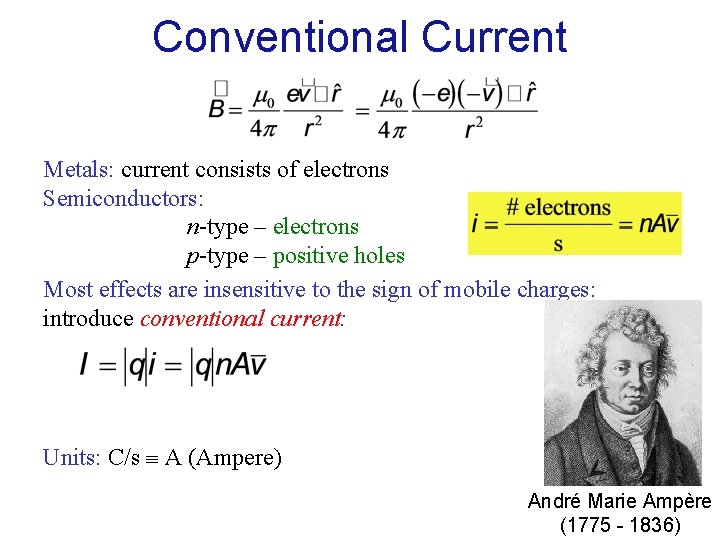
Conventional Current Metals: current consists of electrons Semiconductors: n-type – electrons p-type – positive holes Most effects are insensitive to the sign of mobile charges: introduce conventional current: Units: C/s A (Ampere) André Marie Ampère (1775 - 1836)
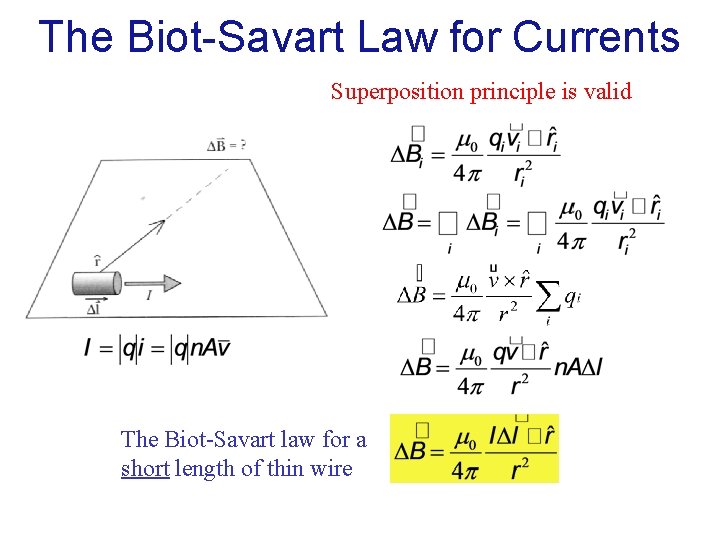
The Biot-Savart Law for Currents Superposition principle is valid The Biot-Savart law for a short length of thin wire
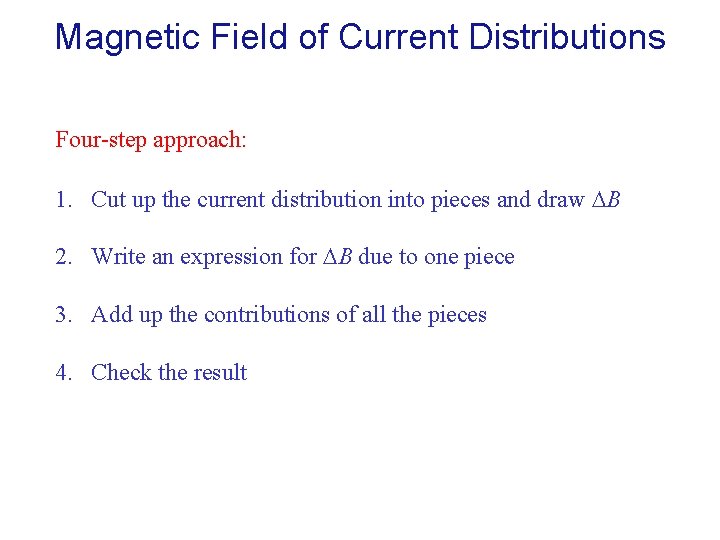
Magnetic Field of Current Distributions Four-step approach: 1. Cut up the current distribution into pieces and draw B 2. Write an expression for B due to one piece 3. Add up the contributions of all the pieces 4. Check the result
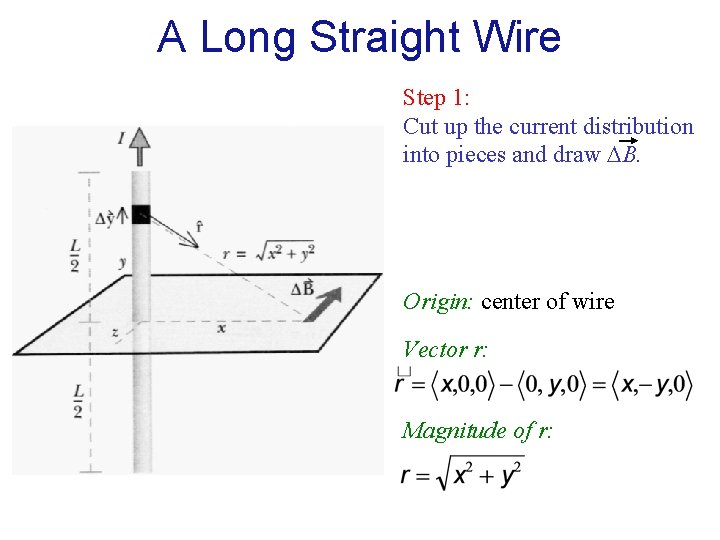
A Long Straight Wire Step 1: Cut up the current distribution into pieces and draw B. Origin: center of wire Vector r: Magnitude of r:
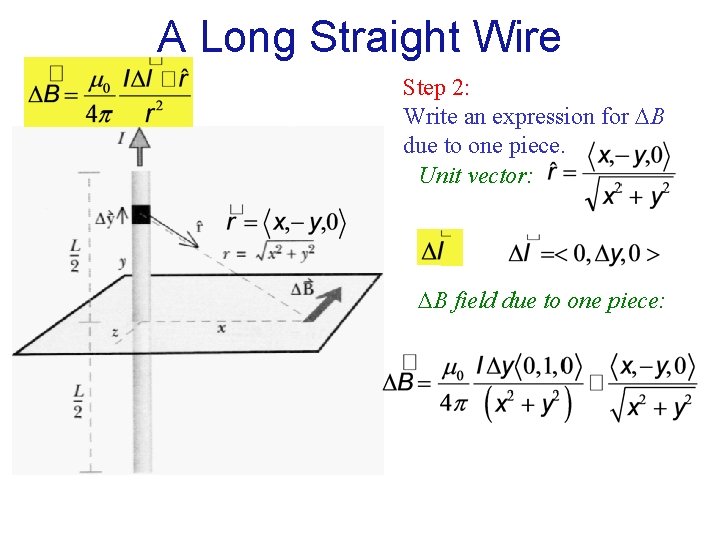
A Long Straight Wire Step 2: Write an expression for B due to one piece. Unit vector: : B field due to one piece:
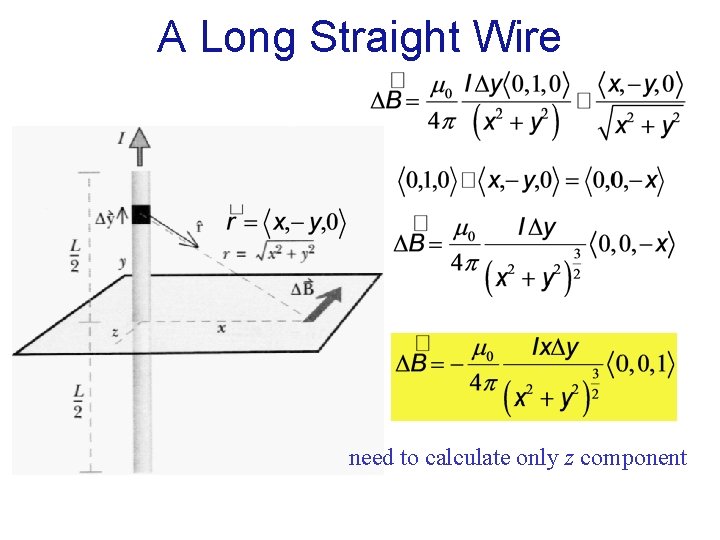
A Long Straight Wire need to calculate only z component
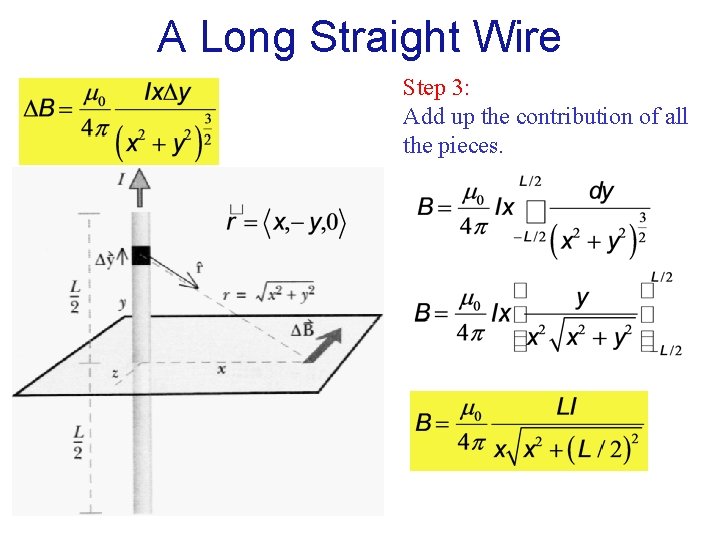
A Long Straight Wire Step 3: Add up the contribution of all the pieces.
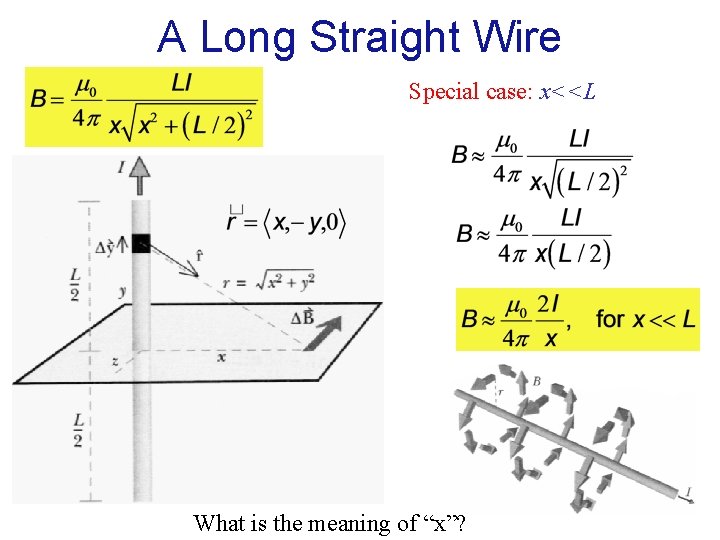
A Long Straight Wire Special case: x<<L What is the meaning of “x”?
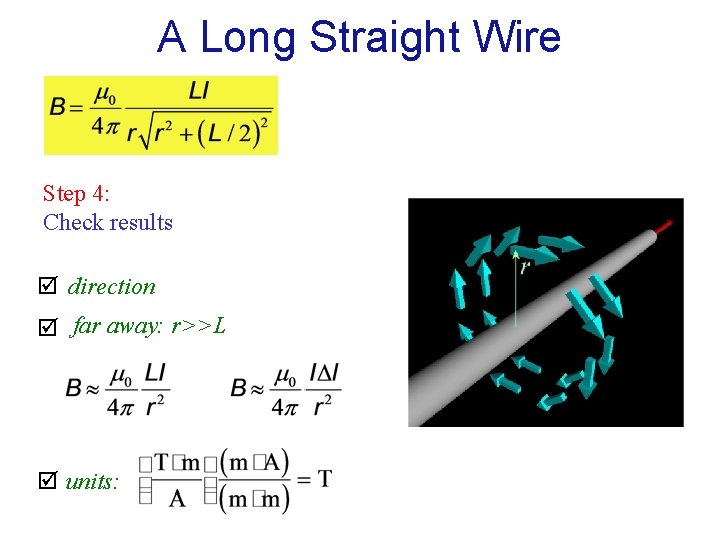
A Long Straight Wire Step 4: Check results direction far away: r>>L units:
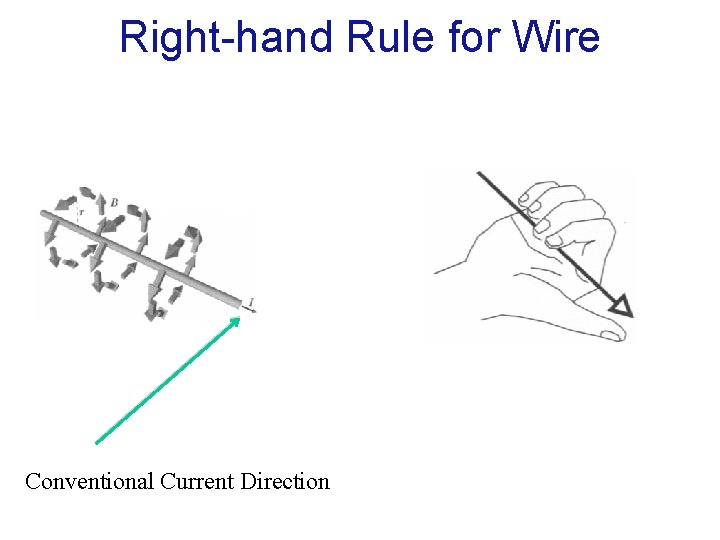
Right-hand Rule for Wire Conventional Current Direction
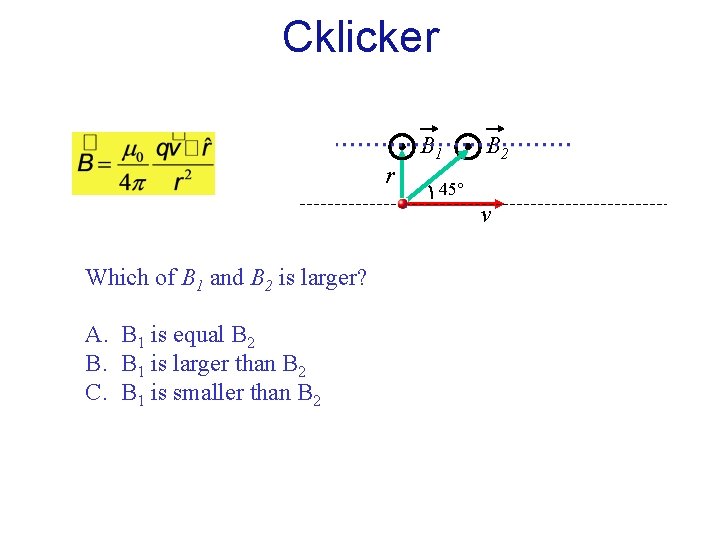
Cklicker r B 1 B 2 45 v Which of B 1 and B 2 is larger? A. B 1 is equal B 2 B. B 1 is larger than B 2 C. B 1 is smaller than B 2