
An Efficient Packet Scheduling Algorithm in Network Processors
- Slides: 31
An Efficient Packet Scheduling Algorithm in Network Processors 60 ---November 2004 --- CS 2
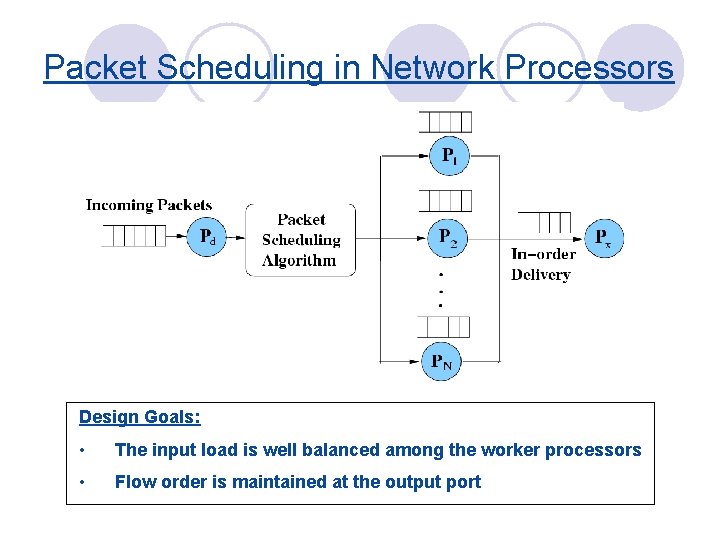
Packet Scheduling in Network Processors Design Goals: • The input load is well balanced among the worker processors • Flow order is maintained at the output port
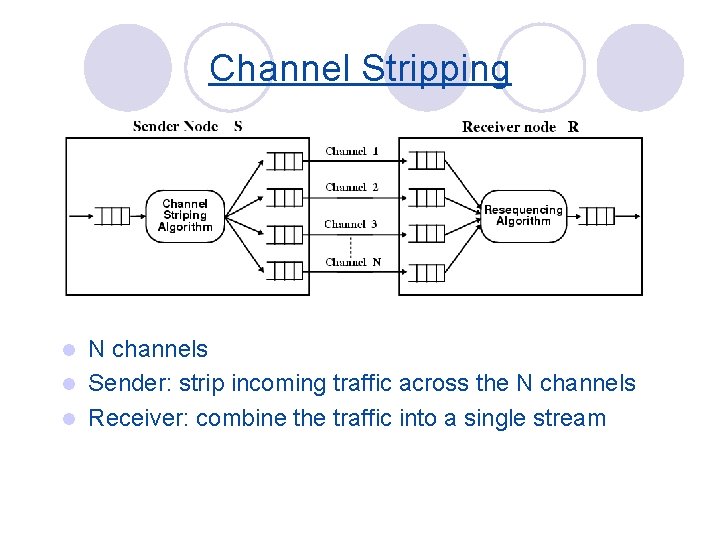
Channel Stripping N channels l Sender: strip incoming traffic across the N channels l Receiver: combine the traffic into a single stream l
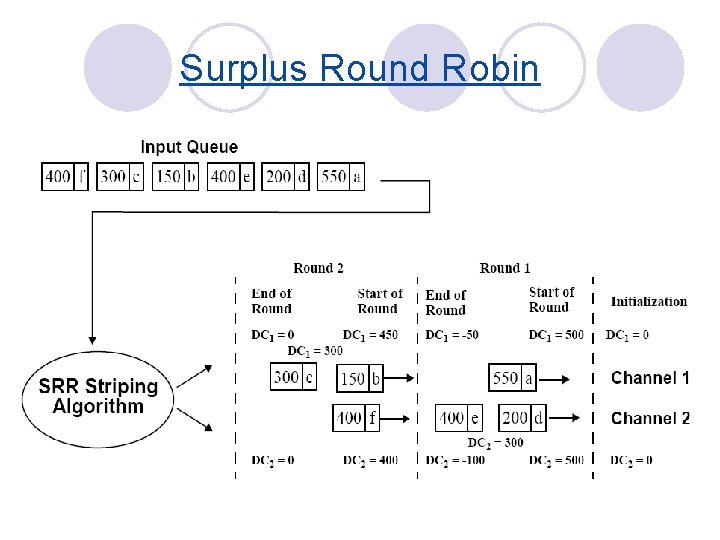
Surplus Round Robin
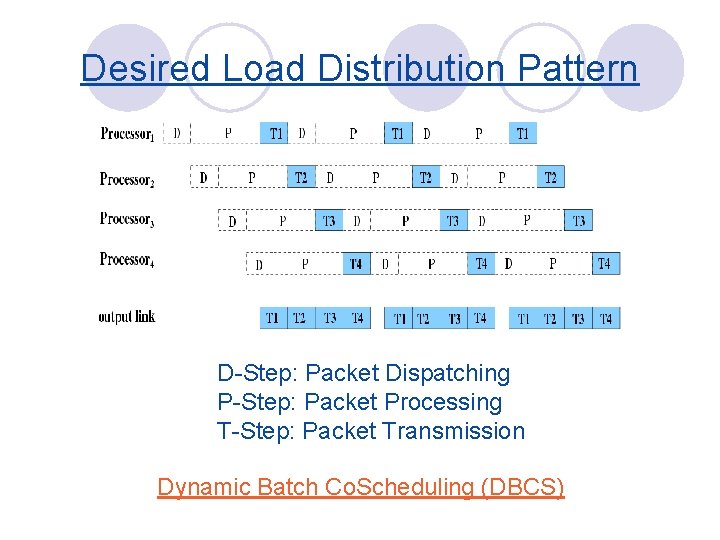
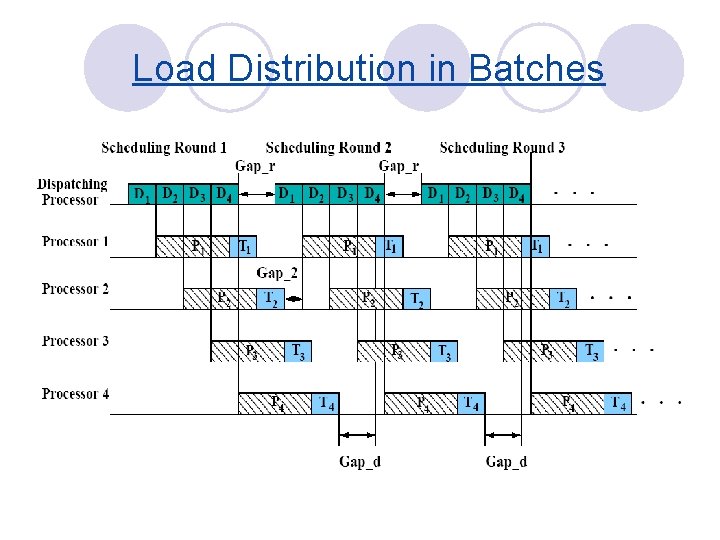
Desired Load Distribution Pattern D-Step: Packet Dispatching P-Step: Packet Processing T-Step: Packet Transmission Dynamic Batch Co. Scheduling (DBCS)
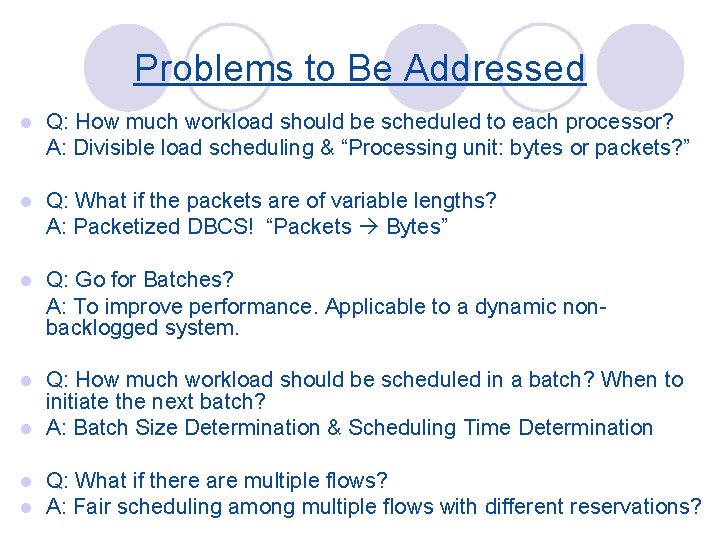
Problems to Be Addressed l Q: How much workload should be scheduled to each processor? A: Divisible load scheduling & “Processing unit: bytes or packets? ” l Q: What if the packets are of variable lengths? A: Packetized DBCS! “Packets Bytes” l Q: Go for Batches? A: To improve performance. Applicable to a dynamic nonbacklogged system. Q: How much workload should be scheduled in a batch? When to initiate the next batch? l A: Batch Size Determination & Scheduling Time Determination l l l Q: What if there are multiple flows? A: Fair scheduling among multiple flows with different reservations?
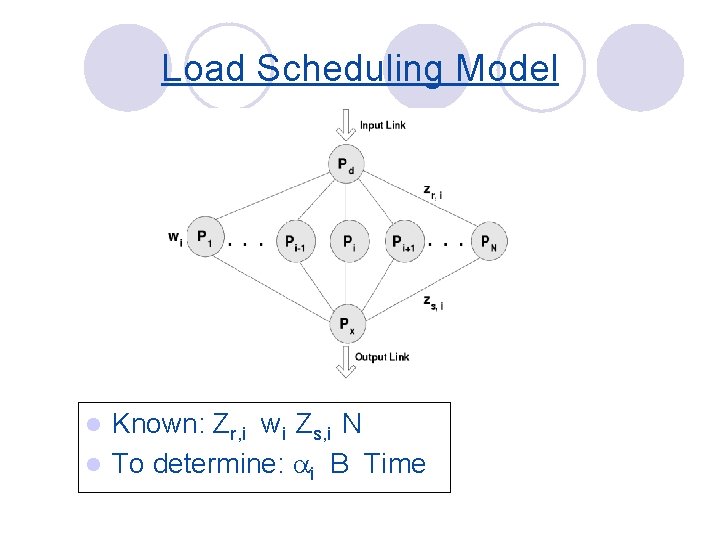
Load Scheduling Model Known: Zr, i wi Zs, i N l To determine: ai B Time l
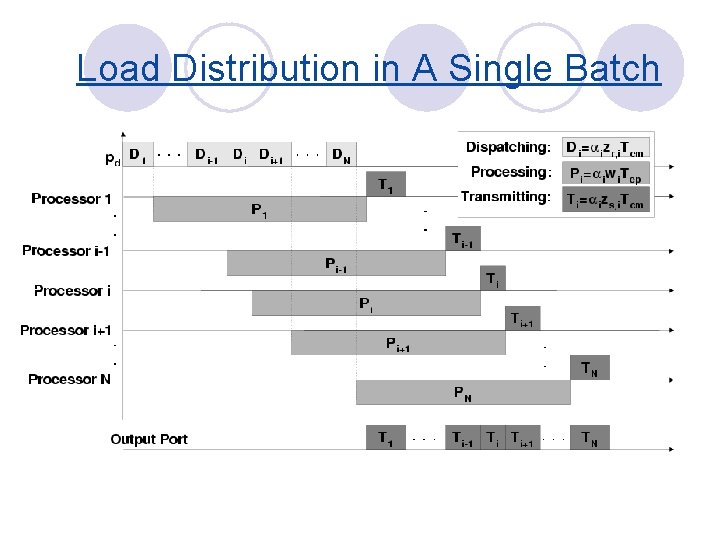
Load Distribution in A Single Batch
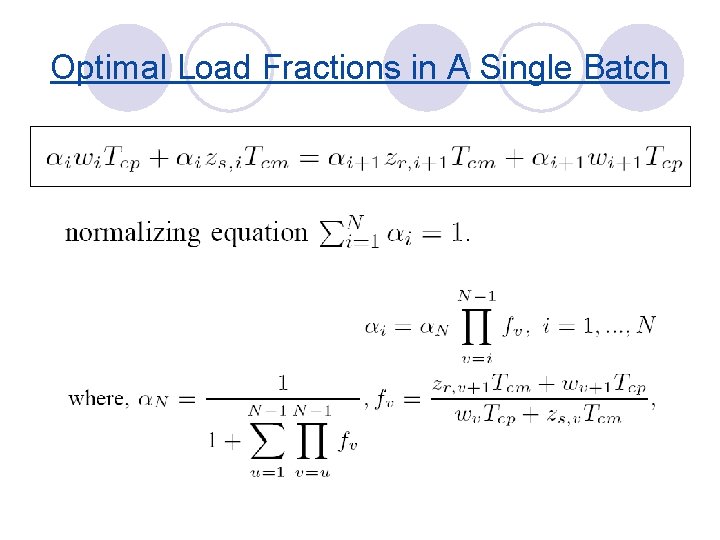
Optimal Load Fractions in A Single Batch
Load Distribution in Batches
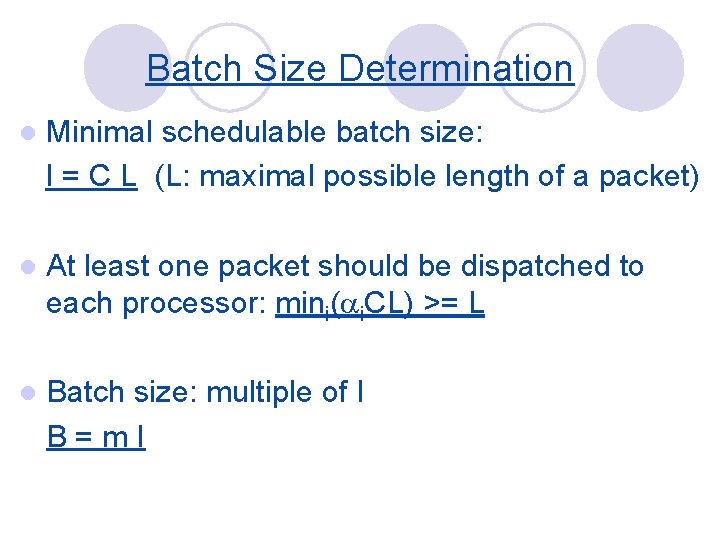
Batch Size Determination l Minimal schedulable batch size: I = C L (L: maximal possible length of a packet) l At least one packet should be dispatched to each processor: mini(ai. CL) >= L l Batch size: multiple of I B=m. I
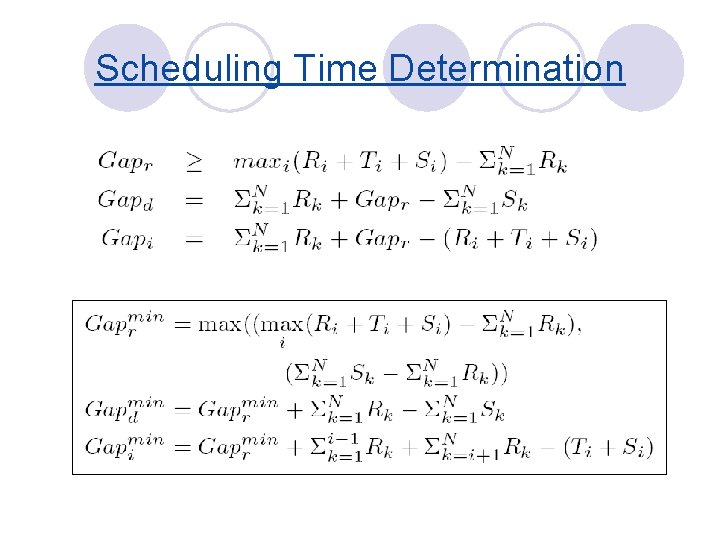
Scheduling Time Determination
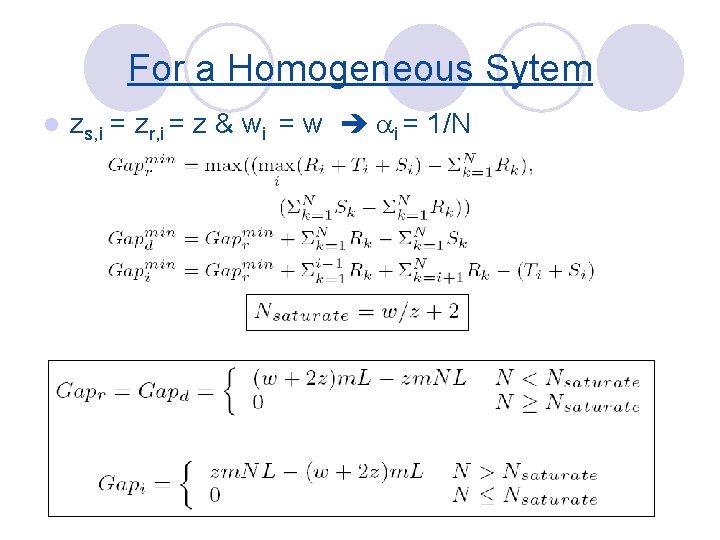
For a Homogeneous Sytem l zs, i = zr, i = z & wi = w ai = 1/N
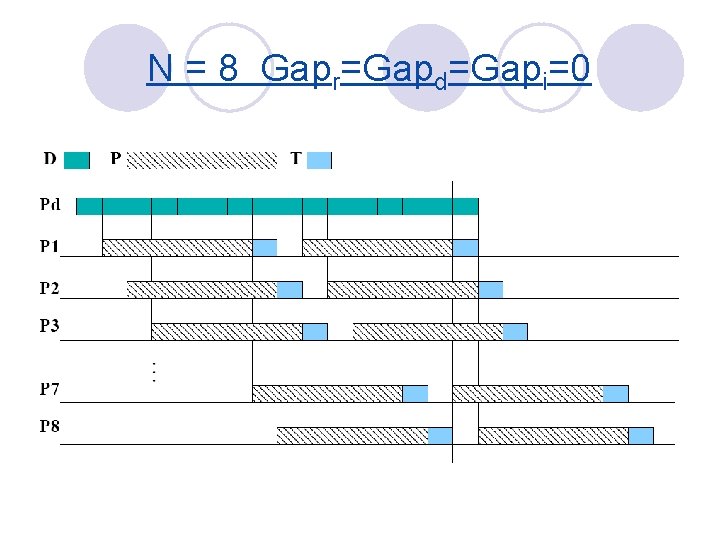
N = 8 Gapr=Gapd=Gapi=0
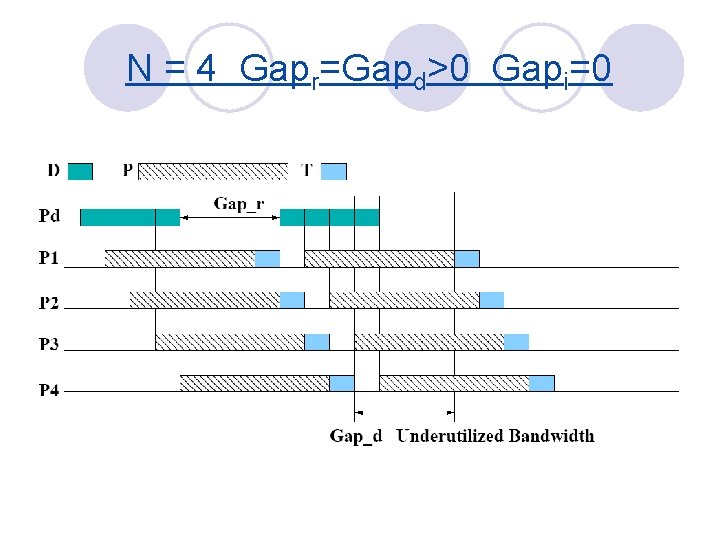
N = 4 Gapr=Gapd>0 Gapi=0
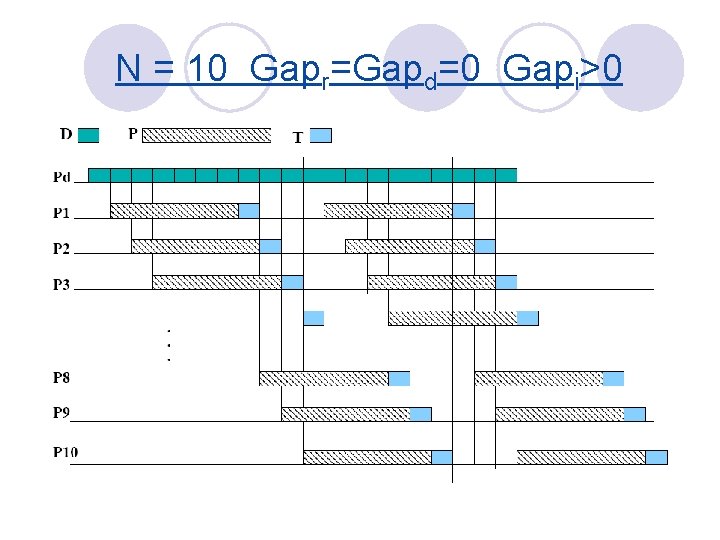
N = 10 Gapr=Gapd=0 Gapi>0
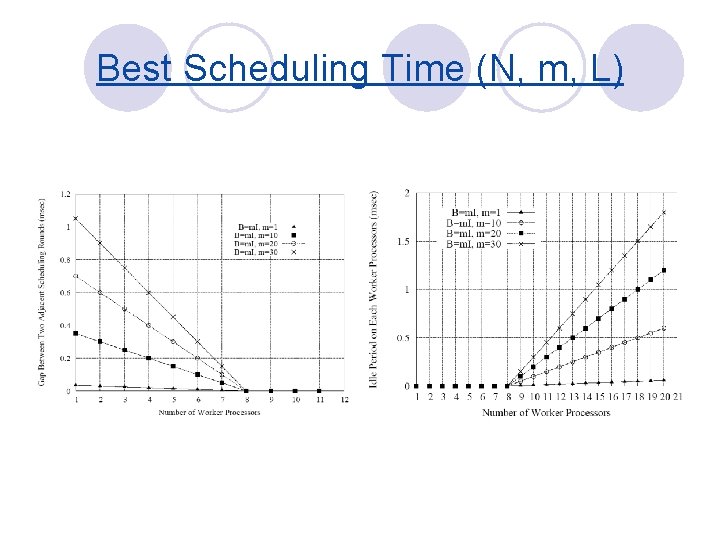
Best Scheduling Time (N, m, L)
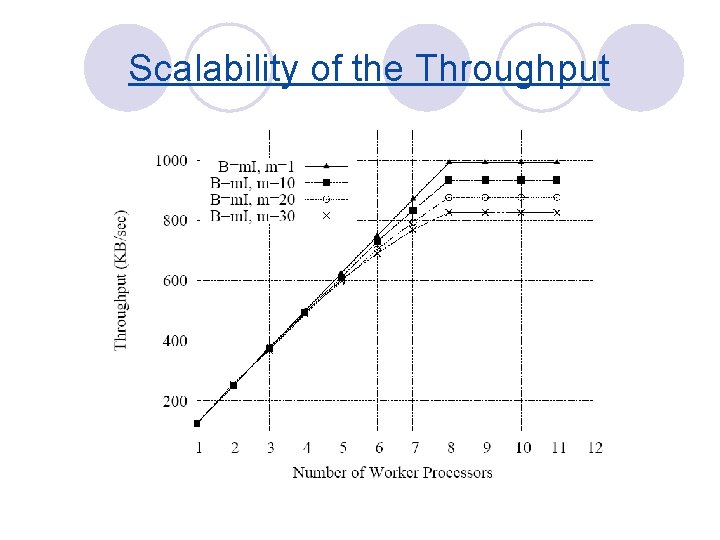
Scalability of the Throughput
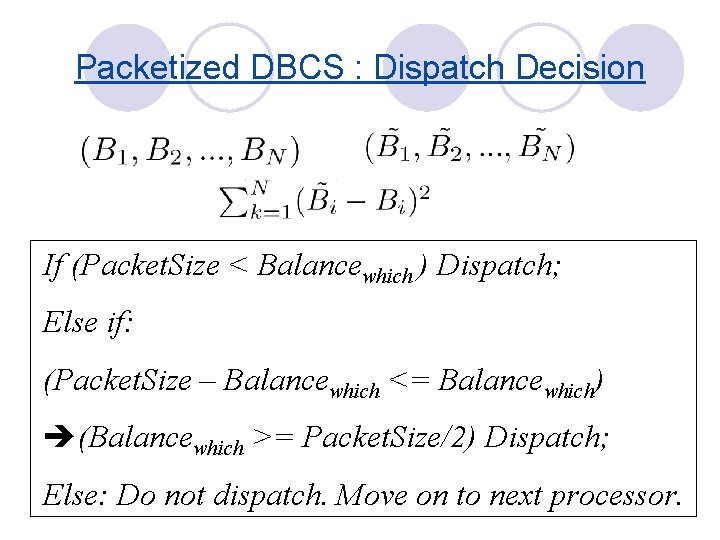
Packetized DBCS : Dispatch Decision If (Packet. Size < Balancewhich ) Dispatch; Else if: (Packet. Size – Balancewhich <= Balancewhich) (Balancewhich >= Packet. Size/2) Dispatch; Else: Do not dispatch. Move on to next processor.
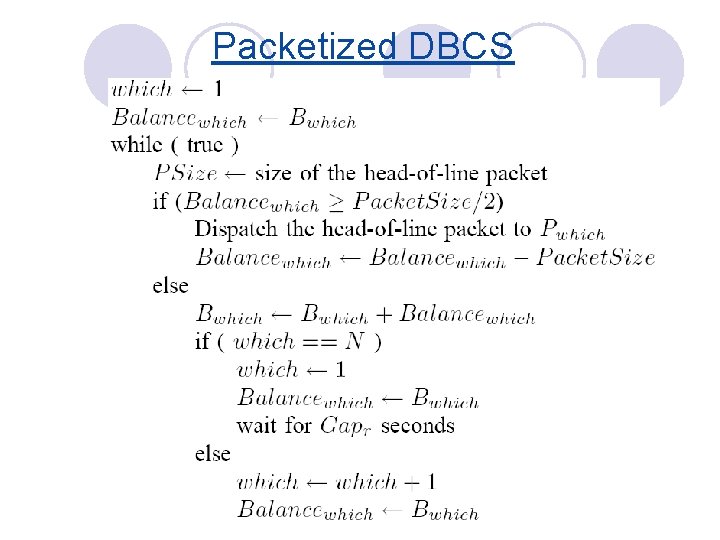
Packetized DBCS
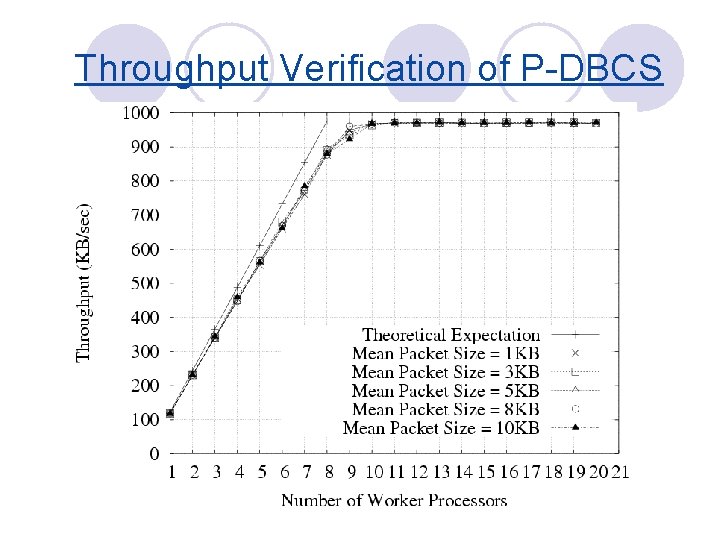
Throughput Verification of P-DBCS
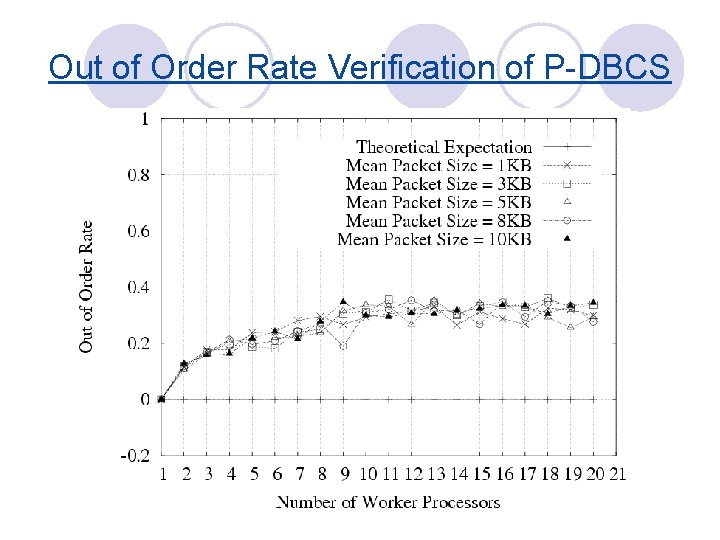
Out of Order Rate Verification of P-DBCS
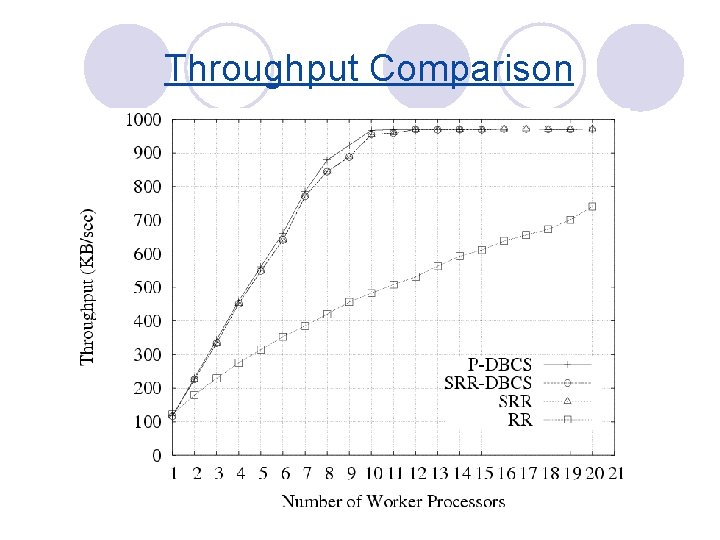
Throughput Comparison
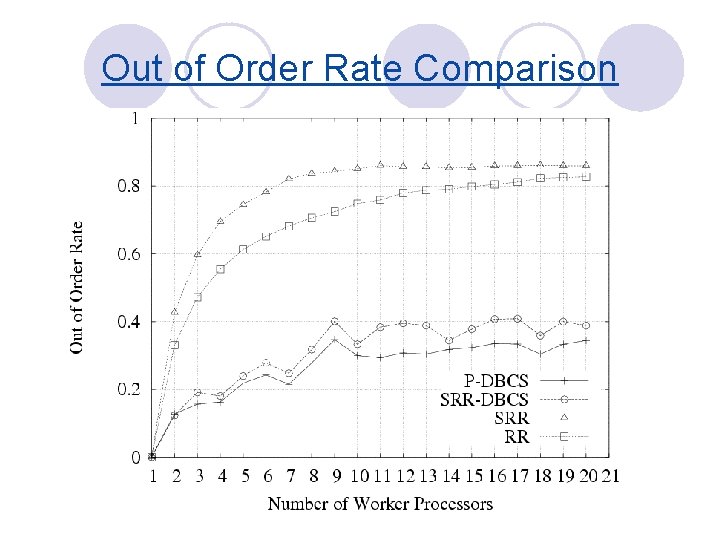
Out of Order Rate Comparison
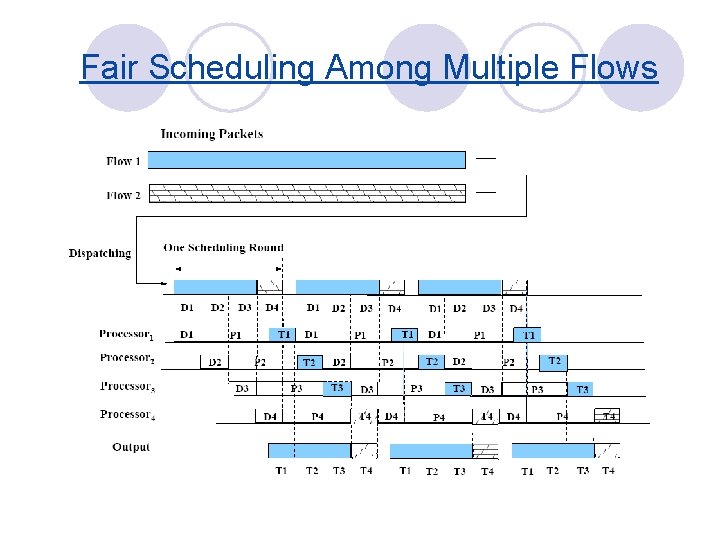
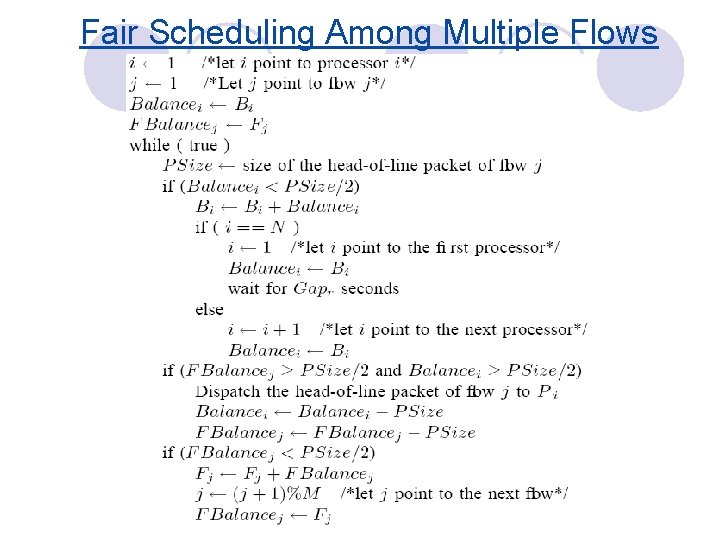
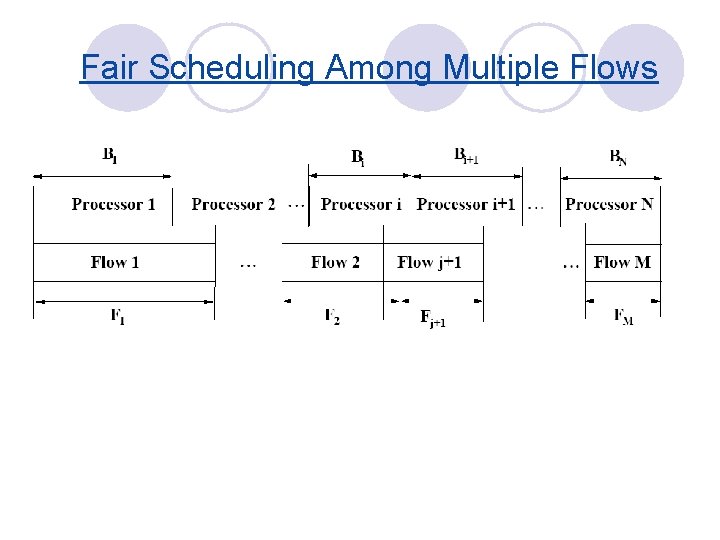
Fair Scheduling Among Multiple Flows
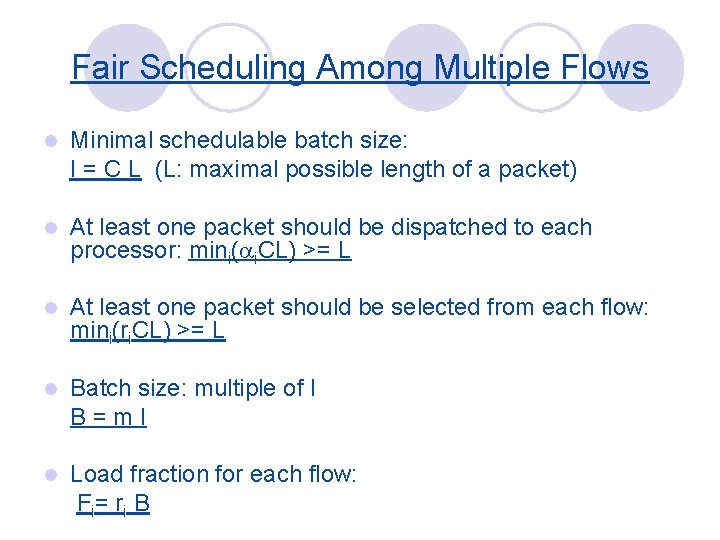
Fair Scheduling Among Multiple Flows l Minimal schedulable batch size: I = C L (L: maximal possible length of a packet) l At least one packet should be dispatched to each processor: mini(ai. CL) >= L l At least one packet should be selected from each flow: mini(ri. CL) >= L l Batch size: multiple of I B=m. I l Load fraction for each flow: F i = ri B
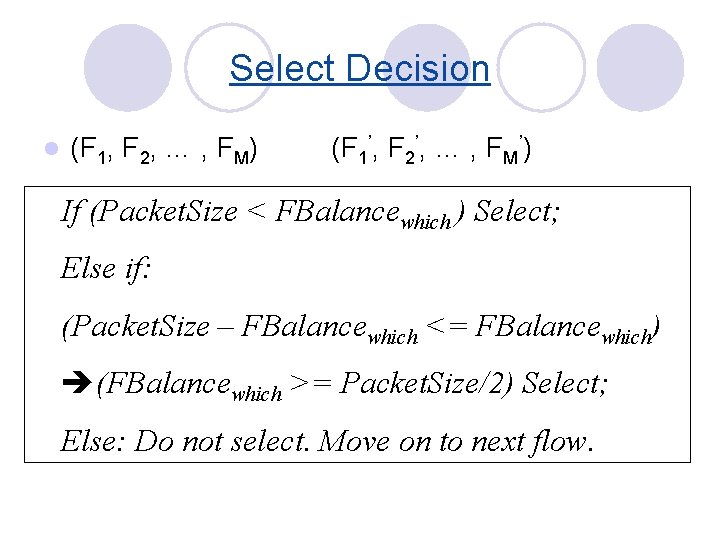
Select Decision l (F 1, F 2, … , FM) (F 1’, F 2’, … , FM’) If (Packet. Size < FBalancewhich ) Select; Else if: (Packet. Size – FBalancewhich <= FBalancewhich) (FBalancewhich >= Packet. Size/2) Select; Else: Do not select. Move on to next flow.
Fair Scheduling Among Multiple Flows
Fair Scheduling Among Multiple Flows
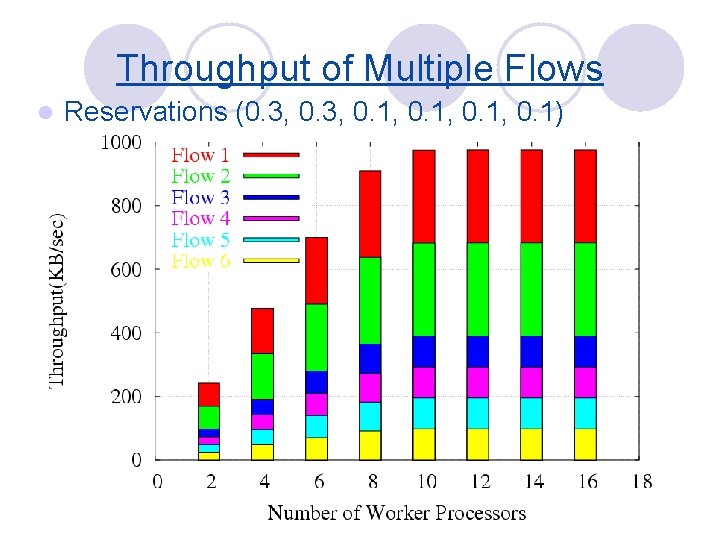
Throughput of Multiple Flows l Reservations (0. 3, 0. 1, 0. 1)
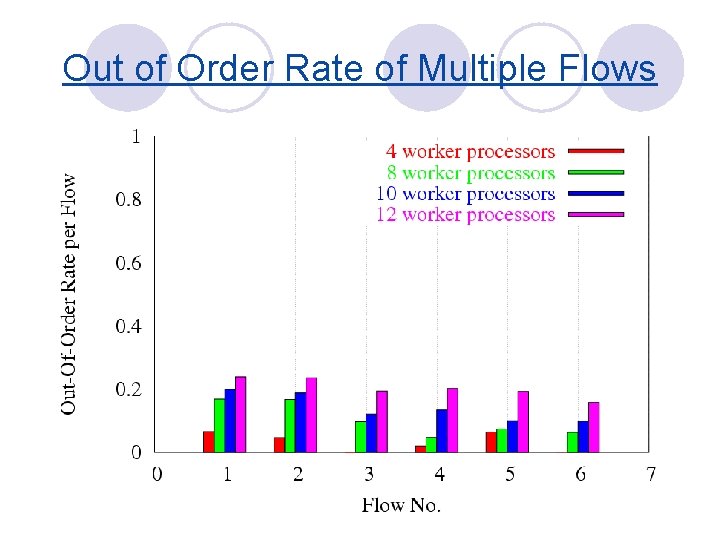
Out of Order Rate of Multiple Flows