
An Efficient Brush Model for Physically Based 3
An Efficient Brush Model for Physically. Based 3 D Painting Nelson S. -H. Chu Chiew-Lan Tai
Benefits Over Existing Models n Brush flattening n Bristle spreading n Plasticity of wetted brushes n Resistance of paper surface
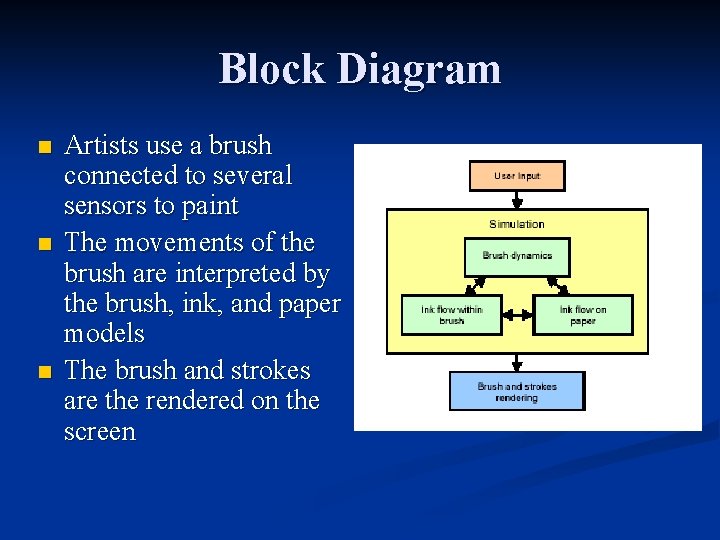
Block Diagram n n n Artists use a brush connected to several sensors to paint The movements of the brush are interpreted by the brush, ink, and paper models The brush and strokes are the rendered on the screen
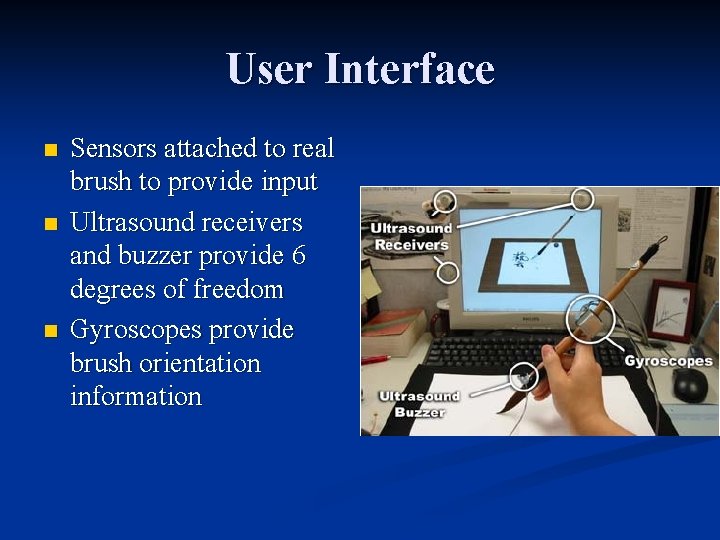
User Interface n n n Sensors attached to real brush to provide input Ultrasound receivers and buzzer provide 6 degrees of freedom Gyroscopes provide brush orientation information
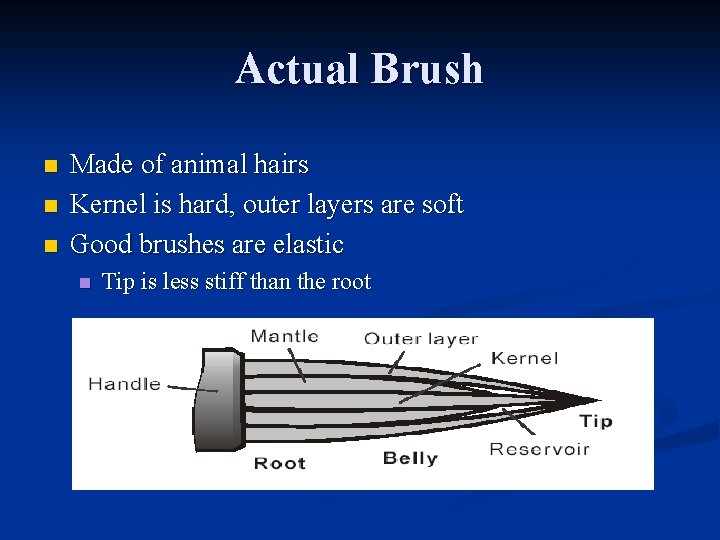
Actual Brush n n n Made of animal hairs Kernel is hard, outer layers are soft Good brushes are elastic n Tip is less stiff than the root
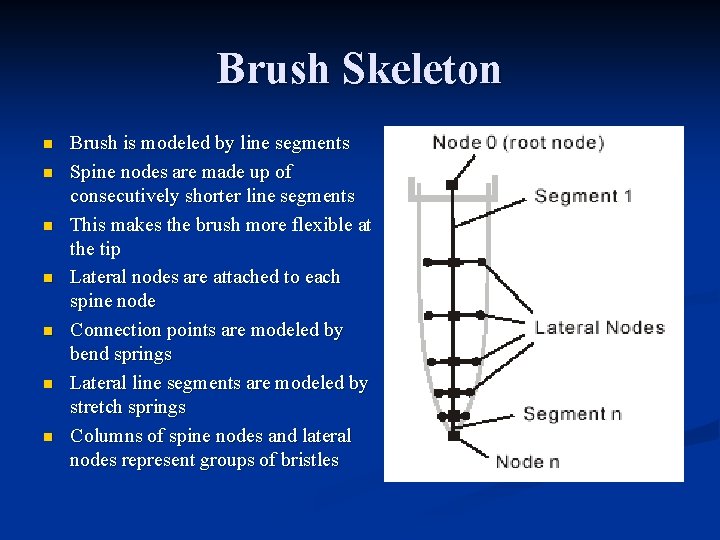
Brush Skeleton n n n Brush is modeled by line segments Spine nodes are made up of consecutively shorter line segments This makes the brush more flexible at the tip Lateral nodes are attached to each spine node Connection points are modeled by bend springs Lateral line segments are modeled by stretch springs Columns of spine nodes and lateral nodes represent groups of bristles
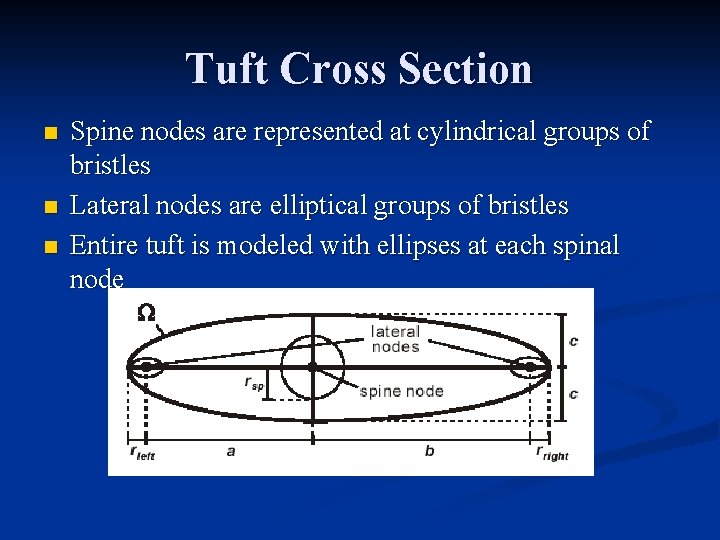
Tuft Cross Section n Spine nodes are represented at cylindrical groups of bristles Lateral nodes are elliptical groups of bristles Entire tuft is modeled with ellipses at each spinal node
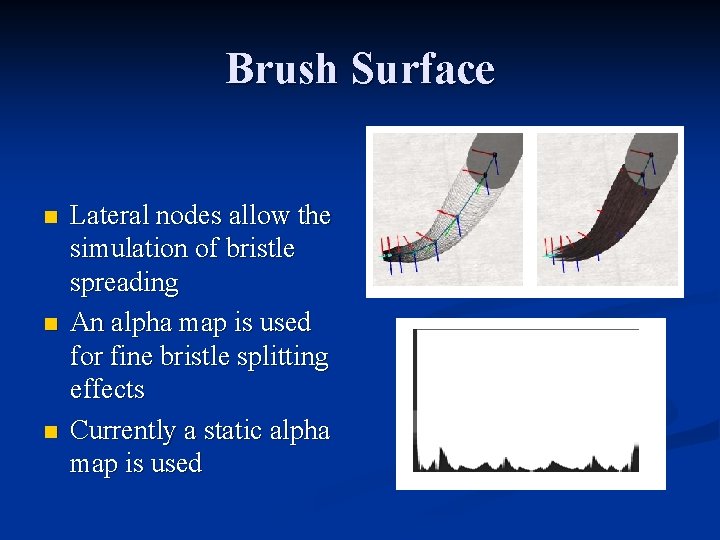
Brush Surface n n n Lateral nodes allow the simulation of bristle spreading An alpha map is used for fine bristle splitting effects Currently a static alpha map is used
Brush Dynamics n n Exact Newtonian physics is not practical Instead, energy minimization is used n n An energy function is set up for the system and its steady state is determined by finding a local energy minimum numerically. The state of the system at the previous time step is used as the new initial value This is a ‘static contained minimization problem’ Sequential Quadratic Programming (SQP) is used to solve the energy minimization problem
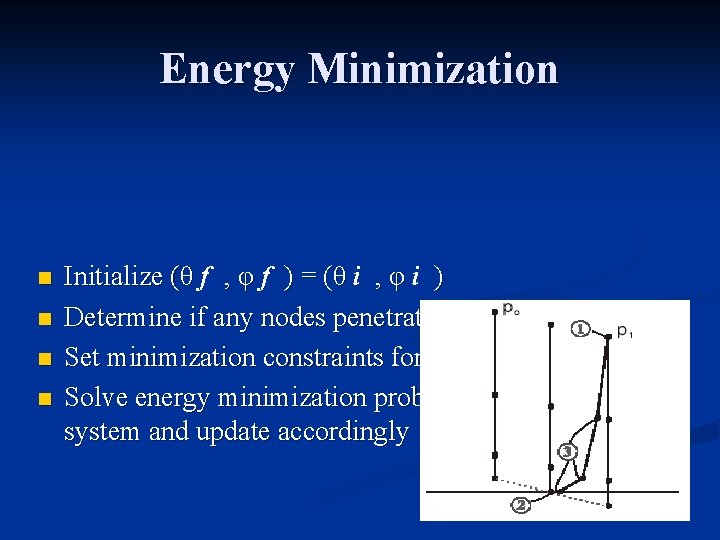
Energy Minimization n n Initialize (θ f , φ f ) = (θ i , φ i ) Determine if any nodes penetrate the paper Set minimization constraints for those nodes Solve energy minimization problem for the state of the system and update accordingly
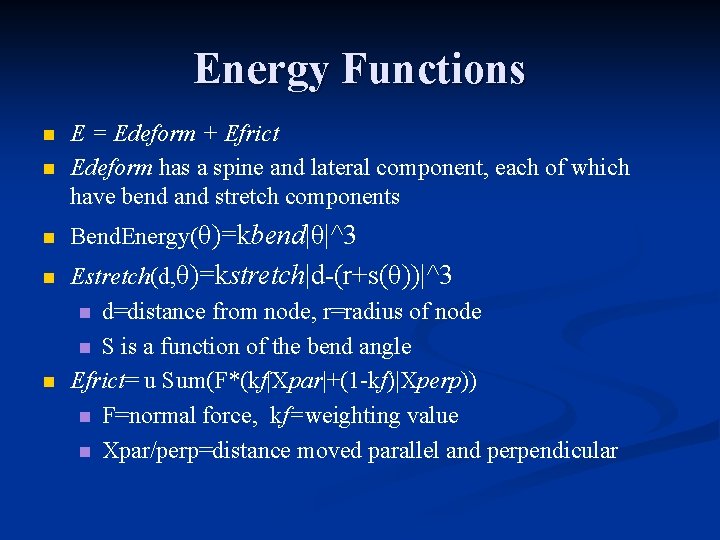
Energy Functions n E = Edeform + Efrict Edeform has a spine and lateral component, each of which have bend and stretch components n Bend. Energy(θ)=kbend|θ|^3 n n n Estretch(d, θ)=kstretch|d-(r+s(θ))|^3 n d=distance from node, r=radius of node n S is a function of the bend angle Efrict= u Sum(F*(kf|Xpar|+(1 -kf)|Xperp)) n F=normal force, kf=weighting value n Xpar/perp=distance moved parallel and perpendicular
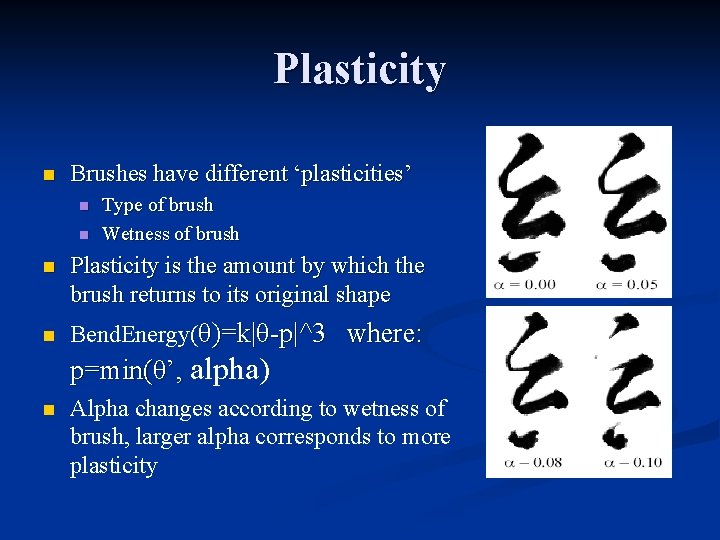
Plasticity n Brushes have different ‘plasticities’ n n Type of brush Wetness of brush Plasticity is the amount by which the brush returns to its original shape Bend. Energy(θ)=k|θ-p|^3 where: p=min(θ’, alpha) n Alpha changes according to wetness of brush, larger alpha corresponds to more plasticity
Ink Depositing n n Ink and moisture information is stored at each node The brush footprint is the orthogonal projection of the penetrating portion of the brush onto the paper Ink is either subtracted from the tuft upon depositing, or maintained to allow continuous painting If the ink is subtracted the tuft alpha map is modified too reflect this
Specs System written in Object Pascal using Borland Delphi 6 n Runs real-time at 25 frames per second on a 1 GHz Pentium-III with a Ge. Force 2 Pro graphics card n Most time frames require less then 10 SQP iterations n
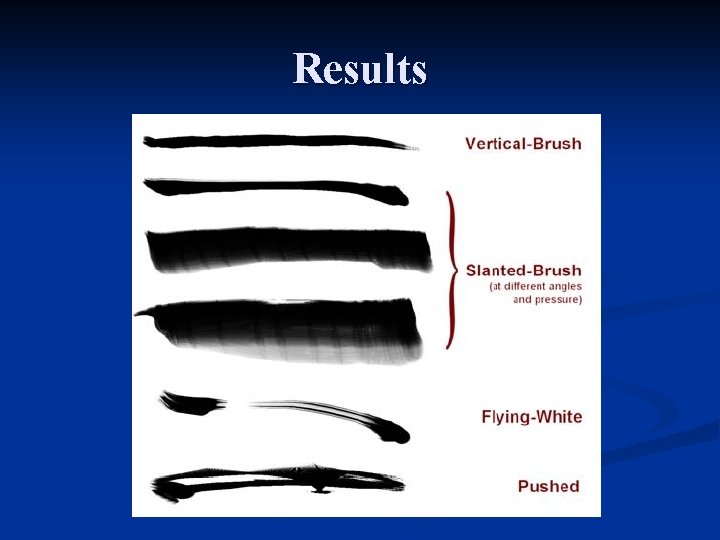
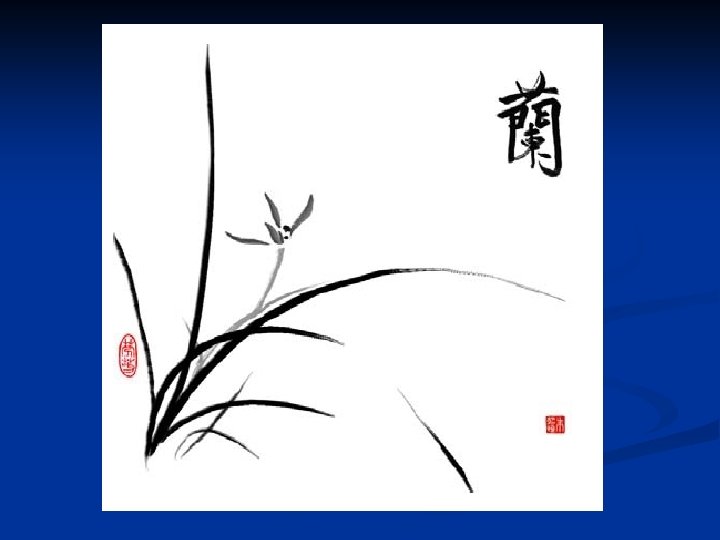
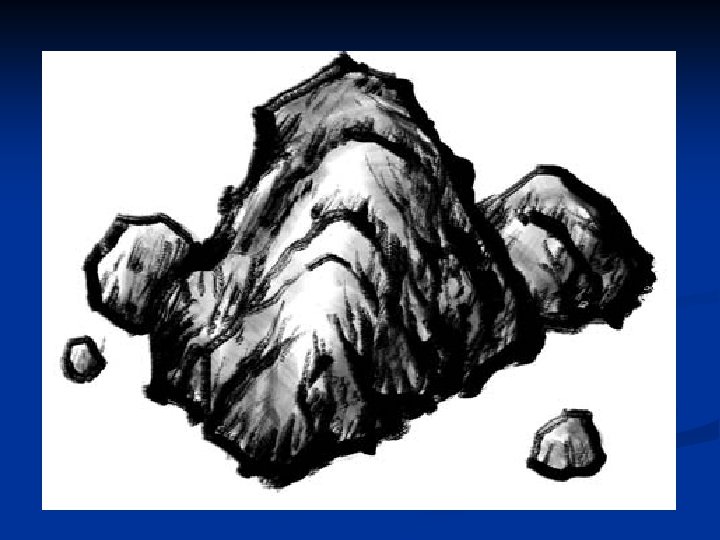
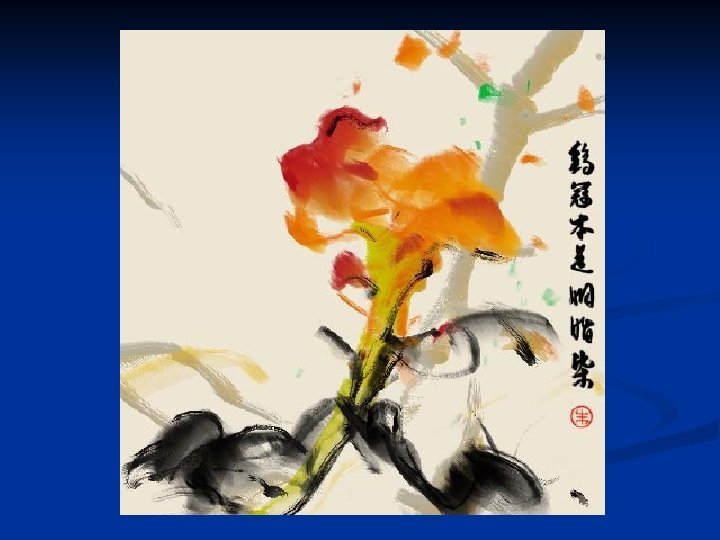
Results

- Slides: 21