
An EDI Testing Strategy Rosemary B Abell Director
An EDI Testing Strategy Rosemary B. Abell Director, National HIPAA Practice Keane, Inc. HIPAA Summit West II March 13 -15, 2002
Overview • Why do you need it and What is it? • What should be included in a testing strategy? • What are some risks to a successful testing project? • What to do and Where can you go for more information? 2
Why do you need it? • When have you ever implemented so many software changes to multiple systems? • When have you ever implemented software changes that also greatly impacted your business processes? 3
Why do you need it? • When have you ever had to test so many levels as part of the testing phases • When have you ever had to test with all your submitters when implementing software changes? 4
Why do you need it? • When have you ever made such significant changes that will be implemented along with other corporate initiatives? • When have you ever had to implement so many changes with an aggressive deadline date that are influenced by the completed work of many of your vendors 5

What is it? • A high level plan to support the objectives of your testing approach • A definition of the resources (software, hardware and people) needed during the course of the process 6
What is it? • A list to assist the team (at a high level) in understanding the events that need to take place • A guide/checklist as the detail plans are developed. 7
What is it? • A first look at the risks and dependencies that could impact the success of the testing effort • A list of the deliverables that will be created and used during the testing events 8
What should be included? • The scope of the testing effort – Transactions, code sets, software changes – Lines of business – Trading partners – Interfaces – Special processing • The phases and techniques • Test schedule (high level) • Acceptance criteria 9
What should be included? • Roles and Responsibilities • Description of the test environment • Test data management process • Test reporting process and controls • Transactions flowing through the systems 10
Creating transaction flow Things to think about? • What contacts are made internally for EDI work to start? • How do you communicate with your external IS (in the provider organization) contacts? • What is the timetable for bringing a new major provider into a full EDI relationship? • How are inbound/outbound transmissions tested? 11
Creating transaction flow Things to think about? • What reports are generated during the EDI process? • Where are the reports from? • Where do the reports go? • Who monitors the EDI reports? • Who handles EDI errors? • What non-standard data files are created for external entities? • What non-standard data files are received from external entities? 12
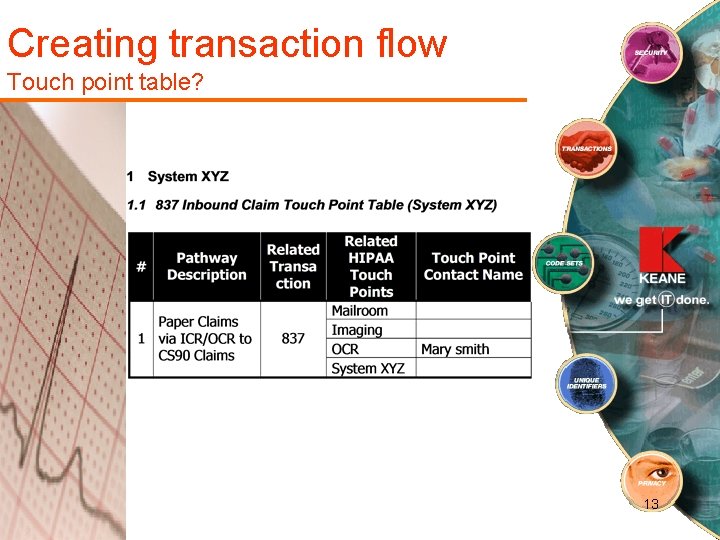
Creating transaction flow Touch point table? 13

What are some risks? • Large number of changes to be tested • Large number of testing events to be included • Availability of the test environment when needed • Available testing resources 14
What are some risks? • HIPAA knowledgeable testing resources • Large number of testing with partners • Tight testing schedule • Dependencies on vendor software 15
What to do? • Start the test planning process now • Assign a test manager • Get all parties involved now • Track issues and risks 16

What to do? • Resolve issues and mitigate risks quickly • Identify resources needed • Identify tools needed to support the effort • Identify training requirements 17
For more information? • www. wedi. org – White papers • Transaction compliance certification • Business-to-business transaction set testing • www. claredi. com – Test files – Scenarios 18

Thank You ! Rosemary B. Abell Director, National HIPAA Practice Keane, Inc Rosemary_B_Abell@Keane. com (919) 767 -2235 19
- Slides: 19