
An Automated Trading System using Recurrent Reinforcement Learning
![An Automated Trading System using Recurrent Reinforcement Learning • Abhishek Kumar[2010 MT 50582] •](https://slidetodoc.com/presentation_image_h/1979891b34b2cb0fb32c66f1bb76fe5a/image-1.jpg "An Automated Trading System using Recurrent Reinforcement Learning • Abhishek Kumar[2010 MT 50582] •")

- Slides: 17
An Automated Trading System using Recurrent Reinforcement Learning • Abhishek Kumar[2010 MT 50582] • Lovejeet Singh[2010 CS 50285] Nimit Bindal[2010 MT 50606] Raghav Goyal [2010 MT 50612]
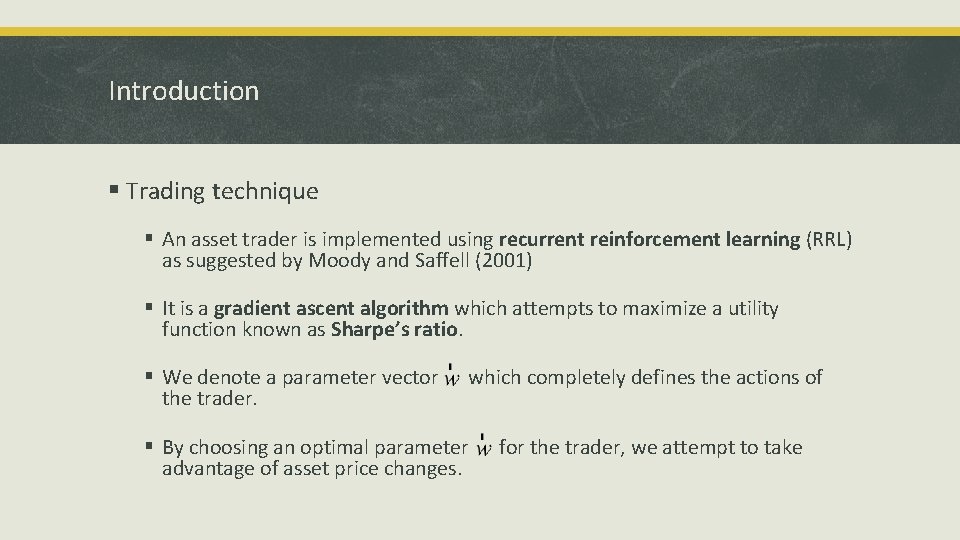
Introduction § Trading technique § An asset trader is implemented using recurrent reinforcement learning (RRL) as suggested by Moody and Saffell (2001) § It is a gradient ascent algorithm which attempts to maximize a utility function known as Sharpe’s ratio. § We denote a parameter vector which completely defines the actions of the trader. § By choosing an optimal parameter for the trader, we attempt to take advantage of asset price changes.
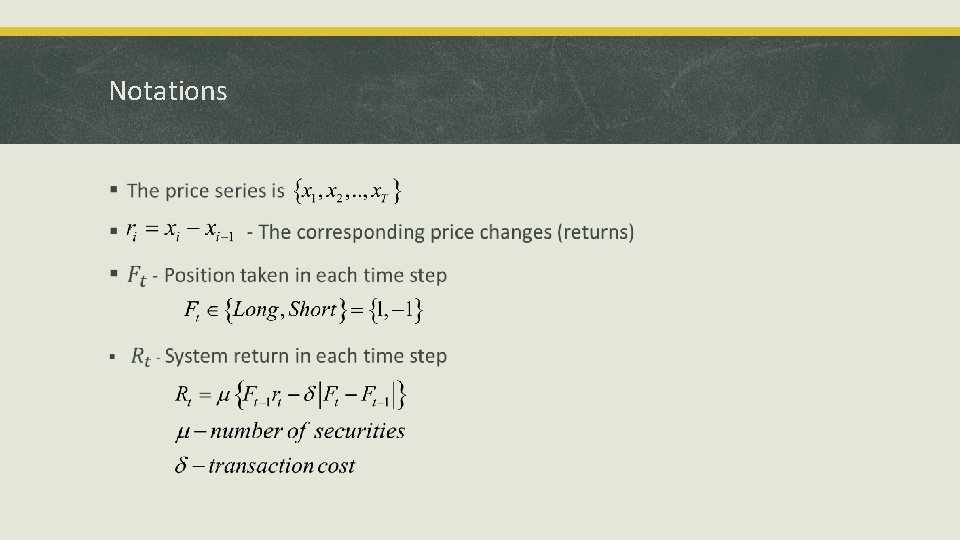
Notations §
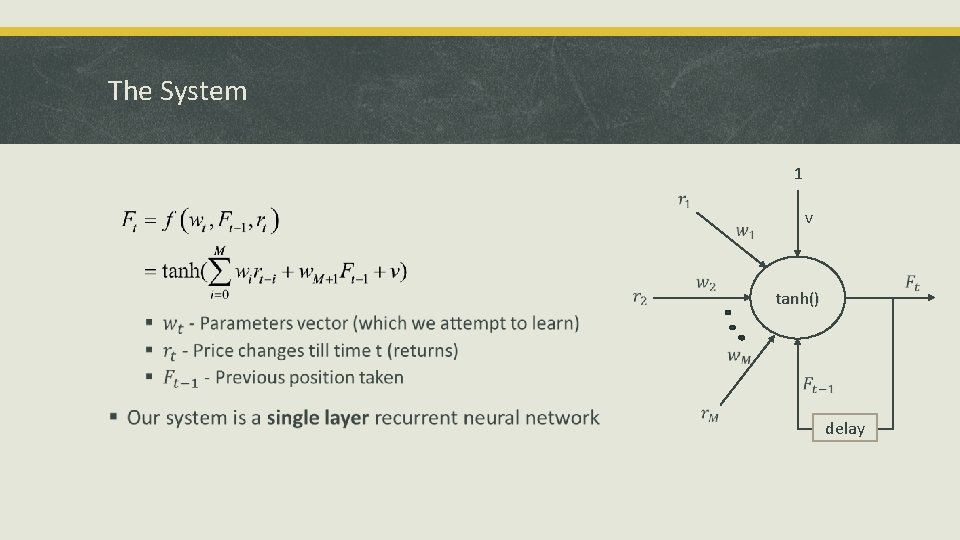
The System 1 § v tanh() delay
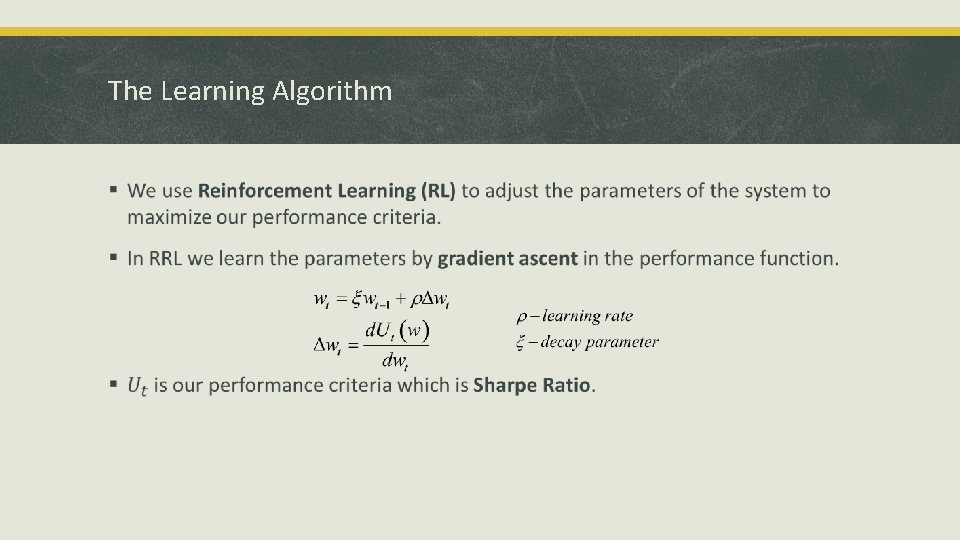
The Learning Algorithm §
Project Goals § Implement an automated trading system which learn its trading strategy by Recurrent Reinforcement Learning algorithm. § Analyze the system’s results & structure. § Suggest and examine improvement methods.
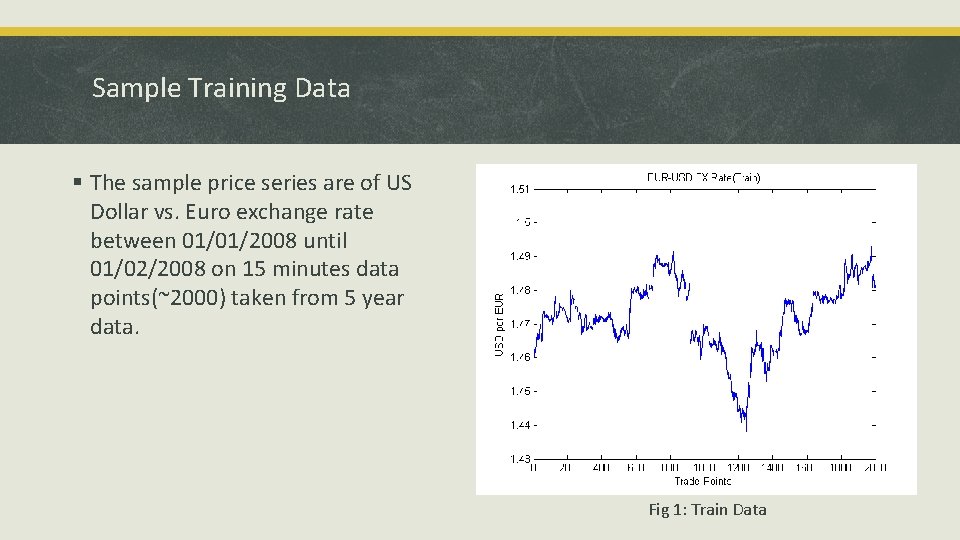
Sample Training Data § The sample price series are of US Dollar vs. Euro exchange rate between 01/01/2008 until 01/02/2008 on 15 minutes data points(~2000) taken from 5 year data. Fig 1: Train Data
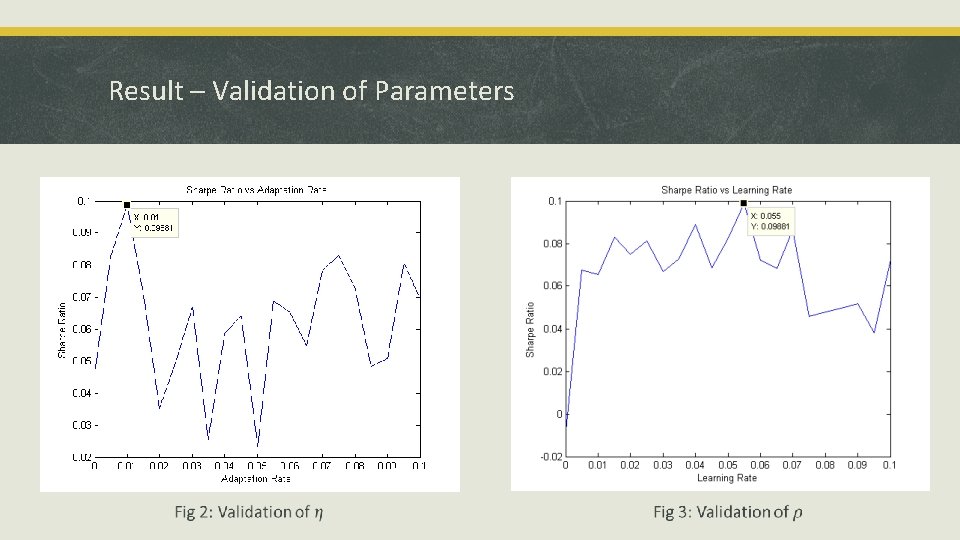
Result – Validation of Parameters
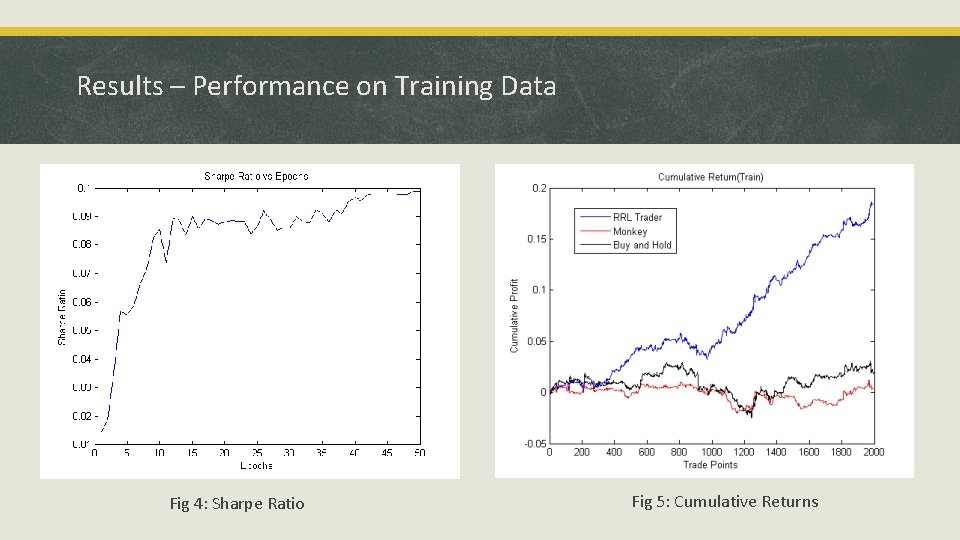
Results – Performance on Training Data Fig 4: Sharpe Ratio Fig 5: Cumulative Returns
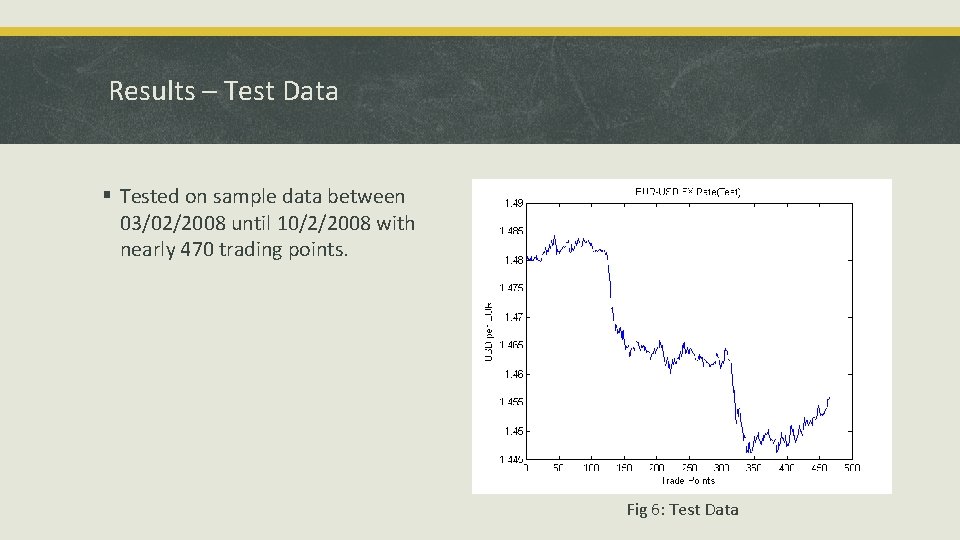
Results – Test Data § Tested on sample data between 03/02/2008 until 10/2/2008 with nearly 470 trading points. Fig 6: Test Data
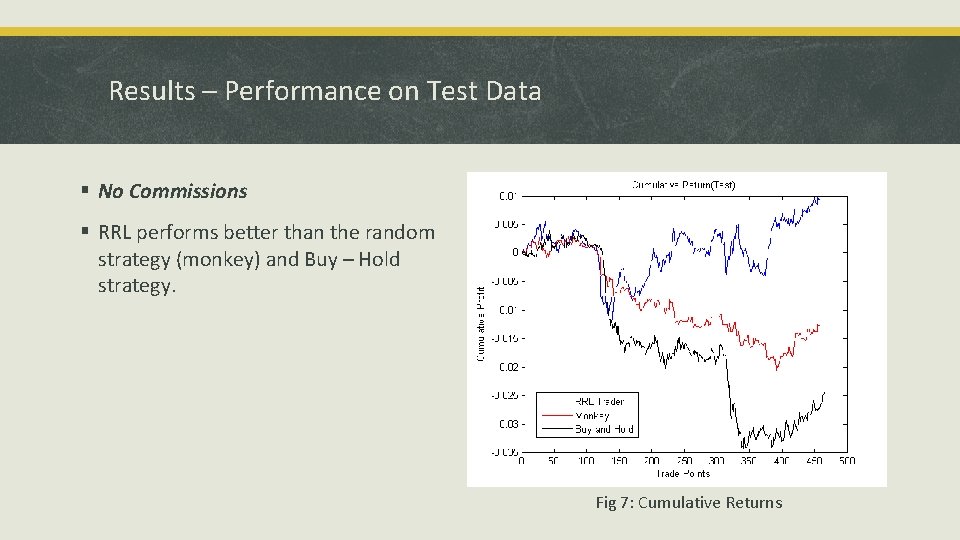
Results – Performance on Test Data § No Commissions § RRL performs better than the random strategy (monkey) and Buy – Hold strategy. Fig 7: Cumulative Returns
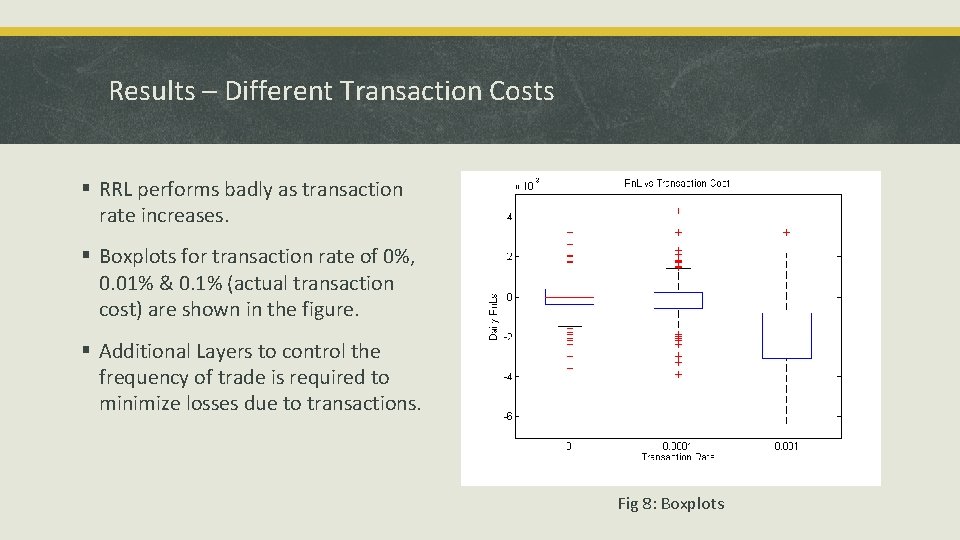
Results – Different Transaction Costs § RRL performs badly as transaction rate increases. § Boxplots for transaction rate of 0%, 0. 01% & 0. 1% (actual transaction cost) are shown in the figure. § Additional Layers to control the frequency of trade is required to minimize losses due to transactions. Fig 8: Boxplots
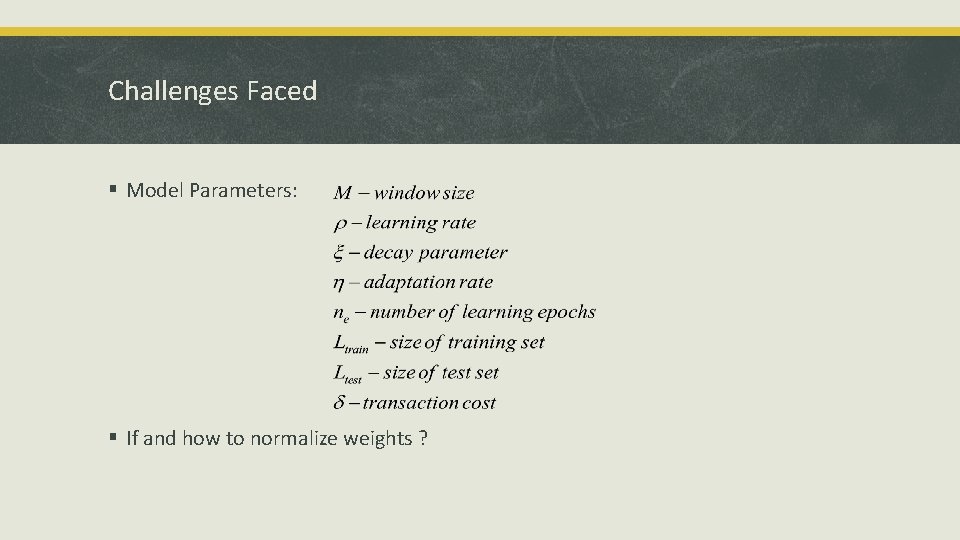
Challenges Faced § Model Parameters: § If and how to normalize weights ?
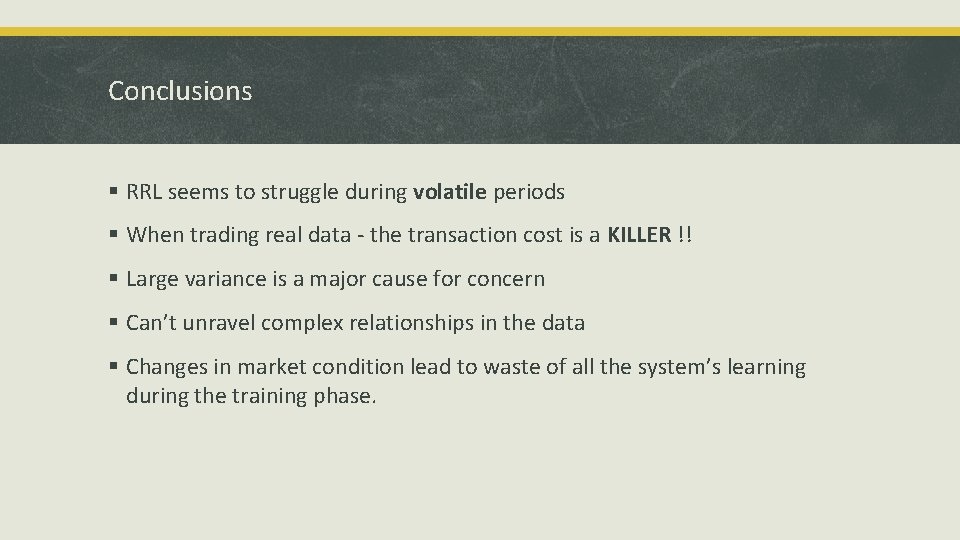
Conclusions § RRL seems to struggle during volatile periods § When trading real data - the transaction cost is a KILLER !! § Large variance is a major cause for concern § Can’t unravel complex relationships in the data § Changes in market condition lead to waste of all the system’s learning during the training phase.
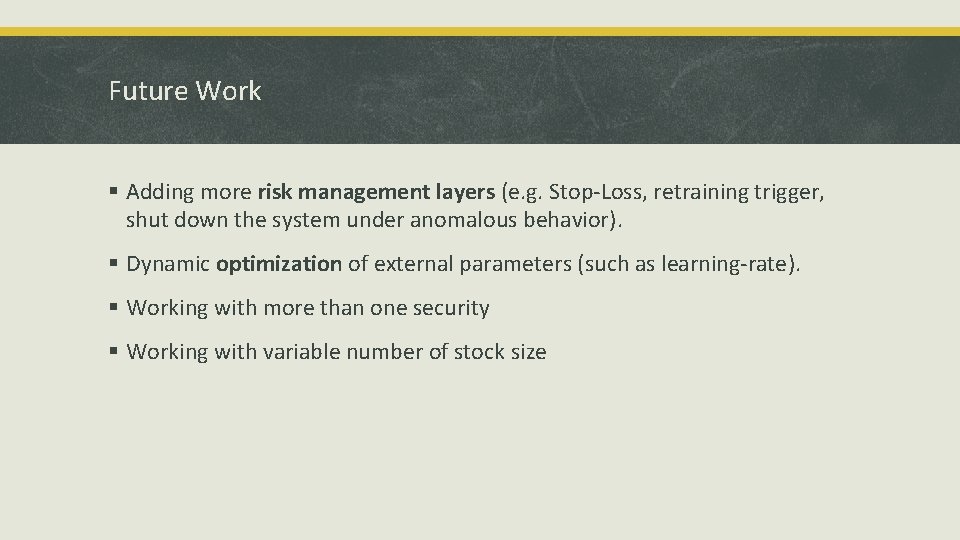
Future Work § Adding more risk management layers (e. g. Stop-Loss, retraining trigger, shut down the system under anomalous behavior). § Dynamic optimization of external parameters (such as learning-rate). § Working with more than one security § Working with variable number of stock size
References � J Moody, M Saffell, Learning to Trade via Direct Reinforcement, IEEE Transactions on Neural Networks, Vol 12, No 4, July 2001 � Carl Gold, FX Trading via Recurrent Reinforcement Learning, CIFE, Hong Kong, 2003 � M. A. H. Dempster, V. Leemans, An Automated FX trading system using adaptive reinforcement learning, Expert Systems with Applications 30, pp. 543 -552, 2006 � G. Molina, Stock Trading with Recurrent Reinforcement Learning(RRL). � Lior Kupfer, Pavel Lifshits, Trading System based on RRL.
Questions ? THANK YOU