
AN APPROACH TO CHILD WITH GI BLEED Dr
AN APPROACH TO CHILD WITH GI BLEED Dr. Rajat Piplani Associate Professor Dept. of Paediatric Surgery
Background • Gastrointestinal (GI) bleeding in infants and children is a fairly common problem, accounting for 10%-20% of referrals to pediatric gastroenterologists.
Definitions • Melena is the passage of black, tarry stools; suggests bleeding proximal to the ileocecal valve • Hematochezia is passage of bright or dark red blood per rectum; indicates colonic source or massive upper GI bleeding • Hematemesis is passage of vomited material that is black (“coffee grounds”) or contains frank blood; bleeding from above the ligament of Treitz
PATHOPHYSIOLOGY OF GI BLEED • 1. Consequences of blood loss • 2. Risk of hemorrrhagic shock • 3. Compensatory mechanism
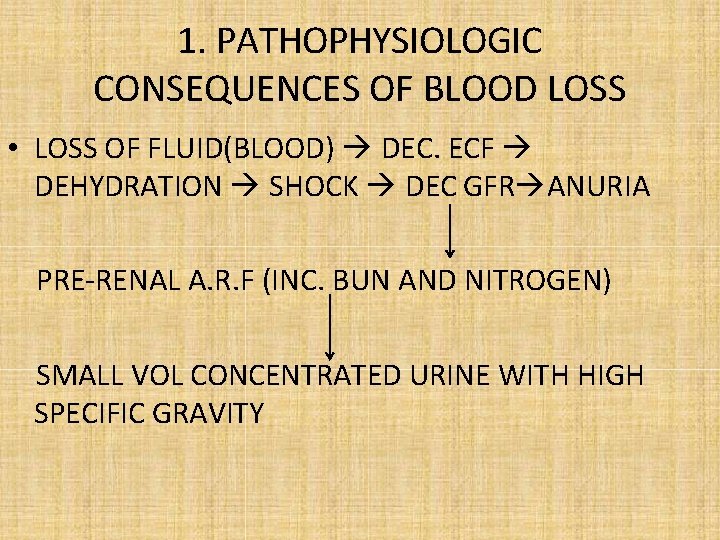
1. PATHOPHYSIOLOGIC CONSEQUENCES OF BLOOD LOSS • LOSS OF FLUID(BLOOD) DEC. ECF DEHYDRATION SHOCK DEC GFR ANURIA PRE-RENAL A. R. F (INC. BUN AND NITROGEN) SMALL VOL CONCENTRATED URINE WITH HIGH SPECIFIC GRAVITY
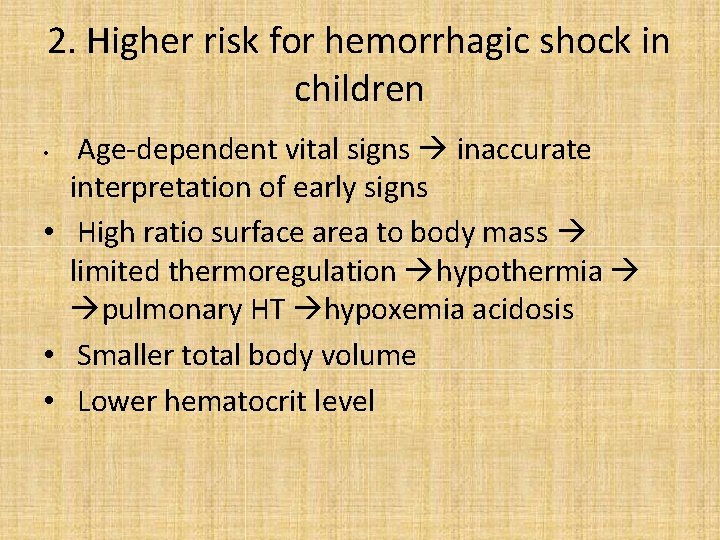
2. Higher risk for hemorrhagic shock in children Age-dependent vital signs inaccurate interpretation of early signs • High ratio surface area to body mass limited thermoregulation hypothermia pulmonary HT hypoxemia acidosis • Smaller total body volume • Lower hematocrit level •
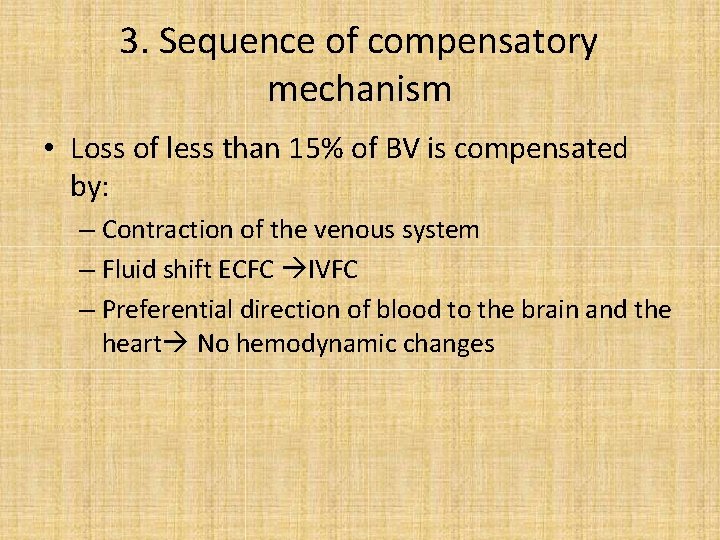
3. Sequence of compensatory mechanism • Loss of less than 15% of BV is compensated by: – Contraction of the venous system – Fluid shift ECFC IVFC – Preferential direction of blood to the brain and the heart No hemodynamic changes
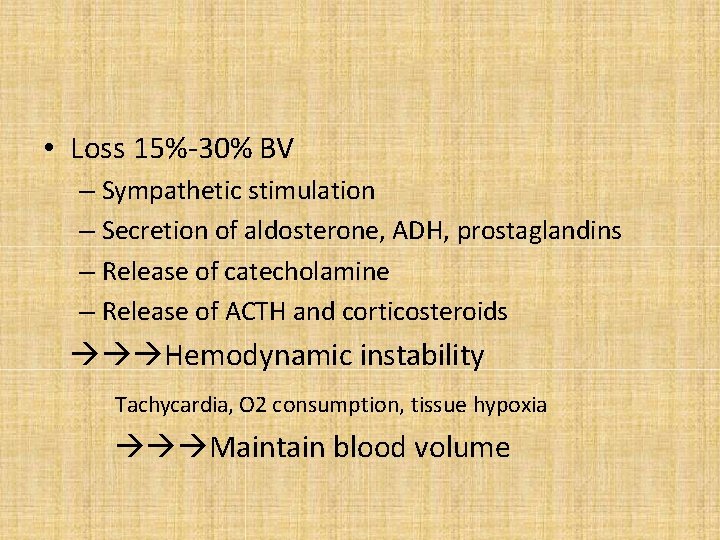
• Loss 15%-30% BV – Sympathetic stimulation – Secretion of aldosterone, ADH, prostaglandins – Release of catecholamine – Release of ACTH and corticosteroids Hemodynamic instability Tachycardia, O 2 consumption, tissue hypoxia Maintain blood volume
• Loss of more than 30% – Hypotension (Shock), dec. cardiac output acidosis tissue damage – Acute renal failure – Liver failure – Heart failure
SYMPTOMS OF UPPER GI BLEED • Symptoms of upper gastrointestinal bleeding include: – vomiting bright red blood (hematemesis) – vomiting dark clots, or coffee ground-like material – passing black, tar-like stool (melena)
SYMPTOMS OF LOWER GI BLEED • Symptoms of lower gastrointestinal bleeding include: – passing pure blood (hematochezia) or blood mixed in stool – bright red or maroon blood in the stool
• Hematemesis : 50% of upper gastrointestinal bleeding cases • Hematochezia : 80% of all gastrointestinal bleeding. • Melena – 70% of upper gastrointestinal bleeding – 33% of lower gastrointestinal bleeding – To form black, tarry stools (melena), there must be 150 -200 cc of blood and the blood must be in the gastrointestinal tract for 8 hours to turn black

CAUSES
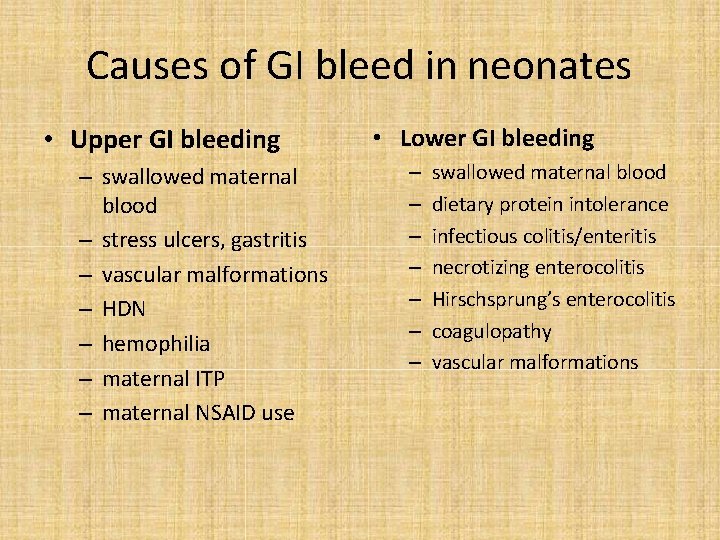
Causes of GI bleed in neonates • Upper GI bleeding – swallowed maternal blood – stress ulcers, gastritis – vascular malformations – HDN – hemophilia – maternal ITP – maternal NSAID use • Lower GI bleeding – – – – swallowed maternal blood dietary protein intolerance infectious colitis/enteritis necrotizing enterocolitis Hirschsprung’s enterocolitis coagulopathy vascular malformations
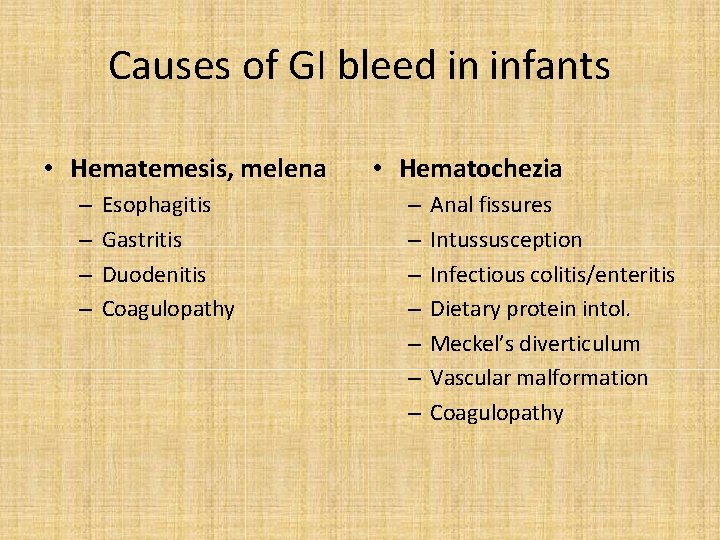
Causes of GI bleed in infants • Hematemesis, melena – – Esophagitis Gastritis Duodenitis Coagulopathy • Hematochezia – – – – Anal fissures Intussusception Infectious colitis/enteritis Dietary protein intol. Meckel’s diverticulum Vascular malformation Coagulopathy
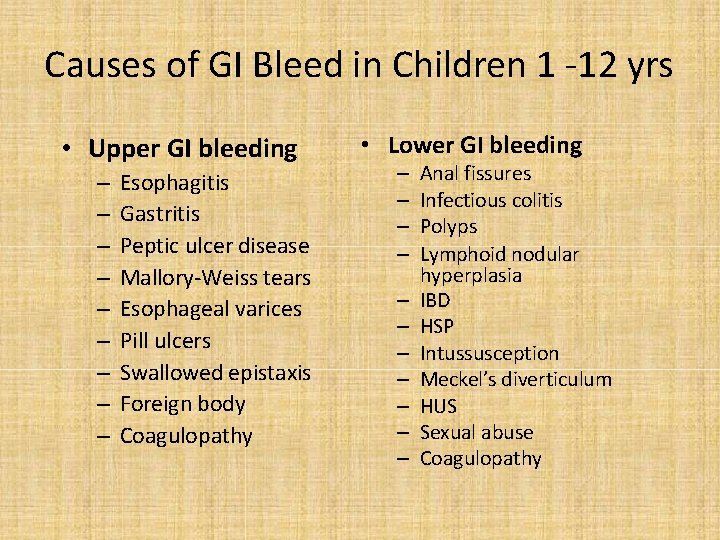
Causes of GI Bleed in Children 1 -12 yrs • Upper GI bleeding – – – – – Esophagitis Gastritis Peptic ulcer disease Mallory-Weiss tears Esophageal varices Pill ulcers Swallowed epistaxis Foreign body Coagulopathy • Lower GI bleeding – – – Anal fissures Infectious colitis Polyps Lymphoid nodular hyperplasia IBD HSP Intussusception Meckel’s diverticulum HUS Sexual abuse Coagulopathy
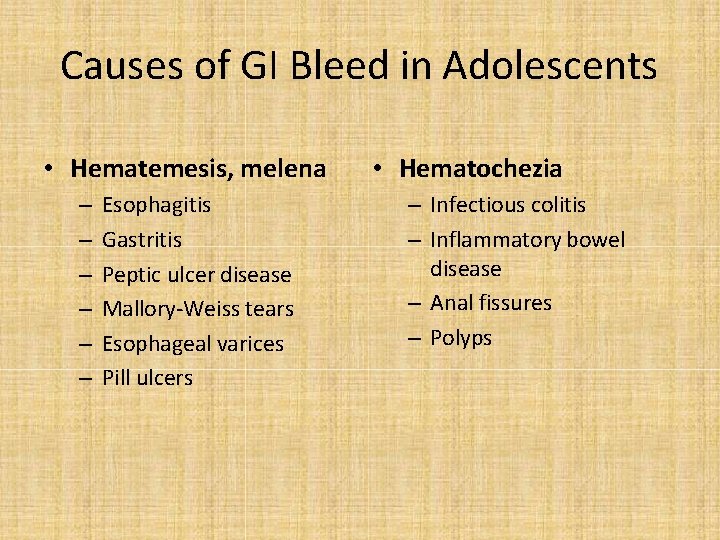
Causes of GI Bleed in Adolescents • Hematemesis, melena – – – Esophagitis Gastritis Peptic ulcer disease Mallory-Weiss tears Esophageal varices Pill ulcers • Hematochezia – Infectious colitis – Inflammatory bowel disease – Anal fissures – Polyps
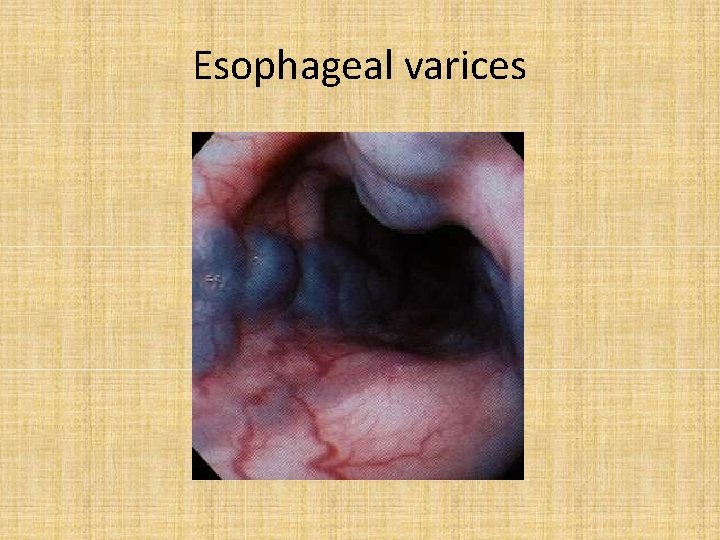
Esophageal varices
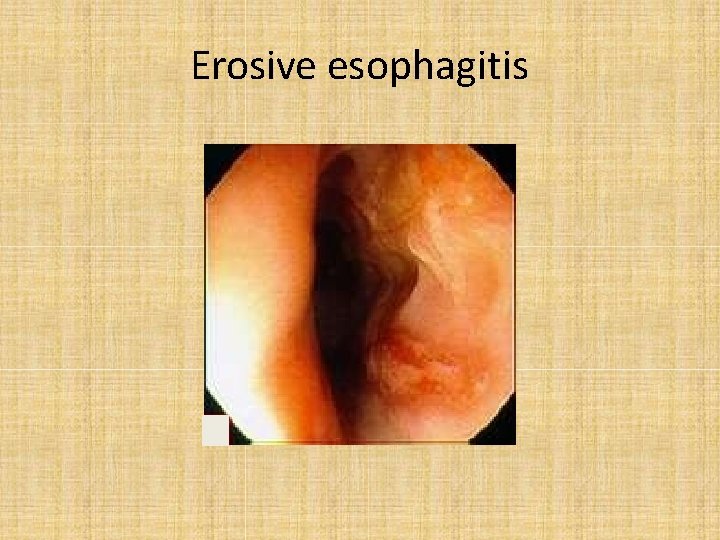
Erosive esophagitis
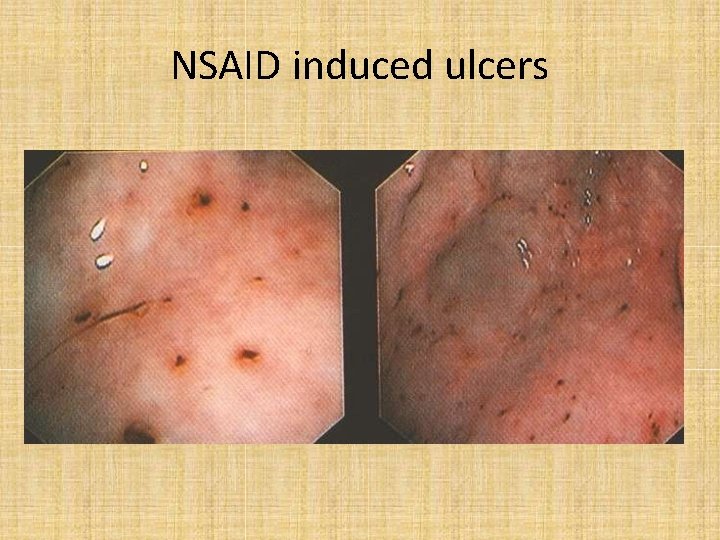
NSAID induced ulcers
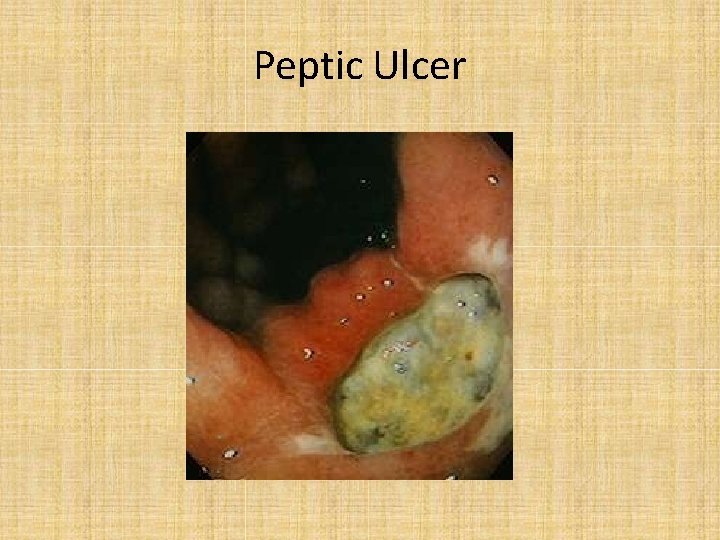
Peptic Ulcer
HISTORY • GENERAL QUESTIONS – Acute or chronic bleeding – Color and quantity of the blood in stools or vomitus – Antecedent symptoms – History of straining – Abdominal pain – Trauma – History of foods consumed or drugs
HISTORY • NEONATE – MILK OR SOY PROTEIN ENTERITIS – NSAIDs, heparin, indomethacin – Maternal medications e. g Aspirin and Phenobarbital – Stress gastritis e. g prematurity, neonatal distress, and mechanical ventilation
HISTORY • CHILDREN AGED 1 MONTH TO 1 YEAR • Episodic abdominal pain that is cramping in nature, vomiting, and currant jelly stools (intussusception) • Fussiness and increased frequency of bowel movements in addition to lower gi bleed (milk protein allergy)
HISTORY • CHILDREN AGED 1 -2 YRS – Upper GI Bleed • systemic diseases, such as burns (Curling ulcer), head trauma (Cushing ulcer), malignancy, or sepsis • NSAID – Lower GI Bleed • Polyps : - painless fresh streaks of blood in stools
HISTORY • CHILDREN OLDER THAN 2 YRS – – lower GI bleeding occurs in association with profuse diarrhea : - Infectious Diarrhea Recent antibiotic use : antibiotic-associated colitis and Clostridium difficile colitis
• A history of vomiting, diarrhea, fever, ill contacts, or travel infectious etiology • Sudden onset of melena in combination with bilious emesis in a previously healthy, nondistended baby INTESTINAL MALROTATION • Bloody diarrhea and signs of obstruction VOLVULUS, INTUSSUSCEPTION or NECROTIZING ENTEROCOLITIS, particularly in premature infants • Recurrent or forceful vomiting Mallory-Weiss tears • Familial history or NSAID use ulcer disease • Ingested substances, such as NSAIDs, tetracyclines, steroids, caustics, and foreign bodies, can irritate the gastric mucosa enough to cause blood to be mixed with the vomitus • Recent jaundice, easy bruising, and changes in stool color liver disease • Evidence of coagulation abnormalities elicited from the history disorders of the kidney or reticuloendothelial system
PHYSICAL EXAMINATION • Signs of shock • Vital signs, including orthostatics • Skin: pallor, jaundice, ecchymoses, abnormal blood vessels, hydration, cap refill • Abdomen: – organomegaly, tenderness, ascites, caput medusa – Abdominal Surgical scars, Hyperactive bowel sounds (upper gi bleeding) – Abdominal tenderness, with or without a mass(intussusception or ischemic Bowel disease) • Perineum: fissure, fistula, trauma • Digital Rectum Examination: polyps, mass, occult blood, evidence of child abuse
Substances that deceive • Red discoloration – candy, fruit punch, beets, watermelon, laxatives, phenytoin, rifampin • Black discoloration – bismuth, activated charcoal, iron, spinach, blueberries, licorice
CONSIDERATIONS • Place NG tube to confirm presence of fresh blood or active bleed. if confirmed – Esophagogastroduosenoscopy – 90% – Colonoscopy – 80% • False negative results in 16 % if duodenopyloric regurgitation is absent
FURTHER ASSESSMENT • Is it really blood (haemoccult test) • Apt-Downey test in neonates – Used to differentiate between maternal and baby blood placed in test tube add sterile water (to hemolye the RBCs yielding free Hb) mix with 1% sodium hydroxide if solution turns yellow or brown maternal blood • Nasogastric aspiration and lavage – Clear lavage makes bleeding proximal to ligament of Treitz unlikely – Coffee grounds that clear suggest bleeding stopped – Coffee grounds and fresh blood mean an active upper GI tract source
Laboratory studies • CBC in all cases – Normal hematocrit hypovolemia and hemoconcentration – Leukocytosis infectious etiology • ESR in all cases • BUN, Cr in all cases • PT, PTT in all cases • Others as indicated: – – – Type and crossmatch AST, ALT, GGTP, bilirubin Albumin, total protein Stool for culture, ova and parasite examination, Clostridium difficile toxin assay Plain abdominal Xray (NEC in neonates)
LAB STUDIES (contd. . ) • Endoscopy – Identifies site of upper GI bleed in 90 % cases – FORREST classification • I – Active hemorrhage – Ia : - bright red bleeding – Ib : - slow bleeding • II – Recent hemorrhages – IIa : - non bleeding visible vessel – IIb : - adherent clot on base of lesion – IIc : - flat pigmented spot • III – No evidence of bleeding
Endoscopy: indications • • EGD: hematemesis, melena Flexible sigmoidoscopy: hematochezia Colonoscopy: hematochezia Enteroscopy: obscure GI blood loss
LAB STUDIES (contd. . ) • Colonoscopy – Identifies site of lower GI bleed in 80 % cases – Polyps, FAP syndrome, haemangiomas, vascular malformations, ulceration, biopsy
LAB STUDIES (contd. . ) • Barium contrast studies – GER, FB, esophagitis, IBD, Polyps, malrotation, volvulus • Doppler USG (Intussusception) • Barium enema (IBD, polyps, intussusception) • H. pylori stool antigen, Ig. G levels, rapid urease test or mucosal biopsy • Ultrasound abdomen (intussusception) • Fasting plasma gastrin level (Z-E syndrome) • Technetium scan (Meckel’s diverticulum) • Enteroscopy • Arteriography (helpful when endoscopy has failed)
INITIAL MANAGEMENT • The initial approach to all patients with significant GI bleed is : – to establish adequate oxygen delivery. – to place intravenous line. – to initiate fluid and blood resuscitation – to correct any underlying coagulopathies.
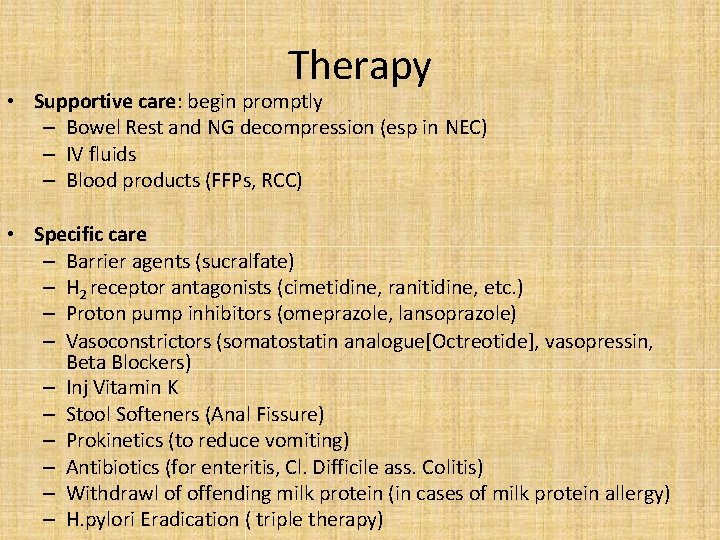
Therapy • Supportive care: begin promptly – Bowel Rest and NG decompression (esp in NEC) – IV fluids – Blood products (FFPs, RCC) • Specific care – Barrier agents (sucralfate) – H 2 receptor antagonists (cimetidine, ranitidine, etc. ) – Proton pump inhibitors (omeprazole, lansoprazole) – Vasoconstrictors (somatostatin analogue[Octreotide], vasopressin, Beta Blockers) – Inj Vitamin K – Stool Softeners (Anal Fissure) – Prokinetics (to reduce vomiting) – Antibiotics (for enteritis, Cl. Difficile ass. Colitis) – Withdrawl of offending milk protein (in cases of milk protein allergy) – H. pylori Eradication ( triple therapy)
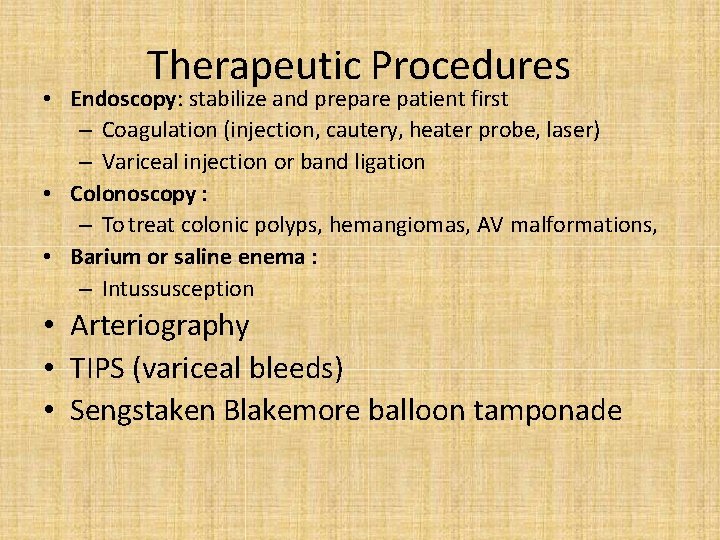
Therapeutic Procedures • Endoscopy: stabilize and prepare patient first – Coagulation (injection, cautery, heater probe, laser) – Variceal injection or band ligation • Colonoscopy : – To treat colonic polyps, hemangiomas, AV malformations, • Barium or saline enema : – Intussusception • Arteriography • TIPS (variceal bleeds) • Sengstaken Blakemore balloon tamponade
Surgical options • If all medical measures fail – Laprotomy – Laproscopy – Vagotomy – Pyloroplasty – Fissurotomy, fistulectomy – Diverticulectomy
Summary Definitions: Hematemesis, Malena and Hematochezia Pathophysiology Causes: In Infant, Children 1 -12 yrs, Adolescents > 12 yrs History/ Presentation Physical examination Initial Management- Blood investigations/IVF/Blood products/O 2/Medications/PPI/NG washes/ Specific investigations(USG) Role of endoscopy- Upper GI/Lower GI Cause specific treatment Surgical Options

THANKS
- Slides: 42