
An Anthropologist Looks at Ballet as a Form
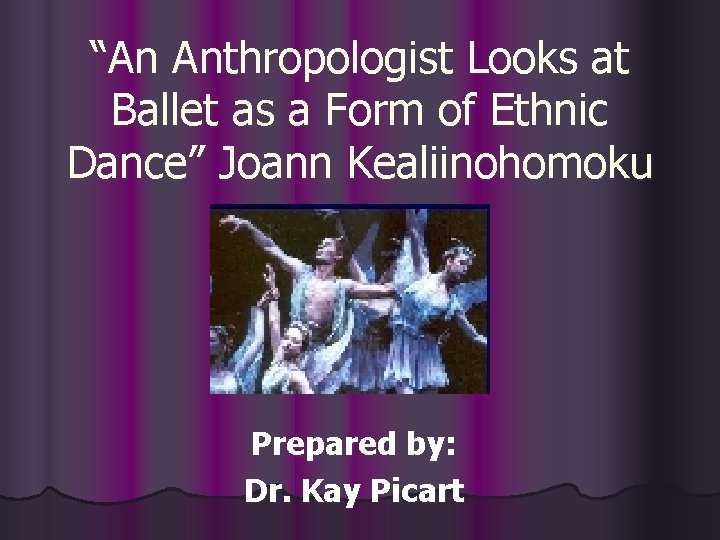
“An Anthropologist Looks at Ballet as a Form of Ethnic Dance” Joann Kealiinohomoku Prepared by: Dr. Kay Picart
Thesis Statement l By ethnic dance, anthropologists mean to convey the idea that all forms of dance reflect the cultural traditions within which they developed. Dancers and dance scholars. . . use this term & the related terms ethnologic, primitive & folkdance, differently. . . in a way which reveals their limited knowledge of non-Western dance forms. (533)
Aims l To discuss how an anthropologist might examine ballet and dance. l To uncover hidden value judgments concerning culture embedded in descriptions of dance.
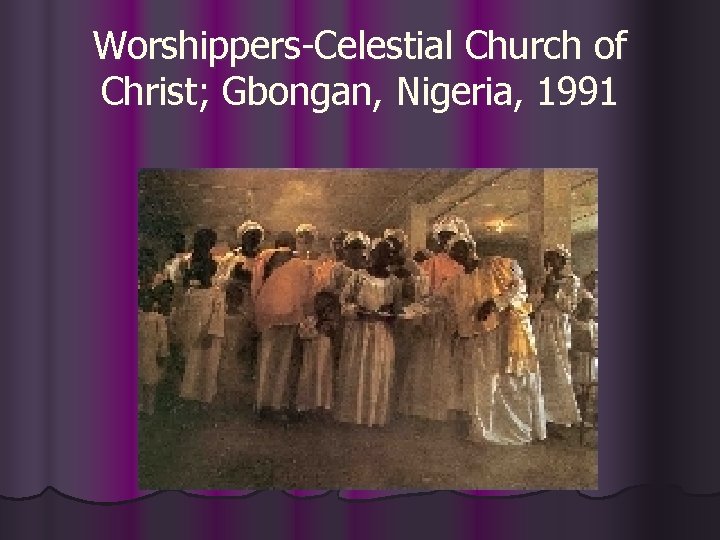
Worshippers-Celestial Church of Christ; Gbongan, Nigeria, 1991
Review Question l What evidence does the author use to show that current Western commentaries on “primitive dance” are ethnocentric and erroneous?
The Sioux “Ghost Dance”
Discussion Questions: l Do you agree with the author that dance criticism/popular culture still enshrines ballet as the highest form of dance? l Do you agree that Western dance criticism still remains paternal & ethnocentric?
Review Questions: l How does the author define “dance”? l Why is such a definition important to her aims?
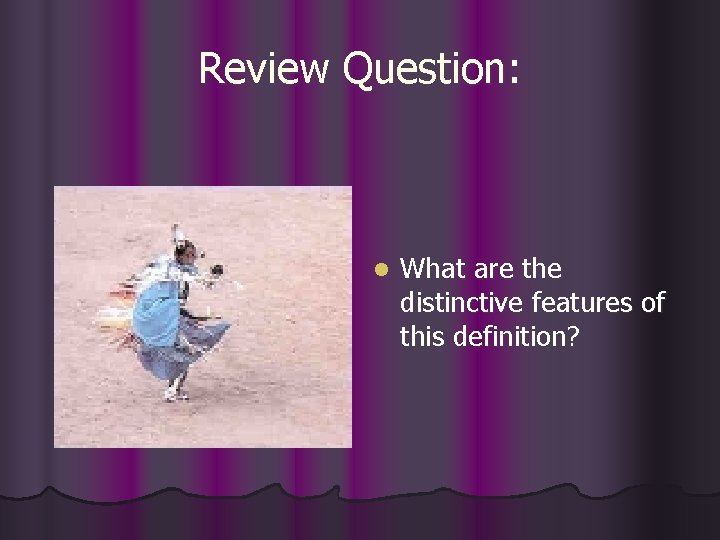
Review Question: l What are the distinctive features of this definition?
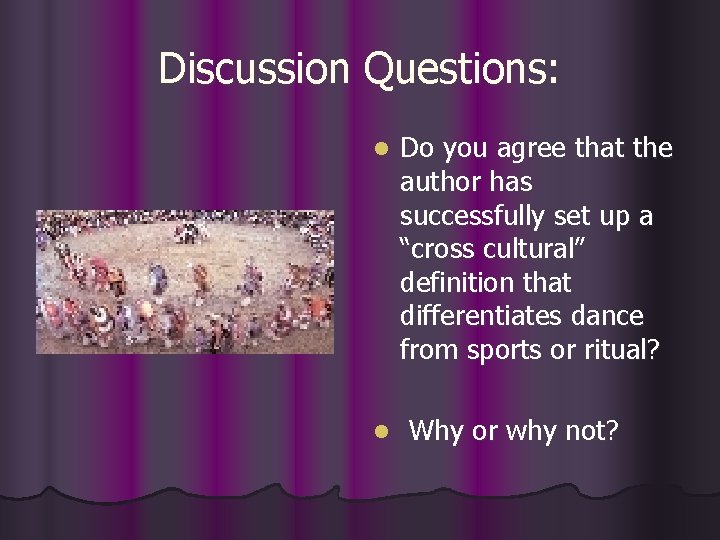
Discussion Questions: l l Do you agree that the author has successfully set up a “cross cultural” definition that differentiates dance from sports or ritual? Why or why not?
Remarks on Other Theorists l l Martin: dance as a universal urge but without a universal form Sorell: differences due to “race, ” “racial memory, ” innate memory, ” “blood” l Review Question: How does the author respond to both these critics’ positions?
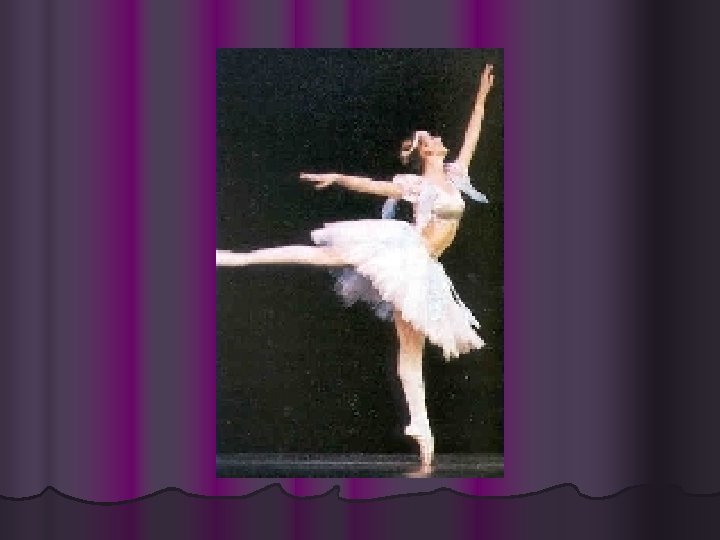
Discussion Question: l Is ballet a genuinely universal dance form?
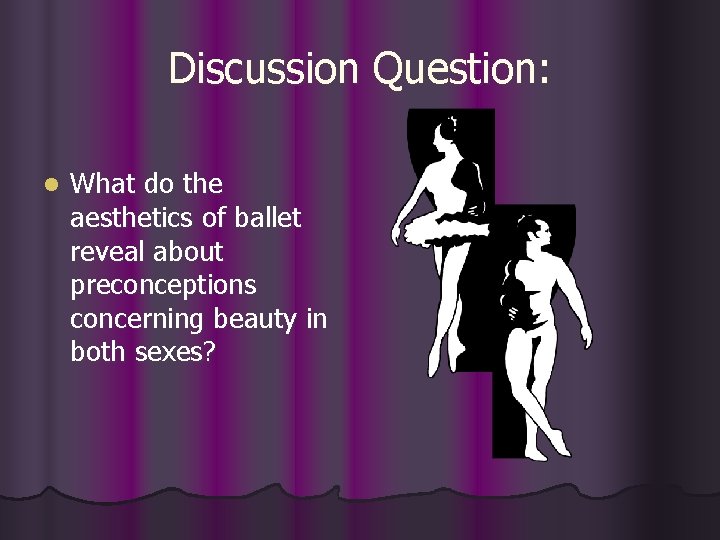
Discussion Question: l What do the aesthetics of ballet reveal about preconceptions concerning beauty in both sexes?
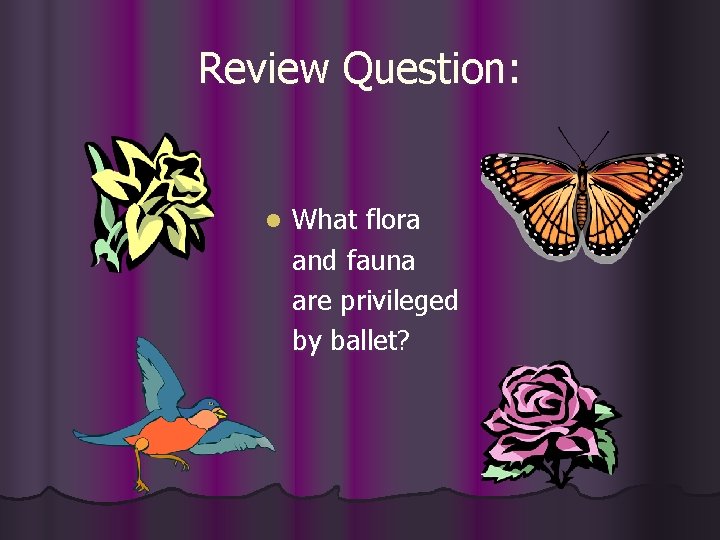
Review Question: l What flora and fauna are privileged by ballet?
Discussion Questions: l What are the main points of the article? l Do you see any weaknesses in the argument?
Concluding Question l What would you say to someone who might accuse the author of being simply “politically correct” and nothing more?
- Slides: 17