
An Alcohol Harm Reduction SelfHelp Manual H A

- Slides: 19
An Alcohol Harm Reduction Self-Help Manual H A from M Harm Moderate alcohol reduction Abstinence drinking Copyright © 2010 The HAMS Harm Reduction Network S Support group
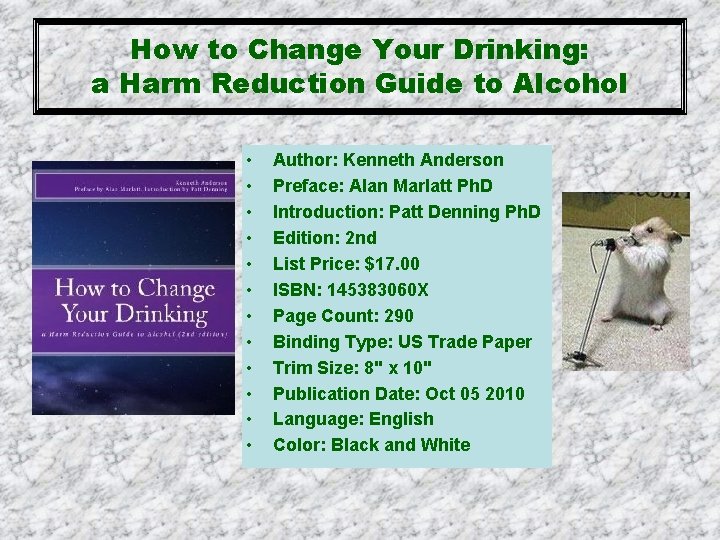
How to Change Your Drinking: a Harm Reduction Guide to Alcohol • • • Author: Kenneth Anderson Preface: Alan Marlatt Ph. D Introduction: Patt Denning Ph. D Edition: 2 nd List Price: $17. 00 ISBN: 145383060 X Page Count: 290 Binding Type: US Trade Paper Trim Size: 8" x 10" Publication Date: Oct 05 2010 Language: English Color: Black and White
Why Do We Need Harm Reduction for Alcohol? • Contrasting the different types of programs • Moderate drinking programs • Abstinence-only programs • The alcohol harm reduction approach
Moderate drinking programs • Moderate drinking programs are aimed at people with mild to moderate drinking problems • Moderate drinking programs have strict drinking limits (e. g. the NIAAA recommends a limit of 14 beers per week for men and 7 for women) – they do not allow for alcohol intoxication • Moderate drinking programs recommend that more severe problem drinkers or people who cannot maintain moderate limits seek an abstinence-only approach
Outcomes • Moderate drinking programs tend to have a good success rate with mild to moderate problem drinkers • Abstinence-only programs are a good fit for the people who choose them • However, the NIAAA tells us that only 7% of people with an alcohol problem will seek treatment, and studies show that 2/3 s of people drop out of 12 step treatment • WHAT ABOUT EVERYBODY ELSE? • DO WE SAY “ABSTAIN OR DIE”?
• The most appropriate approach for people who are failed by abstinence-only approaches or moderate drinking programs is a harm reduction approach • The more alcohol-related problems a person has, the greater the need for harm reduction – just as the more needles a person uses, the more the person needs clean needles • The same type of compassionate and pragmatic strategies used in harm reduction programs for drugs can be used for harm reduction for alcohol
Harm Reduction and Intoxication • A harm reduction approach to alcohol does not condemn recreational intoxication as a moral failing nor does it view recreational intoxication as a “disease” • A harm reduction approach to alcohol recognizes that some people choose to get intoxicated because they receive certain benefits from doing so • A harm reduction approach to alcohol seeks to minimize risks associated with alcohol use and alcohol intoxication
The HAMS Program • The HAMS program supports goals of safer drinking, reduced drinking, or quitting alcohol altogether • HAMS encourages individuals to pick goals which they feel are right for them and doable • HAMS encourages individuals to prioritize goals and eliminate the riskiest behaviors first • HAMS offers 17 optional elements which can be done in any order and a harm reduction toolbox to help people build their own individualized harm reduction programs
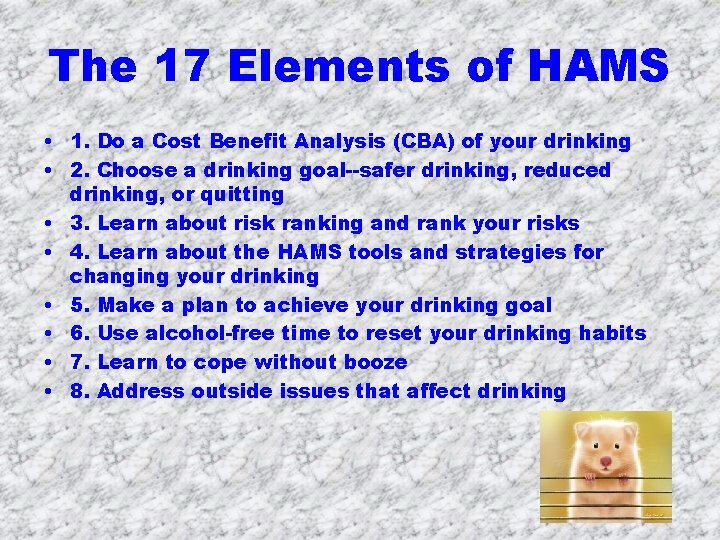
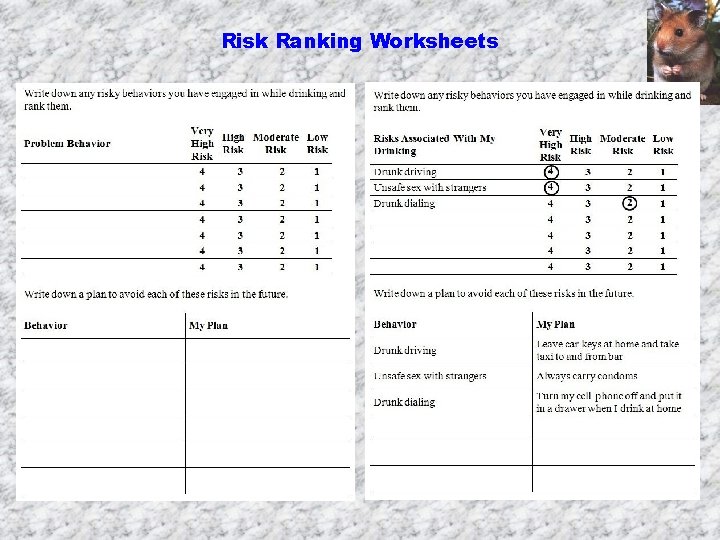
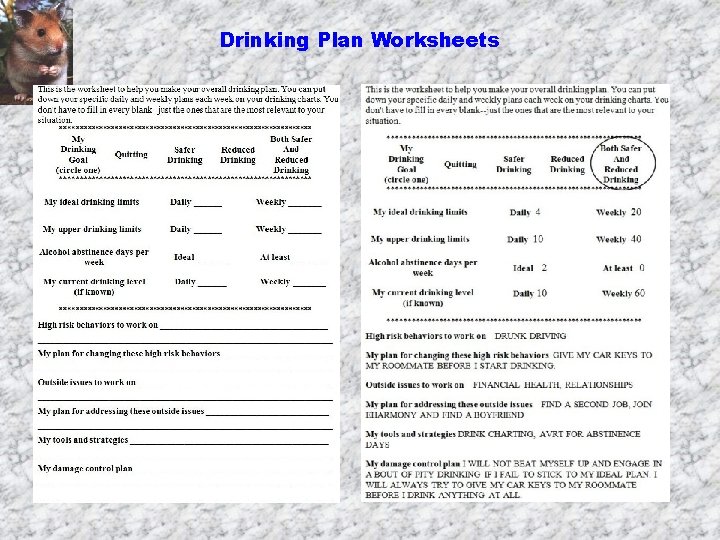
The 17 Elements of HAMS • 1. Do a Cost Benefit Analysis (CBA) of your drinking • 2. Choose a drinking goal--safer drinking, reduced drinking, or quitting • 3. Learn about risk ranking and rank your risks • 4. Learn about the HAMS tools and strategies for changing your drinking • 5. Make a plan to achieve your drinking goal • 6. Use alcohol-free time to reset your drinking habits • 7. Learn to cope without booze • 8. Address outside issues that affect drinking
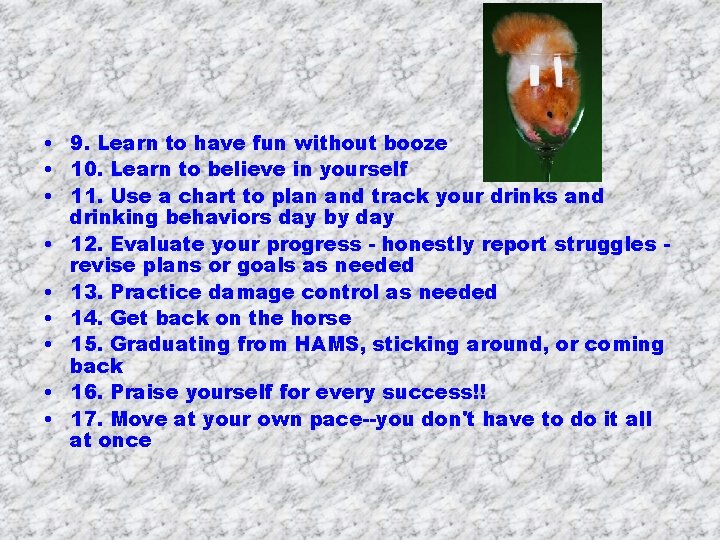
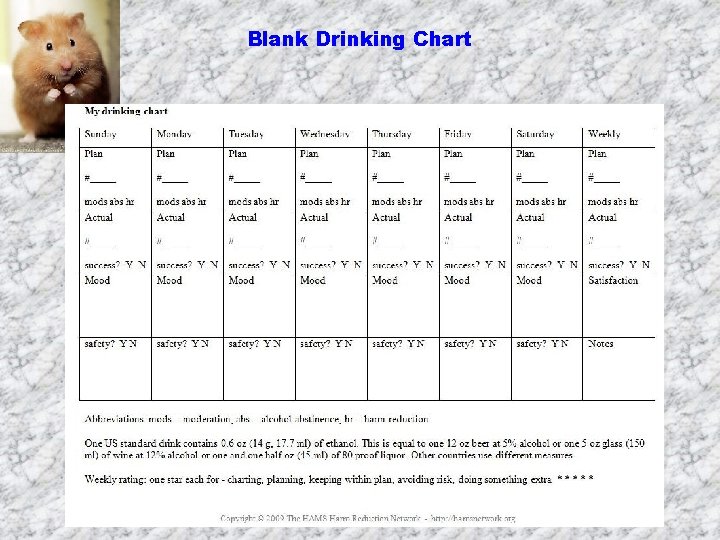
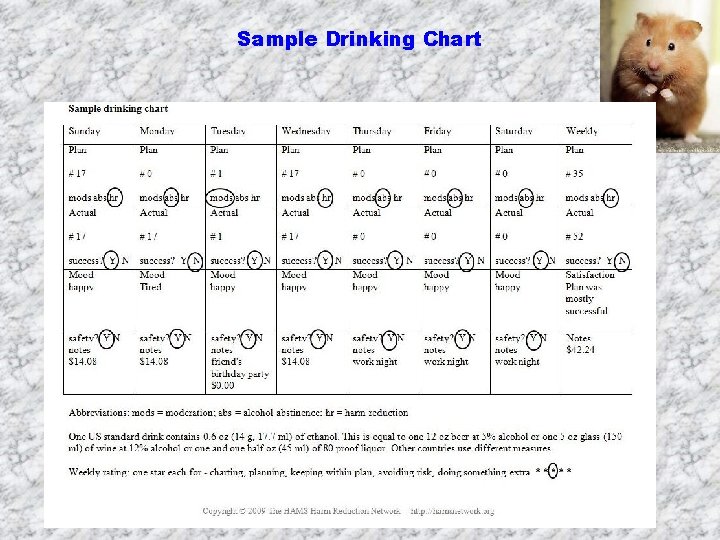
• 9. Learn to have fun without booze • 10. Learn to believe in yourself • 11. Use a chart to plan and track your drinks and drinking behaviors day by day • 12. Evaluate your progress - honestly report struggles revise plans or goals as needed • 13. Practice damage control as needed • 14. Get back on the horse • 15. Graduating from HAMS, sticking around, or coming back • 16. Praise yourself for every success!! • 17. Move at your own pace--you don't have to do it all at once
My Drinking Goal Worksheet
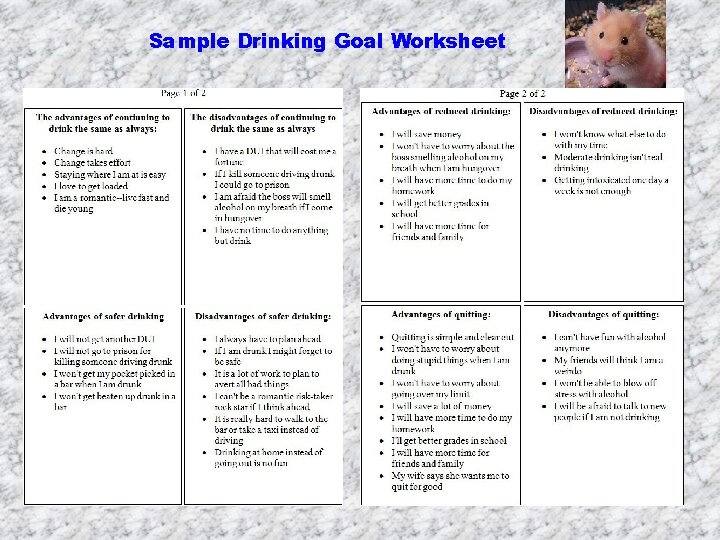
Sample Drinking Goal Worksheet
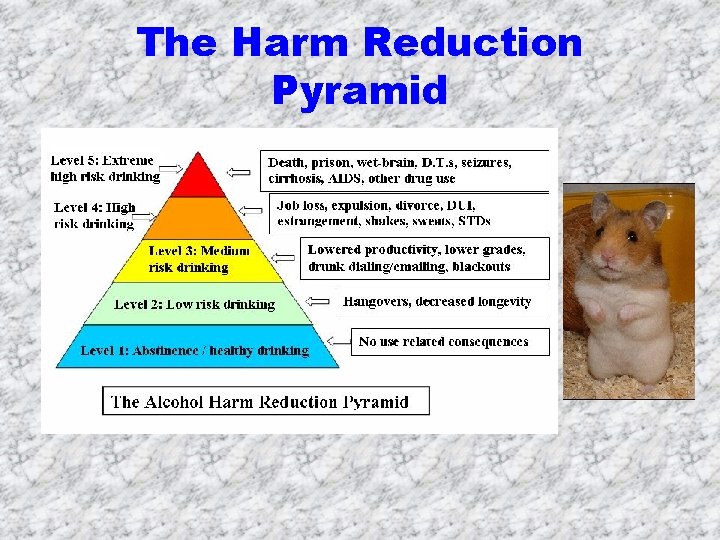
The Harm Reduction Pyramid
Risk Ranking Worksheets
Drinking Plan Worksheets
Blank Drinking Chart
Sample Drinking Chart
Sample Tools from the Toolbox • Cognitive Behavioral tools for abstinence or harm reduction • What causes blackouts and how to avoid them • What causes alcohol withdrawal and how to avoid it • Safe tapering information • Cannabis substitution for alcohol dependence • Dealing with a spouse’s drinking from a harm reduction perspective • Limiting cash to reduce drinking • Drinking at home to avoid alcohol related problems
Thank You!