
An airport is an aerodrome with extended facilities


- Slides: 18
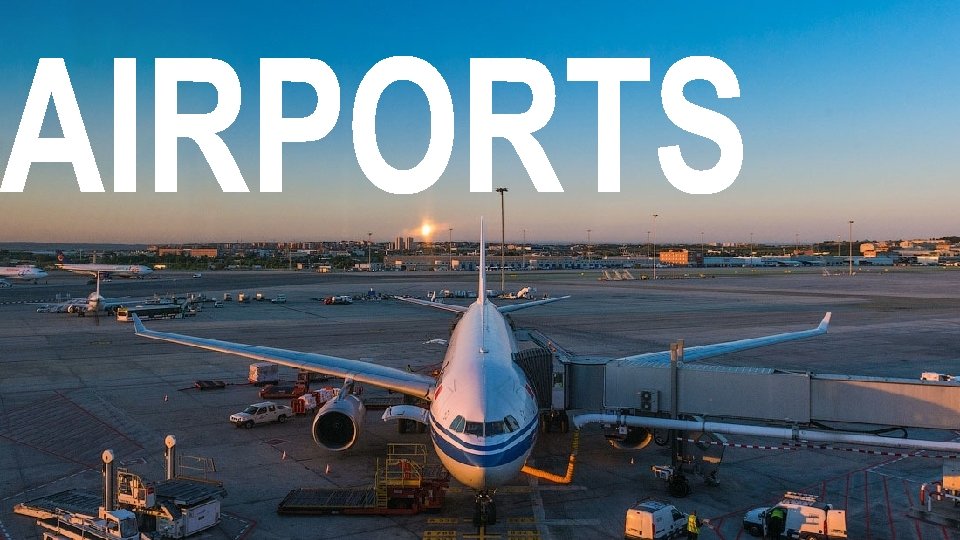
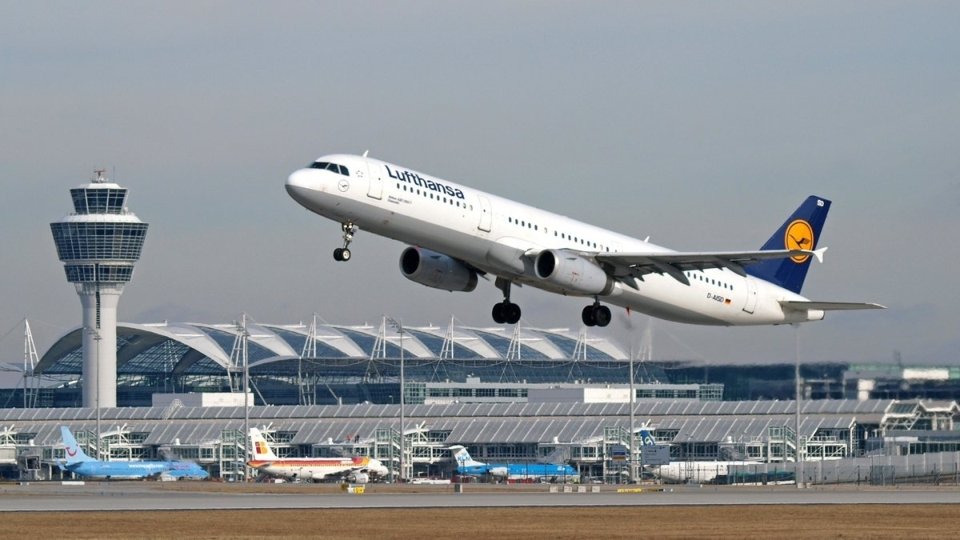
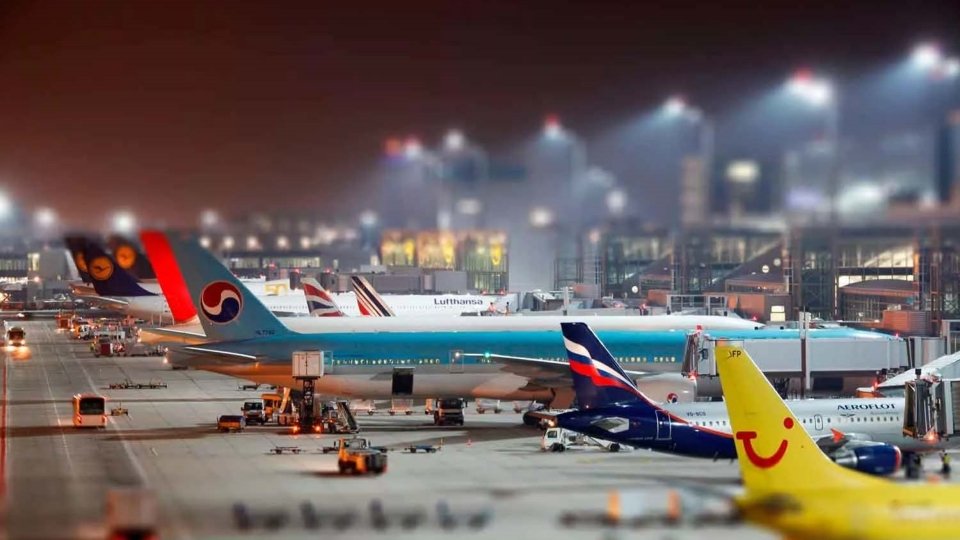
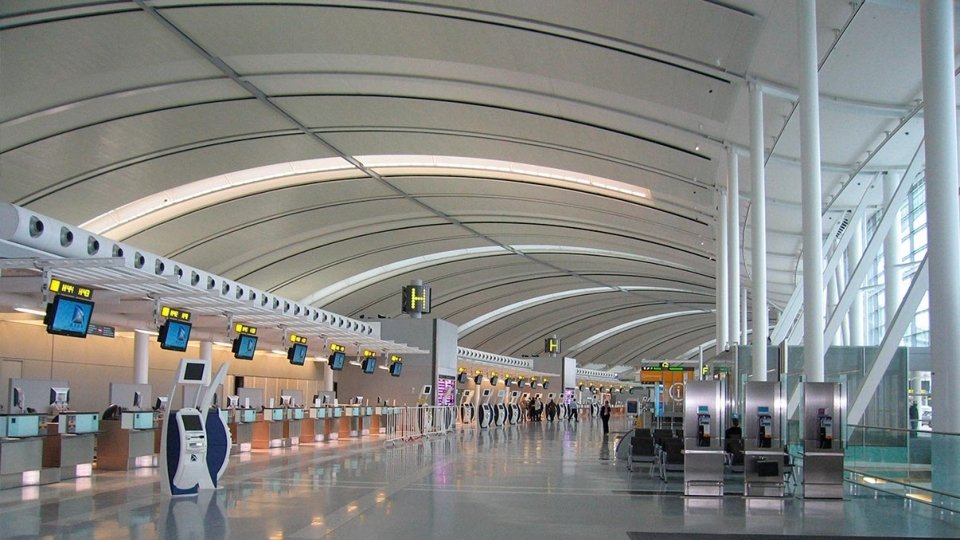
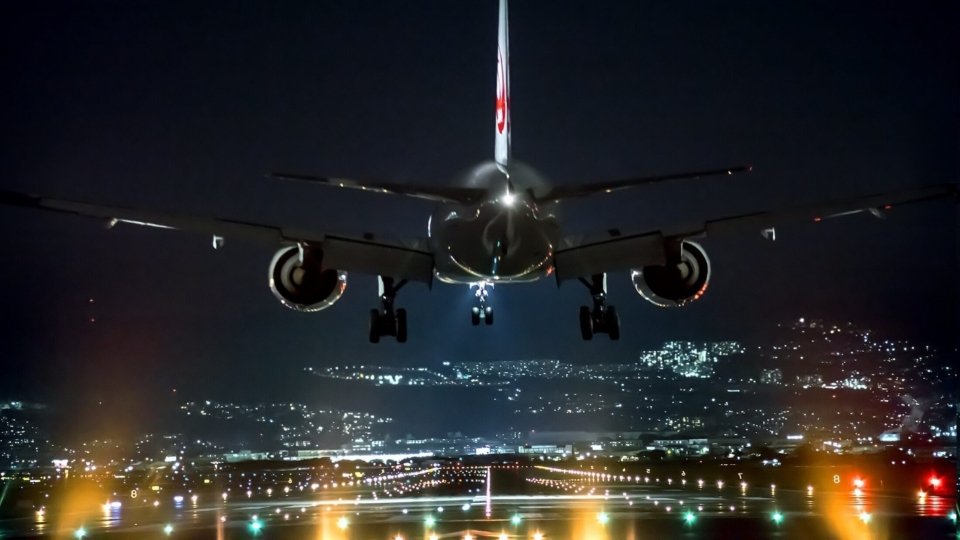
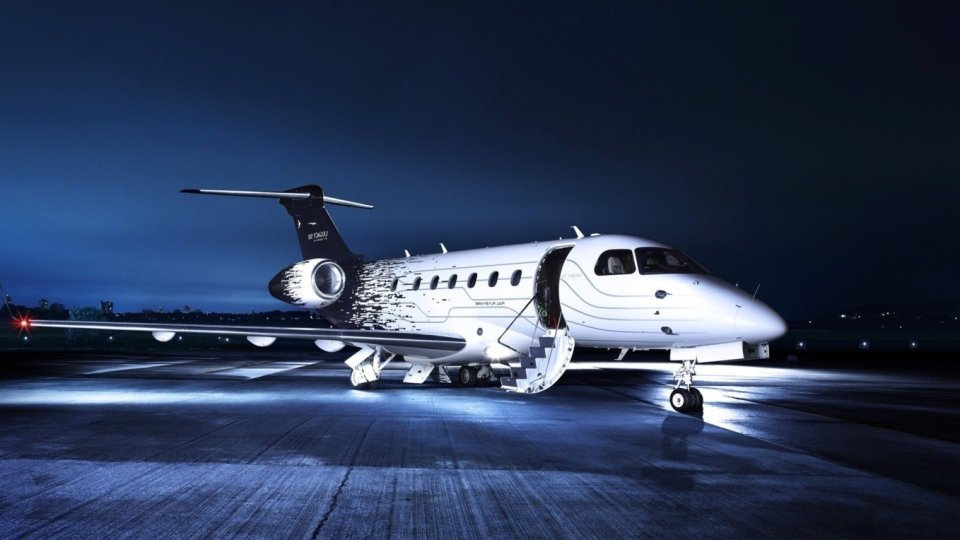
An airport is an aerodrome with extended facilities, mostly for commercial air transport. Airports often have facilities to store and maintain aircraft, and a control tower. An airport consists of a landing area, which comprises an aerially accessible open space including at least one operationally active surface such as a runway for a plane or a helipad, and often includes adjacent utility buildings such as control towers, hangars and terminals. Larger airports may have airport aprons, taxiway bridges, air traffic control centres, passenger facilities such as restaurants and lounges, and emergency services. In some countries, the US in particular, they also typically have one or more fixed-base operators, serving general aviation. An airport solely serving helicopters is called a heliport. An airport for use by seaplanes and amphibious aircraft is called a seaplane base. Such a base typically includes a stretch of open water for takeoffs and landings, and seaplane docks for tying-up. Hartsfield–Jackson Atlanta International Airport in USA is the busiest and biggest airport in the world.
Terminology The terms aerodrome, airfield, and airstrip may also be used to refer to airports, and the terms heliport, seaplane base, and STOLport refer to airports dedicated exclusively to helicopters, seaplanes, or short take-off and landing aircraft. In colloquial use in certain environments, the terms airport and aerodrome are often interchanged. However, in general, the term airport may imply or confer a certain stature upon the aviation facility that other aerodromes may not have achieved. In some jurisdictions, airport is a legal term of art reserved exclusively for those aerodromes certified or licensed as airports by the relevant national aviation authority after meeting specified certification criteria or regulatory requirements. That is to say, all airports are aerodromes, but not all aerodromes are airports. In jurisdictions where there is no legal distinction between aerodrome and airport, which term to use in the name of an aerodrome may be a commercial decision. In United States technical/legal usage, landing area is used instead of aerodrome, and airport means "a landing area used regularly by aircraft for receiving or discharging passengers or cargo".
Management Smaller or less-developed airfields, which represent the vast majority, often have a single runway shorter than 1, 000 m (3, 300 ft). Larger airports for airline flights generally have paved runways of 2, 000 m (6, 600 ft) or longer. Skyline Airport in Inkom, Idaho has a runway that is only 122 m (400 ft) long. In the United States, the minimum dimensions for dry, hard landing fields are defined by the FAR Landing And Takeoff Field Lengths. These include considerations for safety margins during landing and takeoff. The longest public-use runway in the world is at Qamdo Bamda Airport in China. It has a length of 5, 500 m (18, 045 ft). The world's widest paved runway is at Ulyanovsk Vostochny Airport in Russia and is 105 m (344 ft) wide. As of 2009, CIA stated that there were approximately 44, 000 ". . . airports or airfields recognizable from the air" around the world, including 15, 095 in the US, the US having the most in the world.
Airport ownership and operation Most of the world's large airports are owned by local, regional, or national government bodies who then lease the airport to private corporations who oversee the airport's operation. For example, in the United Kingdom the state-owned British Airports Authority originally operated eight of the nation's major commercial airports – it was subsequently privatized in the late 1980 s, and following its takeover by the Spanish Ferrovial consortium in 2006, has been further divested and downsized to operating just Heathrow now. Germany's Frankfurt Airport is managed by the quasi-private firm Fraport. While in India GMR Group operates, through joint ventures, Indira Gandhi International Airport and Rajiv Gandhi International Airport. Bengaluru International Airport and Chhatrapati Shivaji International Airport are controlled by GVK Group. The rest of India's airports are managed by the Airports Authority of India. In Pakistan nearly all civilian airports are owned and operated by the Pakistan Civil Aviation Authority except for Sialkot International Airport which has the distinction of being the first privately owned public airport in Pakistan and South Asia.
In the United States, commercial airports are generally operated directly by government entities or government-created airport authorities (also known as port authorities), such as the Los Angeles World Airports authority that oversees several airports in the Greater Los Angeles area, including Los Angeles International Airport In Canada, the federal authority, Transport Canada, divested itself of all but the remotest airports in 1999/2000. Now most airports in Canada are owned and operated by individual legal authorities or are municipally owned. Many U. S. airports still lease part or all of their facilities to outside firms, who operate functions such as retail management and parking. In the U. S. , all commercial airport runways are certified by the FAA under the Code of Federal Regulations Title 14 Part 139, "Certification of Commercial Service Airports" but maintained by the local airport under the regulatory authority of the FAA. Despite the reluctance to privatize airports in the US (despite the FAA sponsoring a privatization program since 1996), the government-owned, contractor-operated (GOCO) arrangement is the standard for the operation of commercial airports in the rest of the world.
Airport funding The Airport & Airway Trust Fund (AATF) was created by the Airport and Airway Development in 1970 which finances aviation programs in the United States. Airport Improvement Program (AIP), Facilities and Equipment (F&E), and Research, Engineering, and Development (RE&D) are three major accounts of Federal Aviation Administration which are financed by the AATF, as well as pays for the FAA's Operation and Maintenance (O&M) account. The funding of these accounts are dependent on the taxes the airports generate of revenues. Passenger tickets, fuel, and cargo tax are the taxes that are paid by the passengers and airlines help fund these accounts. Airport revenue Airports revenues are divided into three major parts: Aeronautical revenue, Nonaeronautical revenue, and Non-operating revenue. Aeronautical revenue makes up 56%, Non-aeronautical revenue makes up 40%, and Non-operating revenue makes up 4% of the total revenue of airports.
Aeronautical revenue are generated through the airline rents, landing fees, passenger service fees, parking fees and hangar fees. Landing fees are charged per aircraft for landing the airplane in the airport property. Landing fees are calculated through the landing weight and the size of the aircraft which varies but most of the airports have a fixed rate and a charge extra for extra weight. Passenger service fees are charges per passengers for the facilities used on a flight like water, food, wifi and shows which is paid while paying for an airline ticket. Aircraft parking is also a major revenue source for airports. Aircraft are parked for a certain amount of time before or after takeoff and have to pay to park there. Every airport has his own rates of parking but at John F Kennedy airport in New York charges $45 per hour for the plane of 100, 000 pounds and the price increases with weight.
Non-aeronautical revenue is gained through things other than aircraft operations. It includes lease revenue from compatible land-use development, nonaeronautical building leases, retail and concession sales, rental car operations, parking and in-airport advertising. Concession revenue is one big part of nonaeronautical revenue airports makes through Duty Free, Bookstores, Restaurants and money exchange. Car parking is a growing source of revenue for airports, as more people park in the parking facilities of the airport. O'Hare International Airport in Chicago charges $2 per hour for every car.
Landside and airside areas Airports are divided into landside and airside areas. The landside area is open to the public, while access to the airside area is tightly controlled. The airside area includes all parts of the airport around the aircraft, and the parts of the buildings that are accessible only to passengers and staff. Passengers and staff must be checked by security before being permitted to enter the airside area. Conversely, passengers arriving from an international flight must pass through border control and customs to access the landside area, where they can exit the airport. Many major airports will issue a secure keycard called an airside pass to employees, as some roles require employees to frequently move back and forth between landside and airside as part of their duties.