
An Airline Crash Investigation Physics vs Lawyers Michael





- Slides: 51
An Airline Crash Investigation: Physics vs. Lawyers Michael Dubson (SSP class of 1973) Physics Dept U. Colorado at Boulder
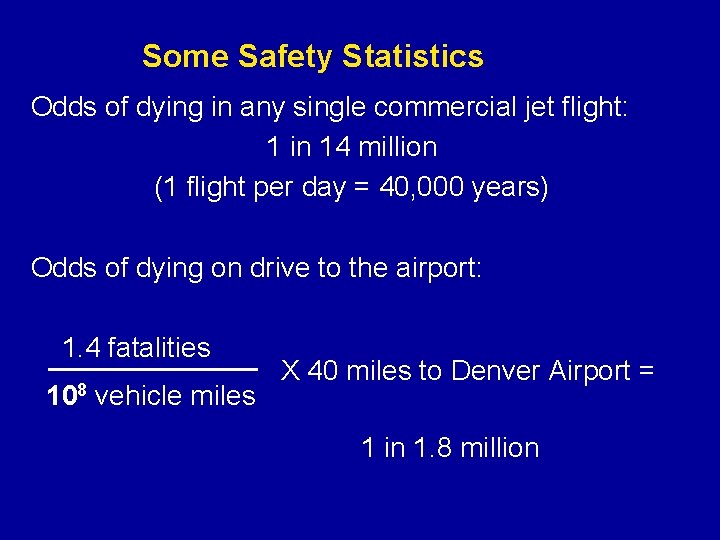
Some Safety Statistics Odds of dying in any single commercial jet flight: 1 in 14 million (1 flight per day = 40, 000 years) Odds of dying on drive to the airport: 1. 4 fatalities 108 vehicle miles X 40 miles to Denver Airport = 1 in 1. 8 million
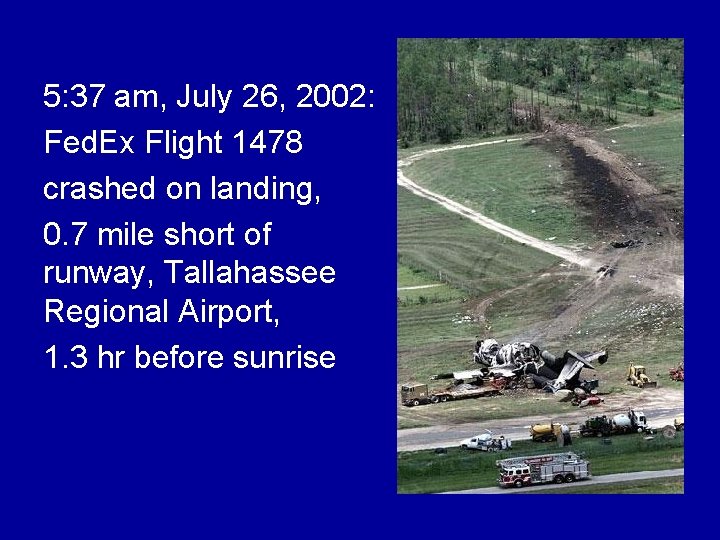
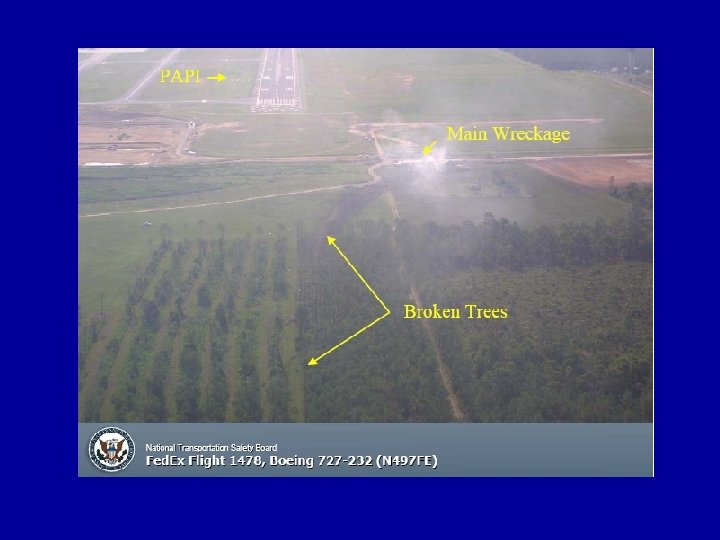
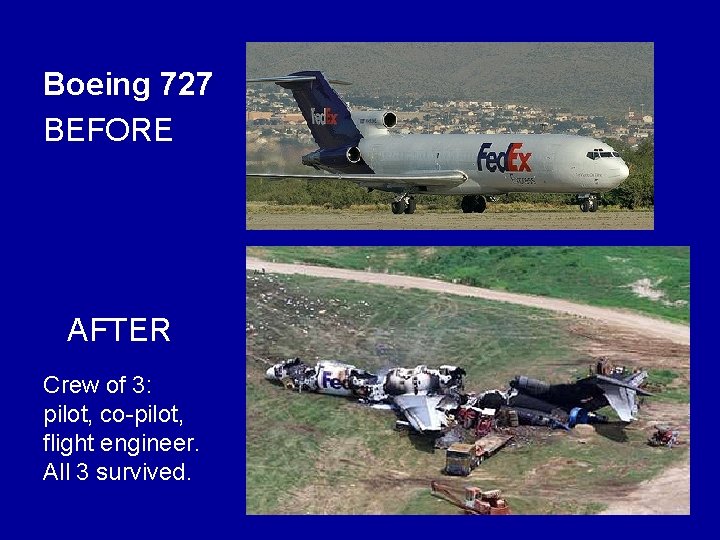
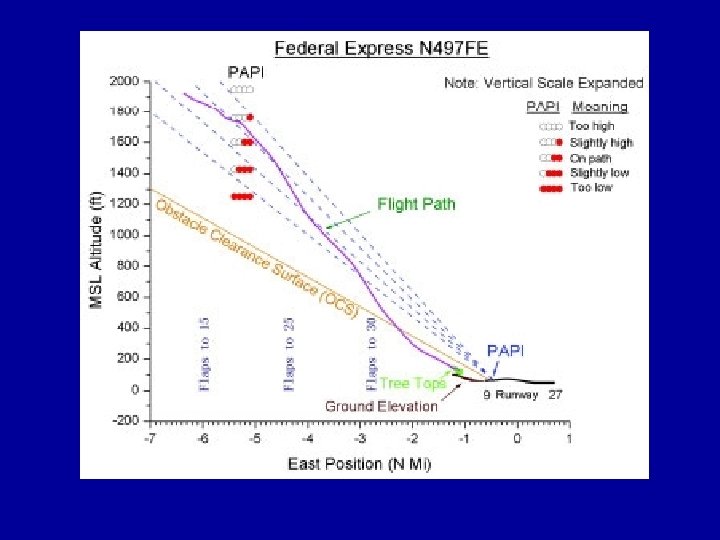
5: 37 am, July 26, 2002: Fed. Ex Flight 1478 crashed on landing, 0. 7 mile short of runway, Tallahassee Regional Airport, 1. 3 hr before sunrise
Boeing 727 BEFORE AFTER Crew of 3: pilot, co-pilot, flight engineer. All 3 survived.
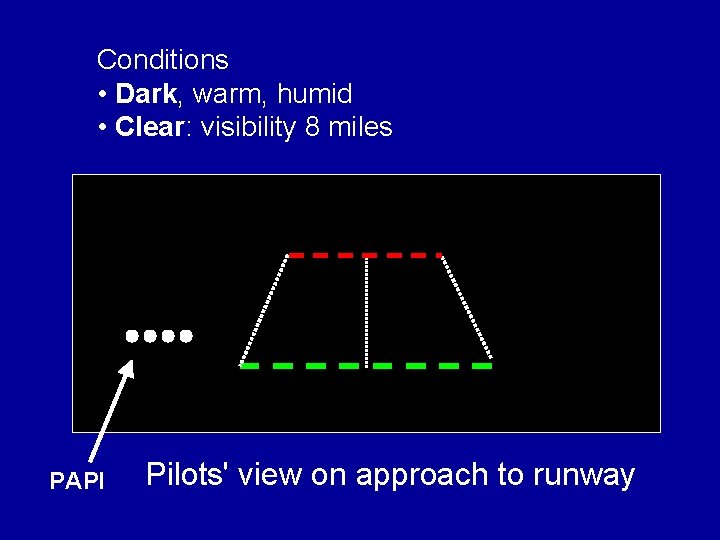
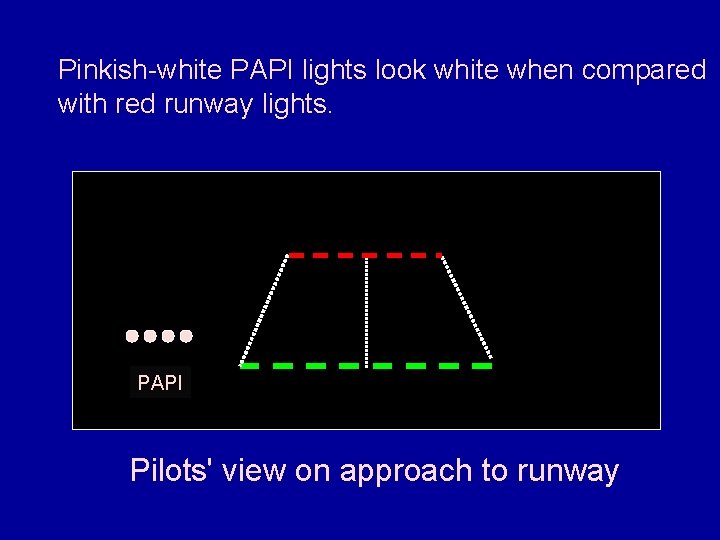
Conditions • Dark, warm, humid • Clear: visibility 8 miles PAPI Pilots' view on approach to runway
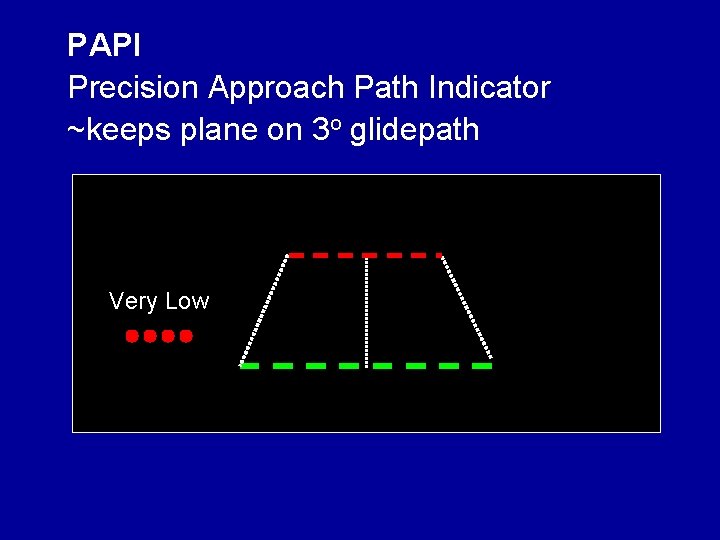
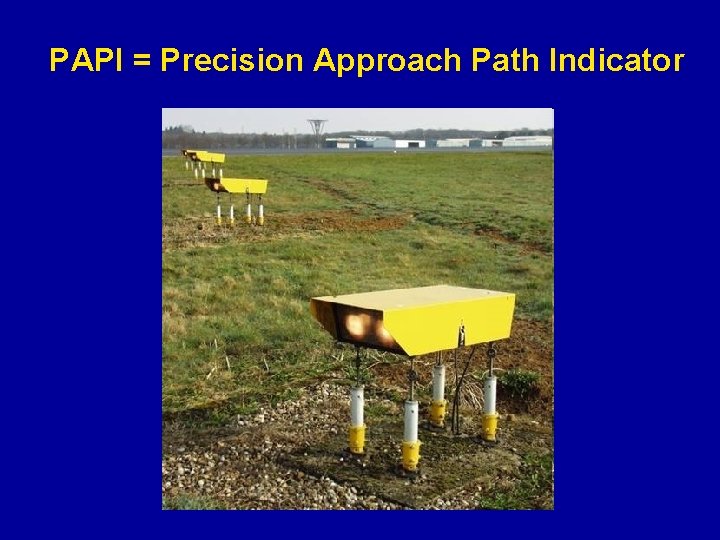
PAPI Precision Approach Path Indicator ~keeps plane on 3 o glidepath Very Good High Low High
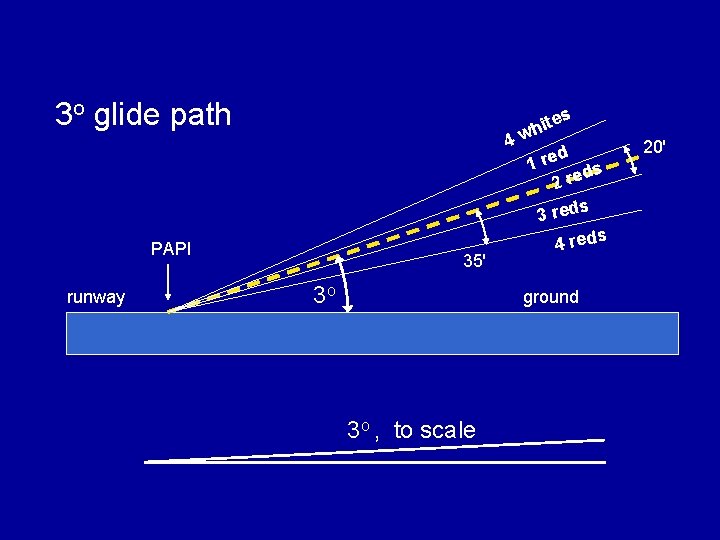
3 o glide path es 4 PAPI runway 35' 3 o it wh d 1 re ds 2 re 3 reds 4 reds ground 3 o , to scale 20'
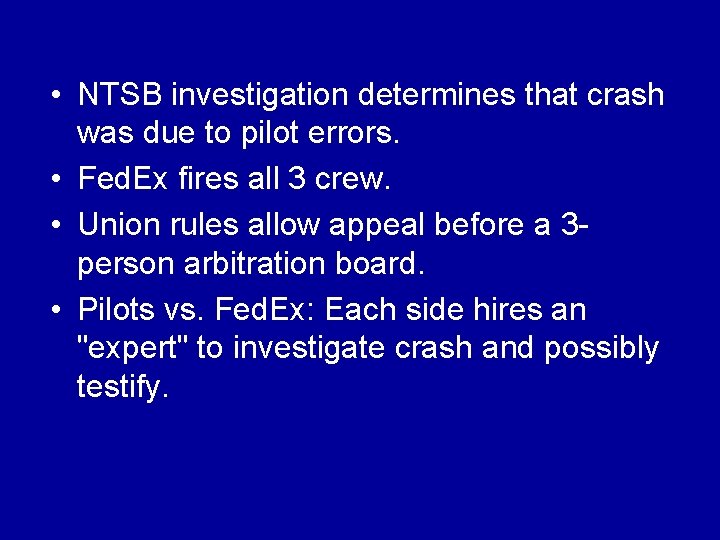
• NTSB investigation determines that crash was due to pilot errors. • Fed. Ex fires all 3 crew. • Union rules allow appeal before a 3 person arbitration board. • Pilots vs. Fed. Ex: Each side hires an "expert" to investigate crash and possibly testify.
PAPI = Precision Approach Path Indicator
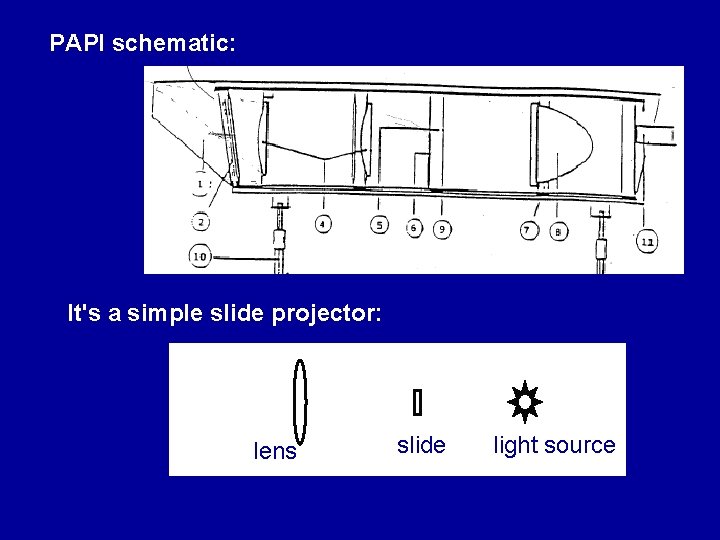
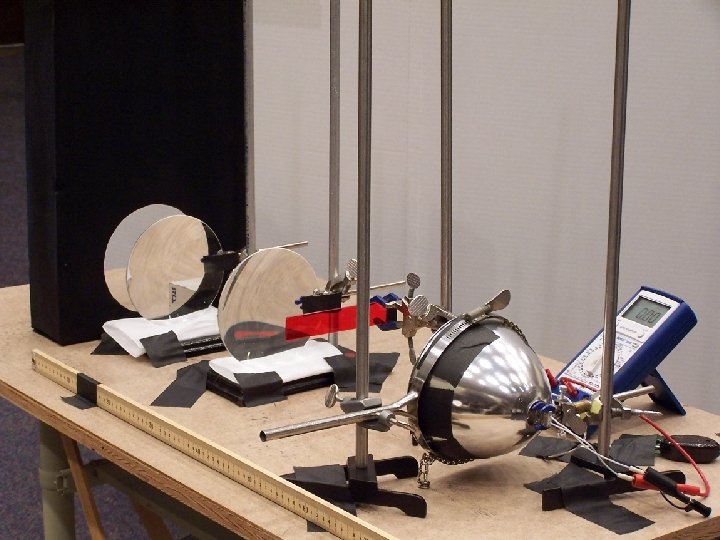
PAPI schematic: It's a simple slide projector: lens slide light source
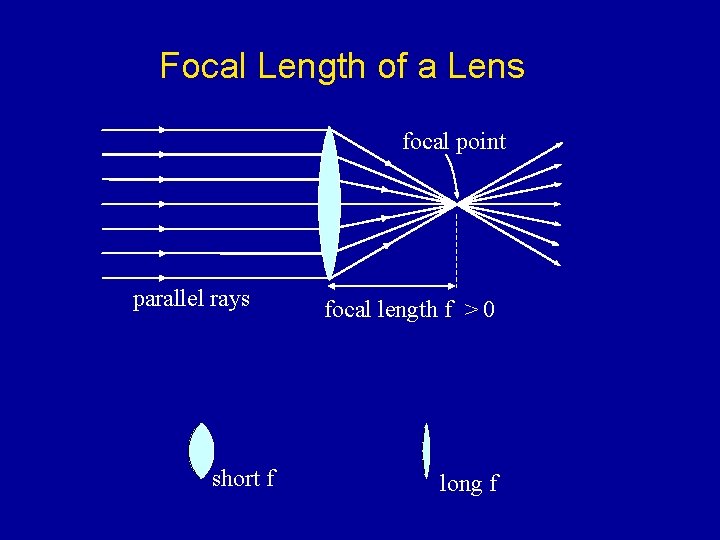
Focal Length of a Lens focal point parallel rays short f focal length f > 0 long f
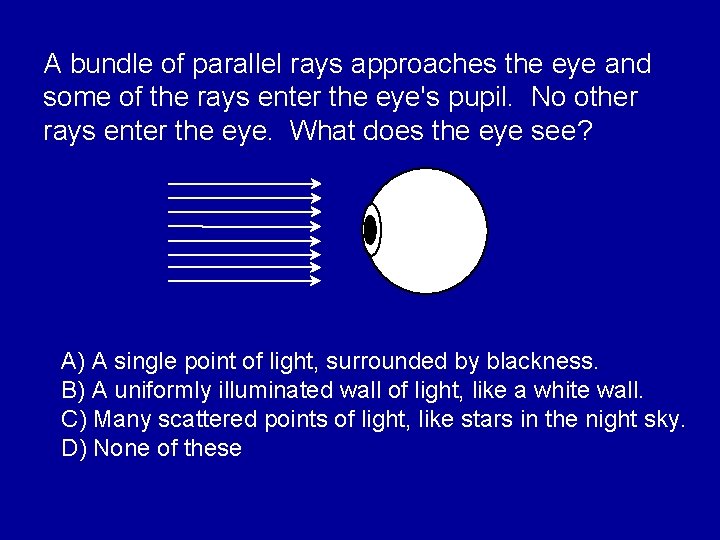
A bundle of parallel rays approaches the eye and some of the rays enter the eye's pupil. No other rays enter the eye. What does the eye see? Eye A) A single point of light, surrounded by blackness. B) A uniformly illuminated wall of light, like a white wall. C) Many scattered points of light, like stars in the night sky. D) None of these
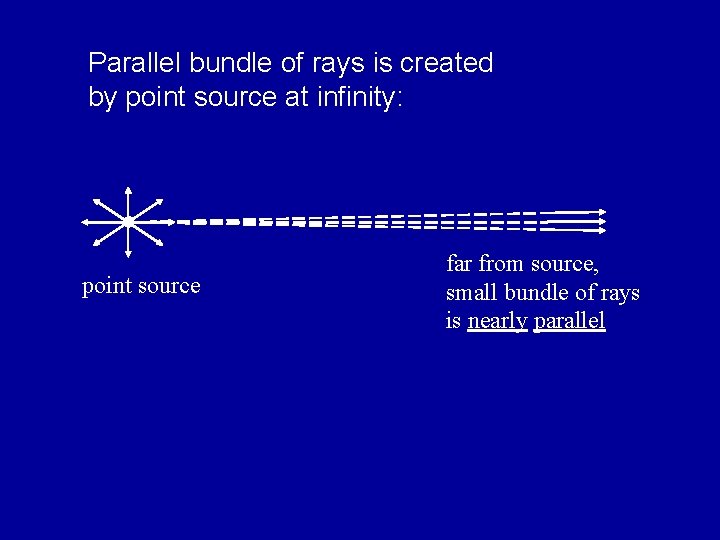
Parallel bundle of rays is created by point source at infinity: point source far from source, small bundle of rays is nearly parallel
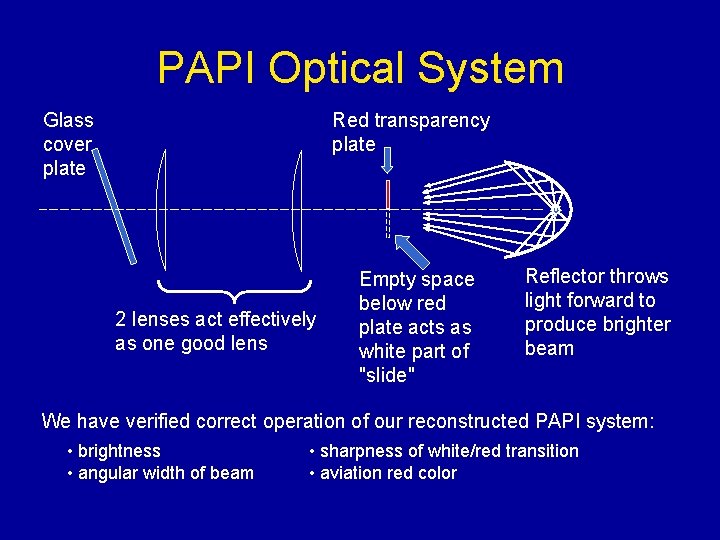
PAPI Optical System Glass cover plate Red transparency plate 2 lenses act effectively as one good lens Empty space below red plate acts as white part of "slide" Reflector throws light forward to produce brighter beam We have verified correct operation of our reconstructed PAPI system: • brightness • angular width of beam • sharpness of white/red transition • aviation red color
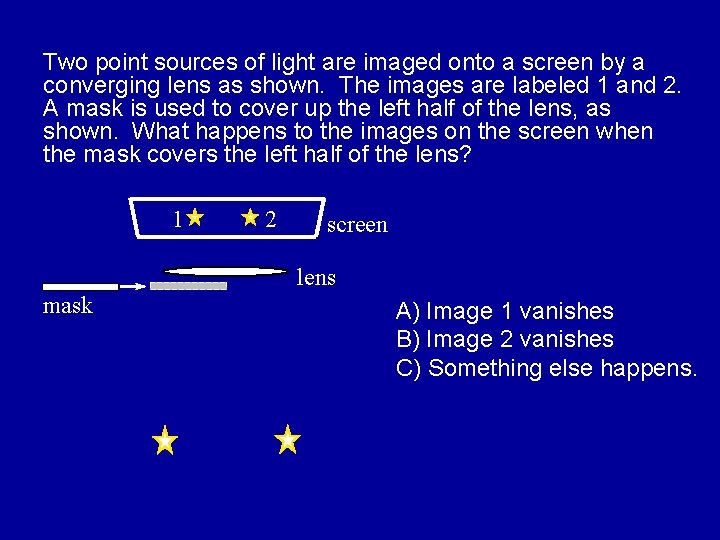
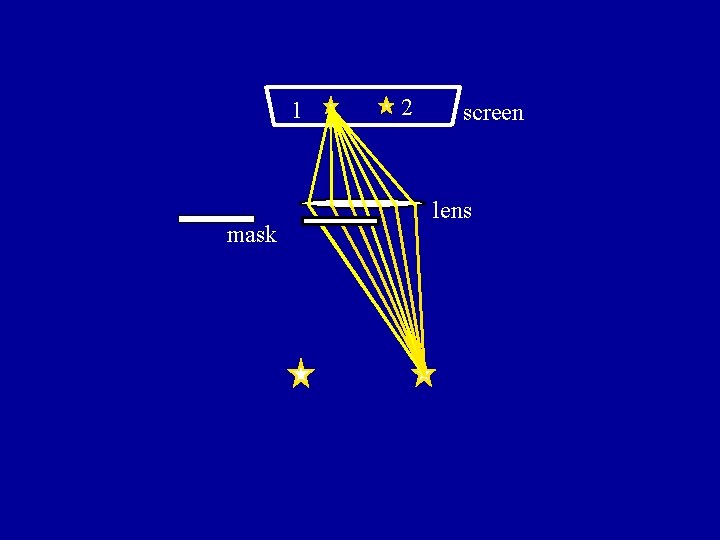
Two point sources of light are imaged onto a screen by a converging lens as shown. The images are labeled 1 and 2. A mask is used to cover up the left half of the lens, as shown. What happens to the images on the screen when the mask covers the left half of the lens? 1 2 screen lens mask A) Image 1 vanishes B) Image 2 vanishes C) Something else happens.
1 mask 2 screen lens
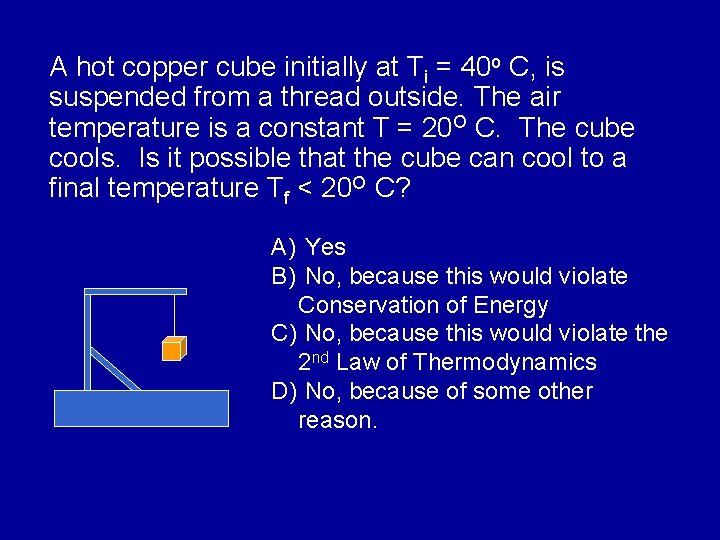
A hot copper cube initially at Ti = 40 o C, is suspended from a thread outside. The air temperature is a constant T = 20 O C. The cube cools. Is it possible that the cube can cool to a final temperature Tf < 20 O C? A) Yes B) No, because this would violate Conservation of Energy C) No, because this would violate the 2 nd Law of Thermodynamics D) No, because of some other reason.
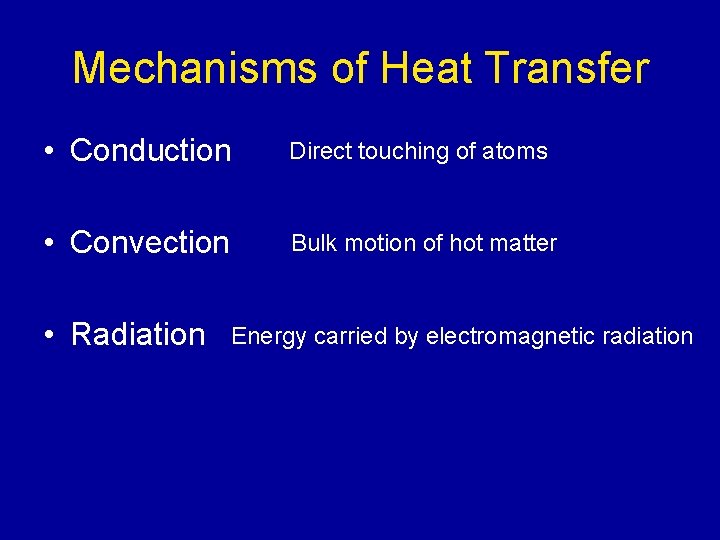
Mechanisms of Heat Transfer • Conduction Direct touching of atoms • Convection Bulk motion of hot matter • Radiation Energy carried by electromagnetic radiation
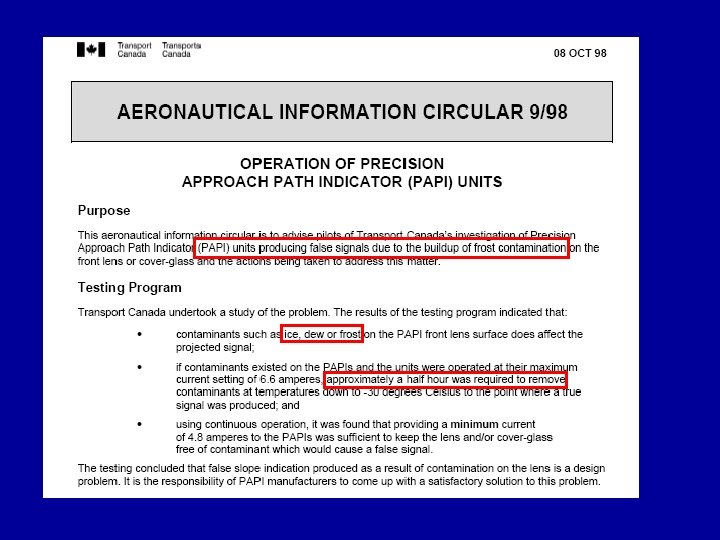
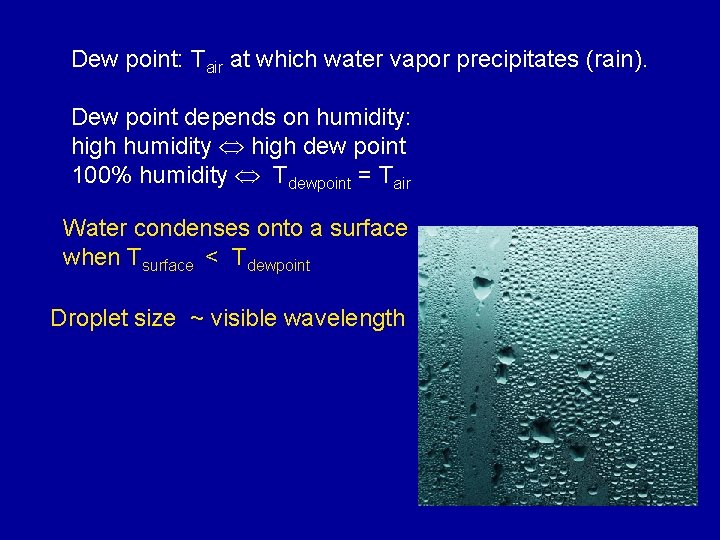
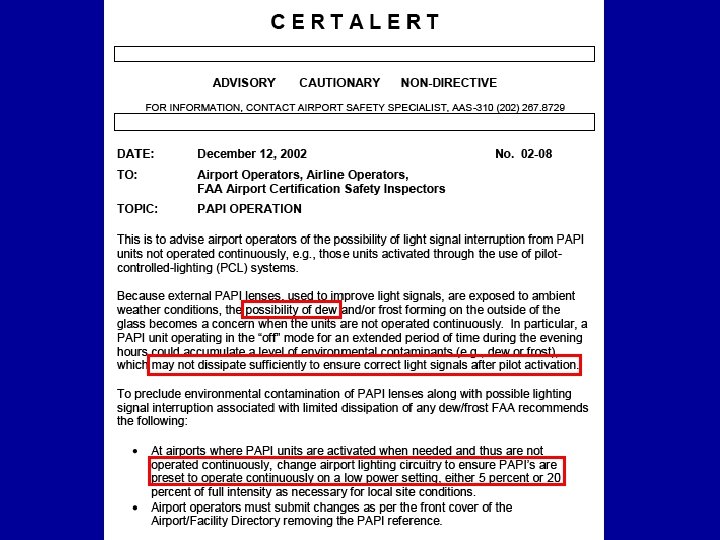
Dew point: Tair at which water vapor precipitates (rain). Dew point depends on humidity: high humidity high dew point 100% humidity Tdewpoint = Tair Water condenses onto a surface when Tsurface < Tdewpoint Droplet size ~ visible wavelength
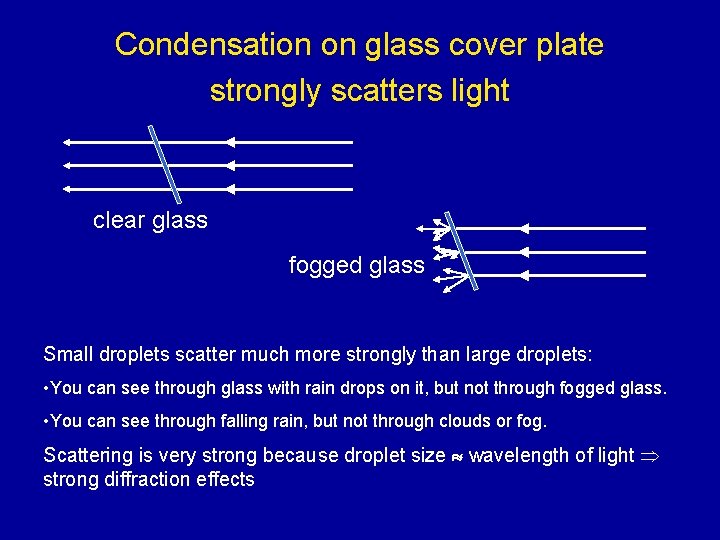
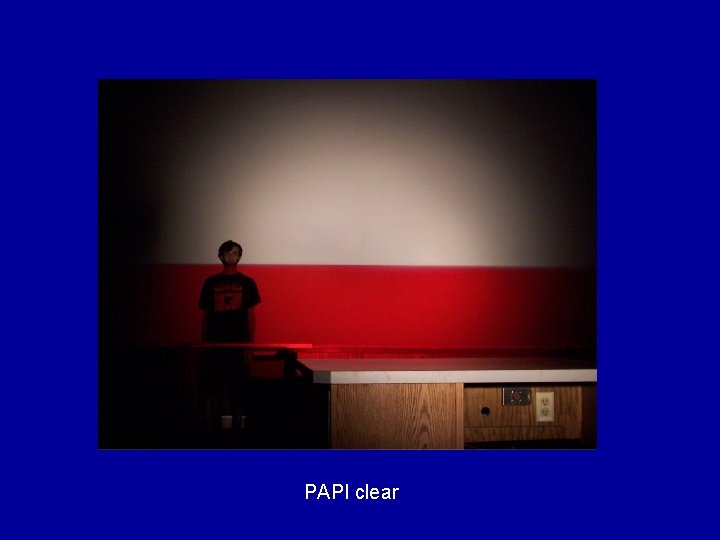
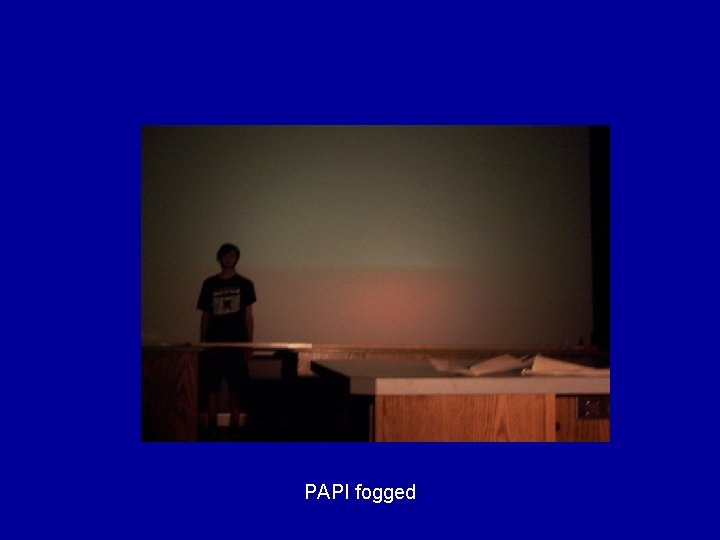
Condensation on glass cover plate strongly scatters light clear glass fogged glass Small droplets scatter much more strongly than large droplets: • You can see through glass with rain drops on it, but not through fogged glass. • You can see through falling rain, but not through clouds or fog. Scattering is very strong because droplet size wavelength of light strong diffraction effects
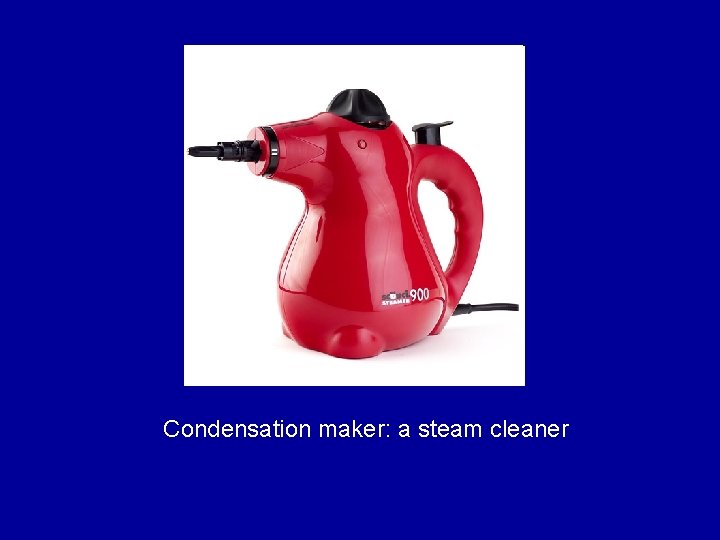
Condensation maker: a steam cleaner
PAPI clear
PAPI fogged
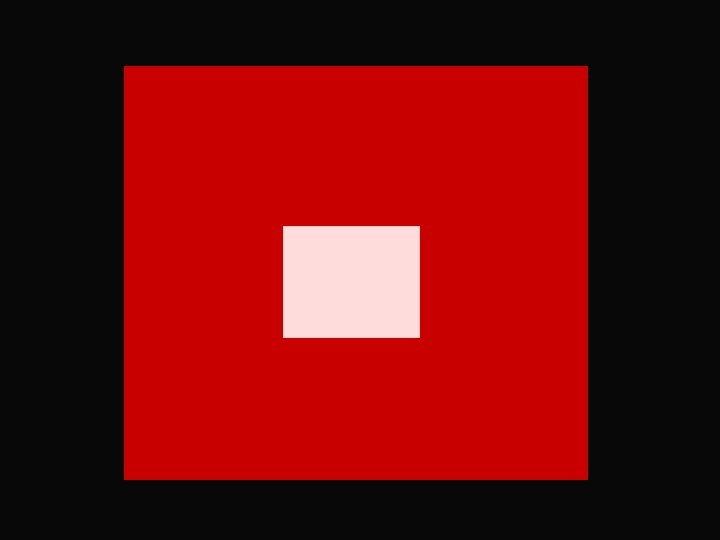
Human Perception of Color The human brain perceives color by comparing different colors in the visual field.
Pinkish-white PAPI lights look white when compared with red runway lights. PAPI Pilots' view on approach to runway
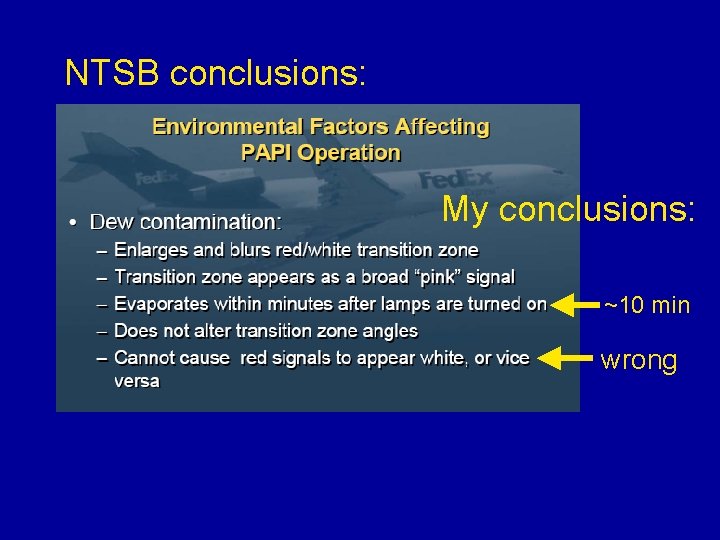
Conditions were ideal for condensation: • 100% humidity (Temperature = dew point) • Clear night sky: Objects cool by radiation. • Time is just before dawn: PAPI and surroundings have had maximum time to cool. • PAPI turned on remotely by pilots only 3 minutes before landing. PAPI front plate surface takes ~ 10 minutes to defog. • Airport employees reported condensation on windows.
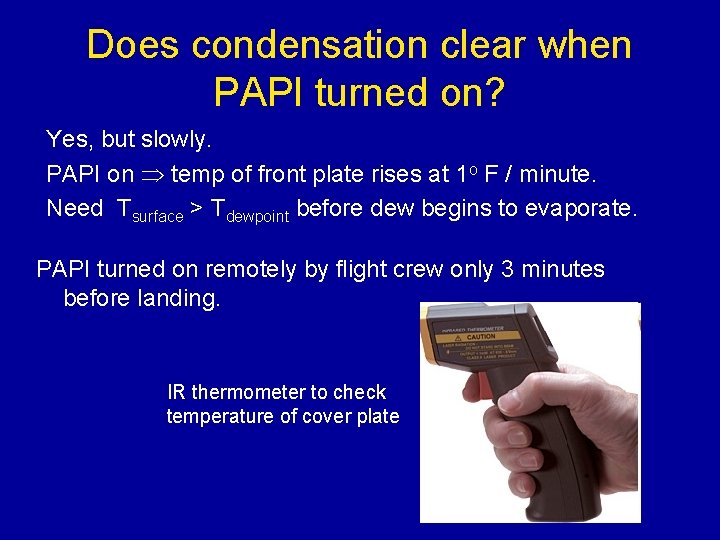
Does condensation clear when PAPI turned on? Yes, but slowly. PAPI on temp of front plate rises at 1 o F / minute. Need Tsurface > Tdewpoint before dew begins to evaporate. PAPI turned on remotely by flight crew only 3 minutes before landing. IR thermometer to check temperature of cover plate
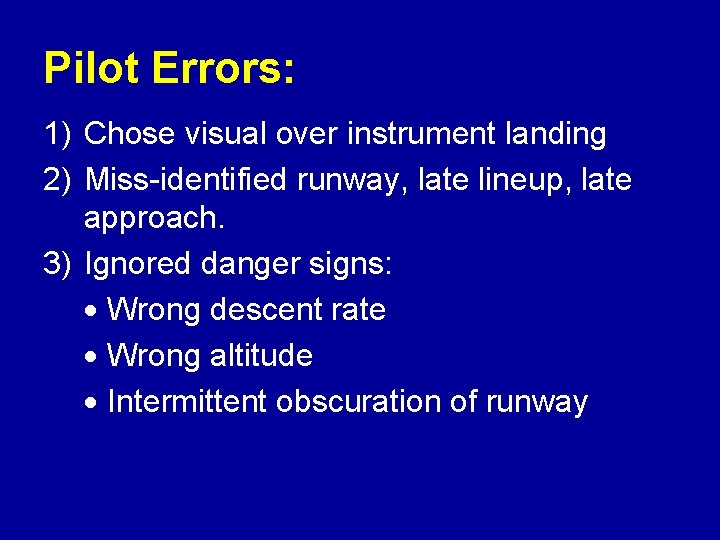
Pilot Errors: 1) Chose visual over instrument landing 2) Miss-identified runway, late lineup, late approach. 3) Ignored danger signs: Wrong descent rate Wrong altitude Intermittent obscuration of runway
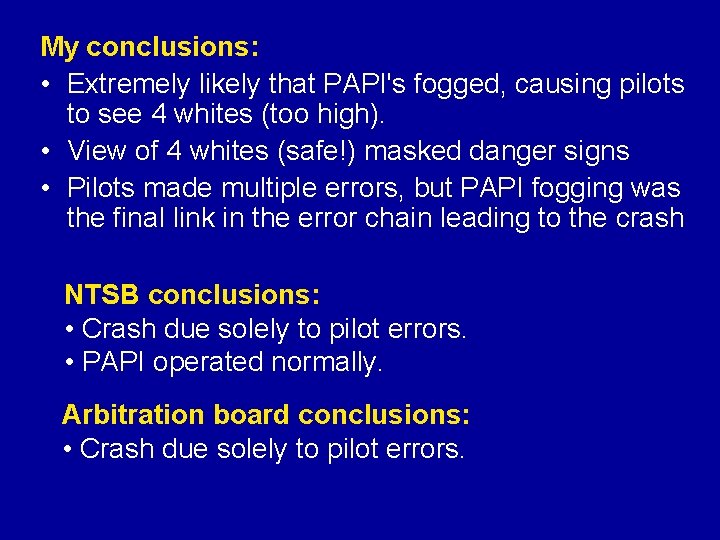
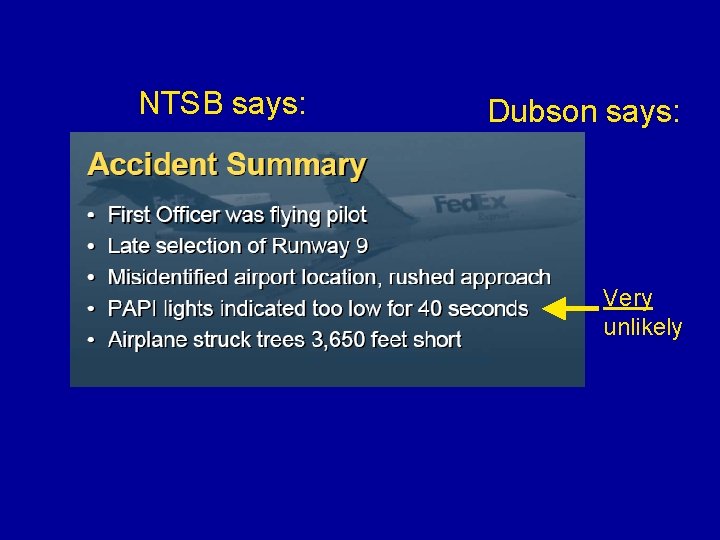
My conclusions: • Extremely likely that PAPI's fogged, causing pilots to see 4 whites (too high). • View of 4 whites (safe!) masked danger signs • Pilots made multiple errors, but PAPI fogging was the final link in the error chain leading to the crash NTSB conclusions: • Crash due solely to pilot errors. • PAPI operated normally. Arbitration board conclusions: • Crash due solely to pilot errors.
Clash of World Views: Physicist World vs. Lawyer World • I was not asked to testify because my conclusions contradicted pilots' testimony that they saw 2 whites / 2 reds on PAPI. Physics World: human memory is the least reliable form of evidence Lawyer World: clients' testimony is the most reliable form of evidence.
NTSB Investigation Team vs. Me
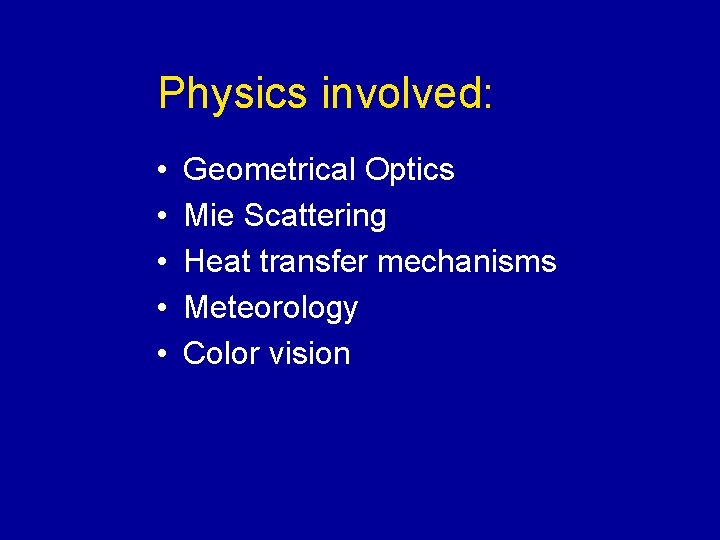
Physics involved: • • • Geometrical Optics Mie Scattering Heat transfer mechanisms Meteorology Color vision
NTSB conclusions: My conclusions: ~10 min wrong
NTSB says: Dubson says: Very unlikely
The Philosophy of Science The final test of the validity of any idea is experiment.