
An Active Traffic Splitter Architecture for Intrusion Detection

- Slides: 17
An Active Traffic Splitter Architecture for Intrusion Detection Ioannis Charitakis Institute of Computer Science Foundation of Research And Technology Hellas, FORTH Joint work with: Evangelos Markatos, FORTH Kostas Anagnastakis, UPENN MASCOTS 2003
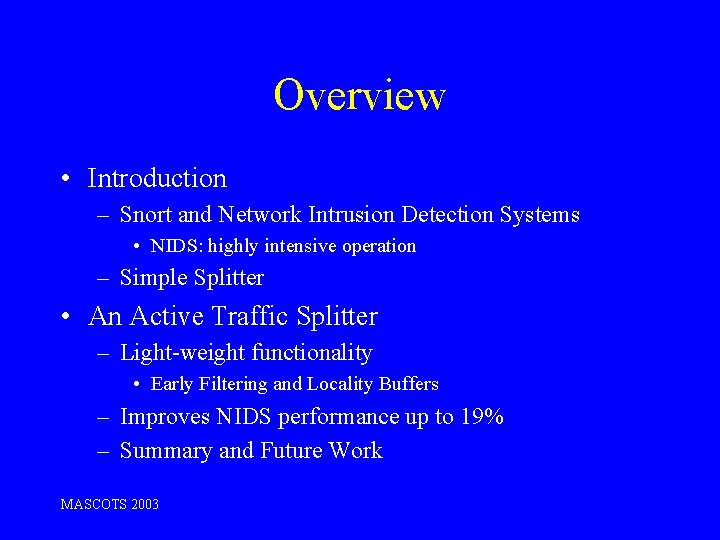
Overview • Introduction – Snort and Network Intrusion Detection Systems • NIDS: highly intensive operation – Simple Splitter • An Active Traffic Splitter – Light-weight functionality • Early Filtering and Locality Buffers – Improves NIDS performance up to 19% – Summary and Future Work MASCOTS 2003
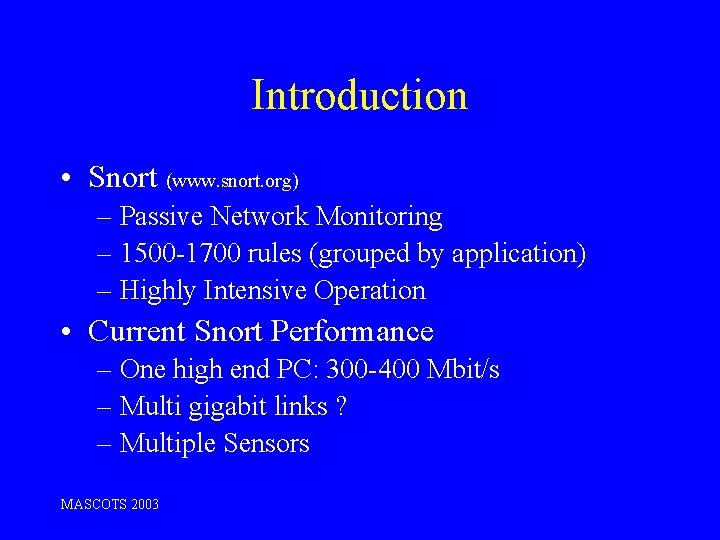
Introduction • Snort (www. snort. org) – Passive Network Monitoring – 1500 -1700 rules (grouped by application) – Highly Intensive Operation • Current Snort Performance – One high end PC: 300 -400 Mbit/s – Multi gigabit links ? – Multiple Sensors MASCOTS 2003
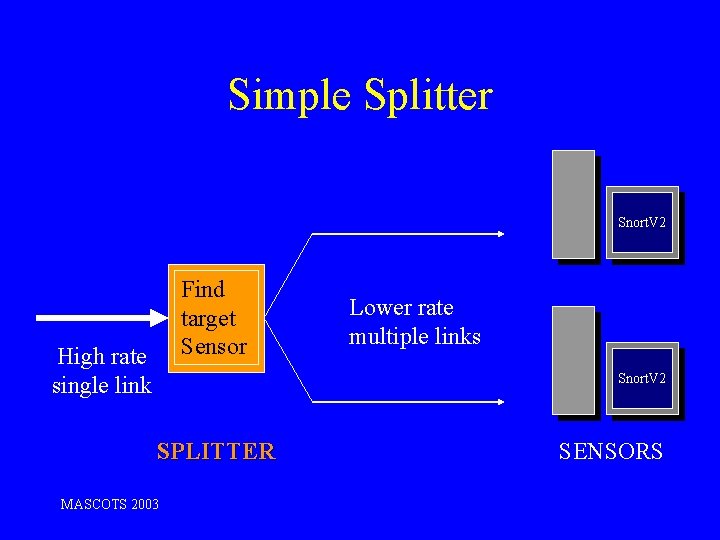
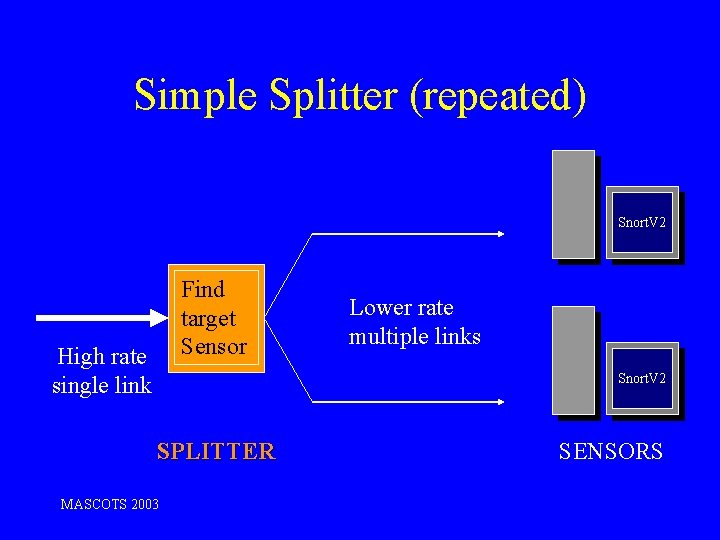
Simple Splitter Snort. V 2 Find target Sensor High rate single link Lower rate multiple links Snort. V 2 SPLITTER MASCOTS 2003 SENSORS
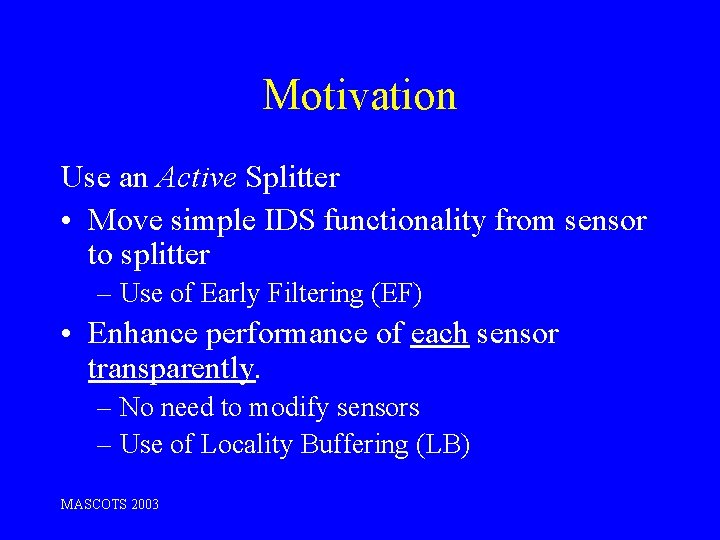
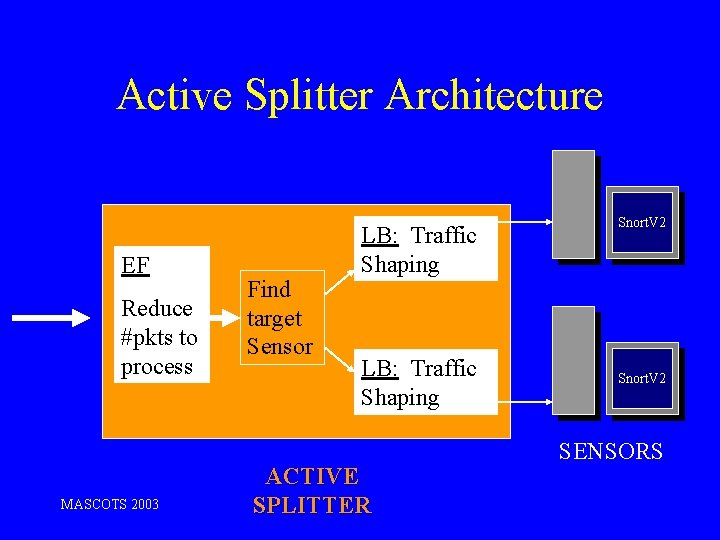
Motivation Use an Active Splitter • Move simple IDS functionality from sensor to splitter – Use of Early Filtering (EF) • Enhance performance of each sensor transparently. – No need to modify sensors – Use of Locality Buffering (LB) MASCOTS 2003
Simple Splitter (repeated) Snort. V 2 Find target Sensor High rate single link Lower rate multiple links Snort. V 2 SPLITTER MASCOTS 2003 SENSORS
Active Splitter Architecture EF Reduce #pkts to process MASCOTS 2003 Find target Sensor LB: Traffic Shaping ACTIVE SPLITTER Snort. V 2 SENSORS
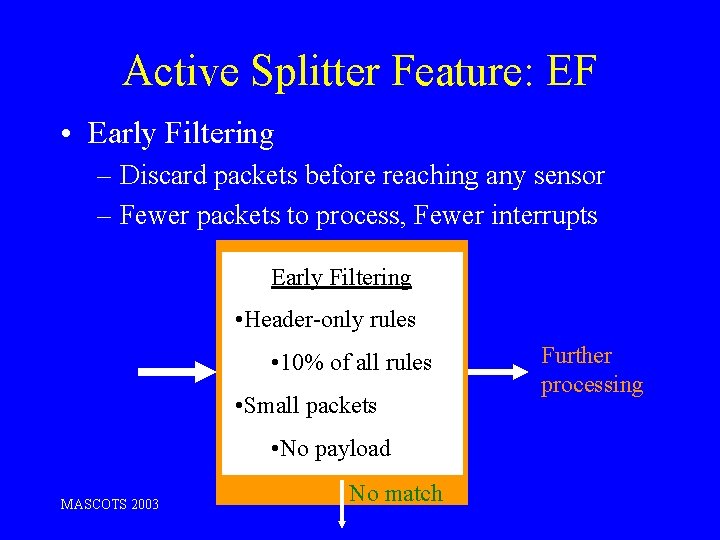
Active Splitter Feature: EF • Early Filtering – Discard packets before reaching any sensor – Fewer packets to process, Fewer interrupts Early Filtering • Header-only rules • 10% of all rules • Small packets • No payload MASCOTS 2003 No match Further processing
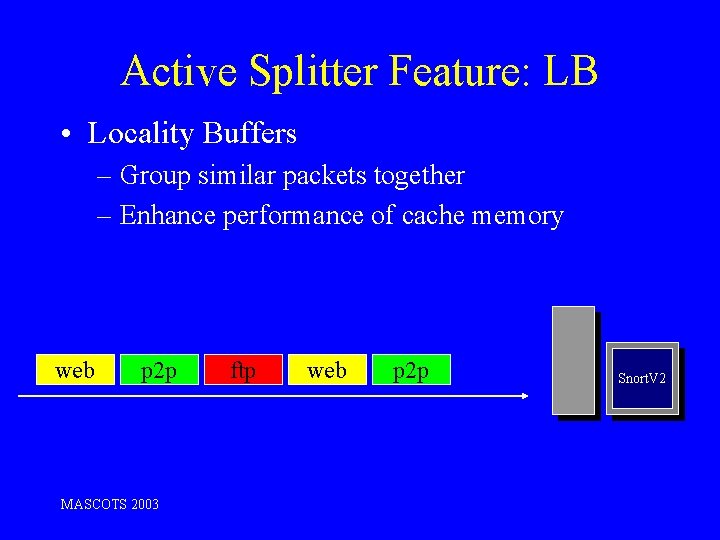
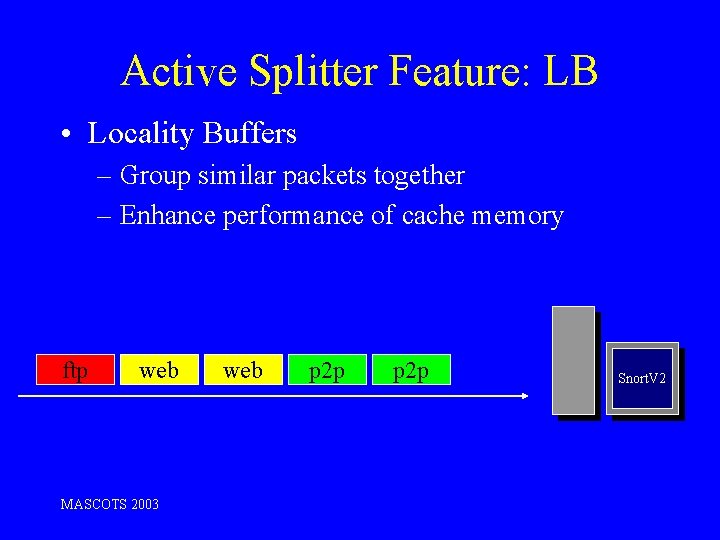
Active Splitter Feature: LB • Locality Buffers – Group similar packets together – Enhance performance of cache memory web p 2 p MASCOTS 2003 ftp web p 2 p Snort. V 2
Active Splitter Feature: LB • Locality Buffers – Group similar packets together – Enhance performance of cache memory ftp web MASCOTS 2003 web p 2 p Snort. V 2
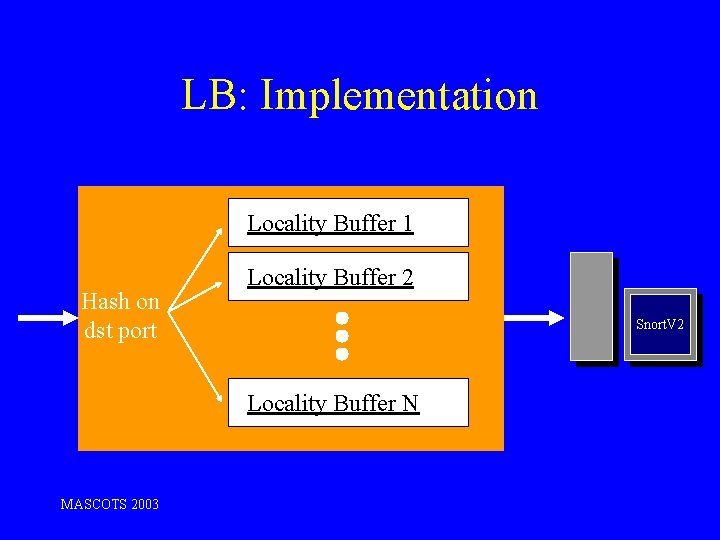
LB: Implementation Locality Buffer 1 Hash on dst port Locality Buffer 2 Snort. V 2 Locality Buffer N MASCOTS 2003
Performance Measurements • Simple Splitter versus : – Splitter/LB – Splitter/EF – Splitter/LB+EF • Simulations – All measurements on same machine – Trace (NLANR) split and shaped to several files – Snort v 2 build 20 • Measured processing time (user + system time) MASCOTS 2003
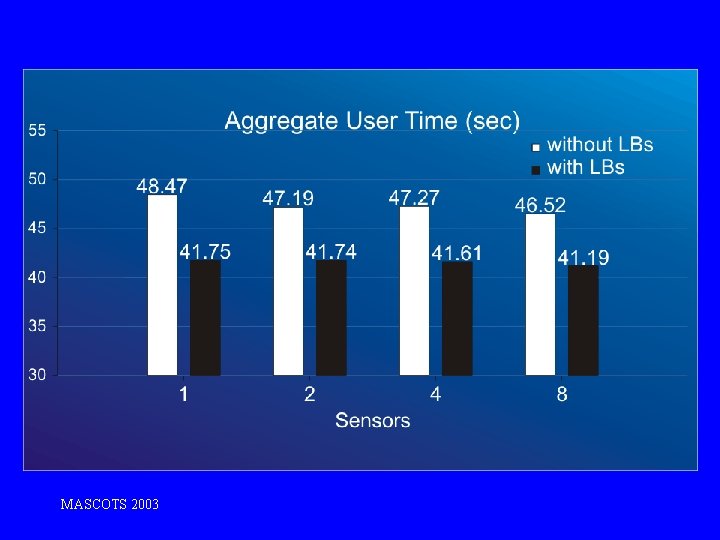
PM: Per number of Sensors MASCOTS 2003
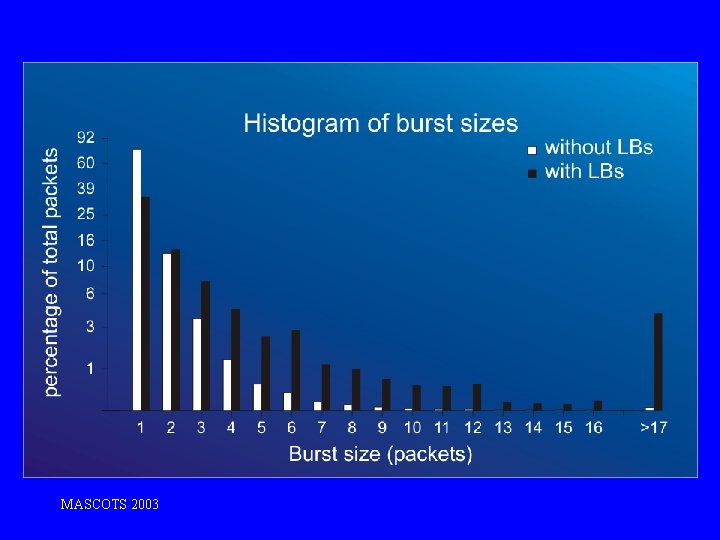
PM: Burst size MASCOTS 2003
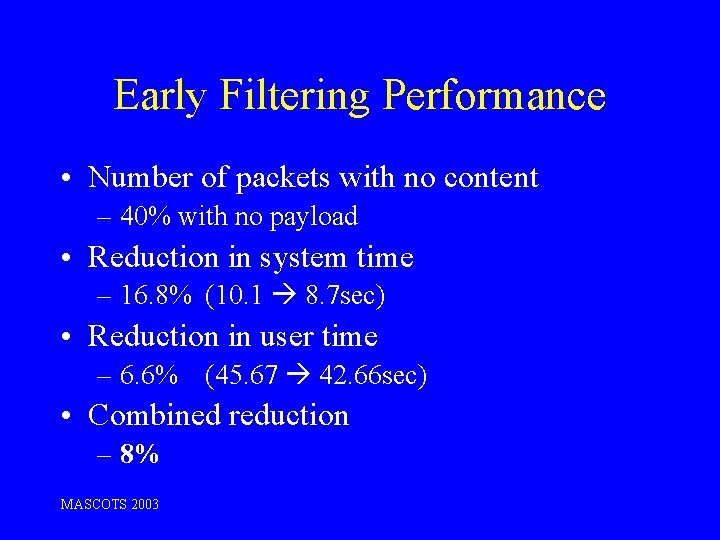
Early Filtering Performance • Number of packets with no content – 40% with no payload • Reduction in system time – 16. 8% (10. 1 8. 7 sec) • Reduction in user time – 6. 6% (45. 67 42. 66 sec) • Combined reduction – 8% MASCOTS 2003
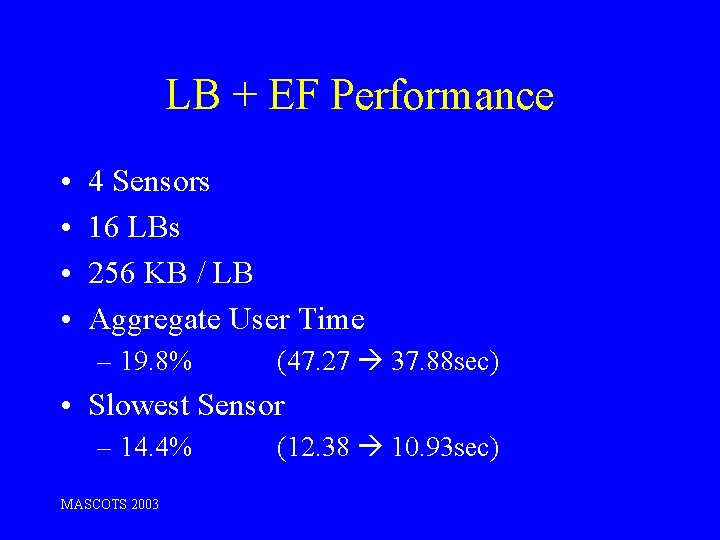
LB + EF Performance • • 4 Sensors 16 LBs 256 KB / LB Aggregate User Time – 19. 8% (47. 27 37. 88 sec) • Slowest Sensor – 14. 4% MASCOTS 2003 (12. 38 10. 93 sec)
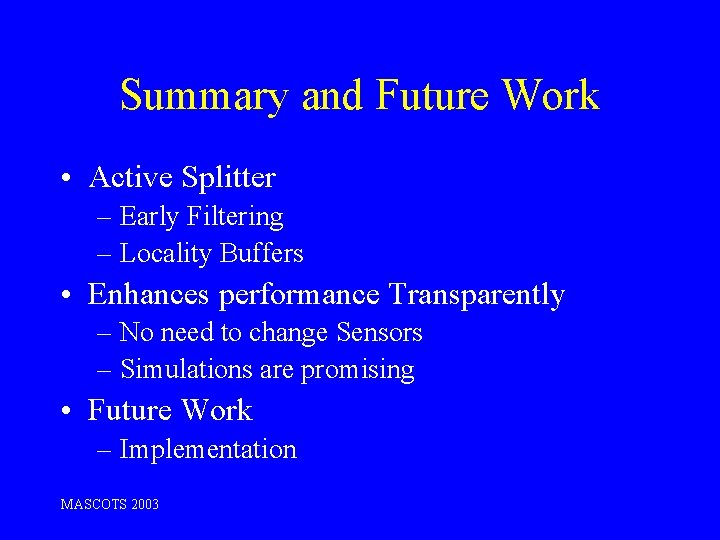
Summary and Future Work • Active Splitter – Early Filtering – Locality Buffers • Enhances performance Transparently – No need to change Sensors – Simulations are promising • Future Work – Implementation MASCOTS 2003