
An Access Control Framework for CloudEnabled Wearable Internet
An Access Control Framework for Cloud-Enabled Wearable Internet of Things Smriti Bhatt, Farhan Patwa and Ravi Sandhu Institute for Cyber Security (ICS) Center for Security and Privacy Enhanced Cloud Computing (C-SPECC) Department of Computer Science University of Texas at San Antonio 3 rd IEEE International Conference on Collaboration and Internet Computing San Jose, California, USA, October 15 - 17, 2017 ravi. sandhu@utsa. edu www. ics. utsa. edu www. cspecc. utsa. edu www. profsandhu. com World-Leading Research with Real-World Impact!
Outline v Introduction v Background v Contributions v Classification of Io. T Devices v Wearable Internet of Things v. Domains and Devices v Access Control (AC) Framework v Use Case v AC Framework Objectives & Research Problems v Conclusion and Future Work © Bhatt et al World-Leading Research with Real-World Impact! 2
Introduction v Internet of Things (Io. T) v Interconnection of Internet-enabled smart devices/things v Enabling technologies – Internet, Cloud and Mobile computing, Big Data and Analytics, M 2 M technologies and communication protocols, … v Diverse and pervasive concept v Numerous Io. T applications and services various subfields of Io. T v Wearable Internet of Things (WIo. T) v Revolutionizing industries like healthcare, and sports and fitness v Enabling technologies – Internet, Smart phones, WSNs, and WBANs v Generally, Io. T devices are resource constraint by nature v Limited storage, power, and computation © Bhatt et al World-Leading Research with Real-World Impact! 3
Introduction (Contd. ) v Cloud-Enabled Internet of Things (CEIo. T) v Integration of Cloud and Io. T v Major cloud services providers (e. g. , AWS, Azure) utilize their cloud infrastructure to provide Io. T solutions v Virtually unlimited resources with analysis and visualization capabilities v Security and privacy are primary concerns for Io. T v Here, we present an Access Control (AC) framework for CEIo. T in context of WIo. T (i. e. CEWIo. T) © Bhatt et al World-Leading Research with Real-World Impact! 4
![Background Fig 1: An Access Control Oriented (ACO) Architecture for the CEIo. T [1]](http://slidetodoc.com/presentation_image_h2/85baeee3f6ac1baade0261f7386ceada/image-5.jpg "Background Fig 1: An Access Control Oriented (ACO) Architecture for the CEIo. T [1]")
Background Fig 1: An Access Control Oriented (ACO) Architecture for the CEIo. T [1] © Bhatt et al World-Leading Research with Real-World Impact! 5
Contributions v Present a general classification of Io. T devices to realize different sub- fields of Io. T v Enhance the ACO architecture for CEWIo. T by adding an Object Abstraction Layer v Develop an Access Control (AC) framework for CEWIo. T based on our enhanced ACO architecture v Develop a use case to capture different interactions between ACO layers and propose its possible enforcement in a commercial CEIo. T platform, viz. , AWS Io. T © Bhatt et al World-Leading Research with Real-World Impact! 6
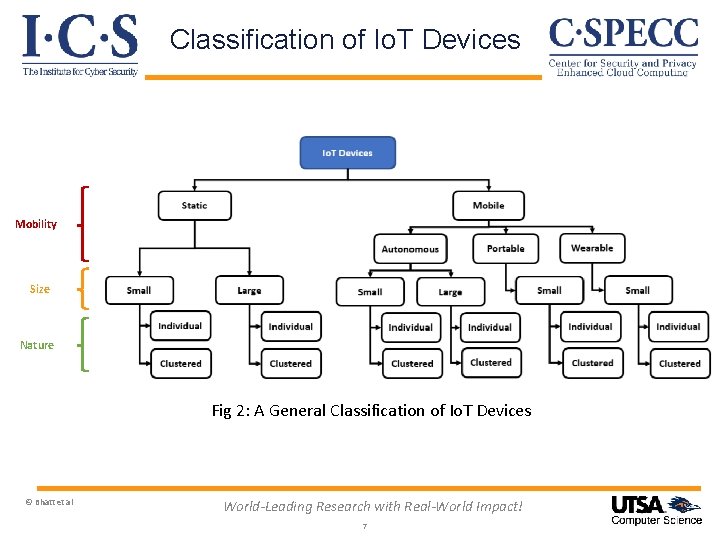
Classification of Io. T Devices Mobility Size Nature Fig 2: A General Classification of Io. T Devices © Bhatt et al World-Leading Research with Real-World Impact! 7
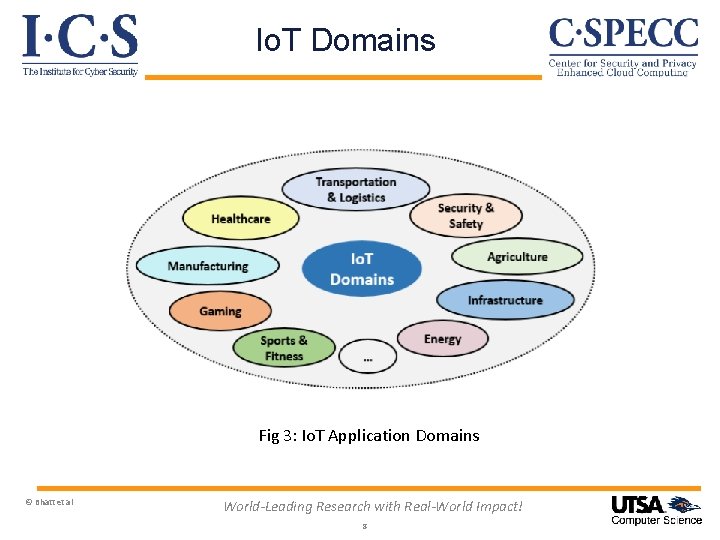
Io. T Domains Fig 3: Io. T Application Domains © Bhatt et al World-Leading Research with Real-World Impact! 8
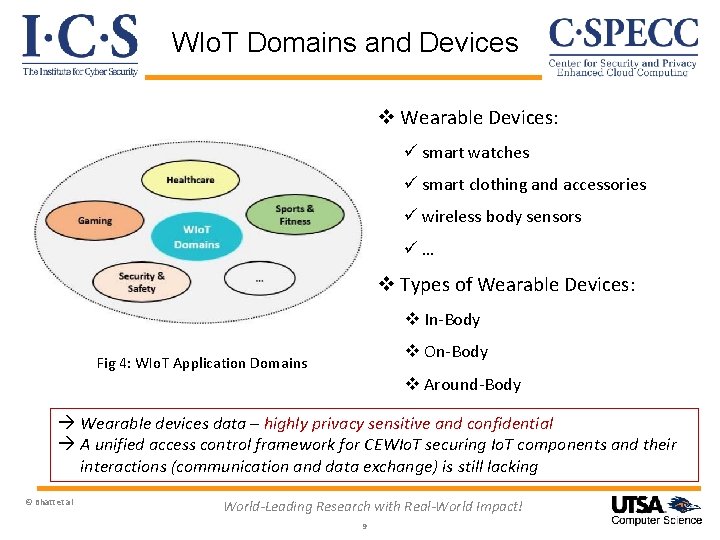
WIo. T Domains and Devices v Wearable Devices: ü smart watches ü smart clothing and accessories ü wireless body sensors ü… v Types of Wearable Devices: v In-Body v On-Body Fig 4: WIo. T Application Domains v Around-Body Wearable devices data – highly privacy sensitive and confidential A unified access control framework for CEWIo. T securing Io. T components and their interactions (communication and data exchange) is still lacking © Bhatt et al World-Leading Research with Real-World Impact! 9
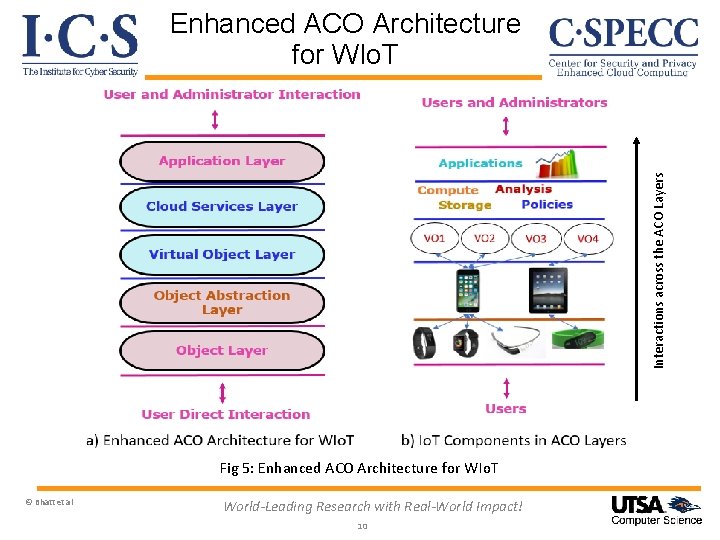
Interactions across the ACO Layers Enhanced ACO Architecture for WIo. T Fig 5: Enhanced ACO Architecture for WIo. T © Bhatt et al World-Leading Research with Real-World Impact! 10
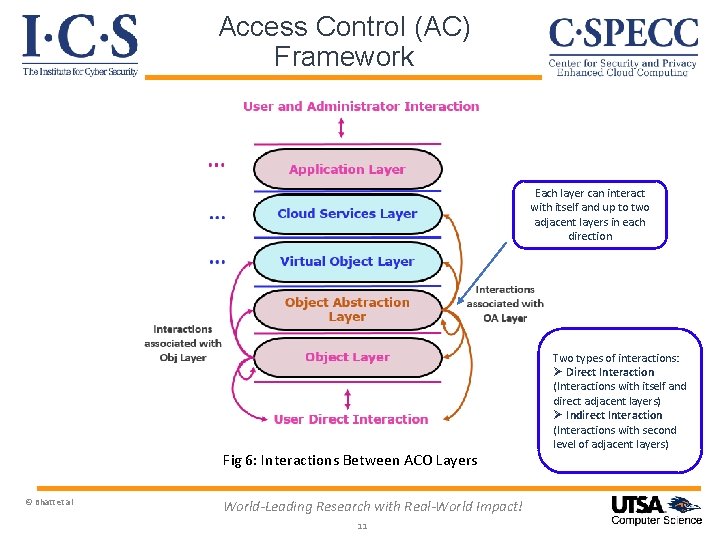
Access Control (AC) Framework Each layer can interact with itself and up to two adjacent layers in each direction Fig 6: Interactions Between ACO Layers © Bhatt et al World-Leading Research with Real-World Impact! 11 Two types of interactions: Ø Direct Interaction (Interactions with itself and direct adjacent layers) Ø Indirect Interaction (Interactions with second level of adjacent layers)
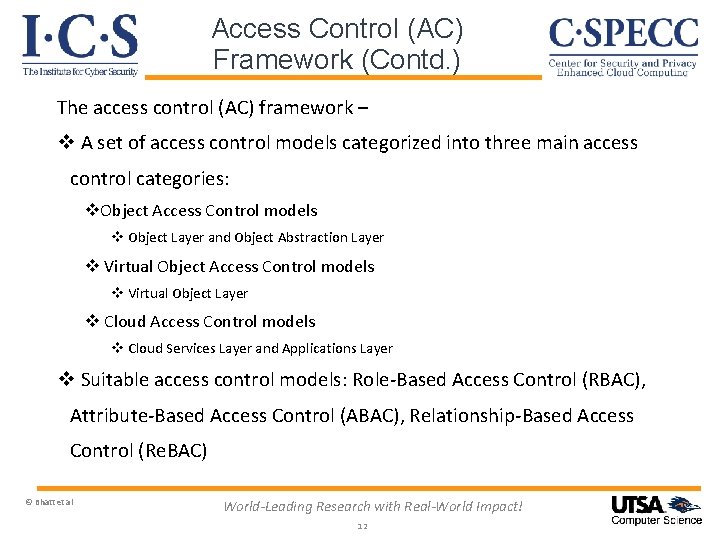
Access Control (AC) Framework (Contd. ) The access control (AC) framework – v A set of access control models categorized into three main access control categories: v. Object Access Control models v Object Layer and Object Abstraction Layer v Virtual Object Access Control models v Virtual Object Layer v Cloud Access Control models v Cloud Services Layer and Applications Layer v Suitable access control models: Role-Based Access Control (RBAC), Attribute-Based Access Control (ABAC), Relationship-Based Access Control (Re. BAC) © Bhatt et al World-Leading Research with Real-World Impact! 12
![Access Control (AC) Framework (Contd. ) AWS-Io. TAC Model [3] Ø Policy-based access control](http://slidetodoc.com/presentation_image_h2/85baeee3f6ac1baade0261f7386ceada/image-13.jpg "Access Control (AC) Framework (Contd. ) AWS-Io. TAC Model [3] Ø Policy-based access control")
Access Control (AC) Framework (Contd. ) AWS-Io. TAC Model [3] Ø Policy-based access control Ø ABAC in limited form - Client Attributes - Target Attributes Alshehri and Sandhu [2] Ø VO-VO communications Ø Operational and Administrative Access Control Models - ACLs, Cap. BAC, RBAC, ABAC Fig 7: Access Control Framework Based on Interactions Between Different Layers of the ACO Architecture © Bhatt et al World-Leading Research with Real-World Impact! 13
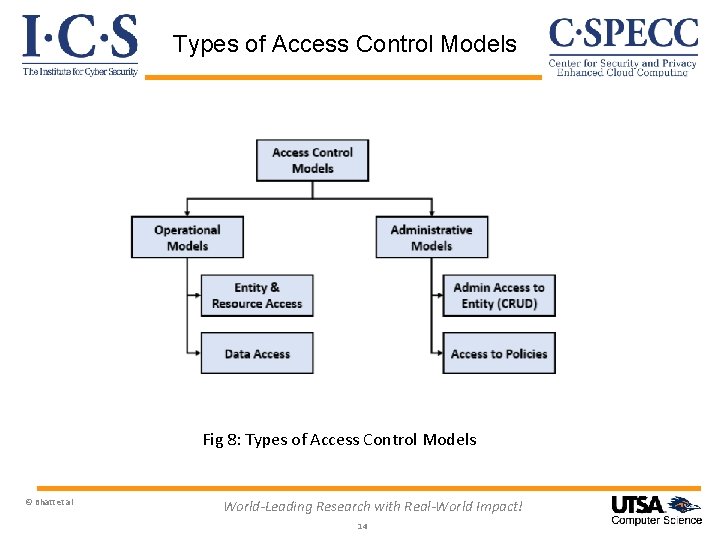
Types of Access Control Models Fig 8: Types of Access Control Models © Bhatt et al World-Leading Research with Real-World Impact! 14
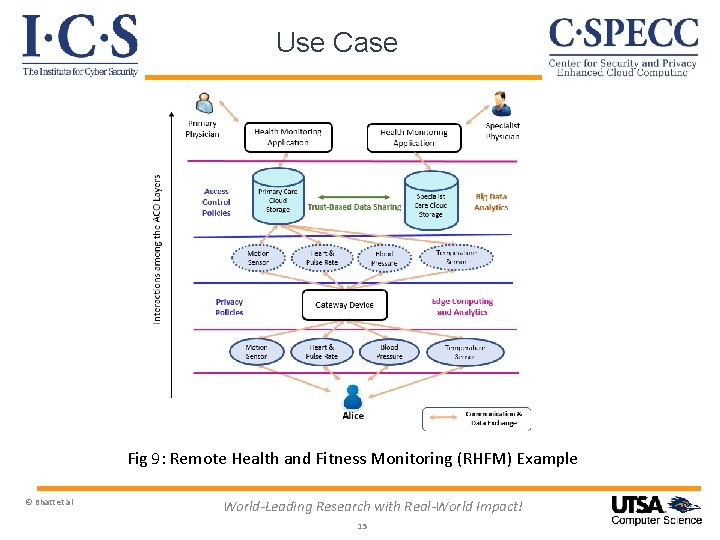
Use Case Fig 9: Remote Health and Fitness Monitoring (RHFM) Example © Bhatt et al World-Leading Research with Real-World Impact! 15
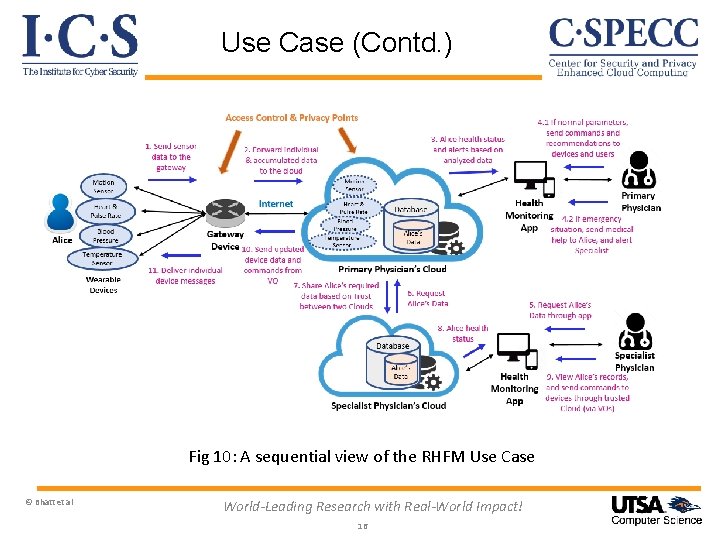
Use Case (Contd. ) Fig 10: A sequential view of the RHFM Use Case © Bhatt et al World-Leading Research with Real-World Impact! 16
![Proposed Enforcement in AWS Io. T v Based on our previous work [3], we](http://slidetodoc.com/presentation_image_h2/85baeee3f6ac1baade0261f7386ceada/image-17.jpg "Proposed Enforcement in AWS Io. T v Based on our previous work [3], we")
Proposed Enforcement in AWS Io. T v Based on our previous work [3], we propose a possible enforcement of our use case utilizing AWS Io. T platform v In [3], we configured a smart home use case (with smart sensors, lights, and thermostat) in AWS Io. T Wearable Devices Device Gateway Cloud Services ü Authorization Policies ü Storage and Analysis ü … Virtual Things X. 509 Certificates Auth Policy Within a Single Account Inter-Account models required!! © Bhatt et al World-Leading Research with Real-World Impact! 17 Applications
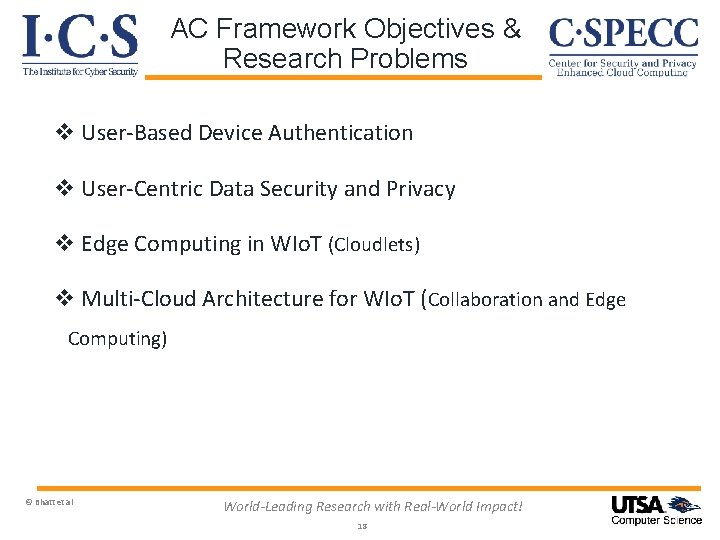
AC Framework Objectives & Research Problems v User-Based Device Authentication v User-Centric Data Security and Privacy v Edge Computing in WIo. T (Cloudlets) v Multi-Cloud Architecture for WIo. T (Collaboration and Edge Computing) © Bhatt et al World-Leading Research with Real-World Impact! 18
Conclusion and Future Work v Developed a conceptual AC framework for cloud-enabled wearable Io. T (CEWIo. T) v Enable development of a family of AC models with fine-grained access control for specific interactions in CEWIo. T v Discussed suitable access control models (e. g. , RBAC, ABAC, Re. BAC) for different AC categories v Presented a WIo. T use case and its possible implementation in AWS Io. T Future Work: v Develop Cloud Access Control models (cross-tenant/account, multi-cloud models) – ABAC and other combinations © Bhatt et al World-Leading Research with Real-World Impact! 19
![References [1] Alshehri, Asma, and Ravi Sandhu. "Access control models for cloud-enabled internet of](http://slidetodoc.com/presentation_image_h2/85baeee3f6ac1baade0261f7386ceada/image-20.jpg "References [1] Alshehri, Asma, and Ravi Sandhu. \"Access control models for cloud-enabled internet of")
References [1] Alshehri, Asma, and Ravi Sandhu. "Access control models for cloud-enabled internet of things: A proposed architecture and research agenda. " In IEEE 2 nd International Conference on Collaboration and Internet Computing (CIC), pp. 530538. IEEE, 2016. [2] Alshehri, Asma, and Ravi Sandhu. "Access Control Models for Virtual Object Communication in Cloud-Enabled Io. T. " In 18 th International Conference on Information Reuse and Integration (IRI). IEEE. 2017. [3] Bhatt, Smriti, Farhan Patwa, and Ravi Sandhu. "Access Control Model for AWS Internet of Things. " In International Conference on Network and System Security, pp. 721 -736. Springer, Cham, 2017. (…More in the paper) © Bhatt et al World-Leading Research with Real-World Impact! 20
Thank you! Questions? © Bhatt et al World-Leading Research with Real-World Impact! 21
- Slides: 21