
AMYOTROPHIC LATERAL SCLEROSIS Motor neuron diseases MND Lou





- Slides: 37
AMYOTROPHIC LATERAL SCLEROSIS
� Motor neuron diseases (MND) � Lou Gehrig’s disease � Degeneration and loss of motor neurons in the spinal cord, brain stem and brain, resulting in a variety of UMN and LMN clinical signs and symptoms.
� Incidence; range of 0. 4 to 2. 4 cases per 100, 000, with the incidence � Prevalence; 4 to 10 cases per 100, 000 � The average at onset is the mid-tolate 50 s � Affects men slightly more than women � In about 5% to 10% of individuals the disease is inherited as an autosomal dominant trait
� 70% to 80% of individuals develop limbonset ALS � 20% to 30 % develop bulbar-onset ALS � Bulbar-onset ALS is more common in middle-aged women, and initial symptoms may include difficulty speaking, chewing, or swallowing
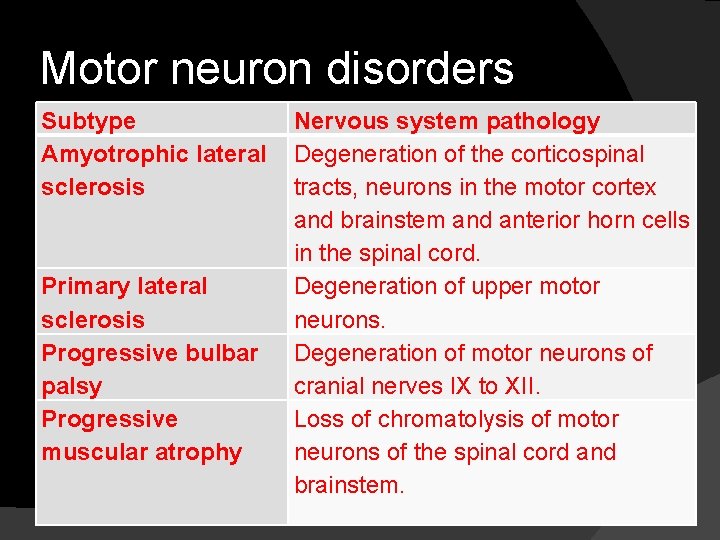
Motor neuron disorders Subtype Amyotrophic lateral sclerosis Primary lateral sclerosis Progressive bulbar palsy Progressive muscular atrophy Nervous system pathology Degeneration of the corticospinal tracts, neurons in the motor cortex and brainstem and anterior horn cells in the spinal cord. Degeneration of upper motor neurons. Degeneration of motor neurons of cranial nerves IX to XII. Loss of chromatolysis of motor neurons of the spinal cord and brainstem.
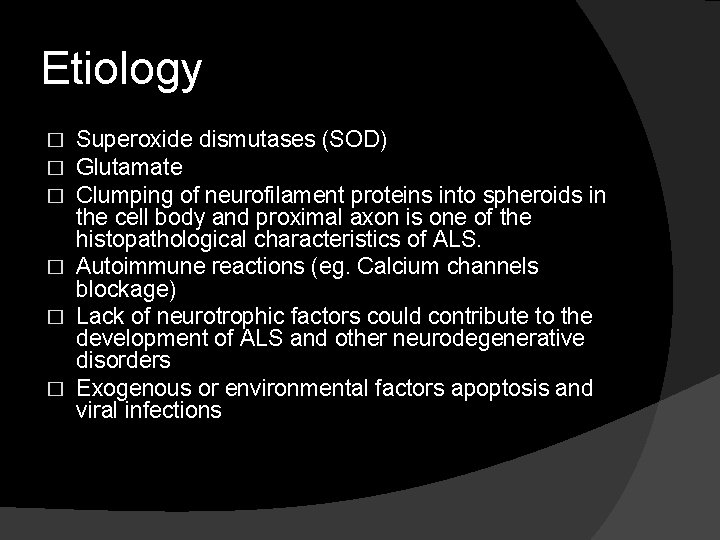
Etiology Superoxide dismutases (SOD) Glutamate Clumping of neurofilament proteins into spheroids in the cell body and proximal axon is one of the histopathological characteristics of ALS. � Autoimmune reactions (eg. Calcium channels blockage) � Lack of neurotrophic factors could contribute to the development of ALS and other neurodegenerative disorders � Exogenous or environmental factors apoptosis and viral infections � � �
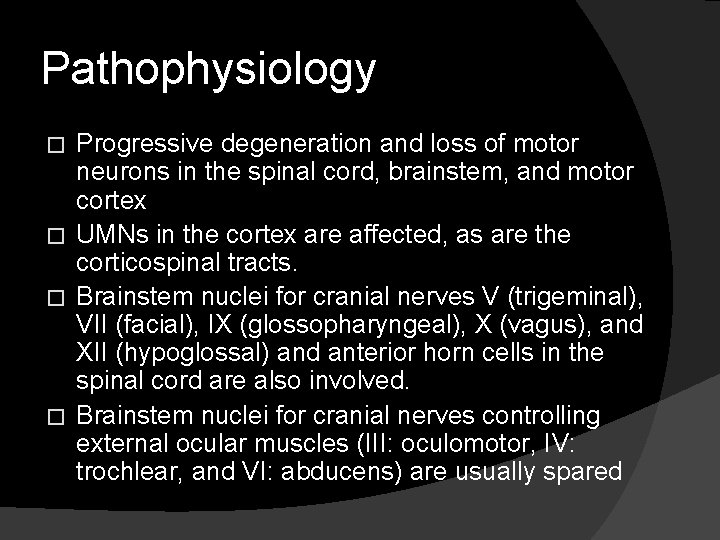
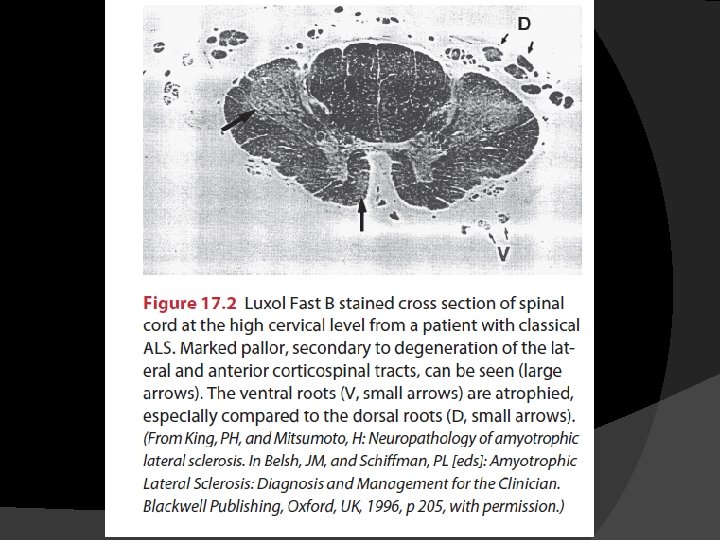
Pathophysiology Progressive degeneration and loss of motor neurons in the spinal cord, brainstem, and motor cortex � UMNs in the cortex are affected, as are the corticospinal tracts. � Brainstem nuclei for cranial nerves V (trigeminal), VII (facial), IX (glossopharyngeal), X (vagus), and XII (hypoglossal) and anterior horn cells in the spinal cord are also involved. � Brainstem nuclei for cranial nerves controlling external ocular muscles (III: oculomotor, IV: trochlear, and VI: abducens) are usually spared �
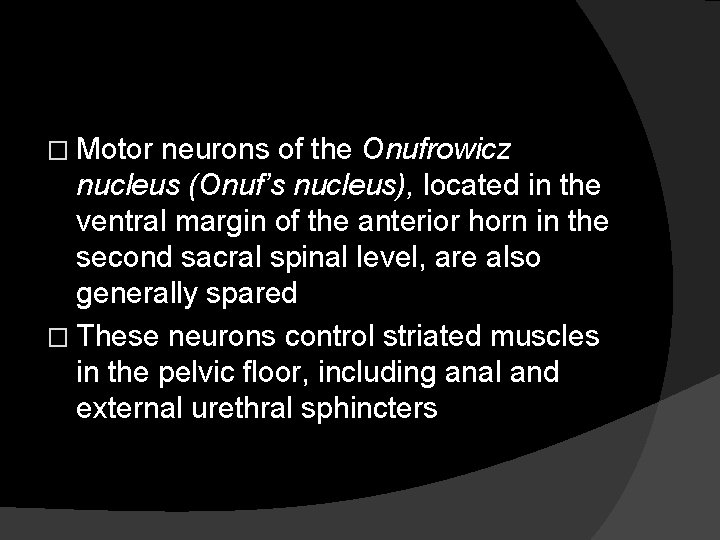
� Motor neurons of the Onufrowicz nucleus (Onuf’s nucleus), located in the ventral margin of the anterior horn in the second sacral spinal level, are also generally spared � These neurons control striated muscles in the pelvic floor, including anal and external urethral sphincters
� The sensory system and spinocerebellar tracts are also generally spared in ALS. � Re-innervation and ultimate failure of reinnervation
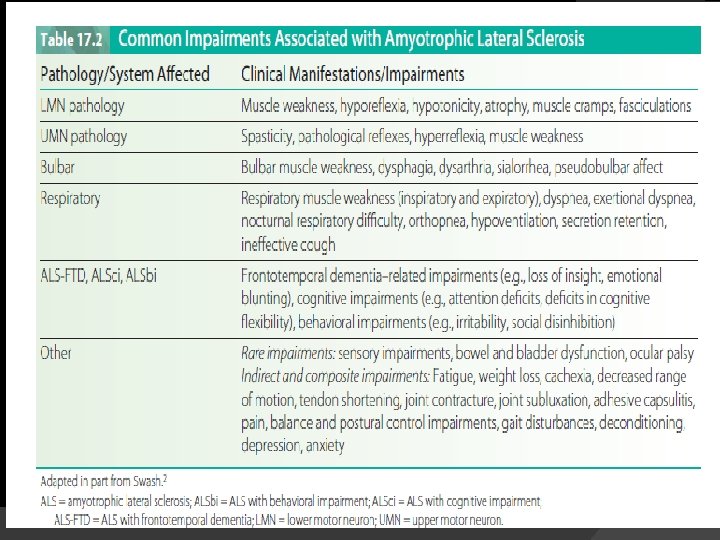
Clinical Manifestations Clinical manifestations of ALS vary depending on the localization and extent of motor neuron loss, the degree and combination of LMN and UMN loss, pattern of onset and progression, body region(s) affected, and stage of the disease. � At onset, signs or symptoms are usually asymmetrical and focal. � Progression of the disease leads to increasing numbers and severity of impairments. �
Diagnosis � Genetic test � Clinical presentation � Laboratory studies � EMG � Nerve conduction velocity (NCV) studies � Muscle and nerve biopsies � Neuroimaging studies
Diagnosis criteria � 1. 2. 3. � 1. 2. The diagnosis of ALS requires the presence of LMN signs by clinical, electrophysiological or neuropathological examination UMN signs by clinical examination and Progression of the disease within a region or two other regions by clinical examinations of via the medical history, And the absence of Electrophysiological and pathological evidences of other diseases that may explain the UMN and LMN signs, and Neuroimaging evidence of other disease processes that may explain the observed clinical and electrophysiological signs
Disease course ALS has a progressive and deteriorating disease trajectory, and the progression from pathology to impairments to functional limitations to disabilities is inevitable. � Time from onset to death ranging from several months to 20 years, studies have found the average duration of ALS to be between 27 and 43 months, and the median duration to be between 23 and 52 months. � Death occurs within 3 to 5 years after diagnosis and usually results from respiratory failure �
PROGNOSIS � Age at time of onset � Individuals with limb onset ALS have a better prognosis than those with bulbaronset ALS � Less severe involvement at the time of diagnosis � No symptoms of dyspnea at onset Psychological status
Management � Disease modifying agents � Glutamate inhibitor; Riluzole (Rilutec) Palliative care is”. . the active total care of patients whose disease is not responsive to curative treatments. � Although there is no cure for ALS, it is still considered a “treatable disease” and rehabilitation plays a integral role in the overall comprehensive care of the patient. � Medical management is symptomatic and individualized and involves supportive care to address impairments as they arise. �
Medical management may include the prescription of anticramping and antispasticity agents, drying agents for sialorrhea, and antidepressants; recommendations and referrals for precutaneous endoscopic gastrotomy (PEG) tubes and ventilator support (noninvasive ventilation, tracheostomy); and discussion of advanced care directives � Management of dysphagia, dysarthria, anxiety, depression � Pain control �
In 1999 a multidisciplinary task force was established to develop recommendations for management of ALS. 1. 2. 3. 4. 5. Informing the patients and family about the diagnosis and prognosis. Symptom management of sialorrhea and pseudobulblar affect Nutrition management and PEG decisions (e. g. dysphagia) Management of respiratory insufficiency and ventilation decisions (infections, aspiration, low oxygen, hypercarbia, respiratory arrest) Advance directives and palliative care
Rehabilitation Framework
Physical therapy examination � � � � Psychosocial function Pain Muscle performance Motor function Tone and reflexes Cranial nerve integrity Sensation Postural alignment, control and balance Gait Respiratory function Integument Functional status Environmental barriers Fatigue
Disease specific and quality of life measures � Disease specific measures; �ALS Functional Rating scale (ALSFRS) �The revised version �Appel ALS Scale (AALS) �ALS Severity Scale (ALSSS) �Norris Scale. � Quality of life measures �SF-36 �The Schedule for Evaluation of Individual Quality Life-Direct Weighing (SEIQo. L-DW) �Sickness Impact Profile (SIP).
Physical Therapy Interventions � � � Cervical muscle weakness Dyartheria and dysphagia Upper extremity weakness Shoulder pain Respiratory muscle weakness Lower extremity muscle weakness Gait training Activities of daily living Decreased mobility Muscle cramps and spasticity Psychosocial issues
Exercise and ALS � Disuse atrophy � Overuse fatigue
Physical Therapy Interventions � Restorative � Compensatory � Preventory
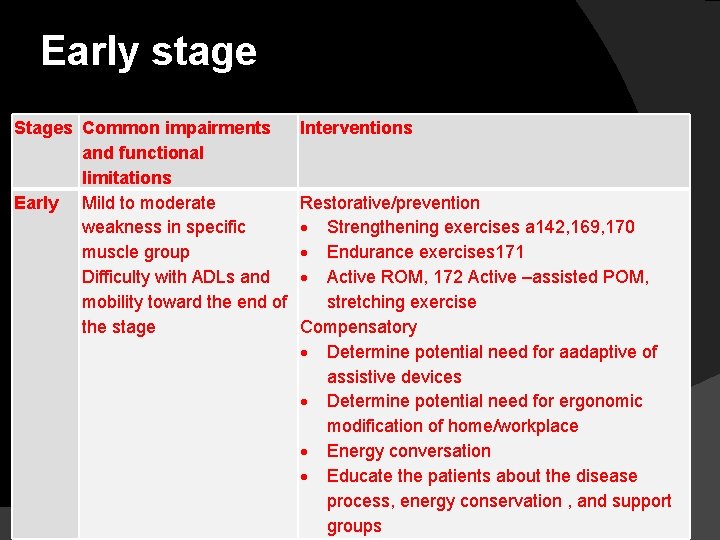
Early stage Stages Common impairments and functional limitations Early Mild to moderate weakness in specific muscle group Difficulty with ADLs and mobility toward the end of the stage Interventions Restorative/prevention Strengthening exercises a 142, 169, 170 Endurance exercises 171 Active ROM, 172 Active –assisted POM, stretching exercise Compensatory Determine potential need for aadaptive of assistive devices Determine potential need for ergonomic modification of home/workplace Energy conversation Educate the patients about the disease process, energy conservation , and support groups
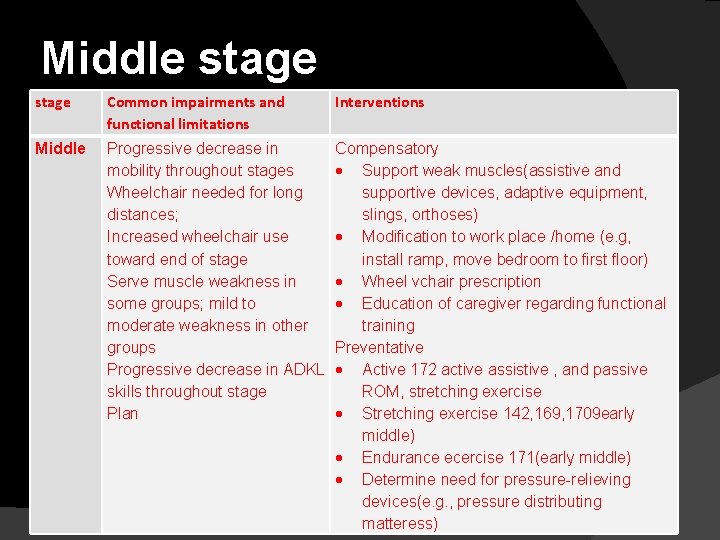
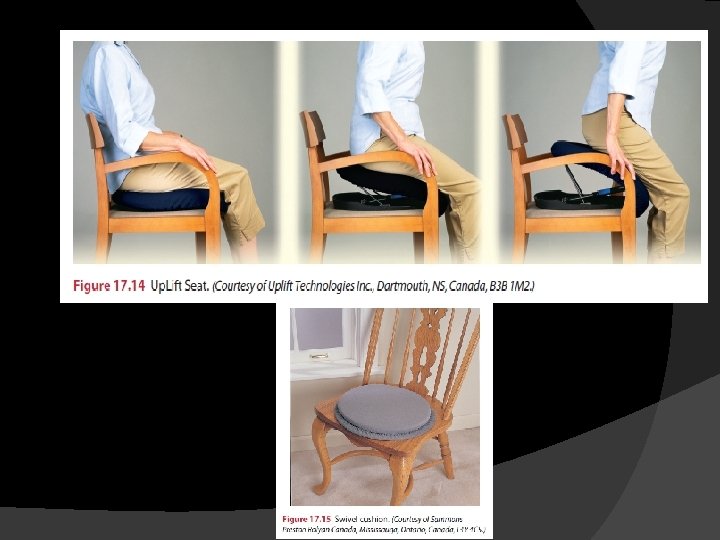
Middle stage Common impairments and functional limitations Interventions Middle Progressive decrease in mobility throughout stages Wheelchair needed for long distances; Increased wheelchair use toward end of stage Serve muscle weakness in some groups; mild to moderate weakness in other groups Progressive decrease in ADKL skills throughout stage Plan Compensatory Support weak muscles(assistive and supportive devices, adaptive equipment, slings, orthoses) Modification to work place /home (e. g, install ramp, move bedroom to first floor) Wheel vchair prescription Education of caregiver regarding functional training Preventative Active 172 active assistive , and passive ROM, stretching exercise Stretching exercise 142, 169, 1709 early middle) Endurance ecercise 171(early middle) Determine need for pressure-relieving devices(e. g. , pressure distributing matteress)
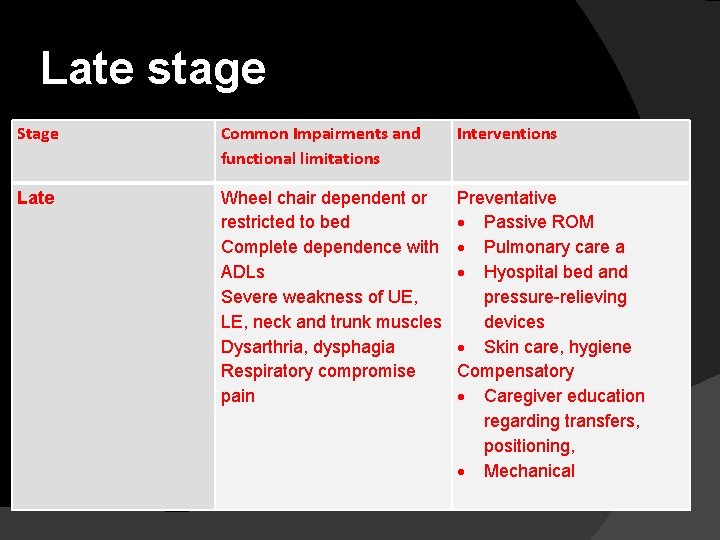
Late stage Stage Common Impairments and functional limitations Interventions Late Wheel chair dependent or restricted to bed Complete dependence with ADLs Severe weakness of UE, LE, neck and trunk muscles Dysarthria, dysphagia Respiratory compromise pain Preventative Passive ROM Pulmonary care a Hyospital bed and pressure-relieving devices Skin care, hygiene Compensatory Caregiver education regarding transfers, positioning, Mechanical
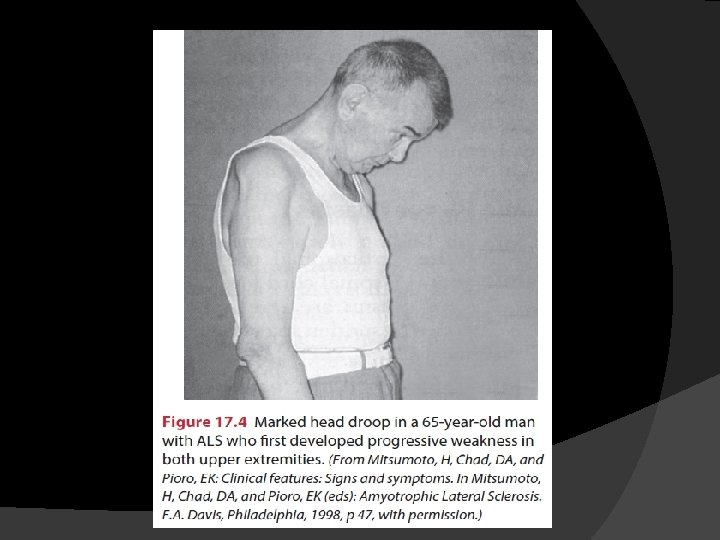
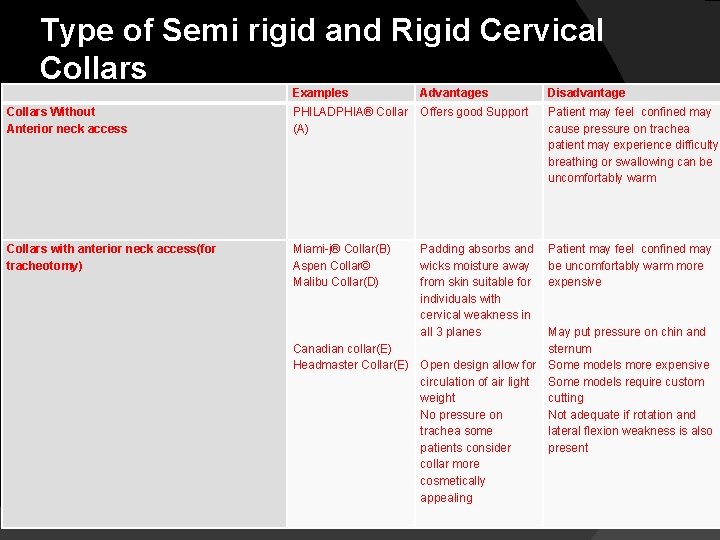
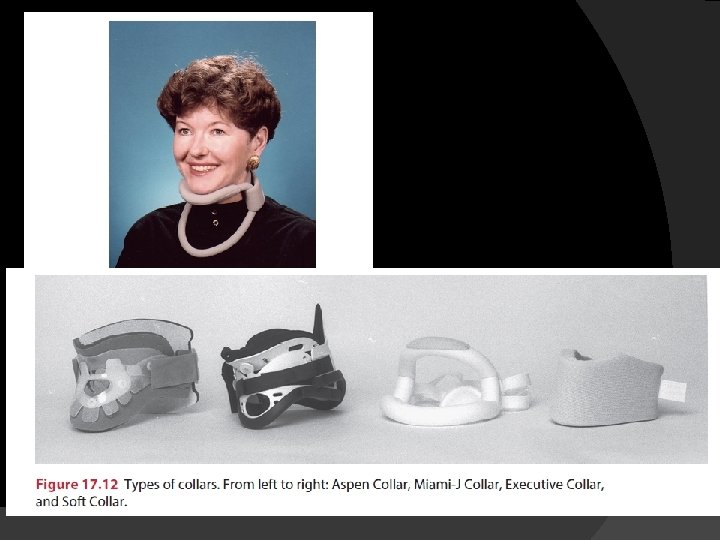
Type of Semi rigid and Rigid Cervical Collars Examples Advantages Disadvantage Collars Without Anterior neck access PHILADPHIA® Collar (A) Offers good Support Patient may feel confined may cause pressure on trachea patient may experience difficulty breathing or swallowing can be uncomfortably warm Collars with anterior neck access(for tracheotomy) Miami-j® Collar(B) Aspen Collar© Malibu Collar(D) Padding absorbs and wicks moisture away from skin suitable for individuals with cervical weakness in all 3 planes Patient may feel confined may be uncomfortably warm more expensive May put pressure on chin and Canadian collar(E) sternum Headmaster Collar(E) Open design allow for Some models more expensive circulation of air light Some models require custom weight cutting No pressure on Not adequate if rotation and trachea some lateral flexion weakness is also patients consider present collar more cosmetically appealing
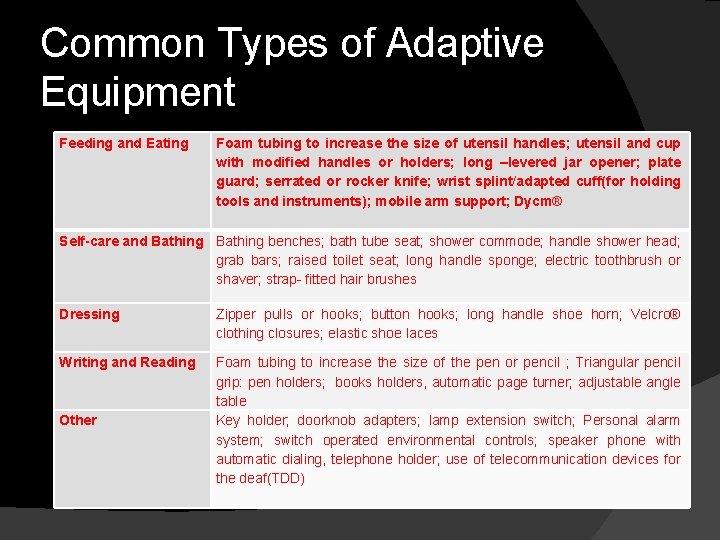
Common Types of Adaptive Equipment Feeding and Eating Foam tubing to increase the size of utensil handles; utensil and cup with modified handles or holders; long –levered jar opener; plate guard; serrated or rocker knife; wrist splint/adapted cuff(for holding tools and instruments); mobile arm support; Dycm® Self-care and Bathing benches; bath tube seat; shower commode; handle shower head; grab bars; raised toilet seat; long handle sponge; electric toothbrush or shaver; strap- fitted hair brushes Dressing Zipper pulls or hooks; button hooks; long handle shoe horn; Velcro® clothing closures; elastic shoe laces Writing and Reading Foam tubing to increase the size of the pen or pencil ; Triangular pencil grip: pen holders; books holders, automatic page turner; adjustable angle table Key holder; doorknob adapters; lamp extension switch; Personal alarm system; switch operated environmental controls; speaker phone with automatic dialing, telephone holder; use of telecommunication devices for the deaf(TDD) Other
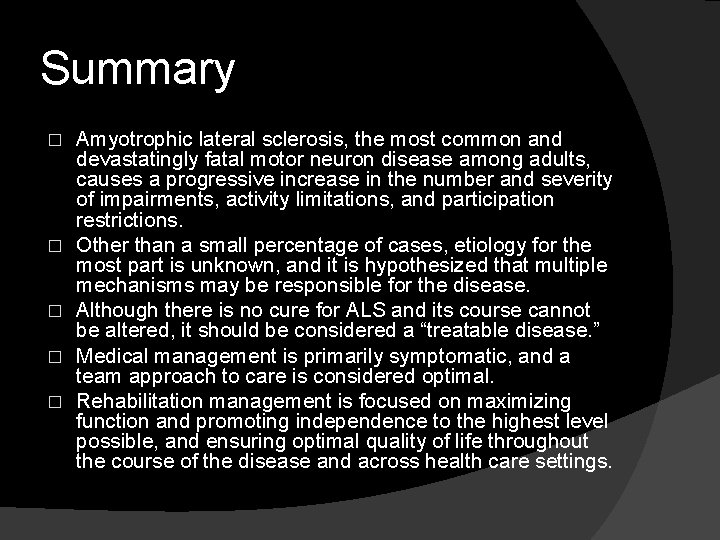
Summary � � � Amyotrophic lateral sclerosis, the most common and devastatingly fatal motor neuron disease among adults, causes a progressive increase in the number and severity of impairments, activity limitations, and participation restrictions. Other than a small percentage of cases, etiology for the most part is unknown, and it is hypothesized that multiple mechanisms may be responsible for the disease. Although there is no cure for ALS and its course cannot be altered, it should be considered a “treatable disease. ” Medical management is primarily symptomatic, and a team approach to care is considered optimal. Rehabilitation management is focused on maximizing function and promoting independence to the highest level possible, and ensuring optimal quality of life throughout the course of the disease and across health care settings.
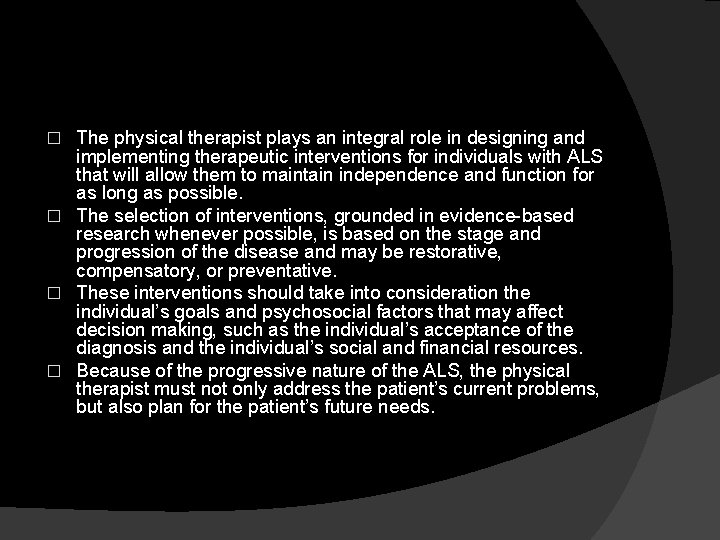
The physical therapist plays an integral role in designing and implementing therapeutic interventions for individuals with ALS that will allow them to maintain independence and function for as long as possible. � The selection of interventions, grounded in evidence-based research whenever possible, is based on the stage and progression of the disease and may be restorative, compensatory, or preventative. � These interventions should take into consideration the individual’s goals and psychosocial factors that may affect decision making, such as the individual’s acceptance of the diagnosis and the individual’s social and financial resources. � Because of the progressive nature of the ALS, the physical therapist must not only address the patient’s current problems, but also plan for the patient’s future needs. �