
Amyloid PET Imaging Basics Background Information for Outreach
Amyloid PET Imaging Basics: Background Information for Outreach Activities with Neurologists and Dementia Specialists

Legal Disclaimer These materials were prepared in good faith by MITA as a service to the profession and are believed to be reliable based on current scientific literature. The materials are for educational purposes only and do not replace either the need for individualized patient diagnosis and treatment planning by qualified physicians based on existing good practices or the need for implementation by qualified radiologists or other qualified healthcare practitioners. Neither MITA nor its members are responsible for any diagnostic or treatment outcomes. MITA, its members, and contributors do not assume any responsibility for the user’s compliance with applicable laws and regulations. MITA does not endorse the proprietary products or processes of any one company.
Purpose § The purpose of this self-study tutorial is to provide background information about Amyloid PET Imaging to aid of diagnosis of Alzheimer’s Disease (AD) § The intended audience for this tutorial are non-medical personnel who engage in marketing activities on behalf of an imaging center or department § Upon completion of this self-study program, a person engaged in marketing activities will be better equipped to speak with referring physicians (neurologists/dementia specialists) about amyloid PET imaging
Agenda § Background information about AD § Description of disease § Demographics and scope of the problem § Key messages for referring physicians § Diagnosis of AD is difficult, but desirable § Amyloid imaging provides in vivo amyloid status and the ability to rule out AD § Amyloid imaging can assist with, and even change, medical management § Amyloid imaging is accessible for Medicare patients via the IDEAS Research. Study § Summary
Key Messages for Referring Physicians 1. Diagnosis of AD is difficult, but desirable. 2. Amyloid imaging provides in vivo amyloid status and the ability to rule out AD. 3. Amyloid imaging can assist with and even change medical management. 4. Amyloid imaging is accessible for Medicare patients via the IDEAS Research Study.
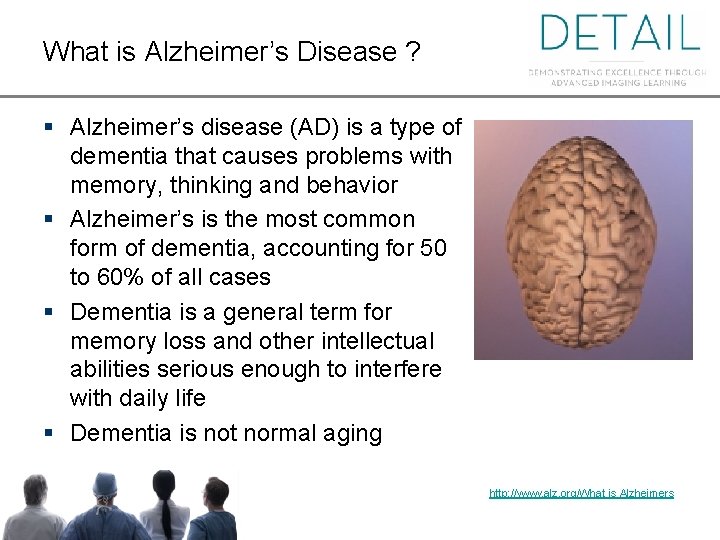
What is Alzheimer’s Disease ? § Alzheimer’s disease (AD) is a type of dementia that causes problems with memory, thinking and behavior § Alzheimer’s is the most common form of dementia, accounting for 50 to 60% of all cases § Dementia is a general term for memory loss and other intellectual abilities serious enough to interfere with daily life § Dementia is not normal aging http: //www. alz. org/What is Alzheimers
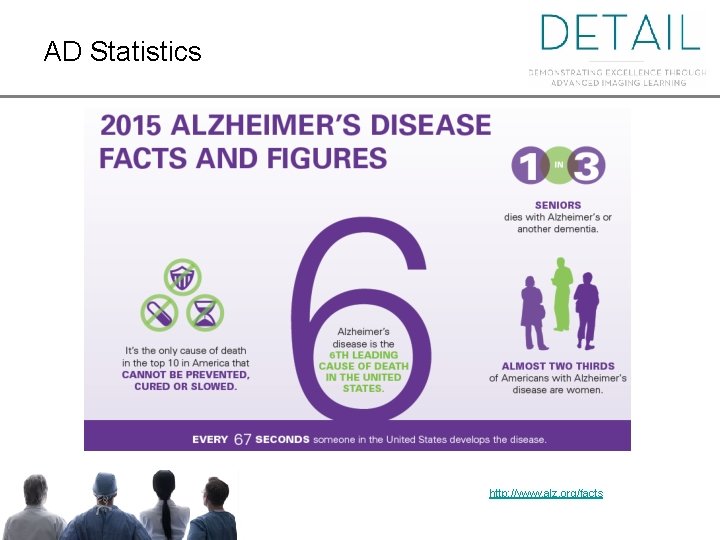
AD Statistics http: //www. alz. org/facts
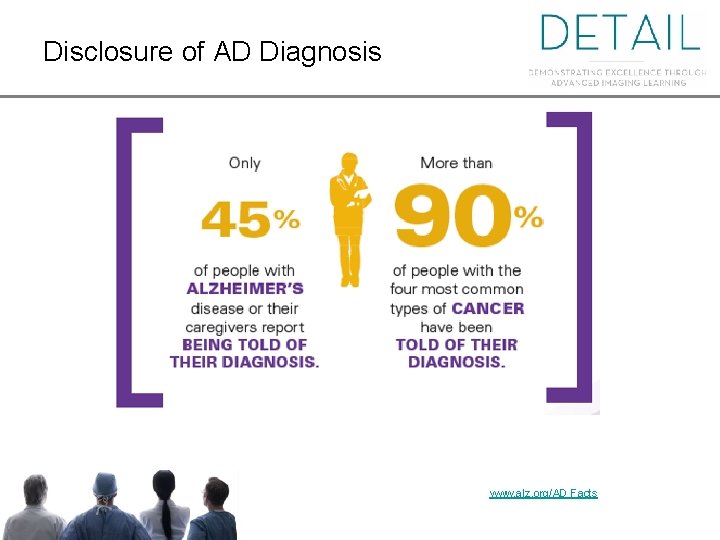
Disclosure of AD Diagnosis www. alz. org/AD Facts
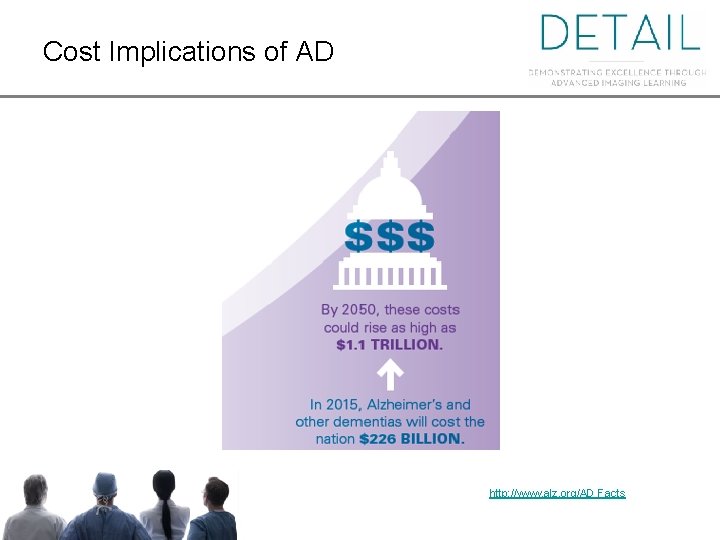
Cost Implications of AD http: //www. alz. org/AD Facts
AD Gender and Racial Disparities § In 2015, an estimated 700, 000 people in the United States age 65 and older will die with AD § Almost two-thirds of Americans with AD are women § There are 5. 1 million people age 65 and older with AD in the United States § 3. 2 million: women § 1. 9 million: men § Older African-Americans and Hispanics are more likely to have AD and other dementias than older caucasions http: //www. alz. org/AD Facts
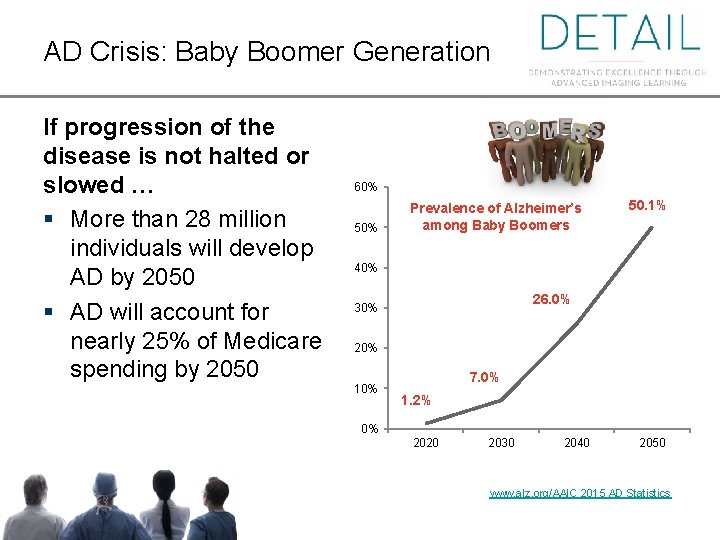
AD Crisis: Baby Boomer Generation If progression of the disease is not halted or slowed … § More than 28 million individuals will develop AD by 2050 § AD will account for nearly 25% of Medicare spending by 2050 60% 50% Prevalence of Alzheimer’s among Baby Boomers 50. 1% 40% 26. 0% 30% 20% 10% 7. 0% 1. 2% 0% 2020 2030 2040 2050 www. alz. org/AAIC 2015 AD Statistics
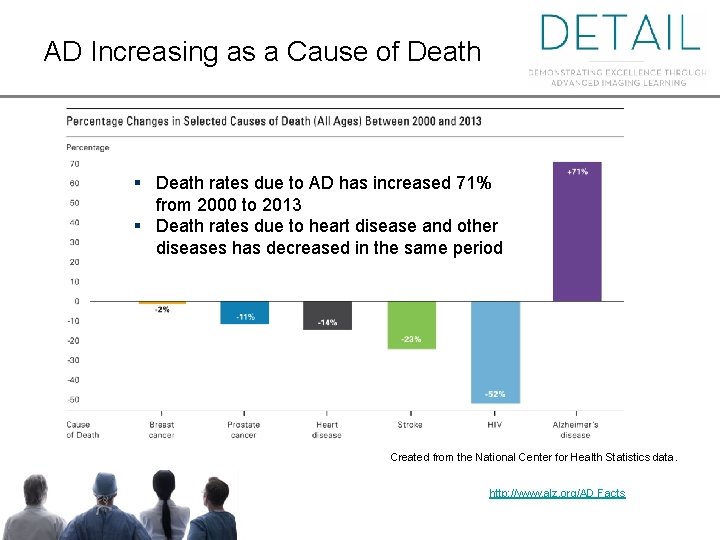
AD Increasing as a Cause of Death § Death rates due to AD has increased 71% from 2000 to 2013 § Death rates due to heart disease and other diseases has decreased in the same period Created from the National Center for Health Statistics data. http: //www. alz. org/AD Facts
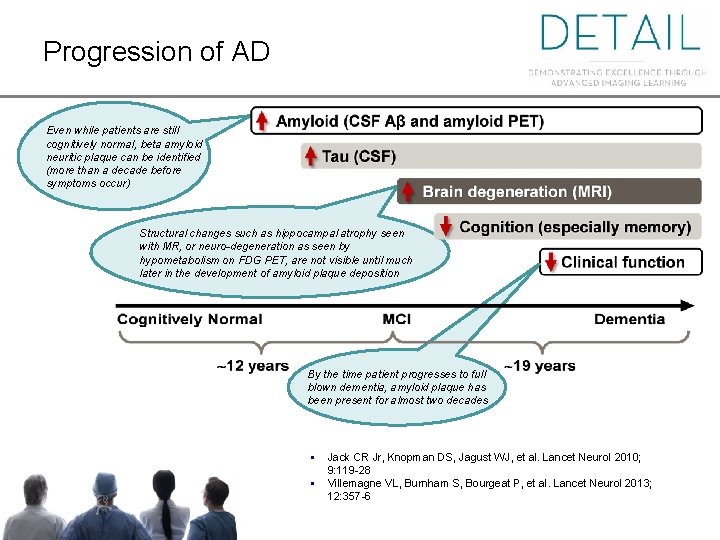
Progression of AD Even while patients are still cognitively normal, beta amyloid neuritic plaque can be identified (more than a decade before symptoms occur) Structural changes such as hippocampal atrophy seen with MR, or neuro-degeneration as seen by hypometabolism on FDG PET, are not visible until much later in the development of amyloid plaque deposition By the time patient progresses to full blown dementia, amyloid plaque has been present for almost two decades § § Jack CR Jr, Knopman DS, Jagust WJ, et al. Lancet Neurol 2010; 9: 119 -28 Villemagne VL, Burnham S, Bourgeat P, et al. Lancet Neurol 2013; 12: 357 -6
Treating and Managing AD Today § Current drug therapies temporarily treat symptoms of AD but may not be appropriate in other types of dementia such as frontotemporal dementia (FTD)1 -4 § Treatment of neuropsychiatric and behavioral symptoms such as apathy, restlessness, anxiety, depression and aggression is often necessary 5 § Nonpharmacologic management includes 5 § Cognitive training, behavioral interventions, sleep hygiene and exercise; caregiver and family support 1; life planning 1. 2. 3. 4. 5. Alzheimer’s Association. 2013 Alzheimer’s Disease Facts and Figures Boise L et al. J Gerontol A Biol Sci Med Sci 2004; 59: M 621 -6 Mendez MF et al. Am J Geriatr Psychiatry 2007; 15: 84 -7 National Institute on Aging. Alzheimer’s Disease Medications Fact Sheet Zec RF and Burkett NR. Neuro. Rehabilitation 2008; 23: 425 -38
Key Message for Referring Physicians Diagnosis of AD is difficult, but desirable
Diagnosing AD § Normal aging is different from neurodegeneration § Definitive diagnosis of AD requires both clinical features and histopathological confirmation by brain biopsy or autopsy 1, 2 § Three characteristic histopathological findings 3 § § § Beta-amyloid neuritic plaques Neurofibrillary tangles Degeneration with loss of neurons and synapses β-Amyloid Neuritic Plaque Neruofibrillary Tangles Healthy Brain vs. AD Brain 1. Matthews BR and Miller BL, Editors. In: The Behavioral Neurology of Dementia 2009 2. Mc. Khann GM et al. Alzheimers Dement 2011; 7: 263 -9 3. NIA Primer for Alzheimers Disease
Clinical Diagnosis of AD Clinical diagnosis of “probable” or “possible” AD can be made based on the 2011 NIA/AA core criteria 2 § Patient history § Physical examination § Cognitive assessment § Laboratory tests § Neuroimaging (such as amyloid PET, FDG PET, MR) to rule out reversible or other causes of cognitive impairment 1 1. Matthews BR and Miller BL. In: The Behavioral Neurology of Dementia 2009 2. Mc. Khann GM et al. Alzheimers Dement 2011; 7: 263 -9
Use of Biomarkers § Biomarkers offer the potential to aid in the diagnosis of AD and other progressive cognitive disorders 2, 7 § Biomarkers that identify patients with amyloid pathology may § Enhance confidence in clinical diagnosis 1 -5 § Lead to earlier diagnosis by identifying individuals with mild cognitive impairment (MCI) due to AD 6 or prodromal AD 7 who are risk for progression to dementia § Absence of biomarker signal could promote considering alternative, treatable causes for impairment 1 1. 2. 3. 4. 5. Grundman M et al. Alzheimer Dis Assoc Disord 2013; 27: 4 -15 Mc. Khann GM et al. Alzheimers Dement 2011; 7: 263 -9 Ossenkoppele R et al. Alzheimers Dement 2013; 9: 414 -21 Frederiksen KS et al. Dement Geriatr Cogn Dis Extra 2012; 2: 610 -21 Schipke CG et al. Dement Geriatr Cogn Disord 2012; 33: 416 -22 (updated 34: 262) 6. Albert MS et al. Alzheimers Dement 2011; 7: 270 -9 7. Dubois B et al. Lancet Neurol 2010; 9: 1118 -27
Amyloid PET Impact on Diagnosis § Amyloid imaging provides in vivo amyloid status and the ability to rule out AD § Presence of amyloid burden consistent with pathological diagnosis of AD § May be present in patients with other neurodegenerative diseases and in cognitively normal elderly patients § Lack of amyloid burden is inconsistent with AD § Researchers have demonstrated that Amyloid PET can § Increase diagnostic confidence 1 -5, 7, 8 and change clinical diagnosis 1 -8 1. 2. 3. 4. 5. 6. 7. 8. Fredricksen KS et al. Dement Geriatr Cogn Disord Extra 2012; 2: 610 -21 Grundman M et al. Alzheimer Dis Assoc Disord 2012; 00: 1 -12 Schipke GE et al. Dement Geriatr Cogn Disord 2012; 33: 416 -422 Ossenkoppele R et al. Alzheimer’s and Dementia 2013; 9: 414 -421 Ghosh PM et al. AAIC 2014; 10(4): Supplement P 249 Sanchez-Juan P et al. Neurology 2014; 82: 230 -238 Zwan MD et al. AAIC 2014; 10(4): Supplement P 248 Pontecorvo et al. AAIC 2015; 11(7): Supplement P 334
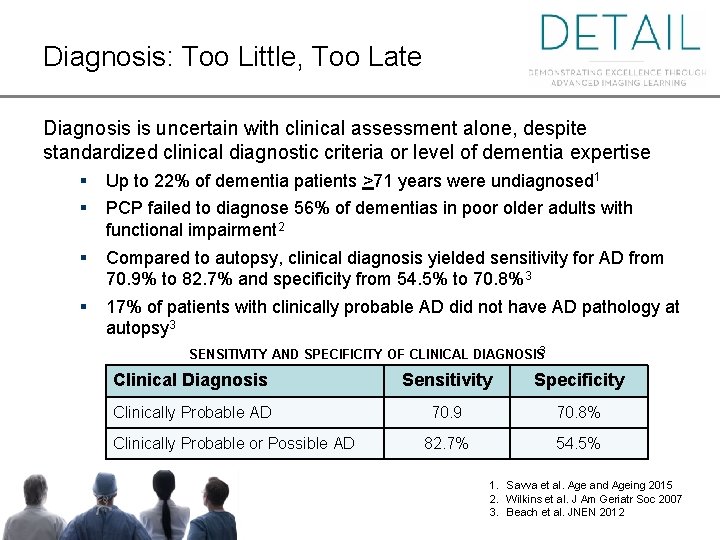
Diagnosis: Too Little, Too Late Diagnosis is uncertain with clinical assessment alone, despite standardized clinical diagnostic criteria or level of dementia expertise § Up to 22% of dementia patients >71 years were undiagnosed 1 § PCP failed to diagnose 56% of dementias in poor older adults with functional impairment 2 § Compared to autopsy, clinical diagnosis yielded sensitivity for AD from 70. 9% to 82. 7% and specificity from 54. 5% to 70. 8%3 § 17% of patients with clinically probable AD did not have AD pathology at autopsy 3 SENSITIVITY AND SPECIFICITY OF CLINICAL DIAGNOSIS 3 Clinical Diagnosis Sensitivity Specificity Clinically Probable AD 70. 9 70. 8% 82. 7% 54. 5% Clinically Probable or Possible AD 1. Savva et al. Age and Ageing 2015 2. Wilkins et al. J Am Geriatr Soc 2007 3. Beach et al. JNEN 2012
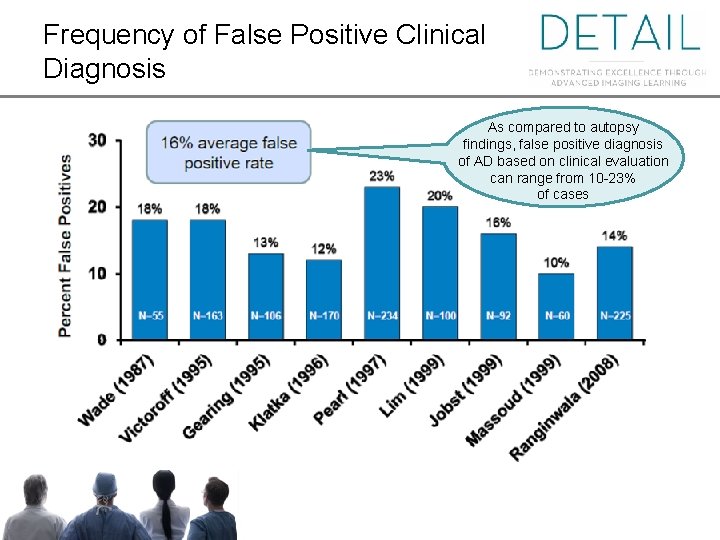
Frequency of False Positive Clinical Diagnosis As compared to autopsy findings, false positive diagnosis of AD based on clinical evaluation can range from 10 -23% of cases
Clinical Diagnosis vs. Autopsy Results Beach et al. J Neuropath Exp Neurol 2012 § Neuropathology studies reveal inaccuracies, especially in possible AD § Comorbid pathology is often missed § 919 patients clinically diagnosed with dementia had autopsy confirmation of their disease § In 648 patients who were diagnosed in life as possible or probable AD § Clinical diagnosis was sensitive (able to diagnose when disease was truly present) 70. 9% to 82. 7% of the time § Clinical diagnosis was specific (able to rule out disease when it was not truly present) 54. 5% to 70. 8% of the time
Clinical Diagnosis vs. Autopsy Results Beach et al. J Neuropath Exp Neurol 2012, cont. § 107 out of 271 patients (39%) who were not clinically diagnosed as possible/probable AD had positive neuropathology for AD § “In most studies, sensitivity is relatively high while specificity is low and many studies have reported only sensitivity or positive predictive value, which has led to a false impression that the clinical diagnosis of AD is extremely accurate. ”
Why Do We Sometimes Fail to Diagnose AD? § Uncertainty – symptoms vary widely in life and there are multiple types of dementia (Beach et al. 2012) § Heightened by a lack of testing methods and tools § Attitudes about dementia (e. g. , fear of causing distress, lack of disease modifying treatment, etc. ) § Delayed diagnosis – “watch and see” effect § Challenging to deliver the diagnosis, especially if unaware of support resources § Lack of awareness of management options and benefits of a diagnosis § Beach et al. JNEN 2012 § Aminzadeh et al. Can Geriatr J 2012 § Koch et al. BMC Family Practice 2010
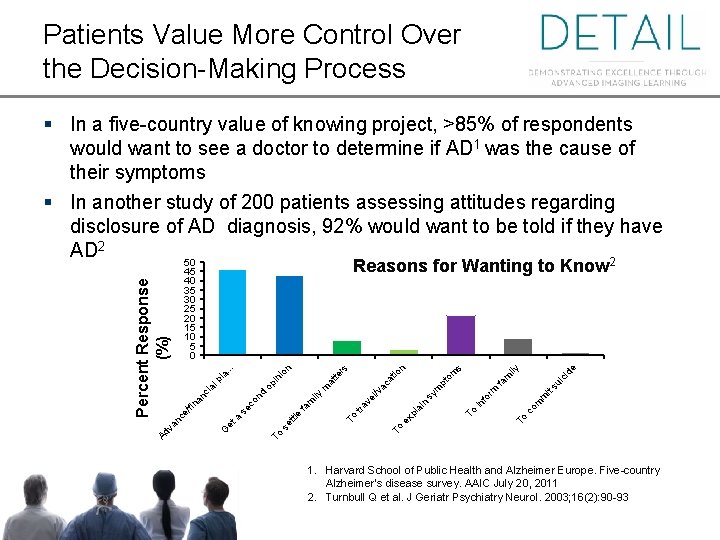
Patients Value More Control Over the Decision-Making Process e id ily ic su To c om m it m fo r To To e x in s pl a in av tr To fa m om pt ym ac /v el ily m ttl e fa s e To s n io at te m at in op nd ec o a s et rs n io p la. . . al ci an fin e/ G va Ad Reasons for Wanting to Know 45 40 35 30 25 20 15 10 5 0 nc Percent Response (%) § In a five-country value of knowing project, >85% of respondents would want to see a doctor to determine if AD 1 was the cause of their symptoms § In another study of 200 patients assessing attitudes regarding disclosure of AD diagnosis, 92% would want to be told if they have AD 2 50 2 1. Harvard School of Public Health and Alzheimer Europe. Five-country Alzheimer's disease survey. AAIC July 20, 2011 2. Turnbull Q et al. J Geriatr Psychiatry Neurol. 2003; 16(2): 90 -93
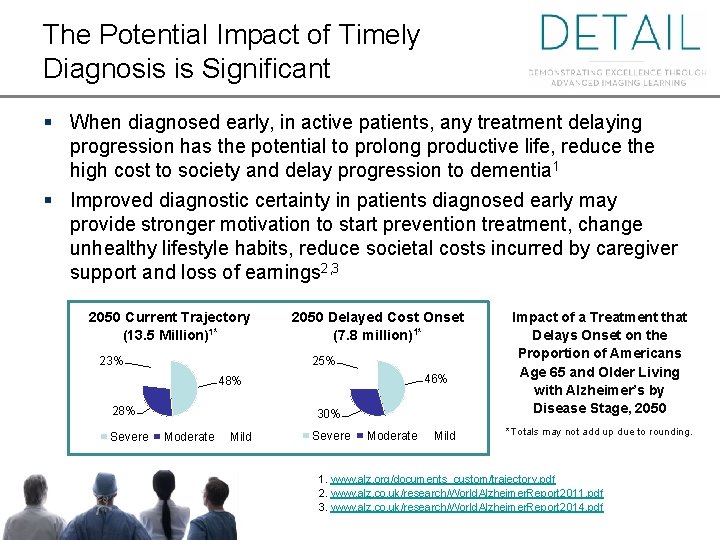
The Potential Impact of Timely Diagnosis is Significant § When diagnosed early, in active patients, any treatment delaying progression has the potential to prolong productive life, reduce the high cost to society and delay progression to dementia 1 § Improved diagnostic certainty in patients diagnosed early may provide stronger motivation to start prevention treatment, change unhealthy lifestyle habits, reduce societal costs incurred by caregiver support and loss of earnings 2, 3 2050 Current Trajectory (13. 5 Million)1* 23% 2050 Delayed Cost Onset (7. 8 million)1* 25% 46% 48% 28% Severe 30% Moderate Mild Severe Moderate Mild Impact of a Treatment that Delays Onset on the Proportion of Americans Age 65 and Older Living with Alzheimer’s by Disease Stage, 2050 *Totals may not add up due to rounding. 1. www. alz. org/documents_custom/trajectory. pdf 2. www. alz. co. uk/research/World. Alzheimer. Report 2011. pdf 3. www. alz. co. uk/research/World. Alzheimer. Report 2014. pdf
Benefits of an Early and Accurate Diagnosis § May reduce the impact of misdiagnosis § Provides access to a pathway of care – including enrolling in clinical trials § Allows patients and their families to seek support and plan for the future; a proper diagnosis offers hope § Targeted medication, lifestyle management and treatment of comorbid conditions can improve quality of life § Addresses safety considerations in the setting of cognitive impairment, including ability to continue driving www. alz. org/2016 Facts and Figures
Key Message for Referring Physicians Amyloid imaging provides in vivo amyloid status and the ability to rule out AD
Benefits of Amyloid PET Imaging Amyloid PET imaging § Is non-invasive § Provides a direct measure of amyloid status in vivo § Links to a specific molecular mechanism § Accumulation of neuritic amyloid plaque § May lead to early detection or exclusion of AD § May be useful in selecting patients for clinical trials § Amyloid PET imaging as a biomarker for therapeutic efficacy
Benefits of Amyloid PET Imaging § Reports show that adjunctive amyloid PET can increase diagnostic certainty and physician confidence 1 -5, 7, 8 § Reports show that amyloid PET results can impact clinical decision-making and patient management 1 -8 1. 2. 3. 4. 5. 6. 7. 8. Fredricksen KS et al. Dement Geriatr Cogn Disord Extra 2012; 2: 610 -21 Grundman M et al. Alzheimer Dis Assoc Disord 2012; Volume 00: 1 -12 Schipke GE et al. Dement Geriatr Cogn Disord 2012; 33: 416 -422 Ossenkoppele R et al. Alzheimer’s and Dementia 2013, 9: 414 -421 Ghosh PM et al. AAIC 2014; 10(4): Supplement P 249 Sanchez-Juan P et al. Neurology 2014; 82: 230 -238 Zwan MD et al. AAIC 2014; 10(4): Supplement P 248 Pontecorvo et al. AAIC 2015; 11(7): Supplement P 334
What is PET Amyloid Imaging? § Positron Emission Tomography (PET) Scan for purposes of detecting beta amyloid plaque § The patient is injected intravenously with an amyloid PET radiopharmaceutical (small amount of radioactivity) § Amyloid radiopharmaceutical binds to β-amyloid neuritic plaques in the brain § The F-18 isotope produces a positron signal that is detected by a PET scanner
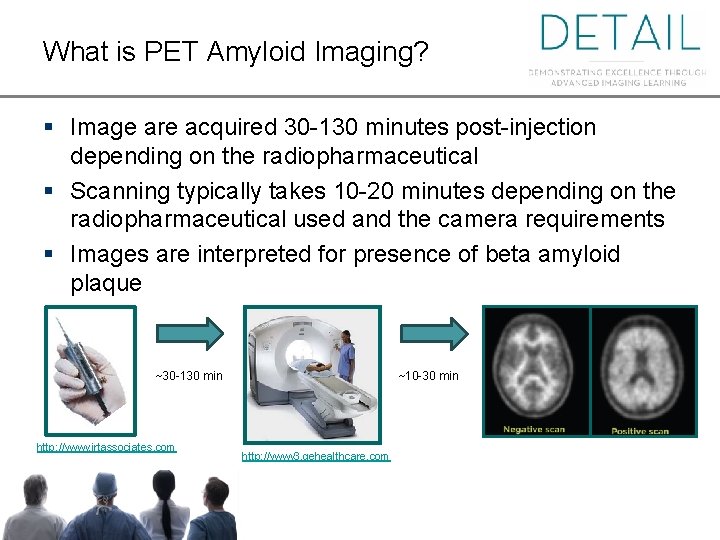
What is PET Amyloid Imaging? § Image are acquired 30 -130 minutes post-injection depending on the radiopharmaceutical § Scanning typically takes 10 -20 minutes depending on the radiopharmaceutical used and the camera requirements § Images are interpreted for presence of beta amyloid plaque ~10 -30 min ~30 -130 min http: //www. jrtassociates. com http: //www 3. gehealthcare. com
Amyloid F-18 Imaging Amyloid F 18 Imaging Agents Radiopharmaceuticals § Florbetapir F-18 Injection = Amyvid™ § Eli Lilly and Company 1 § Flutemetamol F-18 Injection = Vizamyl™ § GE Healthcare 2 § Florbetaben F-18 Injection = Neuraceq™ § Piramal Imaging 3 1. Eli Lilly (2012). Amyvid (Florbetapir F 18 Injection): Prescribing Information. Indianapolis, IN 2. General Electric Company (2013). Vizamyl (Flutemetamol F 18 Injection): Prescribing Information. Manufactured for GE Healthcare by Medi-Physics, Inc. Arlington Heights, IL 3. Piramal Imaging SA (2014). Neuraceq (Florbetaben F 18 Injection): Prescribing Information. Matran, Switzerland
Amyloid F-18 Imaging Radiopharmaceuticals § The difference between a positive and negative amyloid F-18 PET image is the presence of uptake in the gray matter cortex vs. existing white matter § There are product-specific guidelines for dosing, administration, processing, display and interpretation of F -18 labeled amyloid agents § Amyloid images should be displayed according to the radiopharmaceutical-specific validated method § Readers should be trained on the radiopharmaceuticalspecific training method provided by the manufacturer
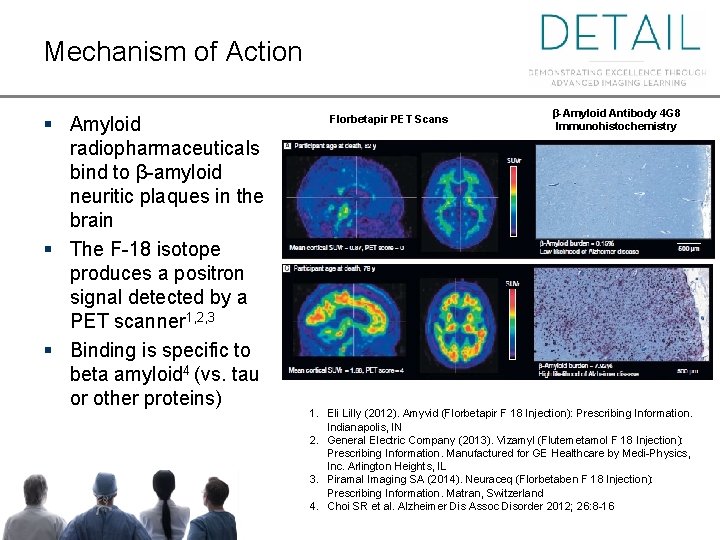
Mechanism of Action Amyloid F 18 Imaging Agents § Amyloid radiopharmaceuticals bind to β-amyloid neuritic plaques in the brain § The F-18 isotope produces a positron signal detected by a PET scanner 1, 2, 3 § Binding is specific to beta amyloid 4 (vs. tau or other proteins) Florbetapir PET Scans β-Amyloid Antibody 4 G 8 Immunohistochemistry 1. Eli Lilly (2012). Amyvid (Florbetapir F 18 Injection): Prescribing Information. Indianapolis, IN 2. General Electric Company (2013). Vizamyl (Flutemetamol F 18 Injection): Prescribing Information. Manufactured for GE Healthcare by Medi-Physics, Inc. Arlington Heights, IL 3. Piramal Imaging SA (2014). Neuraceq (Florbetaben F 18 Injection): Prescribing Information. Matran, Switzerland 4. Choi SR et al. Alzheimer Dis Assoc Disorder 2012; 26: 8 -16
Negative Scan § A negative scan indicates sparse to no neuritic plaques and is inconsistent with a neuropathological diagnosis of AD at the time of image acquisition 1 -3 § A negative scan result reduces the likelihood that a patient’s cognitive impairment is due to AD 1 -3 1. Eli Lilly (2012). Amyvid (Florbetapir F 18 Injection): Prescribing Information. Indianapolis, IN 2. General Electric Company (2013). Vizamyl (Flutemetamol F 18 Injection): Prescribing Information. Manufactured for GE Healthcare by Medi-Physics, Inc. Arlington Heights, IL 3. Piramal Imaging SA (2014). Neuraceq (Florbetaben F 18 Injection): Prescribing Information. Matran, Switzerland
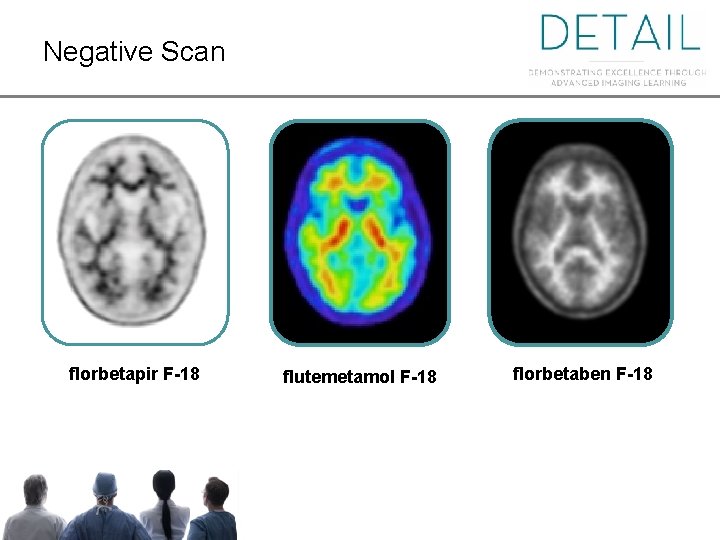
Negative Scan florbetapir F-18 flutemetamol F-18 florbetaben F-18
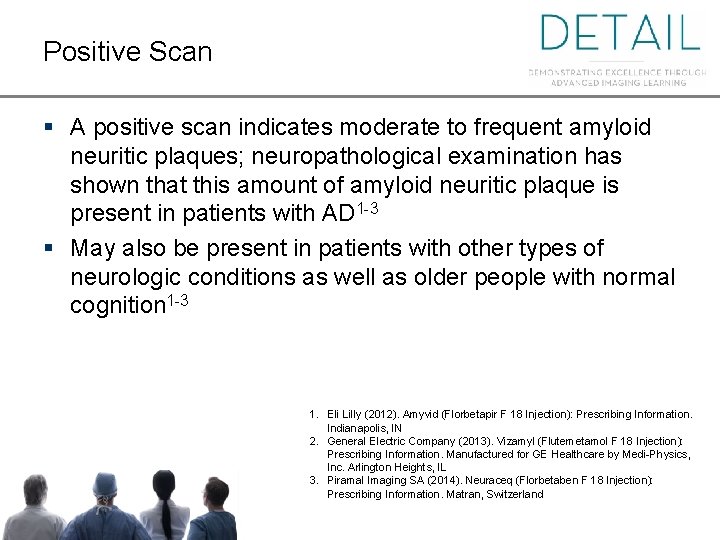
Positive Scan § A positive scan indicates moderate to frequent amyloid neuritic plaques; neuropathological examination has shown that this amount of amyloid neuritic plaque is present in patients with AD 1 -3 § May also be present in patients with other types of neurologic conditions as well as older people with normal cognition 1 -3 1. Eli Lilly (2012). Amyvid (Florbetapir F 18 Injection): Prescribing Information. Indianapolis, IN 2. General Electric Company (2013). Vizamyl (Flutemetamol F 18 Injection): Prescribing Information. Manufactured for GE Healthcare by Medi-Physics, Inc. Arlington Heights, IL 3. Piramal Imaging SA (2014). Neuraceq (Florbetaben F 18 Injection): Prescribing Information. Matran, Switzerland
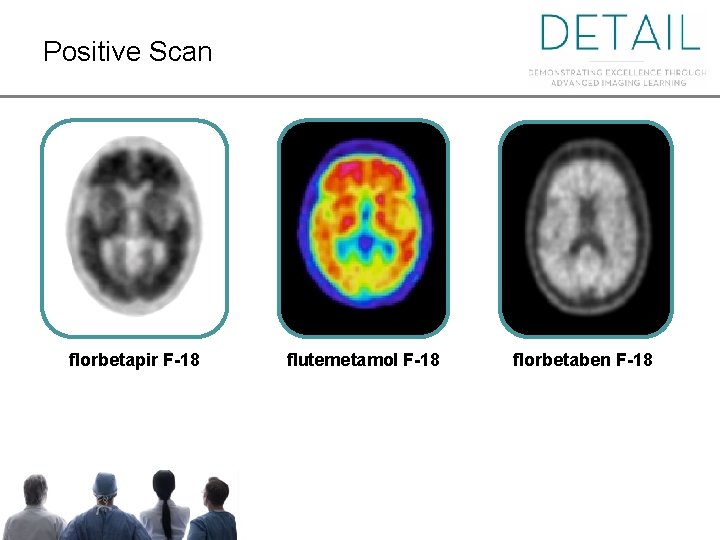
Positive Scan florbetapir F-18 Positive Scan flutemetamol F-18 florbetaben F-18
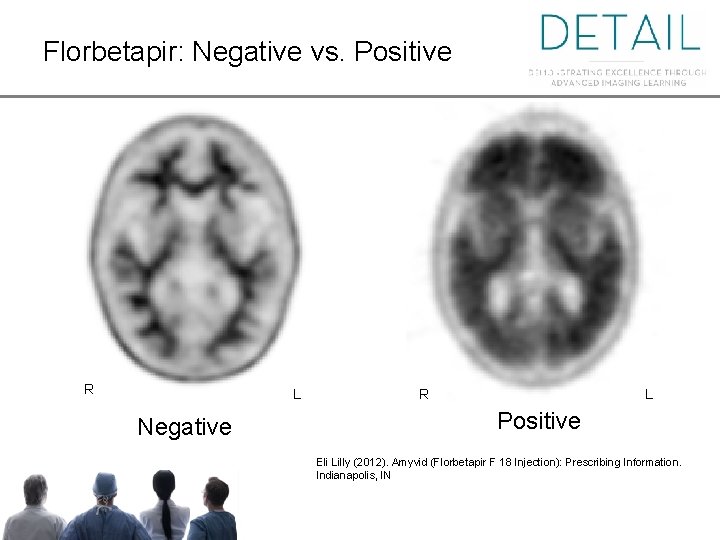
Florbetapir: Negative vs. Positive Florbetapir: Negative vs. . Positive R L Negative R L Positive Eli Lilly (2012). Amyvid (Florbetapir F 18 Injection): Prescribing Information. Indianapolis, IN
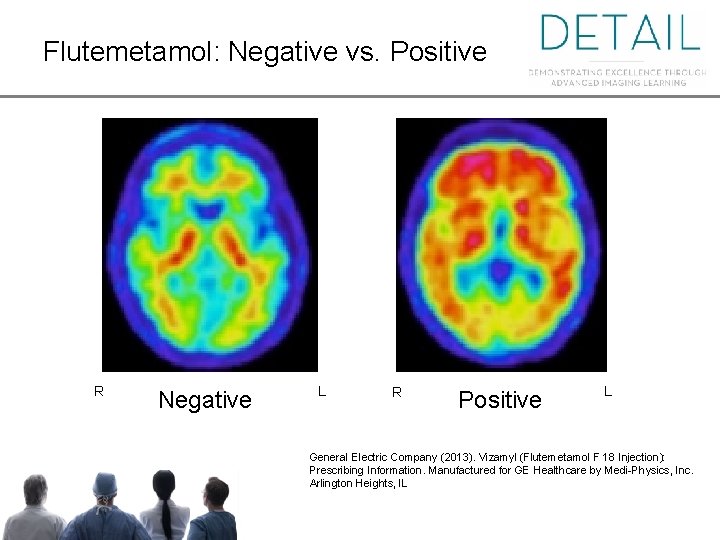
Flutemetamol: Negative vs. Positive Flutemetamol: Negative vs. . Positive R Negative L R Positive L General Electric Company (2013). Vizamyl (Flutemetamol F 18 Injection): Prescribing Information. Manufactured for GE Healthcare by Medi-Physics, Inc. Arlington Heights, IL
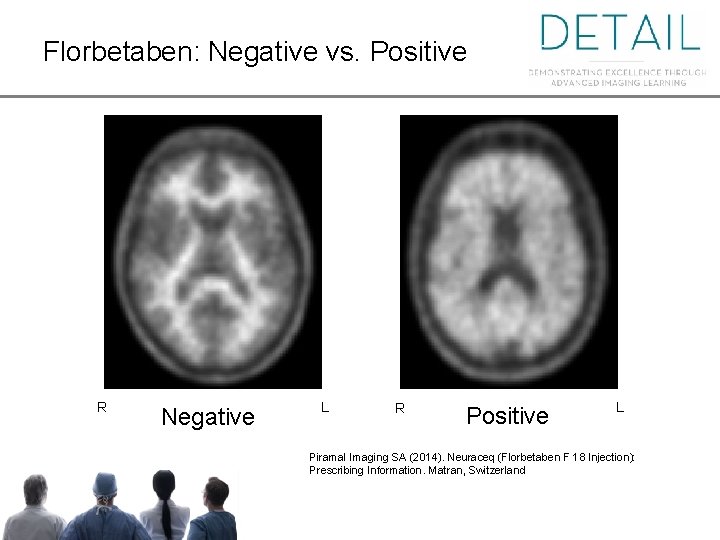
Florbetaben: Negative vs. Positive Florbetaben: Negative vs. . Positive R R Negative L R Positive L Piramal Imaging SA (2014). Neuraceq (Florbetaben F 18 Injection): Prescribing Information. Matran, Switzerland
Risk of Interpretation Errors § Errors may occur in the estimation of brain neuritic plaque density during image interpretation § Image interpretation should be performed independently of the patient’s clinical information. The use of clinical information in the interpretation of images has not been evaluated and may lead to errors. Other errors may be due to extensive brain atrophy that limits the ability to distinguish gray and white matter on the scan as well as motion artifacts that distort the image. § Scan results are indicative of the brain neuritic amyloid plaque content only at the time of image acquisition and a negative scan result does not preclude the development of brain amyloid in the future 1. Eli Lilly (2012). Amyvid (Florbetapir F 18 Injection): Prescribing Information. Indianapolis, IN 2. General Electric Company (2013). Vizamyl (Flutemetamol F 18 Injection): Prescribing Information. Manufactured for GE Healthcare by Medi-Physics, Inc. Arlington Heights, IL 3. Piramal Imaging SA (2014). Neuraceq (Florbetaben F 18 Injection): Prescribing Information. Matran, Switzerland
Key Message for Referring Physicians Amyloid imaging can assist with and even change medical management
Impact of Amyloid Imaging on DIAGNOSIS Review of clinical studies/literature § PET amyloid imaging can result in a change of diagnosis 1 -8 § § In probable AD patients 1, 3, 4 In uncertain diagnosis (less than 85 -90% certainty)1, 2, 4, 7, 8 Changes occurred in 14 -55% of cases 1 -5, 7, 8 Changes occurred even from clinical evaluation by dementia specialists 1 -8 § PET amyloid imaging increases clinician confidence in diagnosis by 16 -78%1 -5, 7, 8 1. 2. 3. 4. 5. 6. 7. 8. Fredricksen KS et al. Dement Geriatr Cogn Disord Extra 2012; 2: 610 -21 Grundman M et al. Alzheimer Dis Assoc Disord 2012; 00: 1 -12 Schipke GE et al. Dement Geriatr Cogn Disord 2012; 33: 416 -422 Ossenkoppele R et al. Alzheimer’s and Dementia 2013; 9: 414 -421 Ghosh PM et al. AAIC 2014; 10(4): Supplement P 249 Sanchez-Juan P et al. Neurology 2014; 82: 230 -238 Zwan MD et al. AAIC 2014; 10(4): Supplement P 248 Pontecorvo MI et al. AAIC 2015; 11(7): Supplement P 334
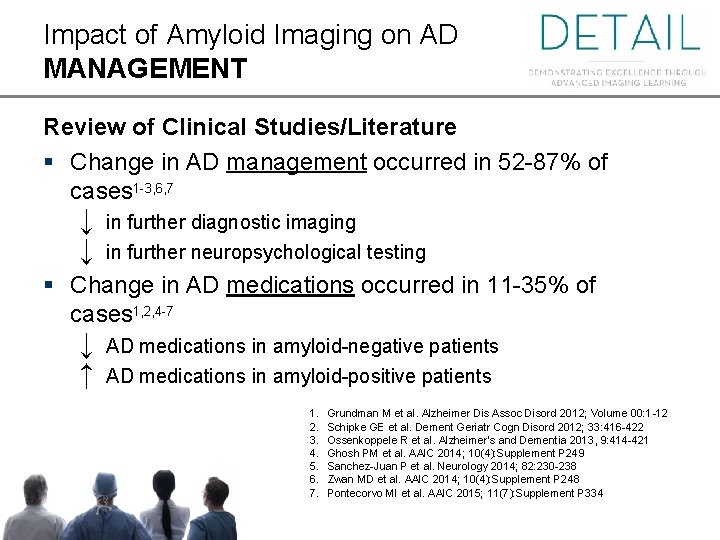
Impact of Amyloid Imaging on AD MANAGEMENT Review of Clinical Studies/Literature § Change in AD management occurred in 52 -87% of cases 1 -3, 6, 7 ↓ ↓ in further diagnostic imaging in further neuropsychological testing § Change in AD medications occurred in 11 -35% of cases 1, 2, 4 -7 ↓ ↑ AD medications in amyloid-negative patients AD medications in amyloid-positive patients 1. 2. 3. 4. 5. 6. 7. Grundman M et al. Alzheimer Dis Assoc Disord 2012; Volume 00: 1 -12 Schipke GE et al. Dement Geriatr Cogn Disord 2012; 33: 416 -422 Ossenkoppele R et al. Alzheimer’s and Dementia 2013, 9: 414 -421 Ghosh PM et al. AAIC 2014; 10(4): Supplement P 249 Sanchez-Juan P et al. Neurology 2014; 82: 230 -238 Zwan MD et al. AAIC 2014; 10(4): Supplement P 248 Pontecorvo MI et al. AAIC 2015; 11(7): Supplement P 334
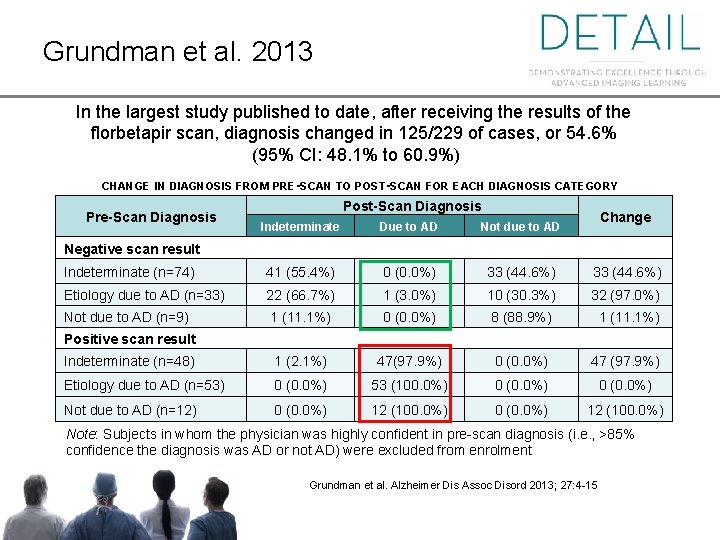
Grundman et al. 2013 In the largest study published to date, after receiving the results of the florbetapir scan, diagnosis changed in 125/229 of cases, or 54. 6% (95% CI: 48. 1% to 60. 9%) CHANGE IN DIAGNOSIS FROM PRE-SCAN TO POST-SCAN FOR EACH DIAGNOSIS CATEGORY Pre-Scan Diagnosis Post-Scan Diagnosis Change Indeterminate Due to AD Not due to AD Indeterminate (n=74) 41 (55. 4%) 0 (0. 0%) 33 (44. 6%) Etiology due to AD (n=33) 22 (66. 7%) 1 (3. 0%) 10 (30. 3%) 32 (97. 0%) Not due to AD (n=9) 1 (11. 1%) 0 (0. 0%) 8 (88. 9%) 1 (11. 1%) Indeterminate (n=48) 1 (2. 1%) 47(97. 9%) 0 (0. 0%) 47 (97. 9%) Etiology due to AD (n=53) 0 (0. 0%) 53 (100. 0%) 0 (0. 0%) Not due to AD (n=12) 0 (0. 0%) 12 (100. 0%) Negative scan result Positive scan result Note: Subjects in whom the physician was highly confident in pre-scan diagnosis (i. e. , >85% confidence the diagnosis was AD or not AD) were excluded from enrolment Grundman et al. Alzheimer Dis Assoc Disord 2013; 27: 4 -15.
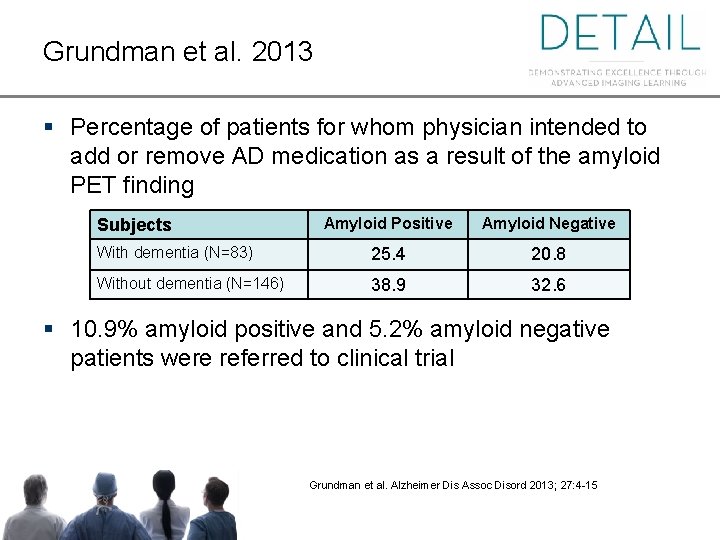
Grundman et al. 2013 § Percentage of patients for whom physician intended to add or remove AD medication as a result of the amyloid PET finding Amyloid Positive Amyloid Negative With dementia (N=83) 25. 4 20. 8 Without dementia (N=146) 38. 9 32. 6 Subjects § 10. 9% amyloid positive and 5. 2% amyloid negative patients were referred to clinical trial Grundman et al. Alzheimer Dis Assoc Disord 2013; 27: 4 -15
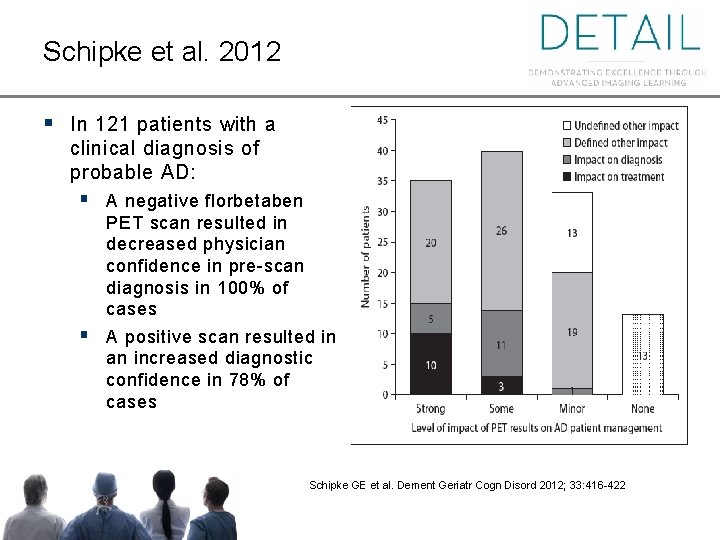
Schipke et al. 2012 § In 121 patients with a clinical diagnosis of probable AD: § A negative florbetaben PET scan resulted in decreased physician confidence in pre-scan diagnosis in 100% of cases § A positive scan resulted in an increased diagnostic confidence in 78% of cases Schipke GE et al. Dement Geriatr Cogn Disord 2012; 33: 416 -422
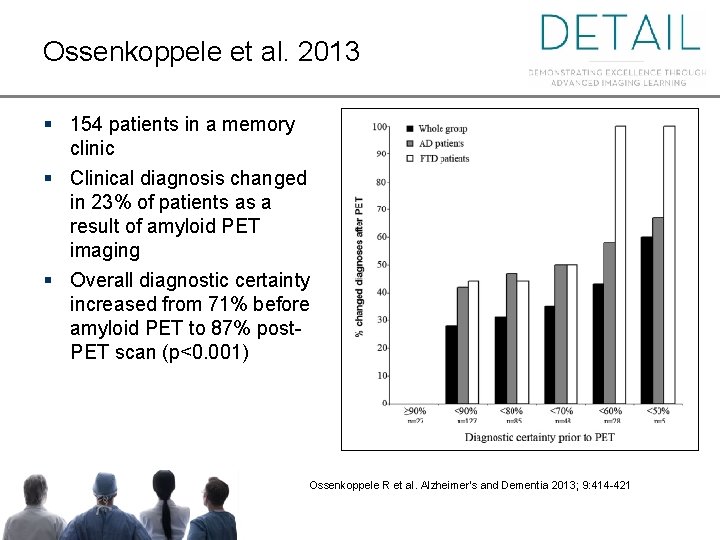
Ossenkoppele et al. 2013 § 154 patients in a memory clinic § Clinical diagnosis changed in 23% of patients as a result of amyloid PET imaging § Overall diagnostic certainty increased from 71% before amyloid PET to 87% post. PET scan (p<0. 001) Ossenkoppele R et al. Alzheimer’s and Dementia 2013; 9: 414 -421
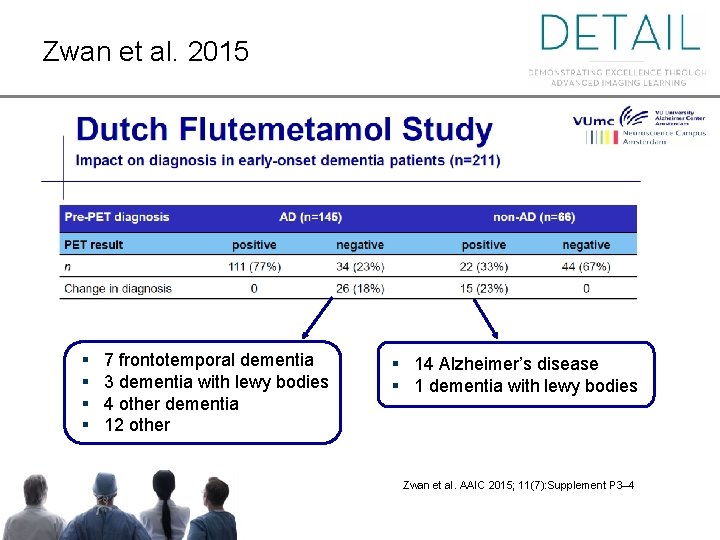
Zwan et al. 2015 § § 7 frontotemporal dementia 3 dementia with lewy bodies 4 other dementia 12 other § 14 Alzheimer’s disease § 1 dementia with lewy bodies Zwan et al. AAIC 2015; 11(7): Supplement P 3– 4
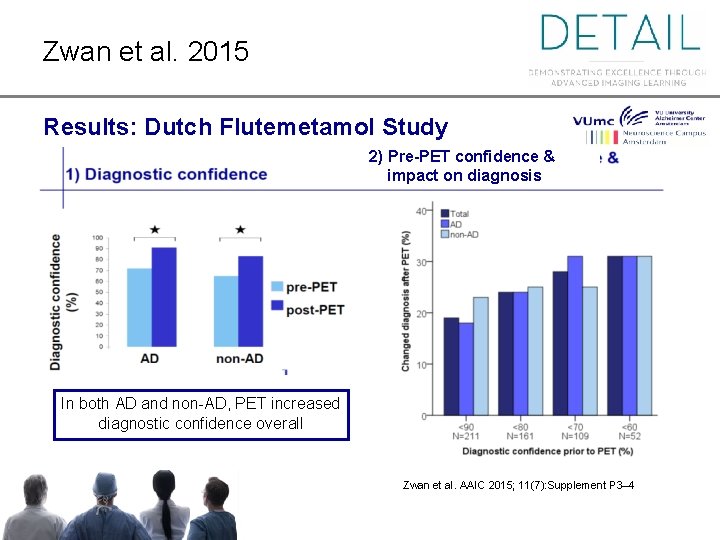
Zwan et al. 2015 Results: Dutch Flutemetamol Study 2) Pre-PET confidence & impact on diagnosis In both AD and non-AD, PET increased diagnostic confidence overall Zwan et al. AAIC 2015; 11(7): Supplement P 3– 4
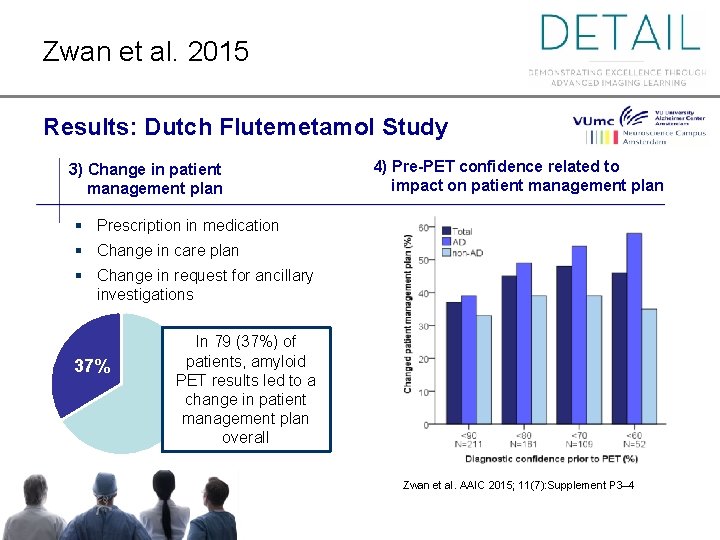
Zwan et al. 2015 Results: Dutch Flutemetamol Study 3) Change in patient management plan 4) Pre-PET confidence related to impact on patient management plan § Prescription in medication § Change in care plan § Change in request for ancillary investigations 37% In 79 (37%) of patients, amyloid PET results led to a change in patient management plan overall Zwan et al. AAIC 2015; 11(7): Supplement P 3– 4
Key Message for Referring Physicians Amyloid imaging is accessible for Medicare patients via the IDEAS Study
IDEAS Study § Imaging Dementia – Evidence for Amyloid Scanning (IDEAS) Study: A Coverage with Evidence Development Longitudinal Cohort Study § Directed by: § Sponsored & Managed by: Alzheimer’s Association American College of Radiology (ACR) American College of Radiology Imaging Network (ACRIN) § Advised by: Centers for Medicare & Medicaid Services (CMS) § Tracer Agnostic: All amyloid tracers can be used § florbetaben (Neuraceq; Pirmal Imaging) § florbetapir (Amyvid; Eli Lilly and Company) § flutemetamol (Vizamyl; GE Healthcare)
Study Overview § An open-label, longitudinal cohort study that will assess the impact of brain amyloid PET imaging on patient outcomes under Coverage with Evidence Development (CED) in patients meeting Appropriate Use Criteria (AUC)1, 2 § The primary hypothesis is that, in diagnostically uncertain cases, knowledge of amyloid status as determined by brain amyloid PET will lead to significant changes in patient management, and this will translate into improved medical outcomes 1. J Nucl Med 2013; 54: 476 -490 2. Alzheimers Dement 2013; 9: e 1 -e 16
IDEAS Aim 1 § To assess the impact of brain amyloid PET imaging on the management of patients meeting AUC at 90 days § Patient management plans are recorded in pre- and post. PET case report forms completed by the Dementia Specialist
Aim 1 Study Primary Objective § Test whether amyloid PET imaging will lead to a ≥ 30% change between intended and actual patient management within ~90 days in a composite measure of at least one of the following: § AD drug therapy § Other drug therapy § Counseling about safety and future planning § The hypothesis will be tested separately for mild cognitive impairment (MCI) and dementia
IDEAS Aim 2 § To assess the impact of brain amyloid PET on hospital admissions and emergency room (ER) visits in study patients (amyloid PET-known) compared to matched patients not in the study (amyloid PET-naïve) over 12 months § CMS Claims Data to address Aim 2 will be collected for all study participants and from concurrent controls matched according to a validated algorithm § 7, 438 additional participants needed for a total of 18, 488 § Metric: 10% relative reduction in hospitalizations / ER visits
Aim 2 Rationale § Individuals with dementia at increased risk for hospitalizations and ED visits compared to those without dementia 1 § Annual hospitalizations: 26. 7% vs. 18. 7%1 § Annual ED visits: 34. 5% vs. 24. 5%1 § Two-thirds deemed preventable (CHF exacerbation, bacterial pneumonia, UTI)2 § Dementia associated with increased mortality and shorter survival after hospitalizations § Preliminary data from Kaiser shows targeted dementia plan led to 18% reduction in ED visits and 11% reduction in hospitalizations 3 1. Feng et al. Health Aff 2014; 33(4): 683 -390 2. Phelan et al. JAMA 2012; 307(2): 165 -172 3. Whitmer RA. Unpublished data
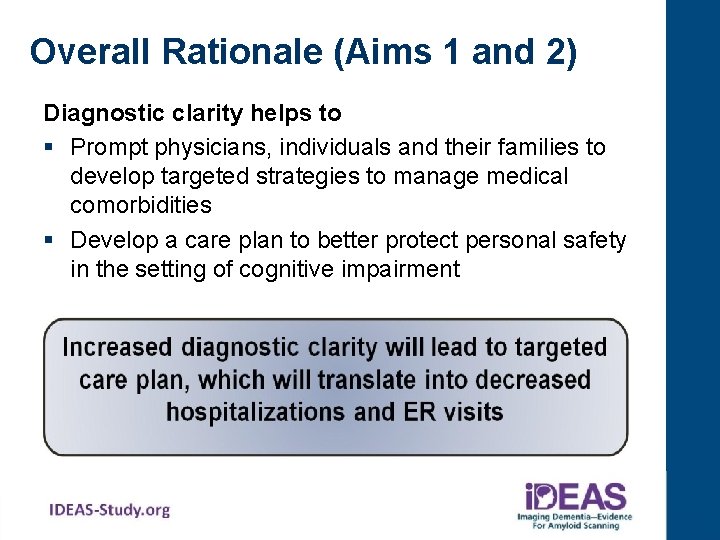
Overall Rationale (Aims 1 and 2) Diagnostic clarity helps to § Prompt physicians, individuals and their families to develop targeted strategies to manage medical comorbidities § Develop a care plan to better protect personal safety in the setting of cognitive impairment
AA-SNMMI Amyloid Imaging Taskforce Appropriate Use Criteria for Amyloid PET: A Report of the Amyloid Imaging Task Force, the Society of Nuclear Medicine and Molecular Imaging, and the Alzheimer’s Association Patient should meet the following criteria: § Cognitive complaint with objectively confirmed impairment § Uncertain diagnosis (with AD as a possibility) after comprehensive evaluation by a dementia expert § Knowledge of Aβ status expected to increase diagnostic certainty and alter management Johnson et al. Alzheimer’s & Dementia/J Nuc Med 2013 IDEAS-Study. org
Appropriate Use Criteria: Top Clinical Scenarios § Persistent/progressive unexplained MCI § Patients with “possible” AD § Atypical clinical course, mixed presentation § Significant co-morbidities (e. g. , vascular, psychiatric, substance abuse) § Patients with atypically early age-of-onset (<65 years) § Note: this population is excluded from IDEAS Johnson et al. Alzheimer’s & Dementia/J Nuc Med 2013 IDEAS-Study. org
Inappropriate Uses of Amyloid PET § Initial evaluation of cognitive complaints § Scan not a substitute for clinical evaluation § Screening of cognitively normal individuals § Pre-clinical AD is a research concept only! § Non-medical use (disability, employment) § Based on family history or genetic risk Johnson et al. Alzheimer’s & Dementia/J Nuc Med 2013 IDEAS-Study. org
When Amyloid PET is NOT Useful § Differentiate AD from other Aβ diseases § Dementia with Lewy bodies § Cerebral amyloid angiopathy § Determine dementia severity § Unlikely to add value in straightforward clinical phenotypes Johnson et al. Alzheimer’s & Dementia/J Nuc Med 2013 IDEAS-Study. org
Best Practices: Pre-PET Screening Visit § Assess mood (depression, anxiety) § Consider use of standardized scales § e. g. State-Trait Anxiety Inventory (STAI), Geriatric Depression Scale (GDS) § Educate about amyloid PET § Relationships between amyloid and AD, relevance to patient’s symptoms § Meaning of positive and negative scan § Consider utilizing Alzheimer’s Association brochure to anchor discussion Adopted from: Harkins et al. Alzheimers Res Ther 2015 IDEAS-Study. org
Best Practices: Pre-PET Screening Visit § Discuss ramifications of positive and negative scan result § Diagnosis, prognosis and management § Psychological impact § Assess patient and family understanding § § Consider using “teach back” method Why is the scan being ordered? How will results impact care? What will be the psychological impact of positive or negative result? Adopted from: Harkins et al. Alzheimers Res Ther 2015 IDEAS-Study. org
Best Practices: Pre-PET Screening Visit § IDEAS Exclusion criteria 4. 2. 2 “Knowledge of amyloid status, in the opinion of the referring dementia expert, may cause significant psychological harm or otherwise negatively impact the patient or family” IDEAS-Study. org
Best Practices: Amyloid Status Disclosure § Disclosure should be made by referring dementia expert, in person whenever possible § Avoid first disclosure by electronic medical records (EMR) § Encourage caregiver/family member/friend attendance to offer support § Schedule enough time in the appointment to allow for questions § Prior to disclosure § Assess mood, recent clinical developments § Assess willingness to receive results § Consider revisiting what the scan is measuring and why it was ordered Adopted from: Harkins et al. Alzheimers Res Ther 2015 IDEAS-Study. org
Best Practices: Following Disclosure § § § Revisit clinical implications Assess understanding Assess immediate psychological impact Encourage questions Provide a written summary Provide contact information for dementia practice and community support resources § In some instances, follow-up contact a few days after disclosure may be prudent Adopted from: Harkins et al. Alzheimers Res Ther 2015 IDEAS-Study. org
IDEAS Research Study For study information (site/HCP applications, logistics, FAQs, etc. ) and registration, go to: www. IDEAS-Study. org 71
Summary § Amyloid imaging provides in vivo amyloid status and the ability to rule out AD § Definitive diagnosis of AD requires both clinical features and histopathological confirmation by brain biopsy or autopsy § Clinical diagnosis of “probable” or “possible” AD can be made based on the 2011 NIA/AA core criteria § The three characteristic findings of AD are beta-amyloid neuritic plaques, neurofibrillary tangles and degeneration with loss of neurons and synapses § Reports show that adjunctive amyloid PET can increase diagnostic certainty and physician confidence and impact clinical decision-making and patient management
Summary § In amyloid F-18 PET imaging, amyloid radiopharmaceuticals bind to β-amyloid neuritic plaques in the brain and produces a positron signal detected by a PET scanner; this binding is specific to beta amyloid vs. tau or other proteins § The difference between a positive and negative amyloid F-18 PET image is the presence of uptake in the gray matter cortex vs. existing white matter § The presence of amyloid burden is consistent with a pathological diagnosis of AD § Amyloid imaging is accessible for Medicare patients via the IDEAS Research Study
References Recommended websites for further information § Alzheimer’s Association: www. alz. org – fact sheets and statistics § IDEAS Study: www. ideas-study. org § NIH National Institute on Aging: www. nia. nih. gov – access the primer on AD and the AD medication fact sheet § Society of Nuclear Medicine and Molecular Imaging: www. snmmi. org – click “Guidance” to access AUC and Practice Standards § World Alzheimer Reports: www. alz. co. uk/research/world-report
Full Scientific References (in alphabetical order) § Albert MS, De. Kosky ST, Dickson D, et al. The diagnosis of mild cognitive impairment due to Alzheimer's disease: recommendations from the National Institute on Aging-Alzheimer's Association workgroups on diagnostic guidelines for Alzheimer's disease. Alzheimers Dement 2011; 7: 270 -9 § Aminzadeh F, Molnar F, Dalziel W and Ayotte D. A review of barriers and enablers to diagnosis and management of persons with dementia in primary care. Can Geriatr J. 2012 § Beach T, Monsell S, Phillips L and Kukull W. Accuracy of the clinical diagnosis of Alzheimer’s disease at National Institute on Aging Alzheimer's Disease Centers, 2005– 2010. J Neuropathol Exp Neurol 2012 Apr; 71(4): 266– 273 § Boise L, Neal M and Jeffrey Kaye J. Dementia assessment in primary care: from a study in three managed care systems. J Gerontol A Biol Sci Med Sci 2004; 59: M 621 -6
Full Scientific References, cont. § Bradford A, Kunik ME, Schulz P, et al. Missed and delayed diagnosis of dementia in primary care: prevalence and contributing factors. Alzheimer Dis Assoc Disord Oct-Dec 2009; 23(4): 306 -14 § Choi SR, Schneider JA, Bennett DA, et al. Correlation of amyloid PET ligand florbetapir F 18 binding with Aβ aggregation and neuritic plaque deposition in postmortem brain tissue. Alzheimer Dis Assoc Disord Jan-Mar 2012; 26(1): 8 -16 § Clark CM, Schneider JA and Bedell BJ. Use of florbetapir-PET for imaging beta-amyloid pathology. JAMA 2011; 305(3): 275 -283 § Dubois B, Feldman H, Jacova C, et al. Revising the definition of Alzheimer’s disease: a new lexicon. Lancet Neurol 2010; 9: 1118 -27 § Feng Z, Coots LA, Kaganova Y and Wiener J. Hospital and ED use among Medicare beneficiaries with dementia varies by setting and proximity to death. Health Affairs 2014; 33(4): 683 -390
Full Scientific References, cont. § Frederiksen KS, Hasselbalch SG, Hejl A, et al. Added diagnostic value of 11 C-Pi. B-PET in memory clinic patients with uncertain diagnosis. Dement Geriatr Cogn Dis Extra 2012; 2: 610 -21 § Ghosh PM, Madison C, Santos M, et al. Amyloid PET has greater clinical impact than FDG PET in the differential diagnosis of AD and FTD. AAIC 2014; 10(4): Supplement P 249 § Grundman M, Pontecorvo M, Salloway S, et al. Potential impact of amyloid imaging on diagnosis and intended management in patients with progressive cognitive decline. Alzheimer Dis Assoc Disord 2012; 00: 1 -12 § Grundman M, Pontecorvo MJ, Salloway SP, et al. Potential impact of amyloid imaging on diagnosis and intended management in patients with progressive cognitive decline. Alzheimer Dis Assoc Disord 2013; 27: 4 -15 § Harvard School of Public Health and Alzheimer Europe. Five-country Alzheimer's disease survey: key findings from a five-country survey of public attitudes about Alzheimer's disease. Presented at AAIC July 20, 2011
Full Scientific References, cont. § Johnson KA, Minoshima S, Bohnen NI, et al. Appropriate Use Criteria for Amyloid PET: A report of the Amyloid Imaging Task Force, the Society of Nuclear Medicine and Molecular Imaging, and the Alzheimer’s Association. J Nucl Med 2013; 54: 476 -490 § Jack CR Jr, Knopman DS, Jagust WJ, et al. Hypothetical model of dynamic biomarkers of the Alzheimer's pathological cascade. Lancet Neurol 2010; 9: 119 -28 § Koch T, Iliffe S and the EVIDEM-ED project. Rapid appraisal of barriers to the diagnosis and management of patients with dementia in primary care: a systematic review. BMC Family Practice 2010; 11: 52 § Matthews BR and Miller BL, Editors. In: The Behavioral Neurology of Dementia 2009; online ISBN: 9780511581410
Full Scientific References, cont. § Mc. Khann GM, Knopman DS, Chertkow H, et al. The diagnosis of dementia due to Alzheimer’s disease: Recommendations from the National Institute on Aging-Alzheimer’s Association workgroups on diagnostic guidelines for Alzheimer’s disease. Alzheimers Dement 2011; 7: 263 -9 § Mendez MF, Shapira JS, Mc. Murtray A and Licht E. Preliminary findings: behavioral worsening on donepezil in patients with frontotemporal dementia. Amer J Geriatr Psych 2007 January; 15(1): 84 -7 § Ossenkoppele R, Prins ND, Pijnenburg YAL, et al. Impact of molecular imaging on the diagnostic process in a memory clinic. Alzheimer’s and Dementia 2013; 9: 414 -421 § Phelan EA, Borson S, Grothaus L, et al. Association of incident dementia with hospitalizations. JAMA 2012; 307(2): 165 -172
Full Scientific References, cont. § Pontecorvo Ml, Siderowf A, Grundman M, et al. A randomized, controlled, multicenter, international study of the impact of florbetapir (18 F) PET amyloid imaging on patient management and outcome. AAIC July 2015; 11(7): Supplement P 334 § Sanchez-Juan P, Ghosh PM, Hagen J, et al. Practical utility of amyloid and FDG-PET in an academic dementia center. Neurology 2014; 82: 230 -238 § Savva G and Arthur A. Who has undiagnosed dementia? A cross-sectional analysis of participants of the Aging, Demographics and Memory Study. Age and Ageing March 2015 § Schipke CG, Peters O, Heuser I, et al. Impact of beta-amyloid specific florbetaben PET imaging on confidence in early diagnosis of Alzheimer’s disease. Geriatr Cogn Disord 2012; 33: 416 -22 (updated 34: 262 § Turnbull Q, Wolf A and Holroyd S. Attitudes of elderly subjects toward “truth telling” for the diagnosis of Alzheimer’s disease. J Geriatr Psychiatry Neurol 2003; 16(2): 90 -93
Full Scientific References, cont. § Villemagne VL, Burnham S, Bourgeat P et al. Amyloid β deposition, neurodegeneration, and cognitive decline in sporadic Alzheimer's disease: a prospective cohort study. Lancet Neurol 2013; 12: 357 -6 § § Whitmer RA. Unpublished data § Zec RF and Burkett NR. Non-pharmacological and pharmacological treatment of the cognitive and behavioral symptoms of Alzheimer disease. Neuro. Rehabilitation 2008; 23: 425 -38 § Zwan MD, Bouwman FH, Konijnenburg E, et al. Diagnostic impact of [18 F]flutemetamol amyloid imaging in young-onset dementia. AAIC July 2015; 11(7): Supplement P 3– 4 § Zwan MD, Bouwman FH, Van der Flier WM, et al. Diagnostic value of amyloid imaging in early onset dementia. AAIC July 2014; 10(4): Supplement P 248 Wilkins CH, Wilkins KL, Meisel M, et al. Dementia undiagnosed in poor older adults with functional impairment. J Am Geriatr Soc 2007 Nov; 55(11): 1771 -6
Important Safety Information § § § Errors may occur in the PET amyloid estimation of brain neuritic plaque density during image interpretation. See individual product labels for additional information. Image interpretation should be performed independently of the patient’s clinical information. The use of clinical information in the interpretation of Amyloid PET images has not been evaluated and may lead to errors. Other errors may be due to extensive brain atrophy that limits the ability to distinguish gray and white matter on the Amyloid PET scan as well as motion artifacts that distort the image. Amyloid PET scan results are indicative of the brain neuritic amyloid plaque content only at the time of image acquisition and a negative scan result does not preclude the development of brain amyloid in the future. Amyloid PET agents, similar to other radiopharmaceuticals, contributes to a patient’s overall long-term cumulative radiation exposure. Long-term cumulative radiation exposure may be associated with an increased risk of cancer.
- Slides: 82