
amylase Digestion Glycogen 1 6 glucosidase debranching enzyme
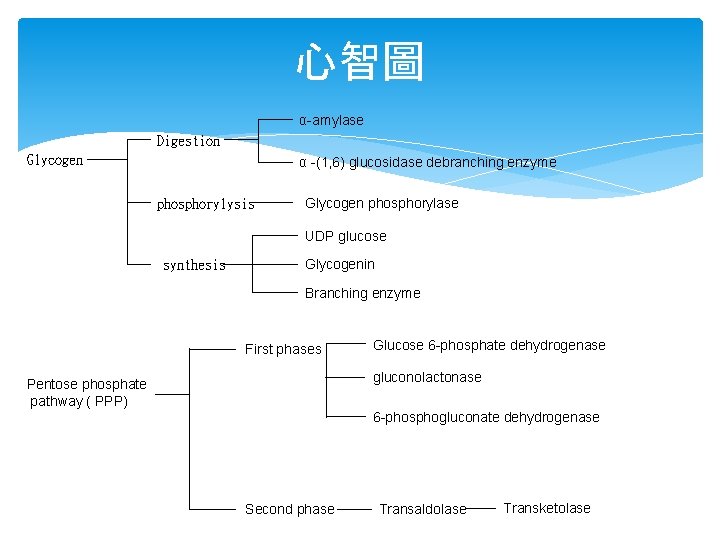
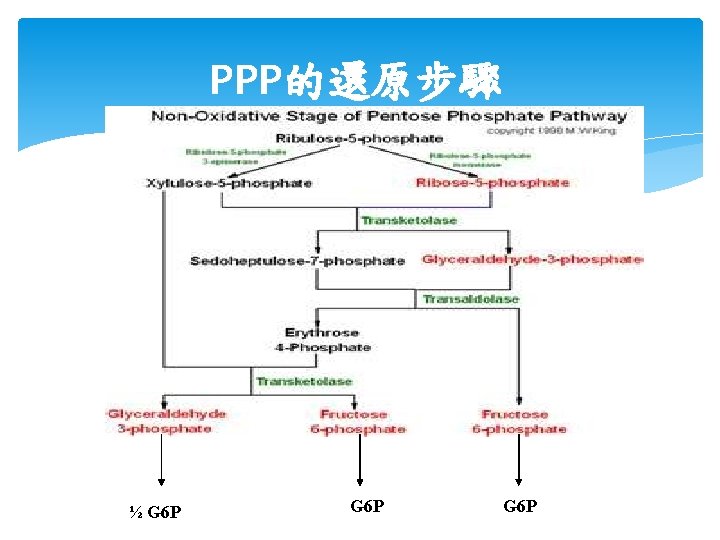
心智圖 α-amylase Digestion Glycogen α -(1, 6) glucosidase debranching enzyme phosphorylysis Glycogen phosphorylase UDP glucose synthesis Glycogenin Branching enzyme First phases Glucose 6 -phosphate dehydrogenase gluconolactonase Pentose phosphate pathway ( PPP) 6 -phosphogluconate dehydrogenase Second phase Transaldolase Transketolase
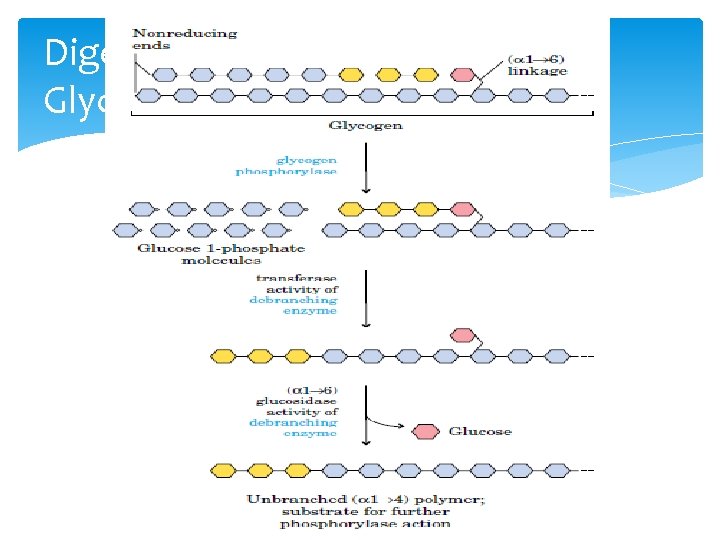
Digestion of Glycogen
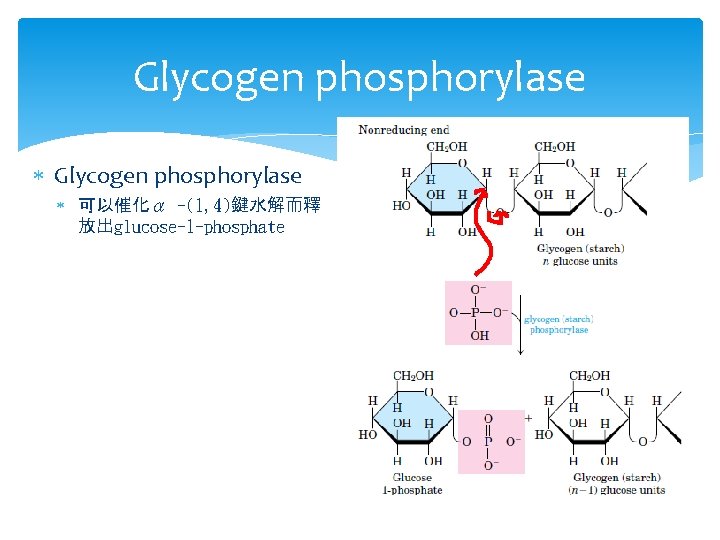
Glycogen phosphorylase 可以催化α -(1, 4)鍵水解而釋 放出glucose-1 -phosphate
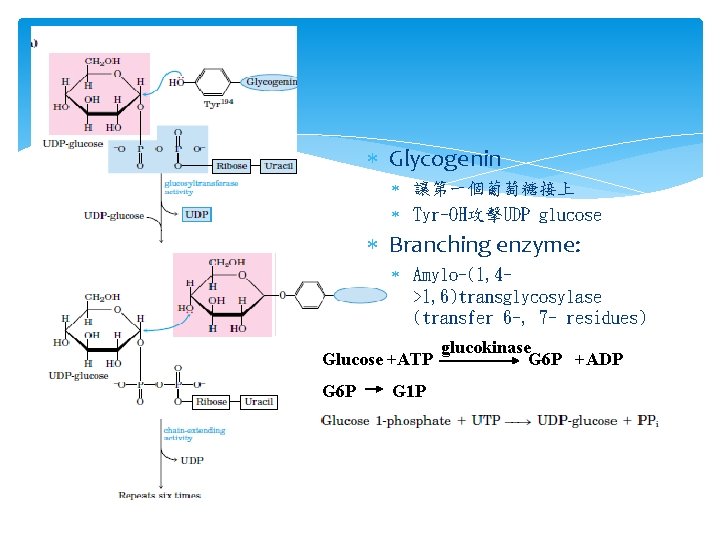
Glycogenin 讓第一個葡萄糖接上 Tyr-OH攻擊UDP glucose Branching enzyme: Amylo-(1, 4>1, 6)transglycosylase (transfer 6 -, 7 - residues) Glucose +ATP G 6 P G 1 P glucokinase G 6 P +ADP

Glycogen synthase
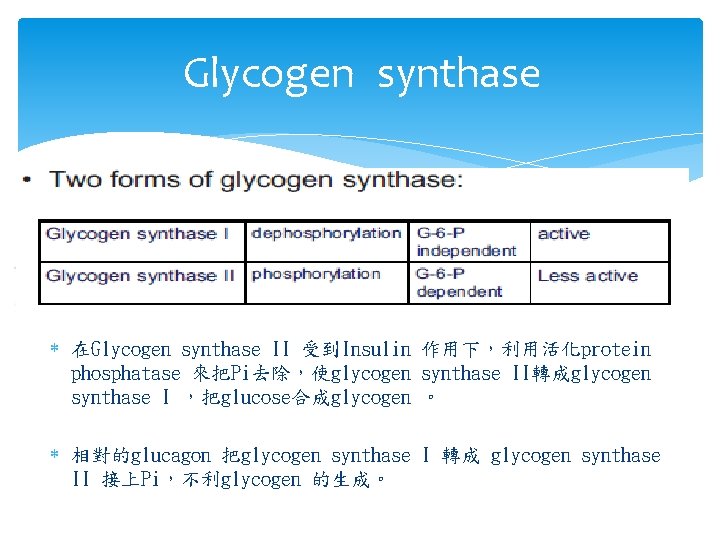
Glycogen synthase 在Glycogen synthase II 受到Insulin 作用下,利用活化protein phosphatase 來把Pi去除,使glycogen synthase II轉成glycogen synthase I ,把glucose合成glycogen 。 相對的glucagon 把glycogen synthase I 轉成 glycogen synthase II 接上Pi,不利glycogen 的生成。
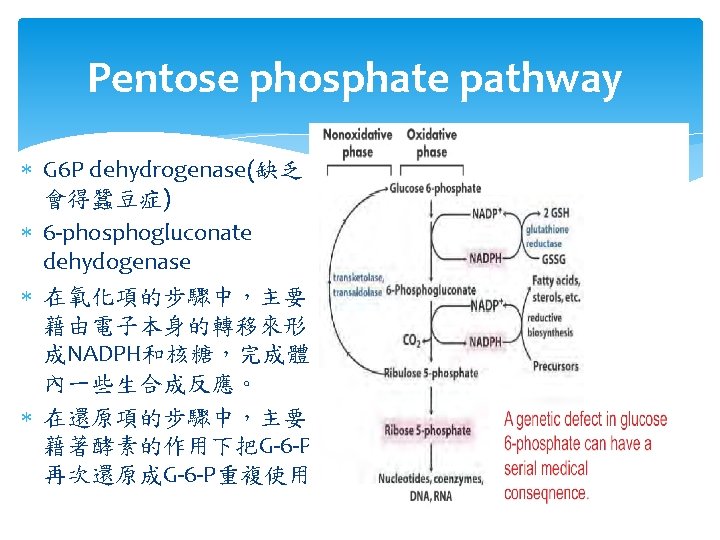
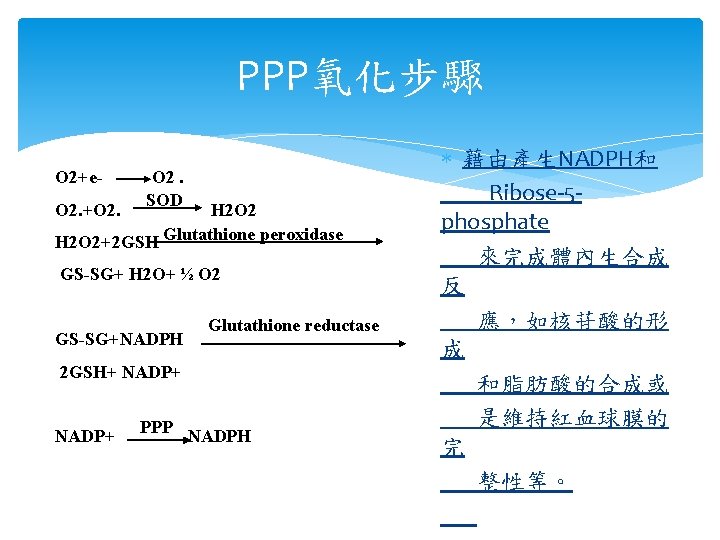
PPP氧化步驟 O 2+e. O 2. +O 2. SOD H 2 O 2+2 GSH Glutathione peroxidase GS-SG+ H 2 O+ ½ O 2 GS-SG+NADPH Glutathione reductase 2 GSH+ NADP+ PPP NADPH 藉由產生NADPH和 Ribose-5 phosphate 來完成體內生合成 反 應,如核苷酸的形 成 和脂肪酸的合成或 是維持紅血球膜的 完 整性等。
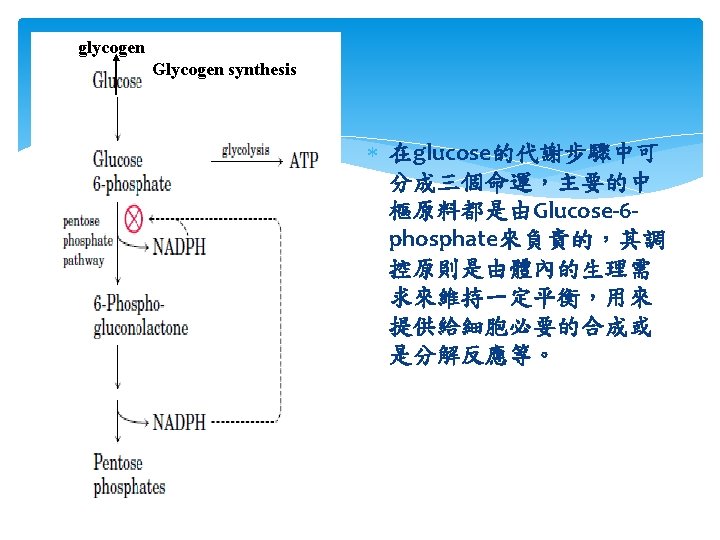
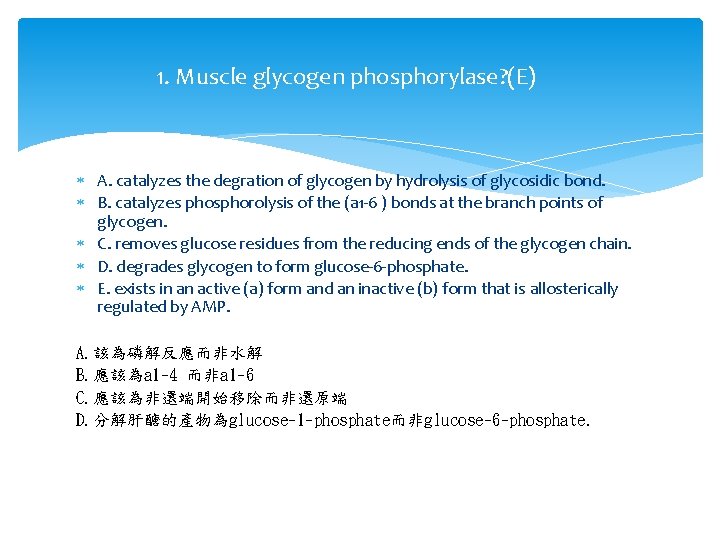
1. Muscle glycogen phosphorylase? (E) A. catalyzes the degration of glycogen by hydrolysis of glycosidic bond. B. catalyzes phosphorolysis of the (a 1 -6 ) bonds at the branch points of glycogen. C. removes glucose residues from the reducing ends of the glycogen chain. D. degrades glycogen to form glucose-6 -phosphate. E. exists in an active (a) form and an inactive (b) form that is allosterically regulated by AMP. A. 該為磷解反應而非水解 B. 應該為a 1 -4 而非a 1 -6 C. 應該為非還端開始移除而非還原端 D. 分解肝醣的產物為glucose-1 -phosphate而非glucose-6 -phosphate.
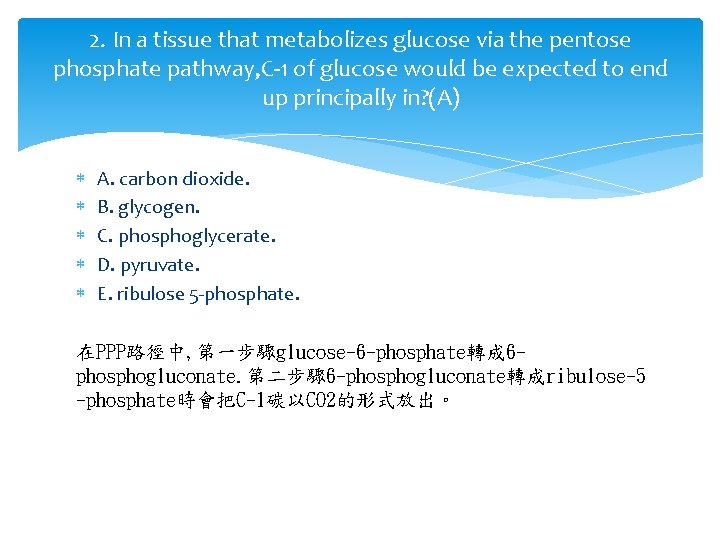
2. In a tissue that metabolizes glucose via the pentose phosphate pathway, C-1 of glucose would be expected to end up principally in? (A) A. carbon dioxide. B. glycogen. C. phosphoglycerate. D. pyruvate. E. ribulose 5 -phosphate. 在PPP路徑中, 第一步驟glucose-6 -phosphate轉成 6 phosphogluconate. 第二步驟 6 -phosphogluconate轉成ribulose-5 -phosphate時會把C-1碳以CO 2的形式放出。
3. Breakdown of glycogen requires following enzymes except: (D) A. glycogen phosphorylase. B. glucantransferase. C. debranching enzyme. D. glycogen phosphatase. Glycogen的代謝由細胞經過訊號因子的接收後, 經過了幾步驟後 活化glycogen phosphorylase把glycogen直鏈部分分解成glucose -1 -phosphate, 分支的部分由debranching enzyme這個酵素包含 glucantransferase和α -(1, 6) glucosidase把分支的glycogen分解 成glucose。
4. Glycogen biosynthesis is the conversion of glucose to glycogen via: (D) A. G-1 -P. B. G-6 -P. C. G-1 -P first and then G-6 -P. D. G-6 -P first and then G-1 -P. 要把glucose轉成glycogen的話要先把glucose轉成G-6 -P後, G-6 -P 轉成G-1 -P, 再把G-1 -P轉成UDP-glucose後, 直接並到glycogen的 非還原端。
5. Which of the following statements about the pentose phosphate pathway is correct? (E) A. It generates 36 moles ATP per mole of glucose consumed. B. It generates 6 moles of CO 2 for each mole of glucose consumed. C. It is a reductive pathway ; it consumes NADH. D. It is present in plant , but no on animals. E. It provides precursors for the synthesis of nucleotides. PPP路徑主要是用來生合成的步驟反應, 不是用來產生能量的, 所 以所以不是用來生產能量沒有ATP的產生, 而是 2 NADPH和CO 2的生 成,而PPP路徑中有氧化項和還原項兩部份,對於任何生物而言 都是非常重要的,所以植物和動物都有PPP代謝路徑。
6. The main function of the pentose phosphate pathway is to: (E) A. give the cell an alternative pathway should glycolysis fail. B. provide a mechanism for the utilization of the carbon skeletons of excess amino acids. C. supply energy. D. supply NADH. E. supply pentose and NADPH. PPP路徑中第一步驟glucose-6 -phosphate轉成 6 -phosphogluconate 時放出NADPH第二步驟 6 -phosphogluconate轉成ribulose-5 phosphate時放出CO 2和NADPH, 接著產物ribulose-5 phosphate會轉成 核苷酸的原料, 另外NADPH會當成生合成的輔酶。
- Slides: 17