
Amphibians reptiles mammals Frogs and other amphibians have
Amphibians, reptiles , mammals
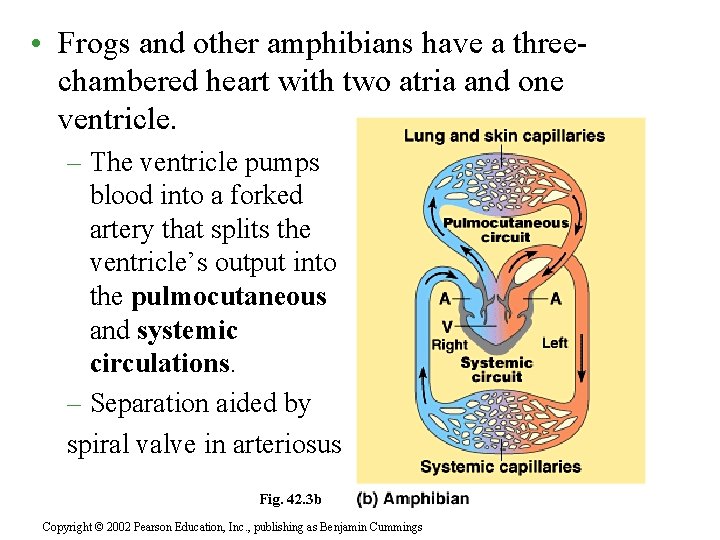
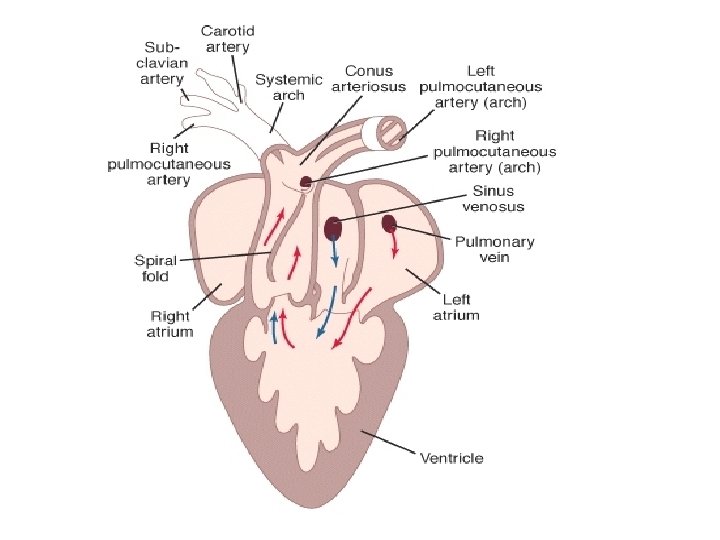
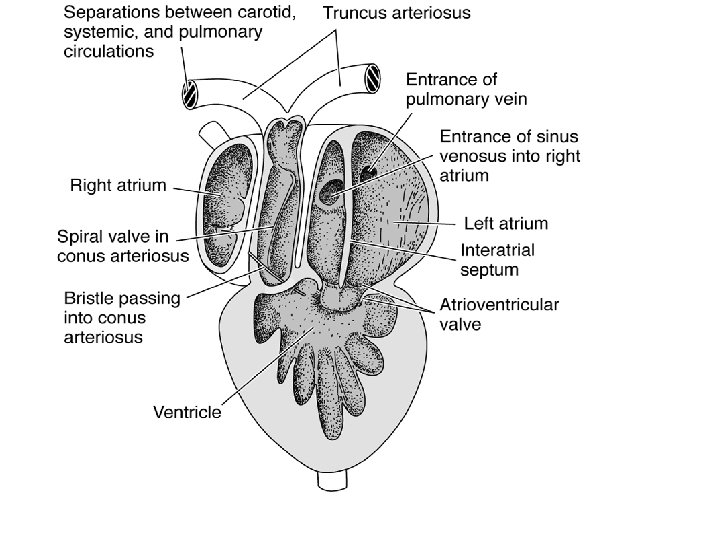
• Frogs and other amphibians have a threechambered heart with two atria and one ventricle. – The ventricle pumps blood into a forked artery that splits the ventricle’s output into the pulmocutaneous and systemic circulations. – Separation aided by spiral valve in arteriosus Fig. 42. 3 b Copyright © 2002 Pearson Education, Inc. , publishing as Benjamin Cummings
• The pulmocutaneous circulation leads to capillaries in the gas-exchange organs (the lungs and skin of a frog), where the blood picks up O 2 and releases CO 2 before returning to the heart’s left atrium. – Most of the returning blood is pumped into the systemic circulation, which supplies all body organs and then returns oxygen-poor blood to the right atrium via the veins. – This scheme, called double circulation, provides a vigorous flow of blood to the brain, muscles, and other organs because the blood is pumped a second time after it loses pressure in the capillary beds of the lung or skin.
• In the ventricle of the frog, some oxygen-rich blood from the lungs mixes with oxygen-poor blood that has returned from the rest of the body. – However, a ridge within the ventricle diverts most of the oxygen-rich blood from the left atrium into the systemic circuit and most of the oxygen-poor blood from the right atrium into the pulmocutaneous circuit. Copyright © 2002 Pearson Education, Inc. , publishing as Benjamin Cummings
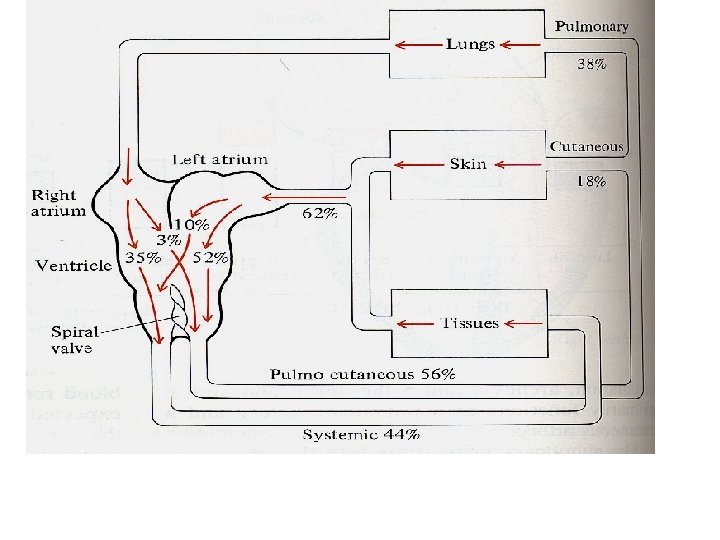
Breathing lung , or skin • According to air breathing if pulmonary are breath its resistance will decrease … more blood directed to lung • If lung is collapse …. its resistance will be higher so blood flow to coetaneous increased
• Amphibians in water, however, can obtain additional oxygen by diffusion through their skin. • This process, called cutaneous respiration, helps to supplement the oxygenation of the blood in these vertebrates.
Reptiles • A- Non-crocodilian reptiles • B- Crocodilian reptiles • A- Non-crocodilian Reptiles also have double circulation with pulmonary (lung) and systemic circuits. – However, there is even less mixing of oxygen-rich and oxygen-poor blood than in amphibians. – Although the reptilian heart is three-chambered, the ventricle is partially divided.
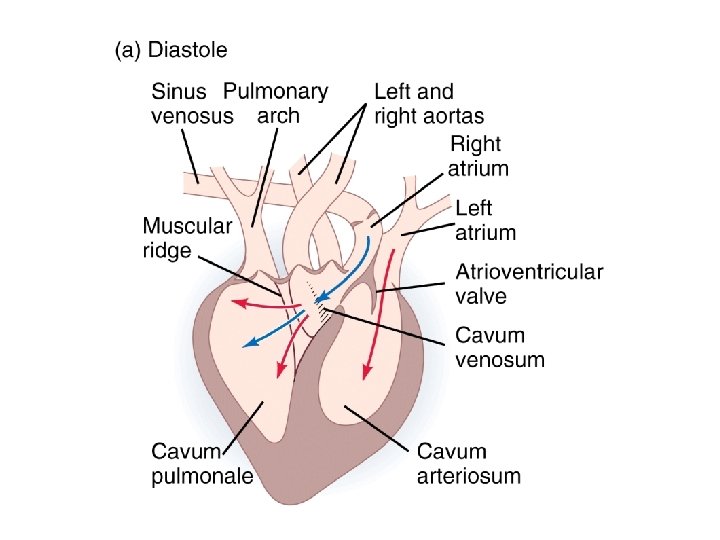
(A- Turtle , lizard, …( non croco • Its ventricle is partially divided by muscular ridge ( septum muskelleist) • Make separation between cavum pulmonar, cavum venosum, and cavum arteriosum • Aided by free horizontal limb
• Left atrium receive oxygenated blood • Right atrium receive deoxygenated • Right atrium contract before left (slightly) and its blood ejected to cavum pulmonar over the free edge of horizontal septum. • Left atrium eject to cavum arteriosum • Cavum venosum mix
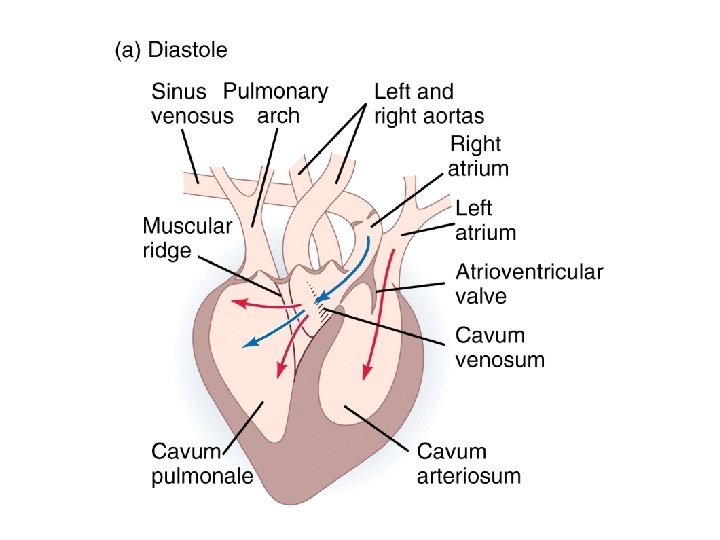
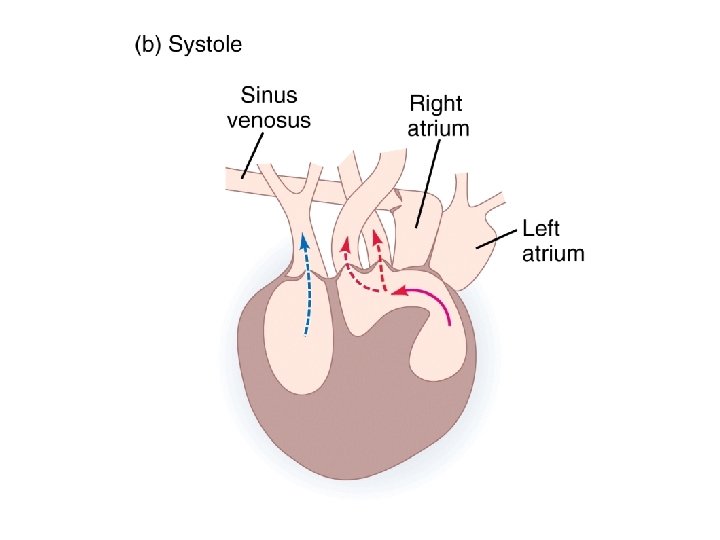
• Ventricle contract ; • cavum venosum and cavum arteriosum eject to systemic arteries • Cavum pulmonar eject to pulmonary artery • Pulmonary artery has low BP so it receive before systemic
Diving or air breating • Blood pressure in pulmonary artery play a role in ventilation or diving. • No ventilation high resistance and higher blood pressure. • In ventilation low Blood pressure.
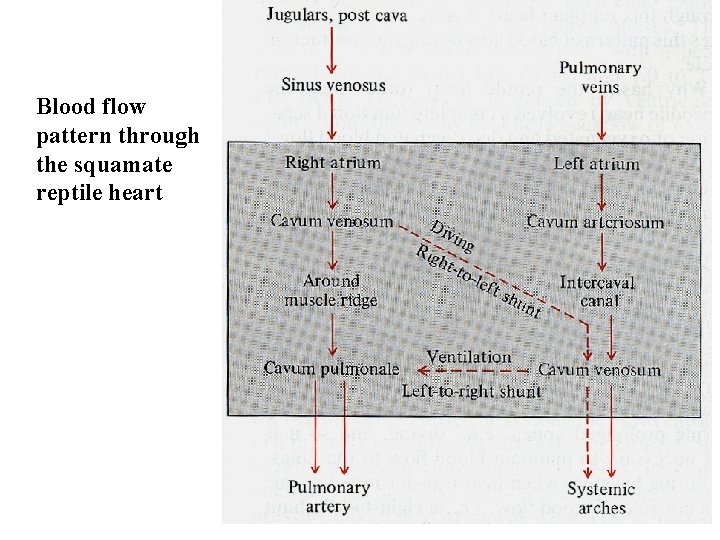
Blood flow pattern through the squamate reptile heart
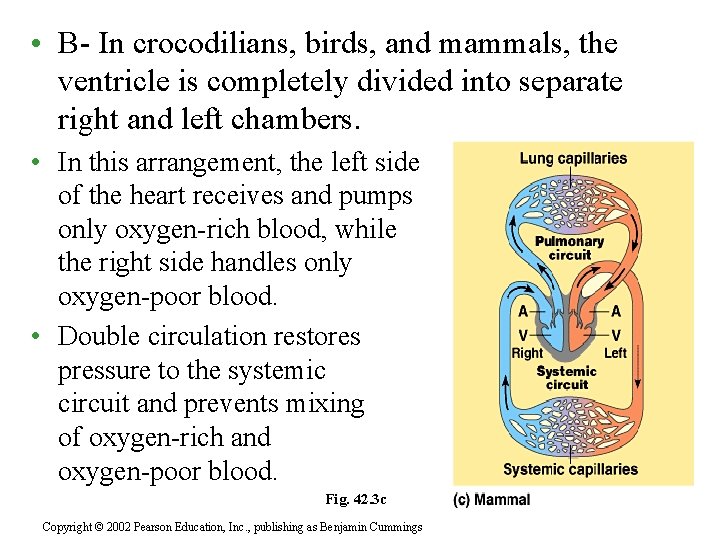
• B- In crocodilians, birds, and mammals, the ventricle is completely divided into separate right and left chambers. • In this arrangement, the left side of the heart receives and pumps only oxygen-rich blood, while the right side handles only oxygen-poor blood. • Double circulation restores pressure to the systemic circuit and prevents mixing of oxygen-rich and oxygen-poor blood. Fig. 42. 3 c Copyright © 2002 Pearson Education, Inc. , publishing as Benjamin Cummings
• • • Ventricle divided completely Two systemic arch - left ---from right ventricle - right from left ventricle Both are connected by foramen panizzae
Crocodilian Heart • Mechanism for breathing and diving – Lungs not utilized – Blood not pumped to lungs • Foramen of Panizza – Valve between aortic trunks to divert blood – Allows left ventricle to pump to both arches when right ventricle closed • Underwater right ventricle helps pump systemic blood
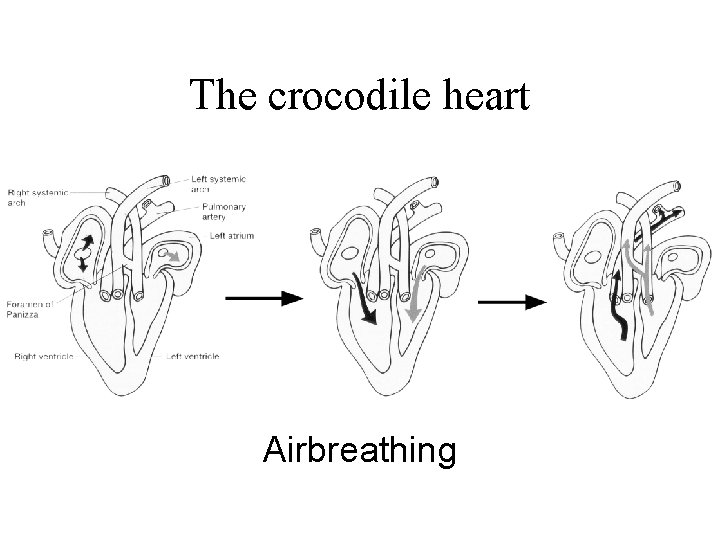
The crocodile heart Airbreathing
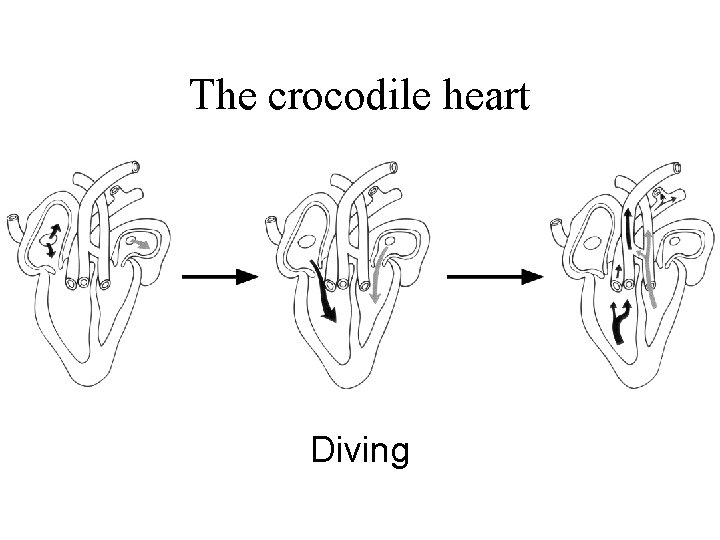
The crocodile heart Diving
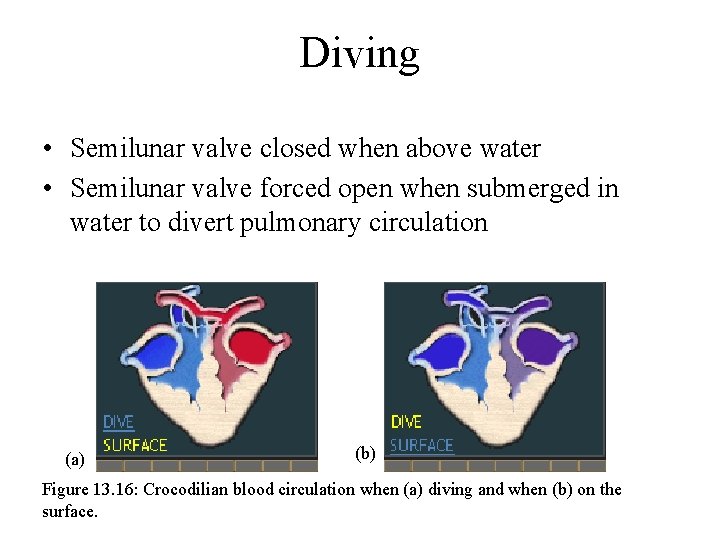
Diving • Semilunar valve closed when above water • Semilunar valve forced open when submerged in water to divert pulmonary circulation (a) (b) Figure 13. 16: Crocodilian blood circulation when (a) diving and when (b) on the surface.
Lungfish and Amphibian vs Dogfish • Modifications of partial or complete partition in atrium – Left and right atria • Advent of lungs – Double circulation – Modification in conus arteriosus – Semi-lunar valve modified to shunt deoxygenated blood to lungs (spiral valve)
• The evolution of a powerful four-chambered heart was an essential adaptation in support of the endothermic way of life characteristic of birds and mammals. – Endotherms use about ten times as much energy as ectotherms of the same size. – Therefore, the endotherm circulatory system needs to deliver about ten times as much fuel and O 2 to their tissues and remove ten times as much wastes and CO 2.
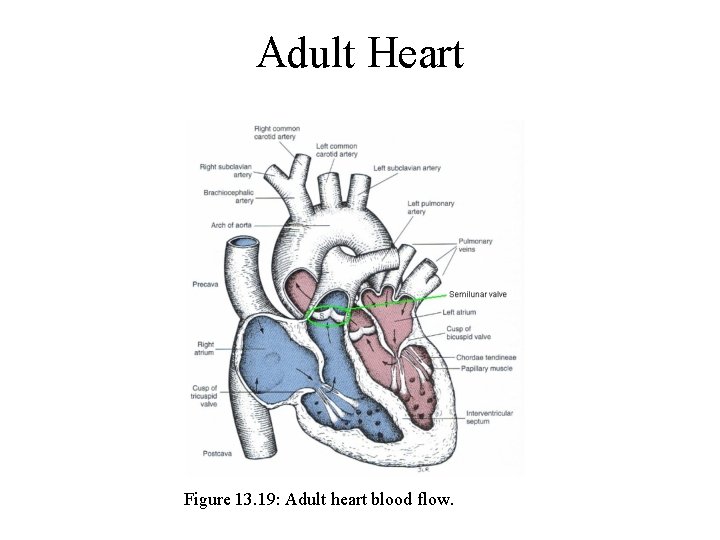
Adult Heart Figure 13. 19: Adult heart blood flow.
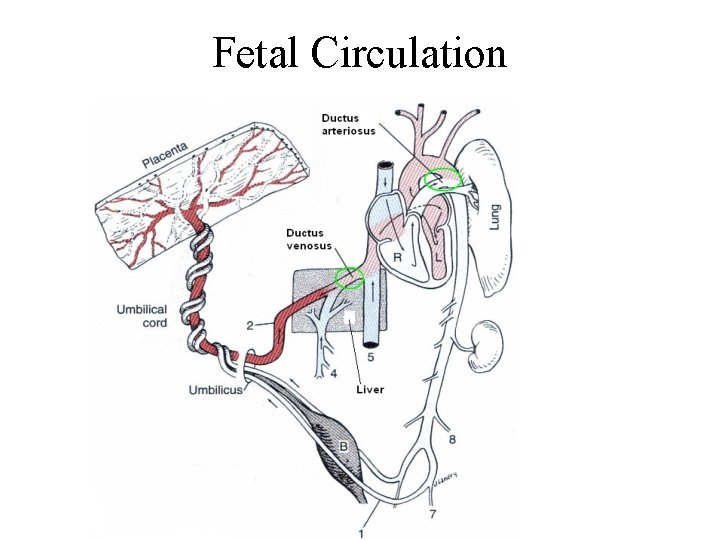
Fetal Circulation
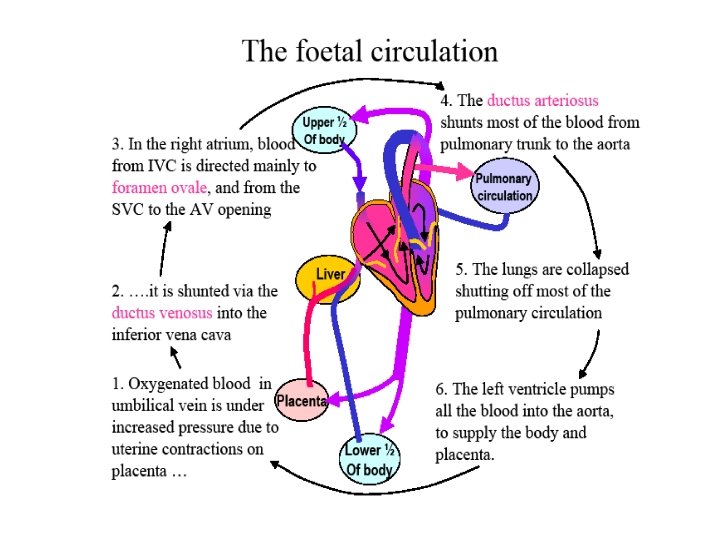
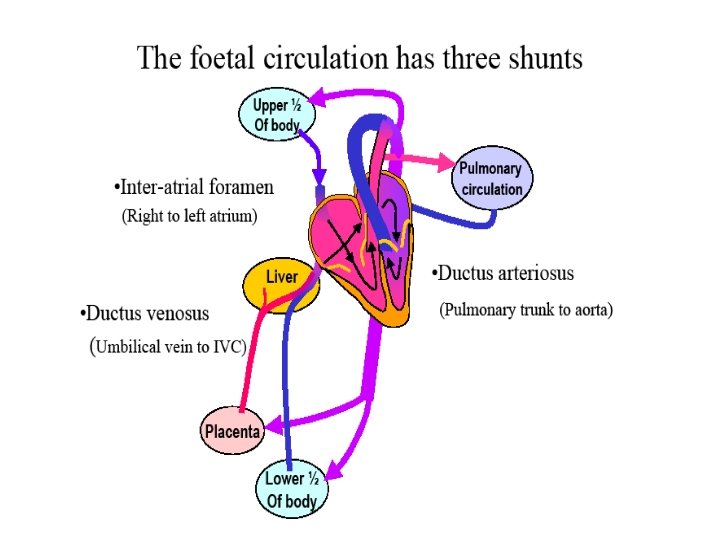
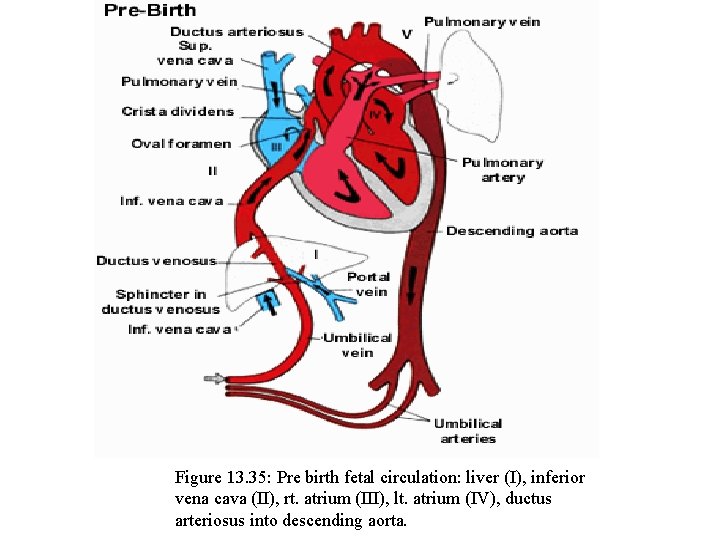
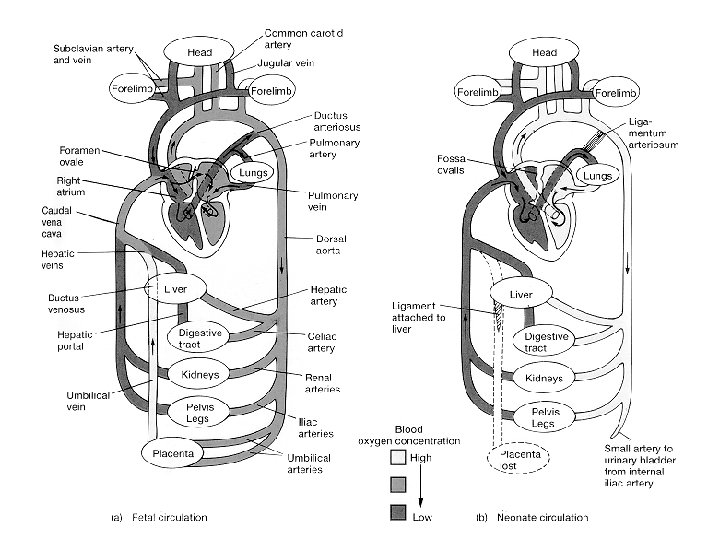
Figure 13. 35: Pre birth fetal circulation: liver (I), inferior vena cava (II), rt. atrium (III), lt. atrium (IV), ductus arteriosus into descending aorta.
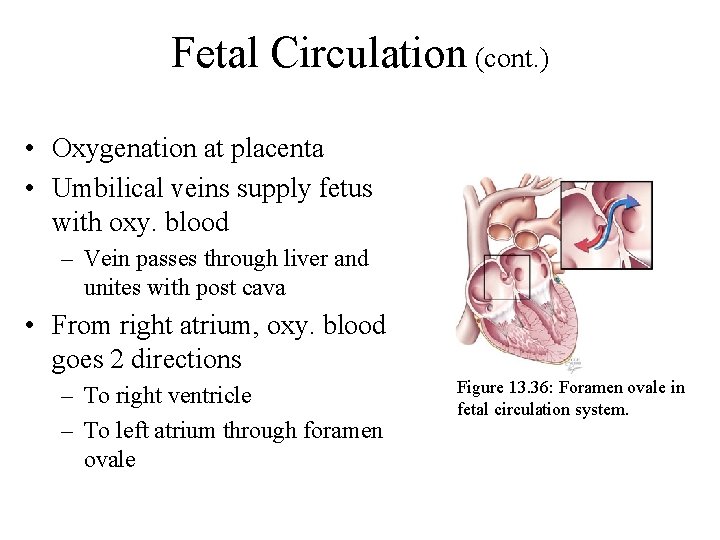
Fetal Circulation (cont. ) • Oxygenation at placenta • Umbilical veins supply fetus with oxy. blood – Vein passes through liver and unites with post cava • From right atrium, oxy. blood goes 2 directions – To right ventricle – To left atrium through foramen ovale Figure 13. 36: Foramen ovale in fetal circulation system.
Fetal Circulation (cont. ) • In right ventricle, oxy. blood sent to pulmonary artery – Lungs nonfunctional – Ductus arteriosus diverts blood from lungs
Circulation At Birth • Placenta shuts down • Umbilical vein collapses- near falciform ligament • Interatrial aperture closes (fossa ovalis) • Ductus arteriosus closes (ligamentum arteriosum) • Deoxygenated blood now enters right ventricle, pulmonary arteries, and continues to lungs • Ductus venosus collapses (ligamentum
- Slides: 35