
Amphibians from the Bruce Peninsula What does it
Amphibians from the Bruce Peninsula
What does it take to be an amphibian? • Four legged vertebrates • Do not have amniotic eggs • Ectothermic (body heat regulated by external environment) • Spend part of their time on land, part in water • Breathe through lungs, gills, or skin
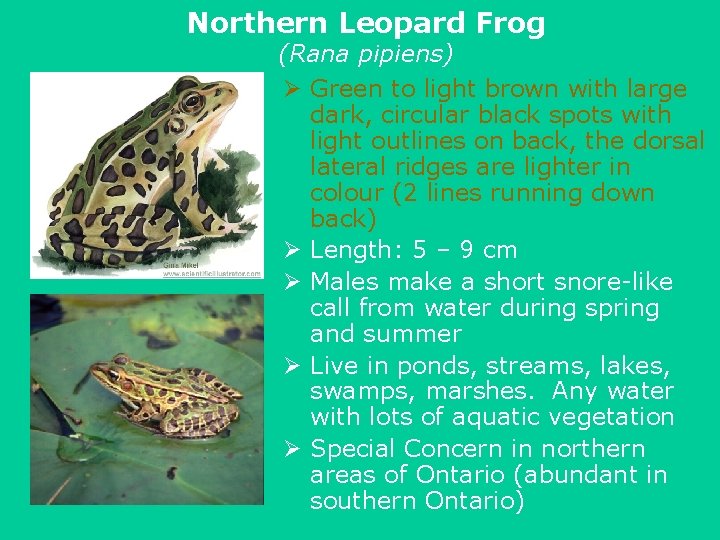
Northern Leopard Frog (Rana pipiens) Ø Green to light brown with large dark, circular black spots with light outlines on back, the dorsal lateral ridges are lighter in colour (2 lines running down back) Ø Length: 5 – 9 cm Ø Males make a short snore-like call from water during spring and summer Ø Live in ponds, streams, lakes, swamps, marshes. Any water with lots of aquatic vegetation Ø Special Concern in northern areas of Ontario (abundant in southern Ontario)
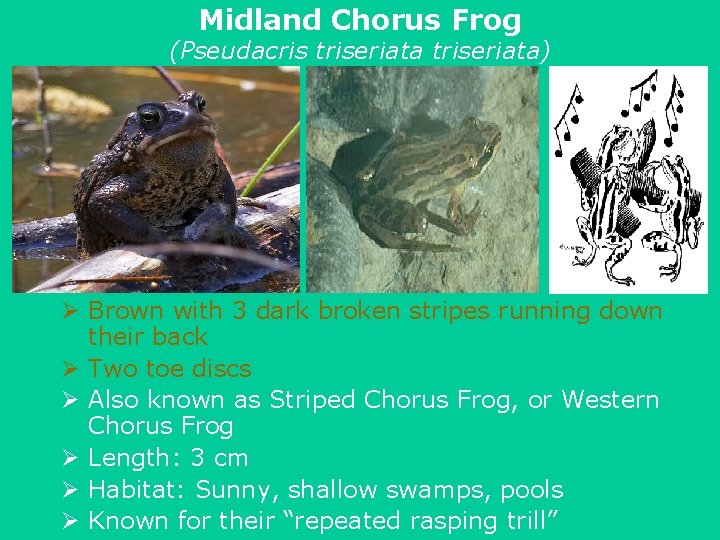
Midland Chorus Frog (Pseudacris triseriata) Ø Brown with 3 dark broken stripes running down their back Ø Two toe discs Ø Also known as Striped Chorus Frog, or Western Chorus Frog Ø Length: 3 cm Ø Habitat: Sunny, shallow swamps, pools Ø Known for their “repeated rasping trill”

Teraploid Gray Tree Frog (Hyla versicolor) Ø Has the ability to change colour, from greenish-gray to gray-black (depending on the environment) Ø Has bright yellow or orange under belly, shown when the frog hops away Ø Length: 3 – 6 cm Ø Habitat: Trees and shrubs close to water Ø The frogs skin is bumpy (almost toad like) Ø Has 4 sets of chromosomes (most animals have 2 sets)
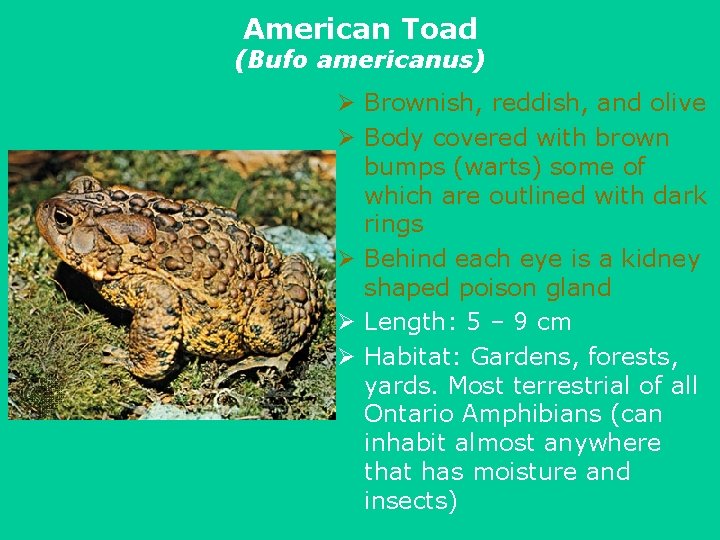
American Toad (Bufo americanus) Ø Brownish, reddish, and olive Ø Body covered with brown bumps (warts) some of which are outlined with dark rings Ø Behind each eye is a kidney shaped poison gland Ø Length: 5 – 9 cm Ø Habitat: Gardens, forests, yards. Most terrestrial of all Ontario Amphibians (can inhabit almost anywhere that has moisture and insects)
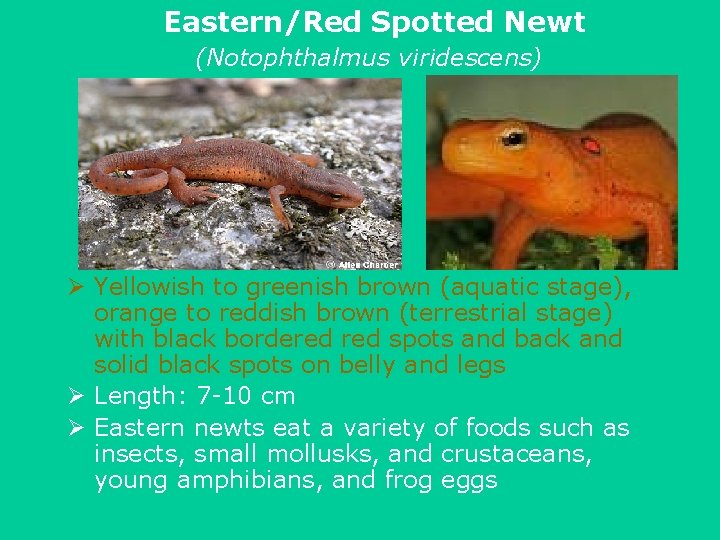
Eastern/Red Spotted Newt (Notophthalmus viridescens) Ø Yellowish to greenish brown (aquatic stage), orange to reddish brown (terrestrial stage) with black bordered spots and back and solid black spots on belly and legs Ø Length: 7 -10 cm Ø Eastern newts eat a variety of foods such as insects, small mollusks, and crustaceans, young amphibians, and frog eggs
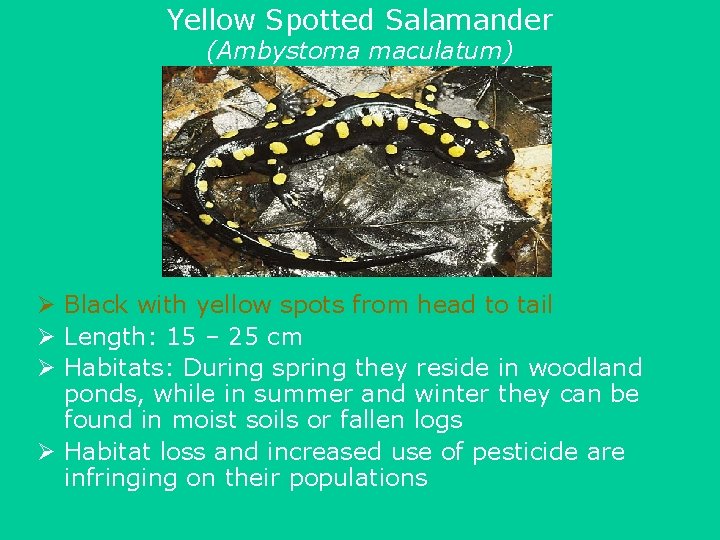
Yellow Spotted Salamander (Ambystoma maculatum) Ø Black with yellow spots from head to tail Ø Length: 15 – 25 cm Ø Habitats: During spring they reside in woodland ponds, while in summer and winter they can be found in moist soils or fallen logs Ø Habitat loss and increased use of pesticide are infringing on their populations
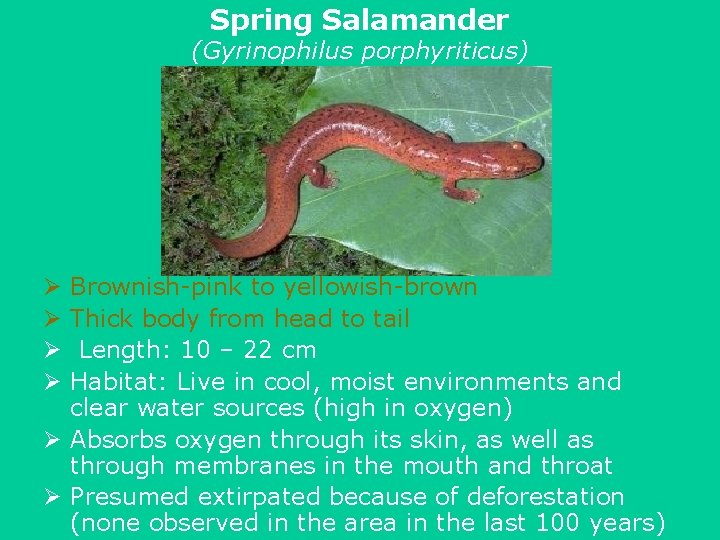
Spring Salamander (Gyrinophilus porphyriticus) Brownish-pink to yellowish-brown Thick body from head to tail Length: 10 – 22 cm Habitat: Live in cool, moist environments and clear water sources (high in oxygen) Ø Absorbs oxygen through its skin, as well as through membranes in the mouth and throat Ø Presumed extirpated because of deforestation (none observed in the area in the last 100 years) Ø Ø
Further Sources Ontario Nature – probably the best source for information about Ontario’s http: //www. ontarionature. org/protect/species/herpetofaunal_atlas. php Frog Watch – excellent site for information about public monitoring of frogs (citizen science) http: //www. naturewatch. ca/english/frogwatch/on/ Toronto Zoo – very good general information on amphibians http: //www. torontozoo. com/adoptapond/About. Amphibians. asp
- Slides: 10