
Amphibians Classification n n Kingdom Animalia Phylum Chordata
Amphibians
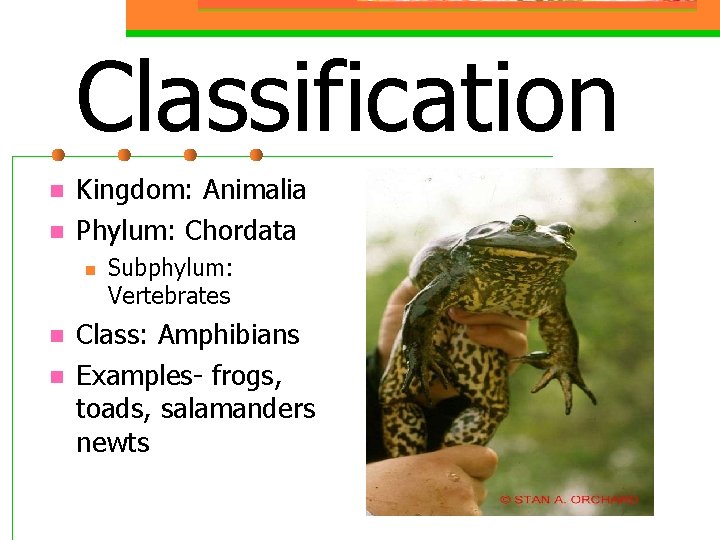
Classification n n Kingdom: Animalia Phylum: Chordata n n n Subphylum: Vertebrates Class: Amphibians Examples- frogs, toads, salamanders newts
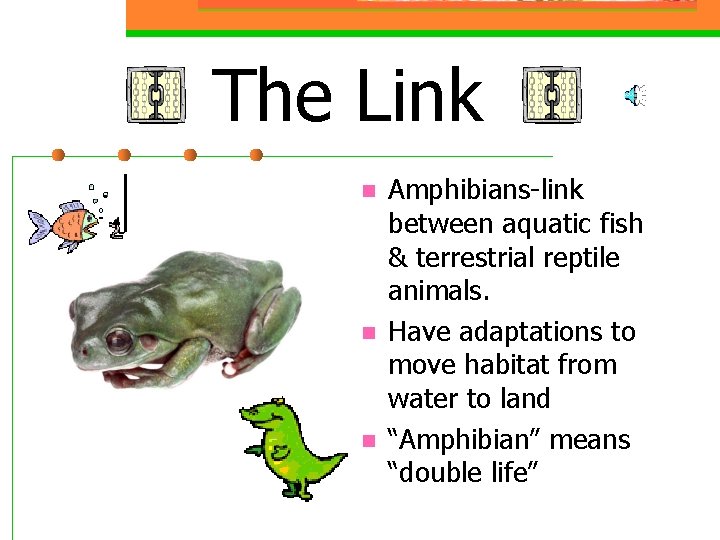
The Link n n n Amphibians-link between aquatic fish & terrestrial reptile animals. Have adaptations to move habitat from water to land “Amphibian” means “double life”
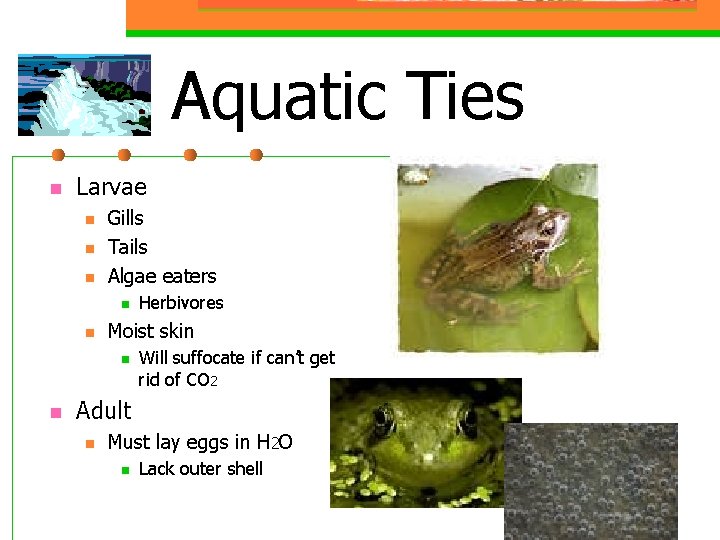
Aquatic Ties n Larvae n n n Gills Tails Algae eaters n n Moist skin n n Herbivores Will suffocate if can’t get rid of CO 2 Adult n Must lay eggs in H 2 O n Lack outer shell
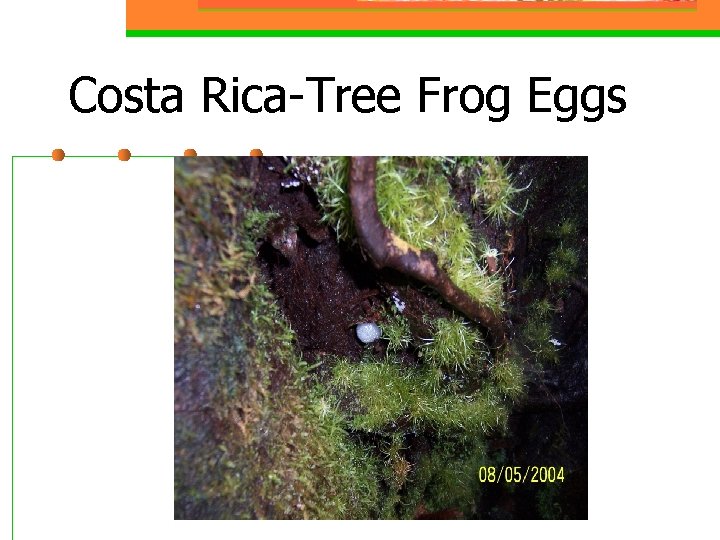
Costa Rica-Tree Frog Eggs
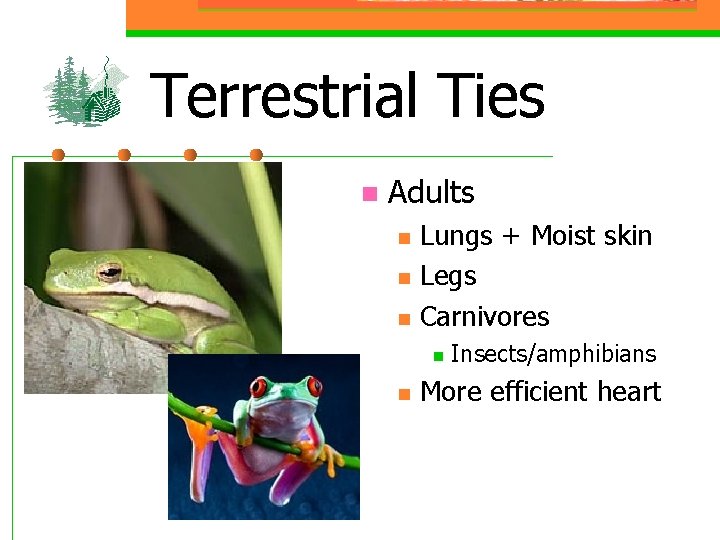
Terrestrial Ties n Adults n n n Lungs + Moist skin Legs Carnivores n n Insects/amphibians More efficient heart
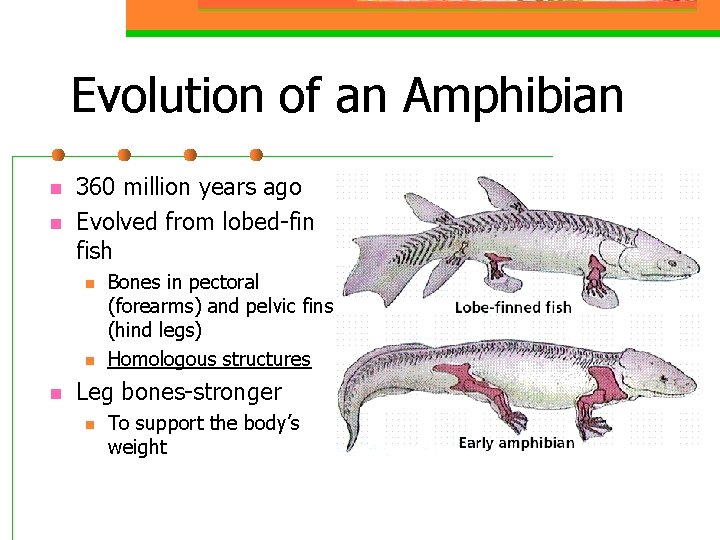
Evolution of an Amphibian n n 360 million years ago Evolved from lobed-fin fish n n n Bones in pectoral (forearms) and pelvic fins (hind legs) Homologous structures Leg bones-stronger n To support the body’s weight
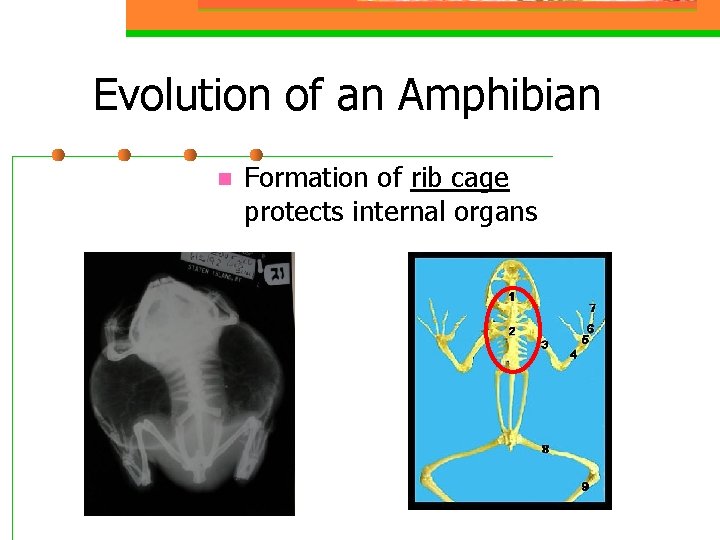
Evolution of an Amphibian n Formation of rib cage protects internal organs
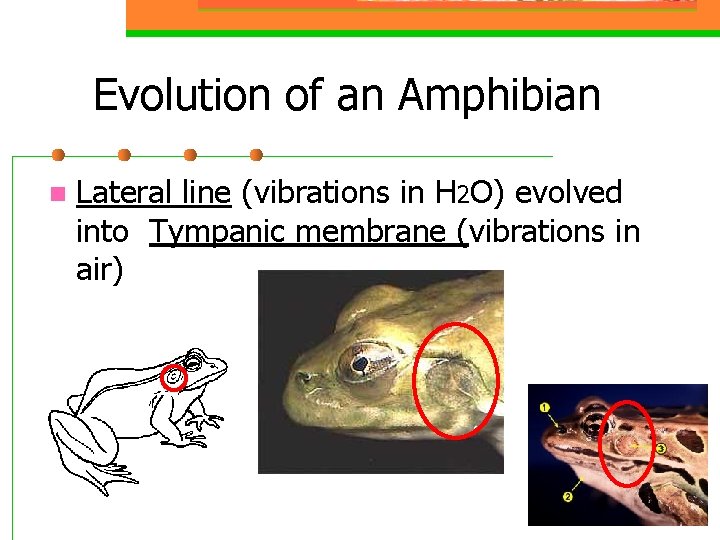
Evolution of an Amphibian n Lateral line (vibrations in H 2 O) evolved into Tympanic membrane (vibrations in air)
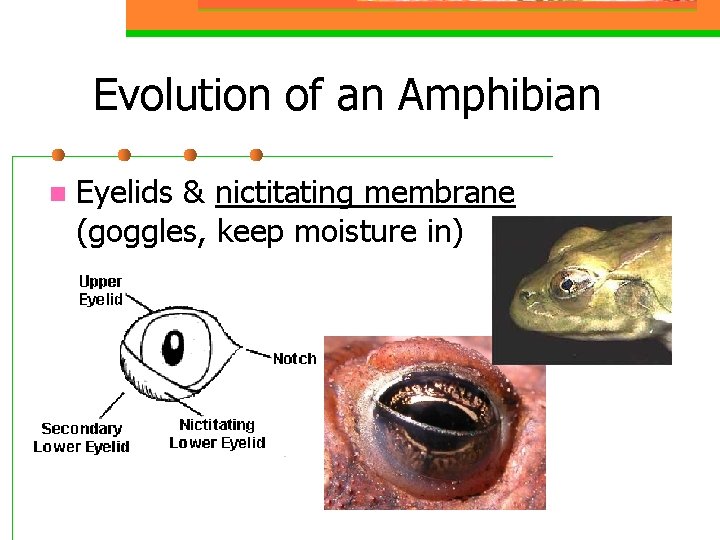
Evolution of an Amphibian n Eyelids & nictitating membrane (goggles, keep moisture in)
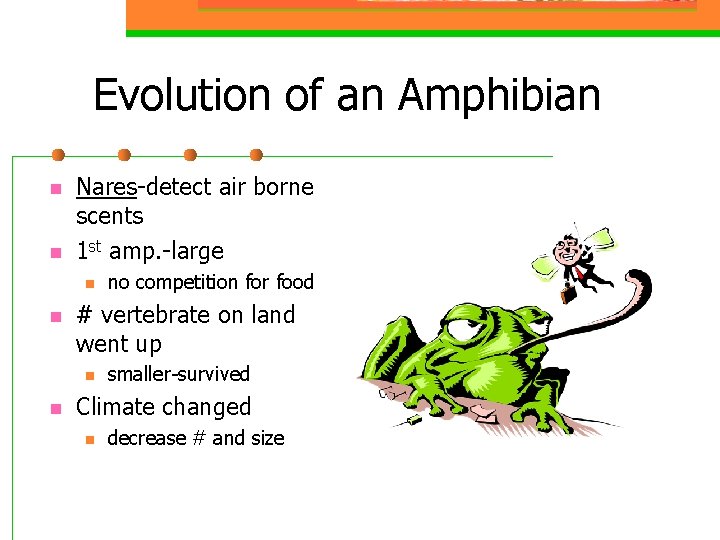
Evolution of an Amphibian n n Nares-detect air borne scents 1 st amp. -large n n # vertebrate on land went up n n no competition for food smaller-survived Climate changed n decrease # and size
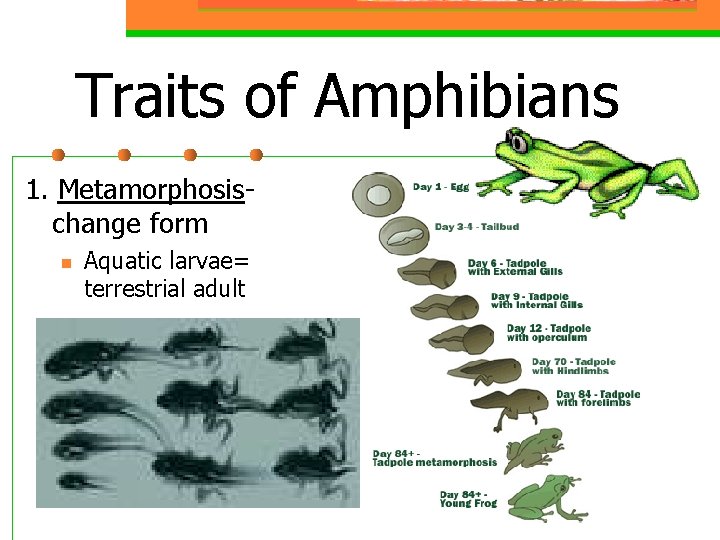
Traits of Amphibians 1. Metamorphosischange form n Aquatic larvae= terrestrial adult
Traits of Amphibians 2. Cold-blooded-ectotherms n Use environment to regulate temperature
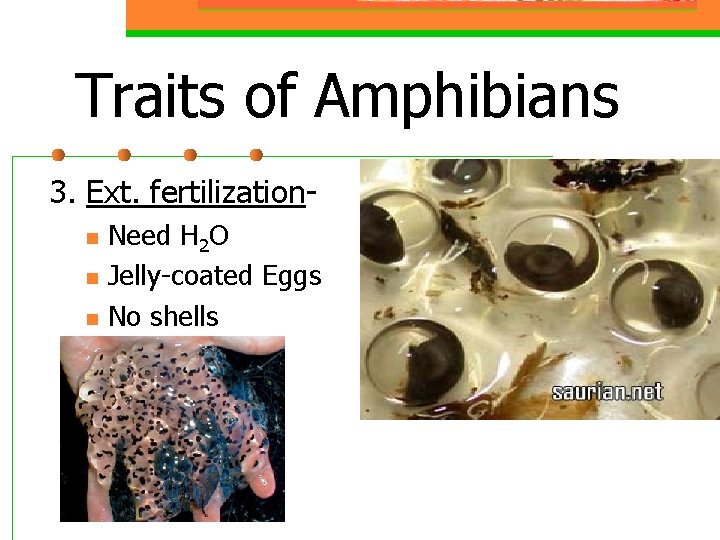
Traits of Amphibians 3. Ext. fertilizationn n n Need H 2 O Jelly-coated Eggs No shells
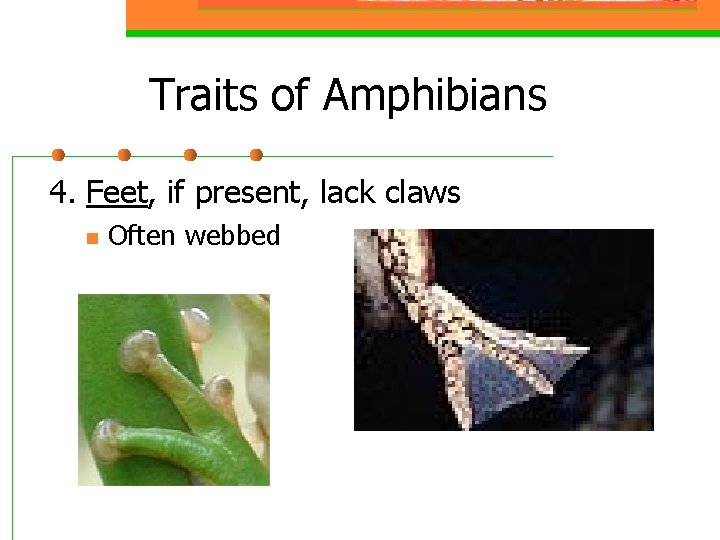
Traits of Amphibians 4. Feet, if present, lack claws n Often webbed
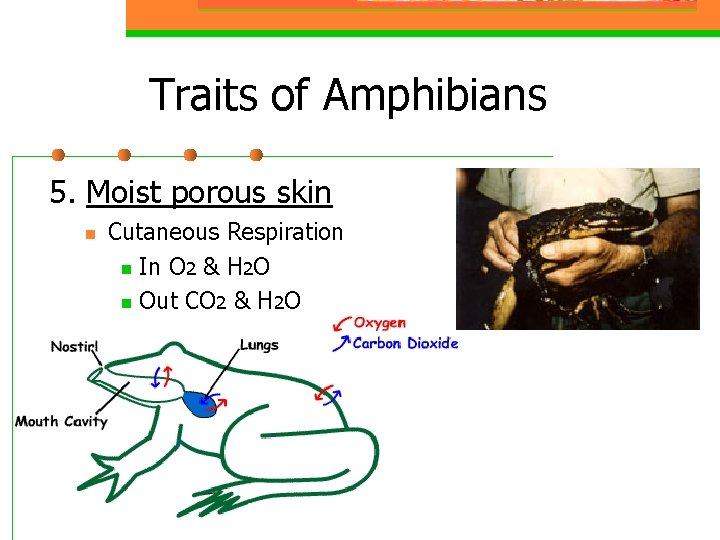
Traits of Amphibians 5. Moist porous skin n Cutaneous Respiration n In O 2 & H 2 O n Out CO 2 & H 2 O
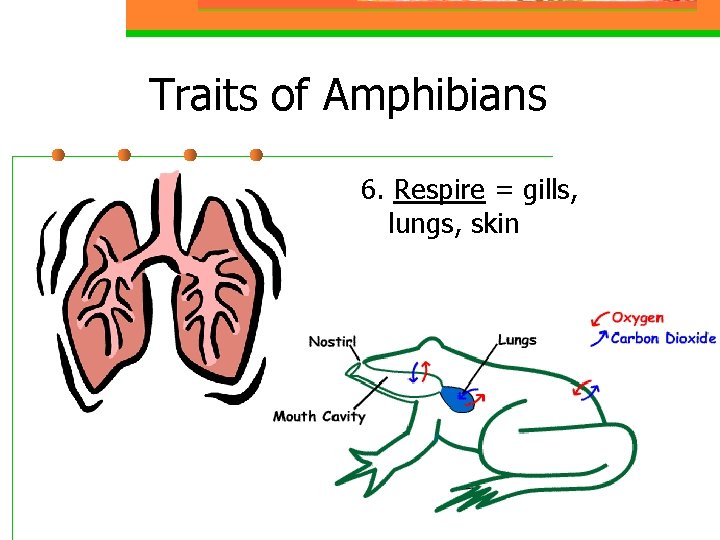
Traits of Amphibians 6. Respire = gills, lungs, skin
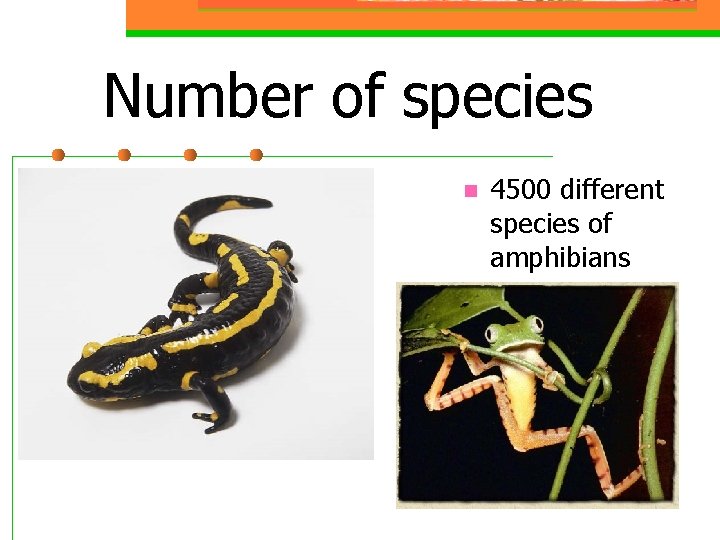
Number of species n 4500 different species of amphibians
Anura n Means: tailless n n Lay jelly-coated eggs in H 2 O n n 3800 species of frogs & toads Tadpoles- compact bodies Tongue sticky, long
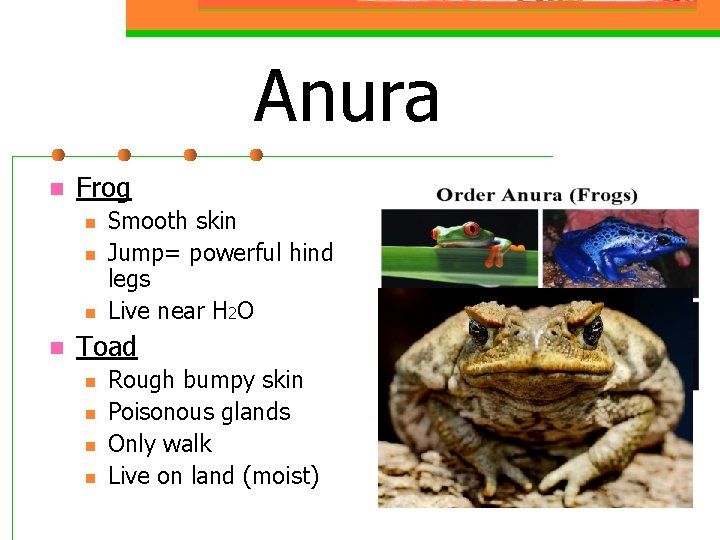
Anura n Frog n n Smooth skin Jump= powerful hind legs Live near H 2 O Toad n n Rough bumpy skin Poisonous glands Only walk Live on land (moist)
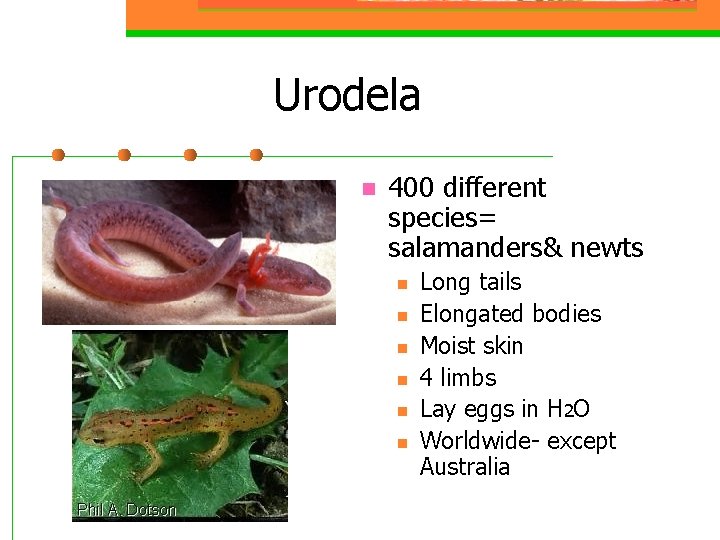
Urodela n 400 different species= salamanders& newts n n n Long tails Elongated bodies Moist skin 4 limbs Lay eggs in H 2 O Worldwide- except Australia
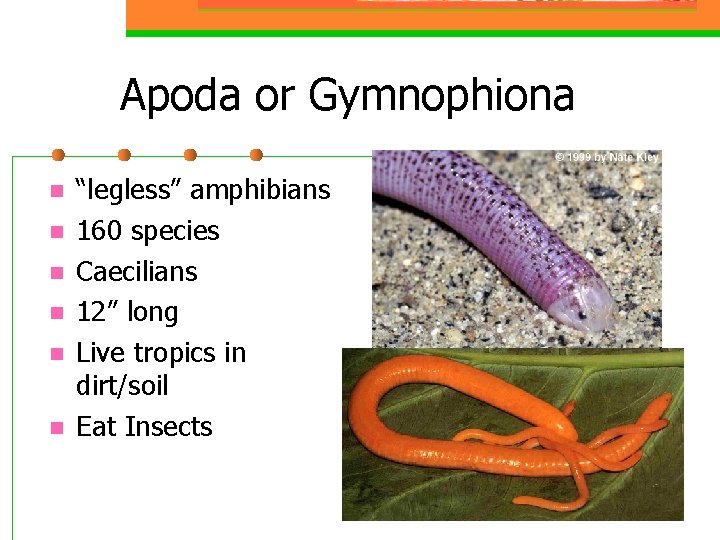
Apoda or Gymnophiona n n n “legless” amphibians 160 species Caecilians 12” long Live tropics in dirt/soil Eat Insects
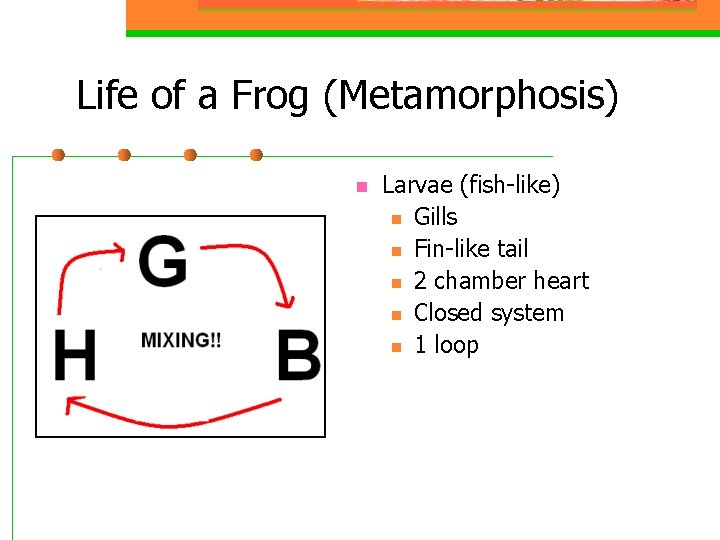
Life of a Frog (Metamorphosis) n Larvae (fish-like) n Gills n Fin-like tail n 2 chamber heart n Closed system n 1 loop
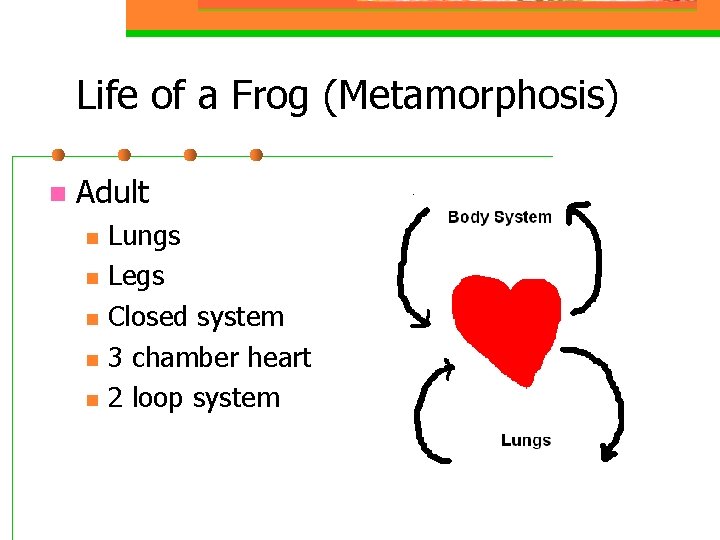
Life of a Frog (Metamorphosis) n Adult n n n Lungs Legs Closed system 3 chamber heart 2 loop system
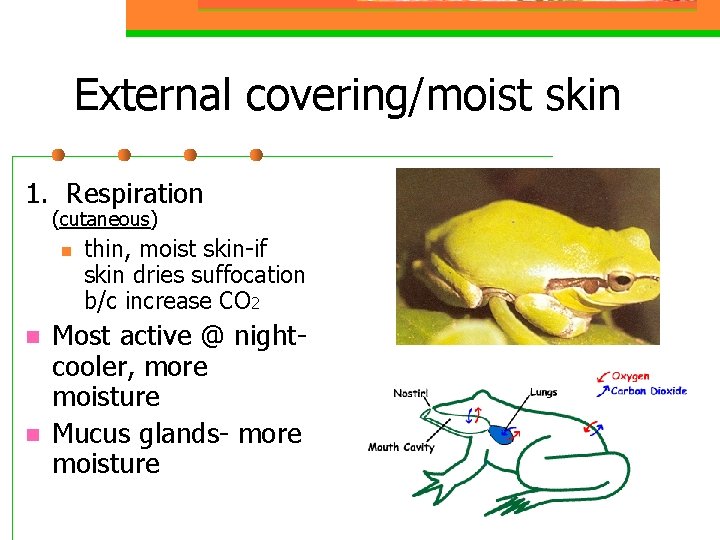
External covering/moist skin 1. Respiration (cutaneous) n n n thin, moist skin-if skin dries suffocation b/c increase CO 2 Most active @ nightcooler, more moisture Mucus glands- more moisture
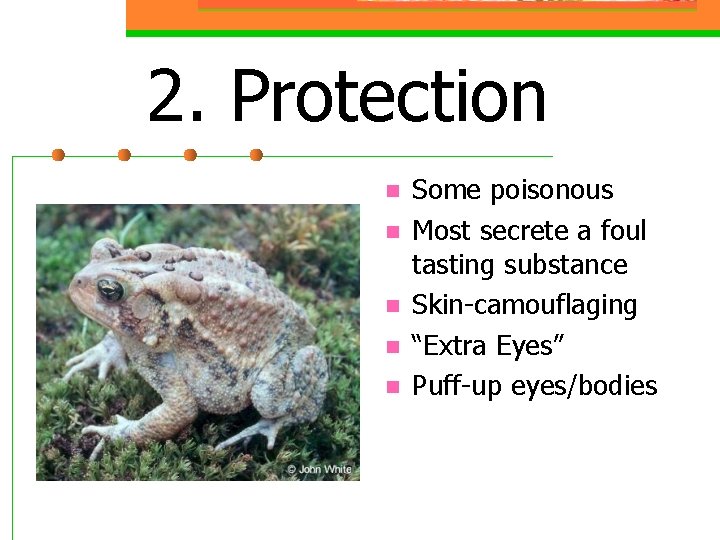
2. Protection n n Some poisonous Most secrete a foul tasting substance Skin-camouflaging “Extra Eyes” Puff-up eyes/bodies
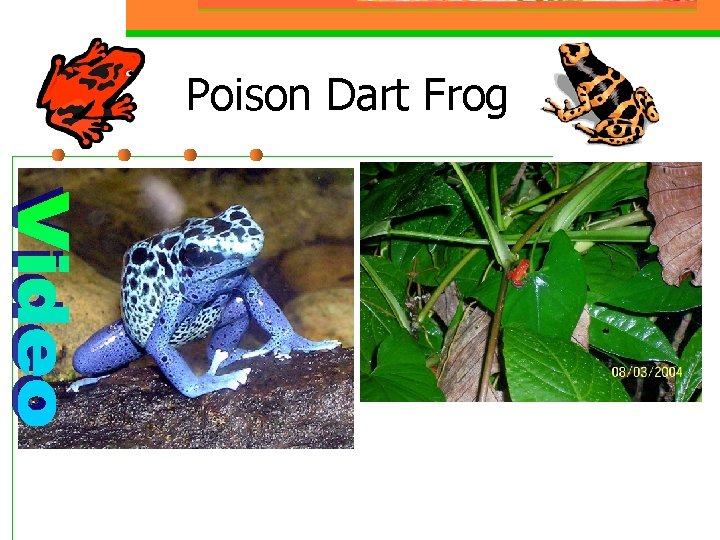
Poison Dart Frog
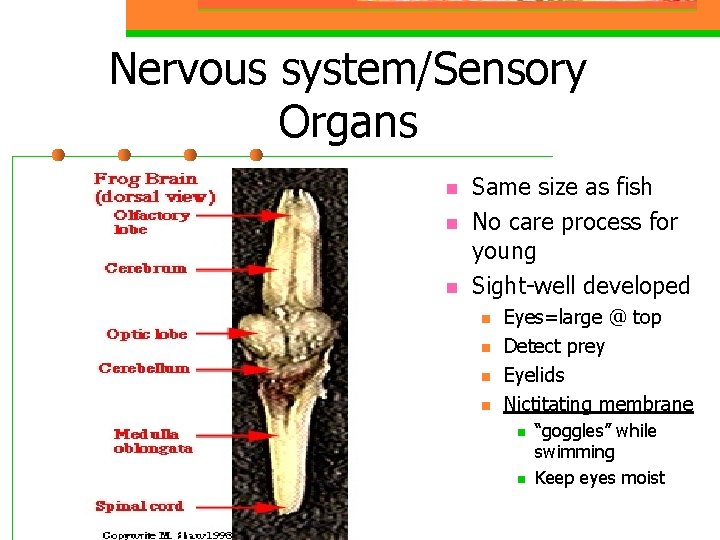
Nervous system/Sensory Organs n n n Same size as fish No care process for young Sight-well developed n n Eyes=large @ top Detect prey Eyelids Nictitating membrane n n “goggles” while swimming Keep eyes moist
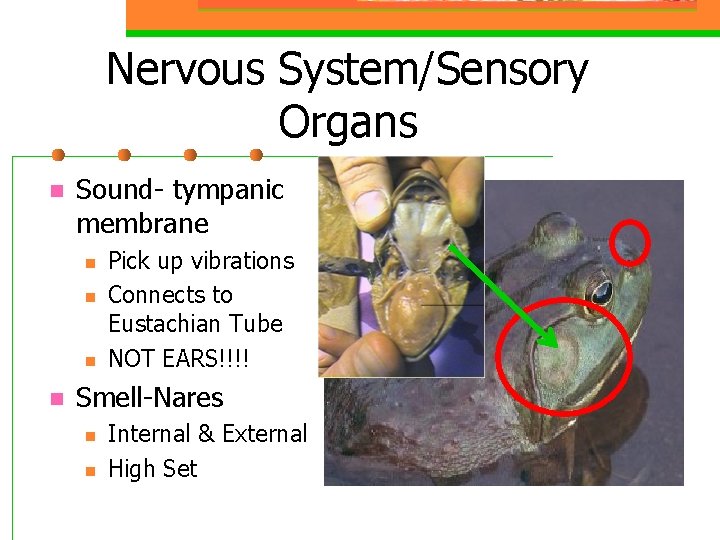
Nervous System/Sensory Organs n Sound- tympanic membrane n n Pick up vibrations Connects to Eustachian Tube NOT EARS!!!! Smell-Nares n n Internal & External High Set
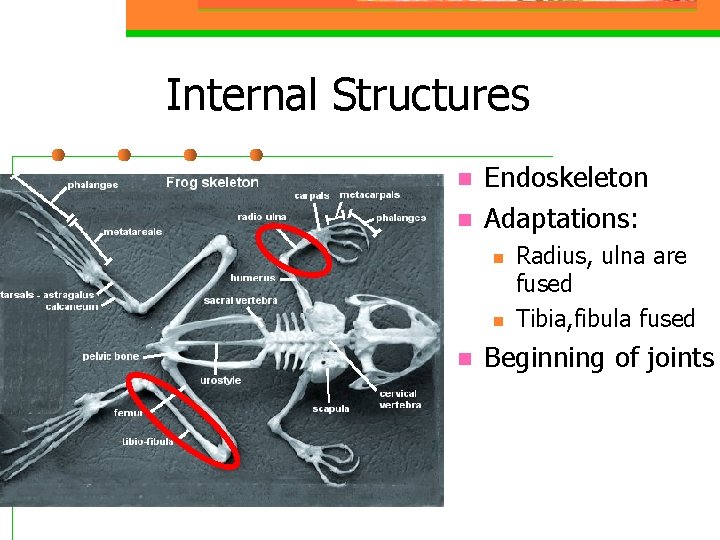
Internal Structures n n Endoskeleton Adaptations: n n n Radius, ulna are fused Tibia, fibula fused Beginning of joints
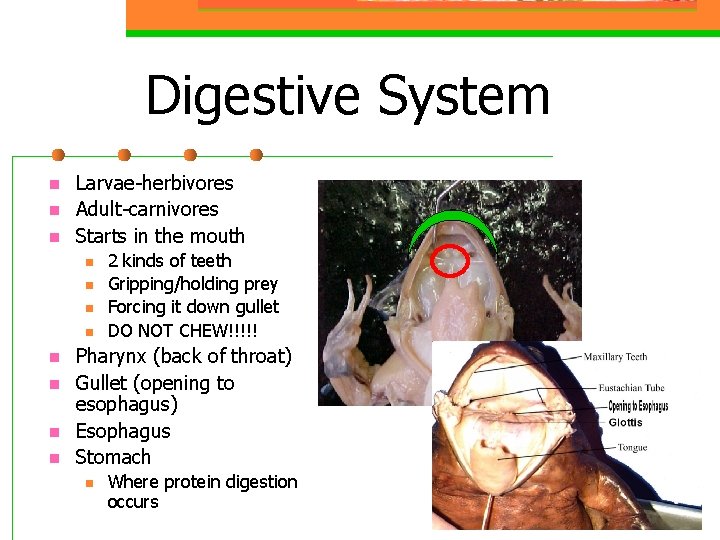
Digestive System n n n Larvae-herbivores Adult-carnivores Starts in the mouth n n n n 2 kinds of teeth Gripping/holding prey Forcing it down gullet DO NOT CHEW!!!!! Pharynx (back of throat) Gullet (opening to esophagus) Esophagus Stomach n Where protein digestion occurs
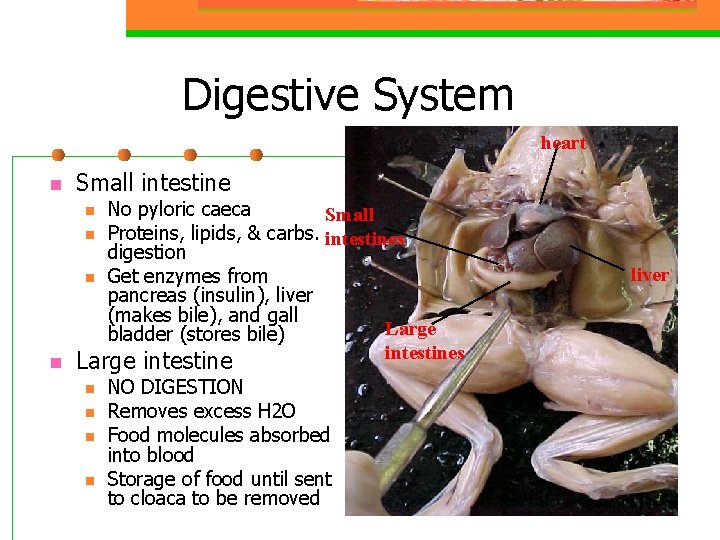
Digestive System heart n Small intestine n n No pyloric caeca Small Proteins, lipids, & carbs. intestines digestion Get enzymes from pancreas (insulin), liver (makes bile), and gall Large bladder (stores bile) intestines Large intestine n n NO DIGESTION Removes excess H 2 O Food molecules absorbed into blood Storage of food until sent to cloaca to be removed liver
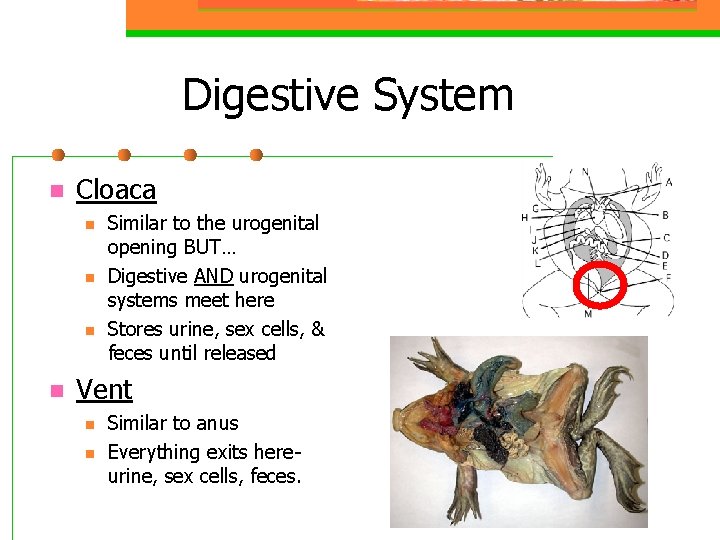
Digestive System n Cloaca n n Similar to the urogenital opening BUT… Digestive AND urogenital systems meet here Stores urine, sex cells, & feces until released Vent n n Similar to anus Everything exits hereurine, sex cells, feces.
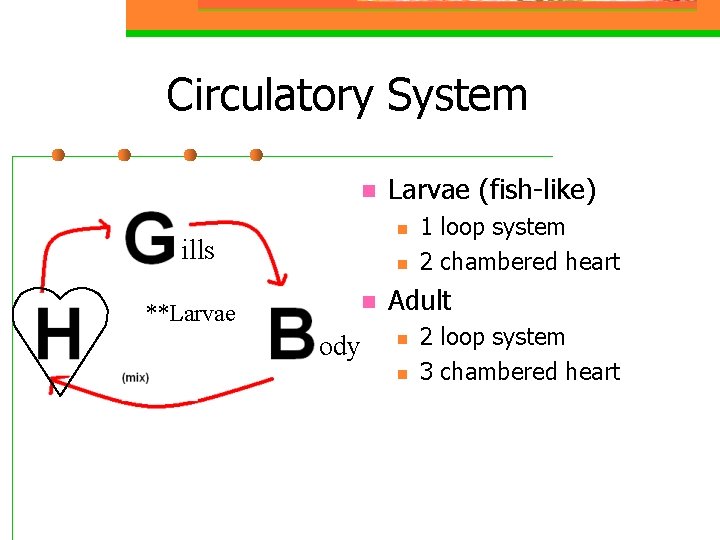
Circulatory System n Larvae (fish-like) n ills n n **Larvae ody 1 loop system 2 chambered heart Adult n n 2 loop system 3 chambered heart
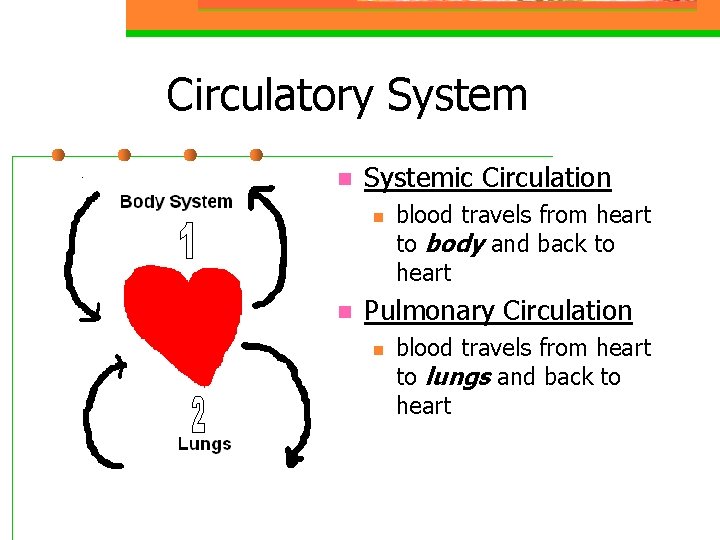
Circulatory System n Systemic Circulation n n blood travels from heart to body and back to heart Pulmonary Circulation n blood travels from heart to lungs and back to heart
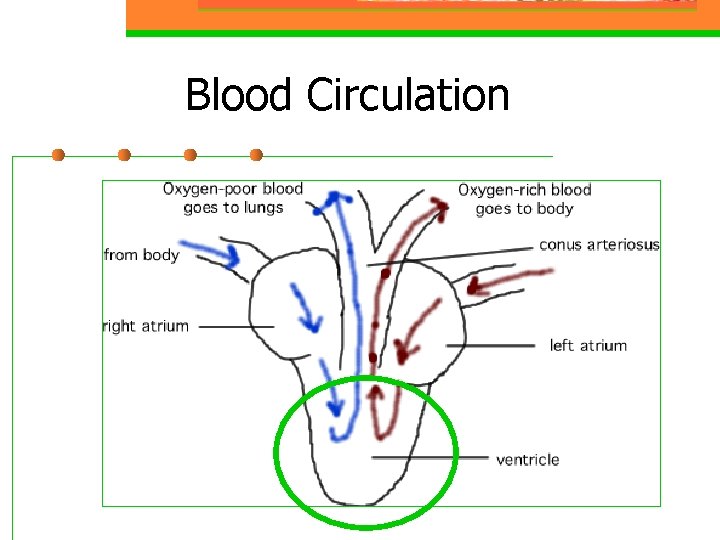
Blood Circulation
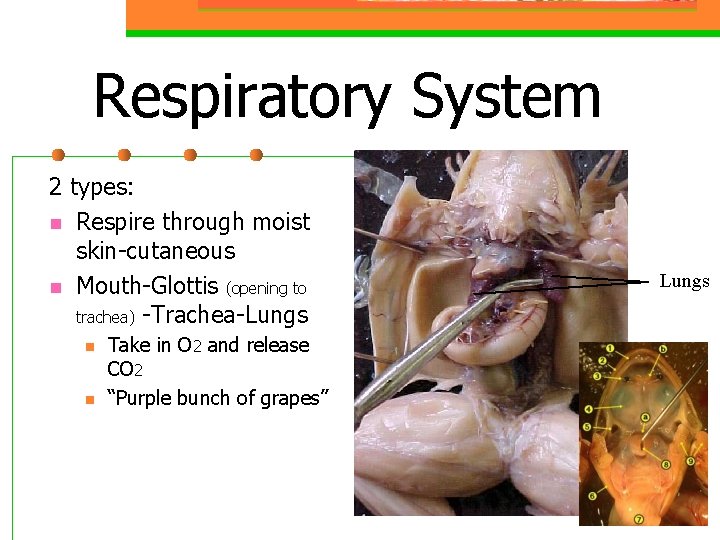
Respiratory System 2 types: n Respire through moist skin-cutaneous n Mouth-Glottis (opening to trachea) -Trachea-Lungs n n Take in O 2 and release CO 2 “Purple bunch of grapes” Lungs
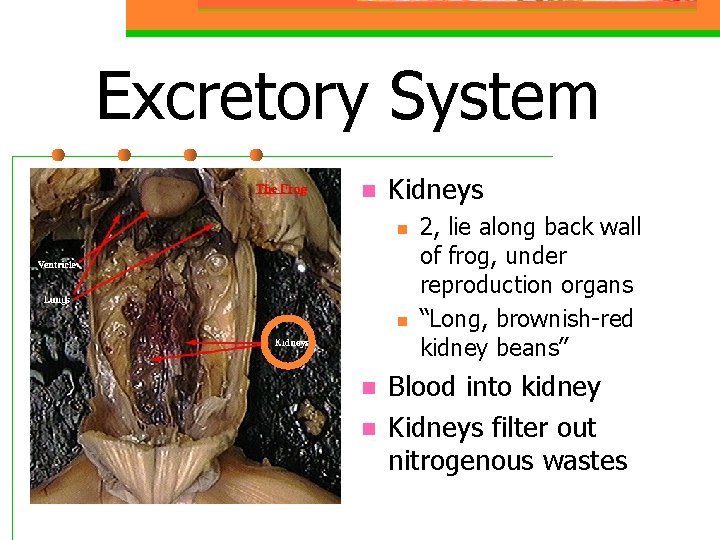
Excretory System n Kidneys n n 2, lie along back wall of frog, under reproduction organs “Long, brownish-red kidney beans” Blood into kidney Kidneys filter out nitrogenous wastes
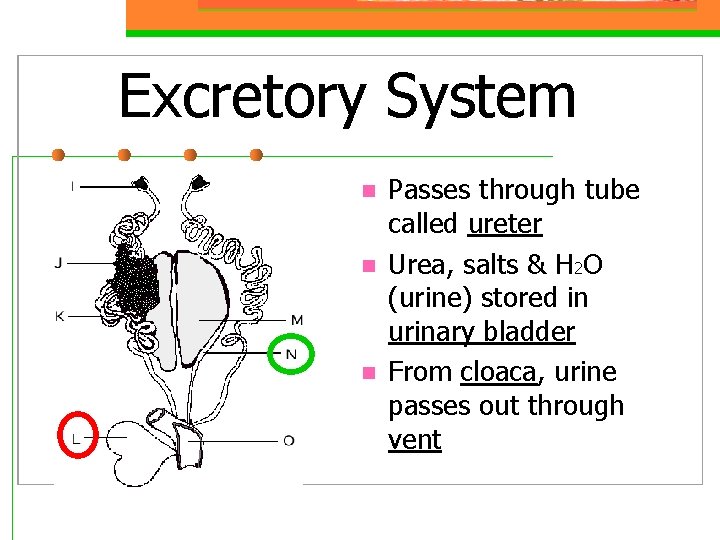
Excretory System n n n Passes through tube called ureter Urea, salts & H 2 O (urine) stored in urinary bladder From cloaca, urine passes out through vent
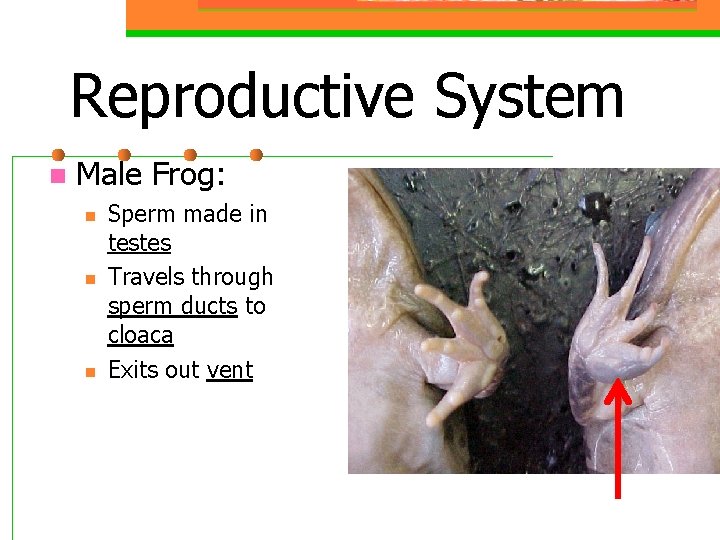
Reproductive System n Male Frog: n n n Sperm made in testes Travels through sperm ducts to cloaca Exits out vent
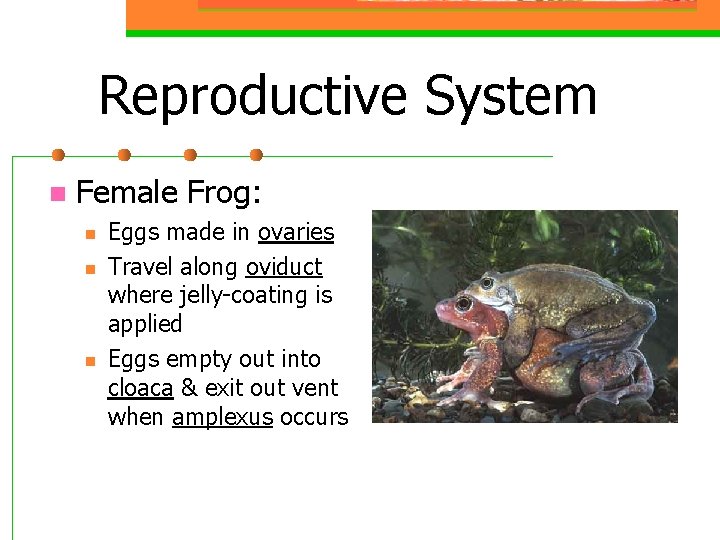
Reproductive System n Female Frog: n n n Eggs made in ovaries Travel along oviduct where jelly-coating is applied Eggs empty out into cloaca & exit out vent when amplexus occurs
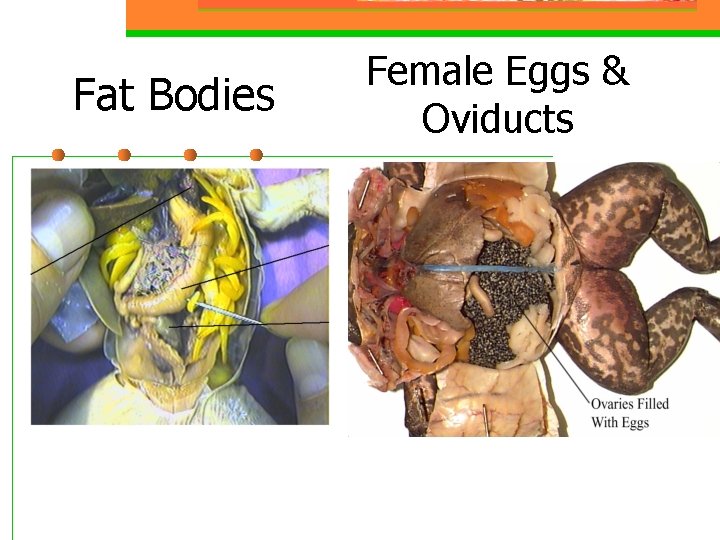
Fat Bodies Female Eggs & Oviducts
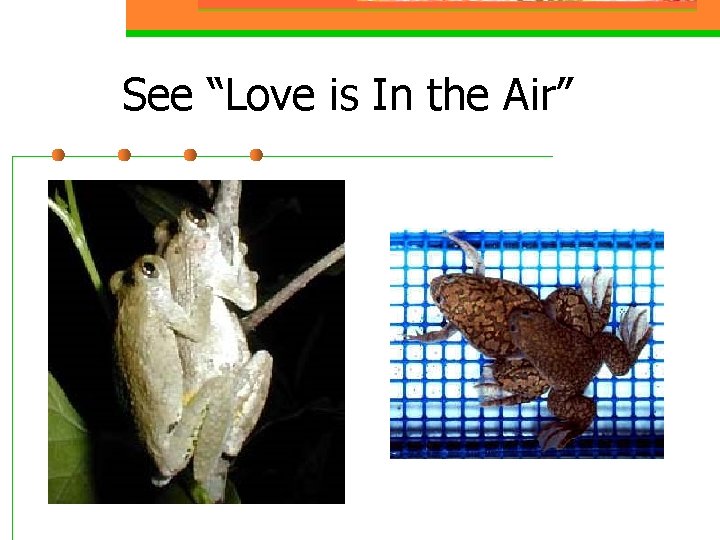
See “Love is In the Air”
Fun Bio-Nerdy Amphibian Facts Group of frogs= Army n Group of toads= Knot n
Fears… Batrachophobia- Fear of amphibians Ranidaphobia- Fear of frogs. Bufonophobia- Fear of toads.
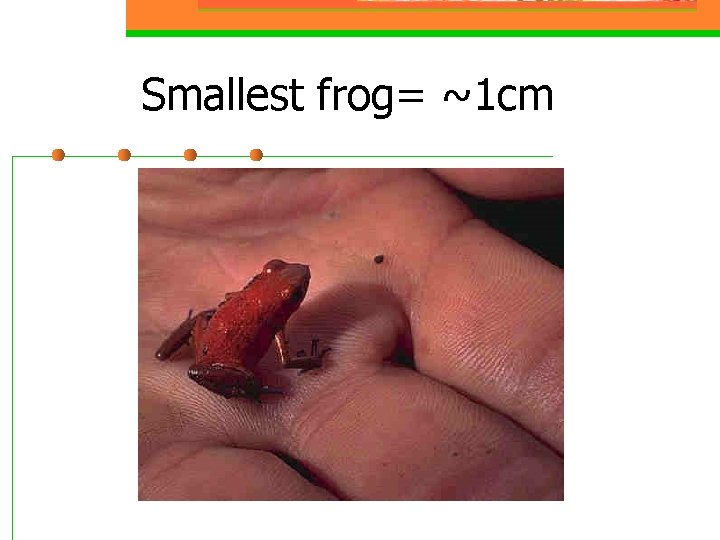
Smallest frog= ~1 cm
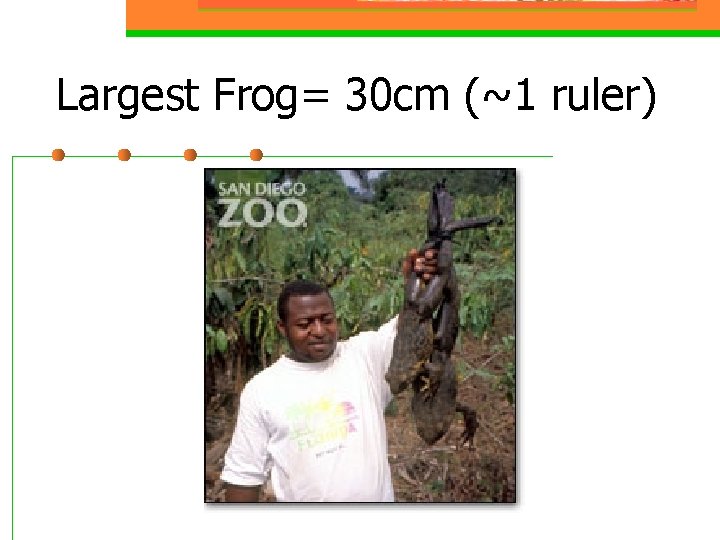
Largest Frog= 30 cm (~1 ruler)
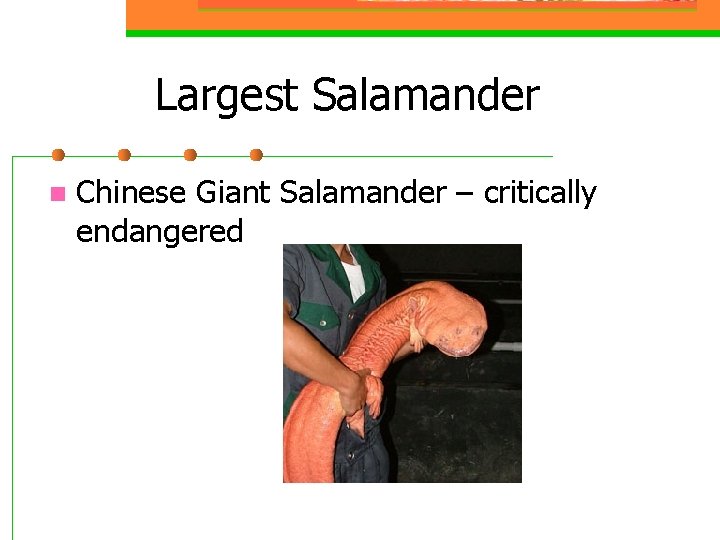
Largest Salamander n Chinese Giant Salamander – critically endangered
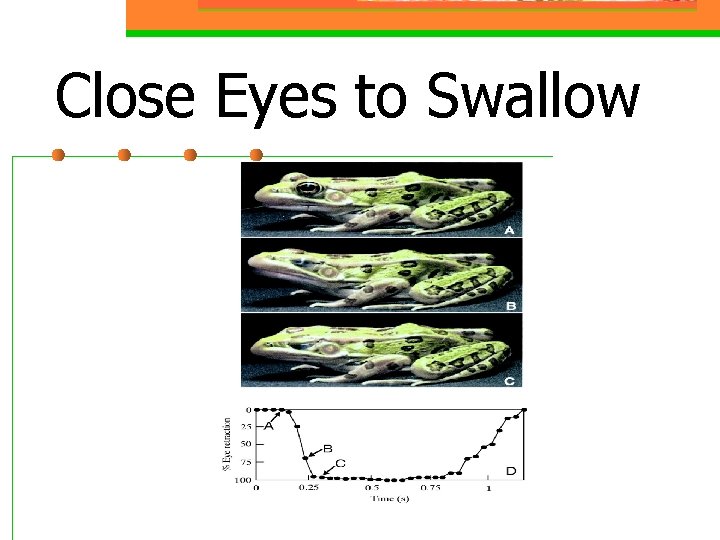
Close Eyes to Swallow
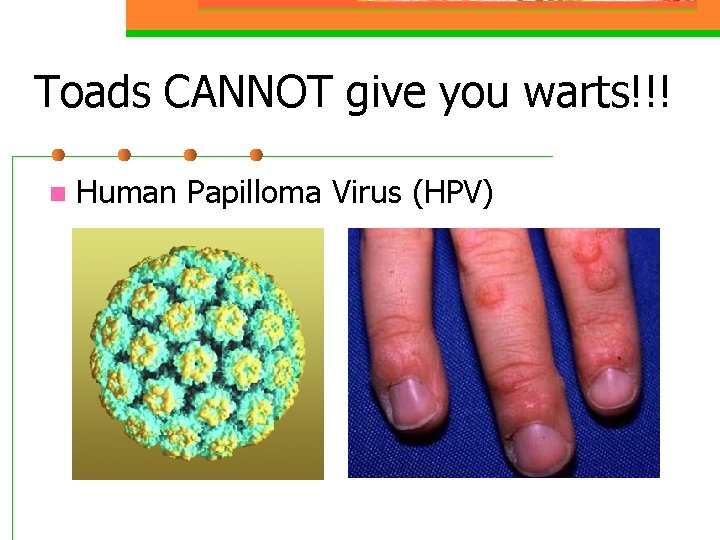
Toads CANNOT give you warts!!! n Human Papilloma Virus (HPV)
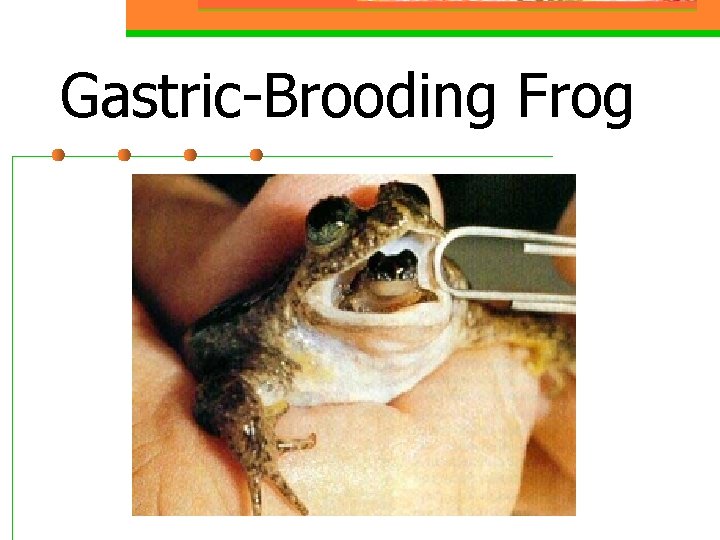
Gastric-Brooding Frog
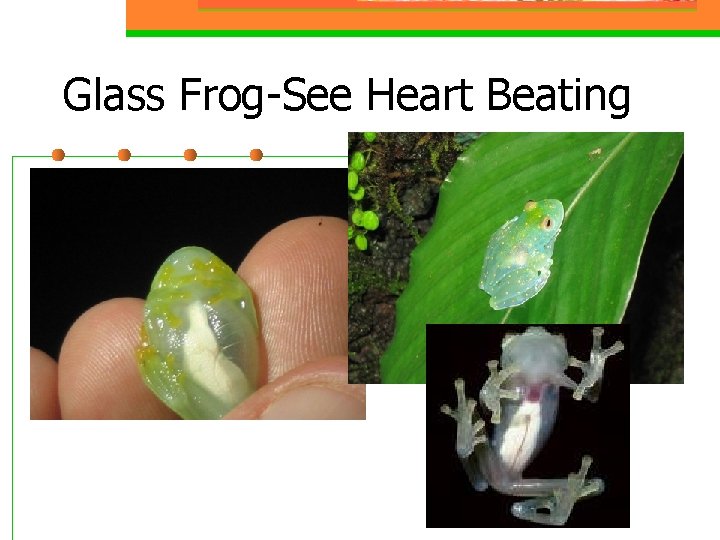
Glass Frog-See Heart Beating
The End-Hop to It!!!
- Slides: 53