
Amphibian What is an Amphibian Vertebrate Live in
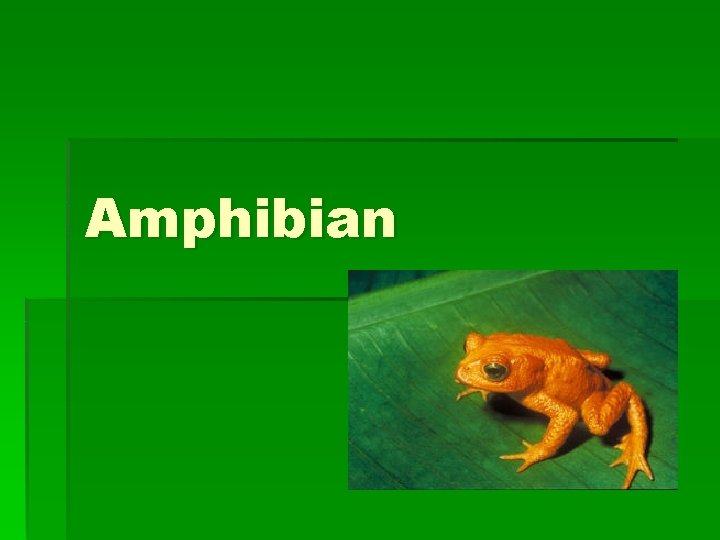
Amphibian

What is an Amphibian? § Vertebrate § Live in the water as larva and on land as adults § Breaths w/ lungs § Moist skin with mucus glands § Lacks scales and claws
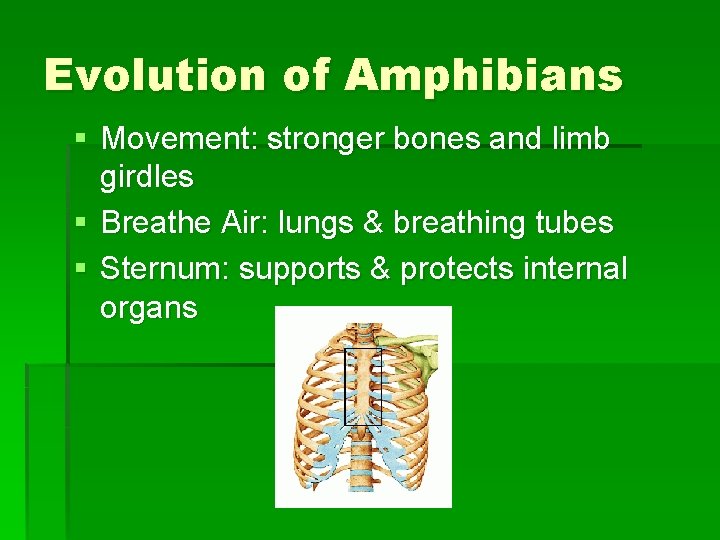
Evolution of Amphibians § Movement: stronger bones and limb girdles § Breathe Air: lungs & breathing tubes § Sternum: supports & protects internal organs
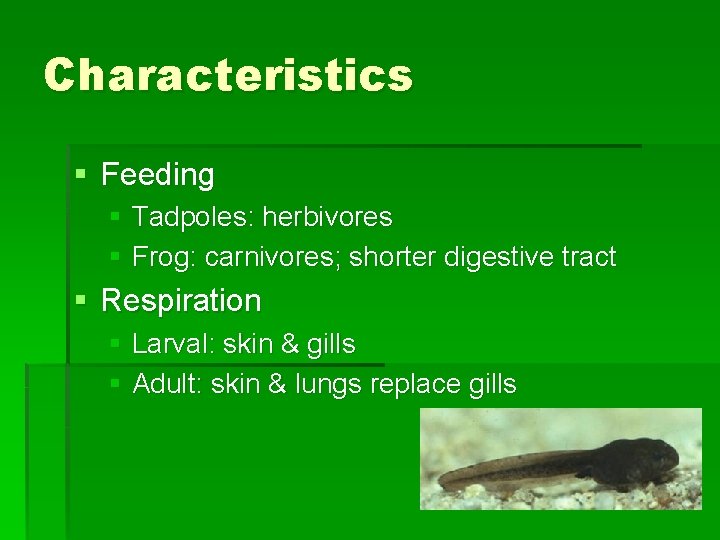
Characteristics § Feeding § Tadpoles: herbivores § Frog: carnivores; shorter digestive tract § Respiration § Larval: skin & gills § Adult: skin & lungs replace gills
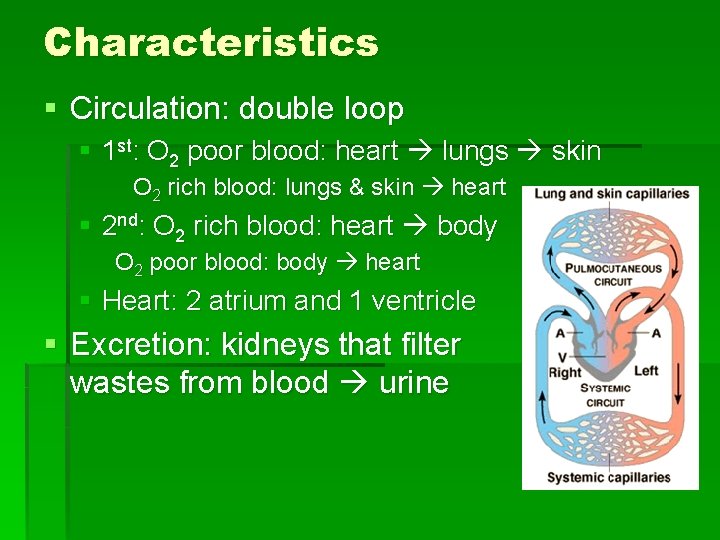
Characteristics § Circulation: double loop § 1 st: O 2 poor blood: heart lungs skin O 2 rich blood: lungs & skin heart § 2 nd: O 2 rich blood: heart body O 2 poor blood: body heart § Heart: 2 atrium and 1 ventricle § Excretion: kidneys that filter wastes from blood urine

Reproduction § Shell-less eggs & must be in water § Female lays eggs & male externally fertilizes § Embryo hatch as larva called tadpoles § Tadpoles metamorphosis to Frogs
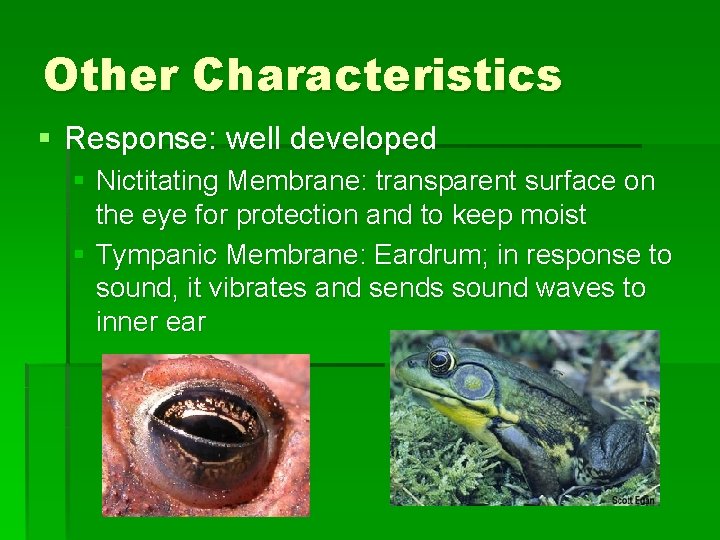
Other Characteristics § Response: well developed § Nictitating Membrane: transparent surface on the eye for protection and to keep moist § Tympanic Membrane: Eardrum; in response to sound, it vibrates and sends sound waves to inner ear
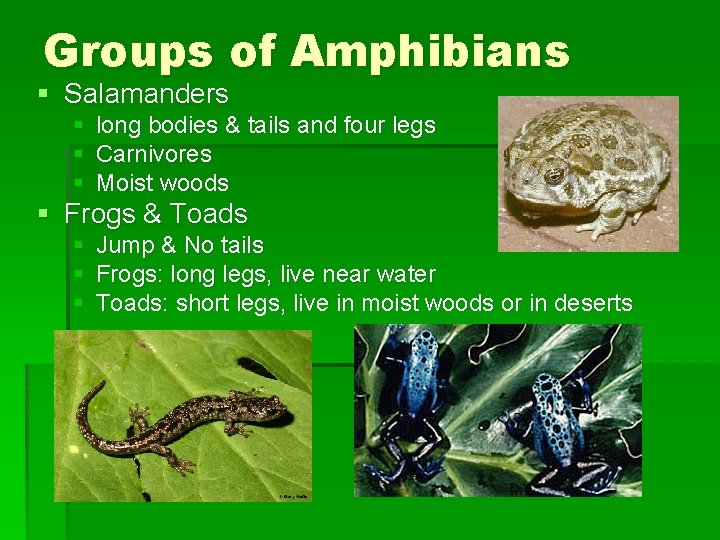
Groups of Amphibians § Salamanders § long bodies & tails and four legs § Carnivores § Moist woods § Frogs & Toads § Jump & No tails § Frogs: long legs, live near water § Toads: short legs, live in moist woods or in deserts
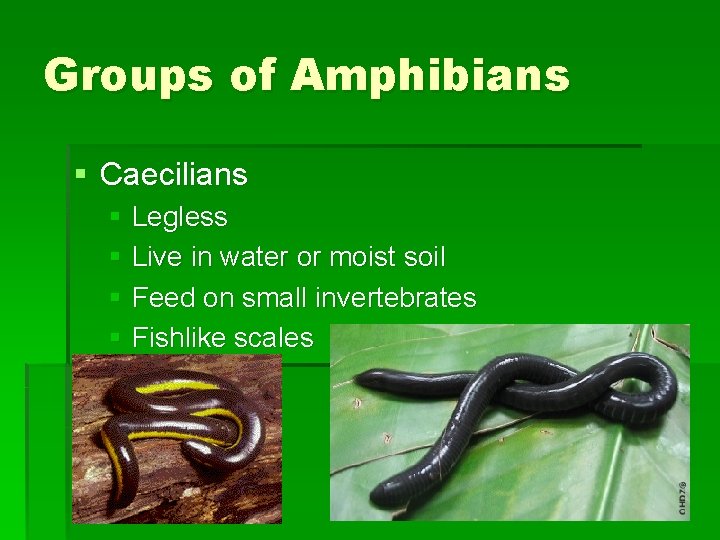
Groups of Amphibians § Caecilians § Legless § Live in water or moist soil § Feed on small invertebrates § Fishlike scales
- Slides: 9