
Amphibian Phylogeny Lungfish n n First discovered 1830
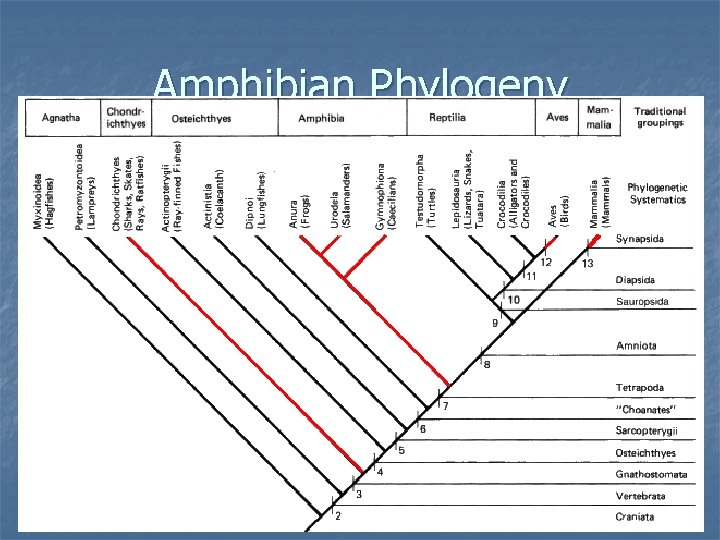
Amphibian Phylogeny
Lungfish n n First discovered 1830 Lungs similar to land animals n n Modified swim bladder They are closest relative of tetrapods (4 legs) n n Tooth enamel Similar skull bone structure Pulmonary and systemic circuit of blood flow Four similar sized limbs
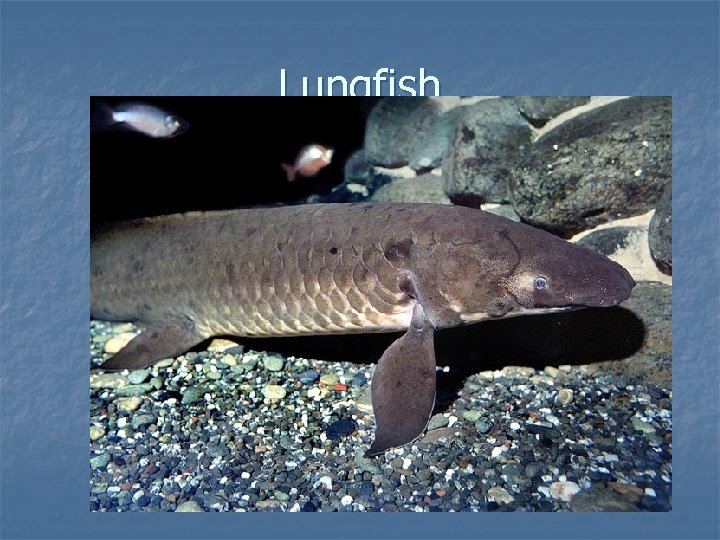
Lungfish
Coelacanth n n http: //www. pbs. org/wgbh/nova/nature/an atomy-coelacanth. html Type of lobed-finned fish
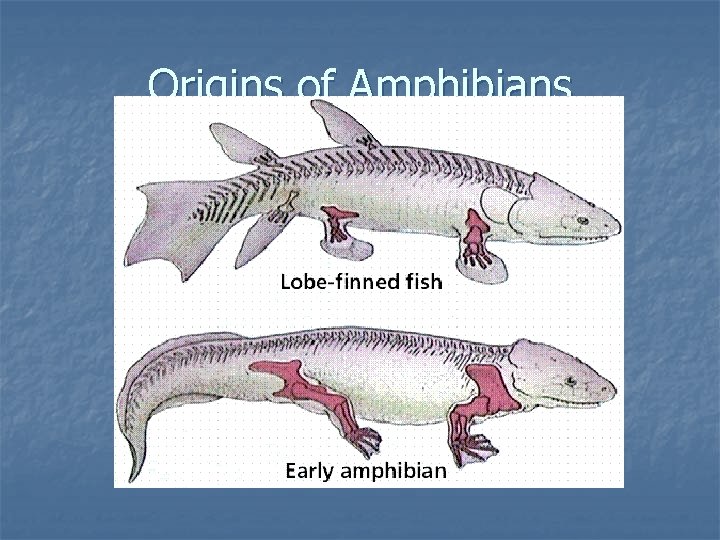
Origins of Amphibians
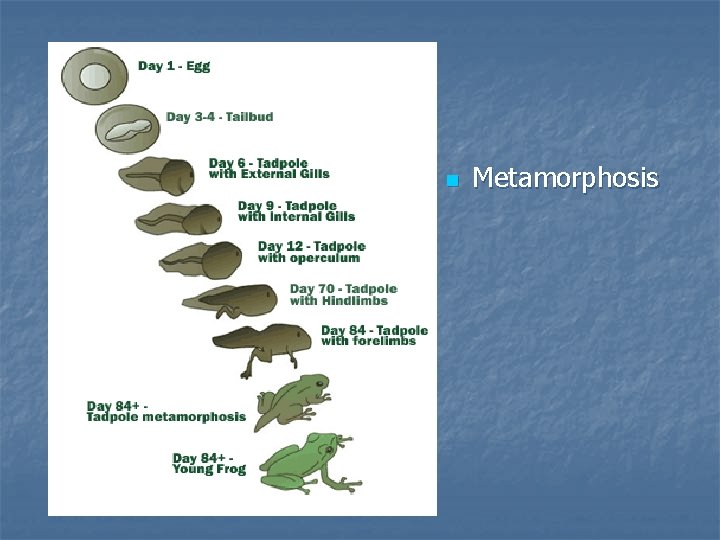
n Metamorphosis
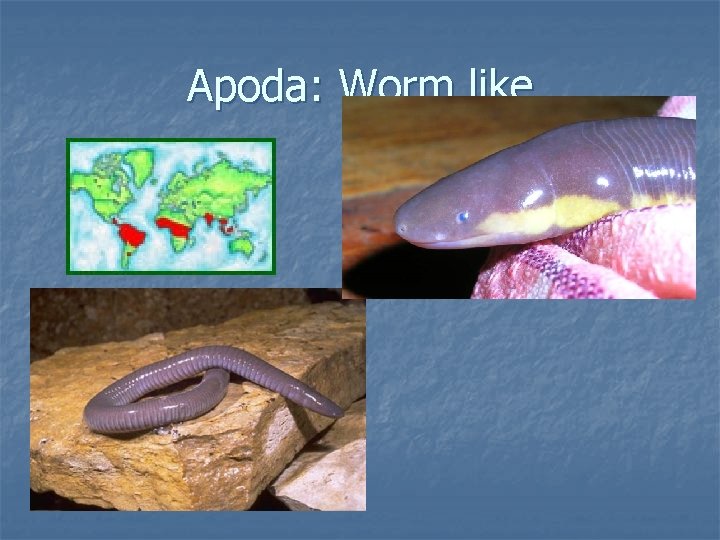
Apoda: Worm like
Urodela: Newt/Salamander n Michigan Species n n n n n Blue-spotted Salamander Eastern Newt Eastern tiger salamander Four-toed salamander Marbled salamander Mudpuppy Red-backed salamander Small mouthed salamander Western lesser siren
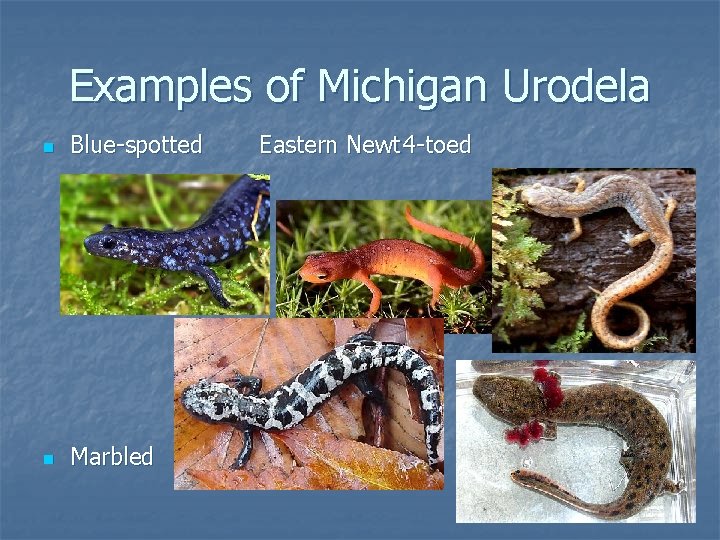
Examples of Michigan Urodela n Blue-spotted n Marbled Eastern Newt 4 -toed
Anura n Michigan Species n n n Blanchard’s cricket frog Bullfrog Eastern American toad Fowler’s Toad Grey tree frog Green frog Mink frog N. leopard frog N. spring peeper Pickerel frog W. chorus frog Wood Frog
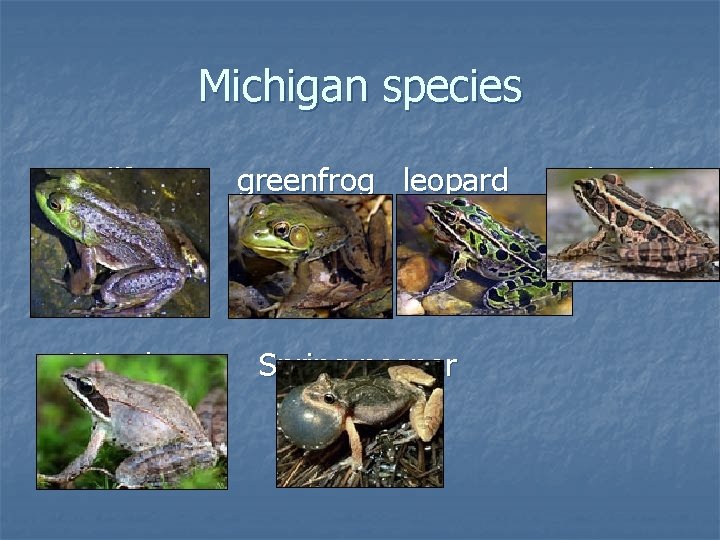
Michigan species n Bullfrog n Wood greenfrog leopard Spring peeper Pickerel
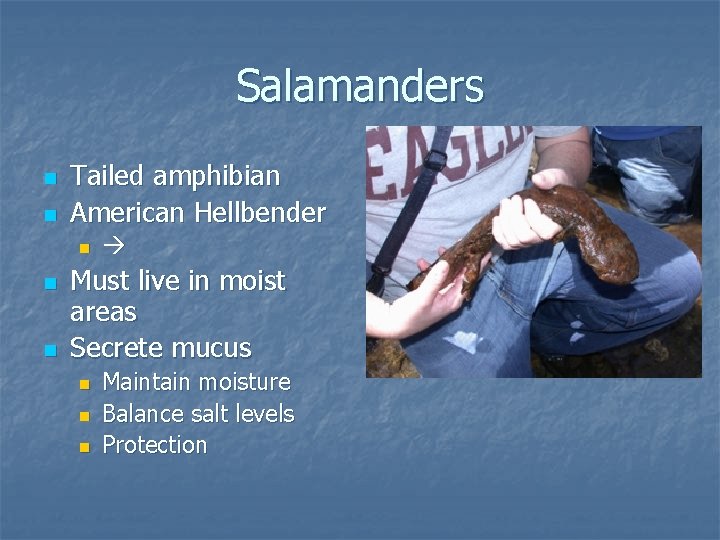
Salamanders n n Tailed amphibian American Hellbender n n n Must live in moist areas Secrete mucus n n n Maintain moisture Balance salt levels Protection
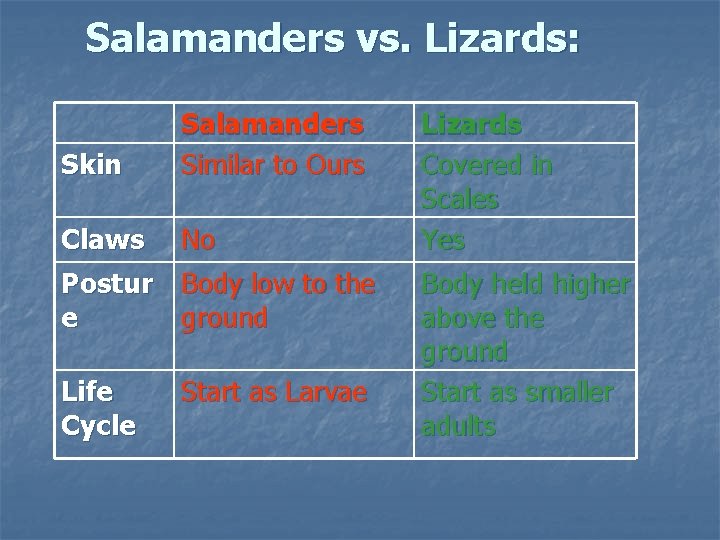
Salamanders vs. Lizards: Skin Salamanders Similar to Ours Claws No Postur Body low to the e ground Life Cycle Start as Larvae Lizards Covered in Scales Yes Body held higher above the ground Start as smaller adults
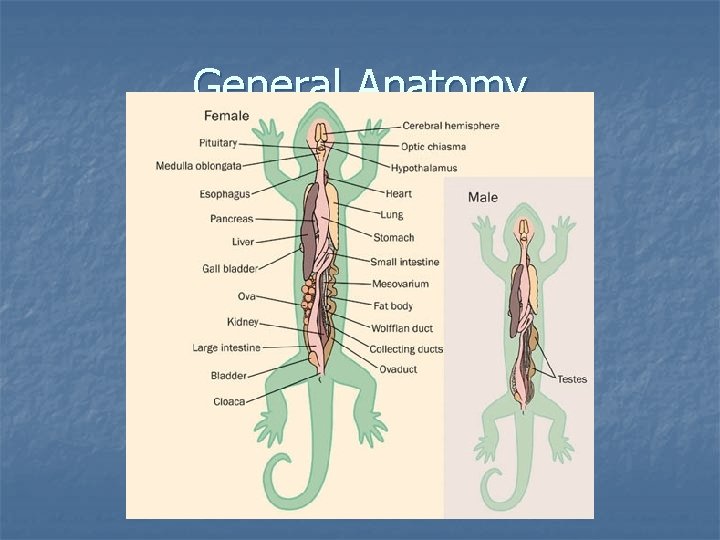
General Anatomy
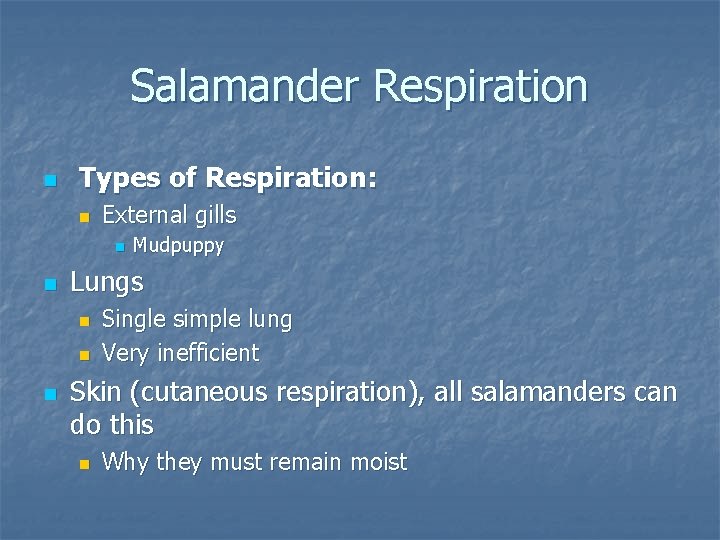
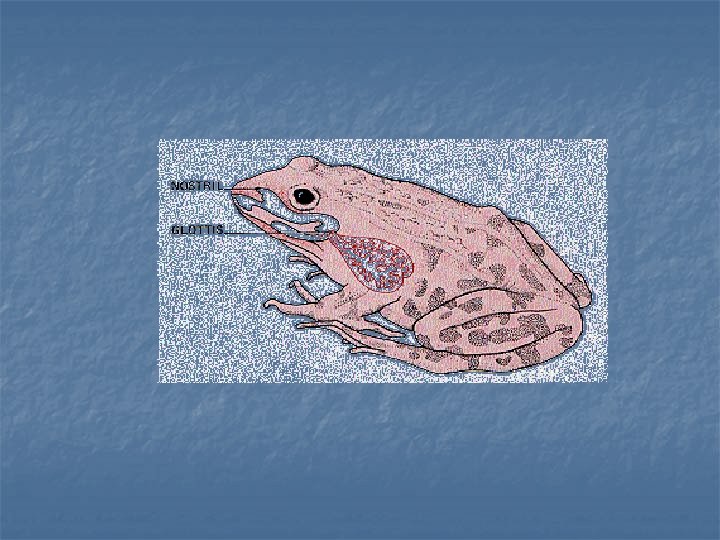
Salamander Respiration n Types of Respiration: n External gills n n Lungs n n n Mudpuppy Single simple lung Very inefficient Skin (cutaneous respiration), all salamanders can do this n Why they must remain moist
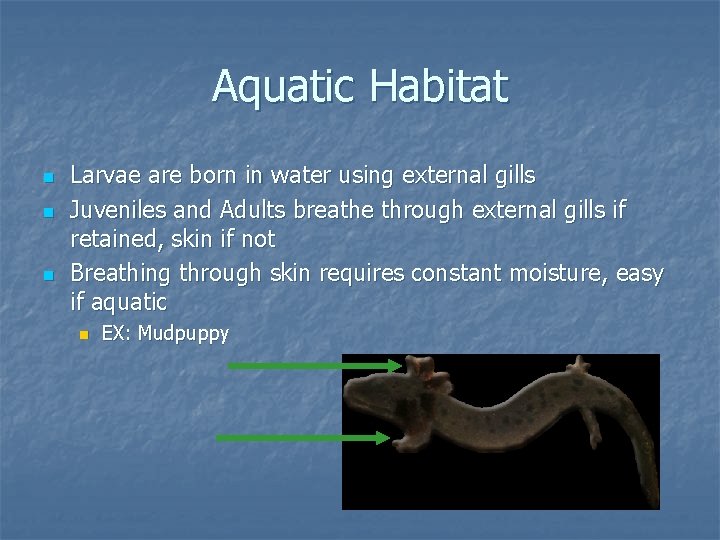
Aquatic Habitat n n n Larvae are born in water using external gills Juveniles and Adults breathe through external gills if retained, skin if not Breathing through skin requires constant moisture, easy if aquatic n EX: Mudpuppy
Environmental Issues n n Salamanders, like all amphibians are one of the first organisms to be affected by environmental changes due to their soft-shelled eggs and respiring skin. Aquatic eggs are jelly-like and can be affected by UV and chemicals in the water. All salamanders can breathe through their skin so any chemicals that come in contact with them easily pass into their bodies. Moisture is critical to all salamanders. n Deforestation leads to areas with less moisture, effectively destroying terrestrial salamander habitat
Anura (Frog/Toad) n Live everywhere (except Antarctica) Most species in tropics n Ectotherms n n Evolved capabilities to live in all biomes n Desert, mountain, tropics, freshwater systems
Toads n n Rough, dry skin Very terrestrial Use soil to maintain body moisture Need water source for larva stage (tadpole)
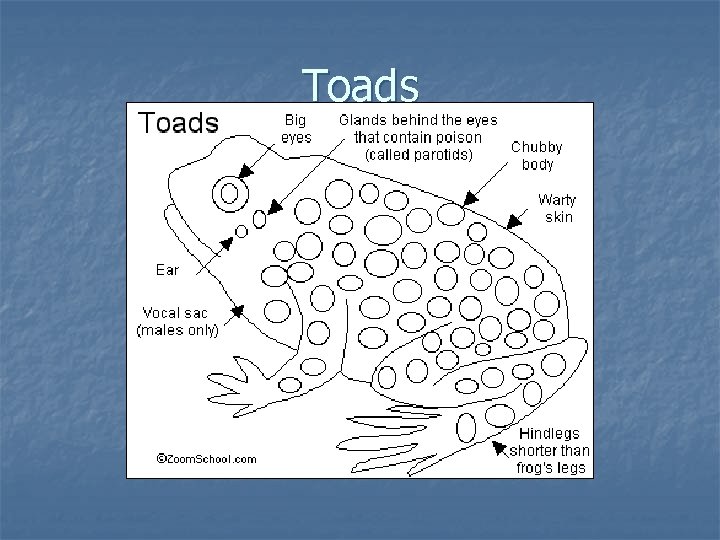
Toads
Frogs n Smaller body structure than toad n n More angular than toad body More reliant on water than toads Moist skin n Secrete mucus n n Similar to function in salamanders
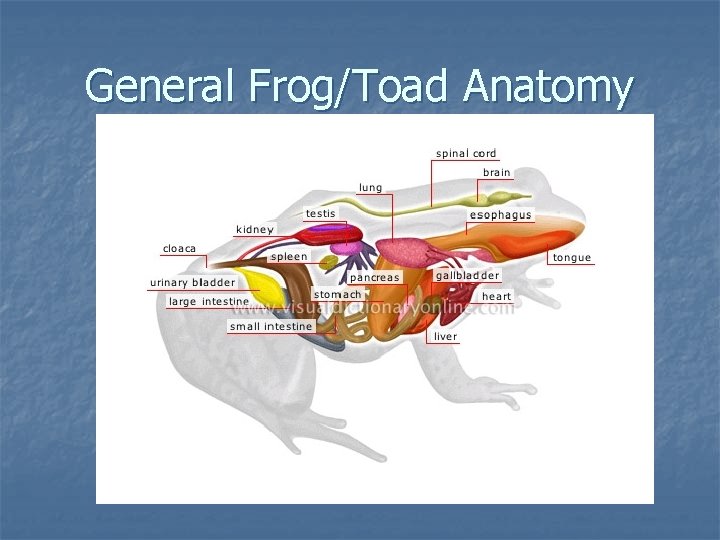
General Frog/Toad Anatomy
Anterior Anatomy n Key Features n Nicitating membrane n n Tympanic membrane n n External eardrum Eustachian Tubes n n 3 rd eyelid Balance pressure Teeth n n 2 vomerine teeth: Maxillary teeth: hold prey
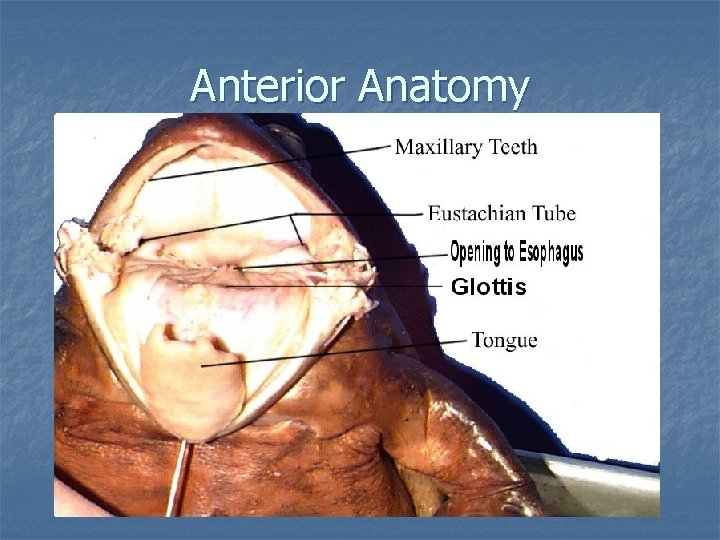
Anterior Anatomy

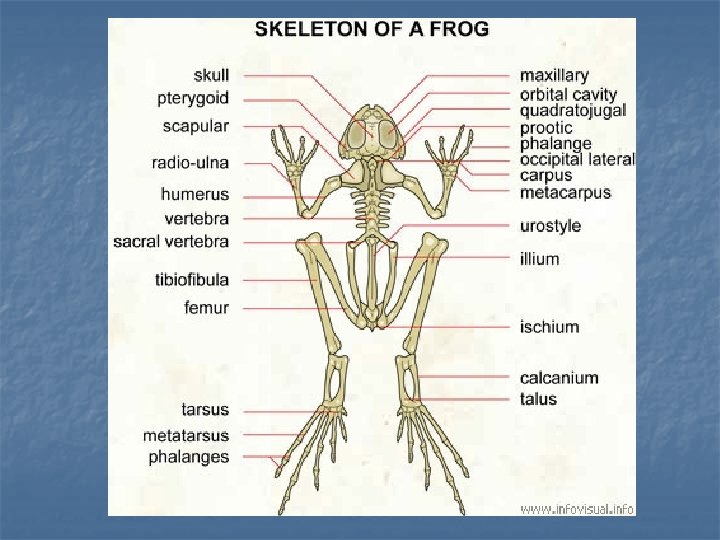
Skeletal System n n Similar to mammalian skeleton Functions as system of levers n Muscle attachment
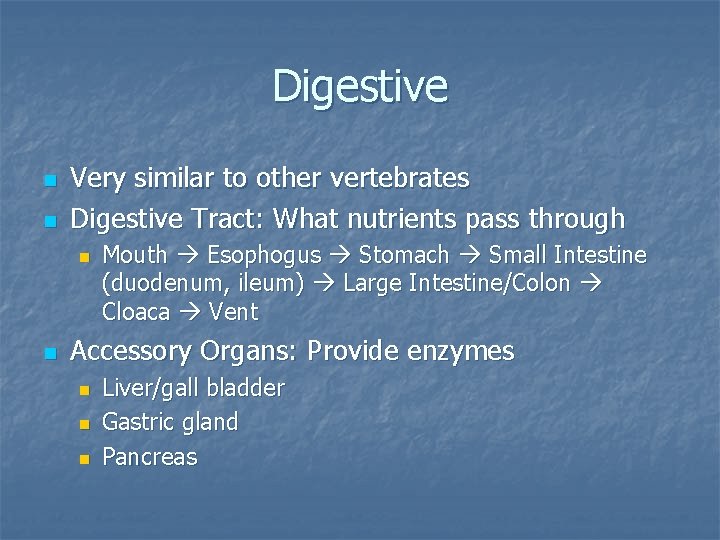
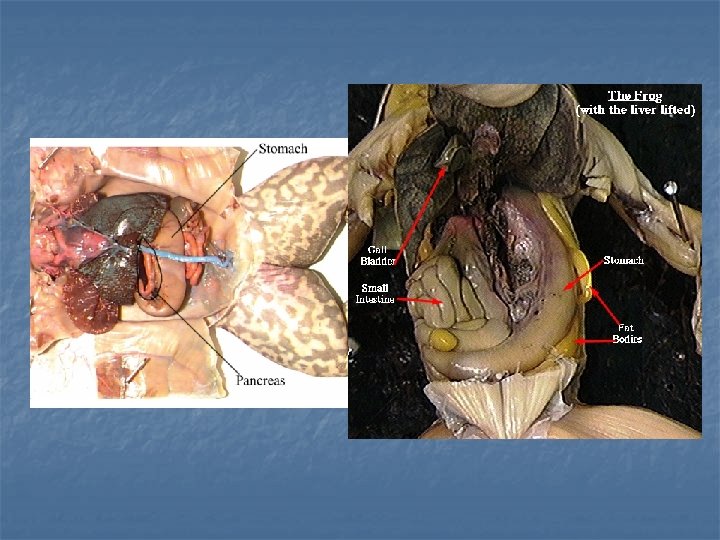
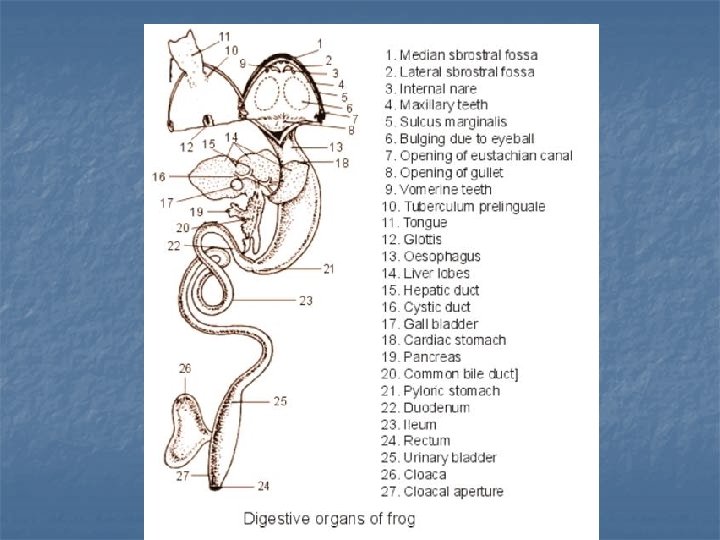
Digestive n n Very similar to other vertebrates Digestive Tract: What nutrients pass through n n Mouth Esophogus Stomach Small Intestine (duodenum, ileum) Large Intestine/Colon Cloaca Vent Accessory Organs: Provide enzymes n n n Liver/gall bladder Gastric gland Pancreas
Excretory System n n n Use skin to excrete some waste (respiratory waste) Cloaca collects digestive waste Kidney major excretory organ n Urinary system

http: //www. stowe. k 12. vt. us/sms/teachers/jgrogan/images/frogcircexcrete. jpg
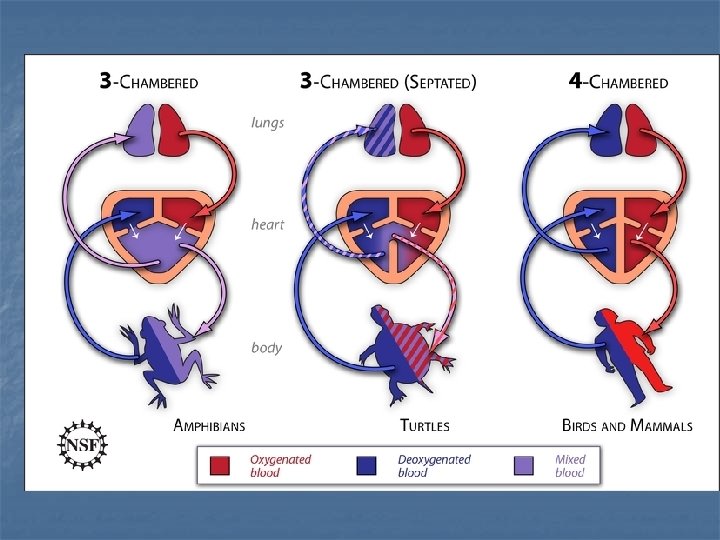
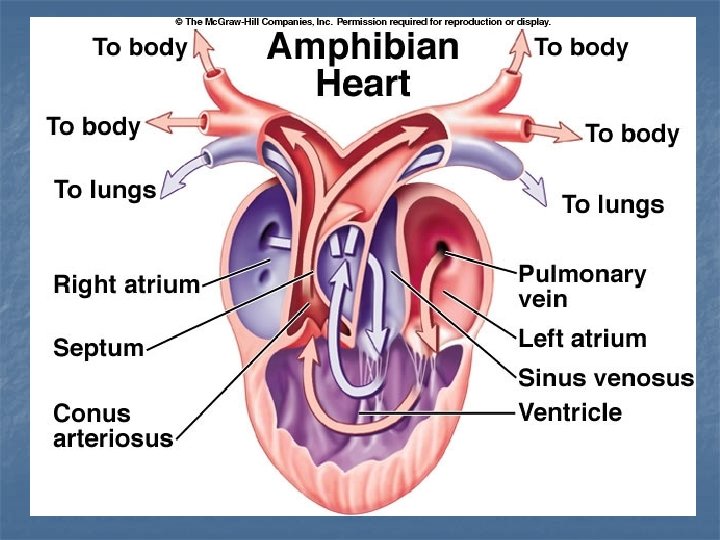
Circulatory System n Pulmonary and systemic circulation n Atrium(s) n n n Pulmonary: Heart Lung Heart Systemic: Heart Body Heart Left: collects blood from lung, sends to the ventricle Right: Collects blood from body, sends to ventricle Ventricle n Pumps blood to both lungs and body
Major Vessels n n Conus arteriosus: Heart systemic or pulmonary circ. Pulmonary vein: Lung Heart (LA) Pulmonary artery: Conus arteriosus lung Sinus Venosus: Body Heart
Problems w/ 3 chambered Heart n n Not as efficient as a 4 chambered (mammalian heart) Oxygenated and deoxygenated blood mix Lungs get some blood that is already oxygenated n Body gets some blood that is already deoxygenated n
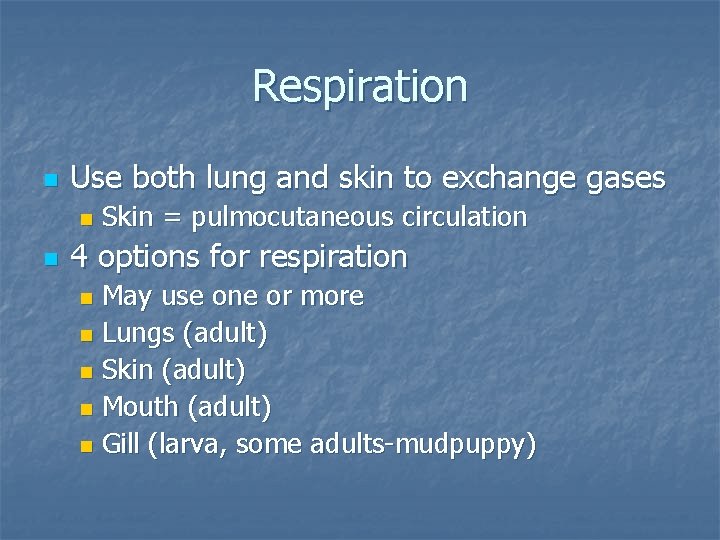
Respiration n Use both lung and skin to exchange gases n n Skin = pulmocutaneous circulation 4 options for respiration May use one or more n Lungs (adult) n Skin (adult) n Mouth (adult) n Gill (larva, some adults-mudpuppy) n
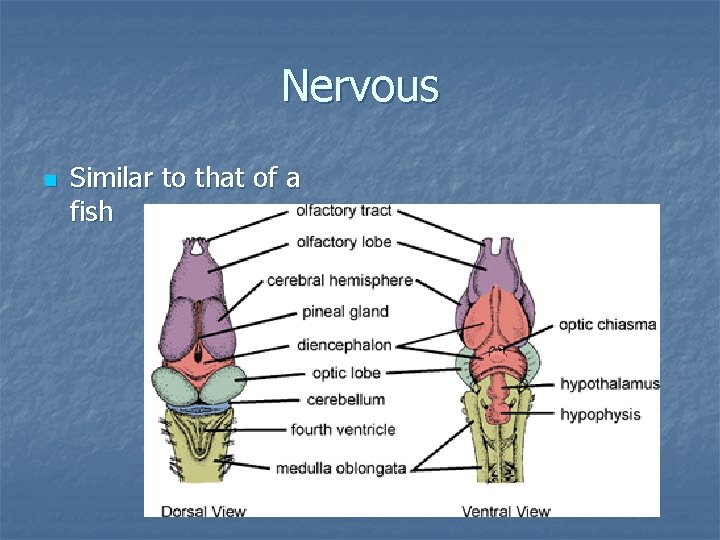
Nervous n Similar to that of a fish
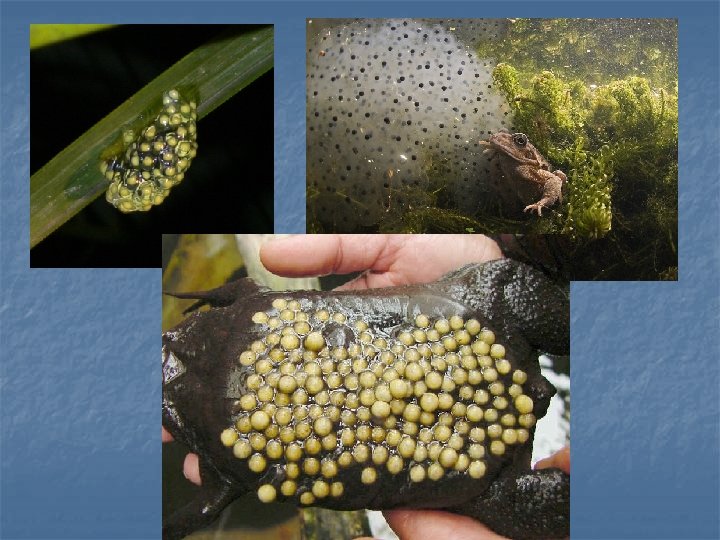
Reproductive n Do not have amniotic egg n n No water barrier must keep moist Most use external fertilization n Male fertilizes eggs as female lays them
- Slides: 41