
Amortization Continued REVISING PERIODIC AMORTIZATION If annual amortization
- Slides: 11
Amortization Continued
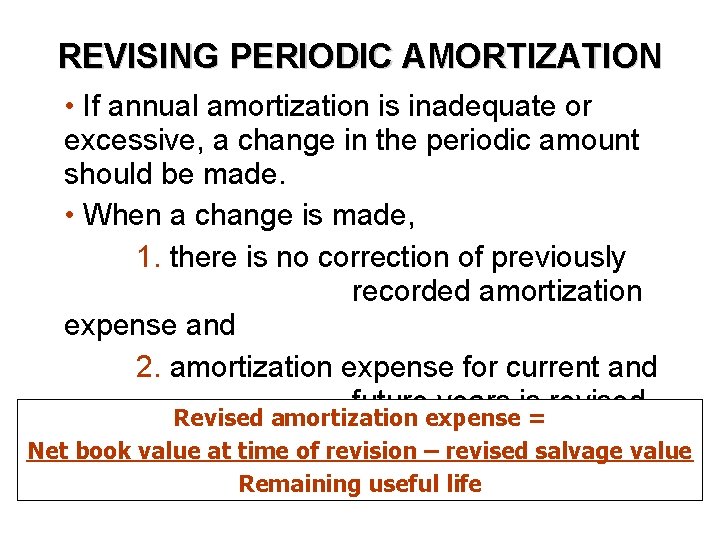
REVISING PERIODIC AMORTIZATION • If annual amortization is inadequate or excessive, a change in the periodic amount should be made. • When a change is made, 1. there is no correction of previously recorded amortization expense and 2. amortization expense for current and future years is revised. Revised amortization expense = Net book value at time of revision – revised salvage value Remaining useful life
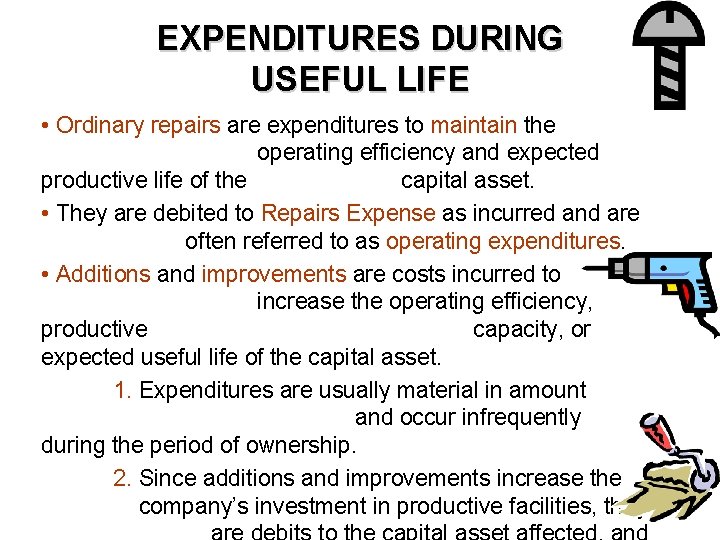
EXPENDITURES DURING USEFUL LIFE • Ordinary repairs are expenditures to maintain the operating efficiency and expected productive life of the capital asset. • They are debited to Repairs Expense as incurred and are often referred to as operating expenditures. • Additions and improvements are costs incurred to increase the operating efficiency, productive capacity, or expected useful life of the capital asset. 1. Expenditures are usually material in amount and occur infrequently during the period of ownership. 2. Since additions and improvements increase the company’s investment in productive facilities, they
CAPITAL ASSET DISPOSALS Capital assets may be disposed of by a) retirement b) sale, or c) exchange
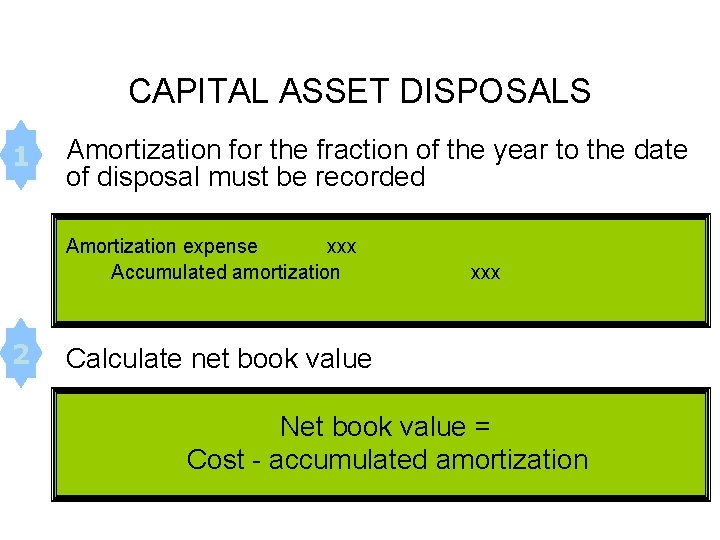
CAPITAL ASSET DISPOSALS 1 Amortization for the fraction of the year to the date of disposal must be recorded Amortization expense xxx Accumulated amortization 2 xxx Calculate net book value Net book value = Cost - accumulated amortization
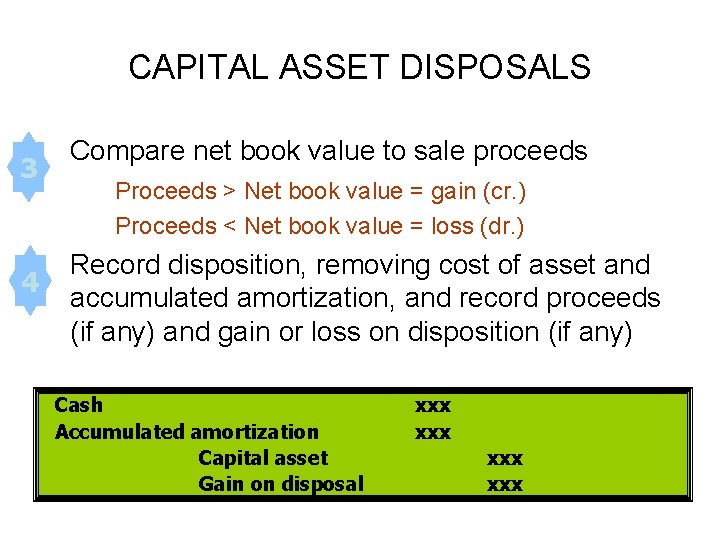
CAPITAL ASSET DISPOSALS 3 4 Compare net book value to sale proceeds Proceeds > Net book value = gain (cr. ) Proceeds < Net book value = loss (dr. ) Record disposition, removing cost of asset and accumulated amortization, and record proceeds (if any) and gain or loss on disposition (if any) Cash Accumulated amortization Capital asset Gain on disposal xxx xxx
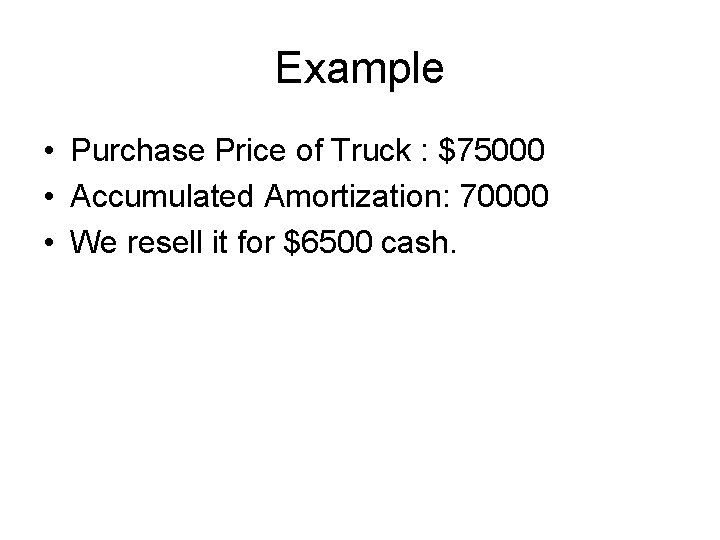
Example • Purchase Price of Truck : $75000 • Accumulated Amortization: 70000 • We resell it for $6500 cash.
NATURAL RESOURCES • Natural resources consist of standing timber and underground deposits of oil, gas, and minerals. • Natural resources, frequently called wasting assets, have two distinguishing characteristics: 1. They are physically extracted in operations. 2. They are replaceable only by an act of nature.
ACQUISITION COST • The acquisition cost of a natural resource is the cash or cash equivalent price necessary to acquire the resource and prepare it for its intended use. • If the resource is already discovered, cost is the price paid for the property.
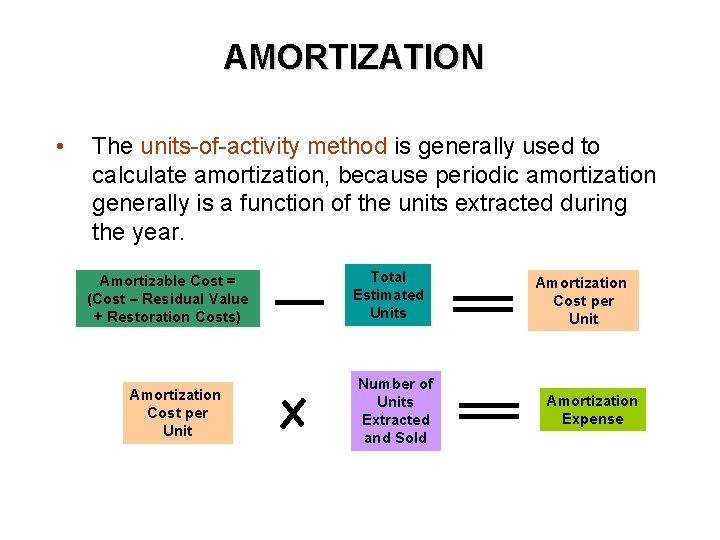
AMORTIZATION • The units-of-activity method is generally used to calculate amortization, because periodic amortization generally is a function of the units extracted during the year. Amortizable Cost = (Cost – Residual Value + Restoration Costs) Amortization Cost per Unit Total Estimated Units Number of Units Extracted and Sold Amortization Cost per Unit Amortization Expense
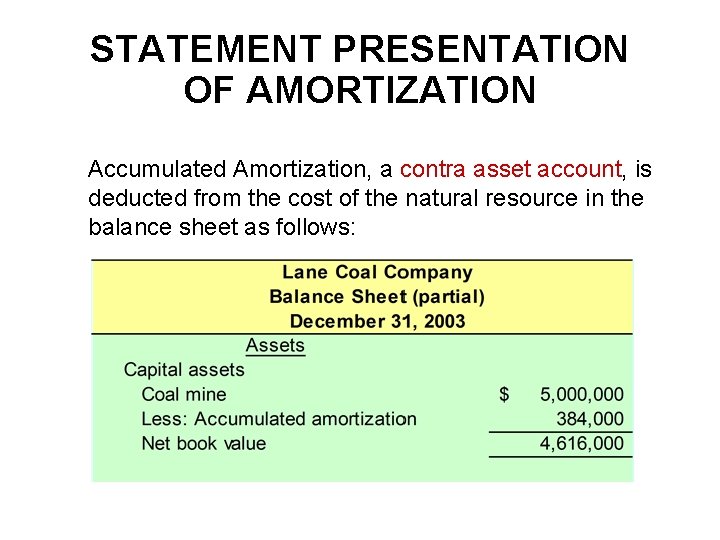
STATEMENT PRESENTATION OF AMORTIZATION Accumulated Amortization, a contra asset account, is deducted from the cost of the natural resource in the balance sheet as follows: