
Amiodarone Use in Cardiac Surgical Resuscitation Jeffrey R
- Slides: 12
Amiodarone Use in Cardiac Surgical Resuscitation Jeffrey R. Balser, M. D. , Ph. D. Associate Professor, Anesthesiology and Pharmacology Associate Dean, Physician Scientist Development Vanderbilt University School of Medicine Nashville, TN 37232
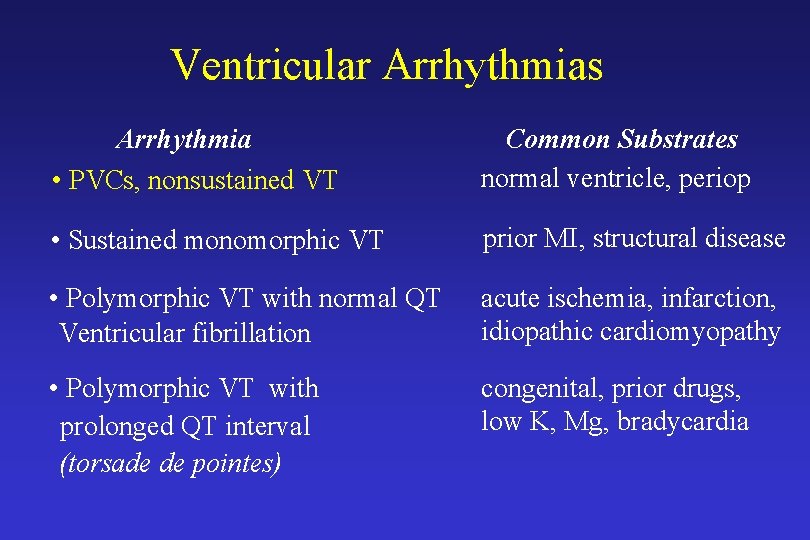
Ventricular Arrhythmias Arrhythmia • PVCs, nonsustained VT Common Substrates normal ventricle, periop • Sustained monomorphic VT prior MI, structural disease • Polymorphic VT with normal QT Ventricular fibrillation acute ischemia, infarction, idiopathic cardiomyopathy • Polymorphic VT with prolonged QT interval (torsade de pointes) congenital, prior drugs, low K, Mg, bradycardia
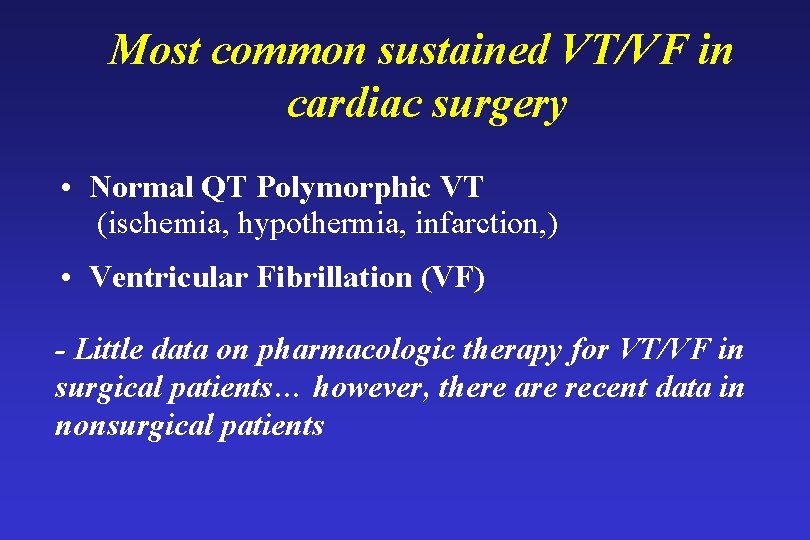
Most common sustained VT/VF in cardiac surgery • Normal QT Polymorphic VT (ischemia, hypothermia, infarction, ) • Ventricular Fibrillation (VF) - Little data on pharmacologic therapy for VT/VF in surgical patients… however, there are recent data in nonsurgical patients
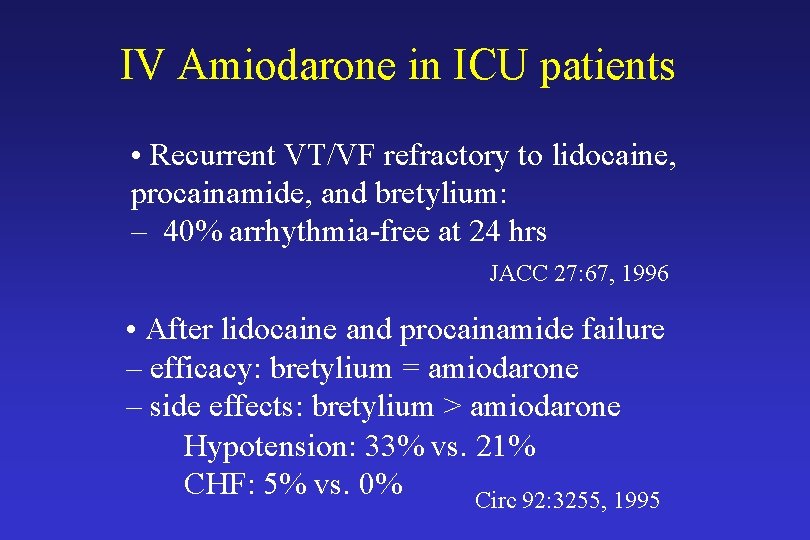
IV Amiodarone in ICU patients • Recurrent VT/VF refractory to lidocaine, procainamide, and bretylium: – 40% arrhythmia-free at 24 hrs JACC 27: 67, 1996 • After lidocaine and procainamide failure – efficacy: bretylium = amiodarone – side effects: bretylium > amiodarone Hypotension: 33% vs. 21% CHF: 5% vs. 0% Circ 92: 3255, 1995
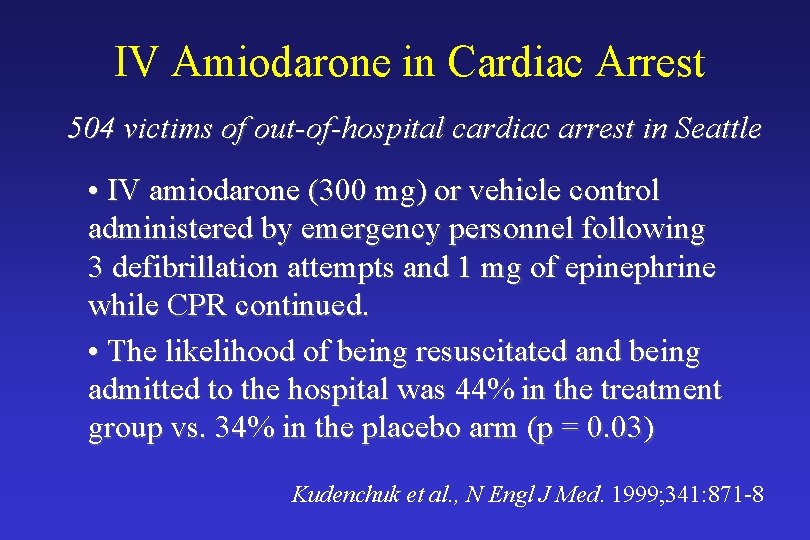
IV Amiodarone in Cardiac Arrest 504 victims of out-of-hospital cardiac arrest in Seattle • IV amiodarone (300 mg) or vehicle control administered by emergency personnel following 3 defibrillation attempts and 1 mg of epinephrine while CPR continued. • The likelihood of being resuscitated and being admitted to the hospital was 44% in the treatment group vs. 34% in the placebo arm (p = 0. 03) Kudenchuk et al. , N Engl J Med. 1999; 341: 871 -8
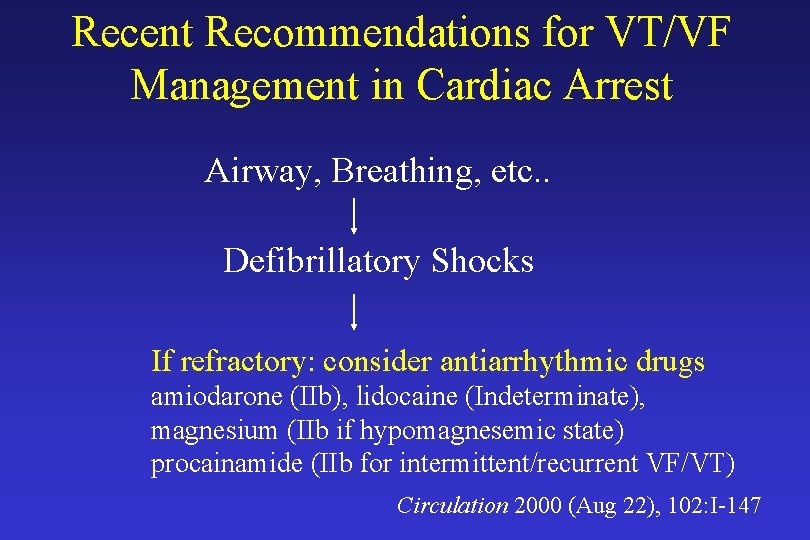
Recent Recommendations for VT/VF Management in Cardiac Arrest Airway, Breathing, etc. . Defibrillatory Shocks If refractory: consider antiarrhythmic drugs amiodarone (IIb), lidocaine (Indeterminate), magnesium (IIb if hypomagnesemic state) procainamide (IIb for intermittent/recurrent VF/VT) Circulation 2000 (Aug 22), 102: I-147
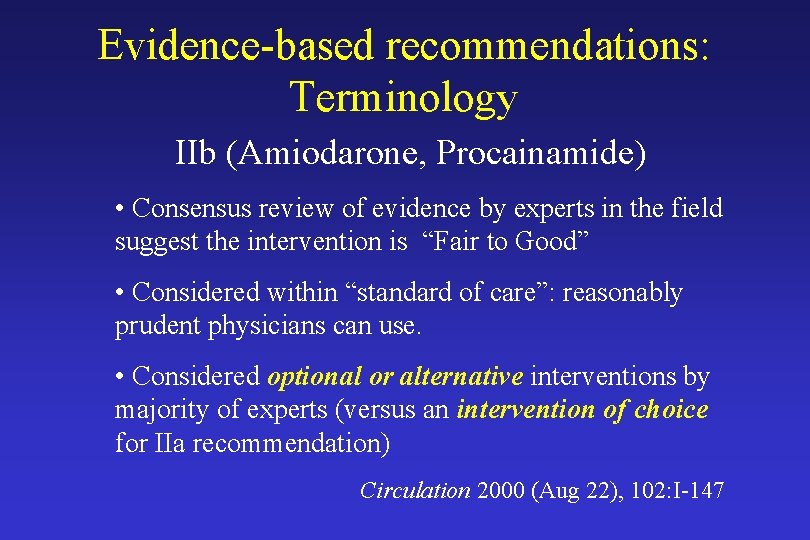
Evidence-based recommendations: Terminology IIb (Amiodarone, Procainamide) • Consensus review of evidence by experts in the field suggest the intervention is “Fair to Good” • Considered within “standard of care”: reasonably prudent physicians can use. • Considered optional or alternative interventions by majority of experts (versus an intervention of choice for IIa recommendation) Circulation 2000 (Aug 22), 102: I-147
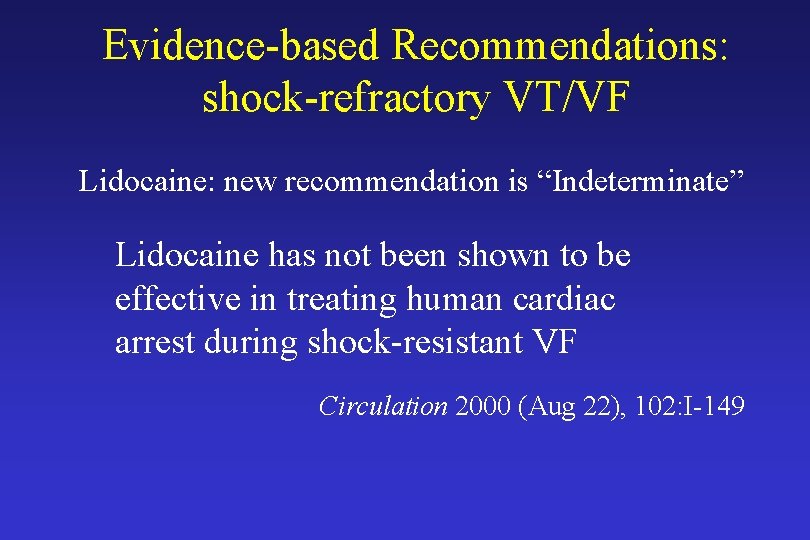
Evidence-based Recommendations: shock-refractory VT/VF Lidocaine: new recommendation is “Indeterminate” Lidocaine has not been shown to be effective in treating human cardiac arrest during shock-resistant VF Circulation 2000 (Aug 22), 102: I-149
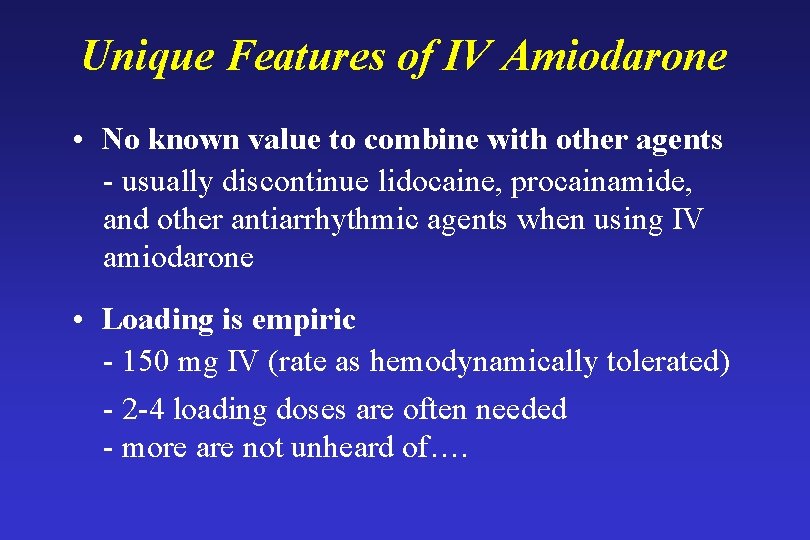
Unique Features of IV Amiodarone • No known value to combine with other agents - usually discontinue lidocaine, procainamide, and other antiarrhythmic agents when using IV amiodarone • Loading is empiric - 150 mg IV (rate as hemodynamically tolerated) - 2 -4 loading doses are often needed - more are not unheard of….
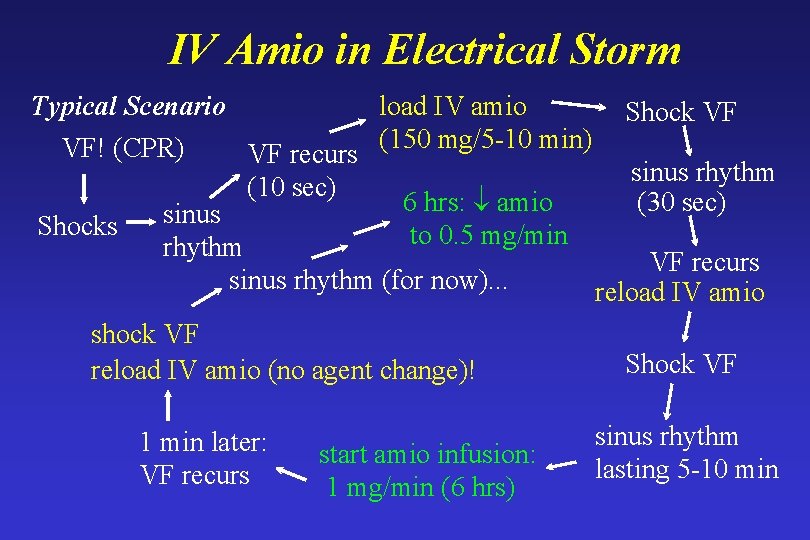
IV Amio in Electrical Storm Typical Scenario VF! (CPR) VF recurs (10 sec) load IV amio (150 mg/5 -10 min) Shock VF sinus rhythm (30 sec) 6 hrs: amio sinus Shocks to 0. 5 mg/min rhythm VF recurs sinus rhythm (for now). . . reload IV amio shock VF Shock VF reload IV amio (no agent change)! 1 min later: VF recurs start amio infusion: 1 mg/min (6 hrs) sinus rhythm lasting 5 -10 min
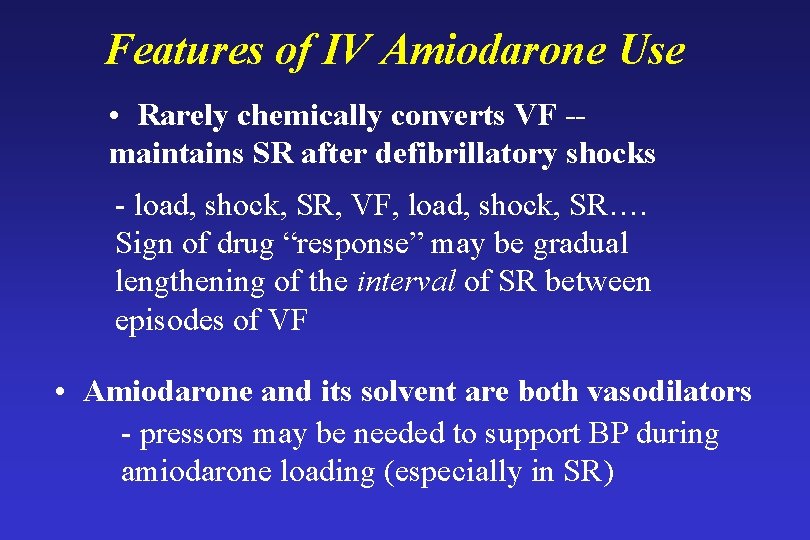
Features of IV Amiodarone Use • Rarely chemically converts VF -maintains SR after defibrillatory shocks - load, shock, SR, VF, load, shock, SR…. Sign of drug “response” may be gradual lengthening of the interval of SR between episodes of VF • Amiodarone and its solvent are both vasodilators - pressors may be needed to support BP during amiodarone loading (especially in SR)
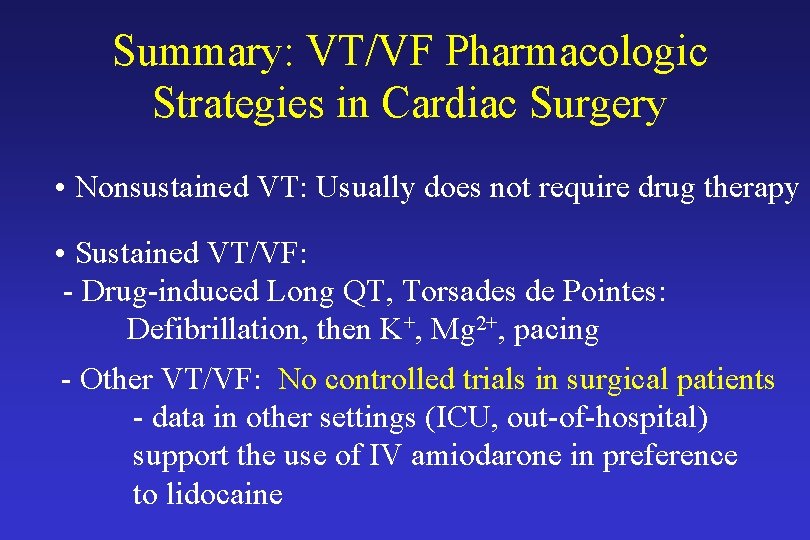
Summary: VT/VF Pharmacologic Strategies in Cardiac Surgery • Nonsustained VT: Usually does not require drug therapy • Sustained VT/VF: - Drug-induced Long QT, Torsades de Pointes: Defibrillation, then K+, Mg 2+, pacing - Other VT/VF: No controlled trials in surgical patients - data in other settings (ICU, out-of-hospital) support the use of IV amiodarone in preference to lidocaine