
Amino Acids Polypeptides and Proteins Text Book HARPERS
Amino Acids, Polypeptides and Proteins Text. Book: HARPERS REVIEW OF BIOCHEMISTRY
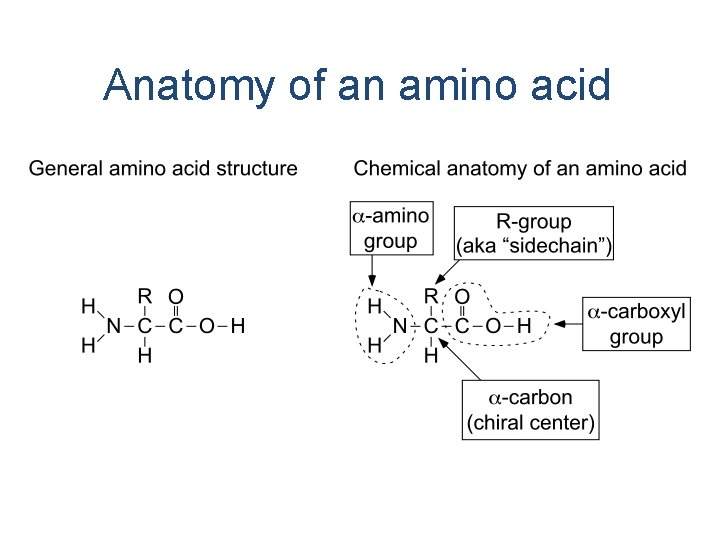
Anatomy of an amino acid
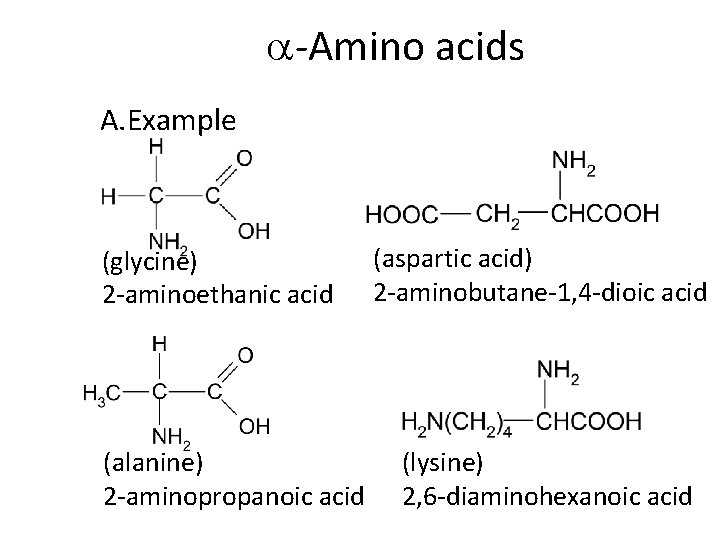
-Amino acids A. Example (glycine) 2 -aminoethanic acid (alanine) 2 -aminopropanoic acid (aspartic acid) 2 -aminobutane-1, 4 -dioic acid (lysine) 2, 6 -diaminohexanoic acid
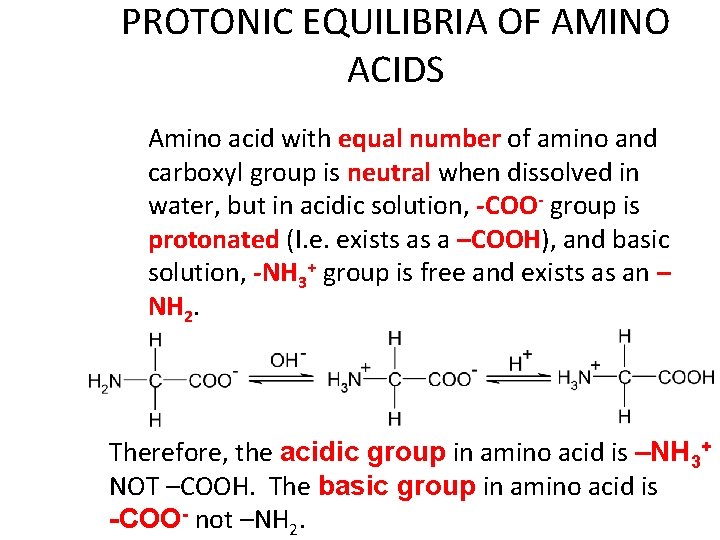
PROTONIC EQUILIBRIA OF AMINO ACIDS Amino acid with equal number of amino and carboxyl group is neutral when dissolved in water, but in acidic solution, -COO- group is protonated (I. e. exists as a –COOH), and basic solution, -NH 3+ group is free and exists as an – NH 2. Therefore, the acidic group in amino acid is –NH 3+ NOT –COOH. The basic group in amino acid is -COO- not –NH 2.
Isoelectric point and electrophoresis By adjusting the p. H value of the aqueous solution of an amino acid, the concentration of cation can be made equal to that of anion, and there will be no net migration of the amino acid in an electric field. The p. H value so adjusted in this case is known as the isoelectric point of the given amino acid. Isoelectric points are characteristic of amino acids. Therefore it is possible to separate different amino acids in a mixture by subjecting the mixture to an electric field and adjusting the p. H value, This technique is known as electrophoresis.
Groups of Amino Acids 1. Polar, uncharged amino acids – Contain R-groups that can form hydrogen bonds with water – Includes amino acids with alcohols in R-groups (Ser, Thr, Tyr) – Amide groups: Asn and Gln – Usually more soluble in water • Exception is Tyr (most insoluble at 0. 453 g/L at 25 C) – Sulfhydryl group: Cys • Cys can form a disulfide bond (2 cysteines can make one cystine)

Uncharged polar side chains + H 3 N COOC H COOC CH 2 OH COO- + H H 3 N C H H C OH H Threonine Ser Thr Glycine S T G C H CH 2 CH 3 Serine Gly + H 3 N COO- OH Tyrosine Tyr Y
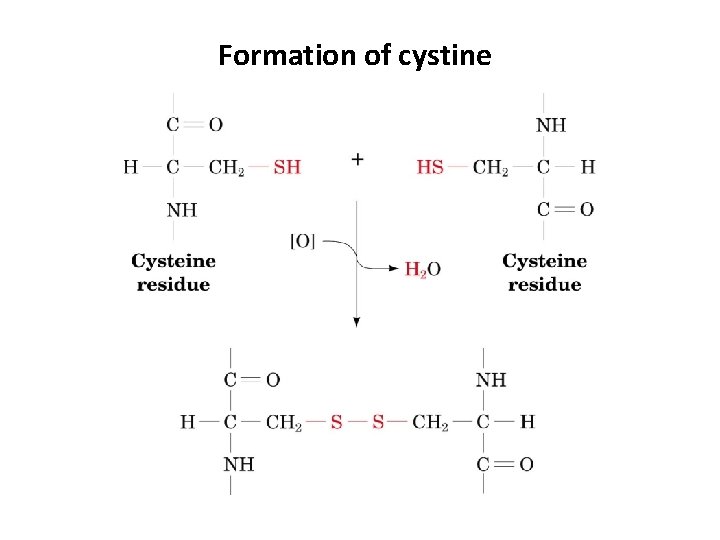
Formation of cystine
Groups of Amino Acids 2. Acidic amino acids – Amino acids in which R-group contains a carboxyl group – Asp and Glu – Have a net negative charge at p. H 7 (negatively charged p. H > 3) – Negative charges play important roles • Metal-binding sites • Carboxyl groups may act as nucleophiles in enzymatic interactions • Electrostatic bonding interactions
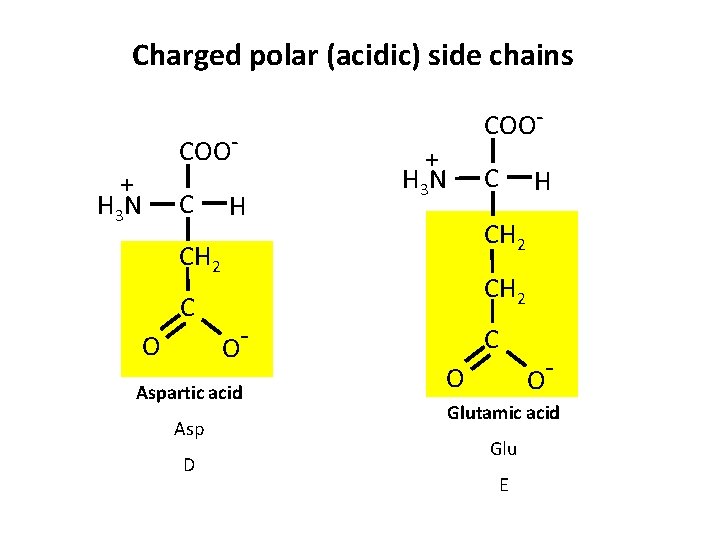
Charged polar (acidic) side chains + H 3 N COOC H + H 3 N O D H CH 2 O Aspartic acid Asp C CH 2 C COO- C O O Glutamic acid Glu E
Groups of Amino Acids 3. Basic amino acids (Charged polar (basic) side chains) – Amino acids in which R-group have net positive charges at p. H 7 – His, Lys, and Arg – Lys and Arg are fully protonated at p. H 7 • Participate in electrostatic interactions – His has a side chain p. Ka of 6. 0 and is only 10% protonated at p. H 7 – Because His has a p. Ka near neutral, it plays important roles as a proton donor or acceptor in many enzymes. – His containing peptides are important biological buffers
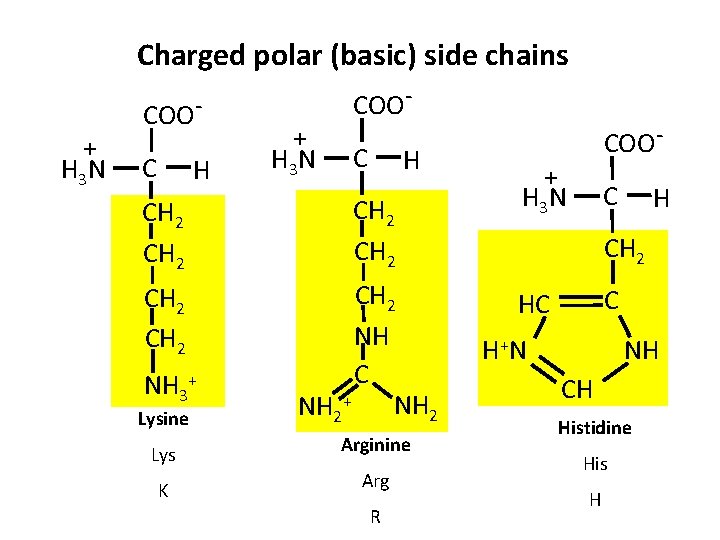
Charged polar (basic) side chains + H 3 N COOC H CH 2 CH 2 NH C NH 2+ NH 3+ Lysine Lys Arginine K Arg R COO- + H 3 N C H CH 2 C HC NH H +N CH Histidine His H
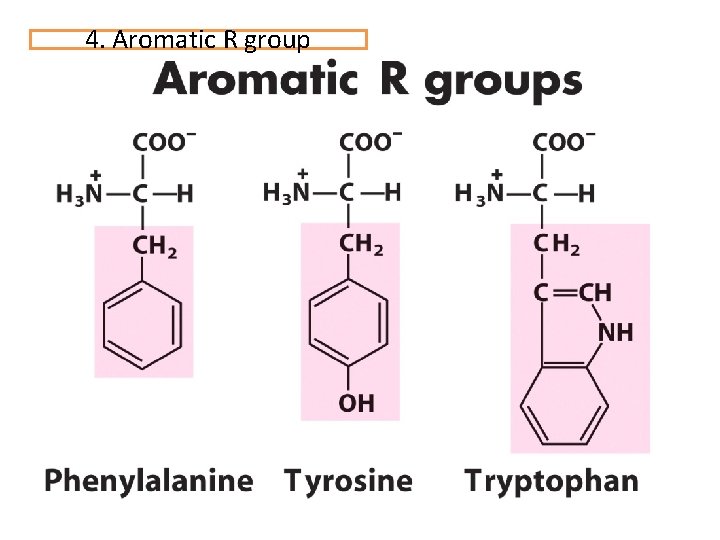
4. Aromatic R group
Nonstandard amino acids • 20 common amino acids programmed by genetic code • Nature often needs more variation • Nonstandard amino acids play a variety of roles: structural, antibiotics, signals, hormones, neurotransmitters, intermediates in metabolic cycles, etc. • Nonstandard amino acids are usually the result of modification of a standard amino acid after a polypeptide has been synthesized. • If you see the structure, could you tell where these nonstandard amino acids were derived from?
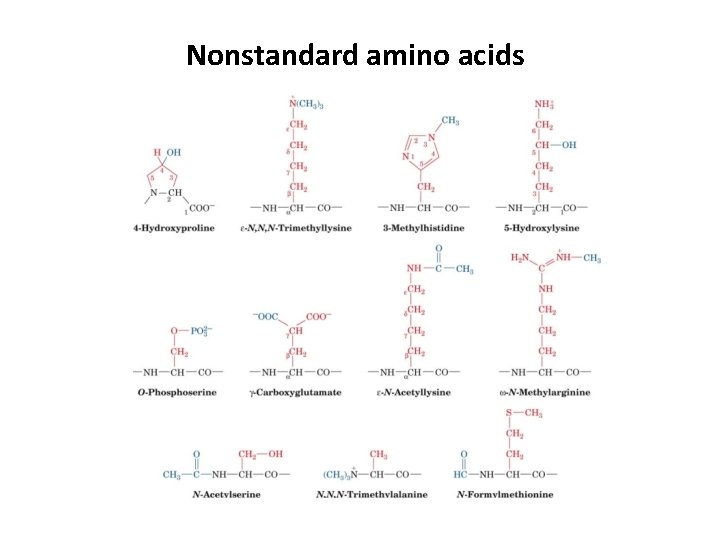
Nonstandard amino acids
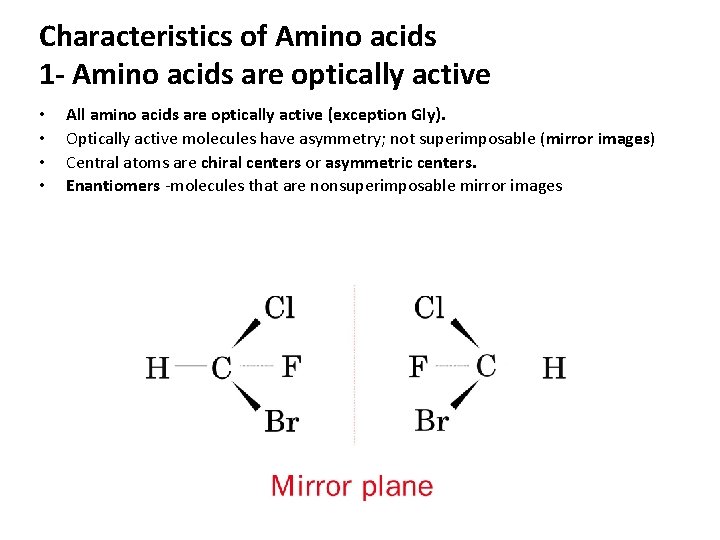
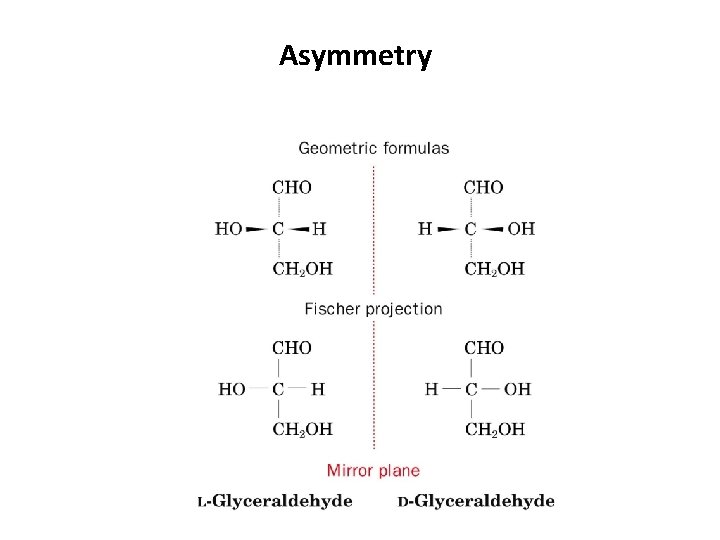
Characteristics of Amino acids 1 - Amino acids are optically active • • All amino acids are optically active (exception Gly). Optically active molecules have asymmetry; not superimposable (mirror images) Central atoms are chiral centers or asymmetric centers. Enantiomers -molecules that are nonsuperimposable mirror images
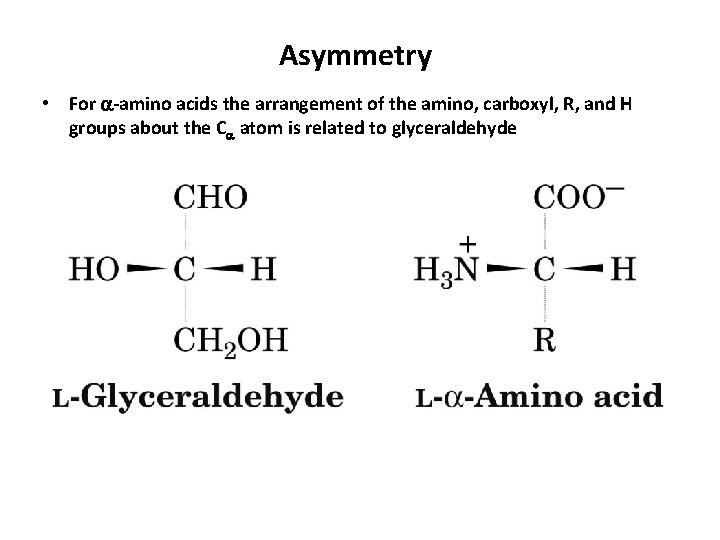
Asymmetry • For -amino acids the arrangement of the amino, carboxyl, R, and H groups about the C atom is related to glyceraldehyde
Asymmetry
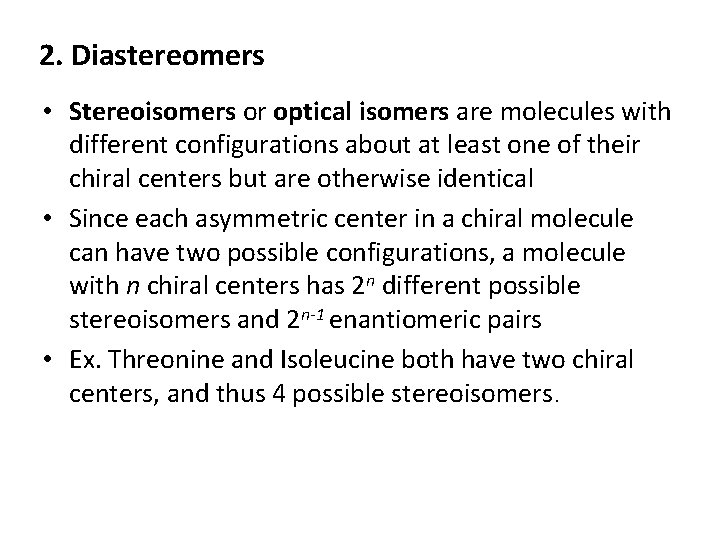
2. Diastereomers • Stereoisomers or optical isomers are molecules with different configurations about at least one of their chiral centers but are otherwise identical • Since each asymmetric center in a chiral molecule can have two possible configurations, a molecule with n chiral centers has 2 n different possible stereoisomers and 2 n-1 enantiomeric pairs • Ex. Threonine and Isoleucine both have two chiral centers, and thus 4 possible stereoisomers.
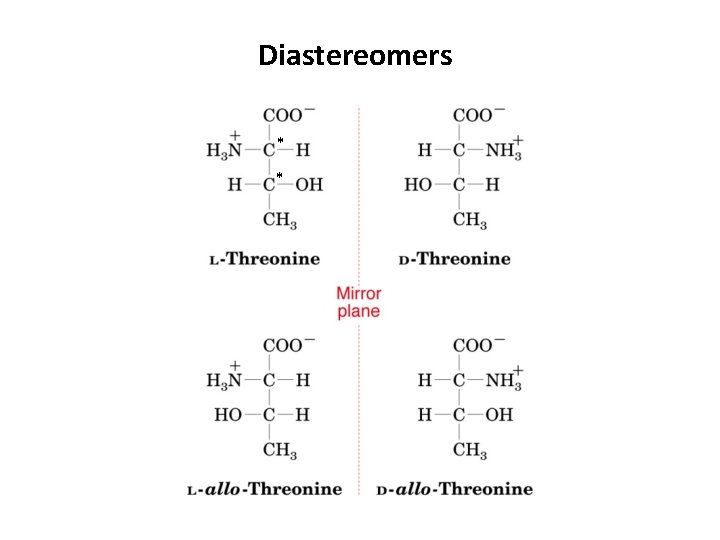
Diastereomers * *
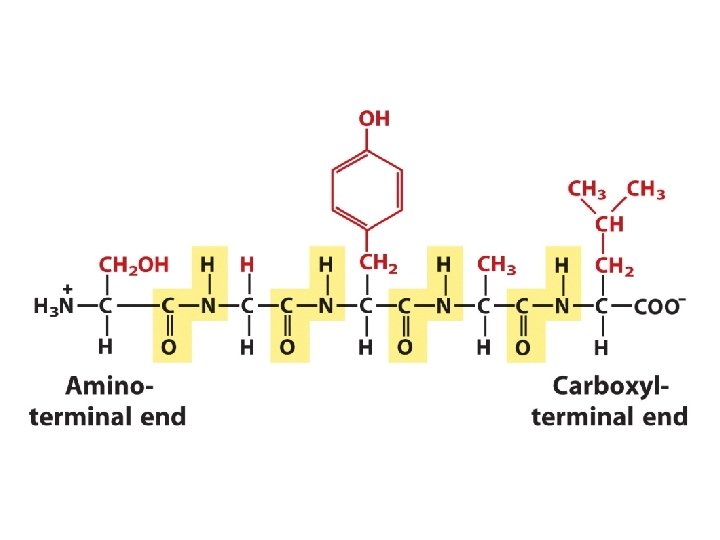
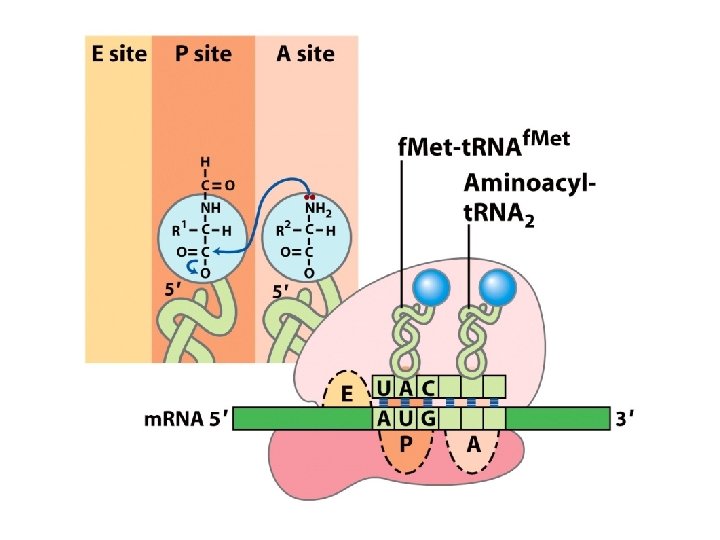
Amino Acids Are Joined By Peptide Bonds In Peptides - -carboxyl of one amino acid is joined to -amino of a second amino acid (with removal of water) - only -carboxyl and -amino groups are used, not R-group carboxyl or amino groups
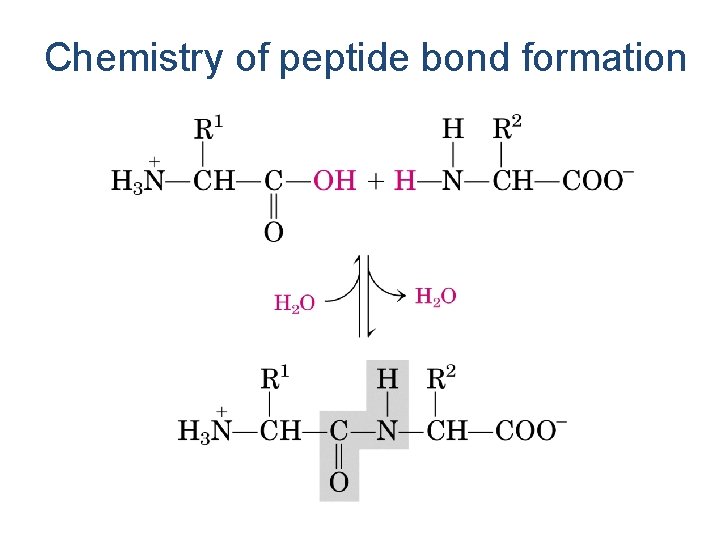
Chemistry of peptide bond formation
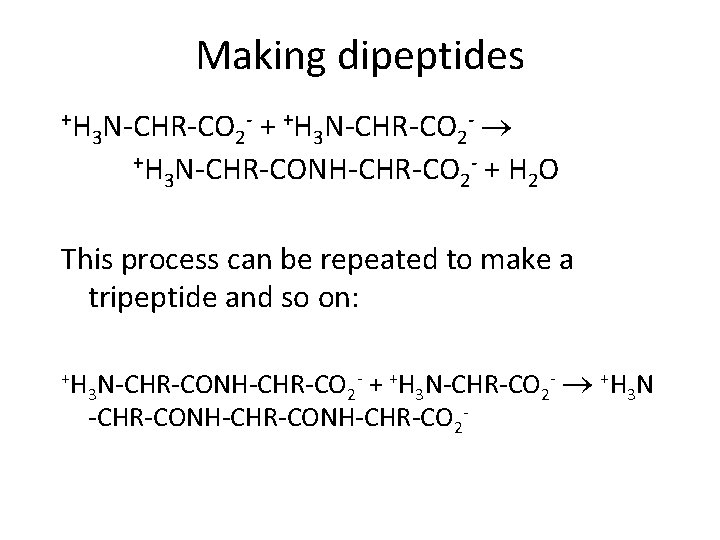
Making dipeptides +H - + +H N-CHR-CO - N-CHR-CO 3 2 +H N-CHR-CONH-CHR-CO - + H O 3 2 2 This process can be repeated to make a tripeptide and so on: +H + +H 3 N-CHR-CO 2 - +H 3 N -CHR-CONH-CHR-CO 2 - 3 N-CHR-CONH-CHR-CO 2 -
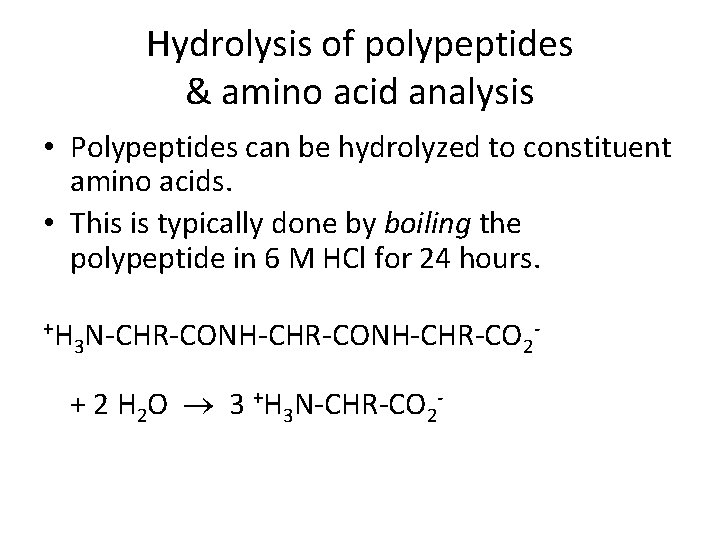
Hydrolysis of polypeptides & amino acid analysis • Polypeptides can be hydrolyzed to constituent amino acids. • This is typically done by boiling the polypeptide in 6 M HCl for 24 hours. +H N-CHR-CONH-CHR-CO 3 2 + 2 H 2 O 3 +H 3 N-CHR-CO 2 -
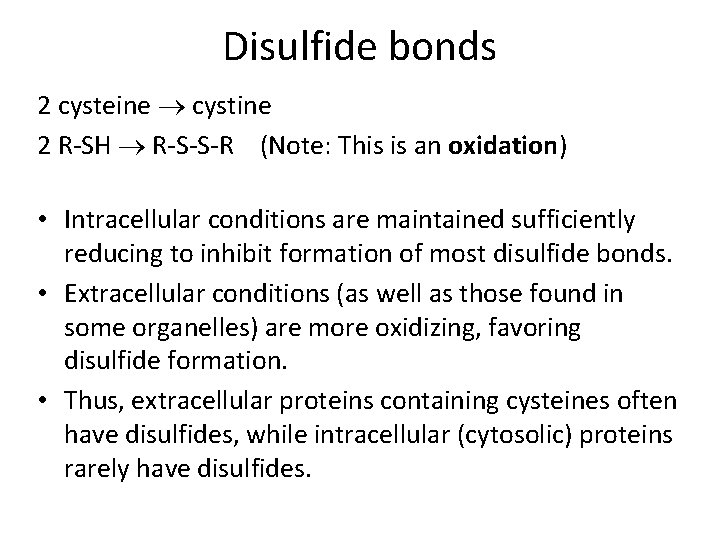
Disulfide bonds 2 cysteine cystine 2 R-SH R-S-S-R (Note: This is an oxidation) • Intracellular conditions are maintained sufficiently reducing to inhibit formation of most disulfide bonds. • Extracellular conditions (as well as those found in some organelles) are more oxidizing, favoring disulfide formation. • Thus, extracellular proteins containing cysteines often have disulfides, while intracellular (cytosolic) proteins rarely have disulfides.
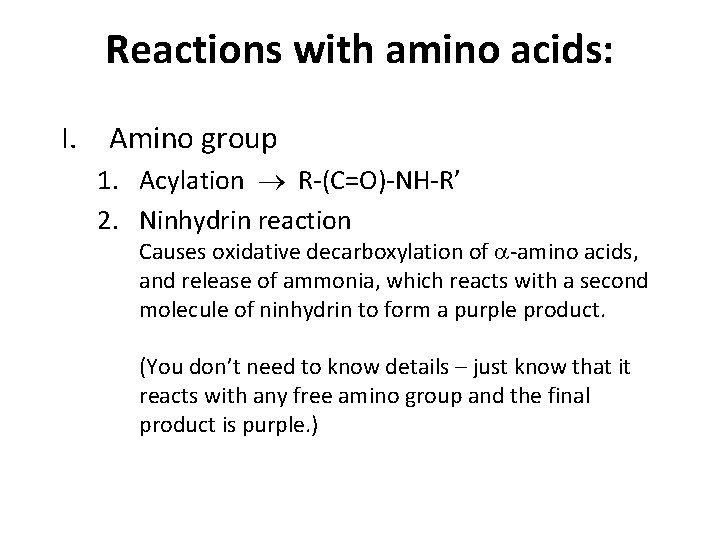
Reactions with amino acids: I. Amino group 1. Acylation R-(C=O)-NH-R’ 2. Ninhydrin reaction Causes oxidative decarboxylation of -amino acids, and release of ammonia, which reacts with a second molecule of ninhydrin to form a purple product. (You don’t need to know details – just know that it reacts with any free amino group and the final product is purple. )
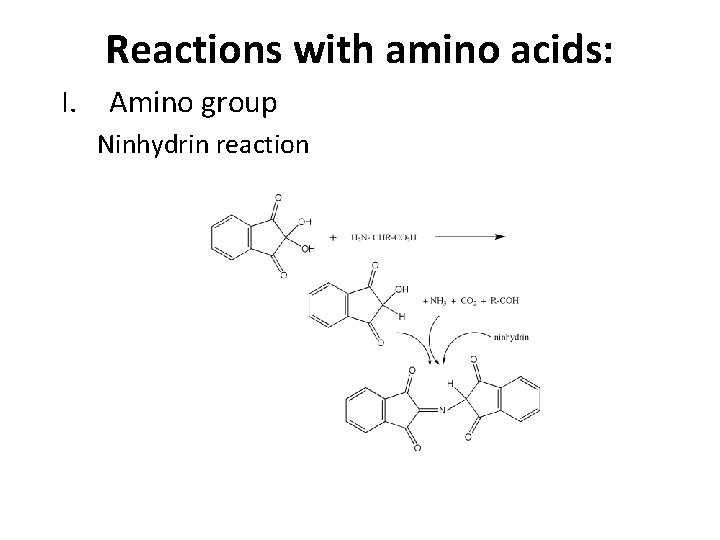
Reactions with amino acids: I. Amino group Ninhydrin reaction
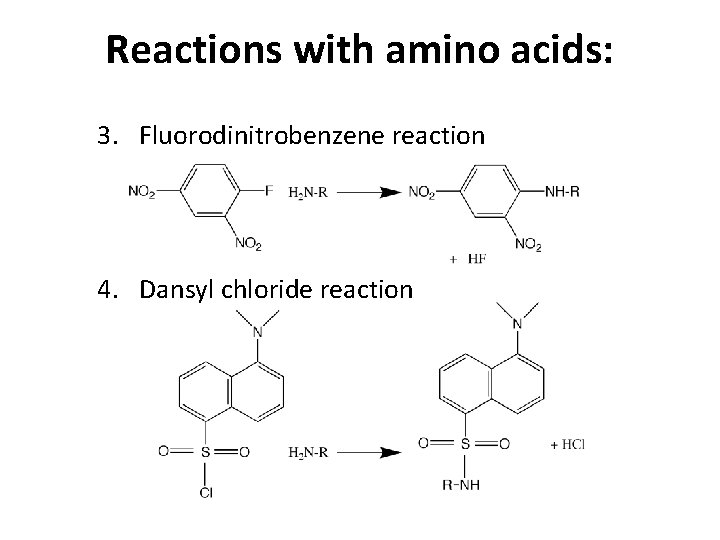
Reactions with amino acids: 3. Fluorodinitrobenzene reaction 4. Dansyl chloride reaction
Reactions with amino acids: II. Carboxyl group 1. Amide formation 2. Ester formation 3. Acyl halide formation 4. Reduction to alcohol (via aldehyde)
- Slides: 31