
Amino Acids 9082009 1 What are Amino Acids
- Slides: 31
Amino Acids (9/08/2009) 1. What are Amino Acids, and what is their 3 -D structure? 2. What are the structures & properties of the individual amino acids? 3. What is the peptide bond? 4. Do amino acids have specific Acid-Base properties? 5. Are small peptides physiologically active?
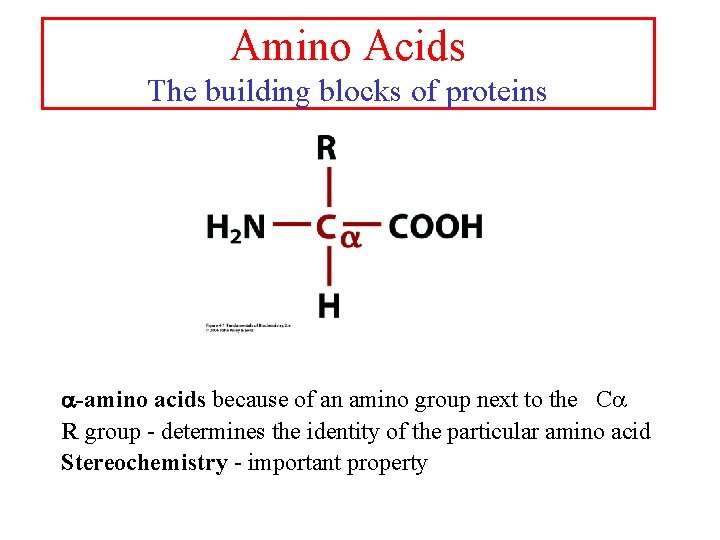
Amino Acids The building blocks of proteins a-amino acids because of an amino group next to the Ca R group - determines the identity of the particular amino acid Stereochemistry - important property
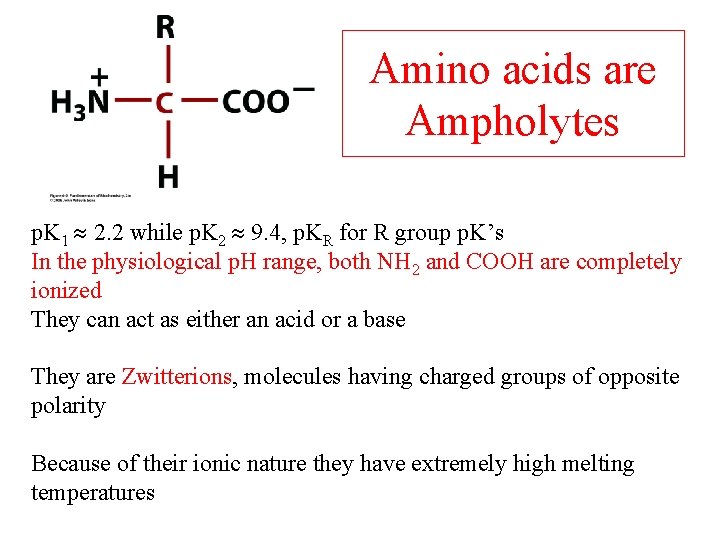
Amino acids are Ampholytes p. K 1 2. 2 while p. K 2 9. 4, p. KR for R group p. K’s In the physiological p. H range, both NH 2 and COOH are completely ionized They can act as either an acid or a base They are Zwitterions, molecules having charged groups of opposite polarity Because of their ionic nature they have extremely high melting temperatures
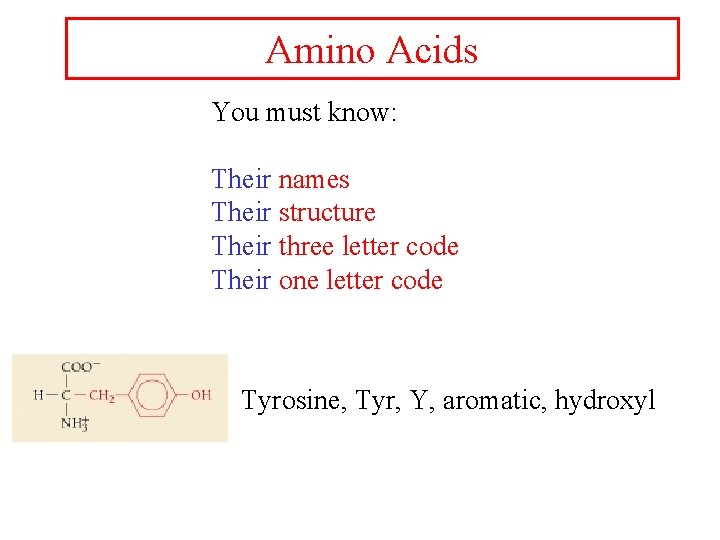
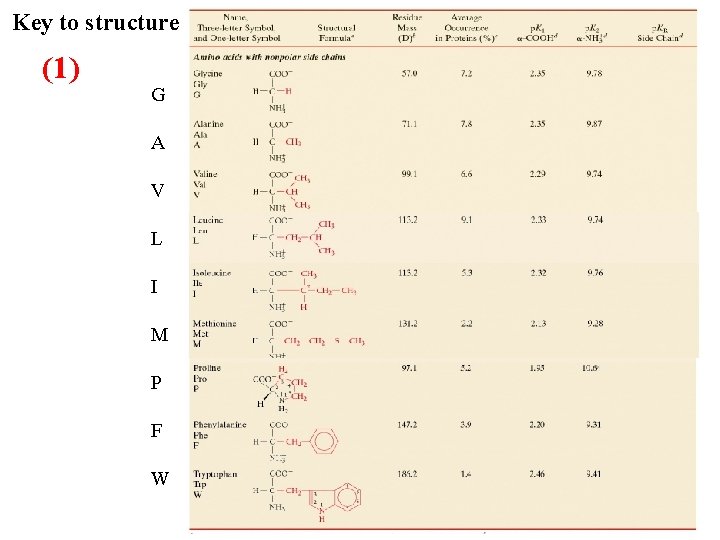
Amino Acids You must know: Their names Their structure Their three letter code Their one letter code Tyrosine, Tyr, Y, aromatic, hydroxyl
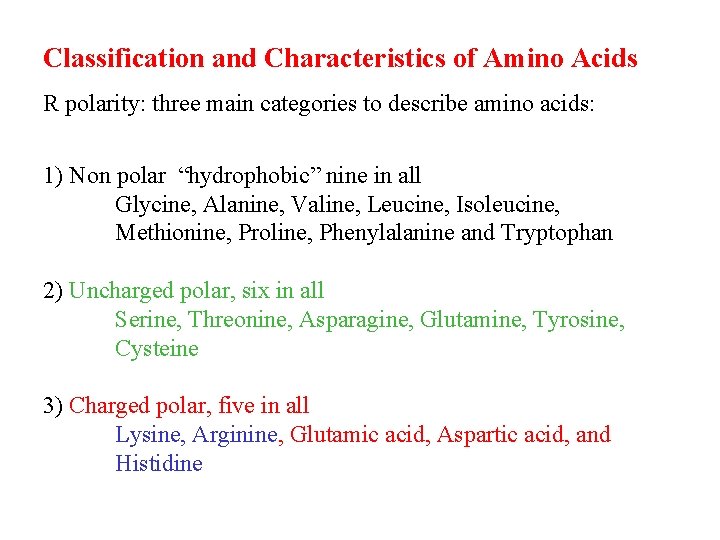
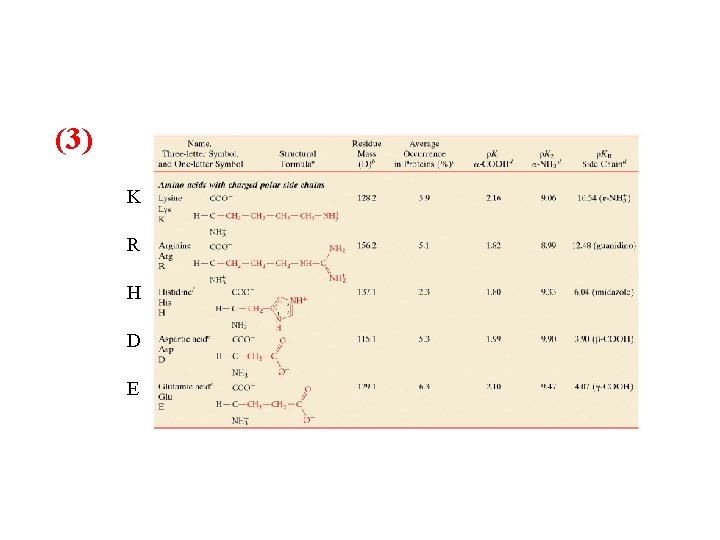
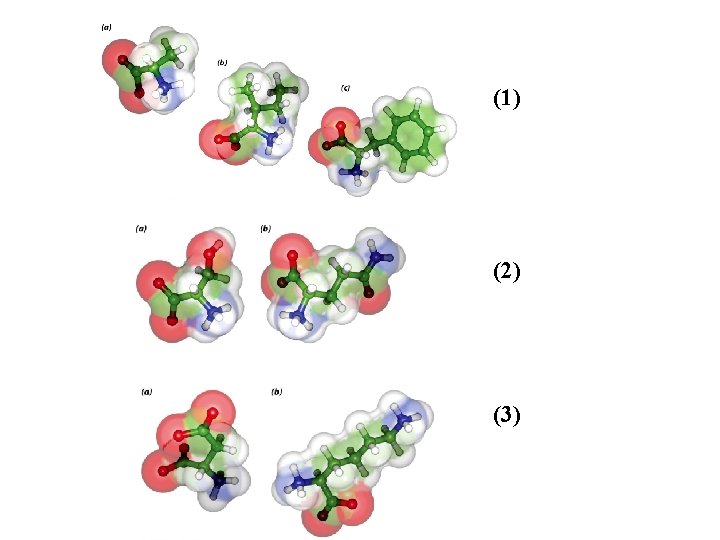
Classification and Characteristics of Amino Acids R polarity: three main categories to describe amino acids: 1) Non polar “hydrophobic” nine in all Glycine, Alanine, Valine, Leucine, Isoleucine, Methionine, Proline, Phenylalanine and Tryptophan 2) Uncharged polar, six in all Serine, Threonine, Asparagine, Glutamine, Tyrosine, Cysteine 3) Charged polar, five in all Lysine, Arginine, Glutamic acid, Aspartic acid, and Histidine
Key to structure (1) G A V L I M P F W
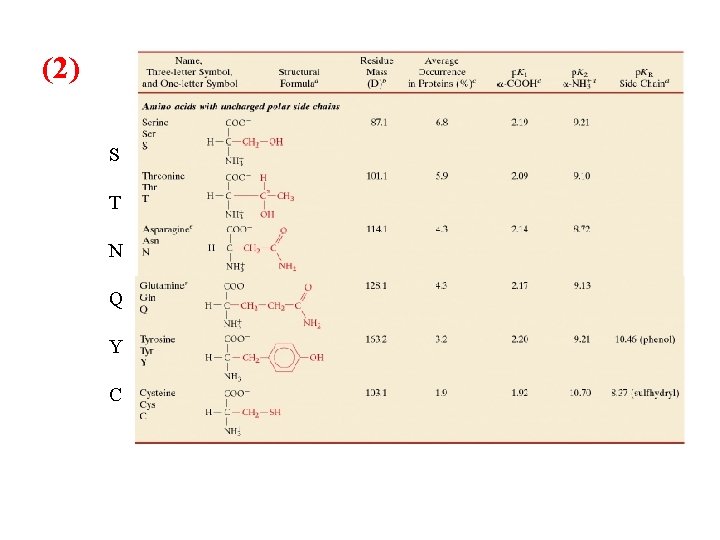
(2) S T N Q Y C
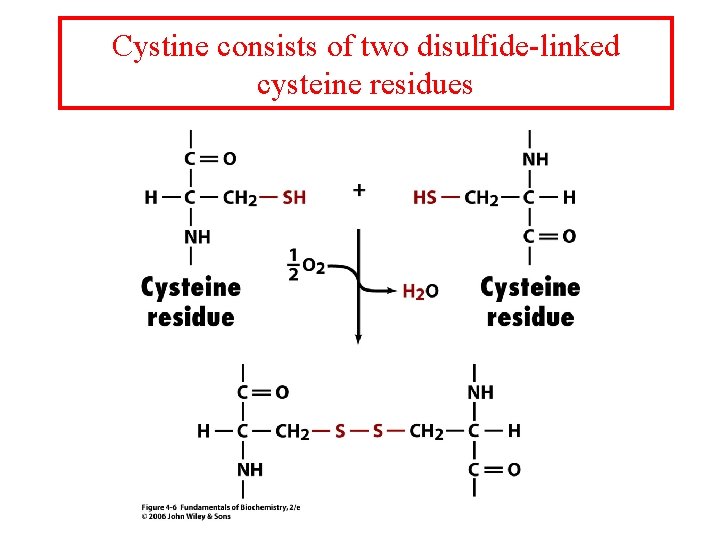
Cystine consists of two disulfide-linked cysteine residues
(3) K R H D E
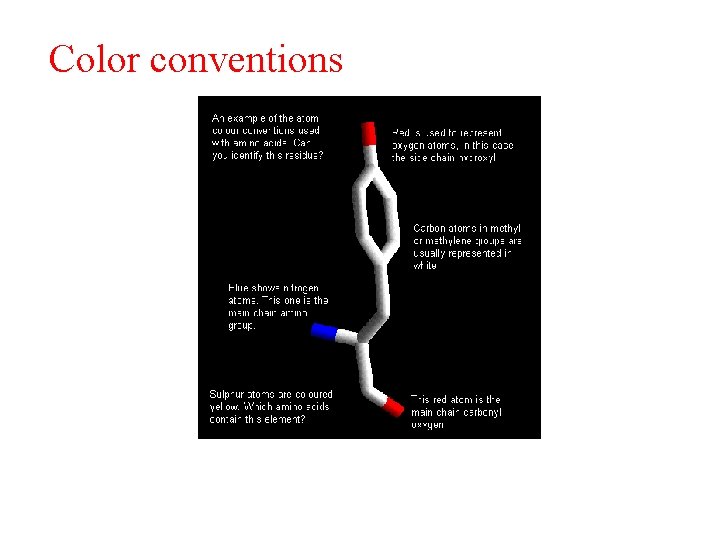
Color conventions
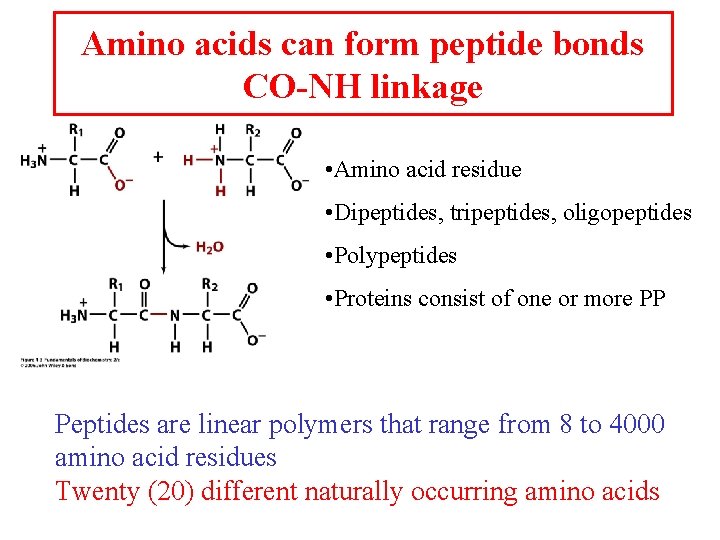
Amino acids can form peptide bonds CO-NH linkage • Amino acid residue • Dipeptides, tripeptides, oligopeptides • Polypeptides • Proteins consist of one or more PP Peptides are linear polymers that range from 8 to 4000 amino acid residues Twenty (20) different naturally occurring amino acids
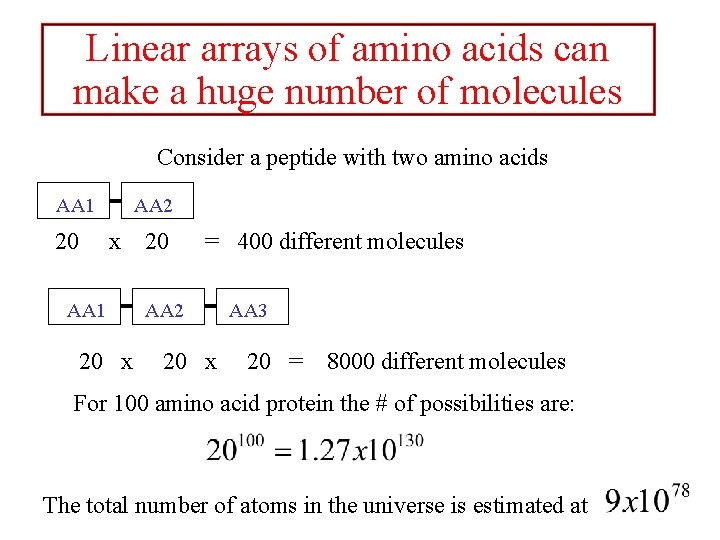
Linear arrays of amino acids can make a huge number of molecules Consider a peptide with two amino acids AA 1 20 AA 2 x AA 1 20 x 20 = 400 different molecules AA 2 20 x AA 3 20 = 8000 different molecules For 100 amino acid protein the # of possibilities are: The total number of atoms in the universe is estimated at
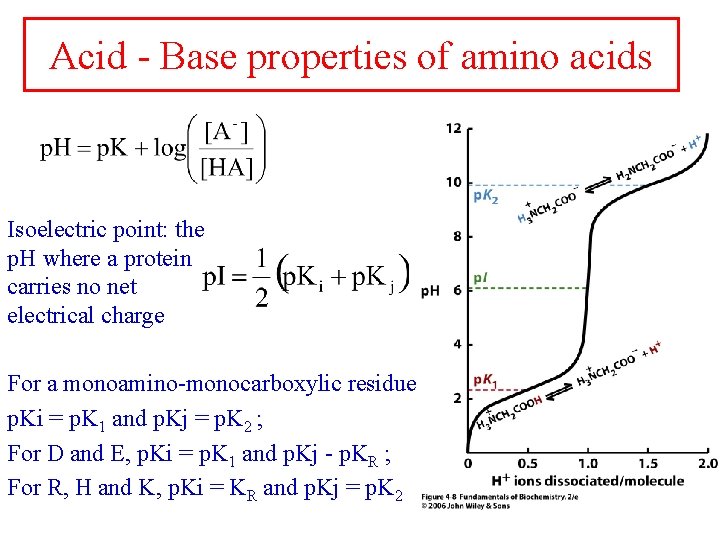
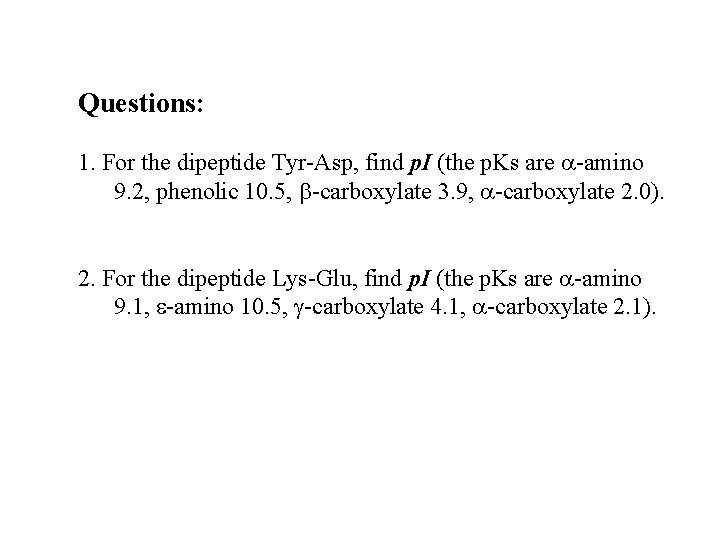
Acid - Base properties of amino acids Isoelectric point: the p. H where a protein carries no net electrical charge For a monoamino-monocarboxylic residue p. Ki = p. K 1 and p. Kj = p. K 2 ; For D and E, p. Ki = p. K 1 and p. Kj - p. KR ; For R, H and K, p. Ki = KR and p. Kj = p. K 2
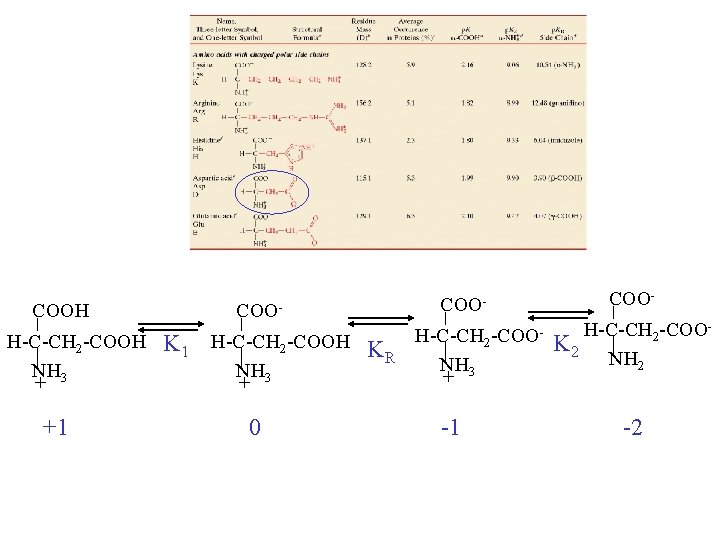
COOH H-C-CH 2 -COOH NH 3 + +1 COO- K 1 H-C-CH 2 -COOH KR NH 3 + 0 COOH-C-CH 2 -COONH 3 + -1 COOH-C-CH 2 -COOK 2 NH 2 -2
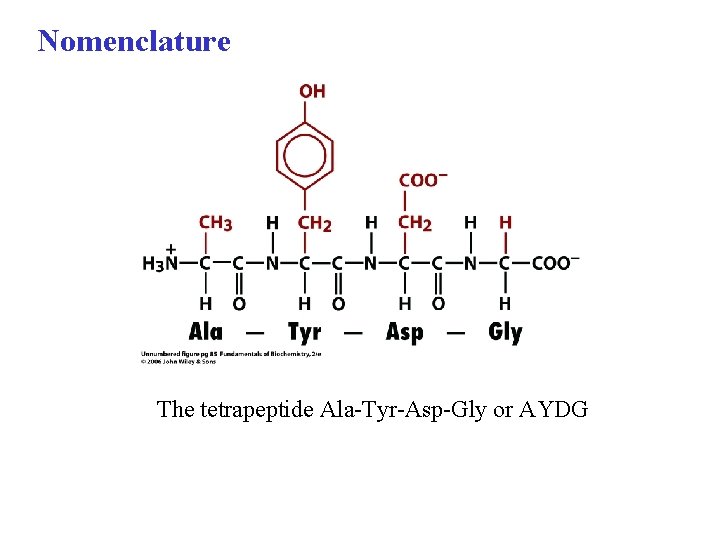
Nomenclature The tetrapeptide Ala-Tyr-Asp-Gly or AYDG
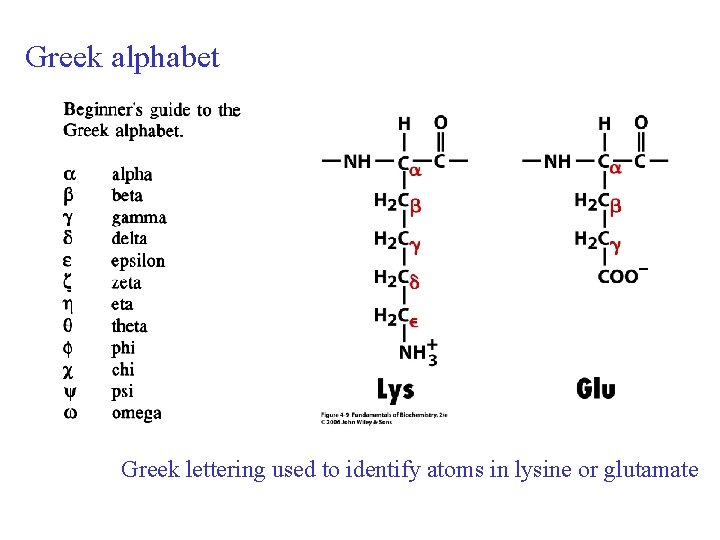
Greek alphabet Greek lettering used to identify atoms in lysine or glutamate
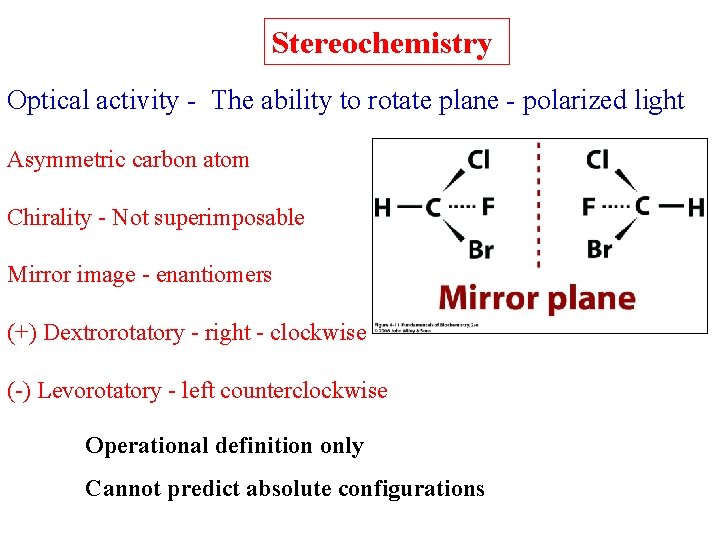
Stereochemistry Optical activity - The ability to rotate plane - polarized light Asymmetric carbon atom Chirality - Not superimposable Mirror image - enantiomers (+) Dextrorotatory - right - clockwise (-) Levorotatory - left counterclockwise Operational definition only Cannot predict absolute configurations
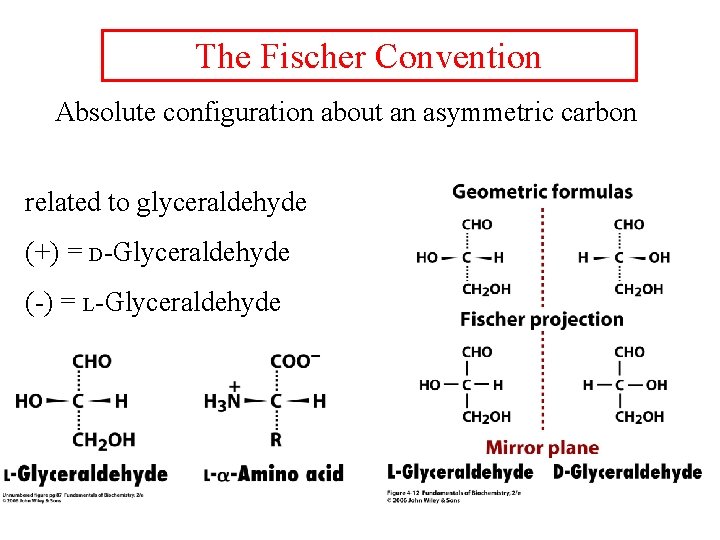
The Fischer Convention Absolute configuration about an asymmetric carbon related to glyceraldehyde (+) = D-Glyceraldehyde (-) = L-Glyceraldehyde
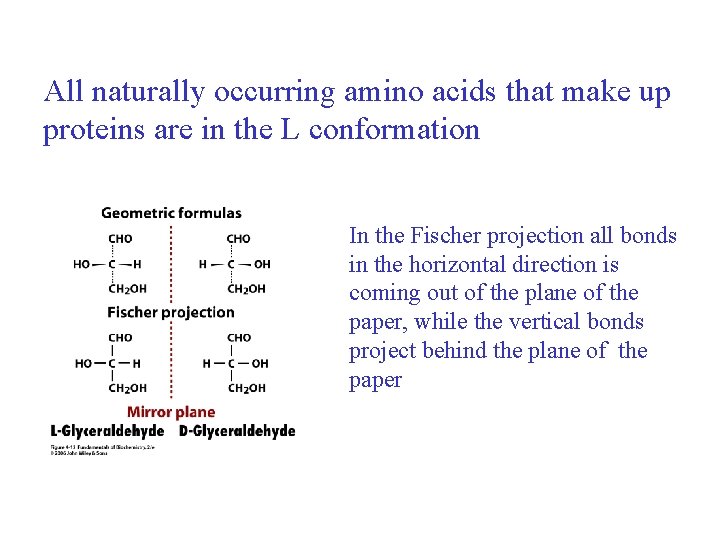
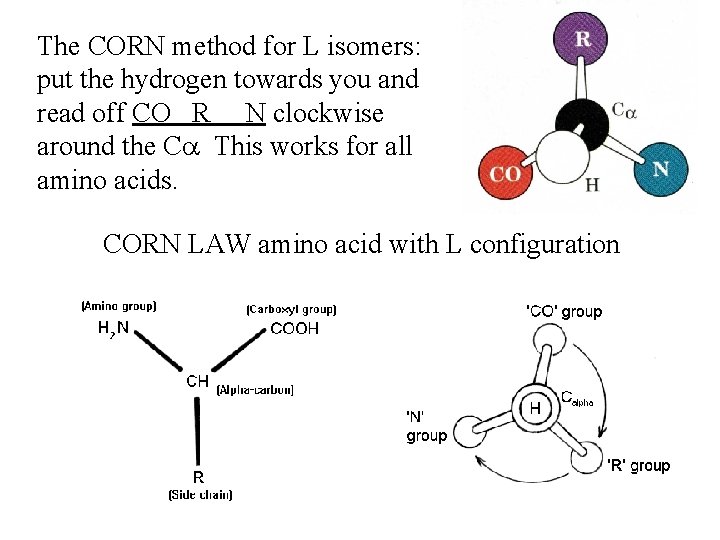
All naturally occurring amino acids that make up proteins are in the L conformation In the Fischer projection all bonds in the horizontal direction is coming out of the plane of the paper, while the vertical bonds project behind the plane of the paper
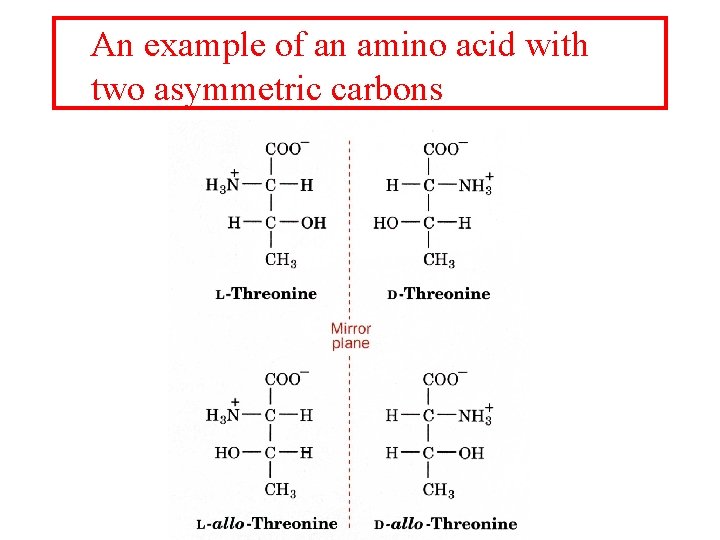
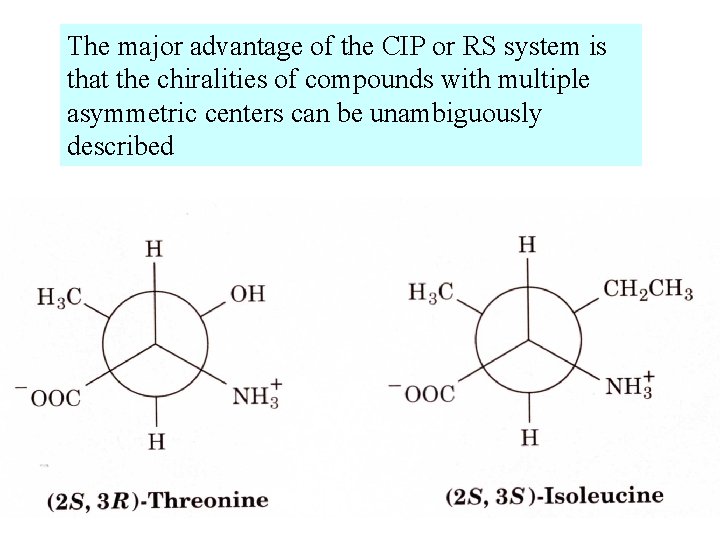
An example of an amino acid with two asymmetric carbons
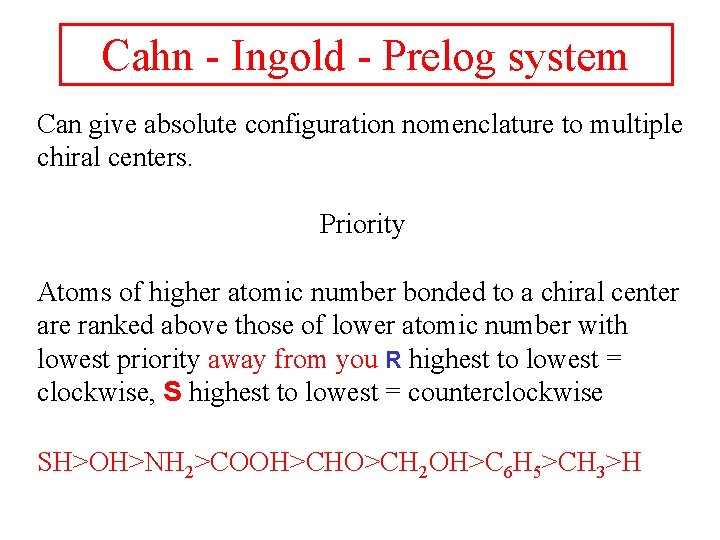
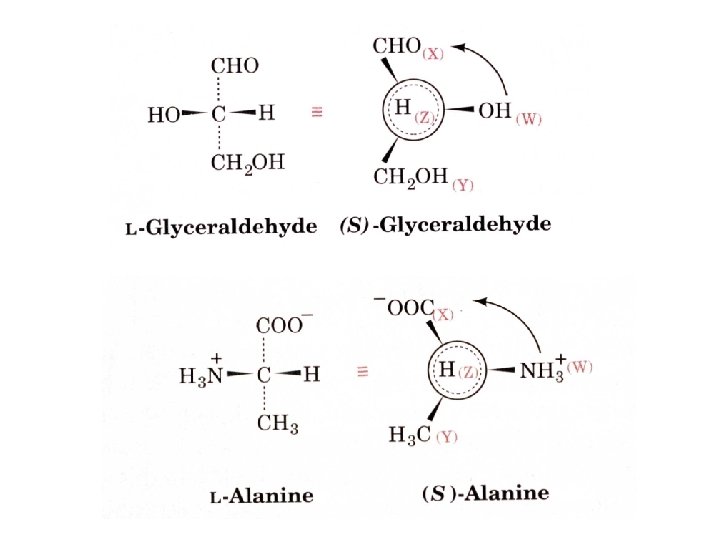
Cahn - Ingold - Prelog system Can give absolute configuration nomenclature to multiple chiral centers. Priority Atoms of higher atomic number bonded to a chiral center are ranked above those of lower atomic number with lowest priority away from you R highest to lowest = clockwise, S highest to lowest = counterclockwise SH>OH>NH 2>COOH>CHO>CH 2 OH>C 6 H 5>CH 3>H
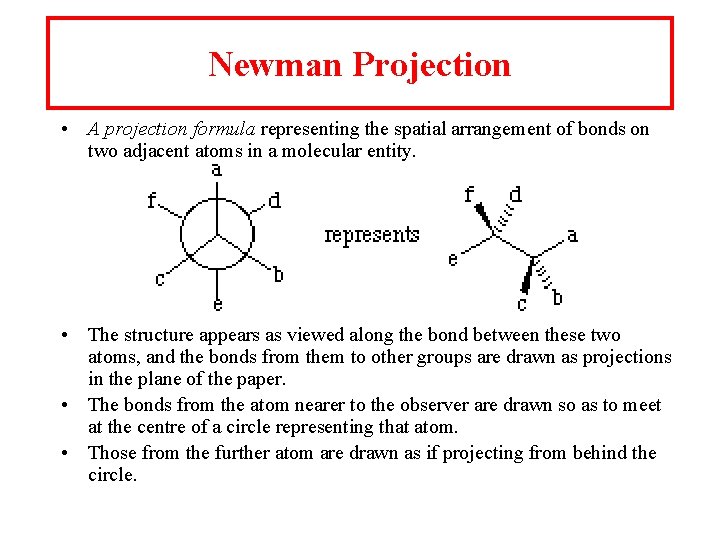
Newman Projection • A projection formula representing the spatial arrangement of bonds on two adjacent atoms in a molecular entity. • The structure appears as viewed along the bond between these two atoms, and the bonds from them to other groups are drawn as projections in the plane of the paper. • The bonds from the atom nearer to the observer are drawn so as to meet at the centre of a circle representing that atom. • Those from the further atom are drawn as if projecting from behind the circle.
The major advantage of the CIP or RS system is that the chiralities of compounds with multiple asymmetric centers can be unambiguously described
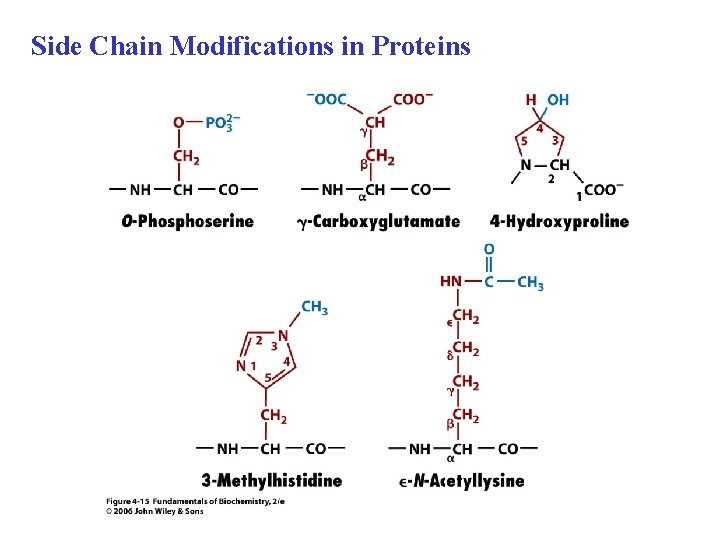
Side Chain Modifications in Proteins
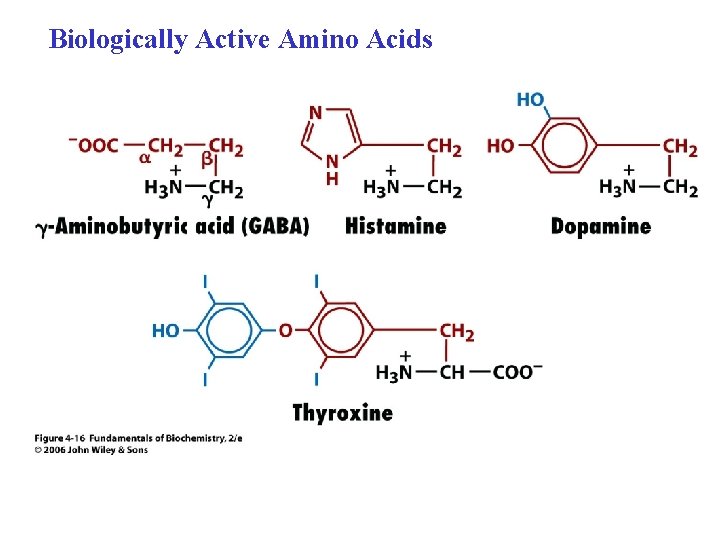
Biologically Active Amino Acids
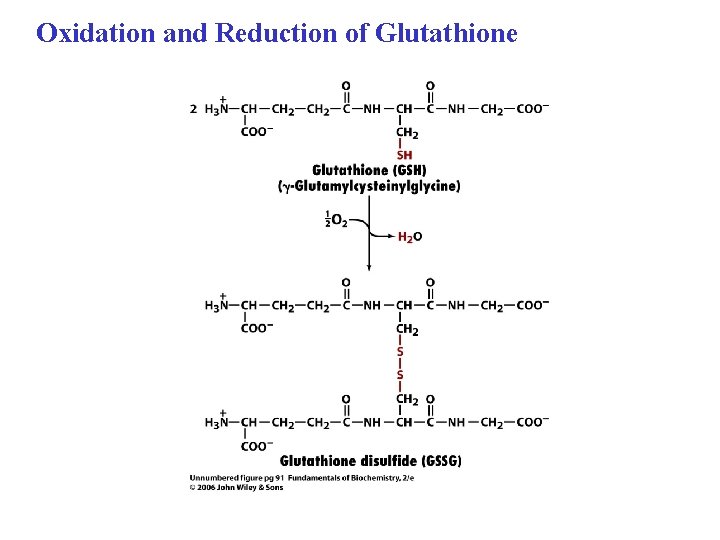
Oxidation and Reduction of Glutathione
Questions: 1. For the dipeptide Tyr-Asp, find p. I (the p. Ks are a-amino 9. 2, phenolic 10. 5, b-carboxylate 3. 9, a-carboxylate 2. 0). 2. For the dipeptide Lys-Glu, find p. I (the p. Ks are a-amino 9. 1, e-amino 10. 5, g-carboxylate 4. 1, a-carboxylate 2. 1).
Lecture 6 Thursday 9/10/09 Amino Acids
The CORN method for L isomers: put the hydrogen towards you and read off CO R N clockwise around the Ca This works for all amino acids. CORN LAW amino acid with L configuration