
Amino Acid Biosynthesis Introduction Essential and Nonessential Amino
Amino Acid Biosynthesis Introduction
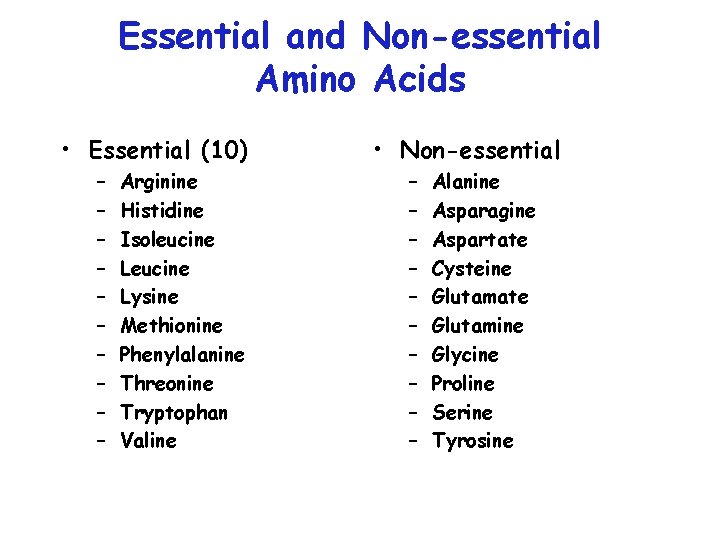
Essential and Non-essential Amino Acids • Essential (10) – – – – – Arginine Histidine Isoleucine Lysine Methionine Phenylalanine Threonine Tryptophan Valine • Non-essential – – – – – Alanine Asparagine Aspartate Cysteine Glutamate Glutamine Glycine Proline Serine Tyrosine
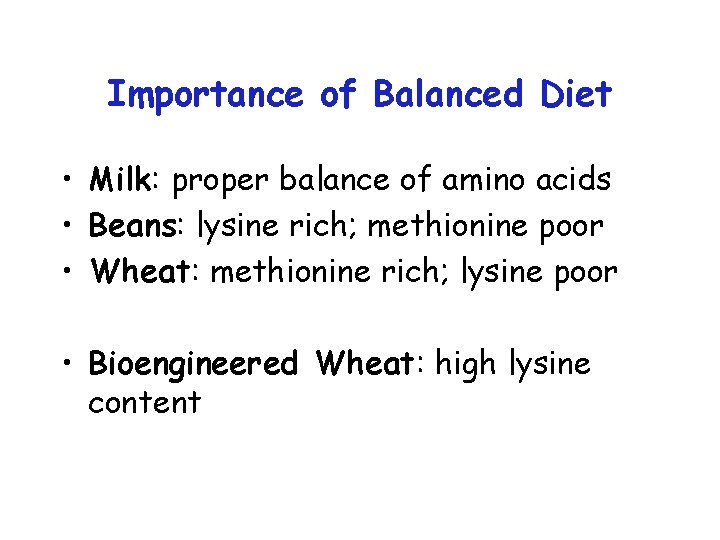
Importance of Balanced Diet • Milk: proper balance of amino acids • Beans: lysine rich; methionine poor • Wheat: methionine rich; lysine poor • Bioengineered Wheat: high lysine content
Nitrogen Acquisition • Nitrogen Fixation • Nitrate Assimilation • Ammonium Assimilation
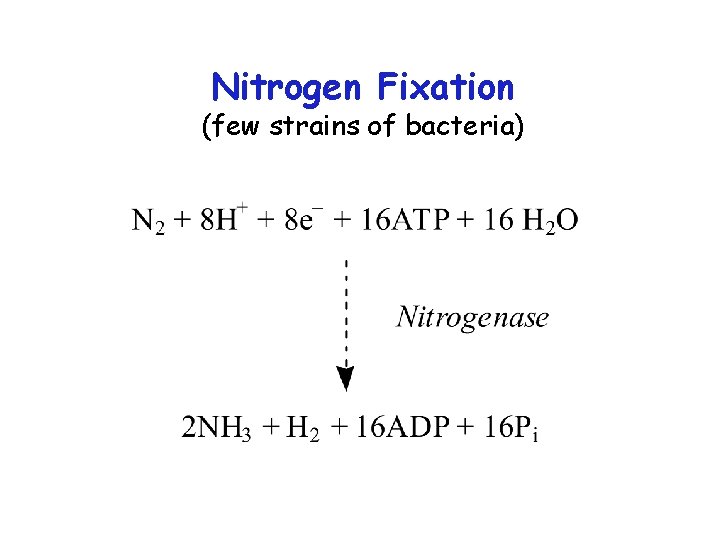
Nitrogen Fixation (few strains of bacteria)
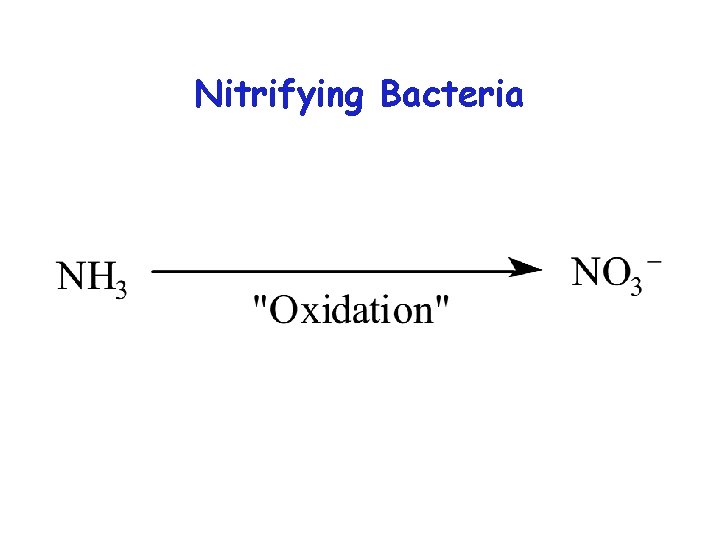
Nitrifying Bacteria
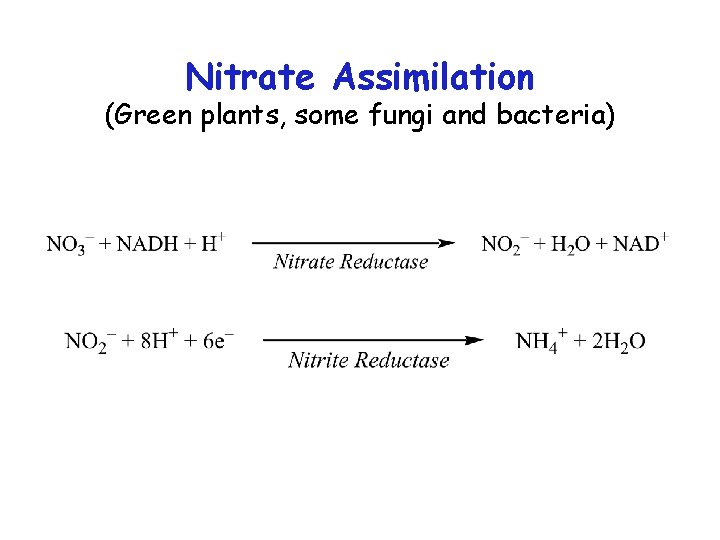
Nitrate Assimilation (Green plants, some fungi and bacteria)
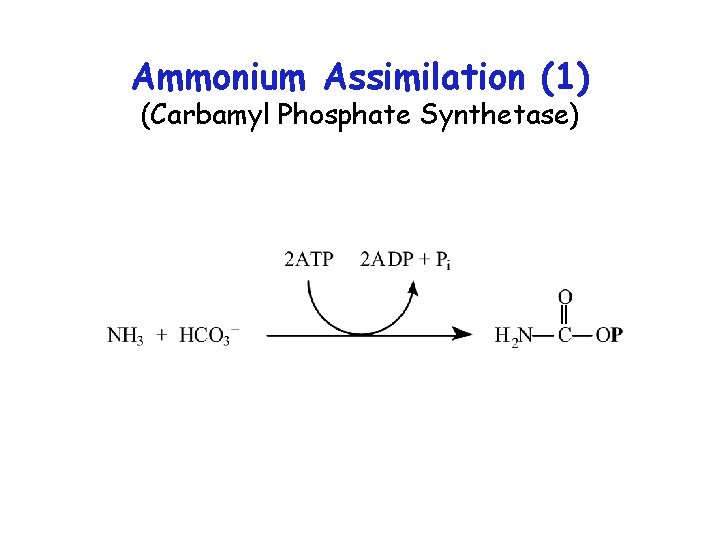
Ammonium Assimilation (1) (Carbamyl Phosphate Synthetase)
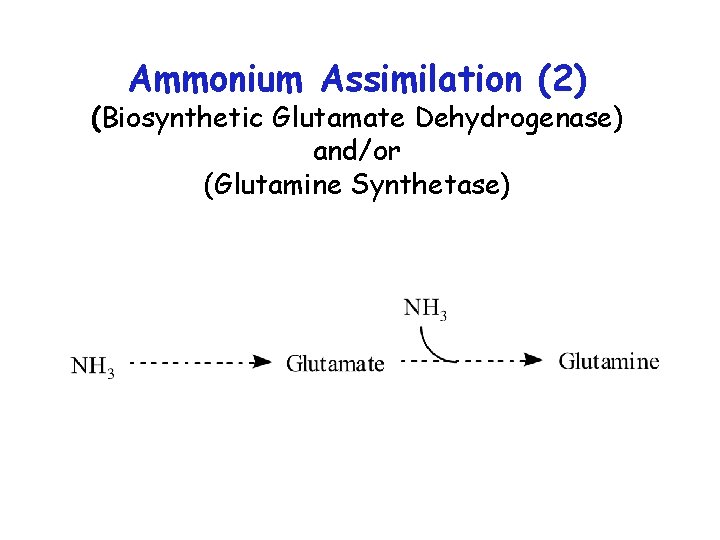
Ammonium Assimilation (2) (Biosynthetic Glutamate Dehydrogenase) and/or (Glutamine Synthetase)
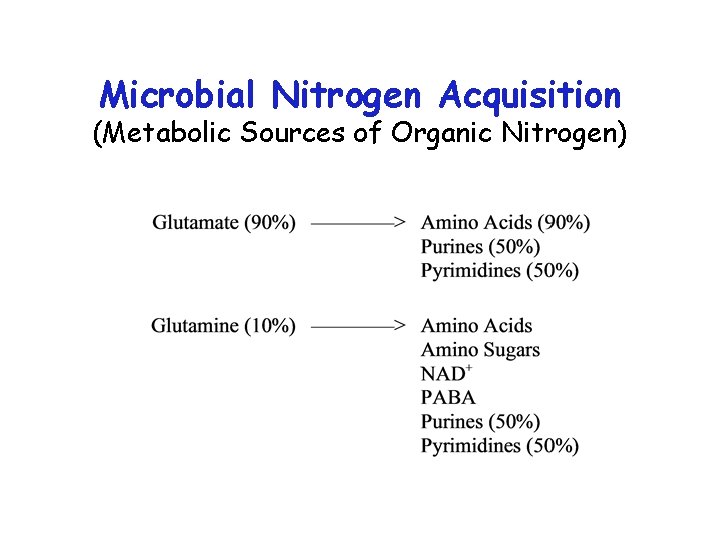
Microbial Nitrogen Acquisition (Metabolic Sources of Organic Nitrogen)
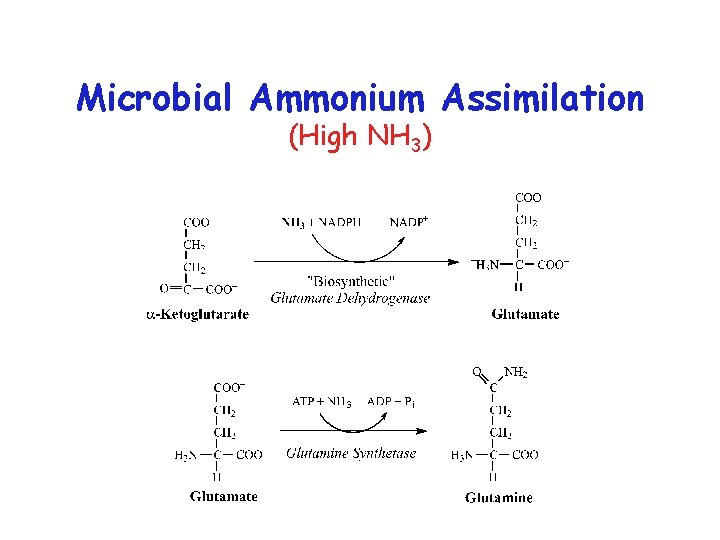
Microbial Ammonium Assimilation (High NH 3)

Mechanism of Glutamine Synthetase
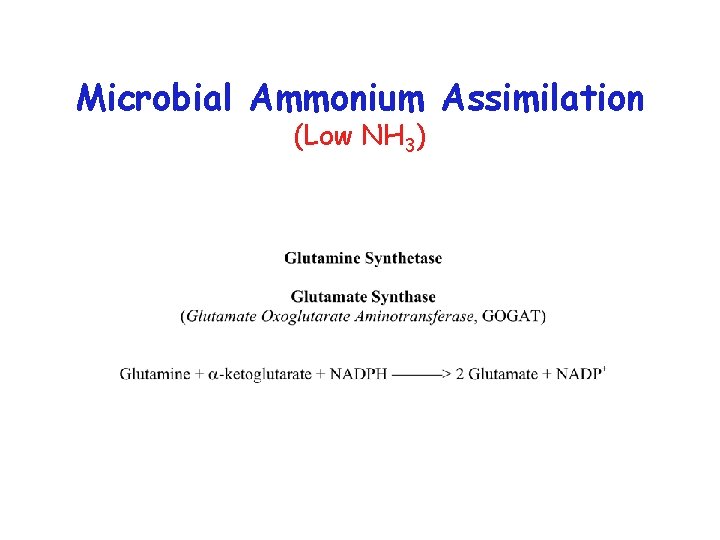
Microbial Ammonium Assimilation (Low NH 3)
![Microbial Ammonium Assimilation • High [NH 3] – “Biosynthetic” Glutamate Dehydrogenase – Glutamine Synthetase](http://slidetodoc.com/presentation_image_h2/bac71ffa8195db69cde4d0fcb79a93c3/image-14.jpg "Microbial Ammonium Assimilation • High [NH 3] – “Biosynthetic” Glutamate Dehydrogenase – Glutamine Synthetase")
Microbial Ammonium Assimilation • High [NH 3] – “Biosynthetic” Glutamate Dehydrogenase – Glutamine Synthetase • Low [NH 3] – Glutamine Synthetase – Glutamate Synthase (Glutamate Oxoglutarate Aminotransferase, GOGAT)
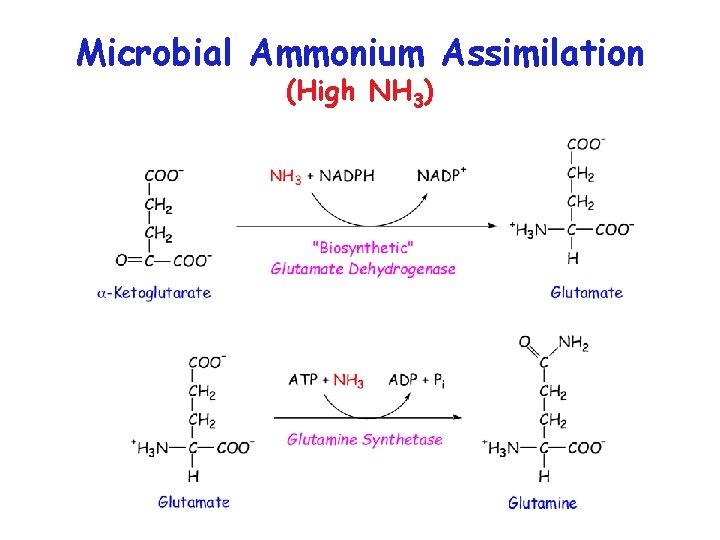
Microbial Ammonium Assimilation (High NH 3)
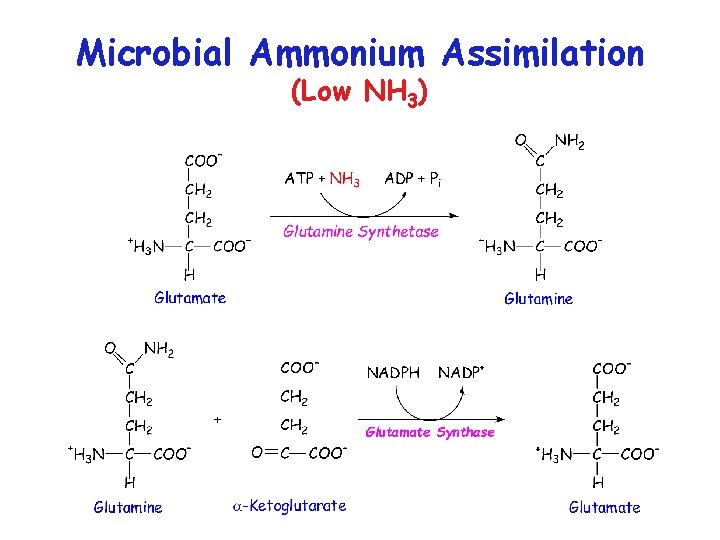
Microbial Ammonium Assimilation (Low NH 3)
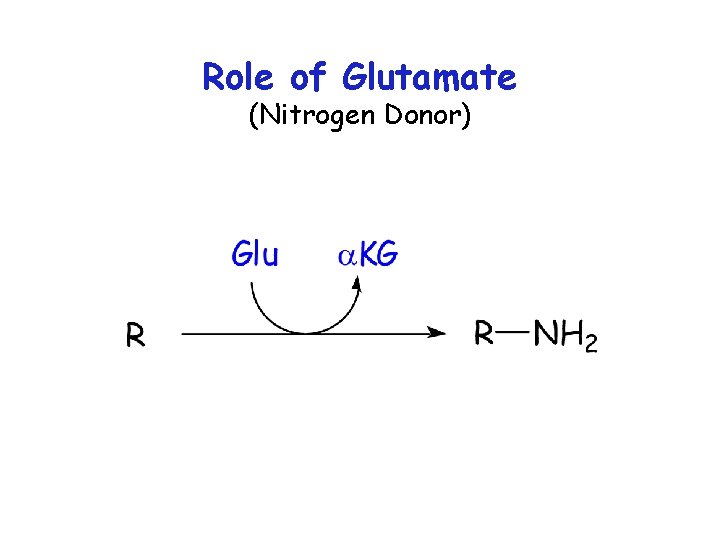
Role of Glutamate (Nitrogen Donor)
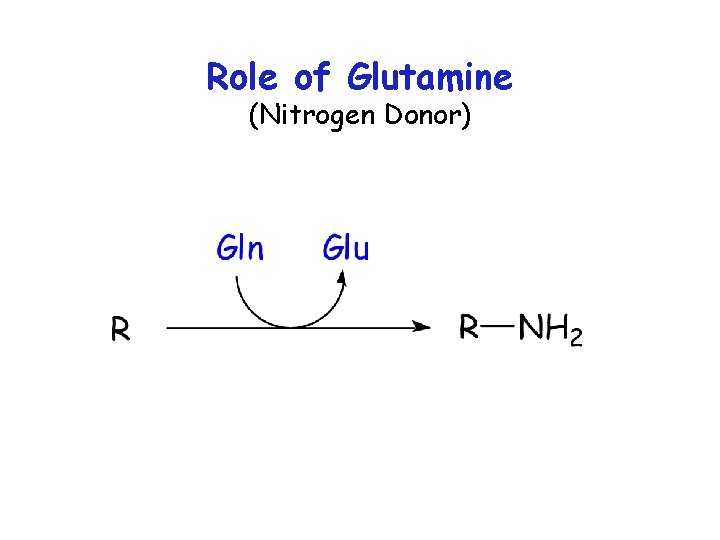
Role of Glutamine (Nitrogen Donor)
Specific Products of Glutamine • Histidine • Tryptophan • Carbamyl Phosphate (CPSII) • Glucosamine • ATP • CTP
Regulation of Glutamine Synthetase
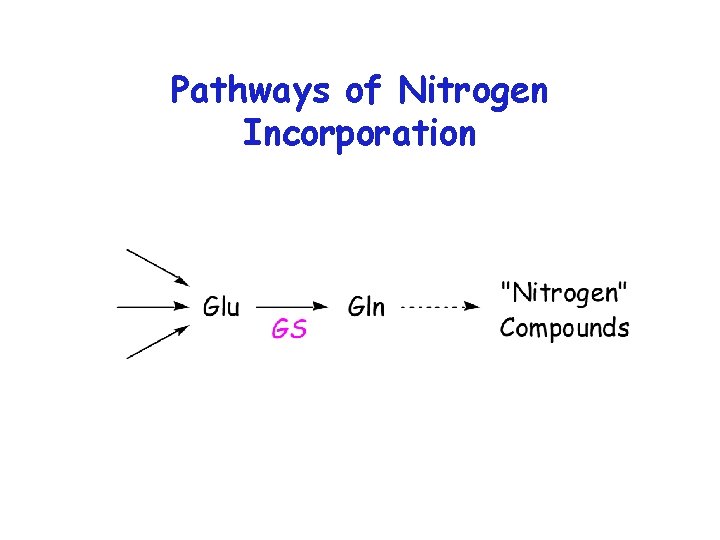
Pathways of Nitrogen Incorporation
Feedback Inhibition (Nitrogen-sufficient conditions) • Products – – – Histidine Tryptophan Carbamyl-P Glucosamine ATP CTP • Nitrogen Status – Alanine – Serine – Glycin
![Modulation of Enzyme Activity Sensitivity to [NH 3] Importance of Glutamine/a-ketoglutarate Ratio](http://slidetodoc.com/presentation_image_h2/bac71ffa8195db69cde4d0fcb79a93c3/image-23.jpg "Modulation of Enzyme Activity Sensitivity to [NH 3] Importance of Glutamine/a-ketoglutarate Ratio")
Modulation of Enzyme Activity Sensitivity to [NH 3] Importance of Glutamine/a-ketoglutarate Ratio
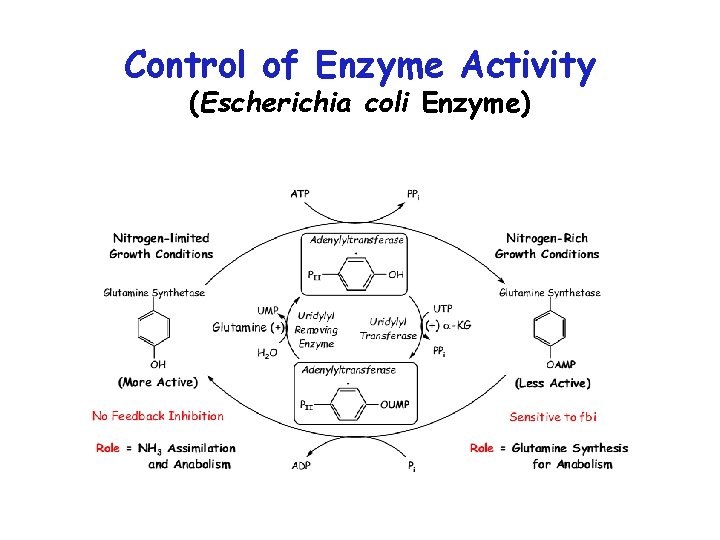
Control of Enzyme Activity (Escherichia coli Enzyme)
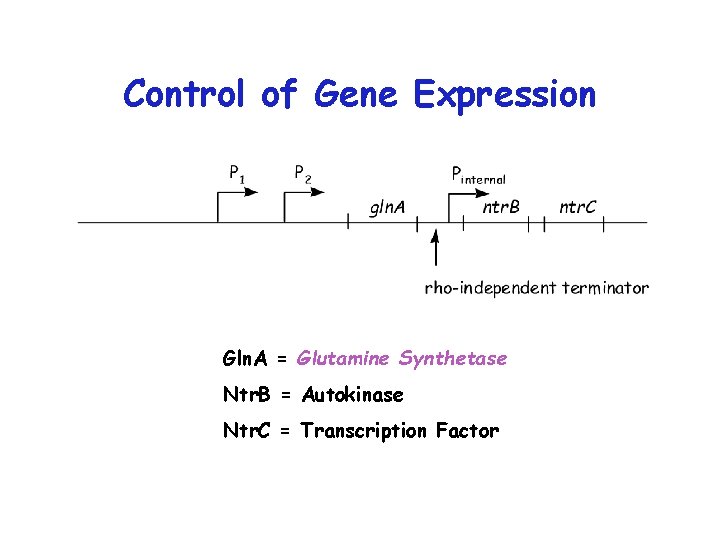
Control of Gene Expression Gln. A = Glutamine Synthetase Ntr. B = Autokinase Ntr. C = Transcription Factor
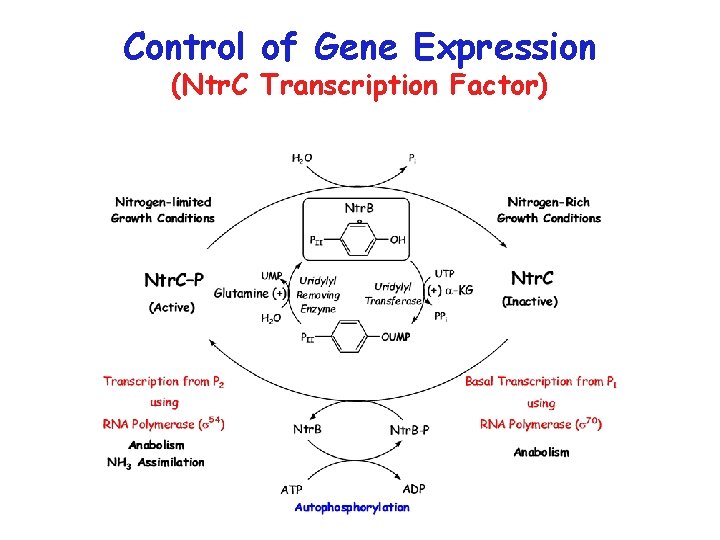
Control of Gene Expression (Ntr. C Transcription Factor)
Nitrogen Sufficiency (Rich) (Low Expression of Glutamine Synthesis) • • Basal expression from P 1 (weak promoter) Termination at rho-independent terminator Basal expression from Pinternal RNA polymerase (s 70)
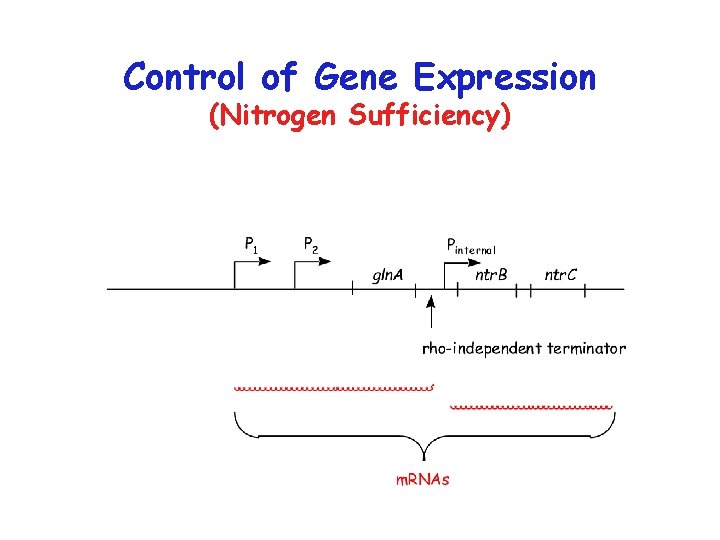
Control of Gene Expression (Nitrogen Sufficiency)
Nitrogen Limitation (Ammonia Assimilation = High Expression) • Expression from P 2 (strong promoter) – Requires Ntr. C–P (binds to enhancer) – RNA polymerase (s 54) • Reads through terminator – Upregulation of ntr. B and ntr. C
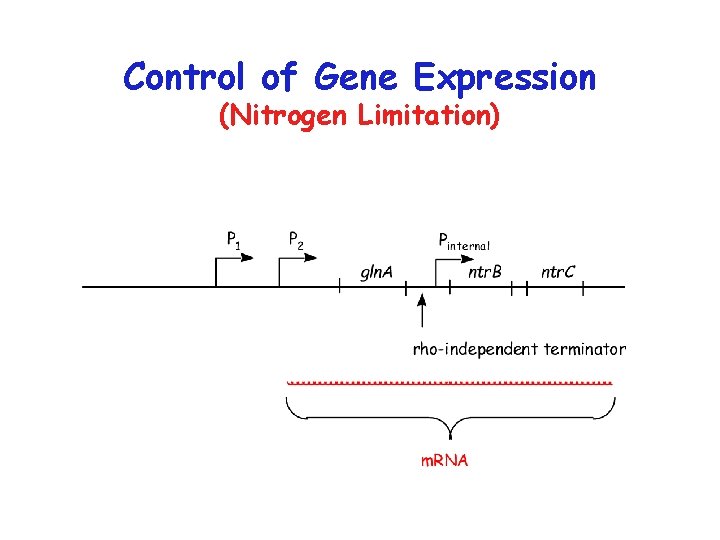
Control of Gene Expression (Nitrogen Limitation)
Ntr. B and Ntr. C Two Component Sensor-Response Regulator System
Two Component Sensor-Response Regulator Systems • Autokinase Sensor Proteins (Ntr. B) (autophosphorylation of histidine residue) – Sensor domain – Transmitter domain (C-terminus) • Response Regulators (Ntr. C) – N-terminal receiver domain – Cross-regulation
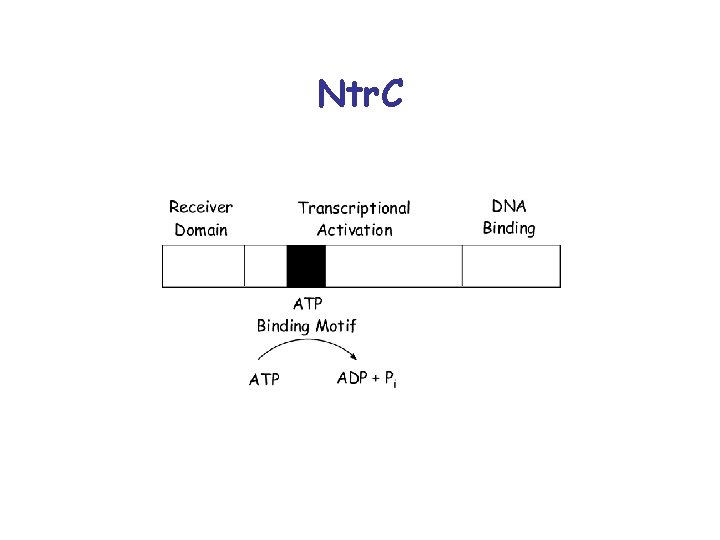
Ntr. C
Other Ntr. C-Sensitive Operons • Direct effect of Ntr. C-P (e. g. hut operon) • Indirect effect of Ntr. C-P
Conclusion Complex regulation of glutamine synthetase confirms important role in nitrogen metabolism
Biosynthesis of Non-essential Amino Acids Simple Pathways
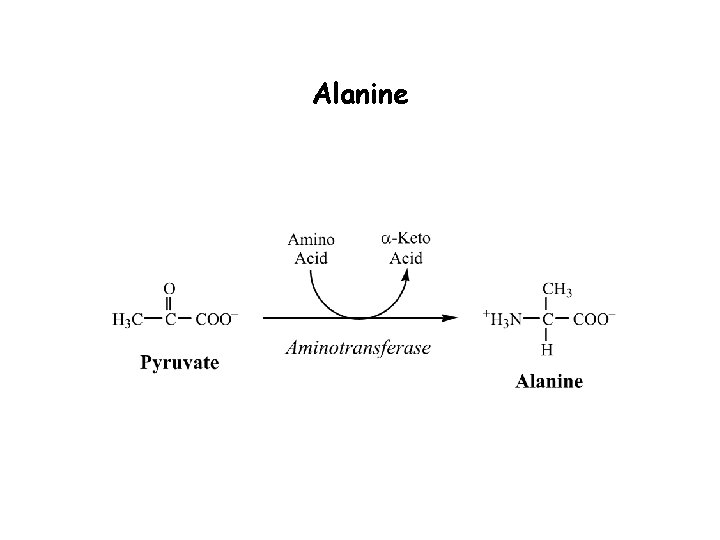
Alanine
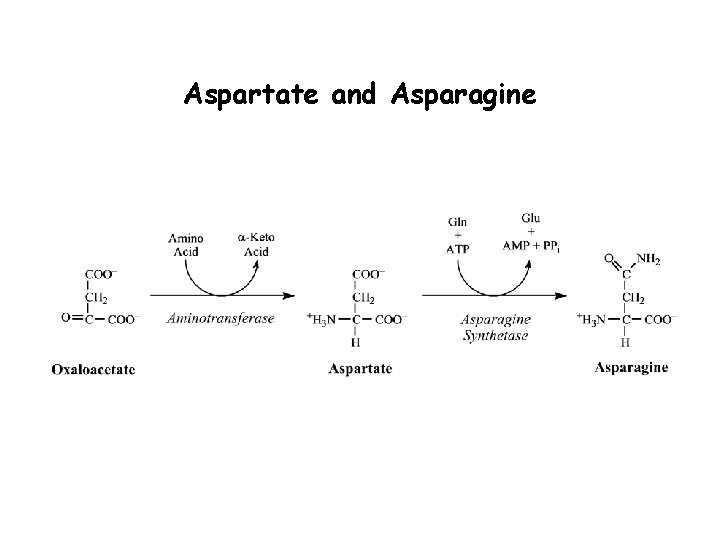
Aspartate and Asparagine
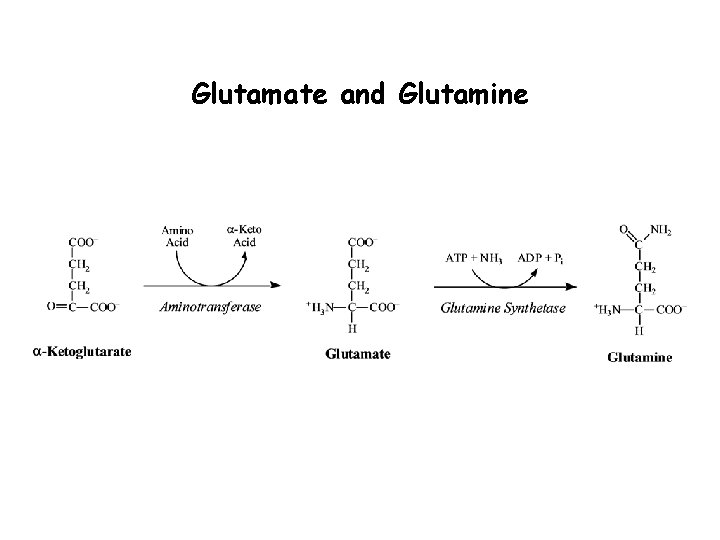
Glutamate and Glutamine
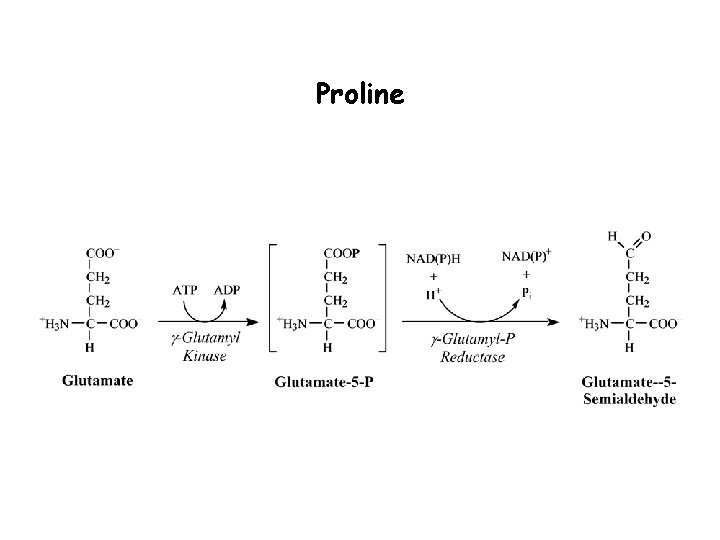
Proline
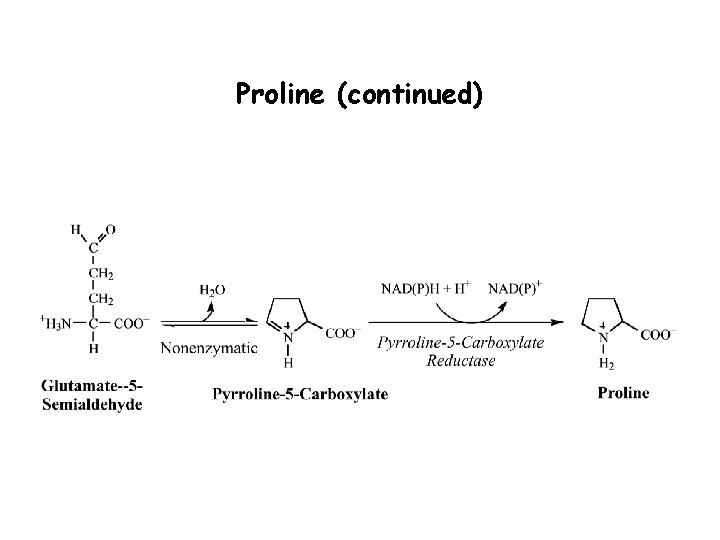
Proline (continued)
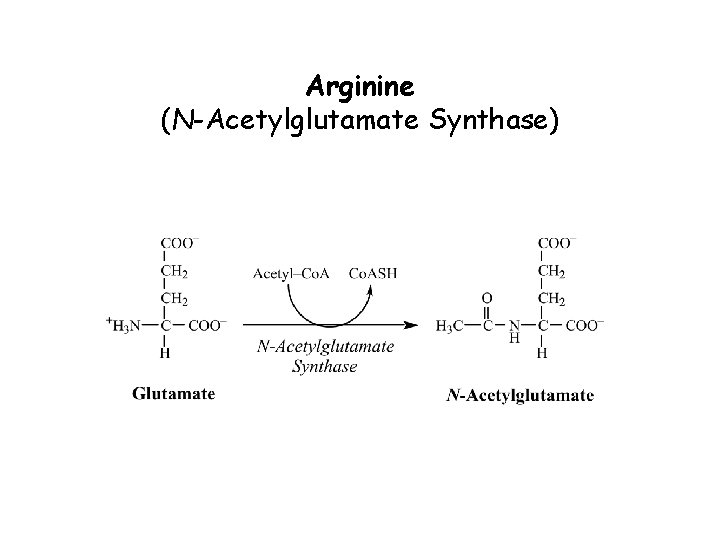
Arginine (N-Acetylglutamate Synthase)
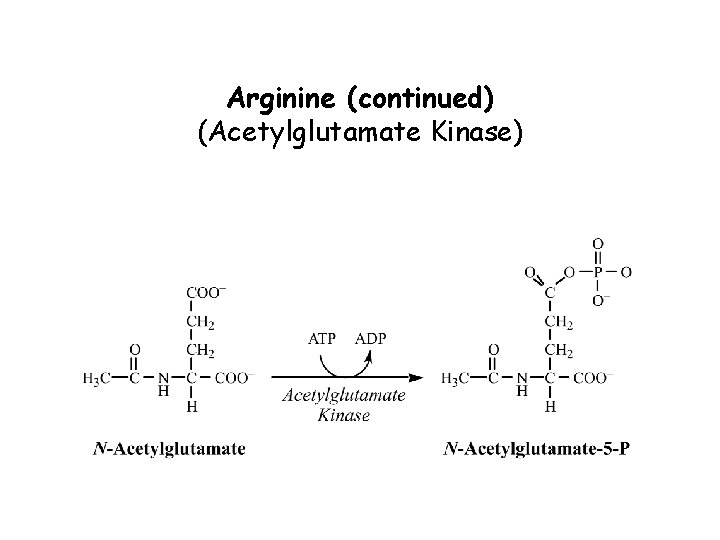
Arginine (continued) (Acetylglutamate Kinase)
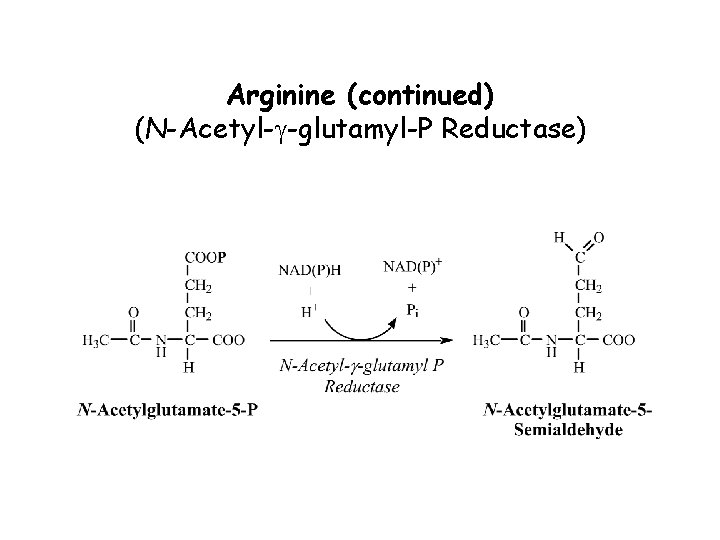
Arginine (continued) (N-Acetyl-g-glutamyl-P Reductase)
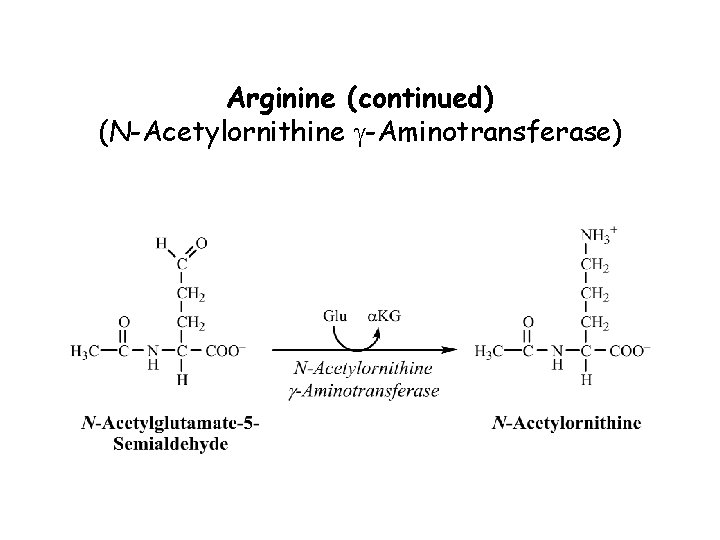
Arginine (continued) (N-Acetylornithine g-Aminotransferase)
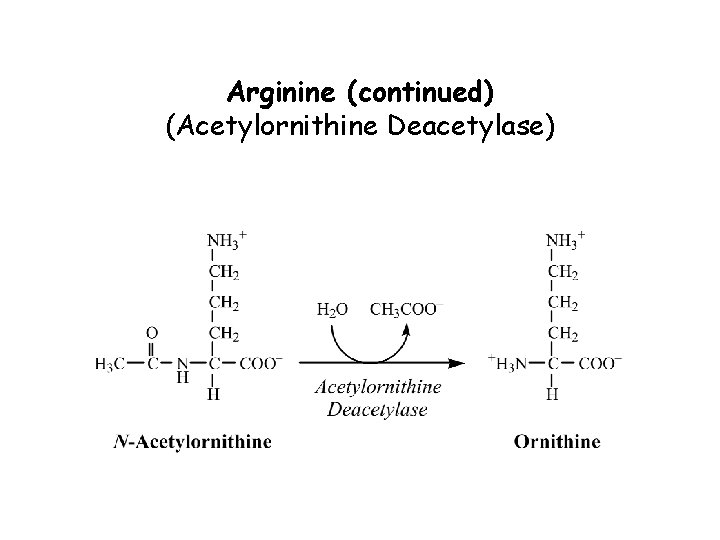
Arginine (continued) (Acetylornithine Deacetylase)
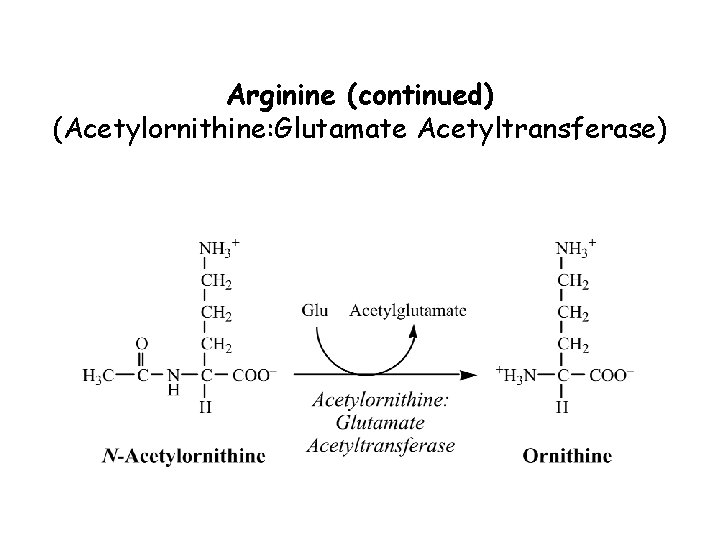
Arginine (continued) (Acetylornithine: Glutamate Acetyltransferase)
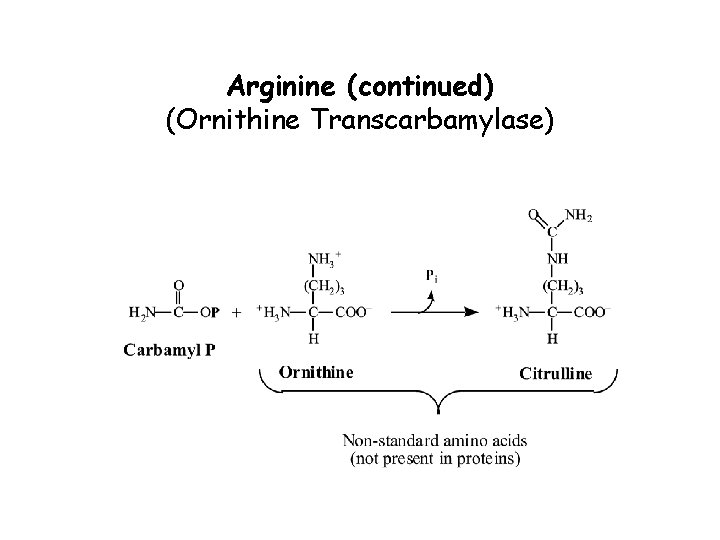
Arginine (continued) (Ornithine Transcarbamylase)
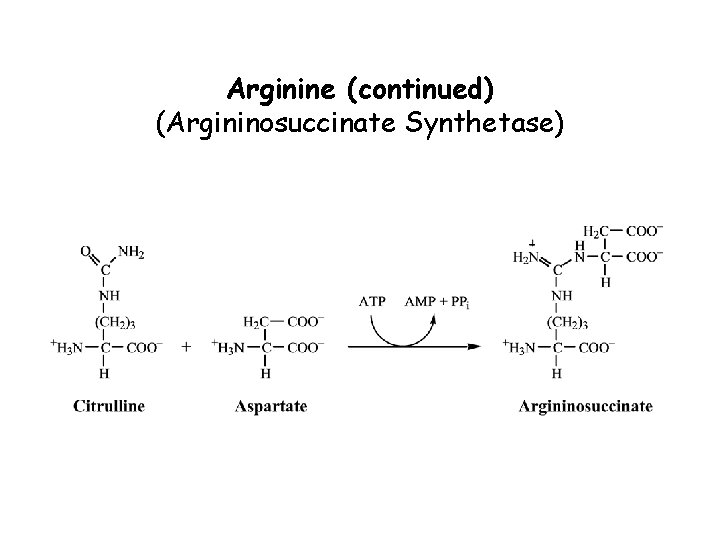
Arginine (continued) (Argininosuccinate Synthetase)
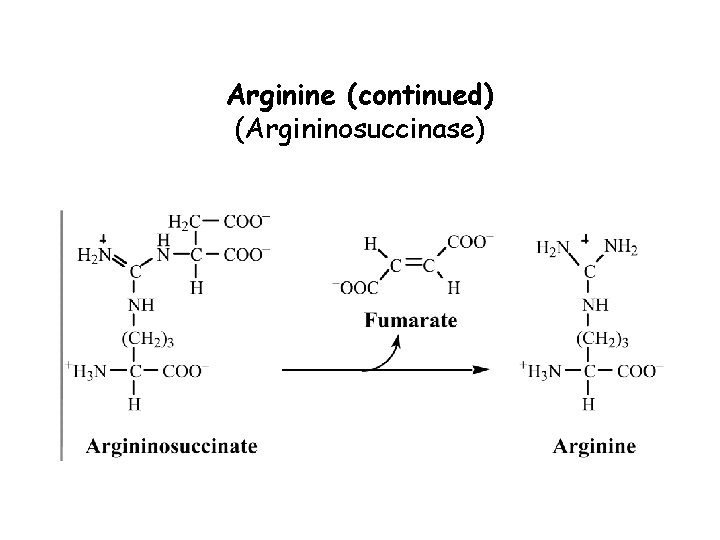
Arginine (continued) (Argininosuccinase)
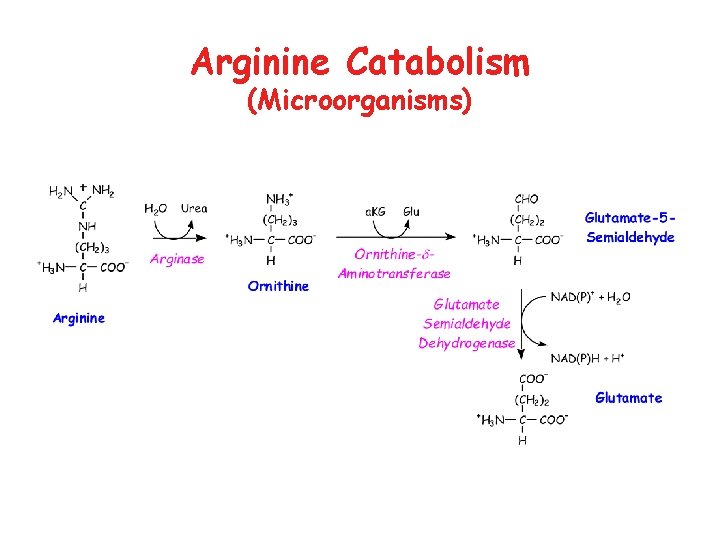
Arginine Catabolism (Microorganisms)
Regulation of Arginine Metabolism
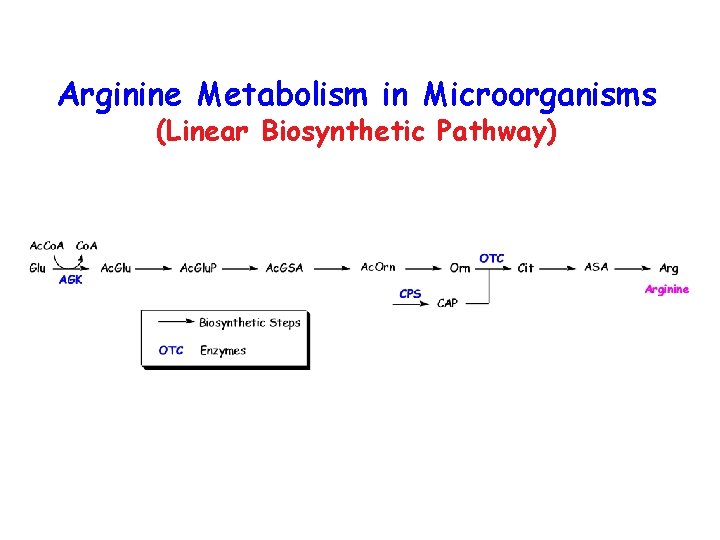
Arginine Metabolism in Microorganisms (Linear Biosynthetic Pathway)
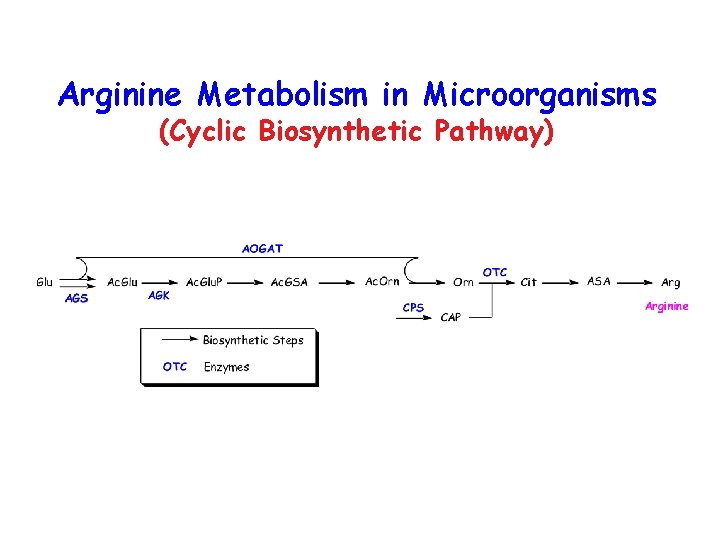
Arginine Metabolism in Microorganisms (Cyclic Biosynthetic Pathway)
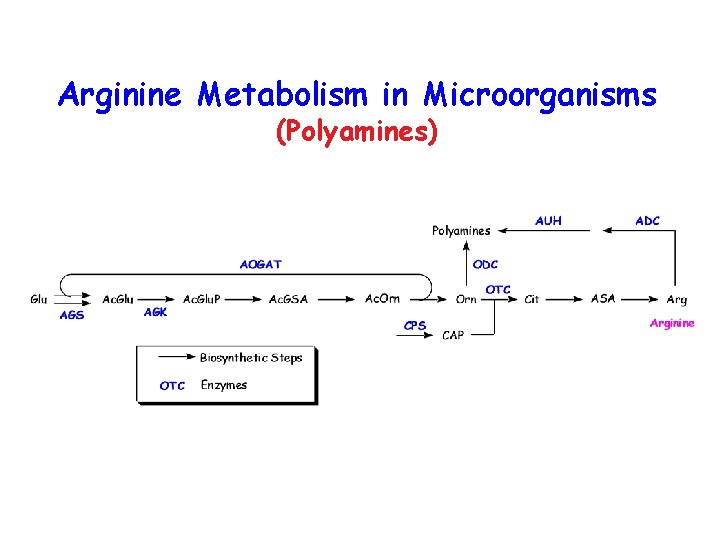
Arginine Metabolism in Microorganisms (Polyamines)
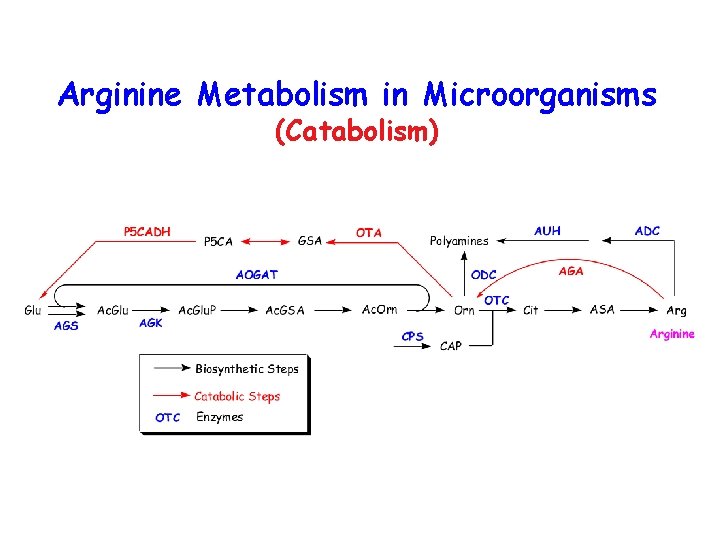
Arginine Metabolism in Microorganisms (Catabolism)
Control of Arginine Metabolism Patterns of Regulation
Arginine Metabolism in Escherichia coli (Properties) • Scattered genes (arginine regulon) • Linear biosynthetic pathway – Acetylglutamate synthase (AGS) – Acetylornithinase (AO) • No catabolic pathway • Single Carbamyl-P synthetase (CPS) • Alternative pathway for polyamine synthesis – Ornithine Decarboxylase (ODC) or – Arginine Decarboxylase (ADC) and Agmatine Ureohydrolase (AUH)
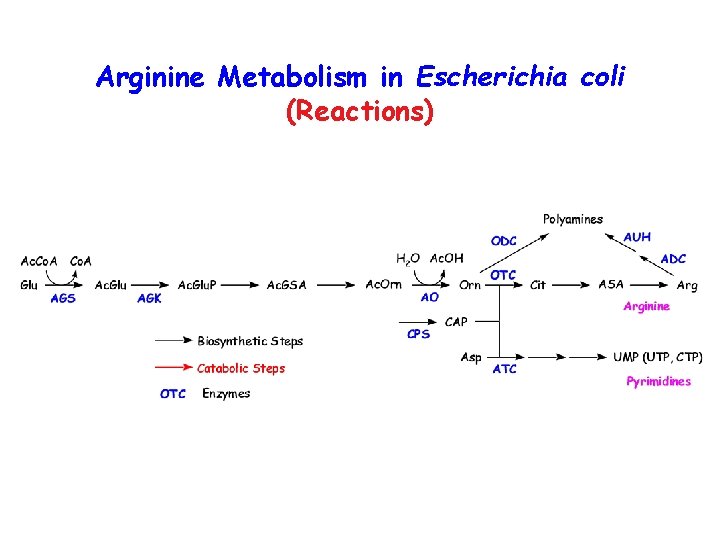
Arginine Metabolism in Escherichia coli (Reactions)
Regulation of Enzyme Amount (long-term regulation) • Biosynthetic enzymes: repression by arginine • CPS: cumulative repression (tandem promoters) – Arginine – Pyrimidines • ADC and AUH: induction by arginine
Regulation of Enzyme Activity (short-term regulation) • Ornithine synthesis: fbi AGS (no ornithine) • CAP synthesis (CPS) – Feedback inhibition by UMP – Activation by ornithine • OTC (no control): no ornithine • Polyamines: ADH and AUH
Arginine Metabolism in Bacillus subtilis (Properties) • Linear pathway • Inducible “arginase” pathway (no urease) • Two CPS’s
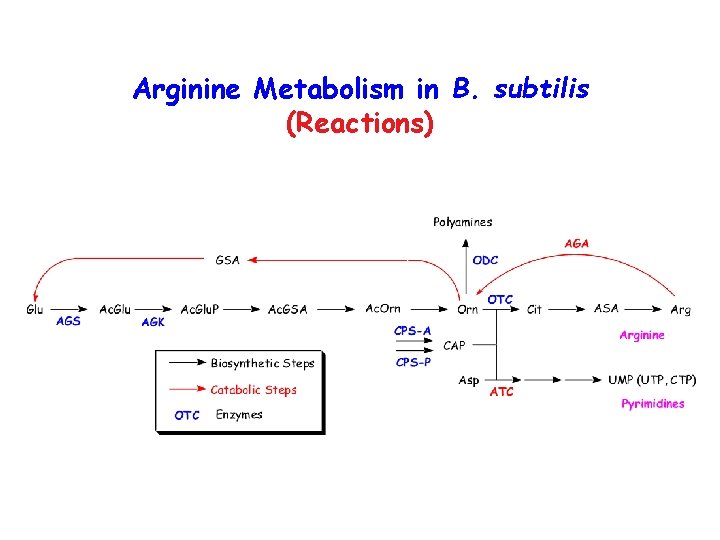
Arginine Metabolism in B. subtilis (Reactions)
Regulation of Enzyme Amount (long-term regulation) • Biosynthetic enzymes: repression by arginine • CPS – Repression of CPS-A by arginine – Repression of CPS-P by pyrimidines • Arginase: induction by arginine – Inducer = arginine – Nitrogen catabolite repression
Regulation of Enzyme Activity (short-term regulation) • Ornithine synthesis: fbi of AGS • CAP synthesis (CPS-A and CPS-P) – Feedback inhibition of CPS-P by UMP – Feedback inhibition of CPS-A by Arg • OTC: inhibition by arginase (+arg) • Polyamines: Ornithine Decarboxylase (ODC)
Arginine Metabolism in Pseudomonas aeruginosa (Properties) • Cyclic pathway • Inducible “arginase” pathway • Single CPS
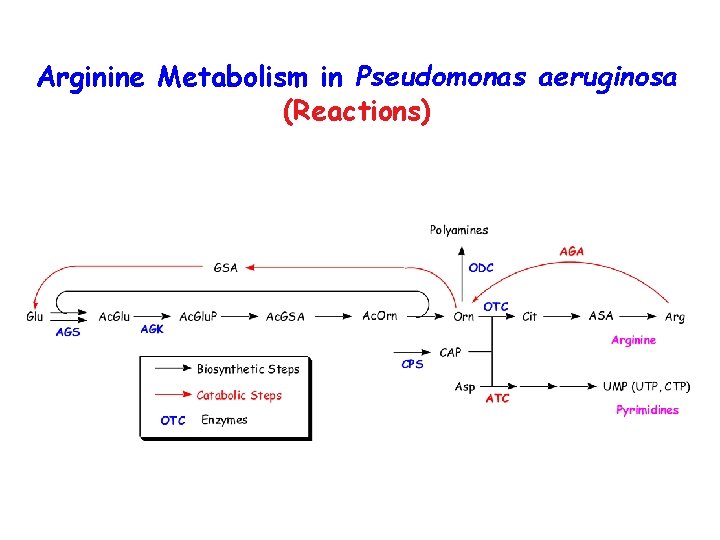
Arginine Metabolism in Pseudomonas aeruginosa (Reactions)
Regulation of Enzyme Amount (long-term regulation) • Biosynthetic enzymes: repression by arginine • CPS: cumulative repression by arginine and pyrimidines • Catabolic enzymes: induction by arginine
Regulation of Enzyme Activity (short-term regulation) • Ornithine synthesis: fbi of AGS and AGK • CAP synthesis (CPS) – Inhibition by UMP – Activation by ornithine • OTC: inhibition by arginine • Polyamines: Ornithine Decarboxylase (ODC)
- Slides: 69