
Amides Amide Synthesis 13 Amide Synthesis Amine plus
- Slides: 18
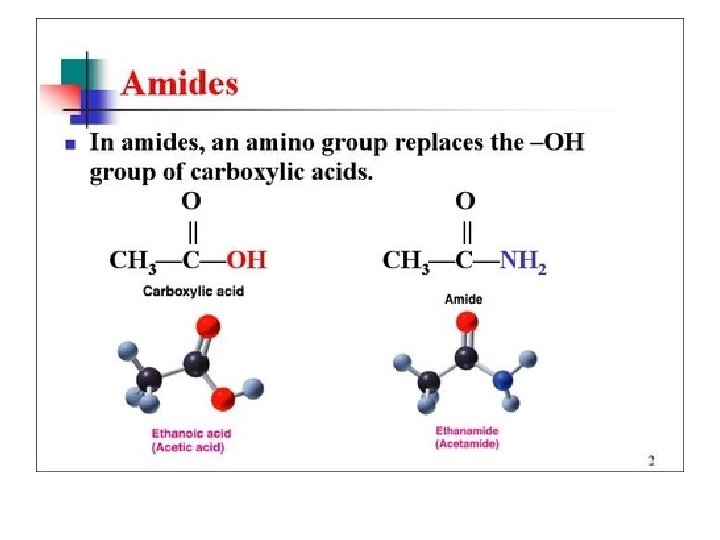
Amides
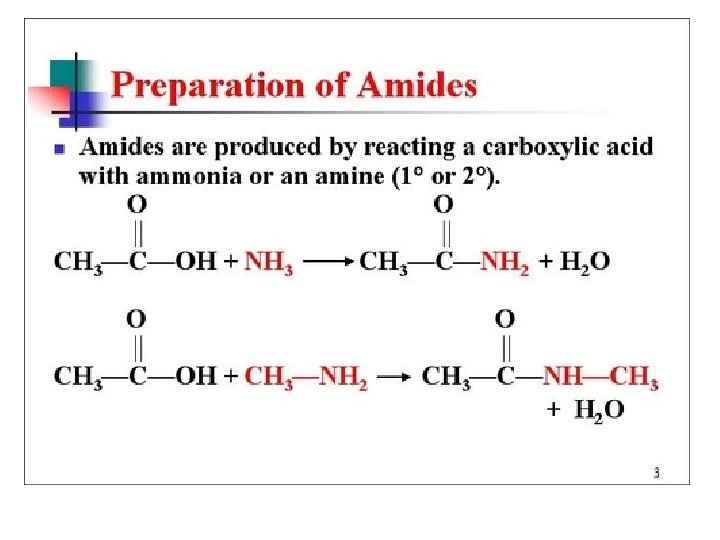
Amide Synthesis
13. Amide Synthesis • Amine plus carboxylic acid --> amide + HOH
Amides
Amides
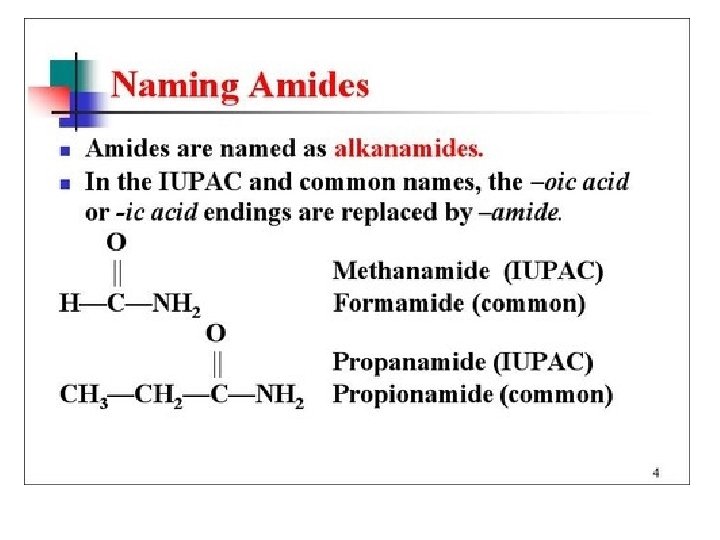
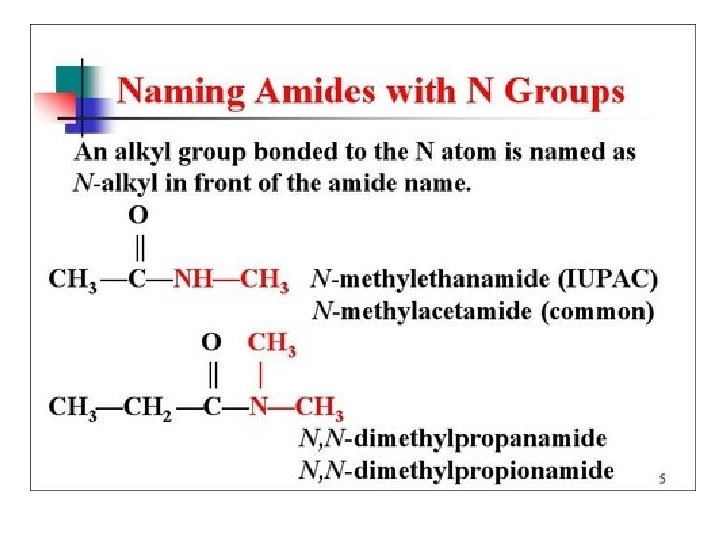
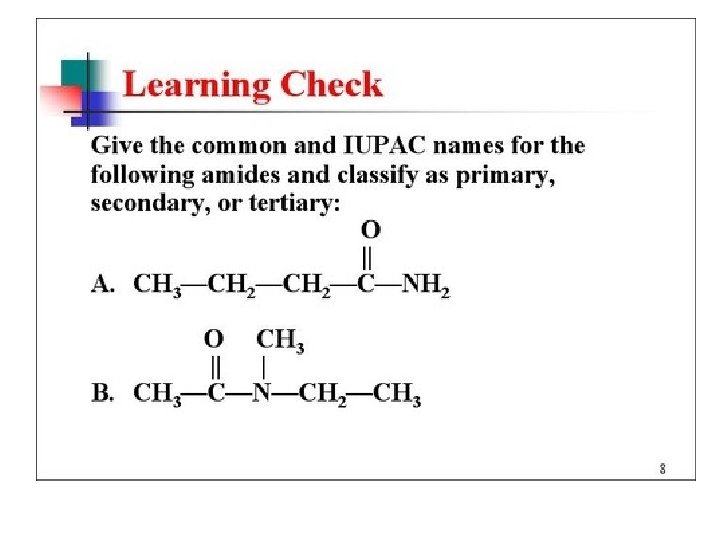
Names of amides
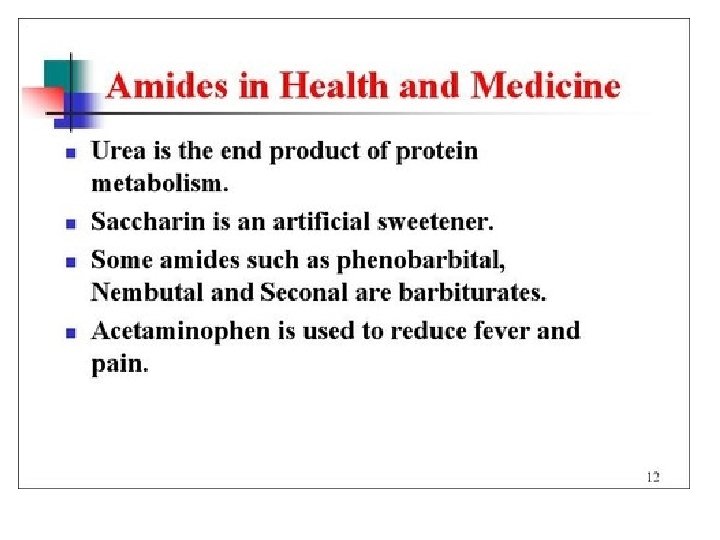
Amides in health
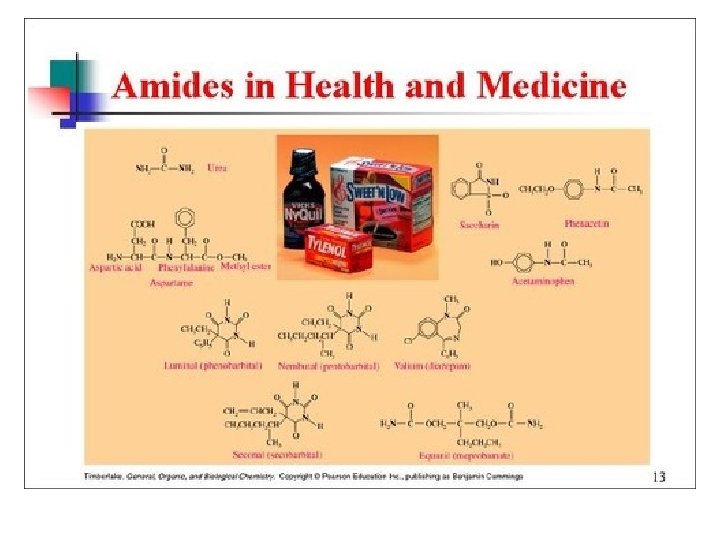
Amides in health
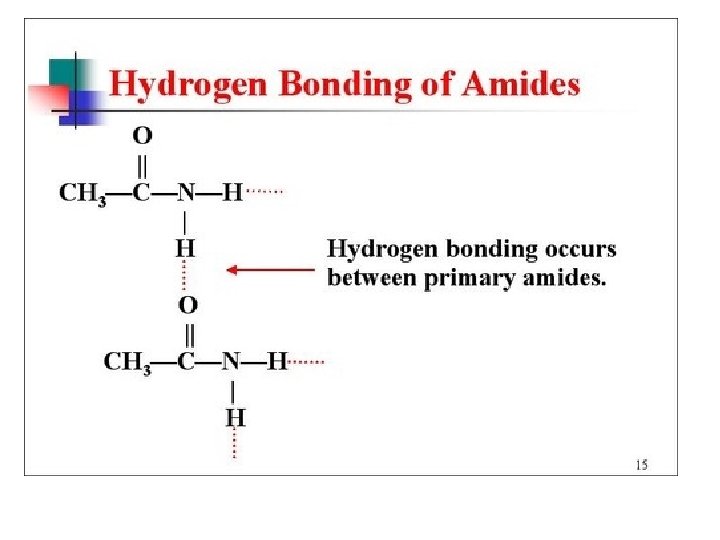
Hydrogen Bonding in Amides
Hydrolysis of Amides • Amide plus HOH --> amine + carboxylic acid
Acid Hydrolysis of Amides • Amide plus HOH --> amine + carboxylic acid • 2 nd step: neutralize amine with acid
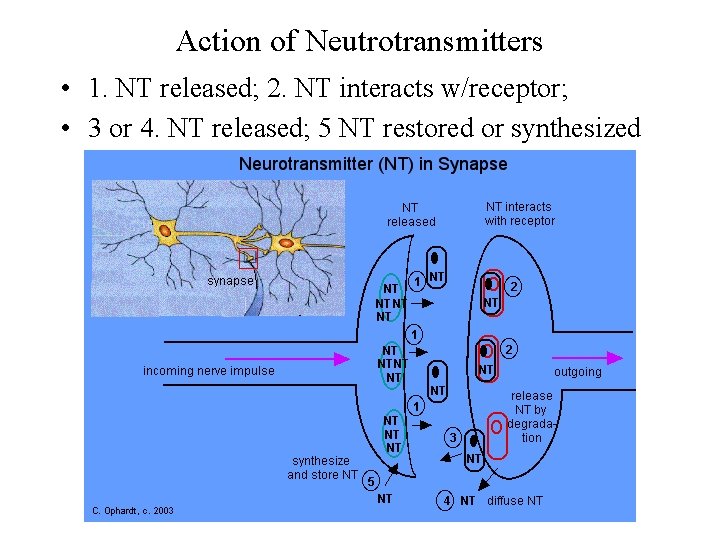
Action of Neutrotransmitters • 1. NT released; 2. NT interacts w/receptor; • 3 or 4. NT released; 5 NT restored or synthesized
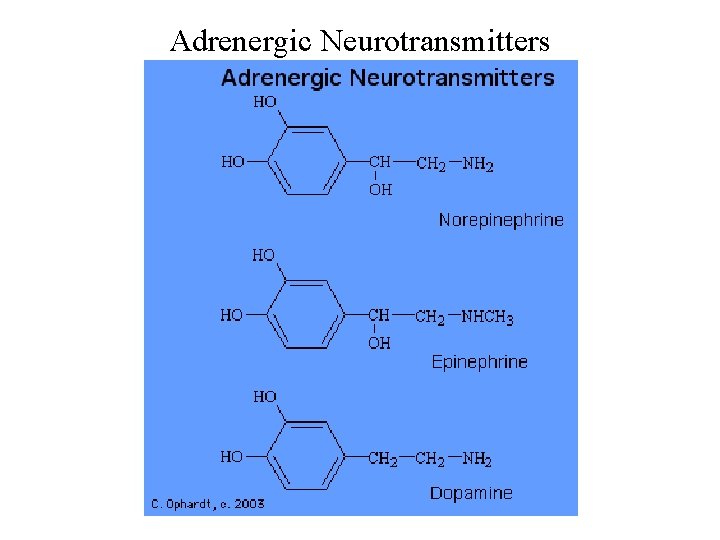
Adrenergic Neurotransmitters
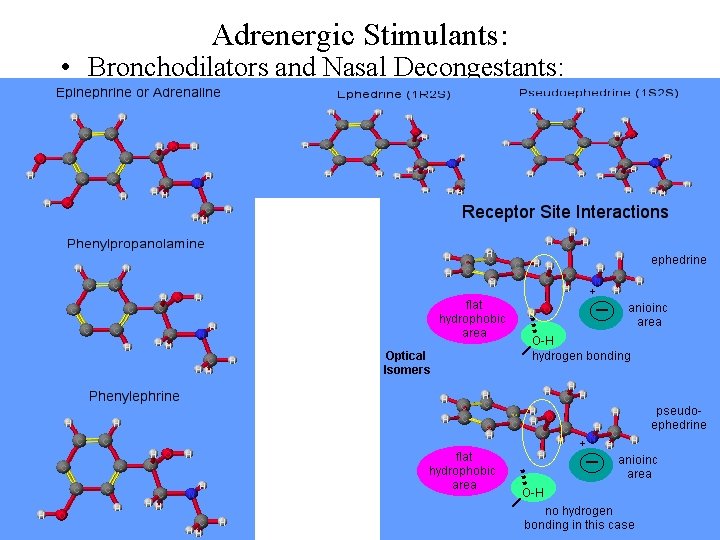
Adrenergic Stimulants: • Bronchodilators and Nasal Decongestants:
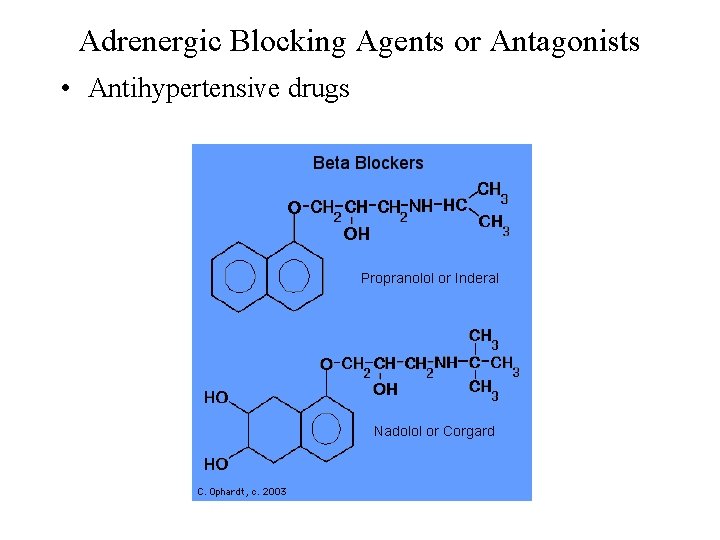
Adrenergic Blocking Agents or Antagonists • Antihypertensive drugs
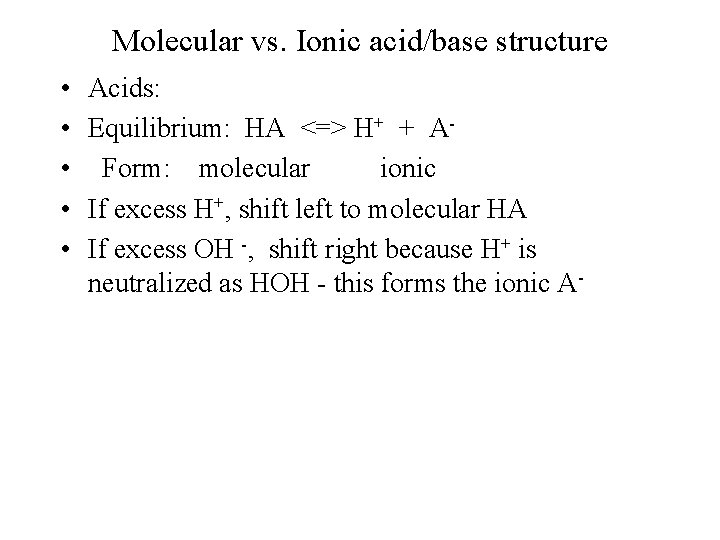
Molecular vs. Ionic acid/base structure • • • Acids: Equilibrium: HA <=> H+ + AForm: molecular ionic If excess H+, shift left to molecular HA If excess OH -, shift right because H+ is neutralized as HOH - this forms the ionic A-
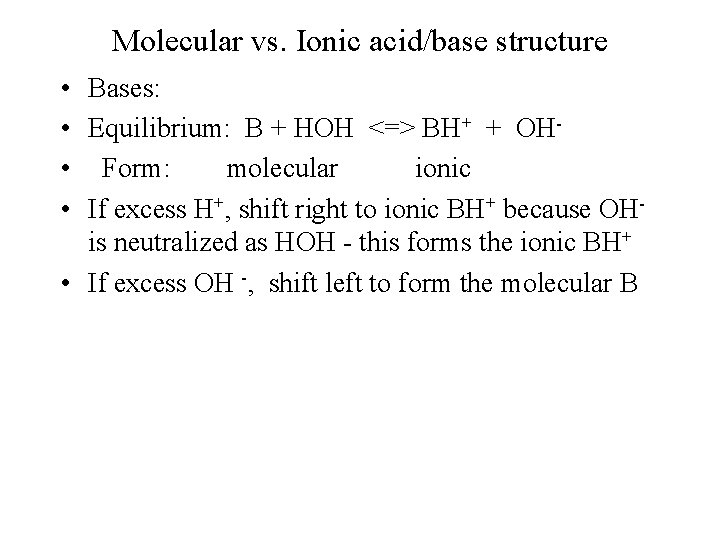
Molecular vs. Ionic acid/base structure • Bases: • Equilibrium: B + HOH <=> BH+ + OH • Form: molecular ionic • If excess H+, shift right to ionic BH+ because OHis neutralized as HOH - this forms the ionic BH+ • If excess OH -, shift left to form the molecular B
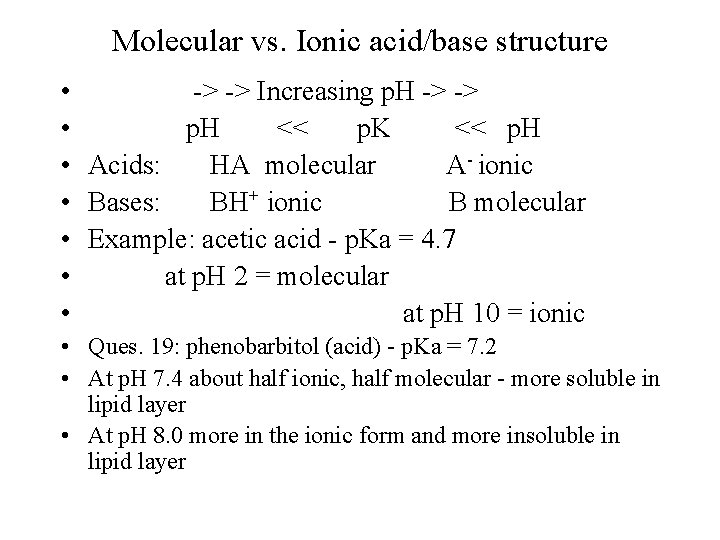
Molecular vs. Ionic acid/base structure • -> -> Increasing p. H -> -> • p. H << p. K << p. H • Acids: HA molecular A- ionic • Bases: BH+ ionic B molecular • Example: acetic acid - p. Ka = 4. 7 • at p. H 2 = molecular • at p. H 10 = ionic • Ques. 19: phenobarbitol (acid) - p. Ka = 7. 2 • At p. H 7. 4 about half ionic, half molecular - more soluble in lipid layer • At p. H 8. 0 more in the ionic form and more insoluble in lipid layer