
Americas Road to WWI 1 US Neutrality At

- Slides: 19
America’s Road to WWI
1. US Neutrality At the war’s outbreak, President Wilson called on Americans to be “neutral in fact as well as in name. ” If the United States remained out of the conflict, Wilson reasoned, he could influence the postwar settlement (treaty). Even if Wilson had wished to, it would have been nearly impossible in 1914 to unite Americans behind the Allies. Many Irish immigrants viewed Britain as an enemy; while millions of German Americans maintained ties to their homeland. Outspoken Americans condemned the war as a conflict among greedy capitalist empires. The New York Sun stated, “It would be folly, for the country to sacrifice itself to… the clash of ancient hatreds which is urging the Old World to destruction. ” The United States, wishing to trade with all the warring nations, might have remained neutral if Britain had no held commanding power at sea….
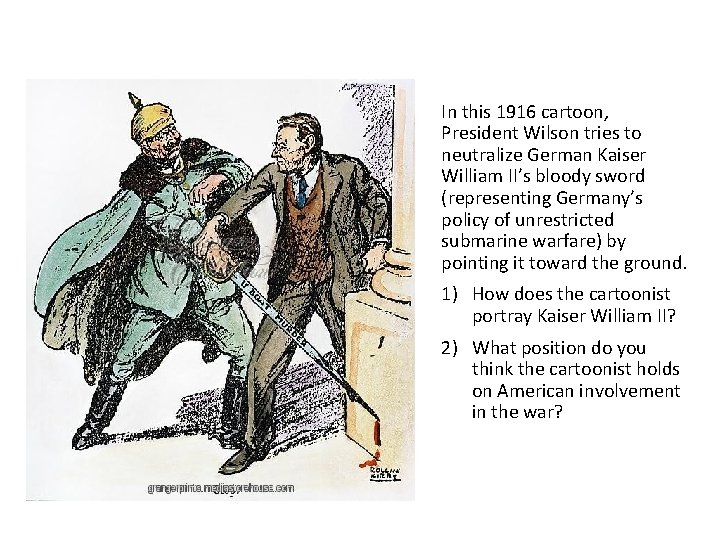
In this 1916 cartoon, President Wilson tries to neutralize German Kaiser William II’s bloody sword (representing Germany’s policy of unrestricted submarine warfare) by pointing it toward the ground. 1) How does the cartoonist portray Kaiser William II? 2) What position do you think the cartoonist holds on American involvement in the war?
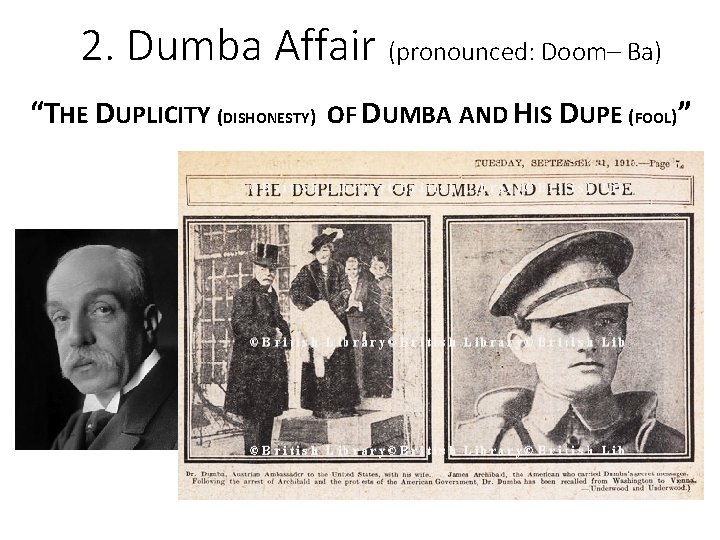
2. Dumba Affair (pronounced: Doom– Ba) Robert Lancing, Secretary of State in the US, demanded the recall (removal) of Austrian Ambassador Constantin Dumba. Lancing accused Dumba of espionage (spying). Dumba was in fact expelled from the US and sent home to Austria-Hungary. When Dumba arrived in Europe, he was honored! Lancing’s letter requesting he be removed from office stated: “Mr. Constantin Dumba, the Austro-Hungarian ambassador at Washington, has admitted that he proposed to his government plans to instigate (incite/start) strikes in the American manufacturing factories that are specifically engaged in the production of munitions (weapons) of war. The information reaching this government through a copy of a letter of the Ambassador to his government. The bearer was an American citizen named Archibald, who was traveling with an American passport. The Ambassador has admitted that he employed Archibald to transport official communications from him to the Austrian government. ”
2. Dumba Affair (pronounced: Doom– Ba) “THE DUPLICITY (DISHONESTY) OF DUMBA AND HIS DUPE (FOOL)”
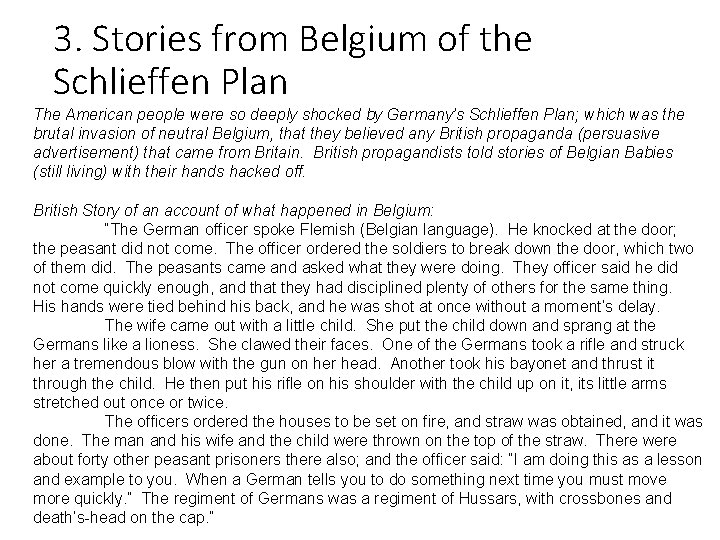
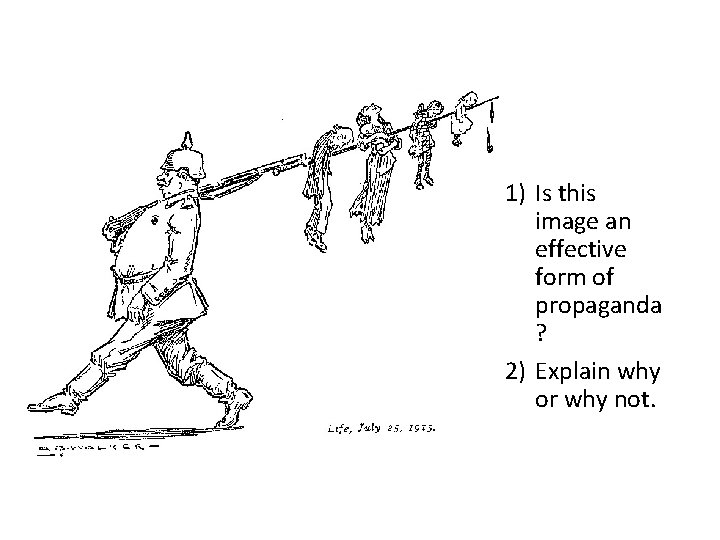
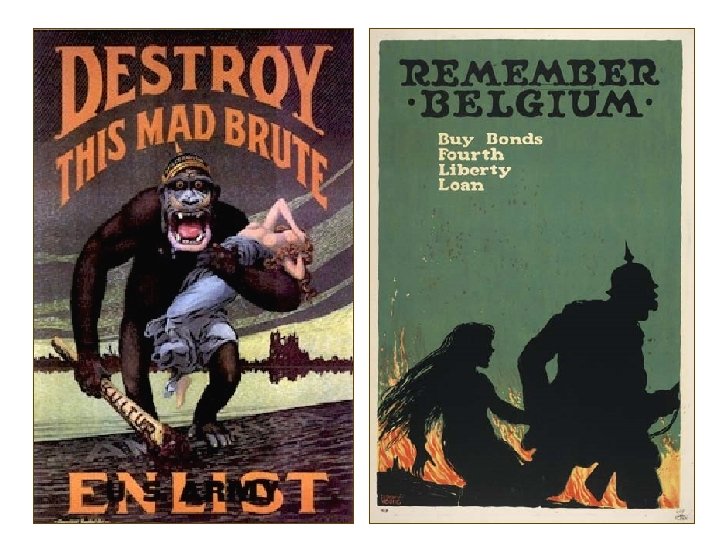
3. Stories from Belgium of the Schlieffen Plan The American people were so deeply shocked by Germany’s Schlieffen Plan; which was the brutal invasion of neutral Belgium, that they believed any British propaganda (persuasive advertisement) that came from Britain. British propagandists told stories of Belgian Babies (still living) with their hands hacked off. British Story of an account of what happened in Belgium: “The German officer spoke Flemish (Belgian language). He knocked at the door; the peasant did not come. The officer ordered the soldiers to break down the door, which two of them did. The peasants came and asked what they were doing. They officer said he did not come quickly enough, and that they had disciplined plenty of others for the same thing. His hands were tied behind his back, and he was shot at once without a moment’s delay. The wife came out with a little child. She put the child down and sprang at the Germans like a lioness. She clawed their faces. One of the Germans took a rifle and struck her a tremendous blow with the gun on her head. Another took his bayonet and thrust it through the child. He then put his rifle on his shoulder with the child up on it, its little arms stretched out once or twice. The officers ordered the houses to be set on fire, and straw was obtained, and it was done. The man and his wife and the child were thrown on the top of the straw. There were about forty other peasant prisoners there also; and the officer said: “I am doing this as a lesson and example to you. When a German tells you to do something next time you must move more quickly. ” The regiment of Germans was a regiment of Hussars, with crossbones and death’s-head on the cap. ”
1) Is this image an effective form of propaganda ? 2) Explain why or why not.
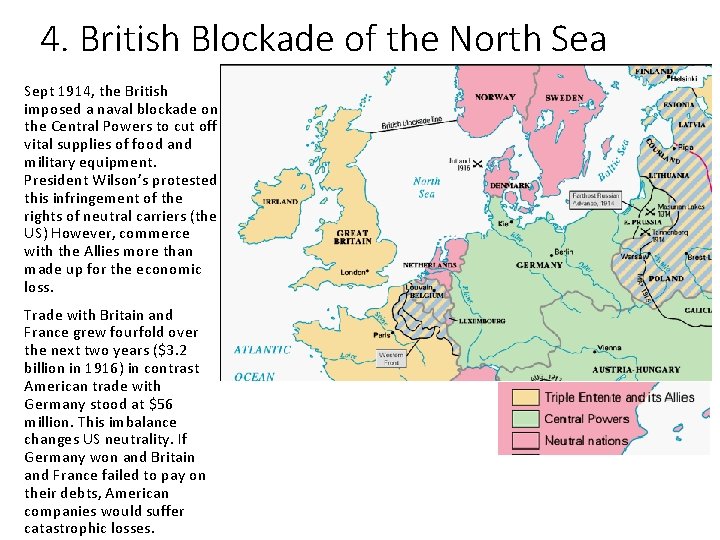
4. British Blockade of the North Sea Sept 1914, the British imposed a naval blockade on the Central Powers to cut off vital supplies of food and military equipment. President Wilson’s protested this infringement of the rights of neutral carriers (the US) However, commerce with the Allies more than made up for the economic loss. Trade with Britain and France grew fourfold over the next two years ($3. 2 billion in 1916) in contrast American trade with Germany stood at $56 million. This imbalance changes US neutrality. If Germany won and Britain and France failed to pay on their debts, American companies would suffer catastrophic losses.
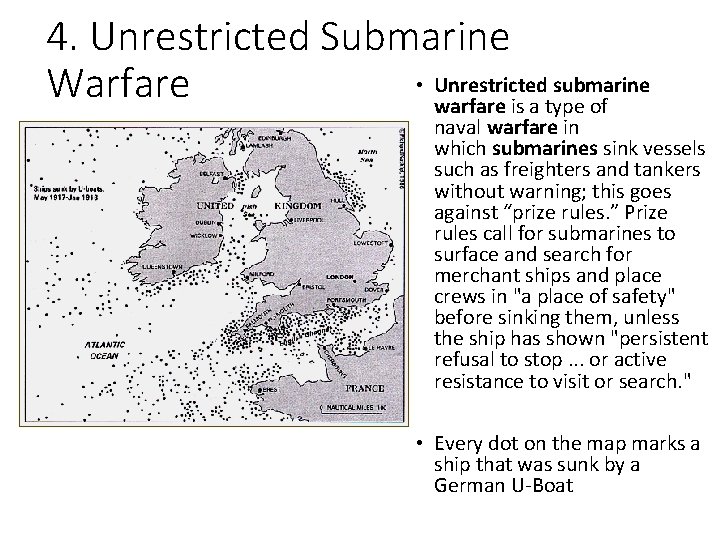
4. Unrestricted Submarine • Unrestricted submarine Warfare warfare is a type of naval warfare in which submarines sink vessels such as freighters and tankers without warning; this goes against “prize rules. ” Prize rules call for submarines to surface and search for merchant ships and place crews in "a place of safety" before sinking them, unless the ship has shown "persistent refusal to stop. . . or active resistance to visit or search. " • Every dot on the map marks a ship that was sunk by a German U-Boat
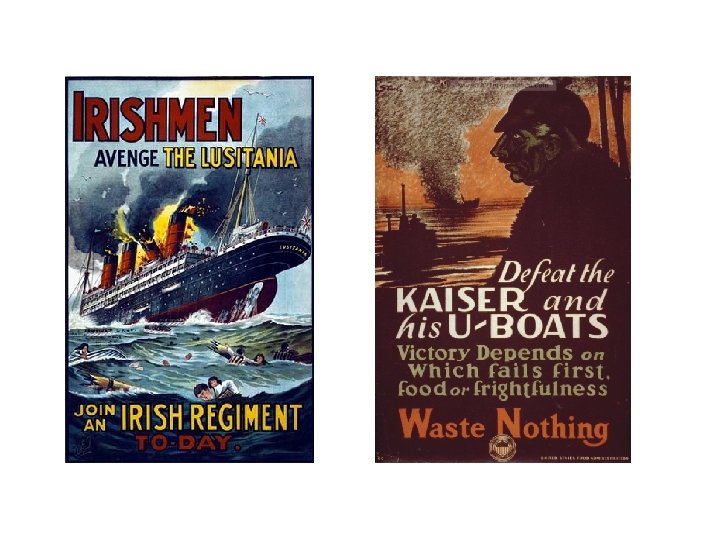
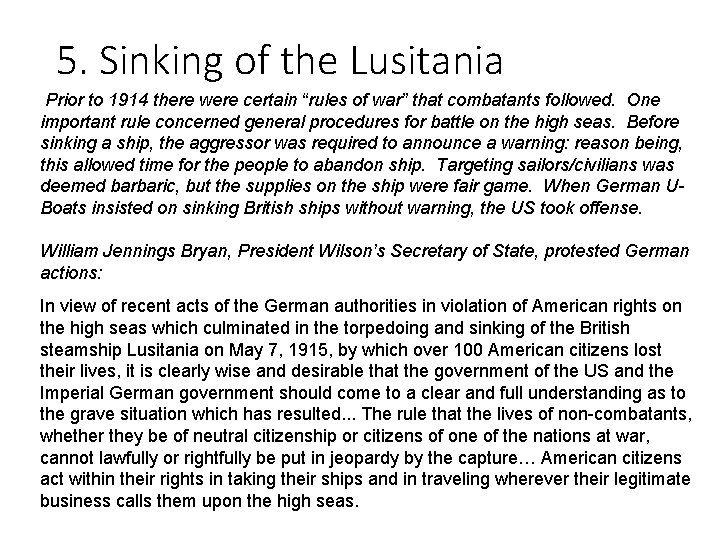
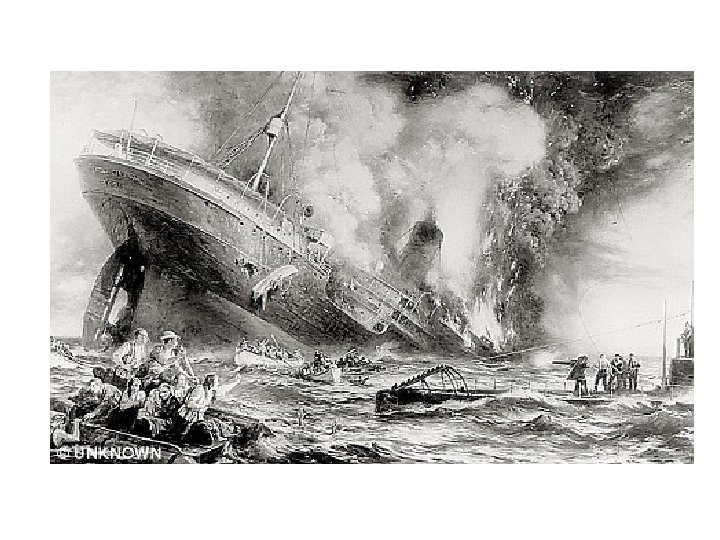
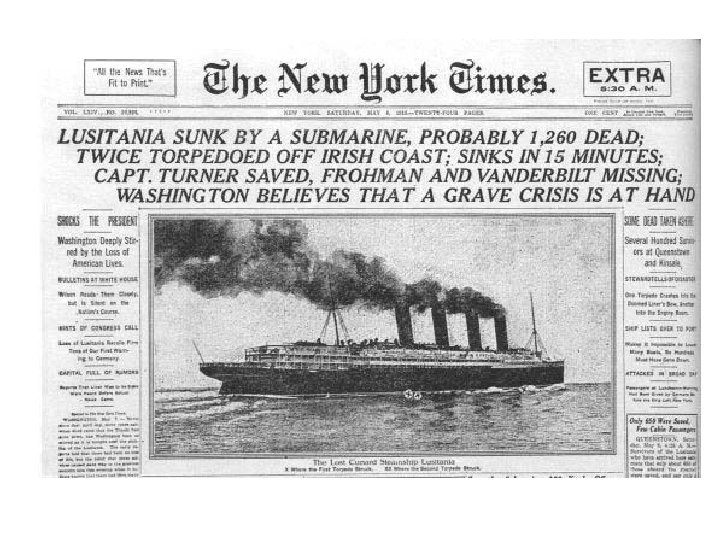
5. Sinking of the Lusitania Prior to 1914 there were certain “rules of war” that combatants followed. One important rule concerned general procedures for battle on the high seas. Before sinking a ship, the aggressor was required to announce a warning: reason being, this allowed time for the people to abandon ship. Targeting sailors/civilians was deemed barbaric, but the supplies on the ship were fair game. When German UBoats insisted on sinking British ships without warning, the US took offense. William Jennings Bryan, President Wilson’s Secretary of State, protested German actions: In view of recent acts of the German authorities in violation of American rights on the high seas which culminated in the torpedoing and sinking of the British steamship Lusitania on May 7, 1915, by which over 100 American citizens lost their lives, it is clearly wise and desirable that the government of the US and the Imperial German government should come to a clear and full understanding as to the grave situation which has resulted. . . The rule that the lives of non-combatants, whether they be of neutral citizenship or citizens of one of the nations at war, cannot lawfully or rightfully be put in jeopardy by the capture… American citizens act within their rights in taking their ships and in traveling wherever their legitimate business calls them upon the high seas.
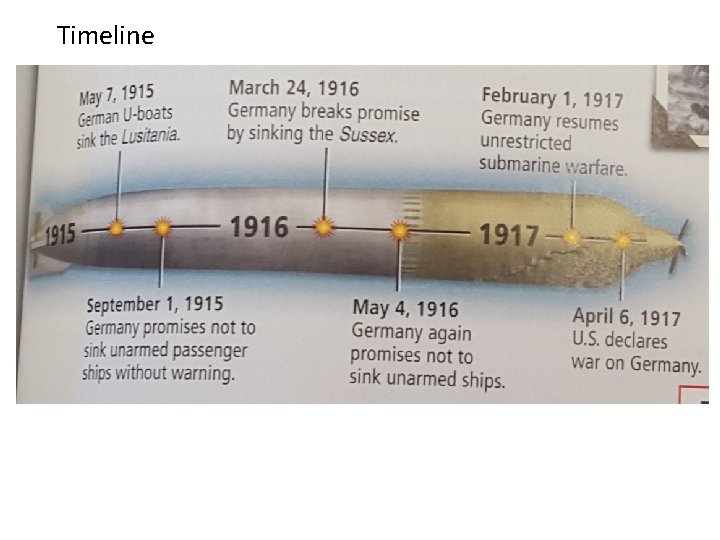
Timeline
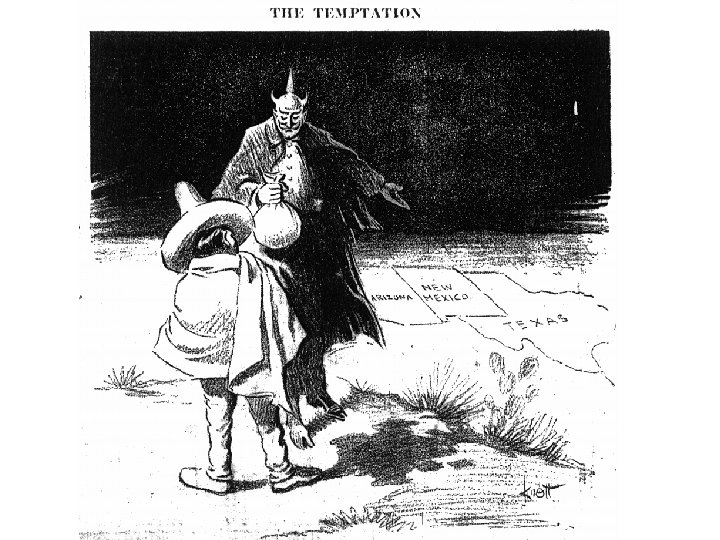
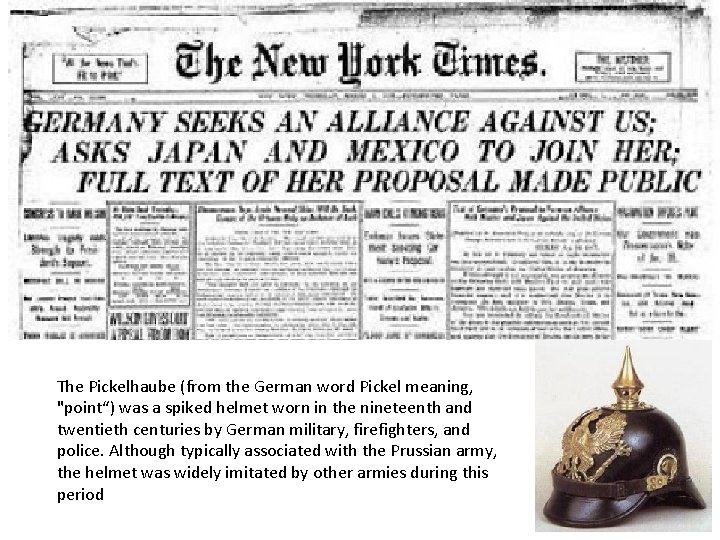
6. Zimmerman Telegram When war broke out in Europe, the US remained neutral (uninvolved). The US was willing to sell weapons to both sides, but in reality was only able to trade with the British. The British naval blockade prevented Americans from trading with Germany. Frustrated by their situation, Germany sent an encrypted telegram, a message written in a secret language, to Mexico. British cryptographers, code breakers, deciphered the message Germany sent to Mexico: “On the first of February we intend to begin unrestricted submarine warfare. In spite of this, it is our intention to keep neutral with the USA. If this attempt is not successful, we propose an alliance on the following basis with Mexico: That we shall make war together and together make peace. We shall give general financial support, and it is understood that Mexico is to reconquer the lost territory in New Mexico, Texas, and Arizona. The details are left to you for settlement… Zimmerman (German Secretary of State)
The Pickelhaube (from the German word Pickel meaning, "point“) was a spiked helmet worn in the nineteenth and twentieth centuries by German military, firefighters, and police. Although typically associated with the Prussian army, the helmet was widely imitated by other armies during this period
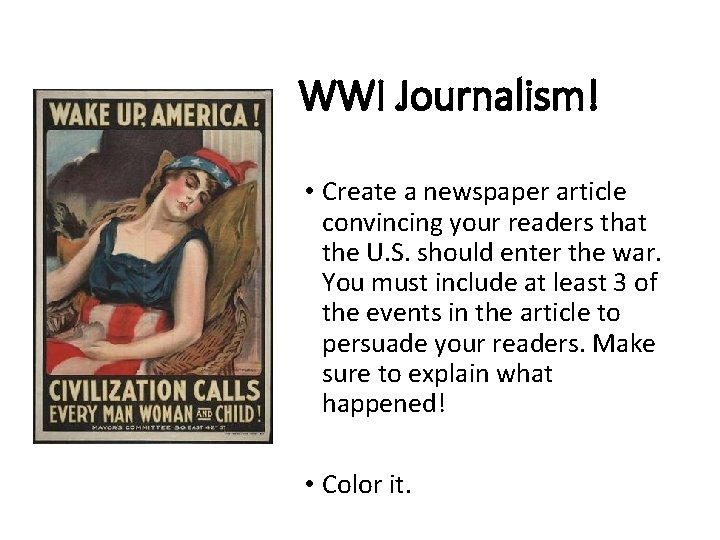
WWI Journalism! • Create a newspaper article convincing your readers that the U. S. should enter the war. You must include at least 3 of the events in the article to persuade your readers. Make sure to explain what happened! • Color it.