
Americas Fire Problem Lesson 2 2004 National Fire
America’s Fire Problem Lesson 2 © 2004 National Fire Protection Association 1
Learning Objectives • Provide overview of U. S. fire problem • Provide data about fire causes and occupancies • Explain how fire statistics are obtained and role of fire service in these statistics • Examine regional differences in fire experience and role of demographic and socioeconomic factors in death rates • Compare U. S. fire experience to other countries • Explain how fire service does more than fight fires • Discuss role of local fire departments, state agencies, NFPA, U. S. F. A. in collecting, analyzing fire loss data © 2004 National Fire Protection 2 Association
U. S. General Fire Data (2001) • Fire departments responded to 1, 734, 500 fires • Fires killed 6, 196 civilians • Direct property damage = $44 billion • 439 fire fighters died in line of duty © 2004 National Fire Protection Association 3
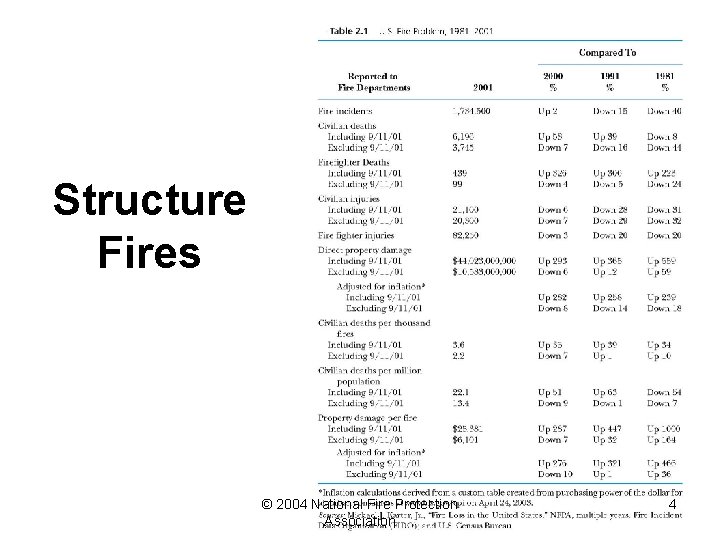
Structure Fires © 2004 National Fire Protection Association 4
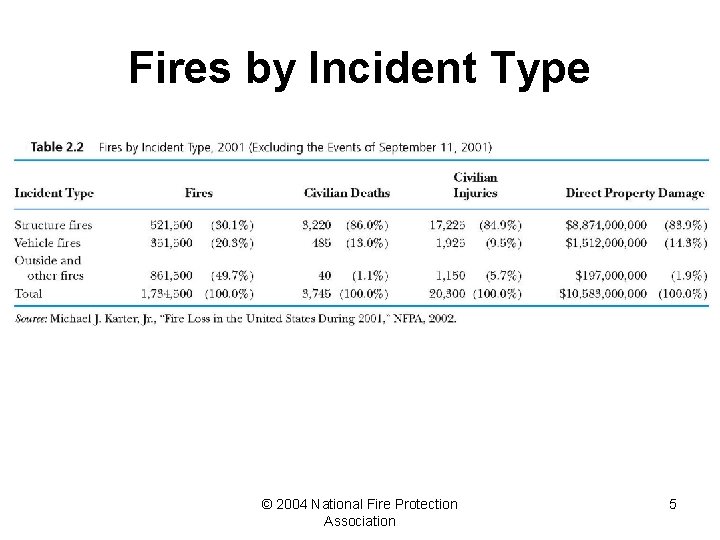
Fires by Incident Type © 2004 National Fire Protection Association 5
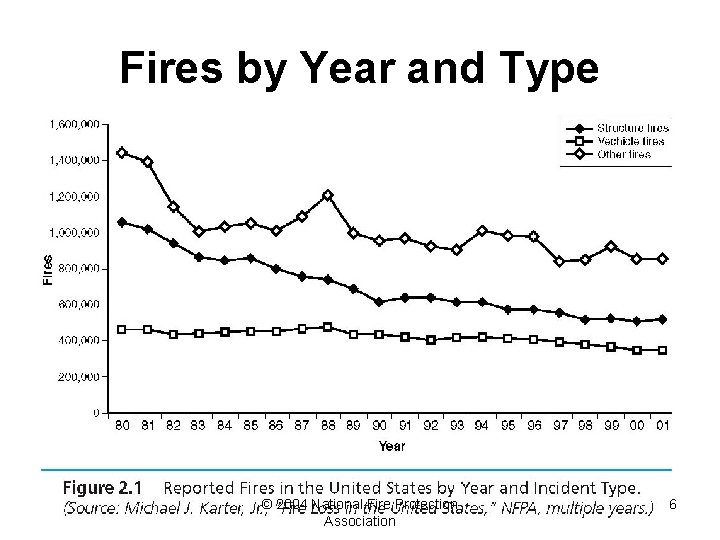
Fires by Year and Type © 2004 National Fire Protection Association 6
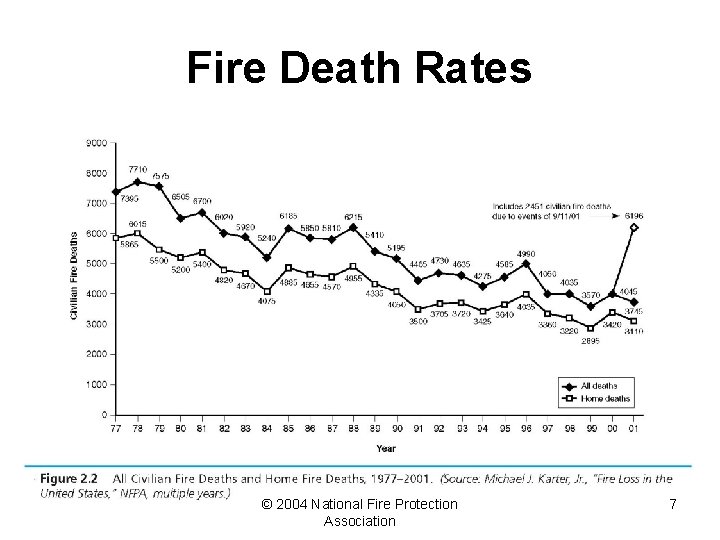
Fire Death Rates © 2004 National Fire Protection Association 7
Fire Fighter Fatalities • 439 died in 2001 from injuries or illnesses while on duty • 340 of those from WTC/September 11, 2001 • More fighter deaths at WTC than any of past 25 years • Tracked separately from other fire statistics © 2004 National Fire Protection Association 8
Structure Fires by Occupancy • Residential structures • Nonresidential properties © 2004 National Fire Protection Association 9
Residential Properties • • One- and two-family dwellings Apartments Manufactured housing Rooming, boarding, or lodging houses Hotels or motels Dormitories, fraternities, or sorority houses Residential board and care facilities © 2004 National Fire Protection Association 10
Nonresidential Properties • • Public assembly Educational Institutional Mercantile and business Utility, defense, agriculture and mining Manufacturing or processing Storage Outside or special © 2004 National Fire Protection Association 11
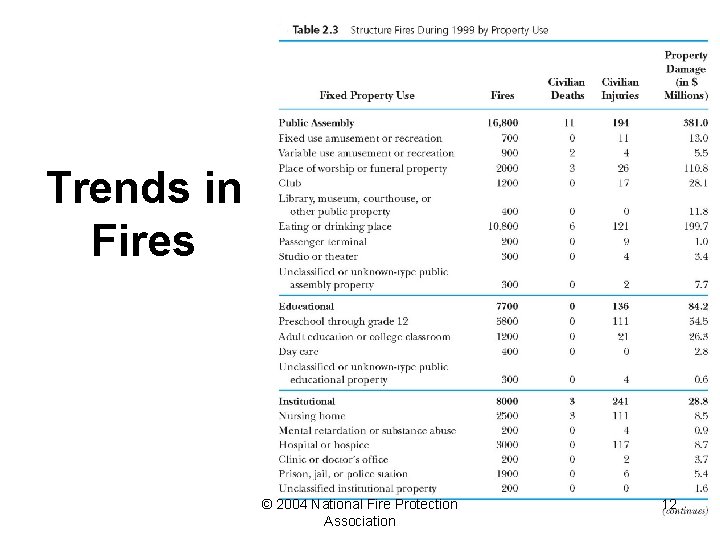
Trends in Fires © 2004 National Fire Protection Association 12
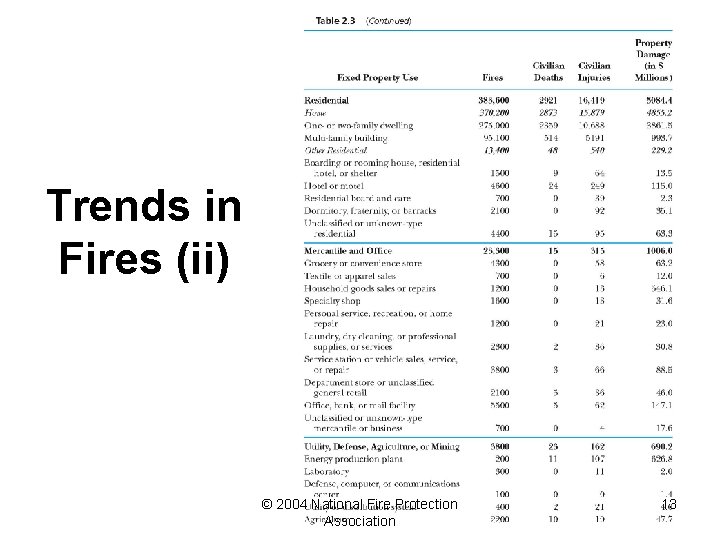
Trends in Fires (ii) © 2004 National Fire Protection Association 13
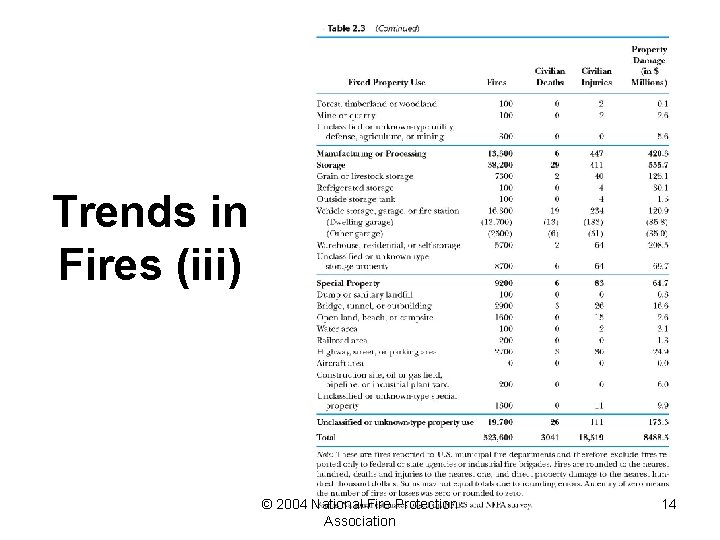
Trends in Fires (iii) © 2004 National Fire Protection Association 14
Causal Factors • • • Heat source Factors contributing to ignition Items first ignited Fire cause in confined structures Hierarchy of major causes © 2004 National Fire Protection Association 15

Factors Contributing to Ignition Top Five Factors for Home Structure Fires: 1. 2. 3. 4. 5. No factors contributing to the ignition (23%) Combustibles too close to heat source (7%) Failure to clean (6%) Unclassified factor (5%) Equipment left unattended (4%) © 2004 National Fire Protection Association 16
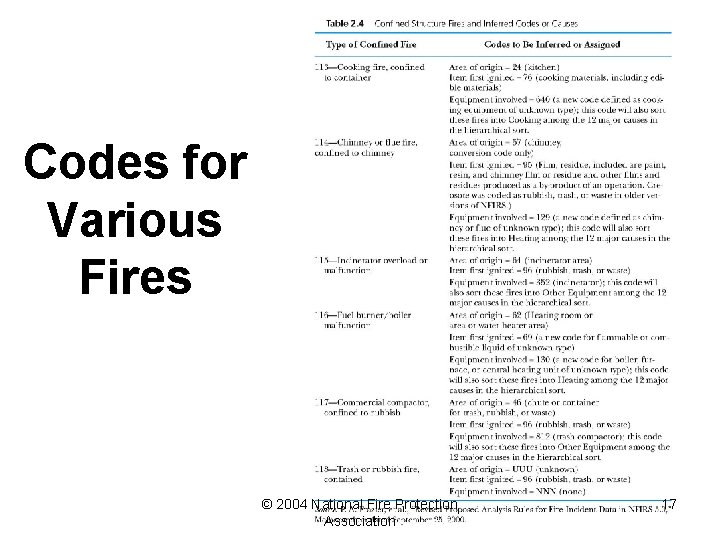
Codes for Various Fires © 2004 National Fire Protection Association 17
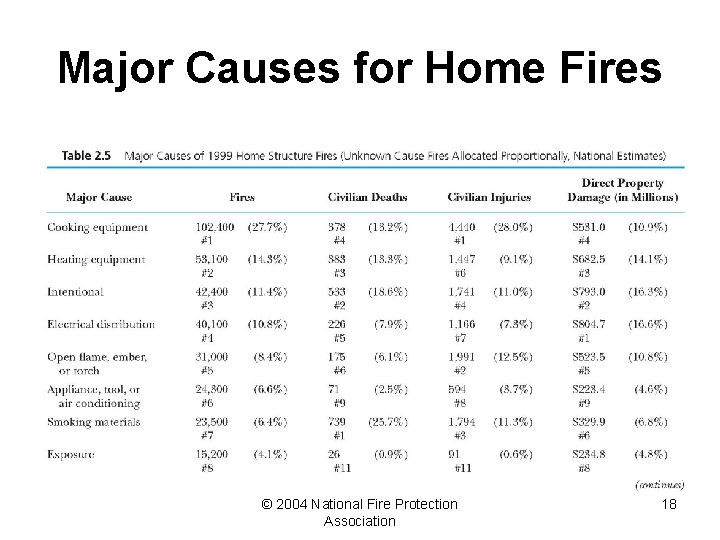
Major Causes for Home Fires © 2004 National Fire Protection Association 18
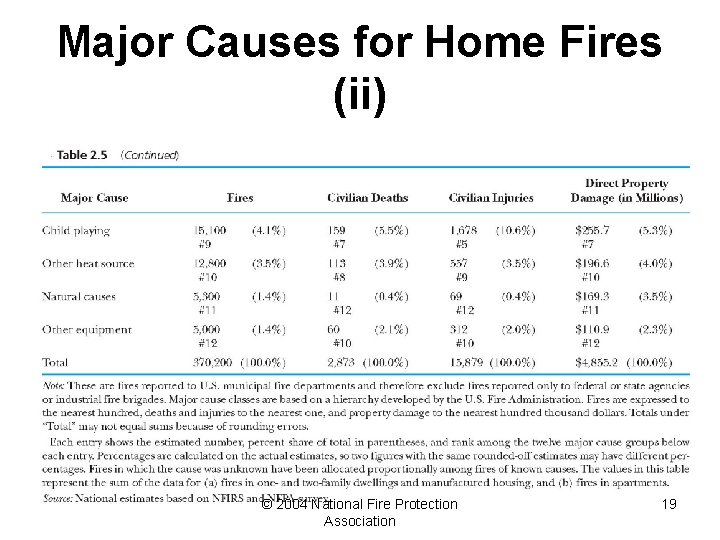
Major Causes for Home Fires (ii) © 2004 National Fire Protection Association 19
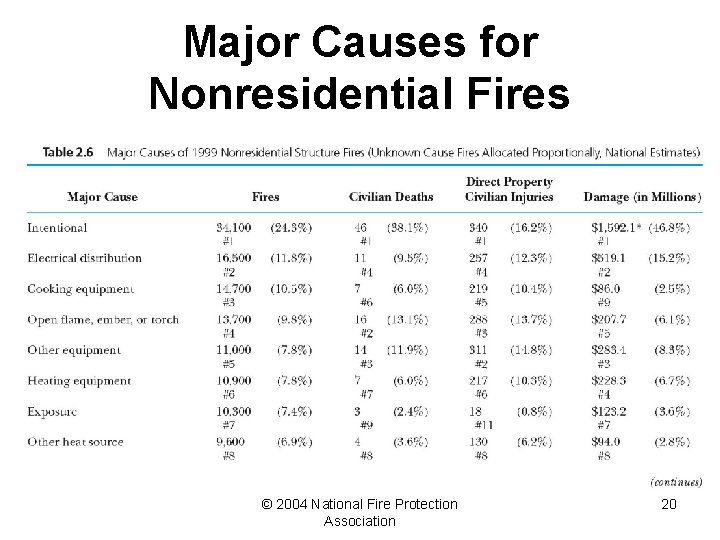
Major Causes for Nonresidential Fires © 2004 National Fire Protection Association 20
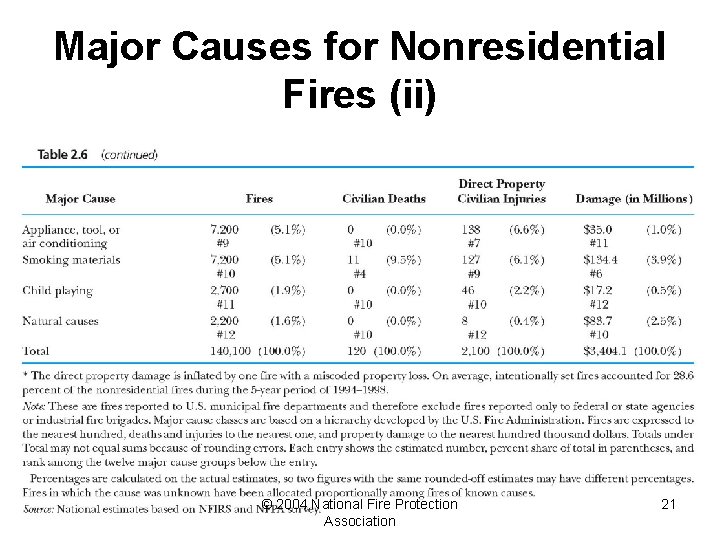
Major Causes for Nonresidential Fires (ii) © 2004 National Fire Protection Association 21
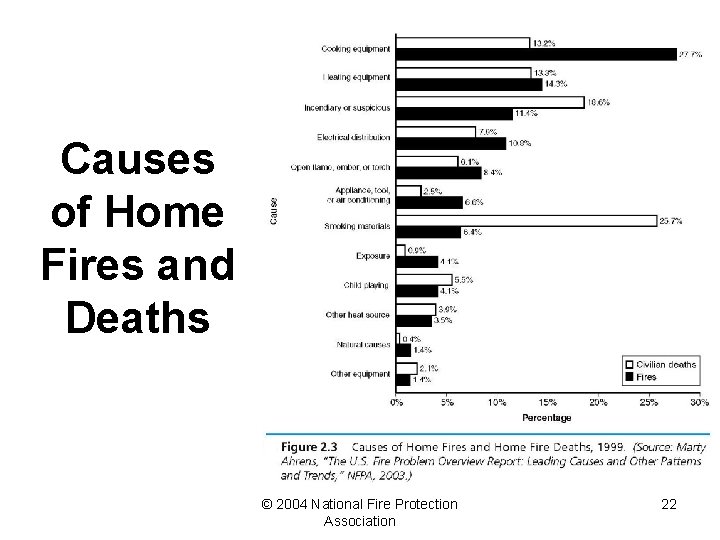
Causes of Home Fires and Deaths © 2004 National Fire Protection Association 22
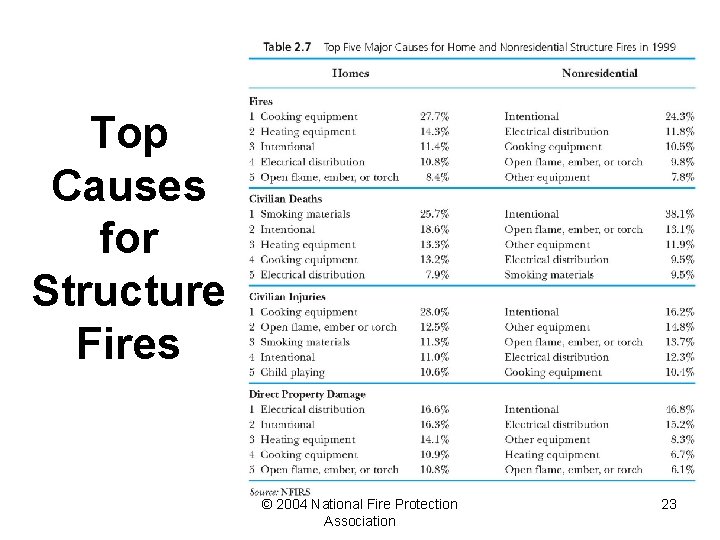
Top Causes for Structure Fires © 2004 National Fire Protection Association 23
Arson • Definition “Crime of willfully setting fire to buildings or other property”* • Arson Data Most current stats come from NFPA’s Annual Fire Department Survey *American Heritage Dictionary © 2004 National Fire Protection Association 24
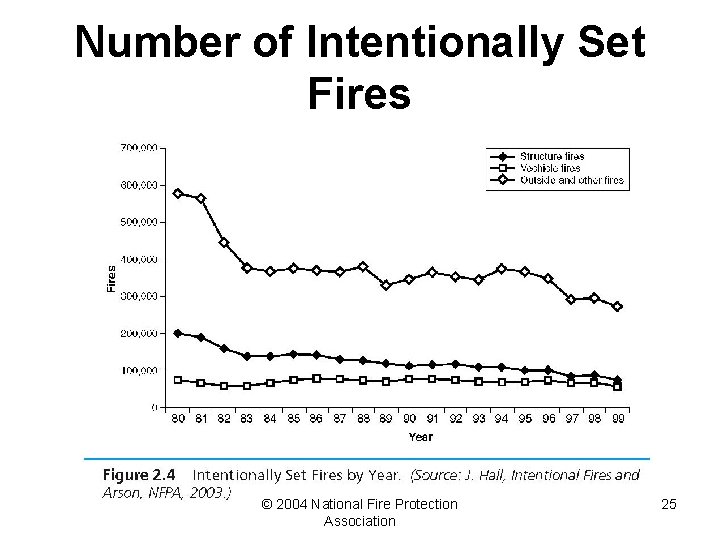
Number of Intentionally Set Fires © 2004 National Fire Protection Association 25
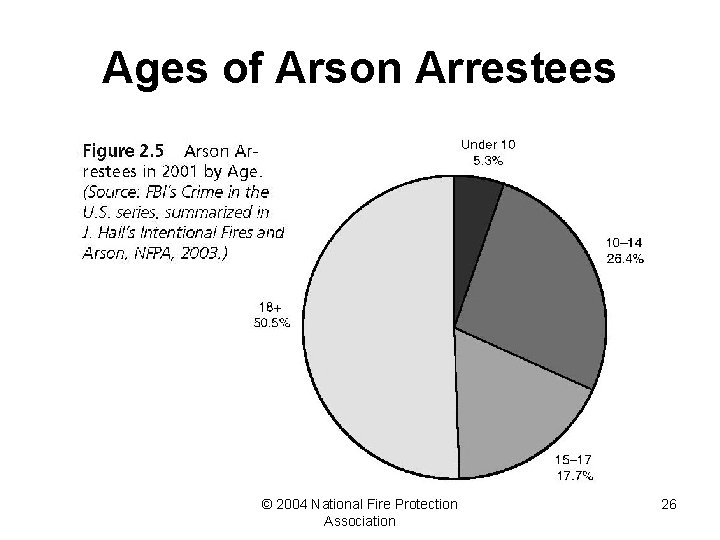
Ages of Arson Arrestees © 2004 National Fire Protection Association 26
Fire Loss by Geographic Region – South – Northeast – West – North Central © 2004 National Fire Protection Association 27
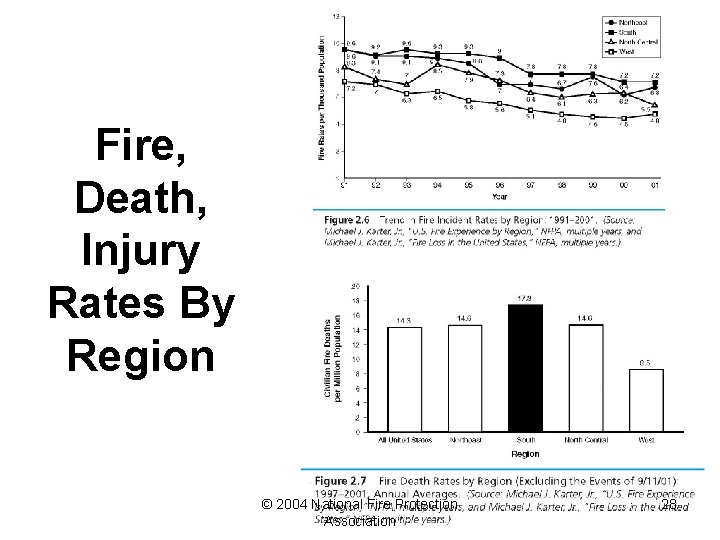
Fire, Death, Injury Rates By Region © 2004 National Fire Protection Association 28
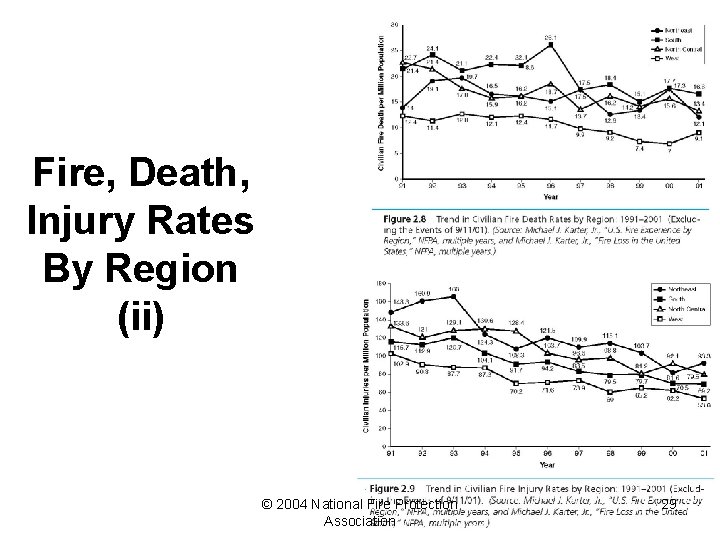
Fire, Death, Injury Rates By Region (ii) © 2004 National Fire Protection Association 29
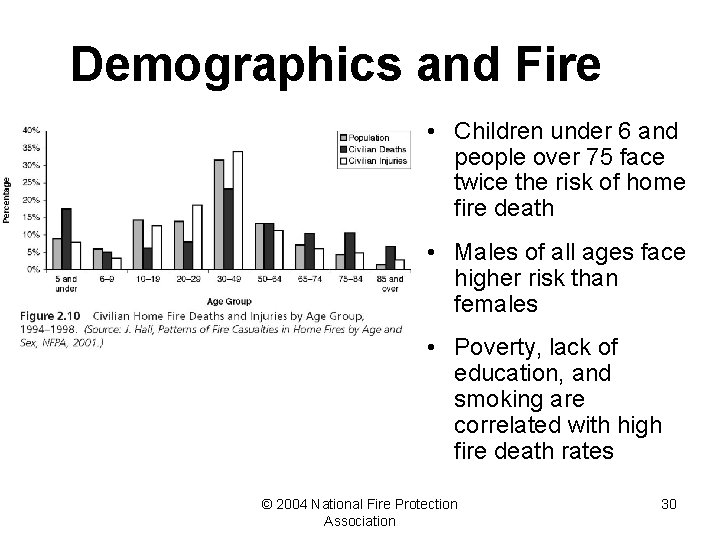
Demographics and Fire • Children under 6 and people over 75 face twice the risk of home fire death • Males of all ages face higher risk than females • Poverty, lack of education, and smoking are correlated with high fire death rates © 2004 National Fire Protection Association 30
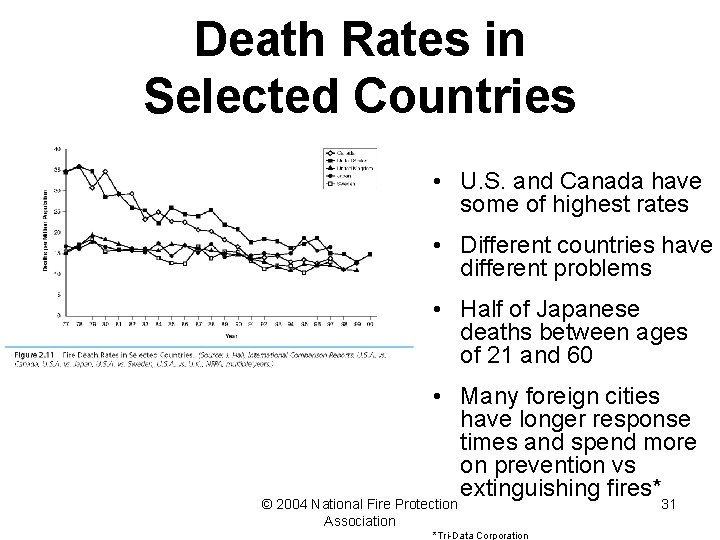
Death Rates in Selected Countries • U. S. and Canada have some of highest rates • Different countries have different problems • Half of Japanese deaths between ages of 21 and 60 • Many foreign cities have longer response times and spend more on prevention vs extinguishing fires* © 2004 National Fire Protection Association *Tri-Data Corporation 31
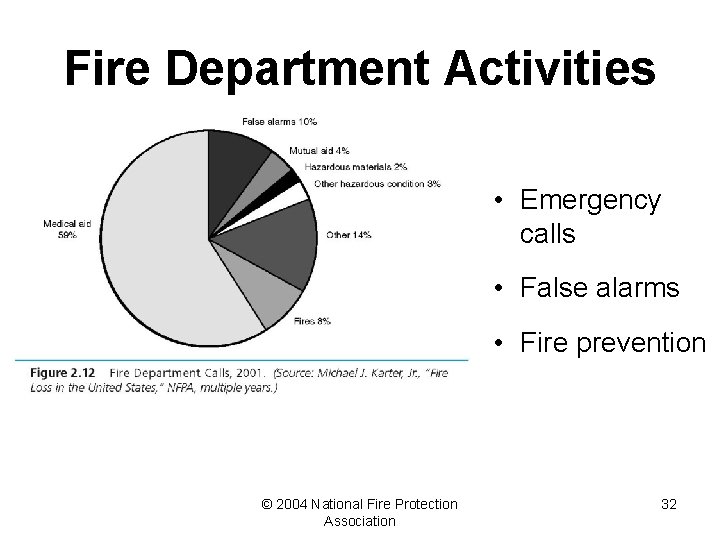
Fire Department Activities • Emergency calls • False alarms • Fire prevention © 2004 National Fire Protection Association 32
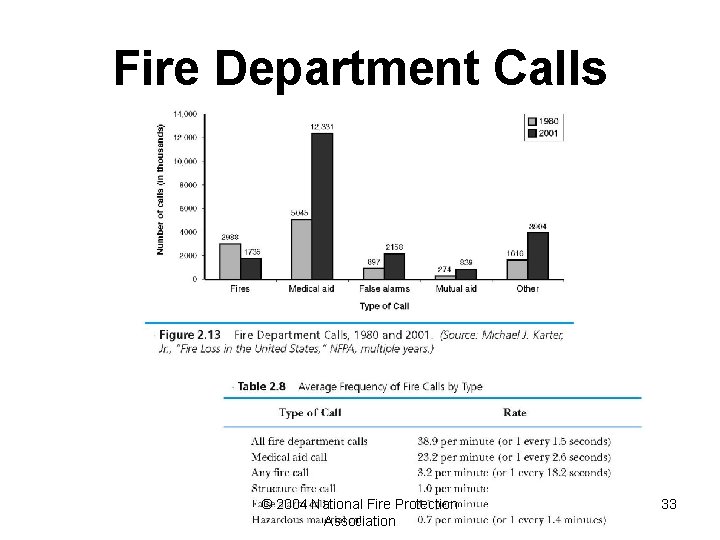
Fire Department Calls © 2004 National Fire Protection Association 33
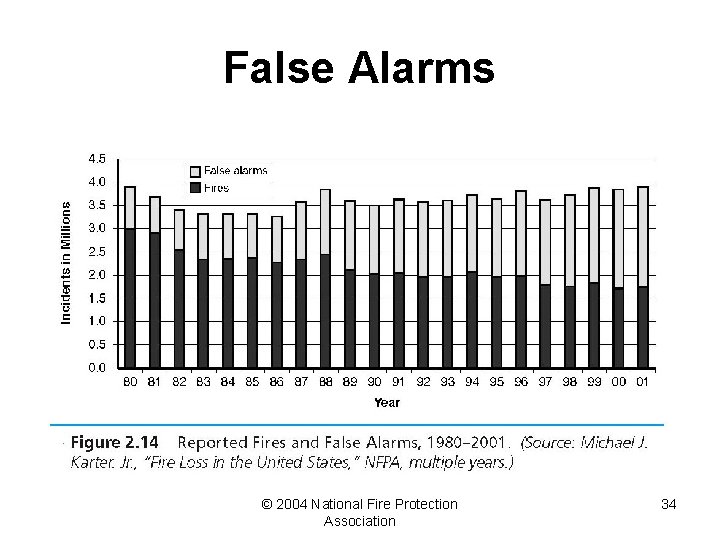
False Alarms © 2004 National Fire Protection Association 34

Fire Data Sources • NFIRS-Three Tiered System 1. Local fire departments 2. State fire agencies 3. Federal government (USFA)/National Fire Data Center • NFPA fire department survey • Statistical estimates • Death certificate data © 2004 National Fire Protection Association 35
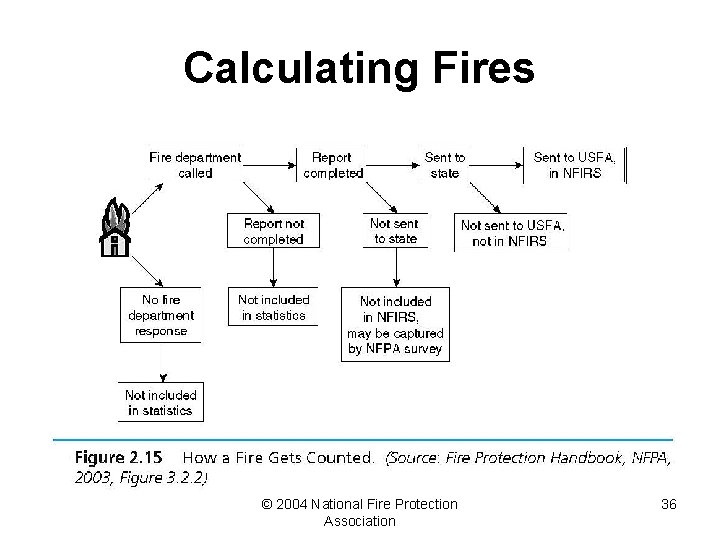
Calculating Fires © 2004 National Fire Protection Association 36
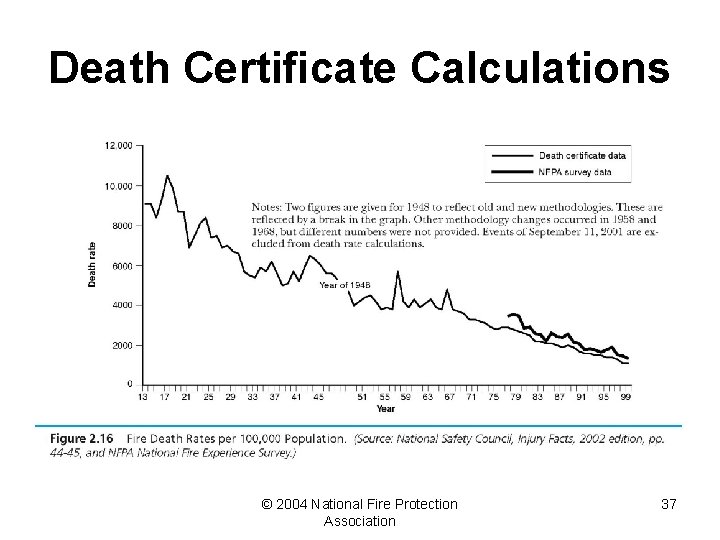
Death Certificate Calculations © 2004 National Fire Protection Association 37
Summary • Incident report forms and surveys source of knowledge on U. S. fire experience • Without NFIRS, impossible to answer most basic questions about causes • States with highest death rates have more adult smokers • Many countries traditionally have fewer fire deaths than U. S. • Reports updated annually by NFPA’s Fire Analysis and Research Division © 2004 National Fire Protection Association 38
Group Activity Discuss the fire statistic (for example, the number of fires, fire deaths, fire fighter fatalities, or the financial costs) that best describes the greatest concern for understanding America’s fire problem. Pick a person to explain the group’s answer. © 2004 National Fire Protection Association 39
Review Questions 1. Where did 76 percent of structure fires occur? 2. What was the source of heat in over one-third of structure fires in 1999? 3. In an arson case, what two things is it necessary to prove? 4. About what percentage of intentionally set fires resulted in arrests? 5. What groups in our population are at highest risk of dying in home fires? © 2004 National Fire Protection Association 40
Review Questions (ii) 6. What are poverty and lack of education related to? 7. Which two countries have had some of the highest fire death rates? 8. What system provides most of the national fire statistical details? 9. What is the leading cause of home structure fires and fire injuries? © 2004 National Fire Protection Association 41
Answer Key to Review Questions 1. Residential properties 2. Radiated or conducted heat from operating equipment 3. That a crime was committed, and then to prove guilt 4. Only 15 percent to 20 percent resulted in arrest 5. Children under six and people over 65 years of age © 2004 National Fire Protection Association 42
Answer Key to Review Questions (ii) 6. High state of death rates 7. The United States and Canada 8. National Fire Incident Reporting System (NFIRS) 9. Cooking equipment © 2004 National Fire Protection Association 43
Additional References • “U. S. Fire Problem Overview: Leading Causes and Other Patterns and Trends, ” can be downloaded for free from the NFPA website at www. nfpa. org. • NFPA’s “Fire Fighters Fatalities Video” © 2004 National Fire Protection Association 44
- Slides: 44