
AMERICAS AWARD WORKSHOP WITH Jorge Argueta A PROFESSIONAL



- Slides: 20
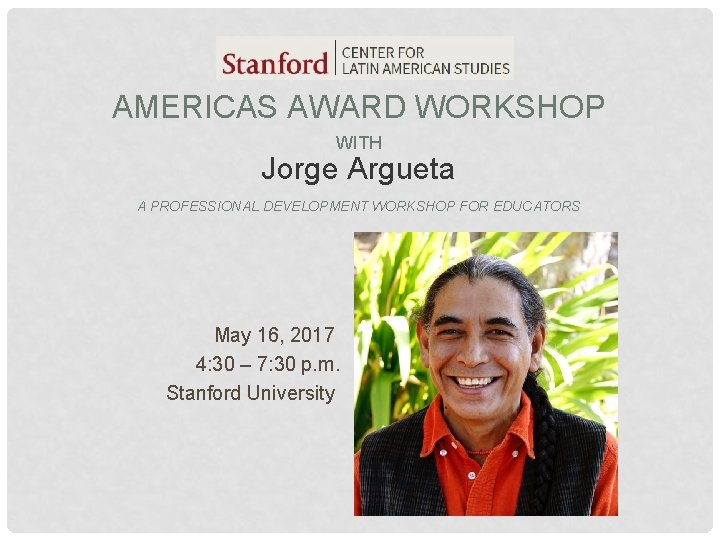
AMERICAS AWARD WORKSHOP WITH Jorge Argueta A PROFESSIONAL DEVELOPMENT WORKSHOP FOR EDUCATORS May 16, 2017 4: 30 – 7: 30 p. m. Stanford University
AMERICAS AWARD
PURPOSE OF THE AMERICAS AWARD • Encourage and commend authors, illustrators and publishers who produce quality children's and young adult books that portray Latin America, the Caribbean, or Latinos. • Provide teachers with recommendations for classroom use, the national Consortium of Latin American Studies Programs (CLASP) offers up to two annual book awards, together with a commended list of titles. http: //claspprograms. org/americasaward
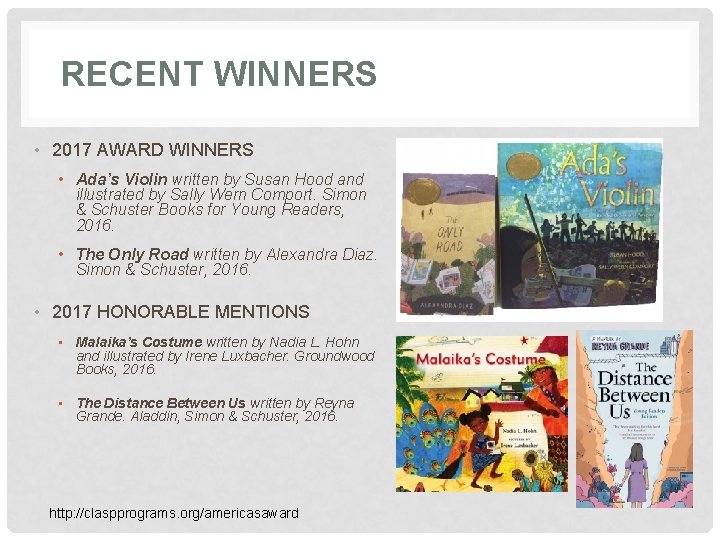
RECENT WINNERS • 2017 AWARD WINNERS • Ada’s Violin written by Susan Hood and illustrated by Sally Wern Comport. Simon & Schuster Books for Young Readers, 2016. • The Only Road written by Alexandra Diaz. Simon & Schuster, 2016. • 2017 HONORABLE MENTIONS • Malaika’s Costume written by Nadia L. Hohn and illustrated by Irene Luxbacher. Groundwood Books, 2016. • The Distance Between Us written by Reyna Grande. Aladdin, Simon & Schuster, 2016. http: //claspprograms. org/americasaward
• The Américas Award is sponsored by CLASP and coordinated by the Stone Center for Latin American Studies at Tulane University. Additional funding is provided by Florida International University, Stanford University, The Ohio State University, University of New Mexico, University of Utah, University of Wisconsin, Milwaukee, and Vanderbilt University. • Today’s Américas Award Workshop at Stanford University is made possible by the Center for Latin American Studies (CLAS) and funding from the U. S. Department of Education Title VI National Resource Center Grant. http: //claspprograms. org/americasaward
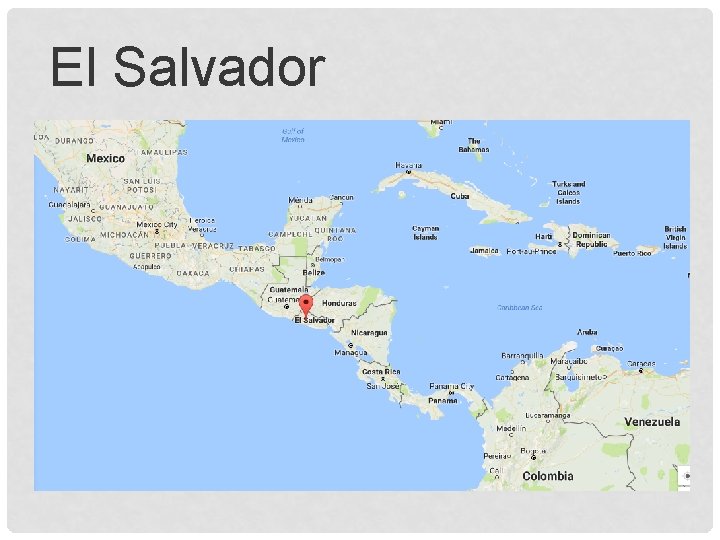
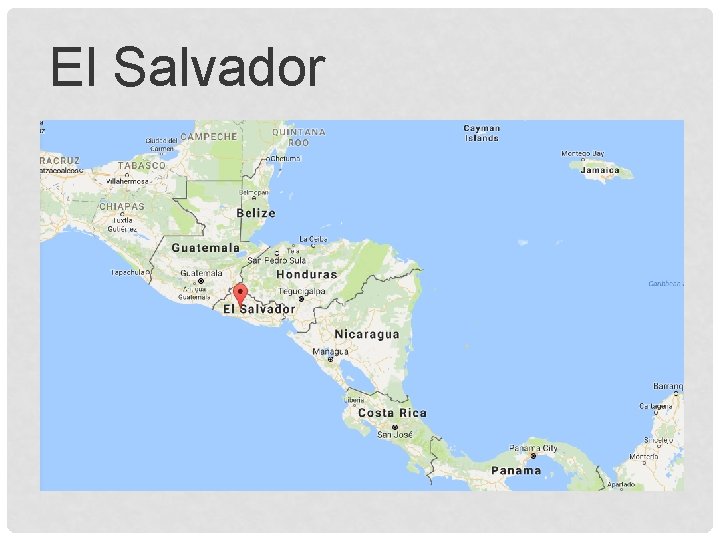
El Salvador
El Salvador
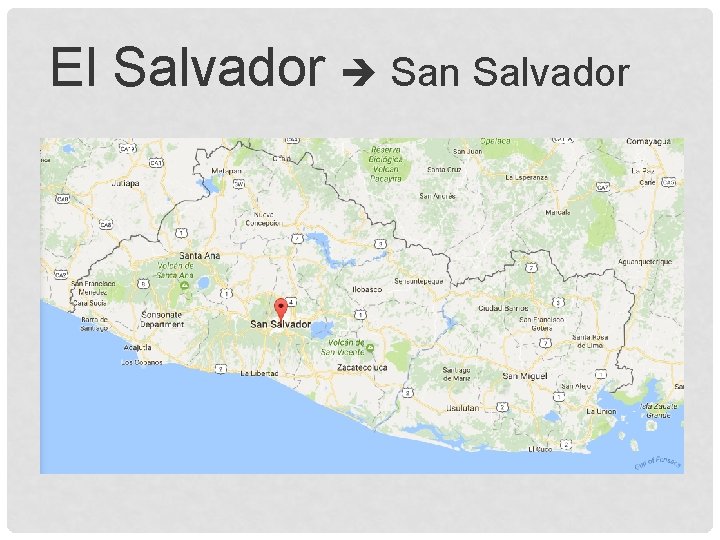
El Salvador San Salvador
El Salvador San Salvador
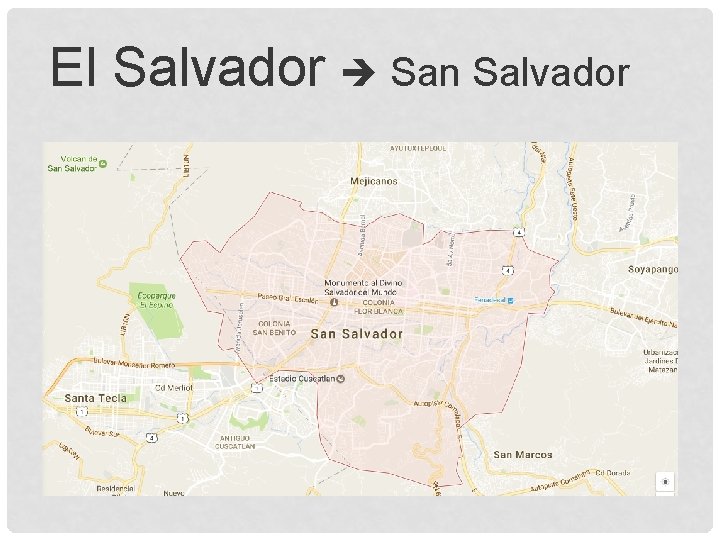
El Salvador San Salvador
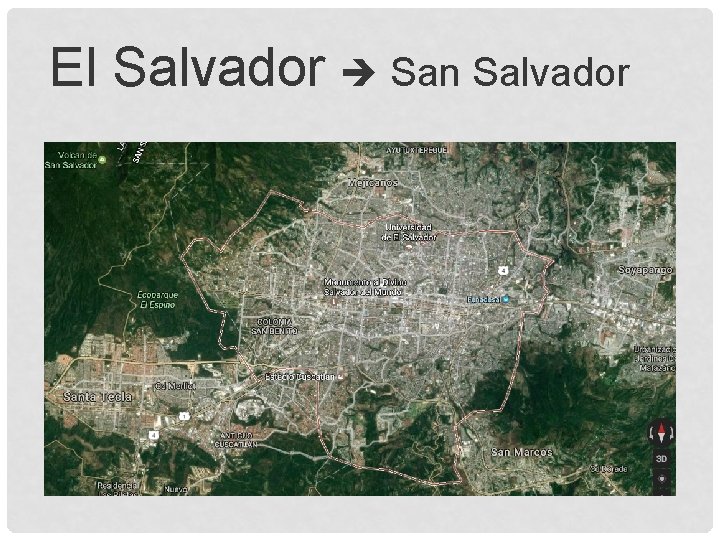
El Salvador San Salvador
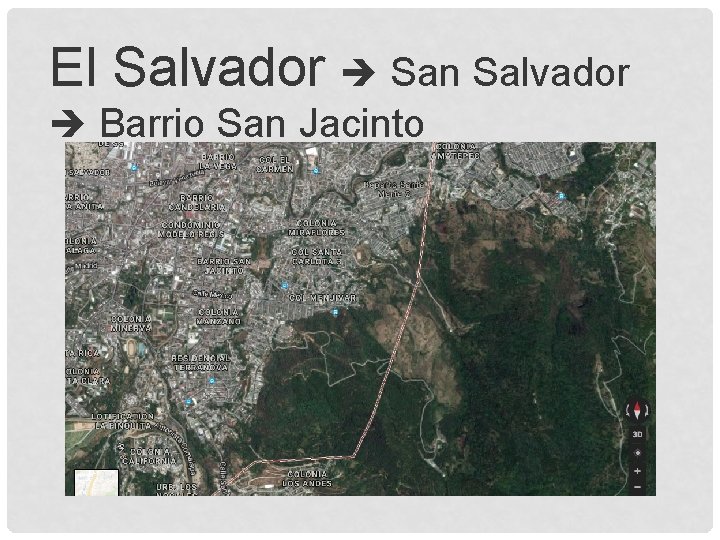
El Salvador San Salvador Barrio San Jacinto
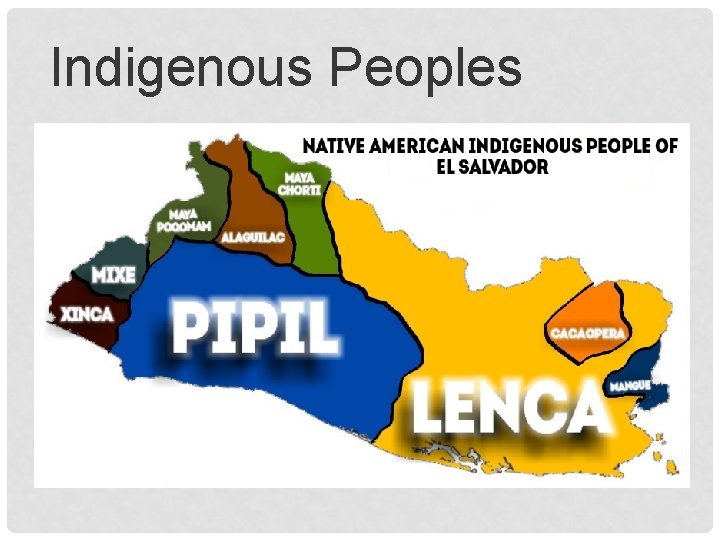
Indigenous Peoples
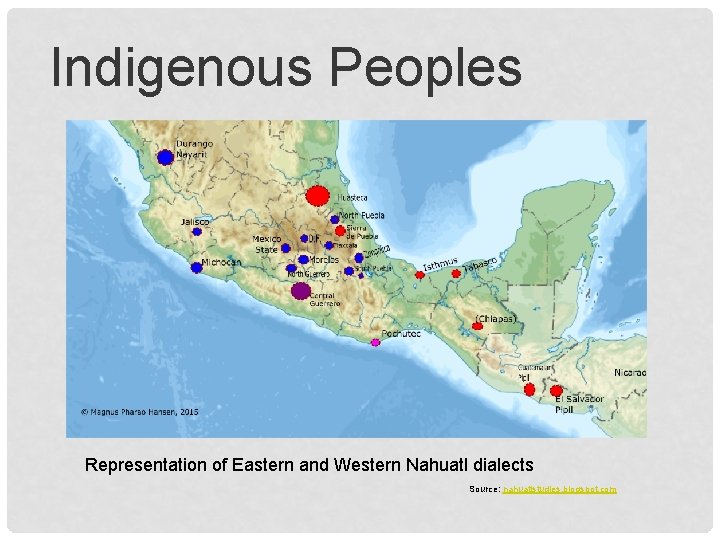
Indigenous Peoples Representation of Eastern and Western Nahuatl dialects Source: nahuatlstudies. blogspot. com
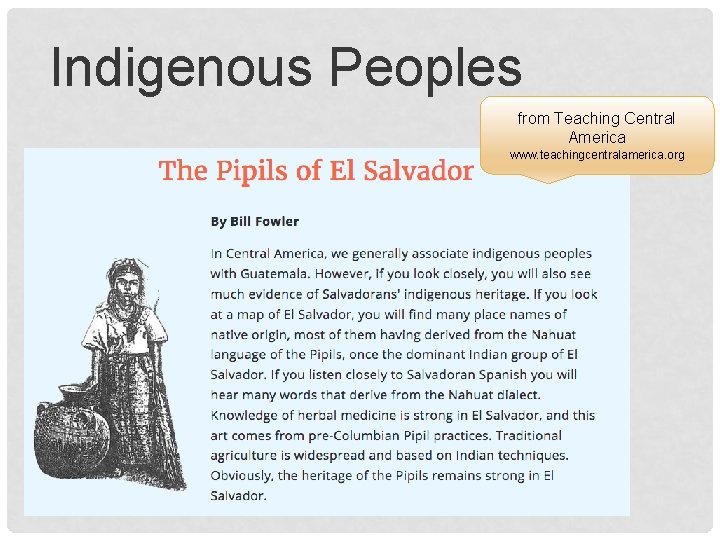
Indigenous Peoples from Teaching Central America www. teachingcentralamerica. org
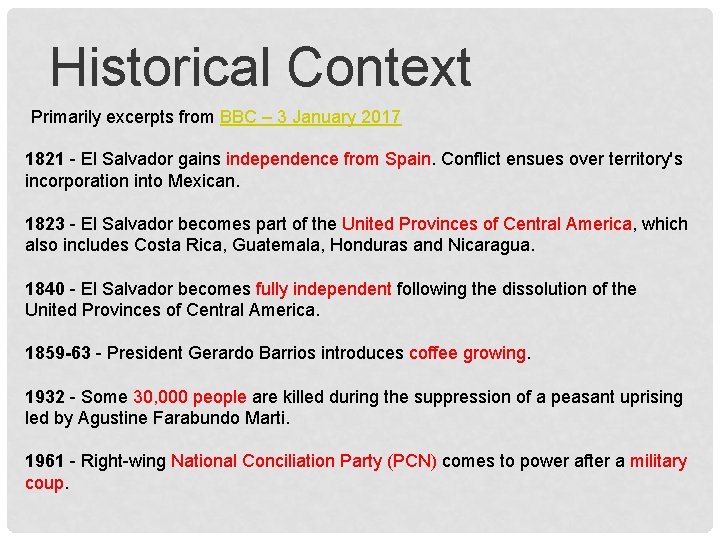
Historical Context Primarily excerpts from BBC – 3 January 2017 1821 - El Salvador gains independence from Spain. Conflict ensues over territory's incorporation into Mexican. 1823 - El Salvador becomes part of the United Provinces of Central America, which also includes Costa Rica, Guatemala, Honduras and Nicaragua. 1840 - El Salvador becomes fully independent following the dissolution of the United Provinces of Central America. 1859 -63 - President Gerardo Barrios introduces coffee growing. 1932 - Some 30, 000 people are killed during the suppression of a peasant uprising led by Agustine Farabundo Marti. 1961 - Right-wing National Conciliation Party (PCN) comes to power after a military coup.
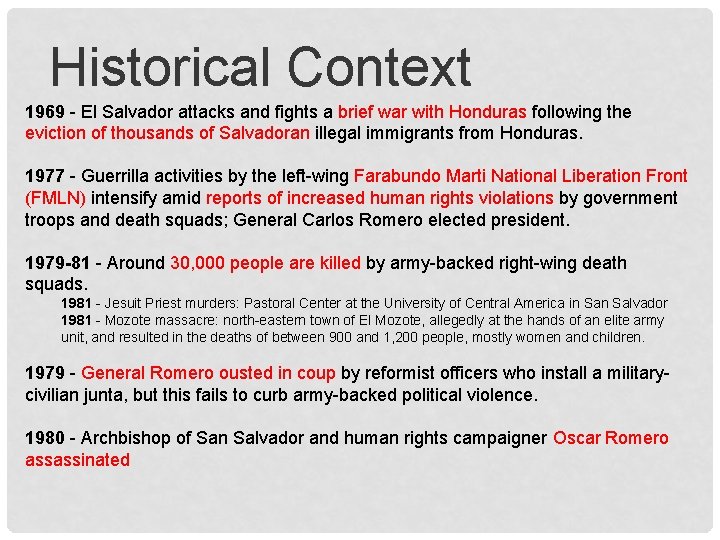
Historical Context 1969 - El Salvador attacks and fights a brief war with Honduras following the eviction of thousands of Salvadoran illegal immigrants from Honduras. 1977 - Guerrilla activities by the left-wing Farabundo Marti National Liberation Front (FMLN) intensify amid reports of increased human rights violations by government troops and death squads; General Carlos Romero elected president. 1979 -81 - Around 30, 000 people are killed by army-backed right-wing death squads. 1981 - Jesuit Priest murders: Pastoral Center at the University of Central America in Salvador 1981 - Mozote massacre: north-eastern town of El Mozote, allegedly at the hands of an elite army unit, and resulted in the deaths of between 900 and 1, 200 people, mostly women and children. 1979 - General Romero ousted in coup by reformist officers who install a militarycivilian junta, but this fails to curb army-backed political violence. 1980 - Archbishop of San Salvador and human rights campaigner Oscar Romero assassinated
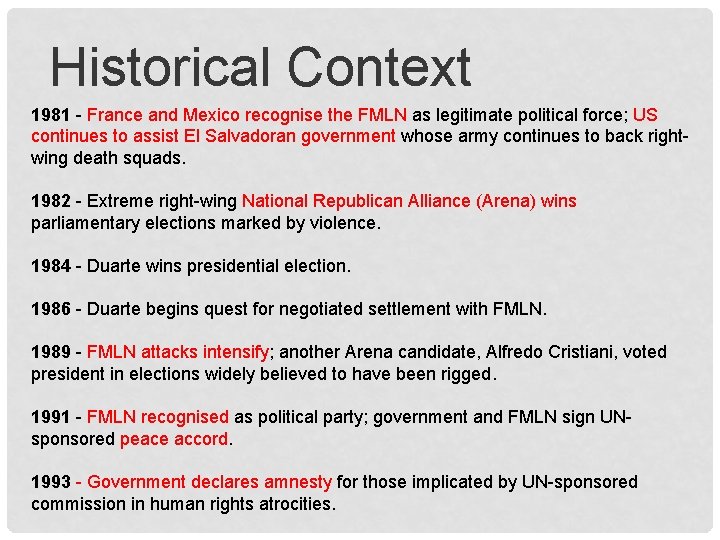
Historical Context 1981 - France and Mexico recognise the FMLN as legitimate political force; US continues to assist El Salvadoran government whose army continues to back rightwing death squads. 1982 - Extreme right-wing National Republican Alliance (Arena) wins parliamentary elections marked by violence. 1984 - Duarte wins presidential election. 1986 - Duarte begins quest for negotiated settlement with FMLN. 1989 - FMLN attacks intensify; another Arena candidate, Alfredo Cristiani, voted president in elections widely believed to have been rigged. 1991 - FMLN recognised as political party; government and FMLN sign UNsponsored peace accord. 1993 - Government declares amnesty for those implicated by UN-sponsored commission in human rights atrocities.
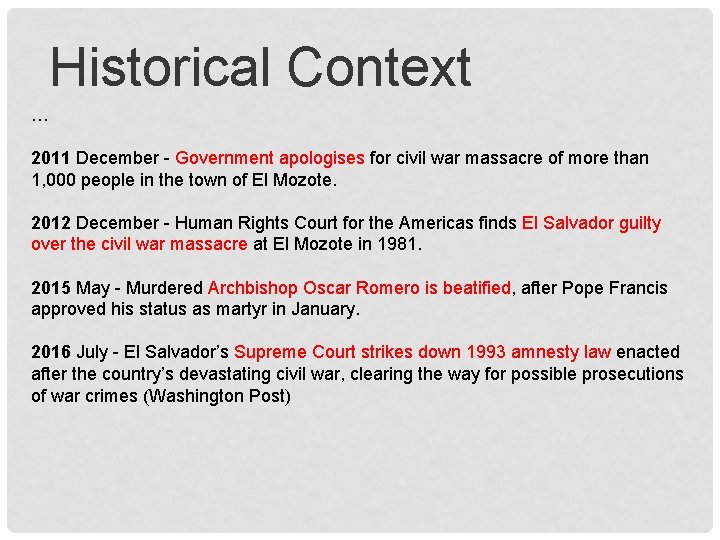
Historical Context … 2011 December - Government apologises for civil war massacre of more than 1, 000 people in the town of El Mozote. 2012 December - Human Rights Court for the Americas finds El Salvador guilty over the civil war massacre at El Mozote in 1981. 2015 May - Murdered Archbishop Oscar Romero is beatified, after Pope Francis approved his status as martyr in January. 2016 July - El Salvador’s Supreme Court strikes down 1993 amnesty law enacted after the country’s devastating civil war, clearing the way for possible prosecutions of war crimes (Washington Post)
AMERICAS AWARD WORKSHOP WITH Jorge Argueta A PROFESSIONAL DEVELOPMENT WORKSHOP FOR EDUCATORS May 16, 2017 4: 30 – 7: 30 p. m. Stanford University