
Americans and the World in Crisis 1933 1945
- Slides: 37
Americans and the World in Crisis 1933 -1945 Chapter 25
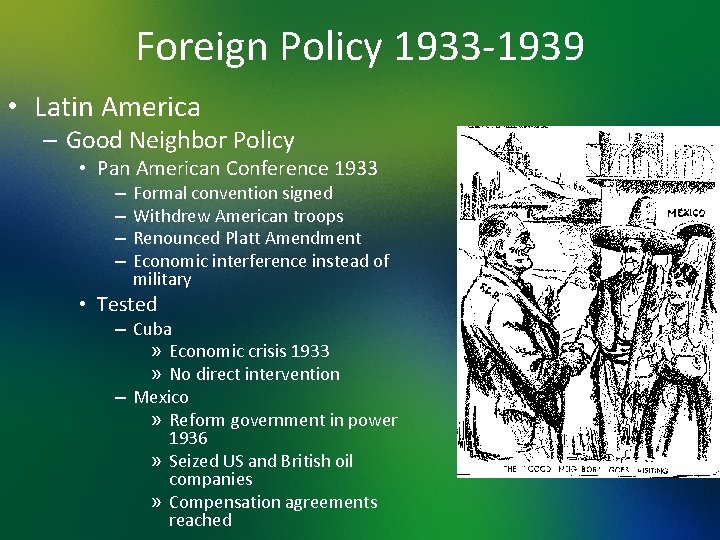
Foreign Policy 1933 -1939 • Latin America – Good Neighbor Policy • Pan American Conference 1933 – – Formal convention signed Withdrew American troops Renounced Platt Amendment Economic interference instead of military • Tested – Cuba » Economic crisis 1933 » No direct intervention – Mexico » Reform government in power 1936 » Seized US and British oil companies » Compensation agreements reached
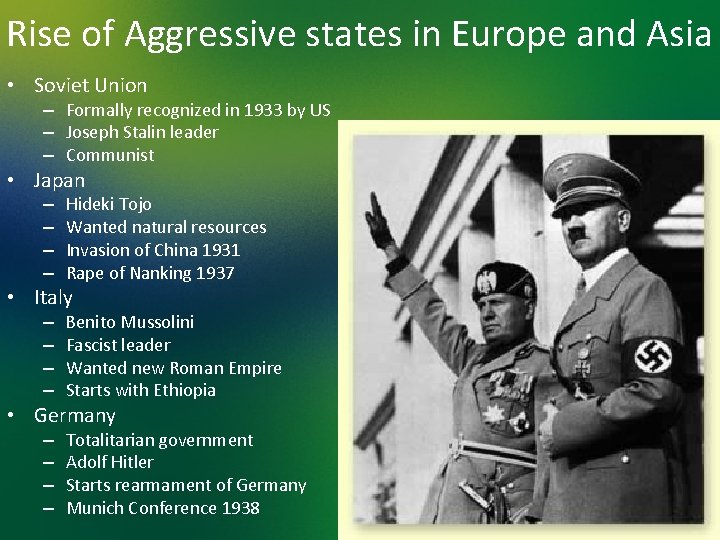
Rise of Aggressive states in Europe and Asia • Soviet Union – Formally recognized in 1933 by US – Joseph Stalin leader – Communist • Japan – – Hideki Tojo Wanted natural resources Invasion of China 1931 Rape of Nanking 1937 • Italy – – Benito Mussolini Fascist leader Wanted new Roman Empire Starts with Ethiopia • Germany – – Totalitarian government Adolf Hitler Starts rearmament of Germany Munich Conference 1938
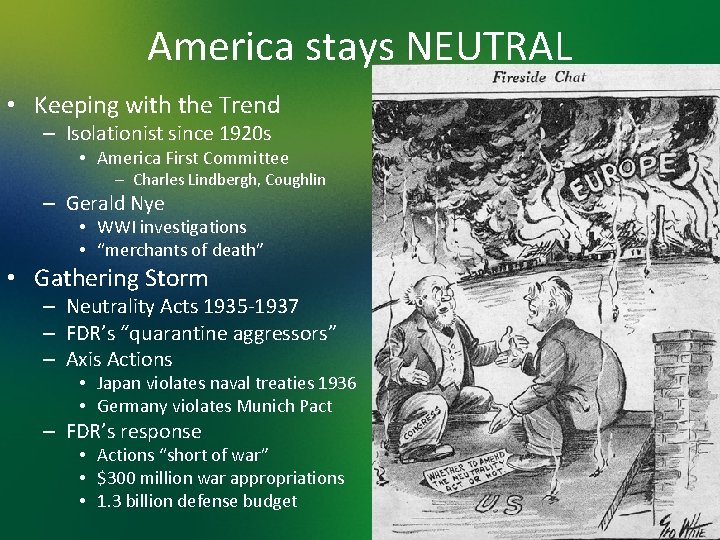
America stays NEUTRAL • Keeping with the Trend – Isolationist since 1920 s • America First Committee – Charles Lindbergh, Coughlin – Gerald Nye • WWI investigations • “merchants of death” • Gathering Storm – Neutrality Acts 1935 -1937 – FDR’s “quarantine aggressors” – Axis Actions • Japan violates naval treaties 1936 • Germany violates Munich Pact – FDR’s response • Actions “short of war” • $300 million war appropriations • 1. 3 billion defense budget
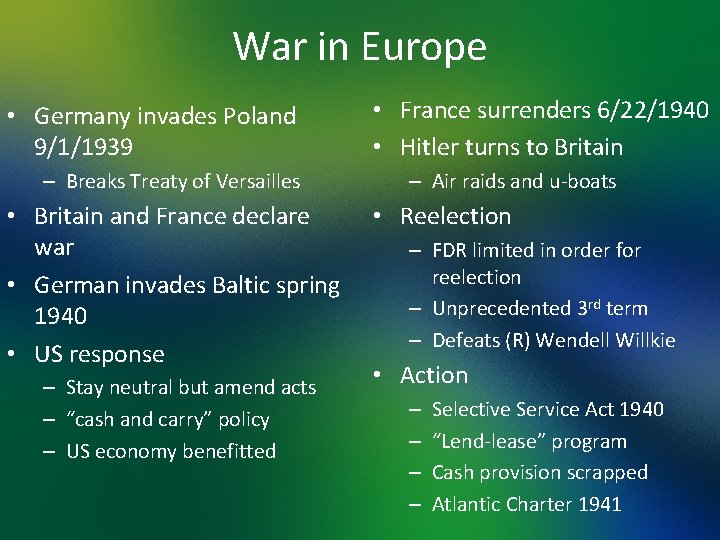
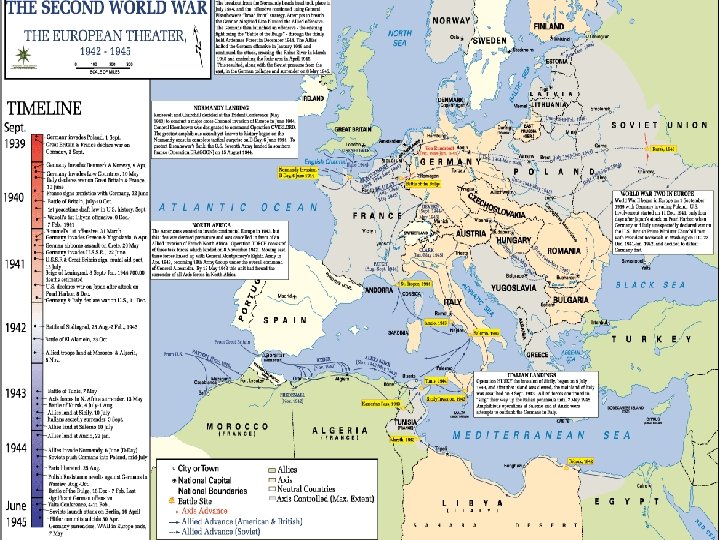
War in Europe • Germany invades Poland 9/1/1939 – Breaks Treaty of Versailles • Britain and France declare war • German invades Baltic spring 1940 • US response – Stay neutral but amend acts – “cash and carry” policy – US economy benefitted • France surrenders 6/22/1940 • Hitler turns to Britain – Air raids and u-boats • Reelection – FDR limited in order for reelection – Unprecedented 3 rd term – Defeats (R) Wendell Willkie • Action – – Selective Service Act 1940 “Lend-lease” program Cash provision scrapped Atlantic Charter 1941
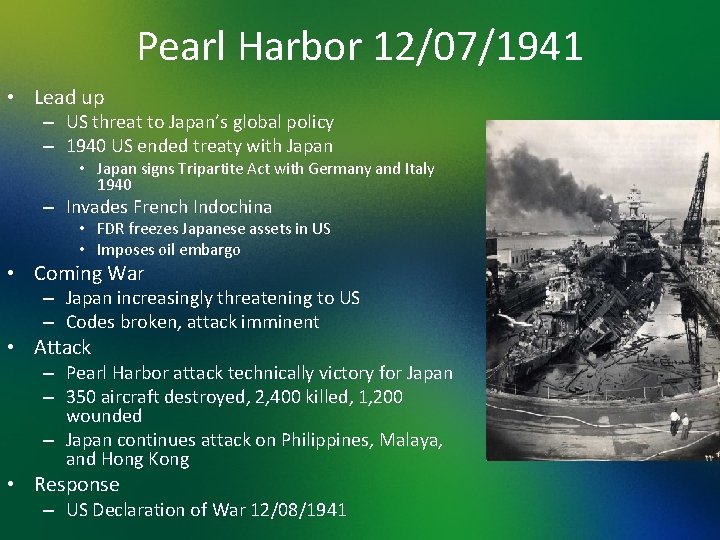
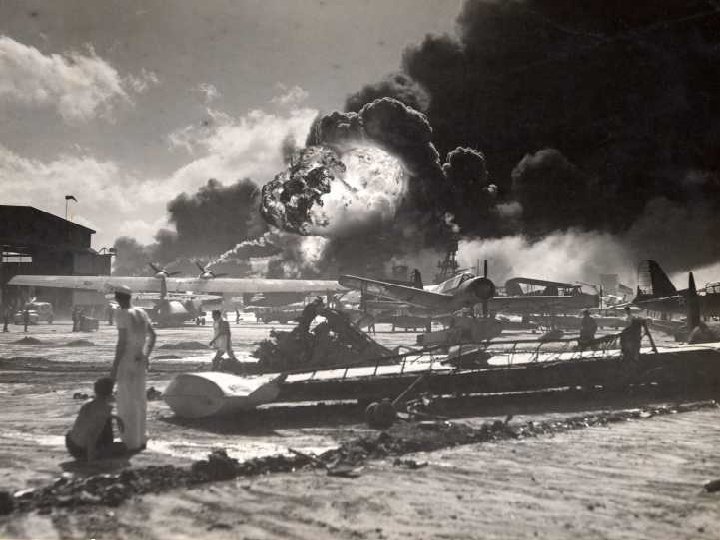
Pearl Harbor 12/07/1941 • Lead up – US threat to Japan’s global policy – 1940 US ended treaty with Japan • Japan signs Tripartite Act with Germany and Italy 1940 – Invades French Indochina • FDR freezes Japanese assets in US • Imposes oil embargo • Coming War – Japan increasingly threatening to US – Codes broken, attack imminent • Attack – Pearl Harbor attack technically victory for Japan – 350 aircraft destroyed, 2, 400 killed, 1, 200 wounded – Japan continues attack on Philippines, Malaya, and Hong Kong • Response – US Declaration of War 12/08/1941
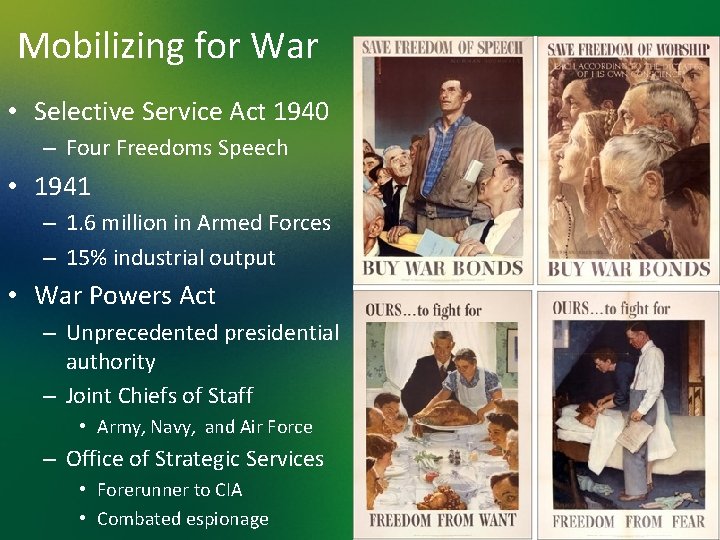
Mobilizing for War • Selective Service Act 1940 – Four Freedoms Speech • 1941 – 1. 6 million in Armed Forces – 15% industrial output • War Powers Act – Unprecedented presidential authority – Joint Chiefs of Staff • Army, Navy, and Air Force – Office of Strategic Services • Forerunner to CIA • Combated espionage
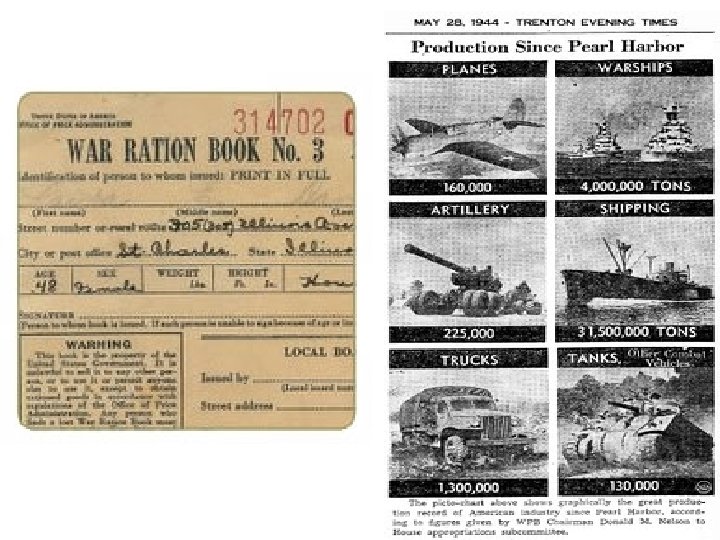
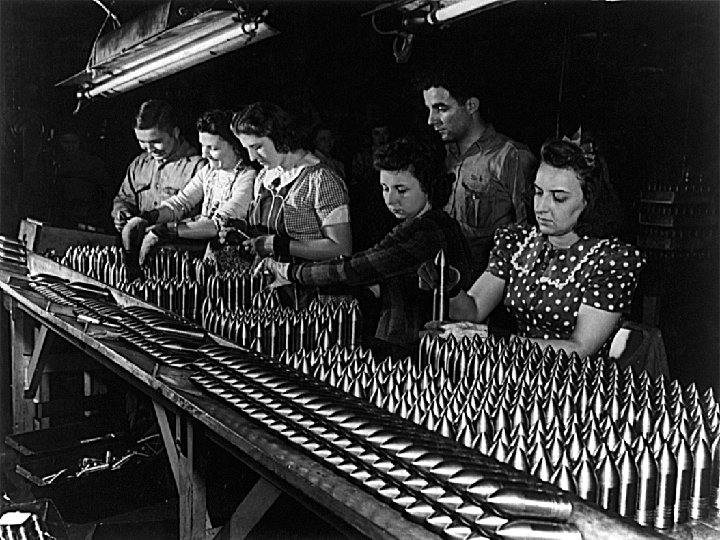
Wartime Industry • War Production Board (WPB) • 1942 Justice James Brynes – Allocated materials – “Assistant President” – Directed conversion of peacetime – In charge of Domestic war effort industries to war industries • Assembly Line st – $100 million in contracts in 1 ½ of – 1942 ½ economy geared for war 1942 – Equaled Germany, Italy, and Japan’s • War Manpower Commission output combined (WMC) – Created synthetic rubber – Supervised mobilization • Greatest Weapons manufacturer • National War Labor Board (NWLB) – Mediated disputes between labor and management – Unions asked not to strike • Office of Price Administration (OPA) – Rationed scare products – Imposed price controls – Henry Ford – Henry Kaiser “liberty ships” • 1944 Economic Bill of Rights – Not enacted by Congress • Consequences – – Powers of government swelled Defense spending increased Federal budget soared Fed. Civilian employees increased
War Economy • $320 billion cost – – – Ended depression Unemployment vanished Stimulated industrial booms Doubled output and GNP Real wages increased • Investment in America – West • $40 billion investment • LA 2 nd largest manufacturing center – South • Textile, oil, natural gas • Shipyards, aircraft plants • A New America – Per capita income tripled – Only shift EVER towards greater equality – Middle class created – Large scale farmers profited • Higher prices • Increased productivity • Farm consolidation – 1 st income tax – Labor Unions • • From 9 to 14. 8 million “maintenance of membership” Limited wildcat strikes Smith-Connally War Labor Disputes 1943 – Limited union power – Inflation • Congress gave FDR control • Combated with rationing • Raised taxes
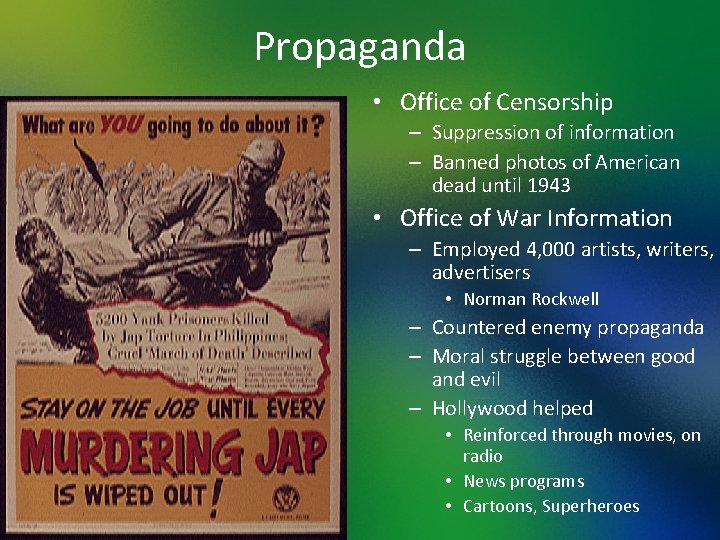
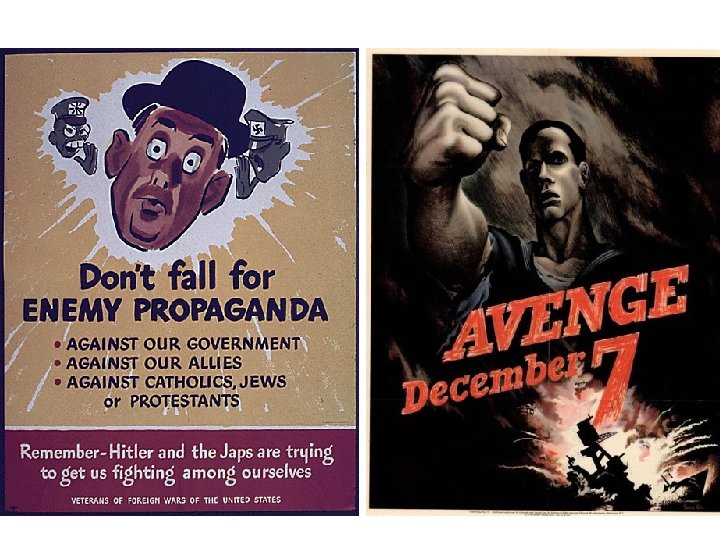
Propaganda • Office of Censorship – Suppression of information – Banned photos of American dead until 1943 • Office of War Information – Employed 4, 000 artists, writers, advertisers • Norman Rockwell – Countered enemy propaganda – Moral struggle between good and evil – Hollywood helped • Reinforced through movies, on radio • News programs • Cartoons, Superheroes
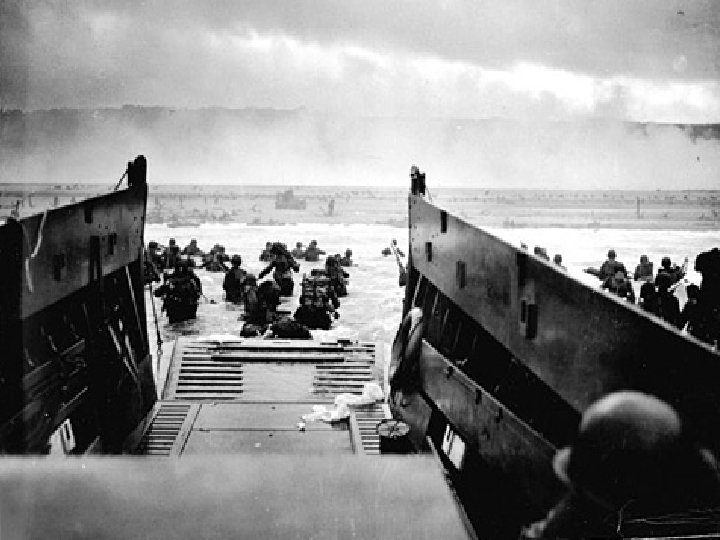
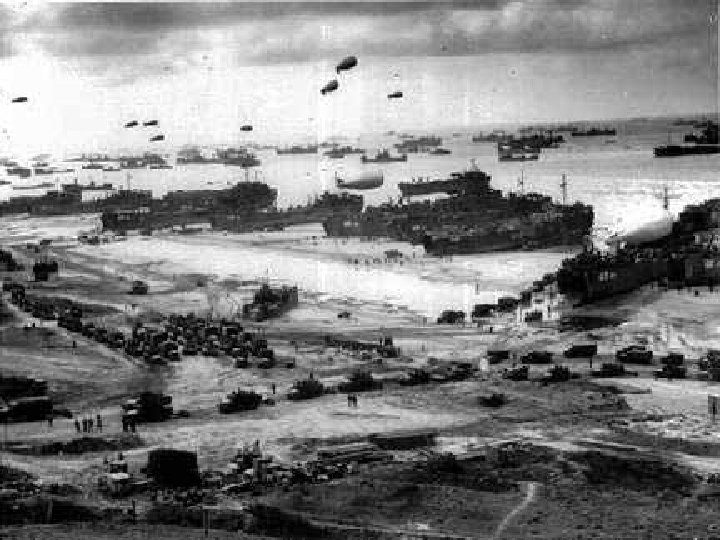
The Battlefront 1942 -1944 • Europe – Operation Torch Nov. 1942 • North Africa • Led by Gen. Eisenhower • Surrender of Rommel – Battle of Stalingrad • Asia – Philippines 1942 • • Mac. Arthur leaves troops Hides in Australia 78, 000 surrender Bataan Death March • Huge Russian victory – Battle at Coral Sea May 1942 • Allied invasion • Spread to Peninsula • Difficult campaign – Midway 1942 – Italy 1943 – D-Day June 4, 1944 • • Allied invasion of France Largest sea-land operation Overlord Led by Eisenhower – Battle of the Bulge Dec. 1944 • Month-long battle • Decisive Allied victory • 1 st all-plane battle • Crucial US outpost • Broke Jap signal • Destroyed large portion of Japanese army – Guadalcanal Aug. 1942 • Had to deal with Malaria • 6 bitter months of battle • Two-pronged advanced – Island-Hopping • new strategy
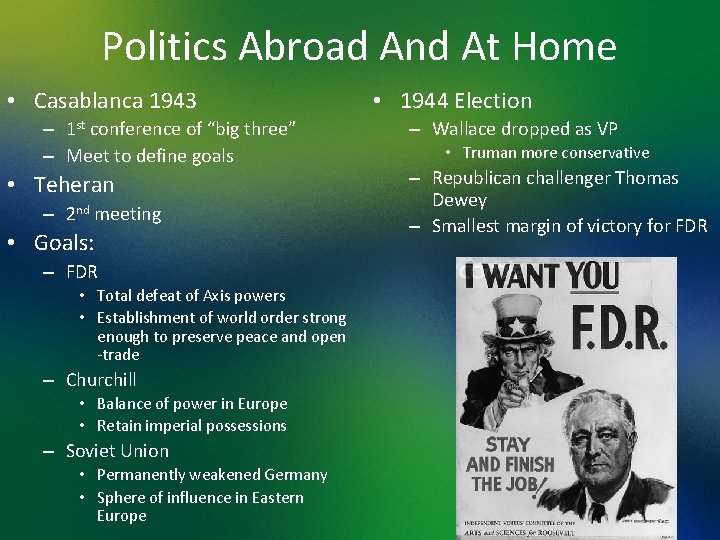
Politics Abroad And At Home • Casablanca 1943 – 1 st conference of “big three” – Meet to define goals • Teheran – 2 nd meeting • Goals: – FDR • Total defeat of Axis powers • Establishment of world order strong enough to preserve peace and open -trade – Churchill • Balance of power in Europe • Retain imperial possessions – Soviet Union • Permanently weakened Germany • Sphere of influence in Eastern Europe • 1944 Election – Wallace dropped as VP • Truman more conservative – Republican challenger Thomas Dewey – Smallest margin of victory for FDR
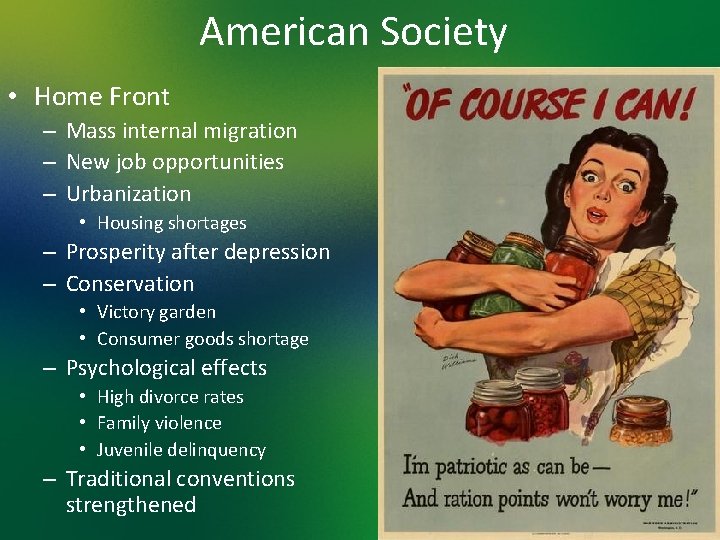
American Society • Home Front – Mass internal migration – New job opportunities – Urbanization • Housing shortages – Prosperity after depression – Conservation • Victory garden • Consumer goods shortage – Psychological effects • High divorce rates • Family violence • Juvenile delinquency – Traditional conventions strengthened
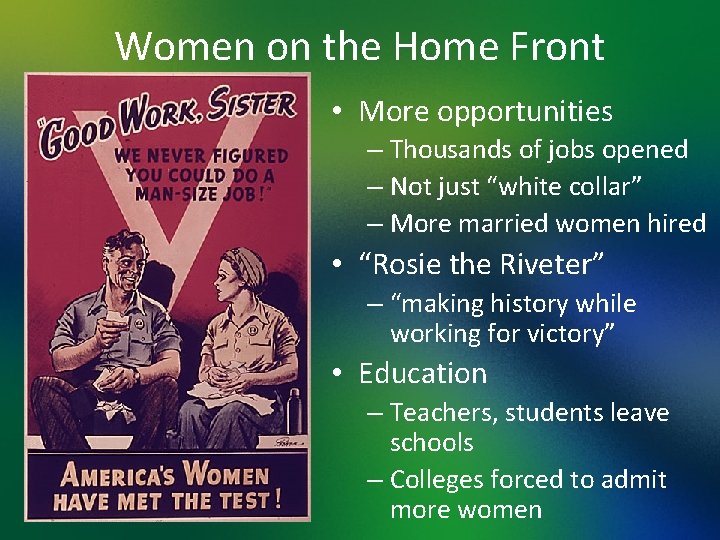
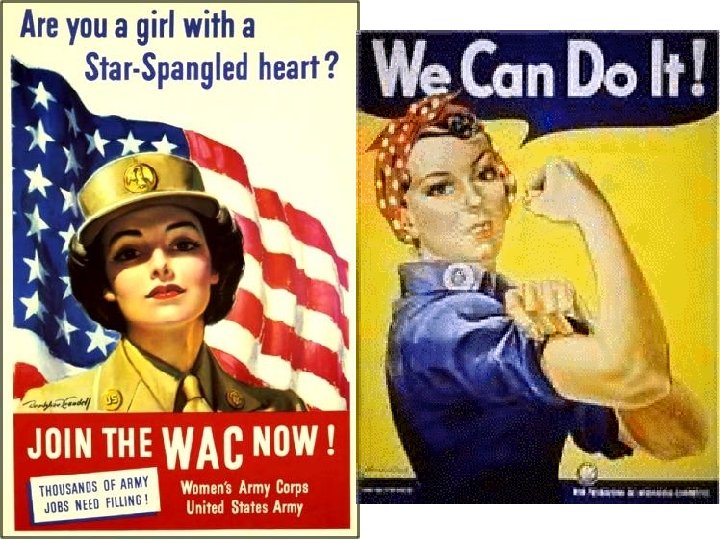
Women on the Home Front • More opportunities – Thousands of jobs opened – Not just “white collar” – More married women hired • “Rosie the Riveter” – “making history while working for victory” • Education – Teachers, students leave schools – Colleges forced to admit more women
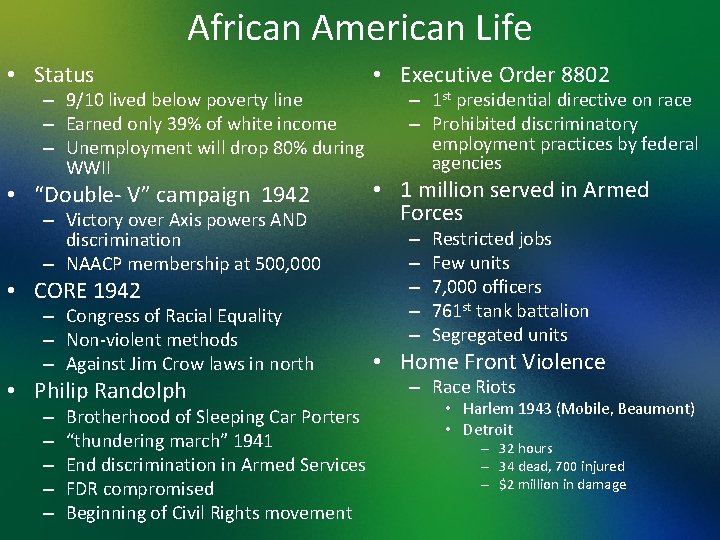
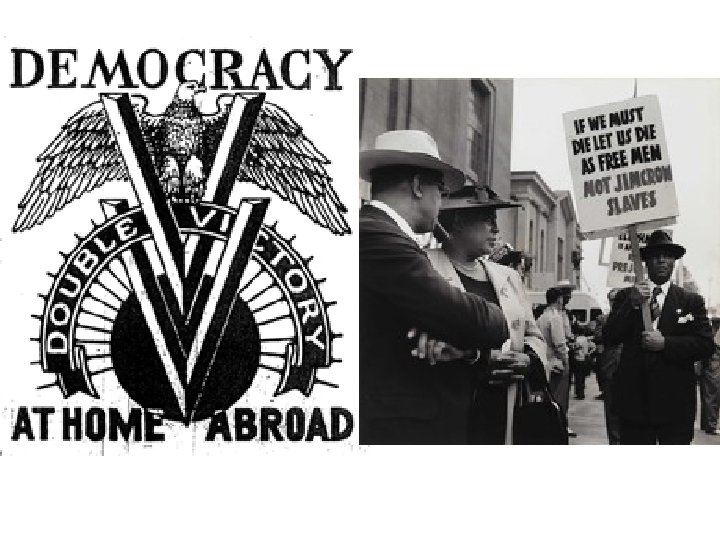
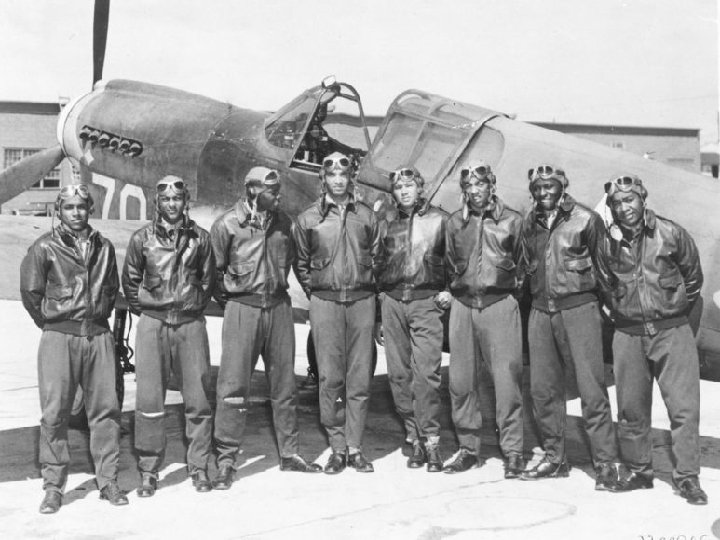
African American Life • Status • Executive Order 8802 • “Double- V” campaign 1942 • 1 million served in Armed Forces – 9/10 lived below poverty line – Earned only 39% of white income – Unemployment will drop 80% during WWII – Victory over Axis powers AND discrimination – NAACP membership at 500, 000 • CORE 1942 – Congress of Racial Equality – Non-violent methods – Against Jim Crow laws in north • Philip Randolph – – – Brotherhood of Sleeping Car Porters “thundering march” 1941 End discrimination in Armed Services FDR compromised Beginning of Civil Rights movement – 1 st presidential directive on race – Prohibited discriminatory employment practices by federal agencies – – – Restricted jobs Few units 7, 000 officers 761 st tank battalion Segregated units • Home Front Violence – Race Riots • Harlem 1943 (Mobile, Beaumont) • Detroit – 32 hours – 34 dead, 700 injured – $2 million in damage
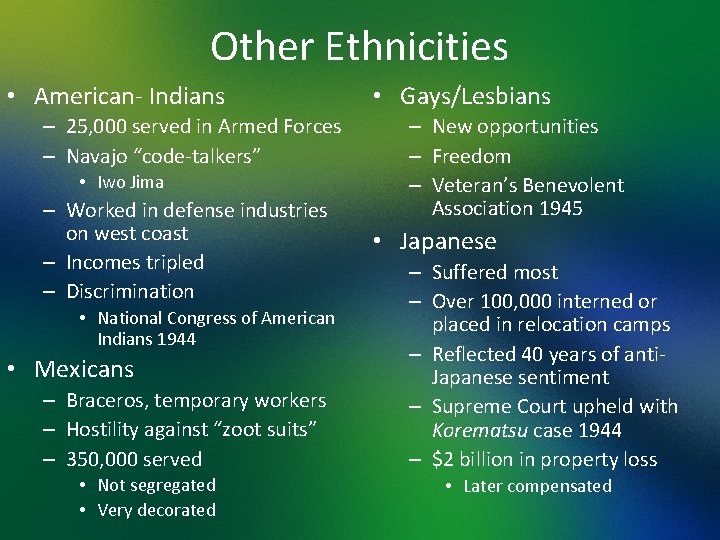
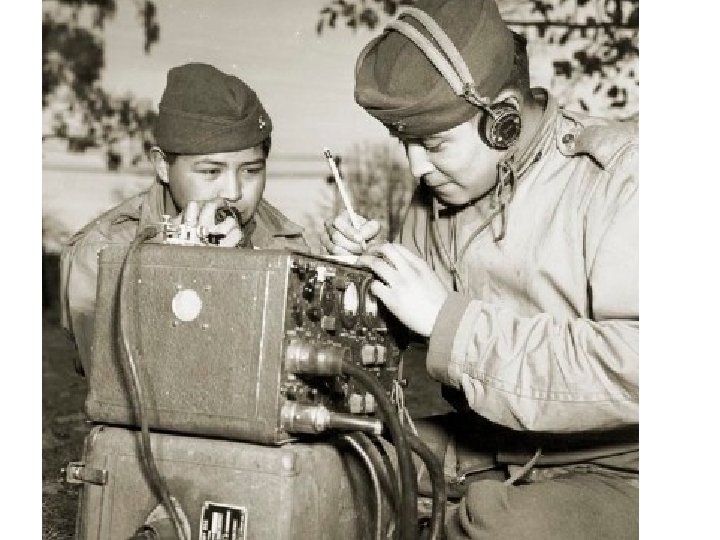
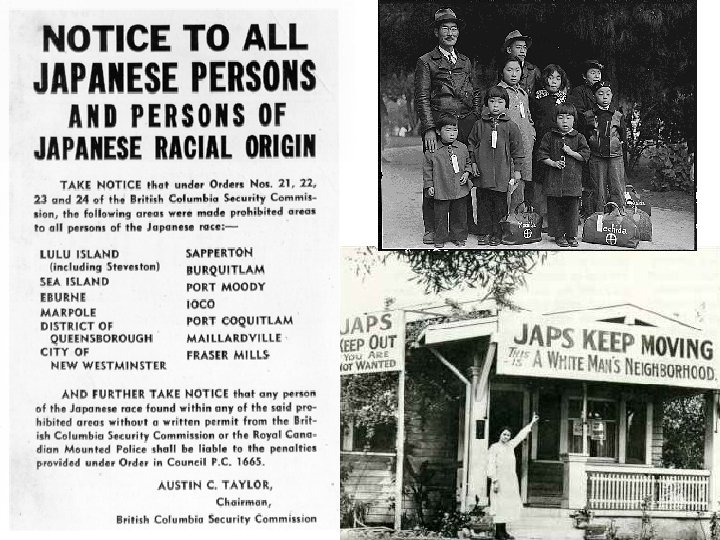
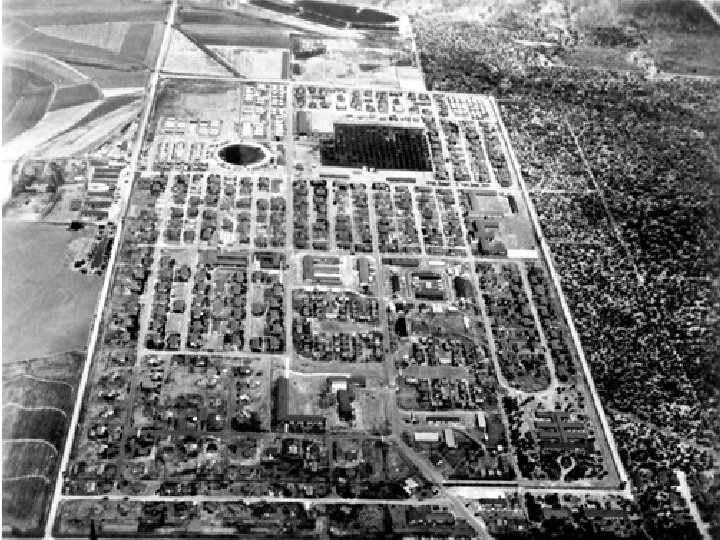
Other Ethnicities • American- Indians – 25, 000 served in Armed Forces – Navajo “code-talkers” • Iwo Jima – Worked in defense industries on west coast – Incomes tripled – Discrimination • National Congress of American Indians 1944 • Mexicans – Braceros, temporary workers – Hostility against “zoot suits” – 350, 000 served • Not segregated • Very decorated • Gays/Lesbians – New opportunities – Freedom – Veteran’s Benevolent Association 1945 • Japanese – Suffered most – Over 100, 000 interned or placed in relocation camps – Reflected 40 years of anti. Japanese sentiment – Supreme Court upheld with Korematsu case 1944 – $2 billion in property loss • Later compensated
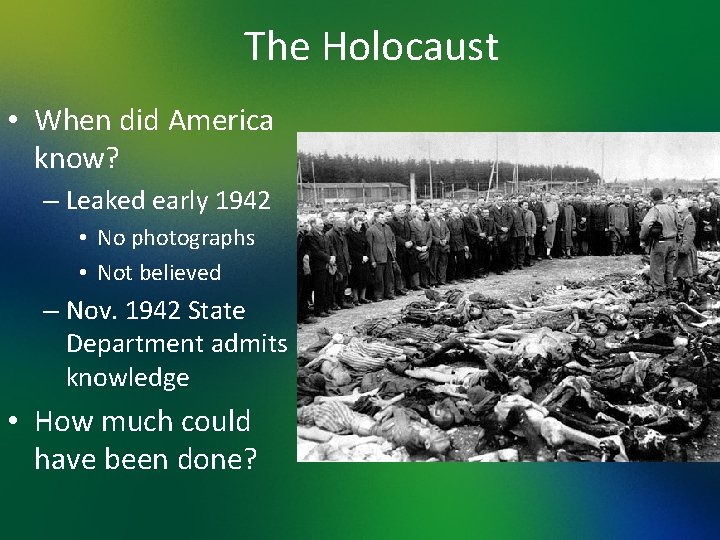
The Holocaust • When did America know? – Leaked early 1942 • No photographs • Not believed – Nov. 1942 State Department admits knowledge • How much could have been done?
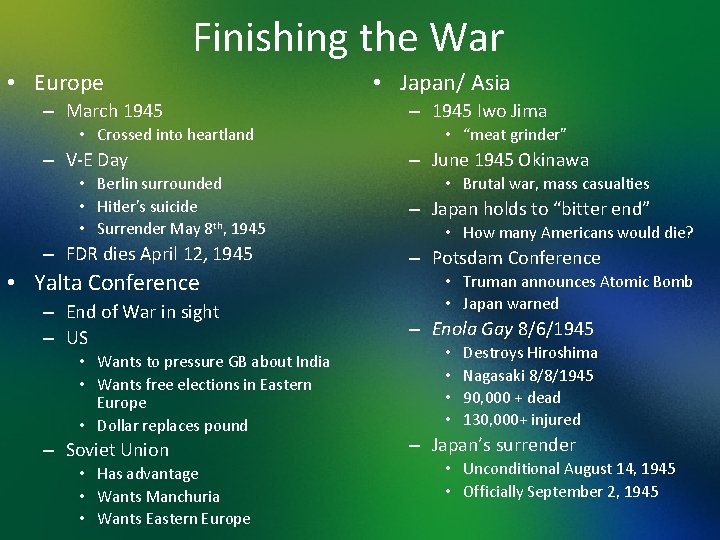
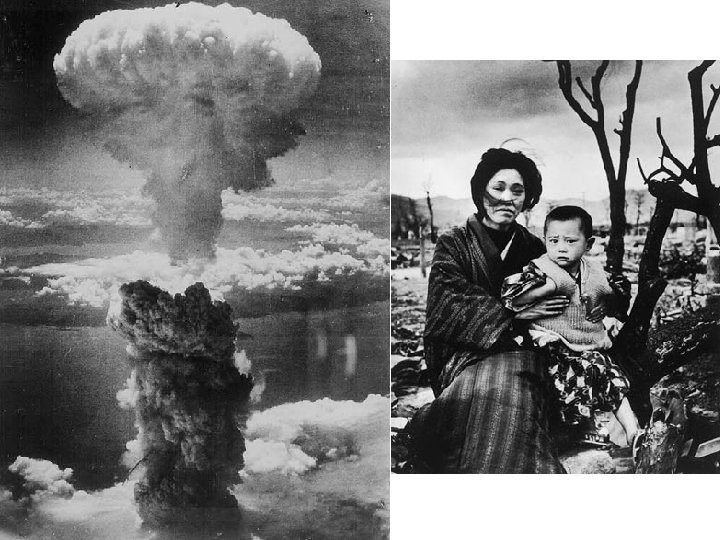
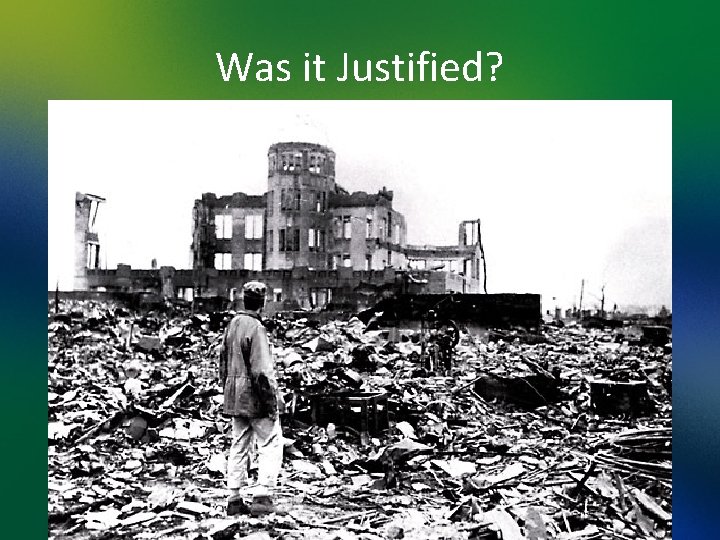
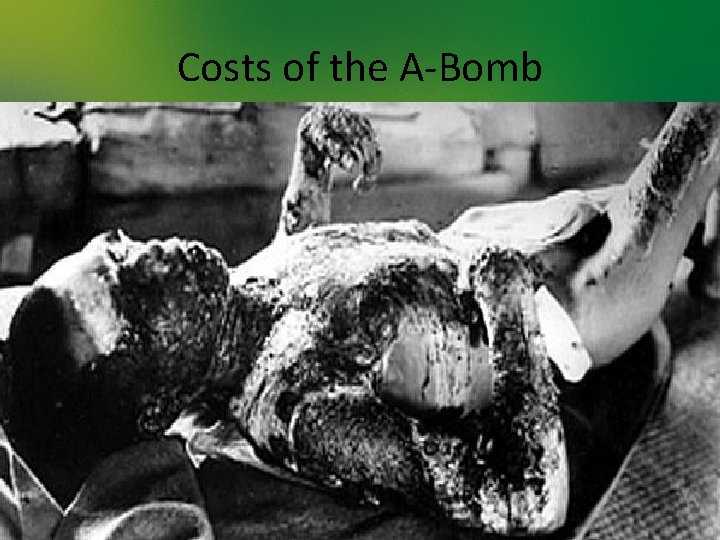
Finishing the War • Europe – March 1945 • Crossed into heartland – V-E Day • Berlin surrounded • Hitler's suicide • Surrender May 8 th, 1945 – FDR dies April 12, 1945 • Yalta Conference – End of War in sight – US • Wants to pressure GB about India • Wants free elections in Eastern Europe • Dollar replaces pound – Soviet Union • Has advantage • Wants Manchuria • Wants Eastern Europe • Japan/ Asia – 1945 Iwo Jima • “meat grinder” – June 1945 Okinawa • Brutal war, mass casualties – Japan holds to “bitter end” • How many Americans would die? – Potsdam Conference • Truman announces Atomic Bomb • Japan warned – Enola Gay 8/6/1945 • • Destroys Hiroshima Nagasaki 8/8/1945 90, 000 + dead 130, 000+ injured – Japan’s surrender • Unconditional August 14, 1945 • Officially September 2, 1945
Was it Justified?
Costs of the A-Bomb
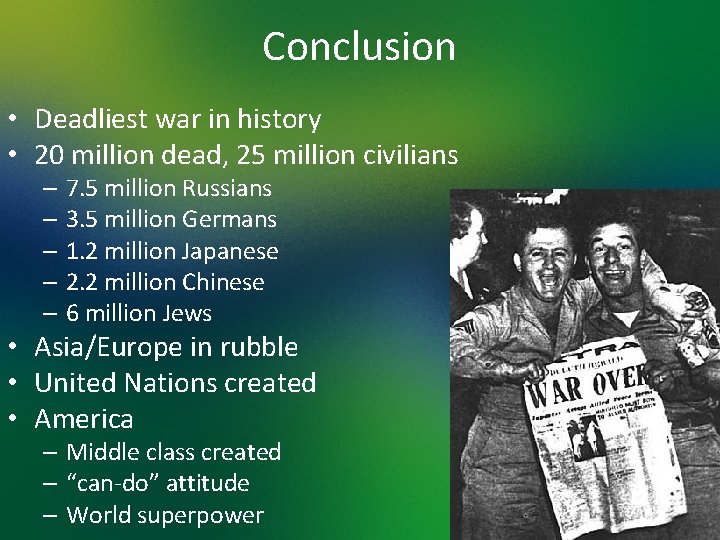
Conclusion • Deadliest war in history • 20 million dead, 25 million civilians – 7. 5 million Russians – 3. 5 million Germans – 1. 2 million Japanese – 2. 2 million Chinese – 6 million Jews • Asia/Europe in rubble • United Nations created • America – Middle class created – “can-do” attitude – World superpower