
American Revolution The Early Years Colonials vs British
American Revolution The Early Years
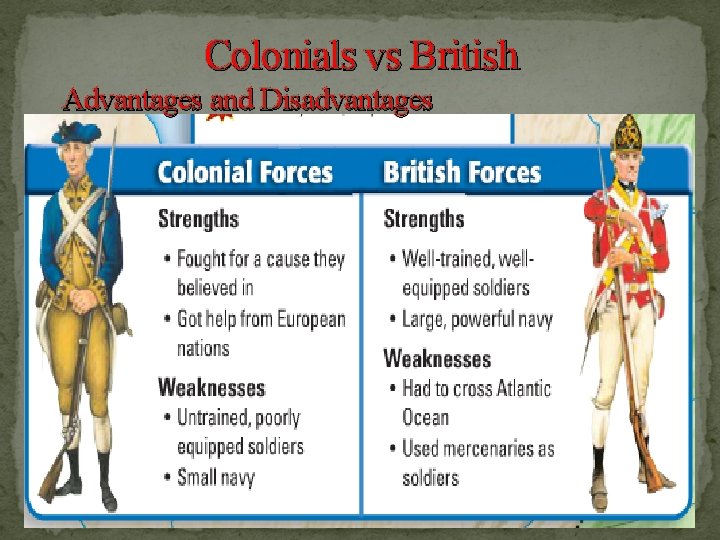
Colonials vs British Advantages and Disadvantages
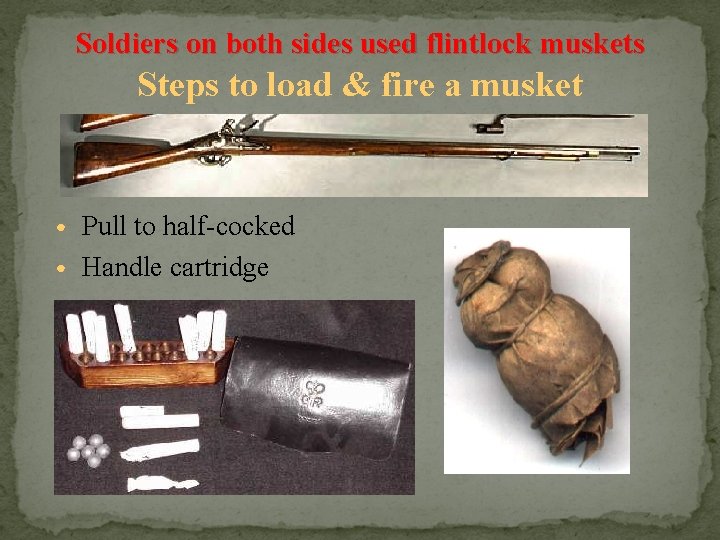
Soldiers on both sides used flintlock muskets Steps to load & fire a musket • Pull to half-cocked • Handle cartridge
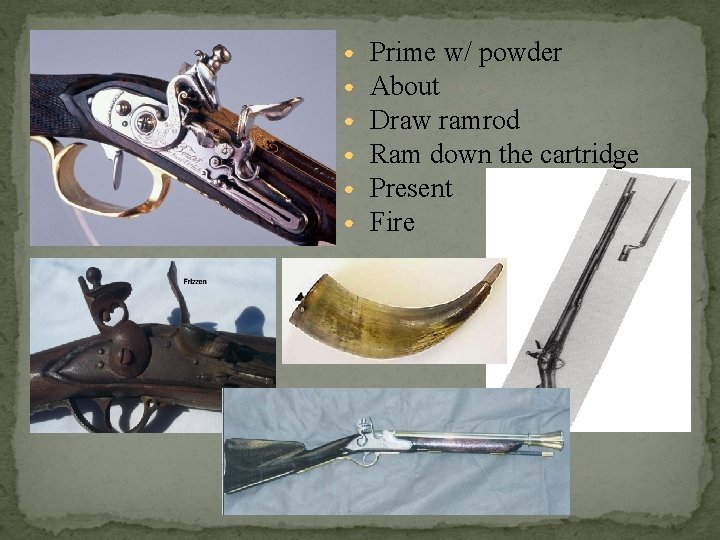
• • • Prime w/ powder About Draw ramrod Ram down the cartridge Present Fire

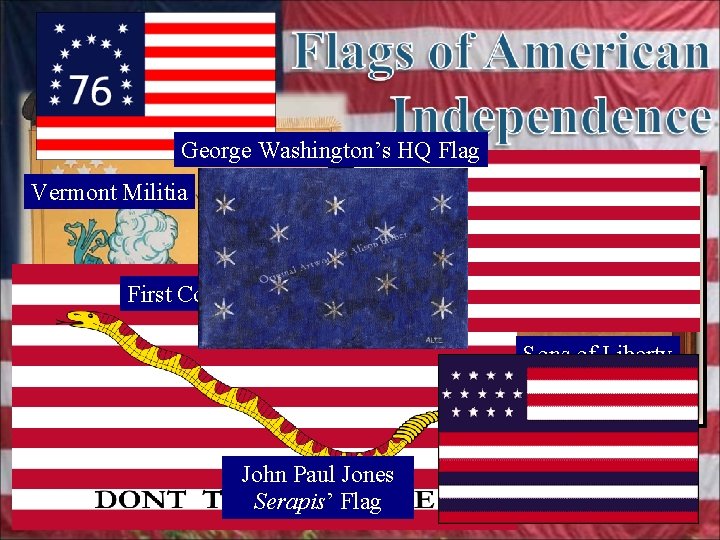
George Washington’s HQ Flag Vermont Militia First Continental Navy Flag Sons of Liberty John Paul Jones Serapis’ Flag
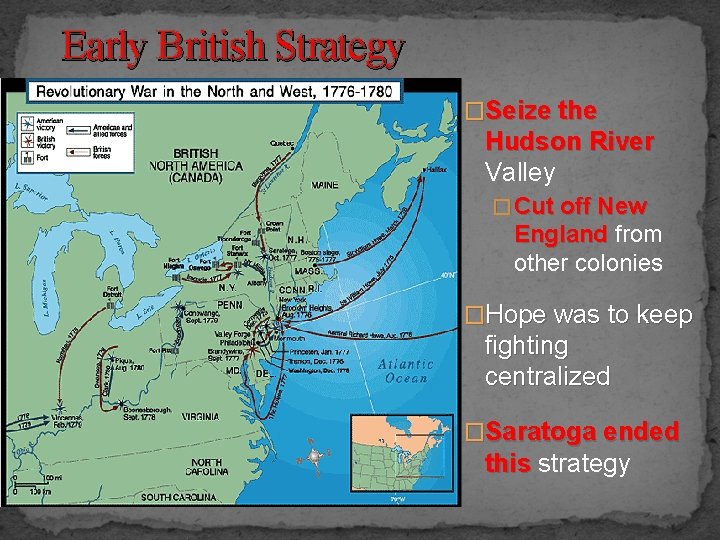
Early British Strategy �Seize the Hudson River Valley � Cut off New England from other colonies �Hope was to keep fighting centralized �Saratoga ended this strategy
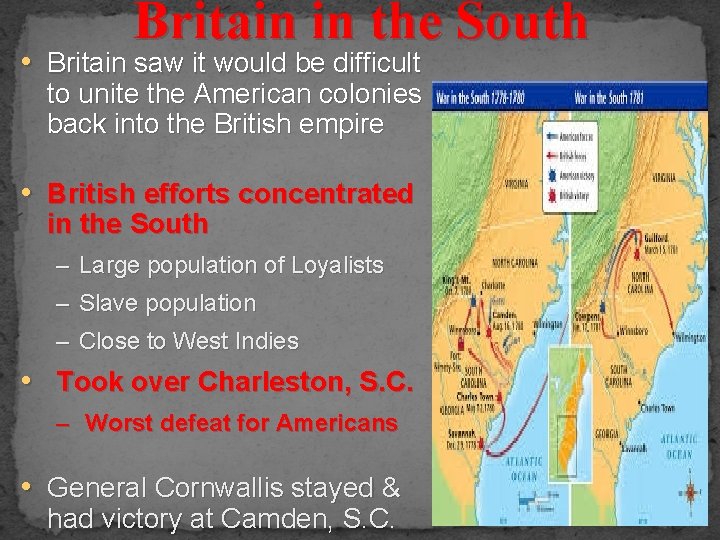
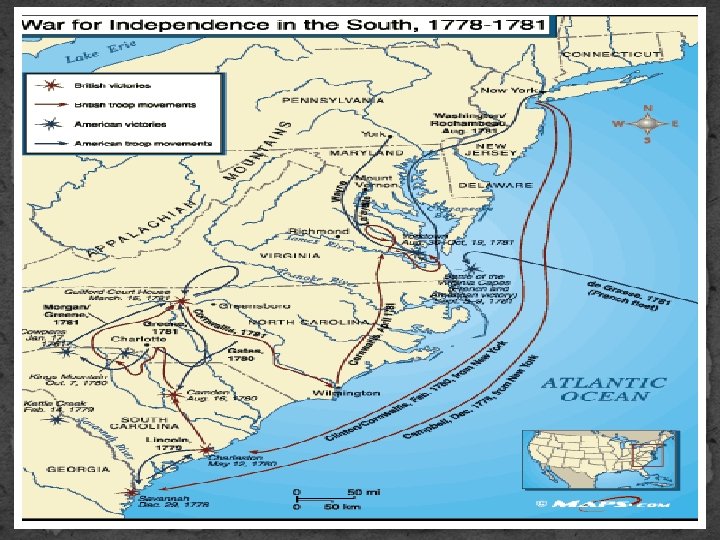
Britain in the South • Britain saw it would be difficult to unite the American colonies back into the British empire • British efforts concentrated in the South – Large population of Loyalists – Slave population – Close to West Indies • Took over Charleston, S. C. – Worst defeat for Americans • General Cornwallis stayed & had victory at Camden, S. C.
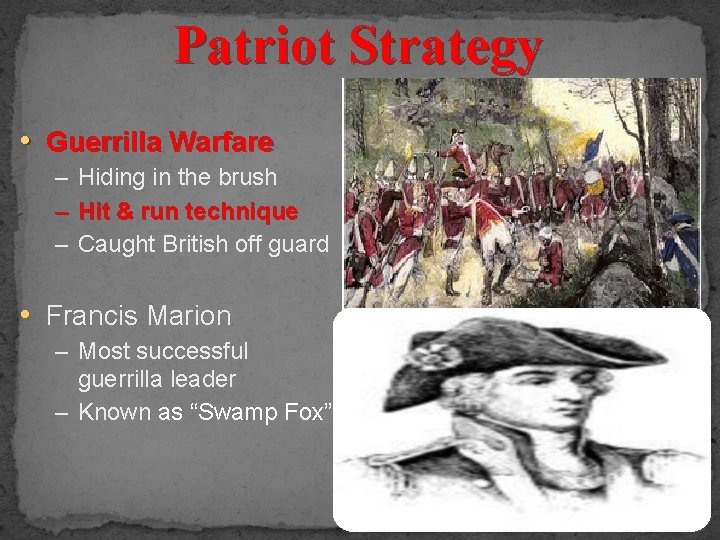
Patriot Strategy • Guerrilla Warfare – Hiding in the brush – Hit & run technique – Caught British off guard • Francis Marion – Most successful guerrilla leader – Known as “Swamp Fox”
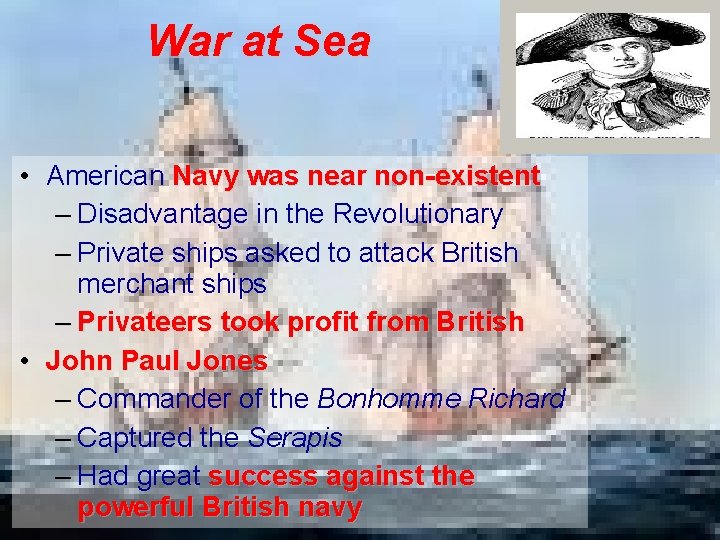
War at Sea • American Navy was near non-existent – Disadvantage in the Revolutionary – Private ships asked to attack British merchant ships – Privateers took profit from British • John Paul Jones – Commander of the Bonhomme Richard – Captured the Serapis – Had great success against the powerful British navy
Major Events of the Revolutionary War
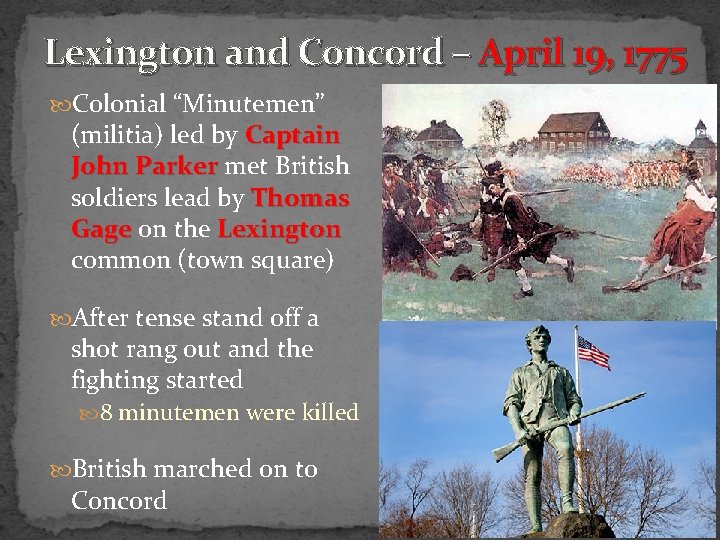
Lexington and Concord – April 19, 1775 Colonial “Minutemen” (militia) led by Captain John Parker met British soldiers lead by Thomas Gage on the Lexington common (town square) After tense stand off a shot rang out and the fighting started 8 minutemen were killed British marched on to Concord
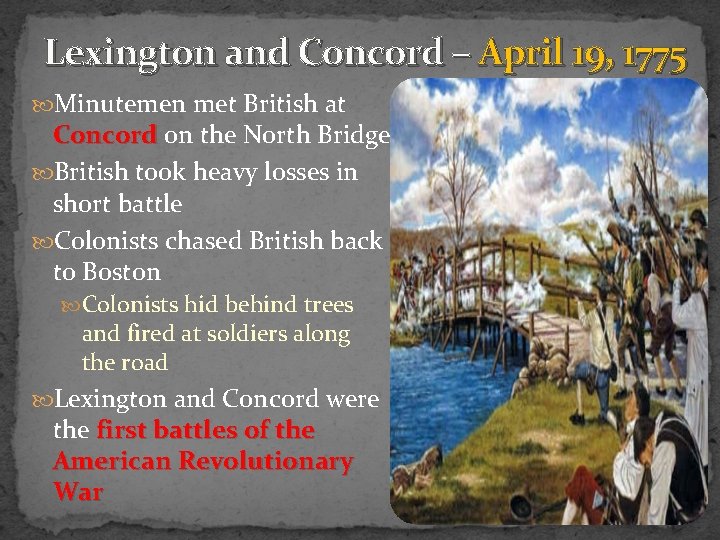
Lexington and Concord – April 19, 1775 Minutemen met British at Concord on the North Bridge British took heavy losses in short battle Colonists chased British back to Boston Colonists hid behind trees and fired at soldiers along the road Lexington and Concord were the first battles of the American Revolutionary War
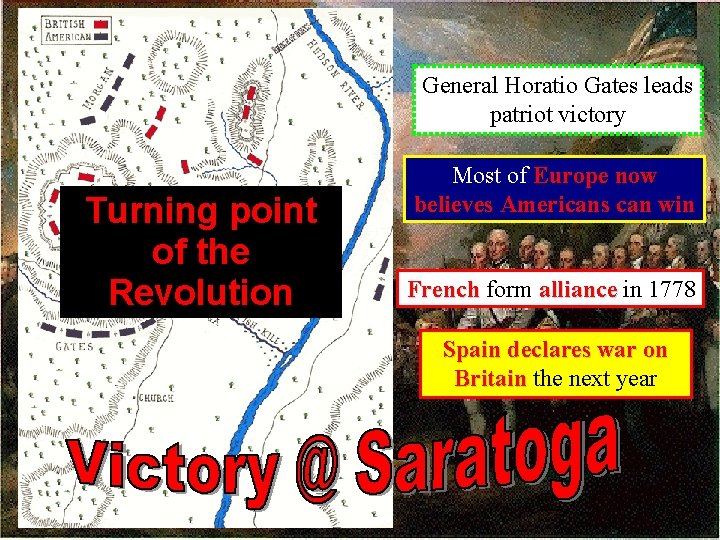
General Horatio Gates leads patriot victory Turning point of the Revolution Most of Europe now believes Americans can win French form alliance in 1778 Spain declares war on Britain the next year
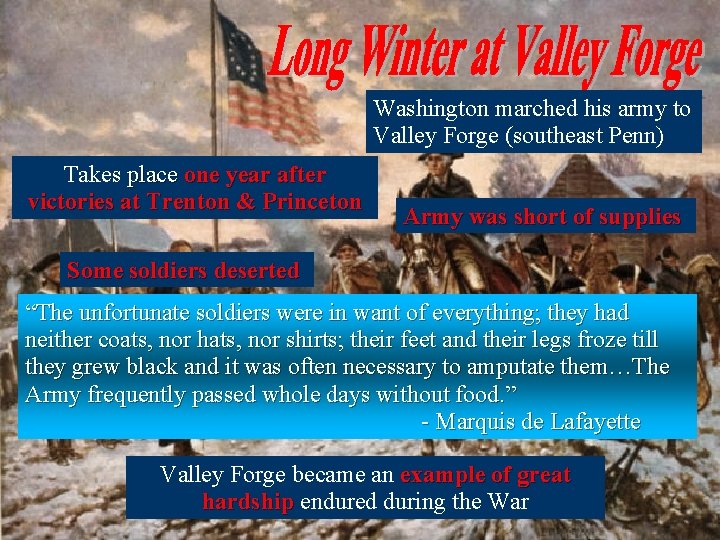
Washington marched his army to Valley Forge (southeast Penn) Takes place one year after victories at Trenton & Princeton Army was short of supplies Some soldiers deserted “The unfortunate soldiers were in want of everything; they had neither coats, nor hats, nor shirts; their feet and their legs froze till they grew black and it was often necessary to amputate them…The Army frequently passed whole days without food. ” - Marquis de Lafayette Valley Forge became an example of great hardship endured during the War
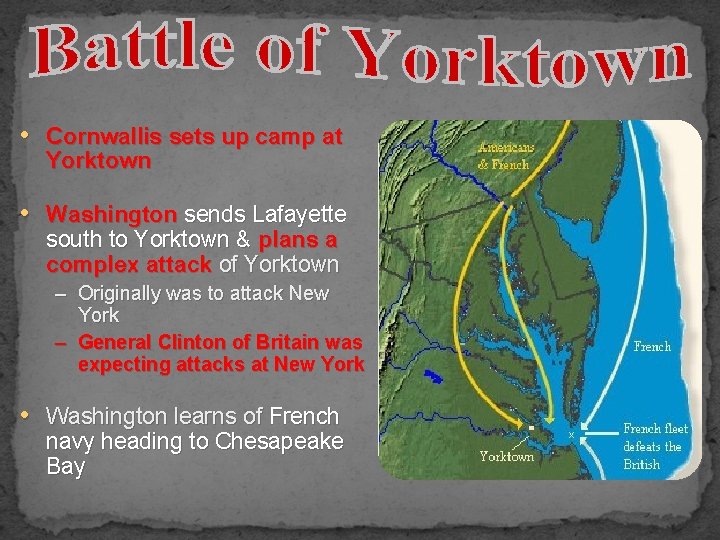
• Cornwallis sets up camp at Yorktown • Washington sends Lafayette south to Yorktown & plans a complex attack of Yorktown – Originally was to attack New York – General Clinton of Britain was expecting attacks at New York • Washington learns of French navy heading to Chesapeake Bay
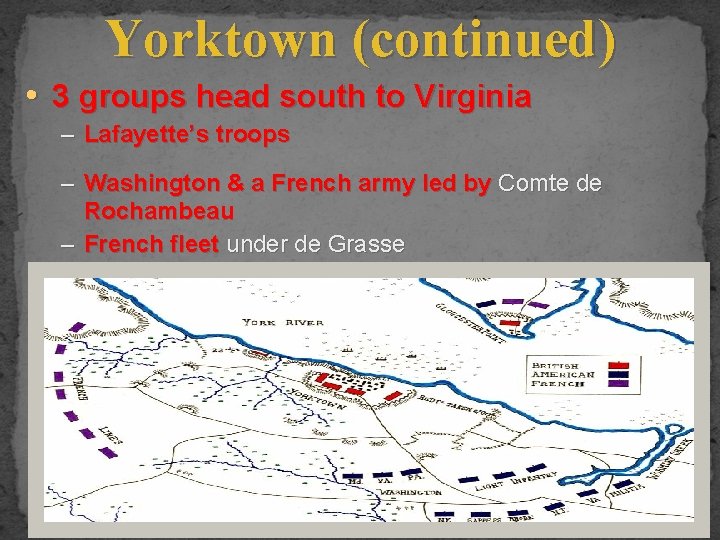
Yorktown (continued) • 3 groups head south to Virginia – Lafayette’s troops – Washington & a French army led by Comte de Rochambeau – French fleet under de Grasse
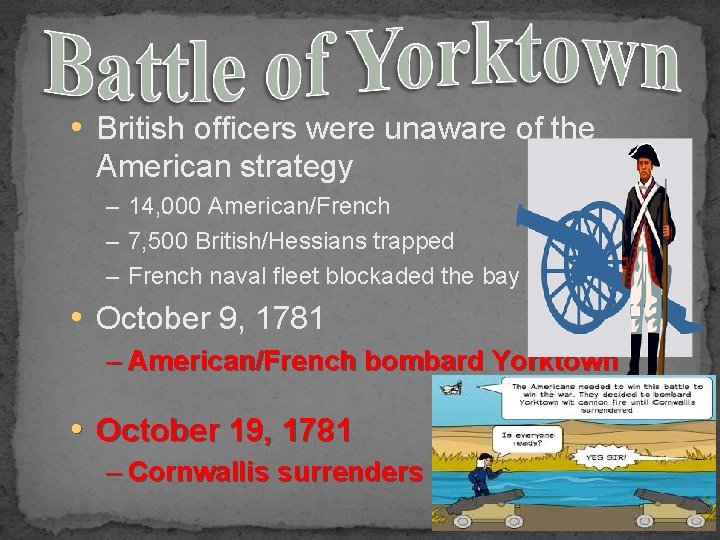
• British officers were unaware of the American strategy – 14, 000 American/French – 7, 500 British/Hessians trapped – French naval fleet blockaded the bay • October 9, 1781 – American/French bombard Yorktown • October 19, 1781 – Cornwallis surrenders
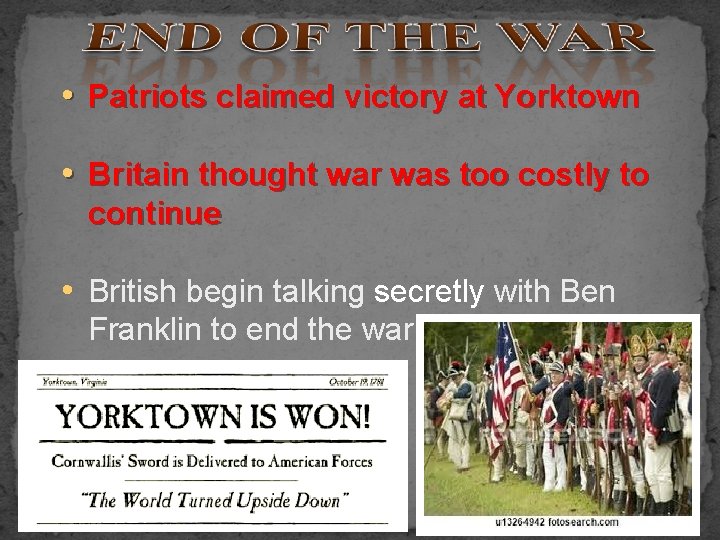
• Patriots claimed victory at Yorktown • Britain thought war was too costly to continue • British begin talking secretly with Ben Franklin to end the war
Treaty of Paris and the End of the War for Independence
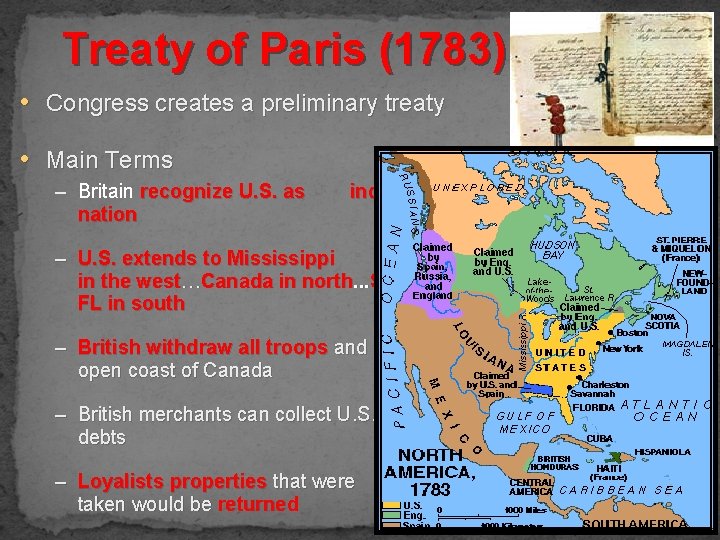
Treaty of Paris (1783) • Congress creates a preliminary treaty • Main Terms – Britain recognize U. S. as nation independent – U. S. extends to Mississippi River in the west…Canada in north. . . Spanish FL in south – British withdraw all troops and open coast of Canada – British merchants can collect U. S. debts – Loyalists properties that were taken would be returned
- Slides: 23