
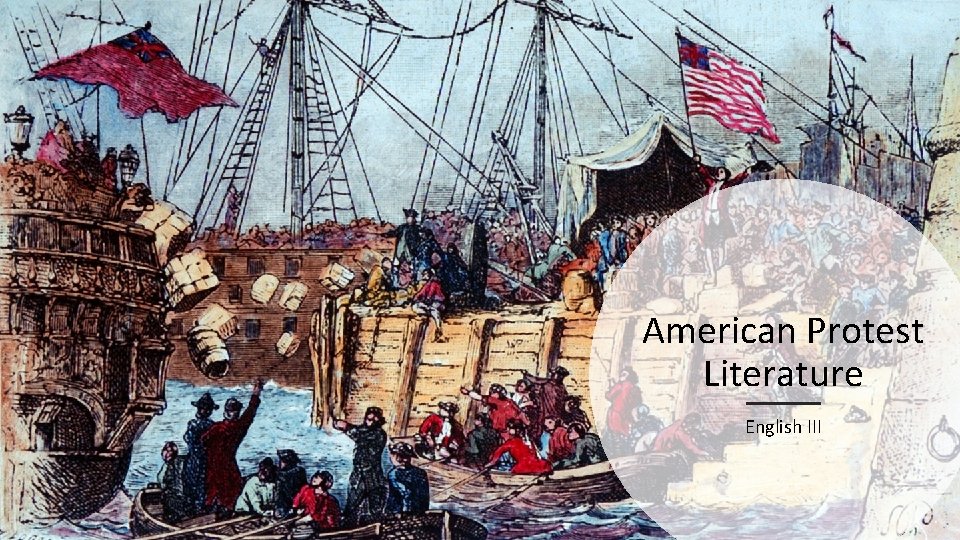
American Protest Literature English III WHAT DO the
- Slides: 9
American Protest Literature English III
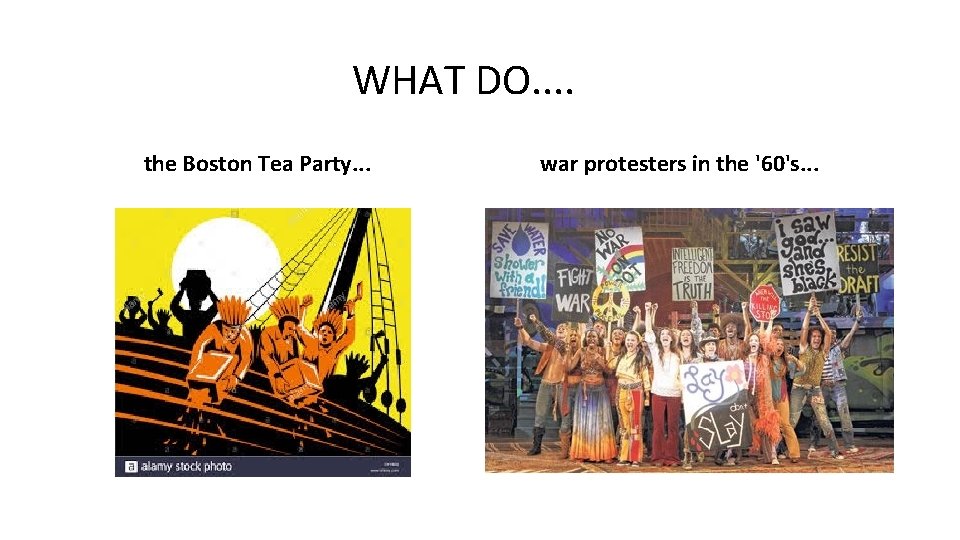
WHAT DO. . the Boston Tea Party. . . war protesters in the '60's. . .
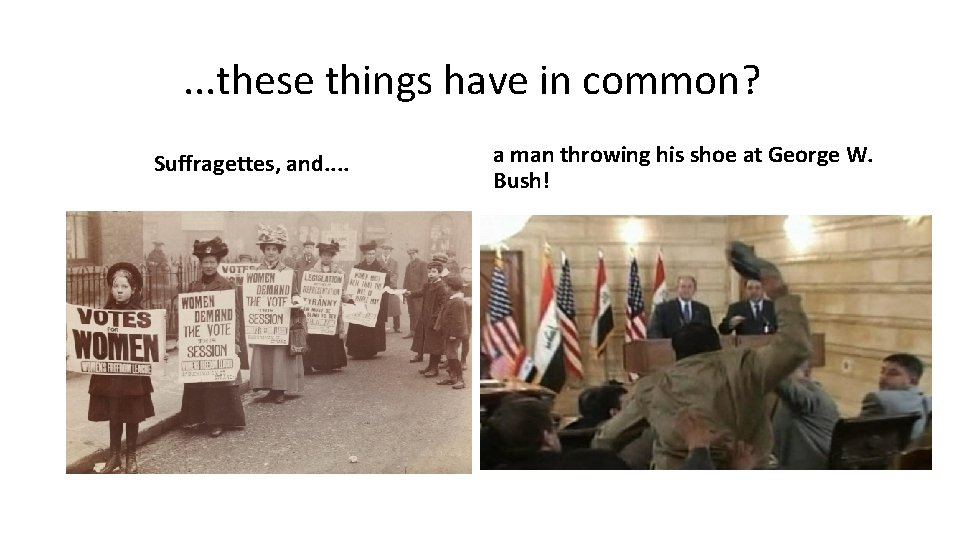
. . . these things have in common? Suffragettes, and. . a man throwing his shoe at George W. Bush!
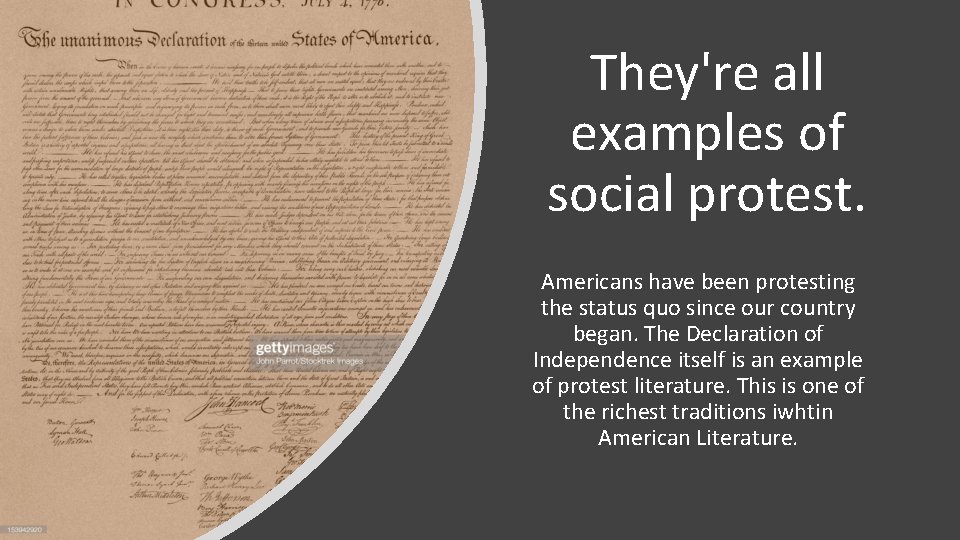
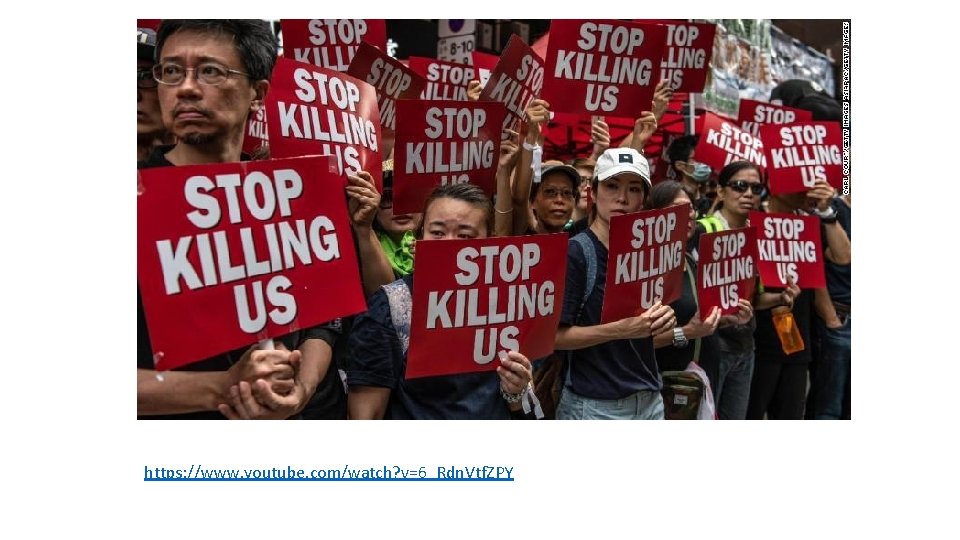
They're all examples of social protest. Americans have been protesting the status quo since our country began. The Declaration of Independence itself is an example of protest literature. This is one of the richest traditions iwhtin American Literature.
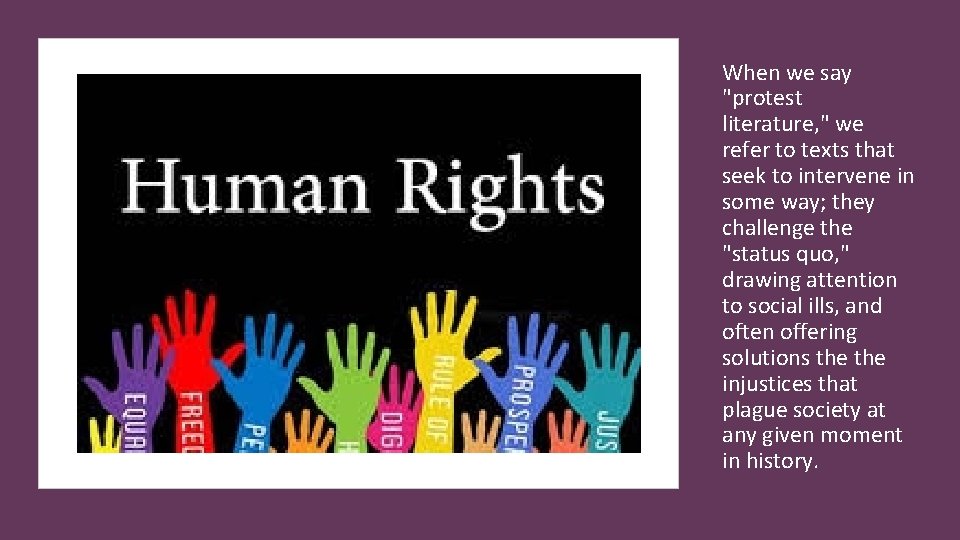
When we say "protest literature, " we refer to texts that seek to intervene in some way; they challenge the "status quo, " drawing attention to social ills, and often offering solutions the injustices that plague society at any given moment in history.
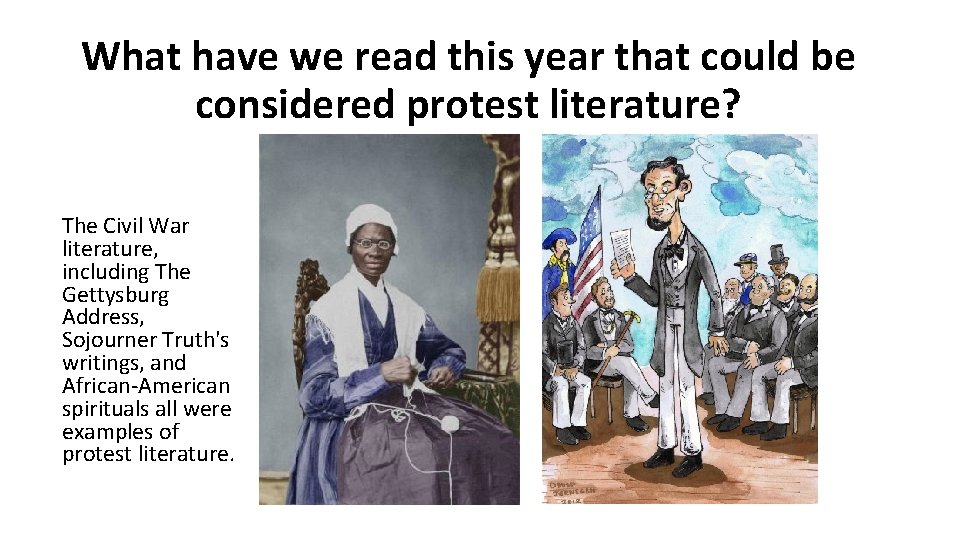
What have we read this year that could be considered protest literature? The Civil War literature, including The Gettysburg Address, Sojourner Truth's writings, and African-American spirituals all were examples of protest literature.
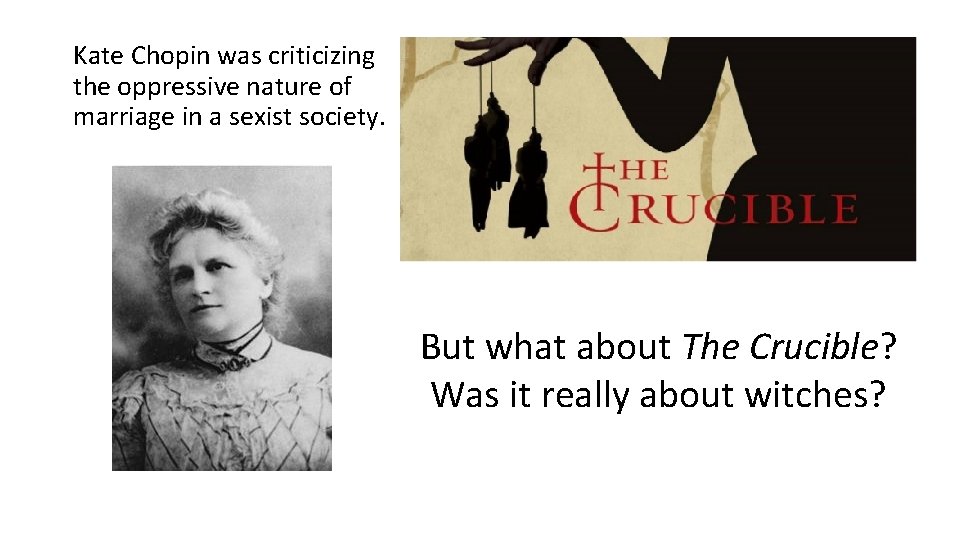
Kate Chopin was criticizing the oppressive nature of marriage in a sexist society. But what about The Crucible? Was it really about witches?
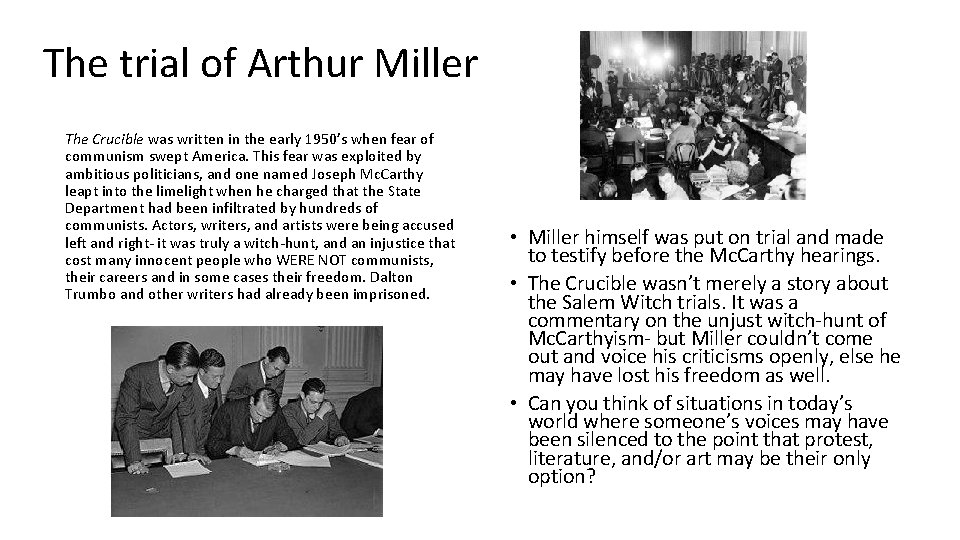
The trial of Arthur Miller The Crucible was written in the early 1950’s when fear of communism swept America. This fear was exploited by ambitious politicians, and one named Joseph Mc. Carthy leapt into the limelight when he charged that the State Department had been infiltrated by hundreds of communists. Actors, writers, and artists were being accused left and right- it was truly a witch-hunt, and an injustice that cost many innocent people who WERE NOT communists, their careers and in some cases their freedom. Dalton Trumbo and other writers had already been imprisoned. • Miller himself was put on trial and made to testify before the Mc. Carthy hearings. • The Crucible wasn’t merely a story about the Salem Witch trials. It was a commentary on the unjust witch-hunt of Mc. Carthyism- but Miller couldn’t come out and voice his criticisms openly, else he may have lost his freedom as well. • Can you think of situations in today’s world where someone’s voices may have been silenced to the point that protest, literature, and/or art may be their only option?
https: //www. youtube. com/watch? v=6_Rdn. Vtf. ZPY