
American Interwar Foreign Policy 1920 1941 FQ TO

- Slides: 46
American Interwar Foreign Policy: 1920 -1941 FQ: TO WHAT EXTENT DID THE GOALS OF AMERICAN FOREIGN POLICY CHANGE IN THE INTERWAR YEARS (1920 -1941)?
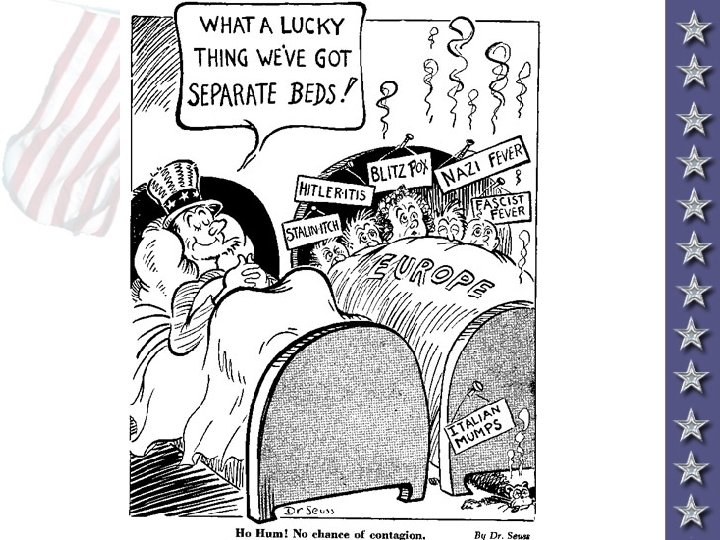
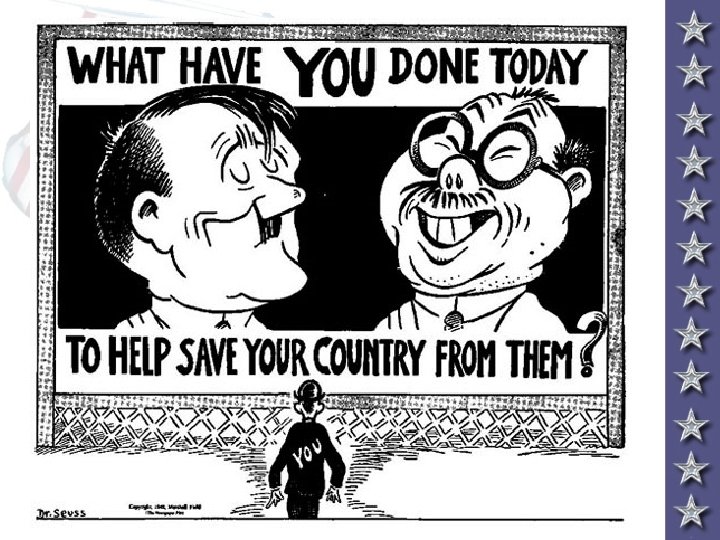
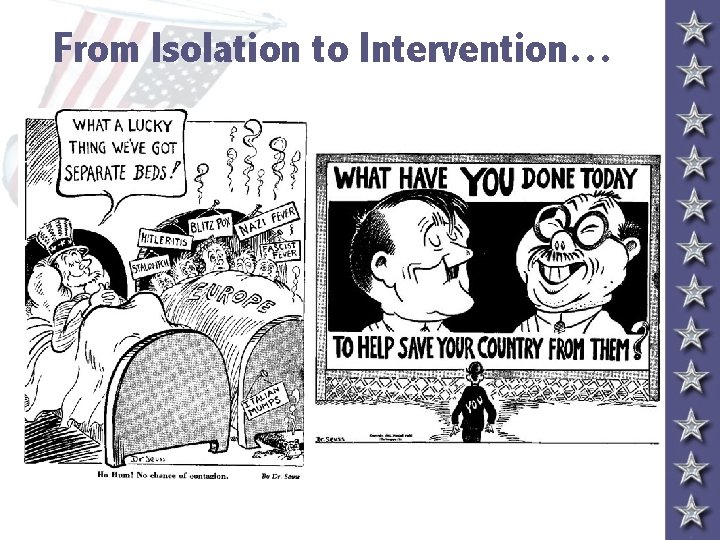
From Isolation to Intervention…
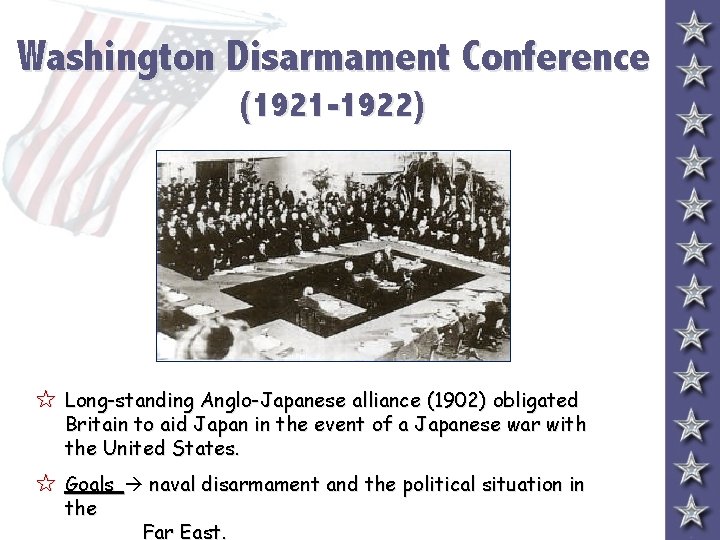
Washington Disarmament Conference (1921 -1922) 5 Long-standing Anglo-Japanese alliance (1902) obligated Britain to aid Japan in the event of a Japanese war with the United States. 5 Goals naval disarmament and the political situation in the Far East.
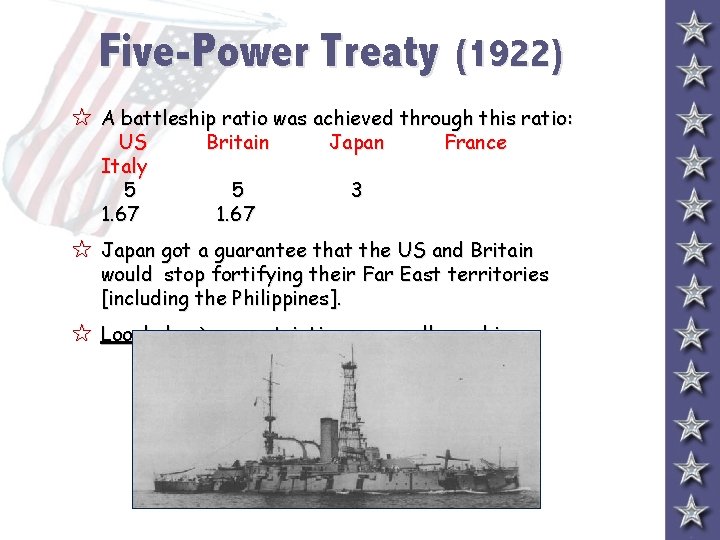
Five-Power Treaty (1922) 5 A battleship ratio was achieved through this ratio: US Italy 5 1. 67 Britain Japan 5 1. 67 3 France 5 Japan got a guarantee that the US and Britain would stop fortifying their Far East territories [including the Philippines]. 5 Loophole no restrictions on small warships
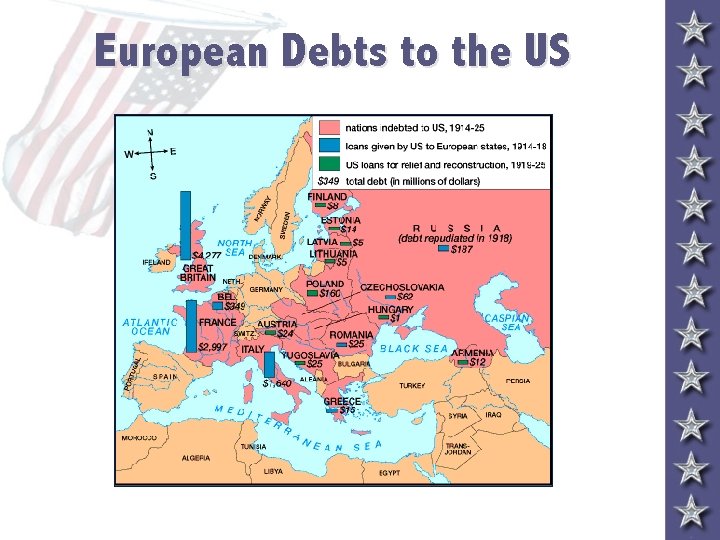
European Debts to the US
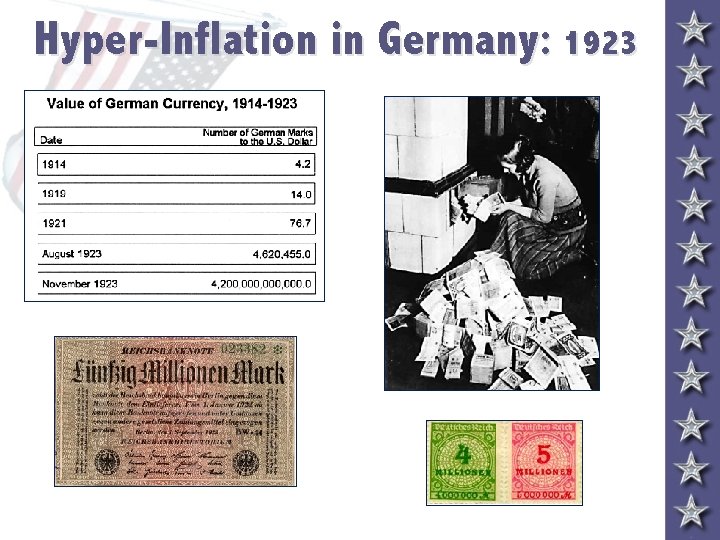
Hyper-Inflation in Germany: 1923
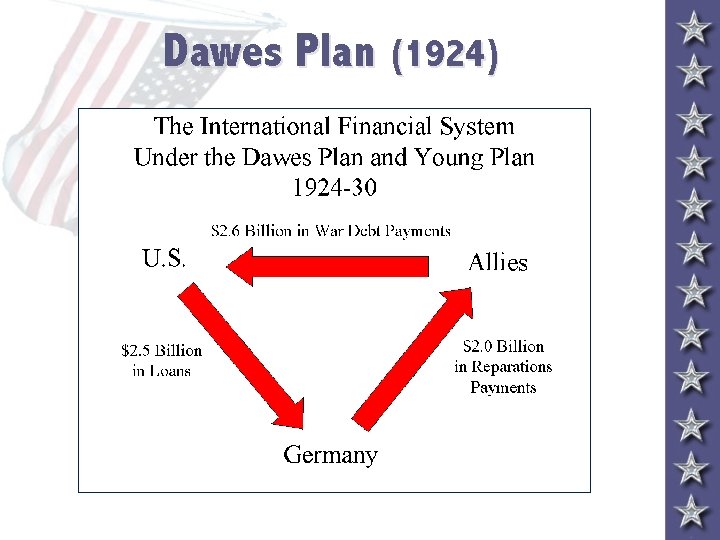
Dawes Plan (1924)
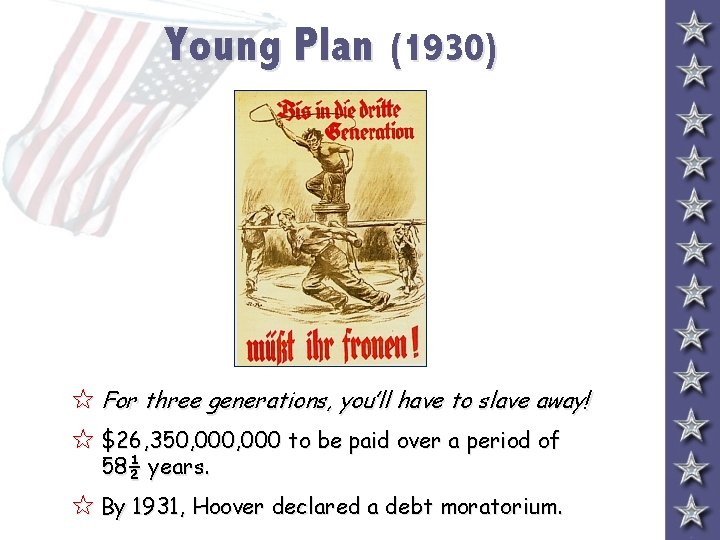
Young Plan (1930) 5 For three generations, you’ll have to slave away! 5 $26, 350, 000 to be paid over a period of 58½ years. 5 By 1931, Hoover declared a debt moratorium.
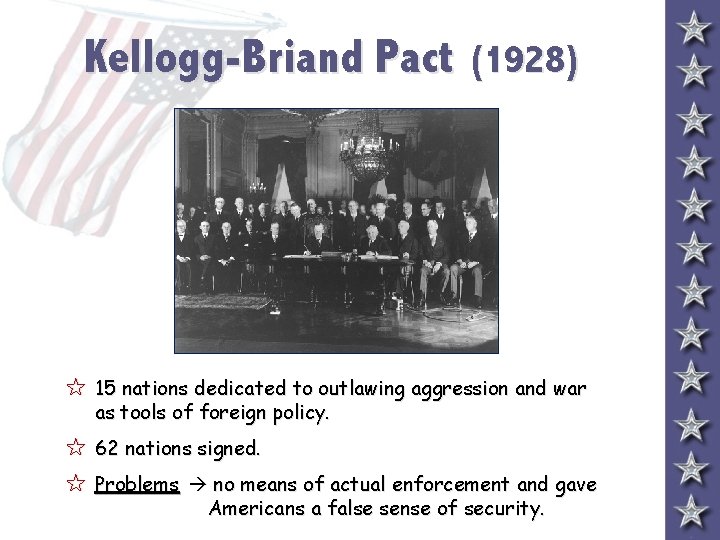
Kellogg-Briand Pact (1928) 5 15 nations dedicated to outlawing aggression and war as tools of foreign policy. 5 62 nations signed. 5 Problems no means of actual enforcement and gave Americans a false sense of security.
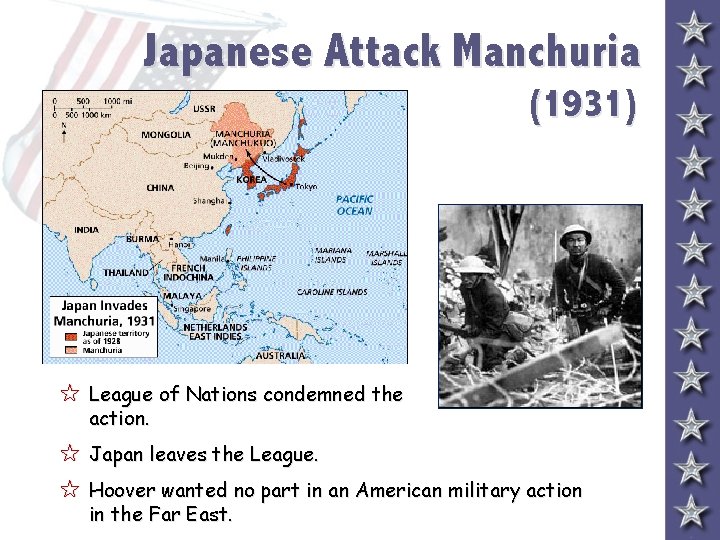
Japanese Attack Manchuria (1931) 5 League of Nations condemned the action. 5 Japan leaves the League. 5 Hoover wanted no part in an American military action in the Far East.
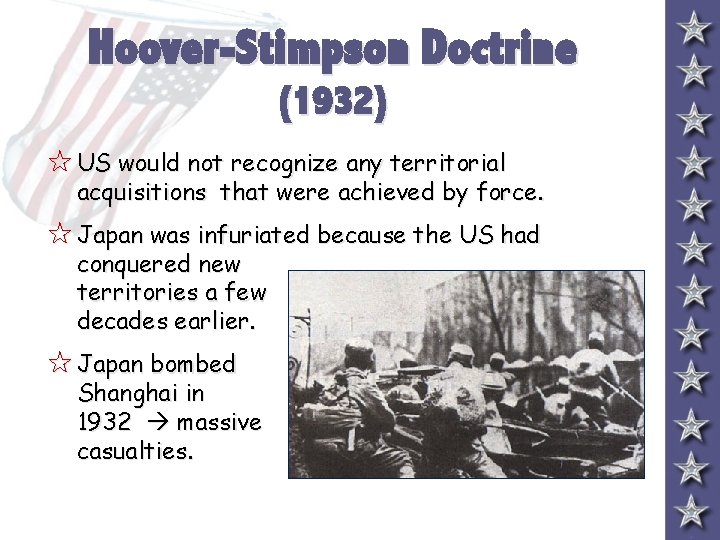
Hoover-Stimpson Doctrine (1932) 5 US would not recognize any territorial acquisitions that were achieved by force. 5 Japan was infuriated because the US had conquered new territories a few decades earlier. 5 Japan bombed Shanghai in 1932 massive casualties.
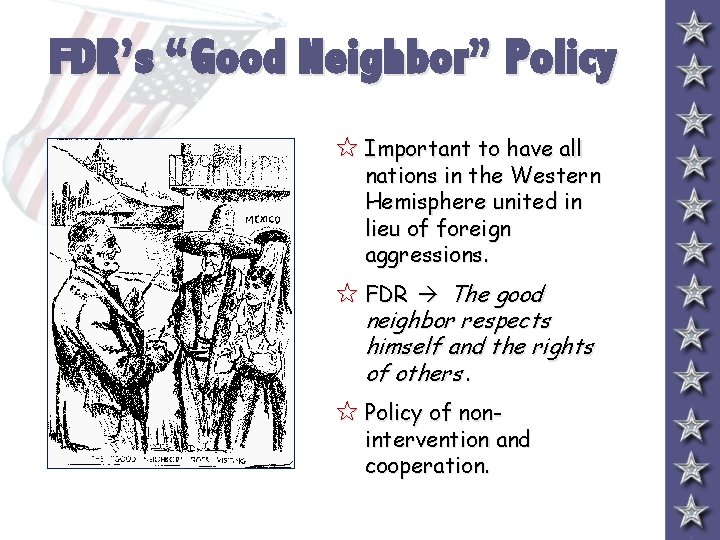
FDR’s “Good Neighbor” Policy 5 Important to have all nations in the Western Hemisphere united in lieu of foreign aggressions. 5 FDR The good neighbor respects himself and the rights of others. 5 Policy of non- intervention and cooperation.
FDR Recognizes the Soviet Union (late 1933) 5 FDR felt that recognizing Moscow might bolster the US against Japan. 5 Maybe trade with the USSR would help the US economy during the Depression.
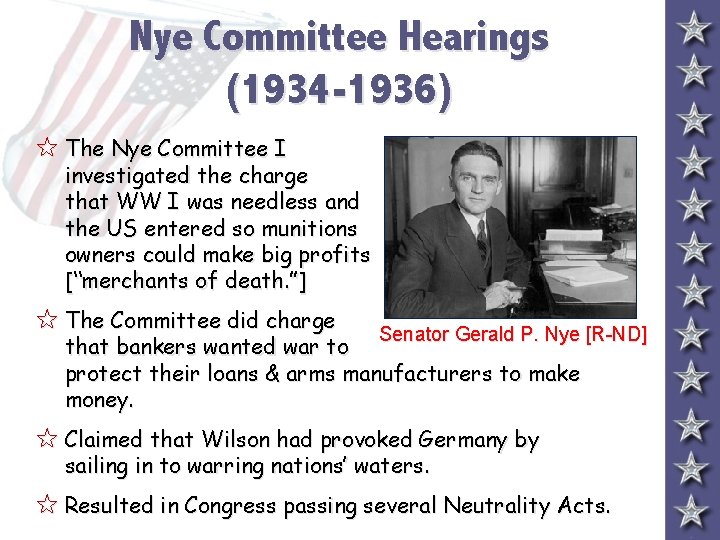
Nye Committee Hearings (1934 -1936) 5 The Nye Committee I investigated the charge that WW I was needless and the US entered so munitions owners could make big profits [“merchants of death. ”] 5 The Committee did charge Senator Gerald P. Nye [R-ND] that bankers wanted war to protect their loans & arms manufacturers to make money. 5 Claimed that Wilson had provoked Germany by sailing in to warring nations’ waters. 5 Resulted in Congress passing several Neutrality Acts.
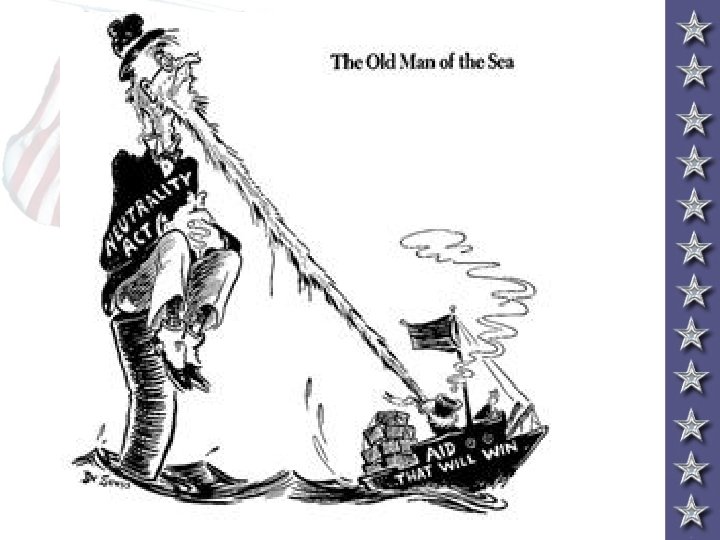
Neutrality Acts: 1935, 1936, 1937 5 When the President proclaimed the existence of a foreign war, certain restrictions would automatically go into effect: § Prohibited sales of arms to belligerent nations (1935) § Prohibited loans to belligerent nations (1936) § Forbade Americans to travel on vessels of nations at war [in contrast to WW I]. § Non-military goods must be purchased on a “cash- and-carry” basis pay when goods are picked up (1937) § Banned involvement in the Spanish Civil War. 5 This limited the options of the President in a crisis.
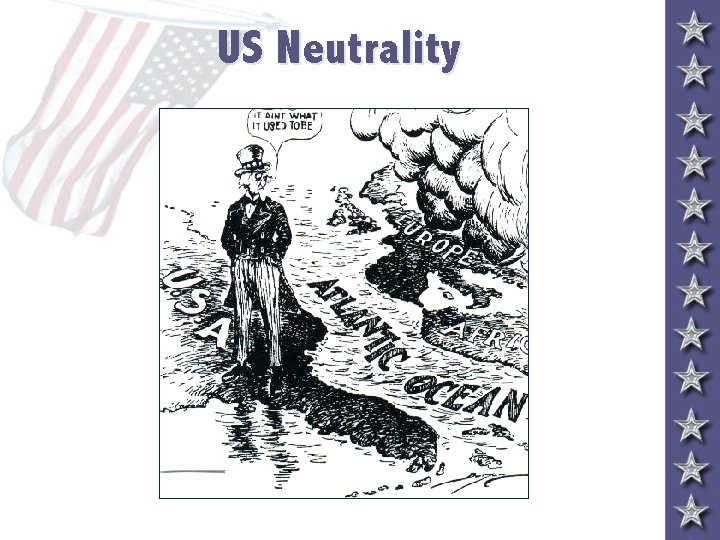
US Neutrality
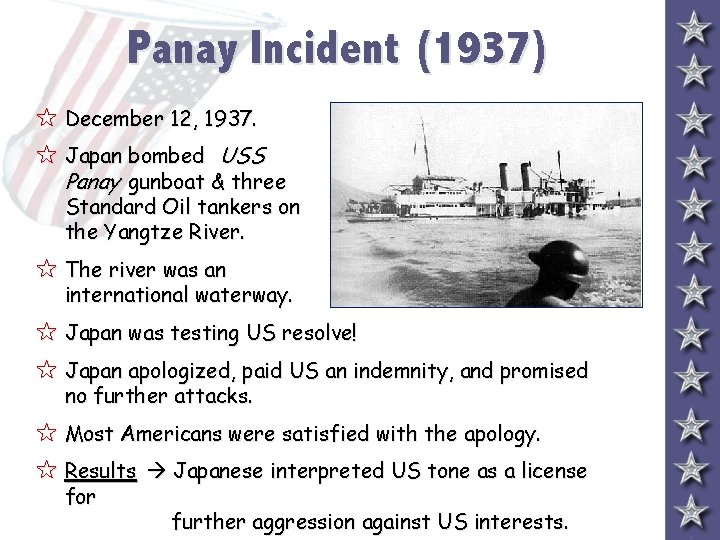
Panay Incident (1937) 5 December 12, 1937. 5 Japan bombed USS Panay gunboat & three Standard Oil tankers on the Yangtze River. 5 The river was an international waterway. 5 Japan was testing US resolve! 5 Japan apologized, paid US an indemnity, and promised no further attacks. 5 Most Americans were satisfied with the apology. 5 Results Japanese interpreted US tone as a license for further aggression against US interests.
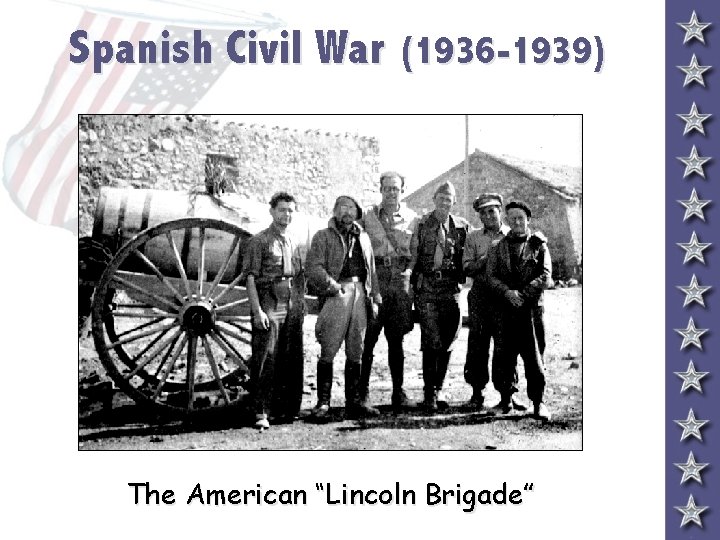
Spanish Civil War (1936 -1939) The American “Lincoln Brigade”
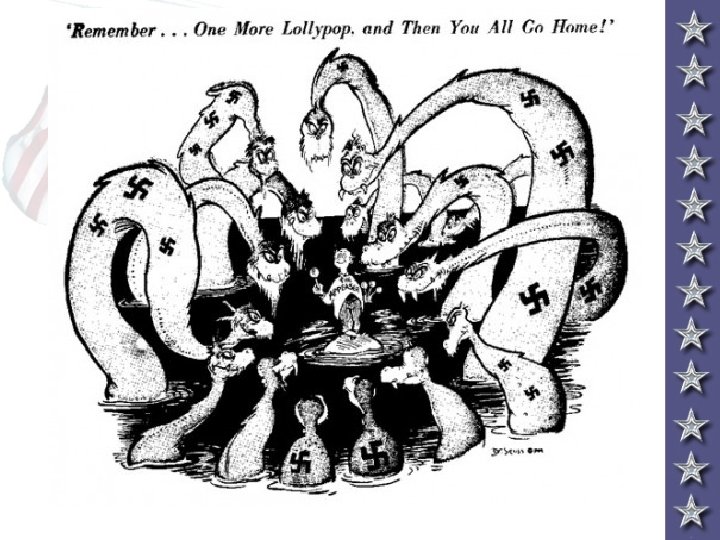
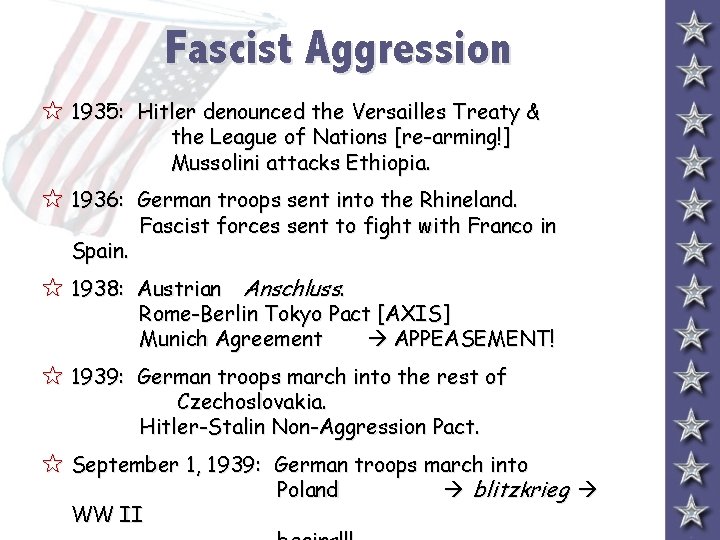
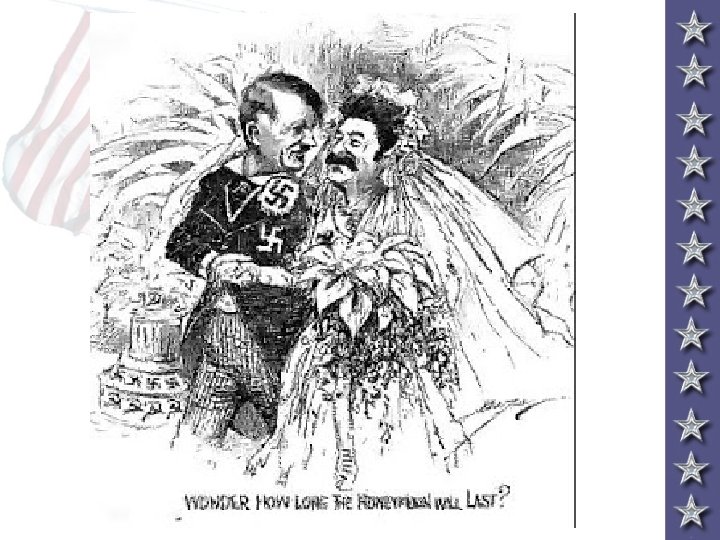
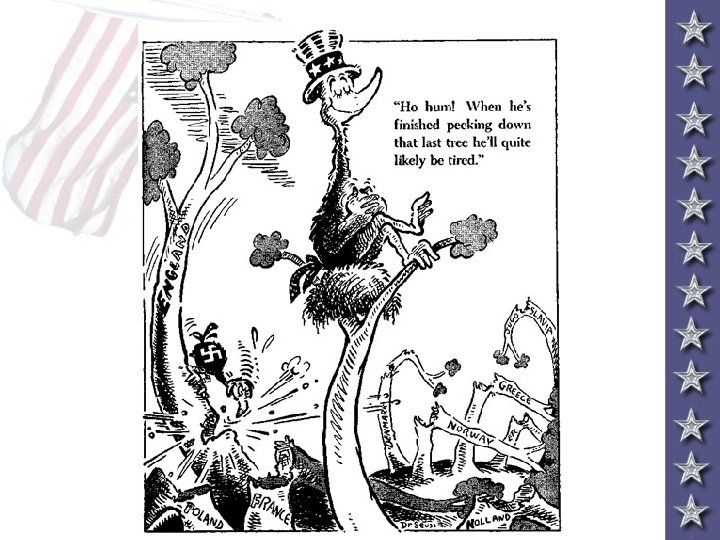
Fascist Aggression 5 1935: Hitler denounced the Versailles Treaty & the League of Nations [re-arming!] Mussolini attacks Ethiopia. 5 1936: German troops sent into the Rhineland. Spain. Fascist forces sent to fight with Franco in 5 1938: Austrian Anschluss. Rome-Berlin Tokyo Pact [AXIS] Munich Agreement APPEASEMENT! 5 1939: German troops march into the rest of Czechoslovakia. Hitler-Stalin Non-Aggression Pact. 5 September 1, 1939: German troops march into WW II Poland blitzkrieg
1939 Neutrality Act 5 In response to Germany’s invasion of Poland. 5 FDR persuades Congress in special session to allow the US to aid European democracies in a limited way: § The US could sell weapons to the European democracies on a “cash-and-carry” basis. § FDR was authorized to proclaim danger zones which US ships and citizens could not enter. 5 Results of the 1939 Neutrality Act: § Aggressors could not send ships to buy US munitions. § The US economy improved as European demands for war goods helped bring the country out of the 1937 -38 recession.
“America First” Committee Charles Lindbergh
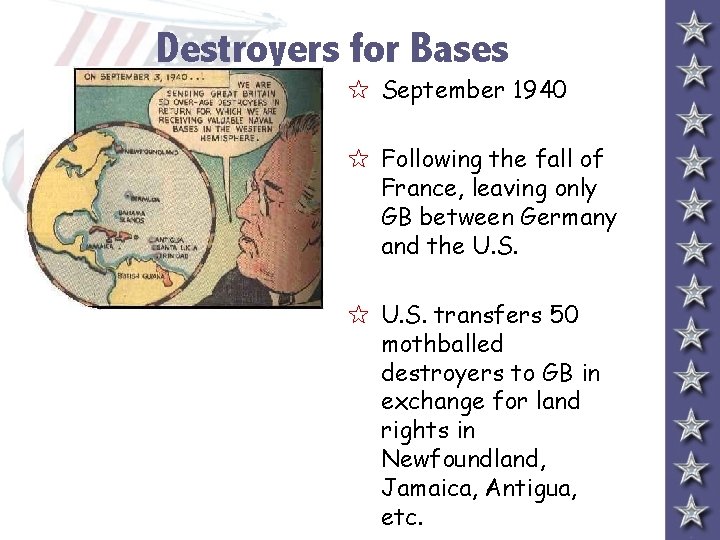
Destroyers for Bases 5 September 1940 5 Following the fall of France, leaving only GB between Germany and the U. S. 5 U. S. transfers 50 mothballed destroyers to GB in exchange for land rights in Newfoundland, Jamaica, Antigua, etc.
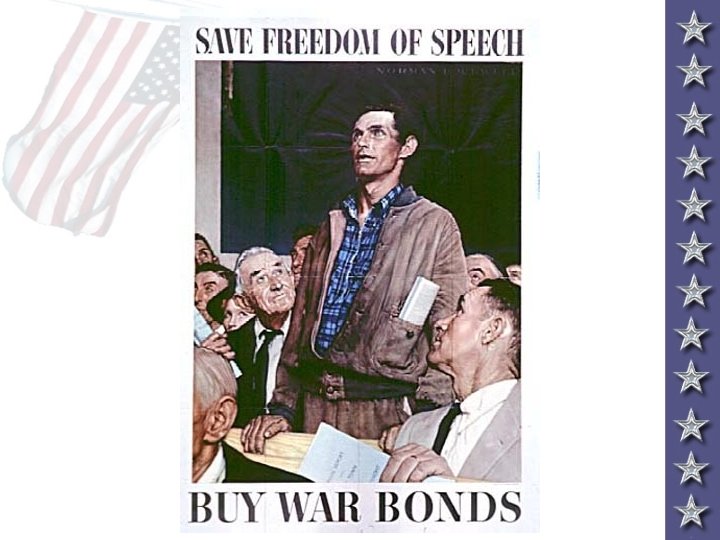
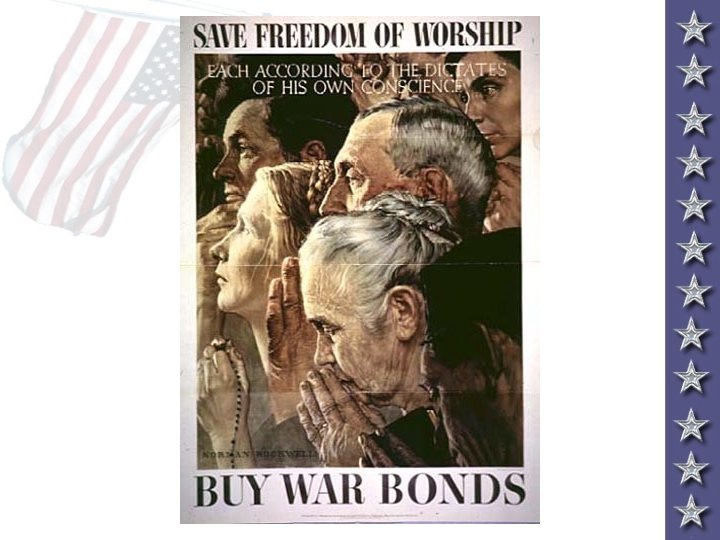
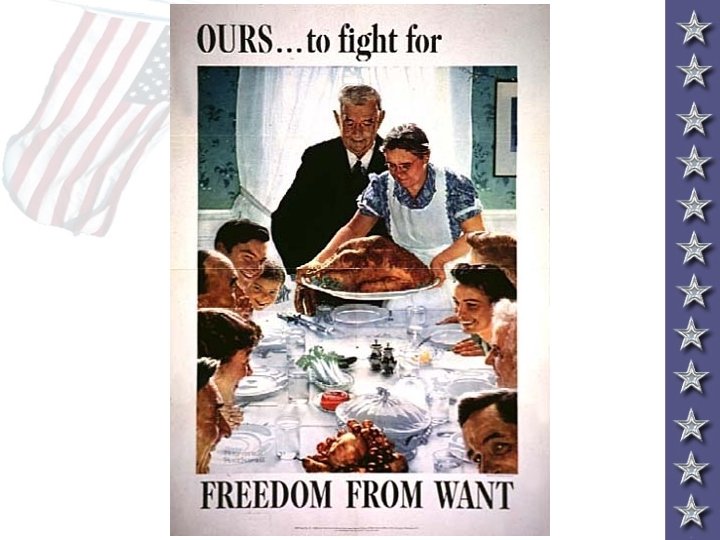
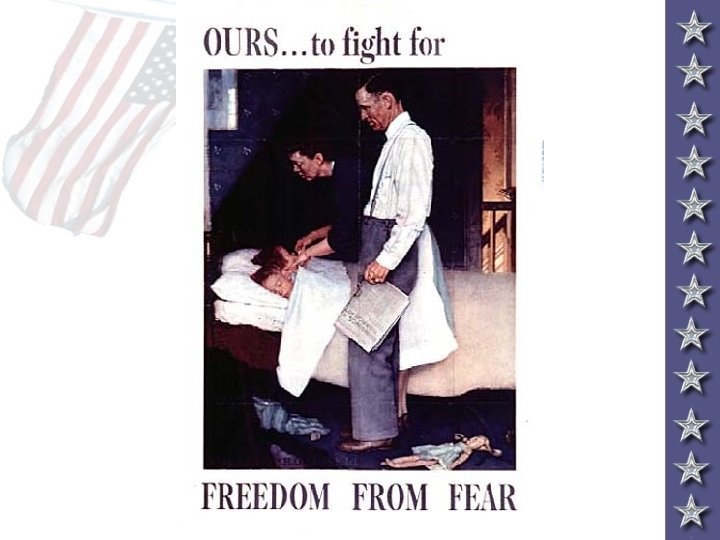
FDR’s Four Freedoms Speech
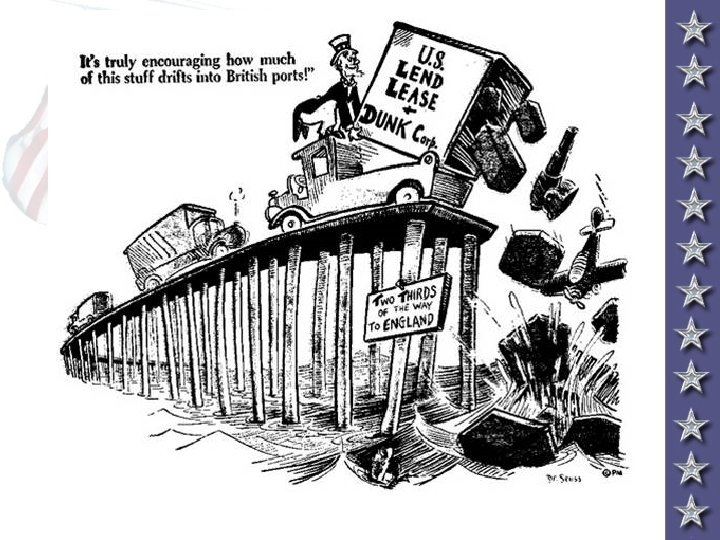
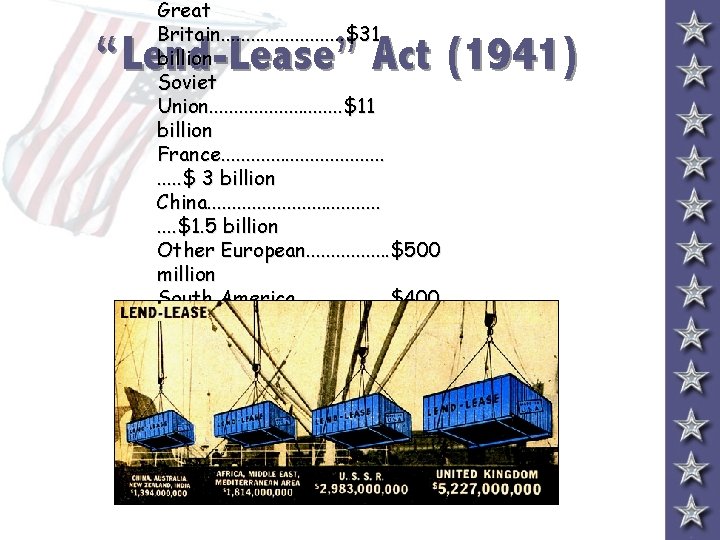
Great Britain. . . $31 billion Soviet Union. . . . $11 billion France. . . . . $ 3 billion China. . . . . $1. 5 billion Other European. . . . $500 million South America. . . . . $400 million The amount totaled: $48, 601, 365, 000 “Lend-Lease” Act (1941)
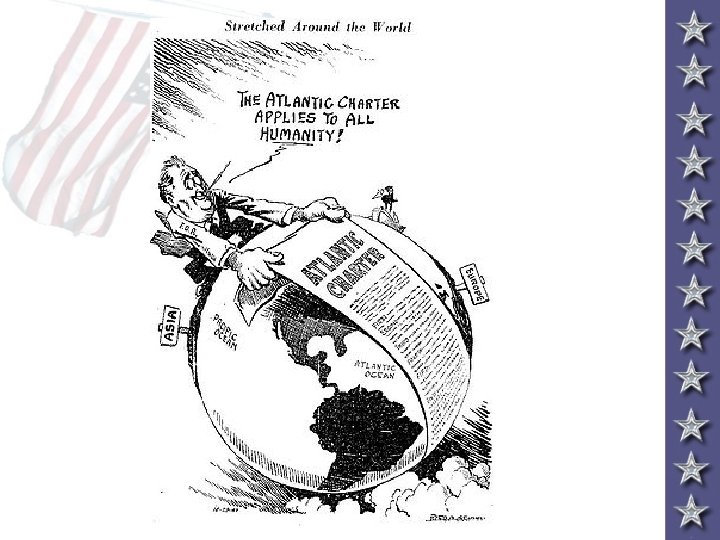
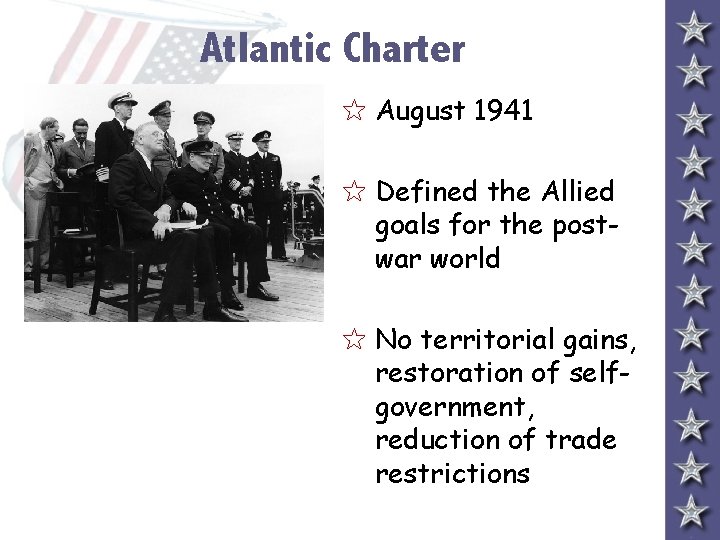
Atlantic Charter 5 August 1941 5 Defined the Allied goals for the postwar world 5 No territorial gains, restoration of selfgovernment, reduction of trade restrictions
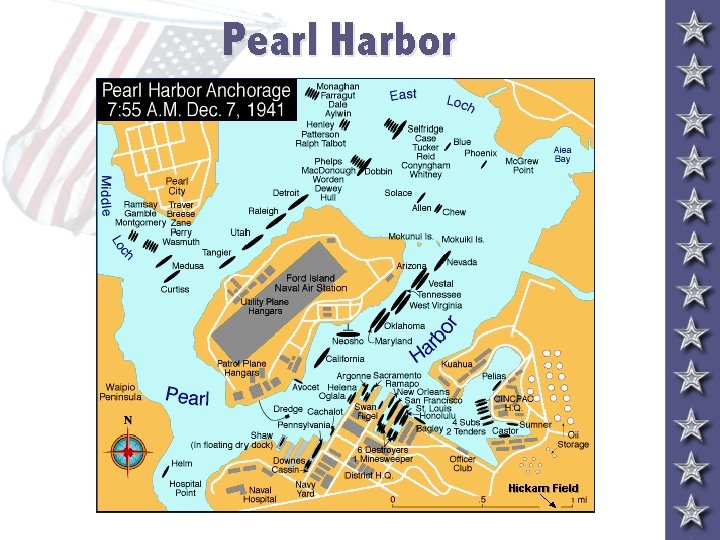
Pearl Harbor
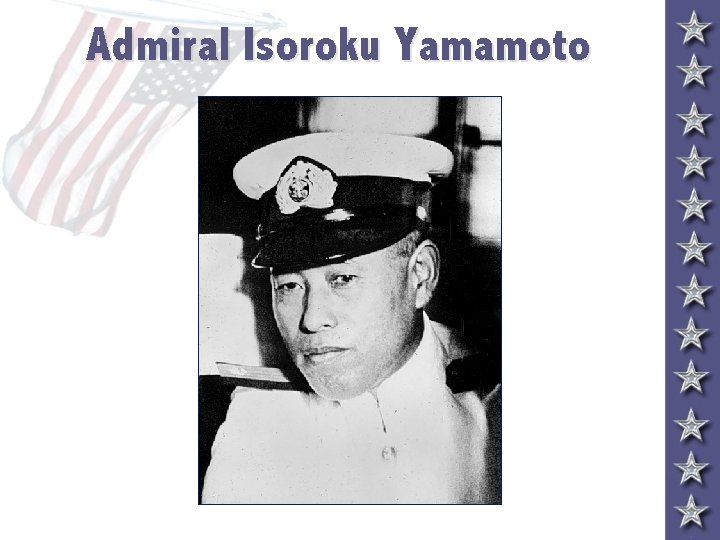
Admiral Isoroku Yamamoto
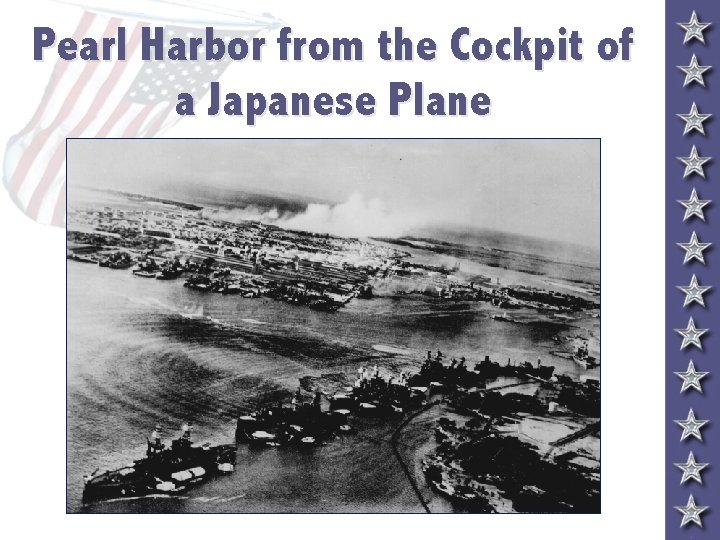
Pearl Harbor from the Cockpit of a Japanese Plane
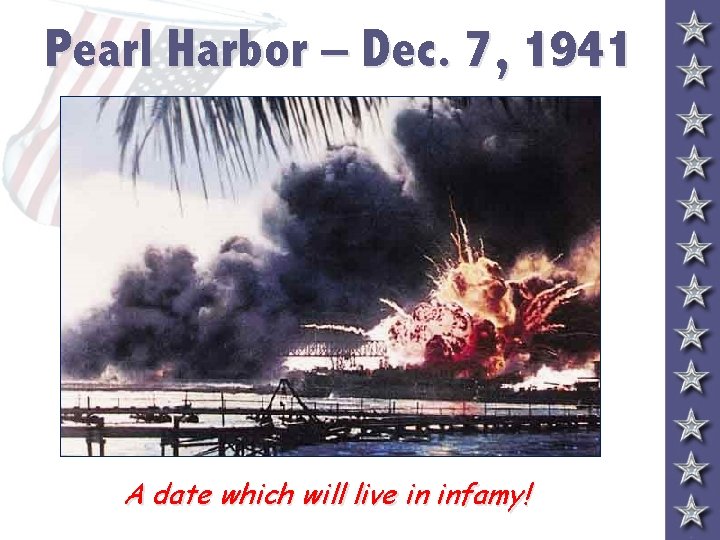
Pearl Harbor – Dec. 7, 1941 A date which will live in infamy!
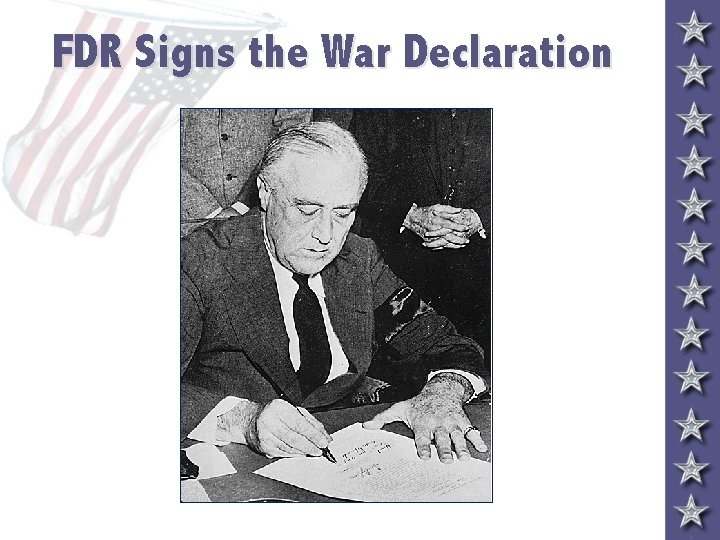
FDR Signs the War Declaration
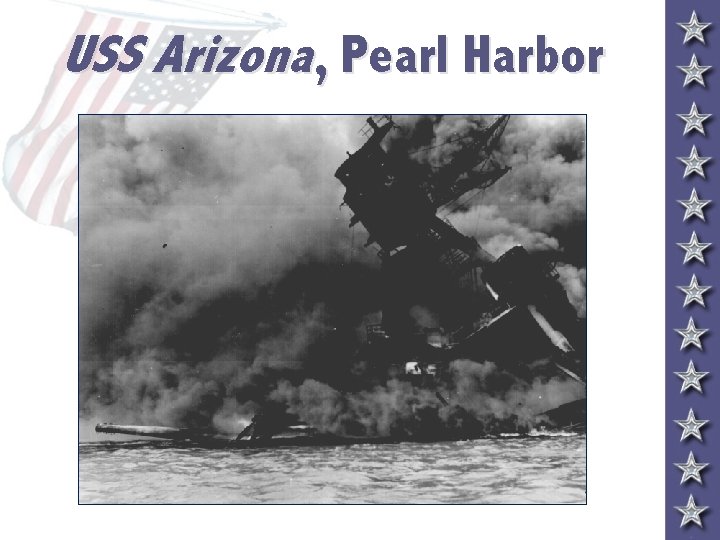
USS Arizona, Pearl Harbor
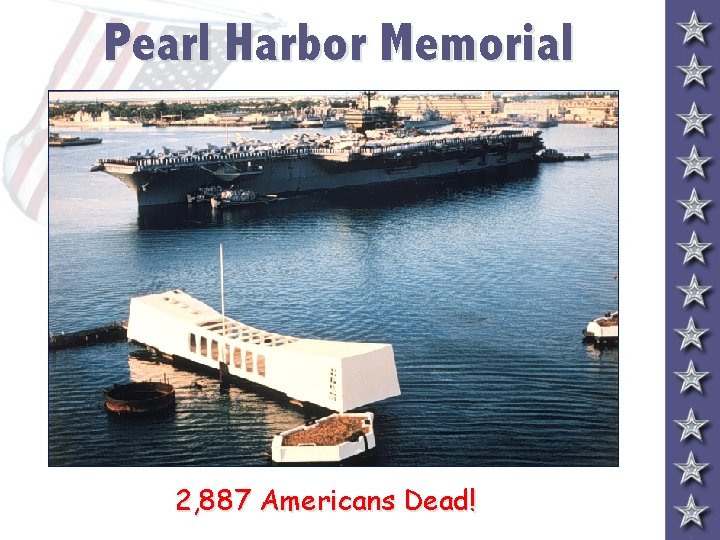
Pearl Harbor Memorial 2, 887 Americans Dead!