
American Indians of the Southeast Location Land bordered

American Indians of the Southeast
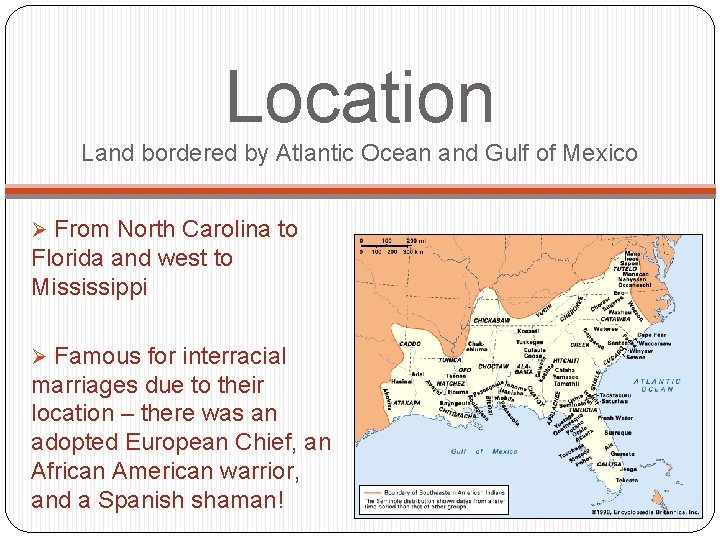
Location Land bordered by Atlantic Ocean and Gulf of Mexico Ø From North Carolina to Florida and west to Mississippi Ø Famous for interracial marriages due to their location – there was an adopted European Chief, an African American warrior, and a Spanish shaman!
Major Tribes There were Five civilized tribes in the Southeast. Ø Cherokee: the largest of the 563 federally recognized tribes; now located mainly in Oklahoma Ø Chickasaw: related to the Choctaw; in northeast Mississippi Ø Choctaw: supported the colonies bid for independence from Britian; were made the “model” of Indian removal as the first to move Ø Creek: original name “Muskogee”; related to the Seminole ØSeminole: formed in the 18 th century of Creek, escaped African American slaves and other Native
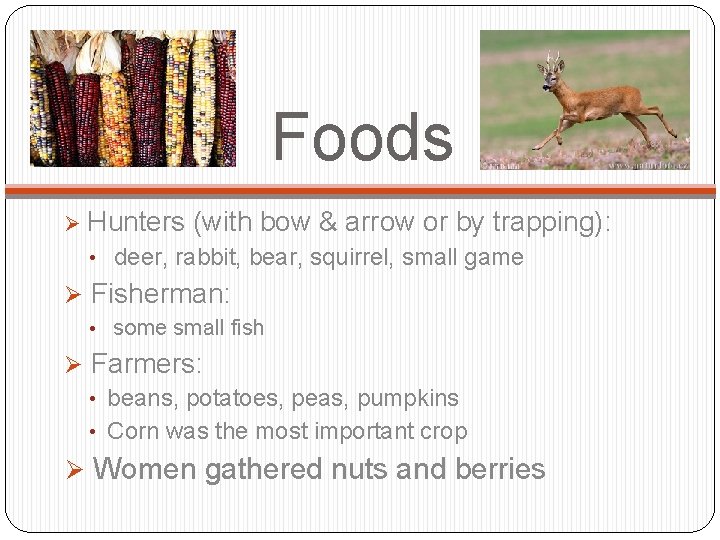
Foods Ø Hunters (with bow & arrow or by trapping): • deer, rabbit, bear, squirrel, small game Ø Fisherman: • some small fish Ø Farmers: • beans, potatoes, peas, pumpkins • Corn was the most important crop Ø Women gathered nuts and berries
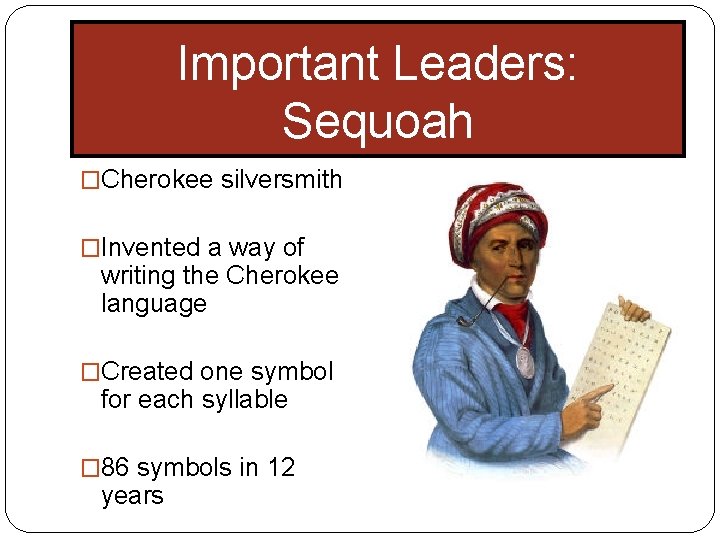
Important Leaders: Sequoah �Cherokee silversmith �Invented a way of writing the Cherokee language �Created one symbol for each syllable � 86 symbols in 12 years
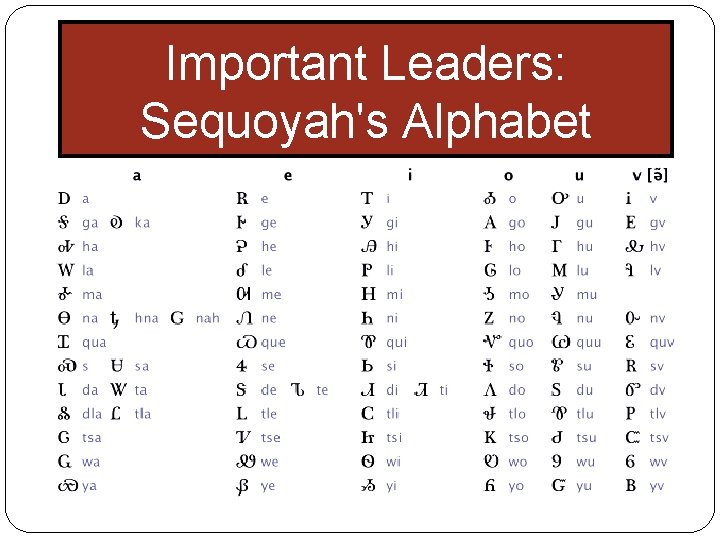
Important Leaders: Sequoyah's Alphabet
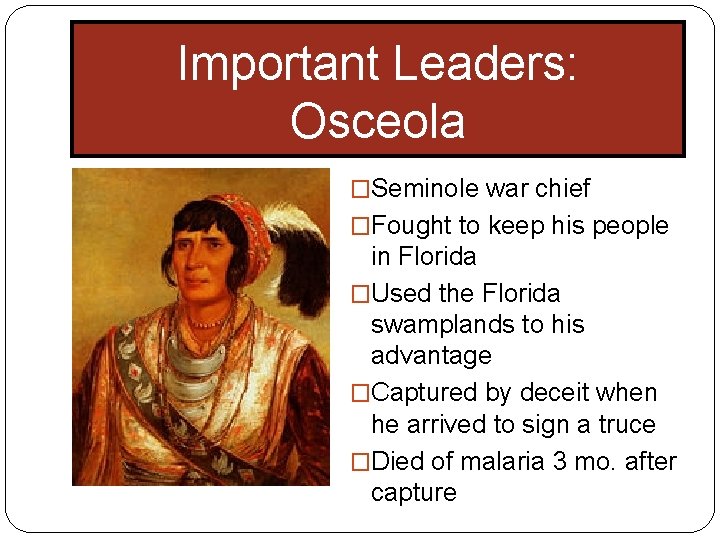
Important Leaders: Osceola �Seminole war chief �Fought to keep his people in Florida �Used the Florida swamplands to his advantage �Captured by deceit when he arrived to sign a truce �Died of malaria 3 mo. after capture
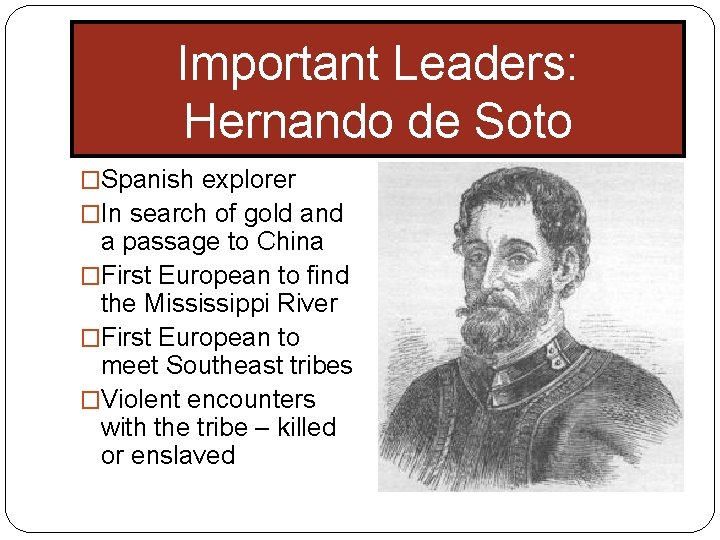
Important Leaders: Hernando de Soto �Spanish explorer �In search of gold and a passage to China �First European to find the Mississippi River �First European to meet Southeast tribes �Violent encounters with the tribe – killed or enslaved
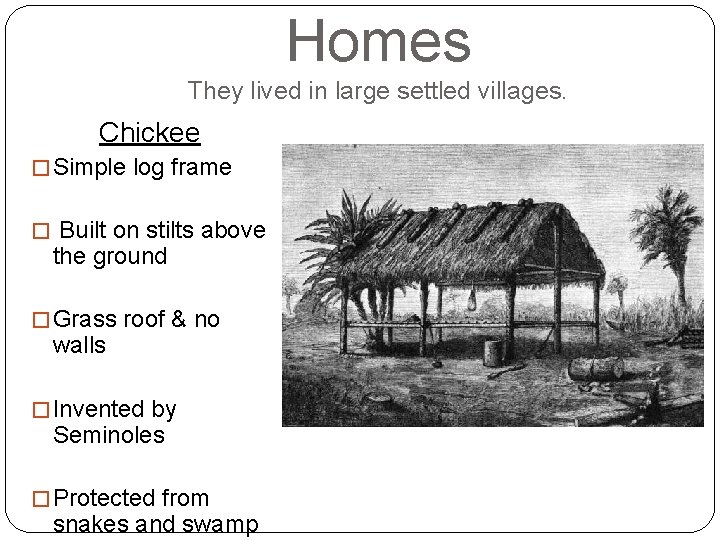
Homes They lived in large settled villages. Chickee � Simple log frame � Built on stilts above the ground � Grass roof & no walls � Invented by Seminoles � Protected from snakes and swamp
Customs & Traditions Ø Booger Dance • Masked dancers come into homes and chase the women • Masks resembled non-Indian features (slit eyes, large noses, blond hair, etc. ) • Their intention is to dance with the girls • The ceremony ends with a Friendship Dance Ø Green Corn Ceremony • Festival to celebrate the ripening of the year’s corn • Dancing, feasting and religious observations (honors Corn Mother)
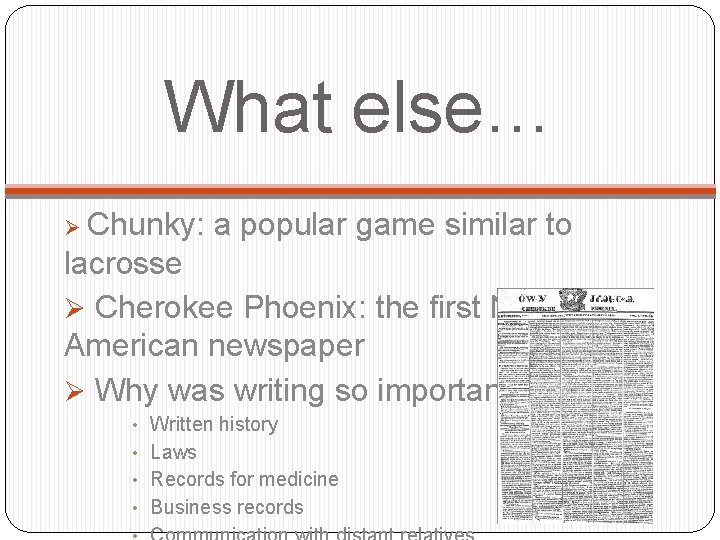
What else… Chunky: a popular game similar to lacrosse Ø Cherokee Phoenix: the first Native American newspaper Ø Why was writing so important? Ø Written history • Laws • Records for medicine • Business records •
Another fight for land… Yamasee War � Began in 1715 over: �Trade abuse �Indian enslavement �Depletion of deer �Land encroachment � A fight between the South Carolina settlers and various tribes including the Creek/Yamasee Tribe � English had help from the Cherokee � English won the war � Survivors had to find new homes
Another fight for land… The removal of the Creek �The Creek were living in Southeastern Georgia �The European settlers wanted to push west from the coast �Georgians forced them into the frontier �By 1825 the Lower Creek had been completely removed �By 1827 the Creek were completely gone �Today they are living in Oklahoma
Another fight for land… The Indian Removal Act � 1828 – Cherokee nation is rumored to have gold • De. Soto finds it in the Northern Georgia mountains • 1830 – President Jackson signs the “Indian Removal Act” that Congress proposed • 1832 – Land lottery starts the encroachment of whites • 1838 – The removal to Oklahoma begins • Choctaws in Mississippi left the land east of the Mississippi for $ and moved West • Cherokee left the land in Georgia by force and moved to Oklahoma
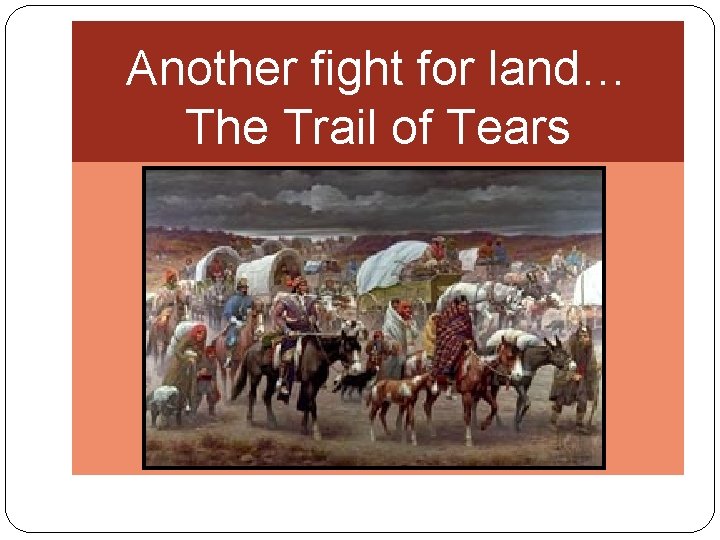
Another fight for land… The Trail of Tears
Another fight for land… The Trail of Tears �Cherokee journey to Indian Territory �Indian Territory – the western lands where the US wanted to resettle the southeast Indians �Forced to walk with little or no provisions � 1 out of 4 died along the way (only 75% survived) �Sun exposure, disease, starvation �About 4000 Cherokees died �Escorted by 7000 Army soldiers
American Indians of the Southeast
- Slides: 17