
American Imperialism Unit 7 Imperialism A policy in
- Slides: 14
American Imperialism Unit 7
Imperialism • A policy in which stronger nations extend their economic, political, or military control over weaker nations
Roots of US Imperialism • With a partner use pg. 549 -550 to complete the graphic organizer on your notes
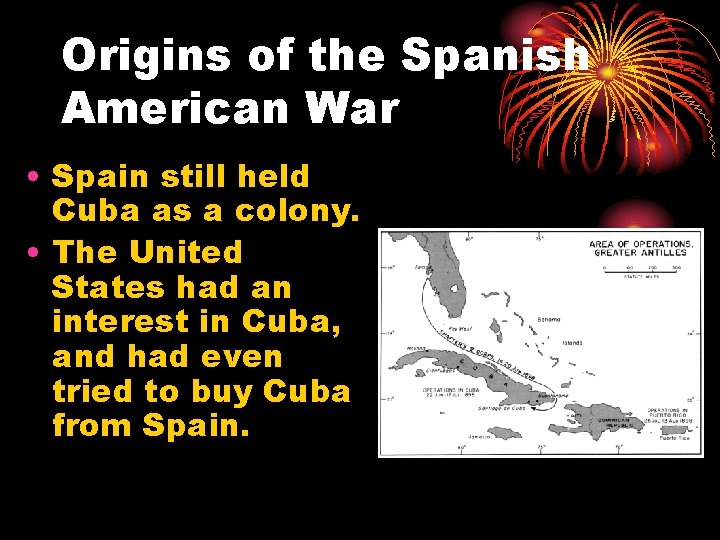
Origins of the Spanish American War • Spain still held Cuba as a colony. • The United States had an interest in Cuba, and had even tried to buy Cuba from Spain.
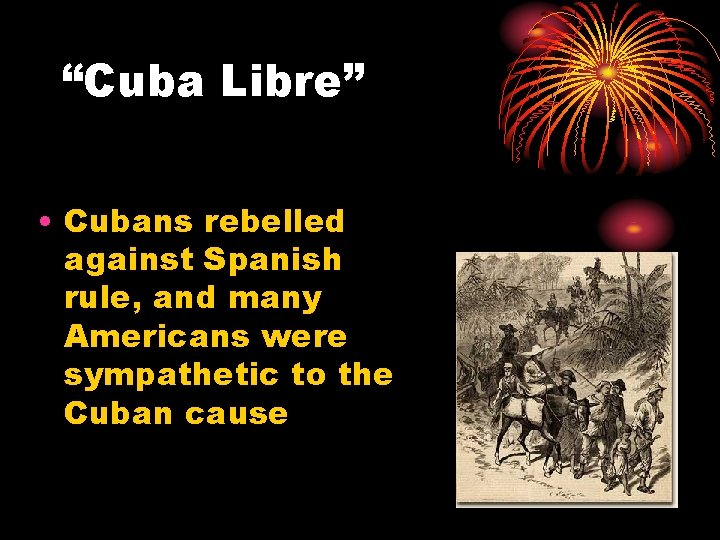
“Cuba Libre” • Cubans rebelled against Spanish rule, and many Americans were sympathetic to the Cuban cause
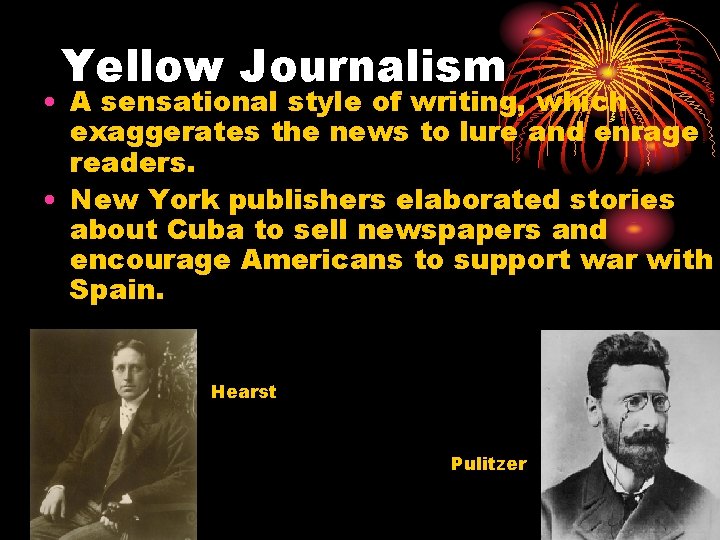
Yellow Journalism • A sensational style of writing, which exaggerates the news to lure and enrage readers. • New York publishers elaborated stories about Cuba to sell newspapers and encourage Americans to support war with Spain. Hearst Pulitzer
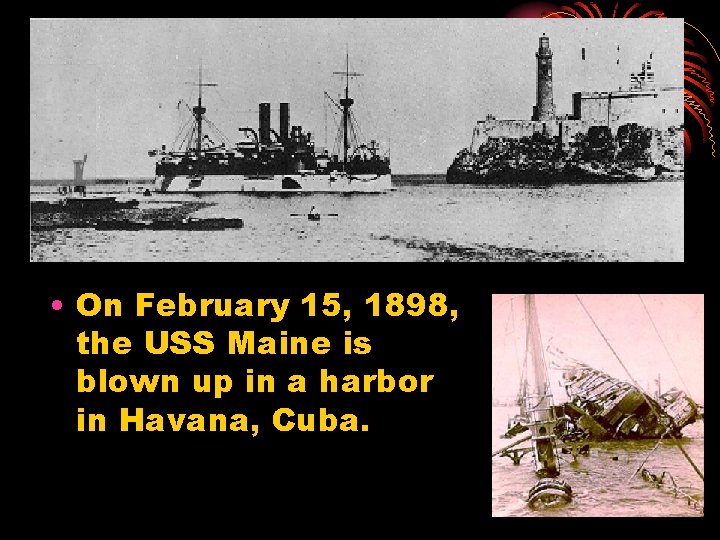
• On February 15, 1898, the USS Maine is blown up in a harbor in Havana, Cuba.
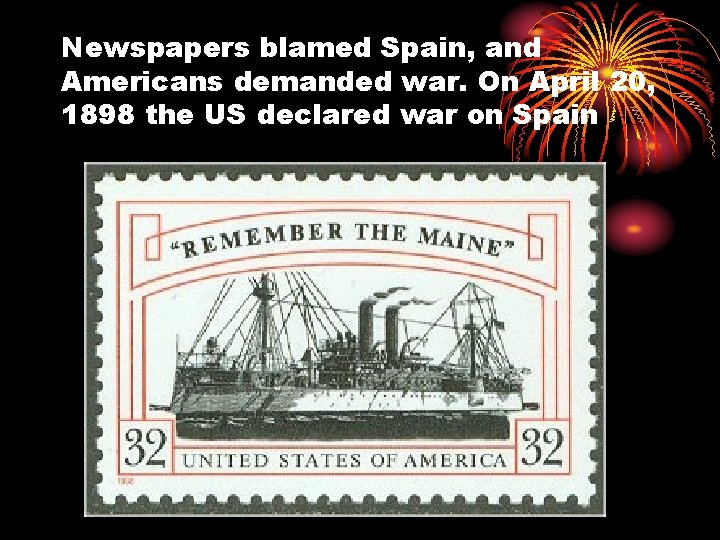
Newspapers blamed Spain, and Americans demanded war. On April 20, 1898 the US declared war on Spain
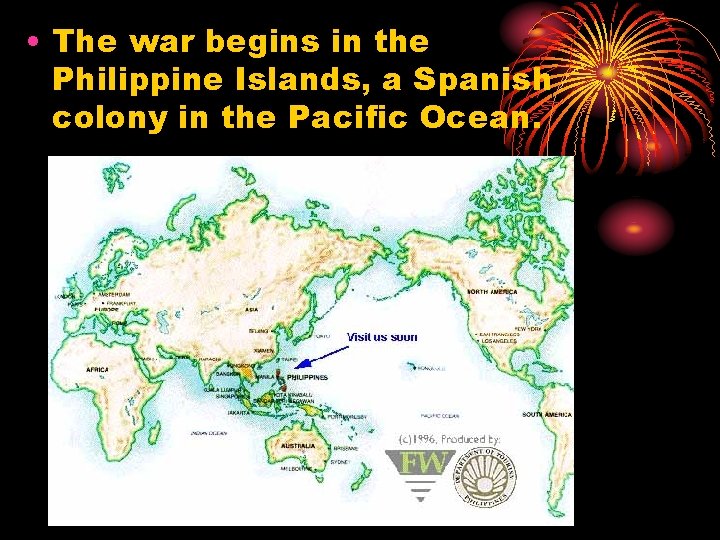
• The war begins in the Philippine Islands, a Spanish colony in the Pacific Ocean.
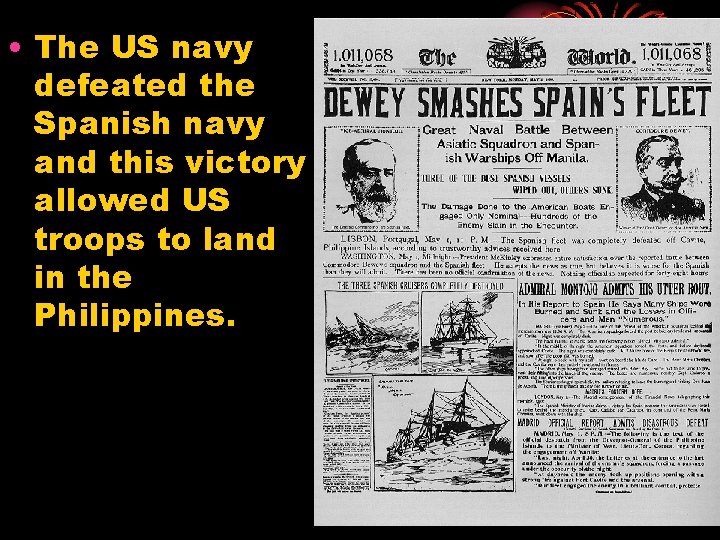
• The US navy defeated the Spanish navy and this victory allowed US troops to land in the Philippines.
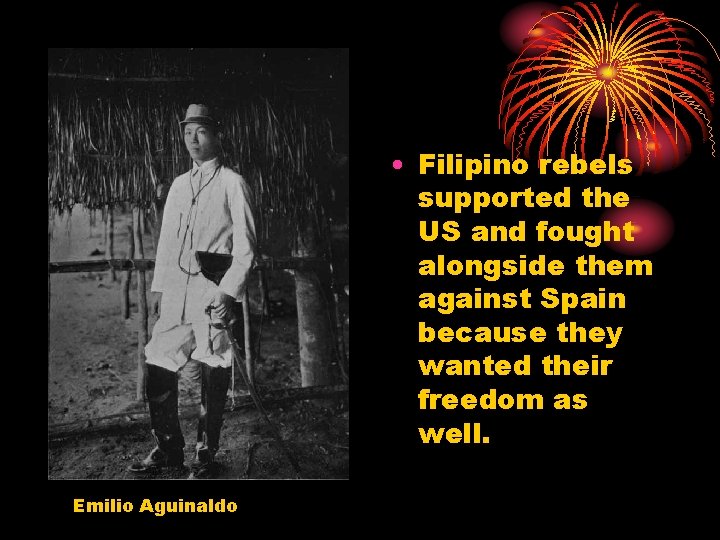
• Filipino rebels supported the US and fought alongside them against Spain because they wanted their freedom as well. Emilio Aguinaldo
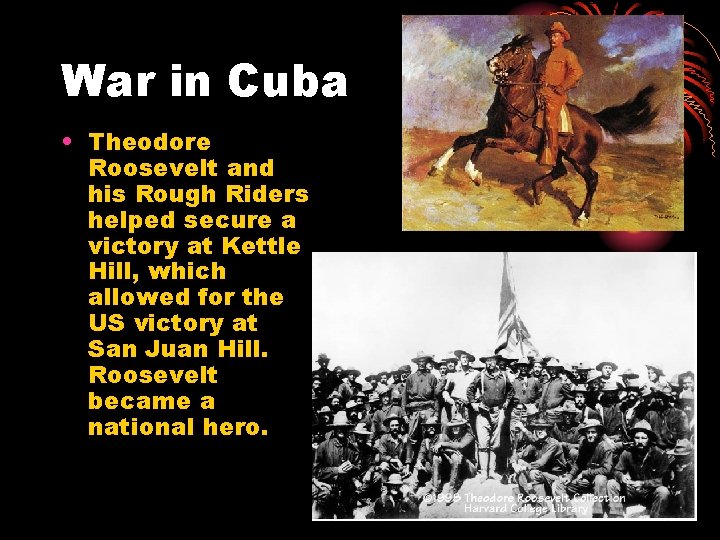
War in Cuba • Theodore Roosevelt and his Rough Riders helped secure a victory at Kettle Hill, which allowed for the US victory at San Juan Hill. Roosevelt became a national hero.
Treaty of Paris • US and Spain signed an armistice on August 12, 1898. • Spain freed Cuba • US got Guam and Puerto Rico from Spain and bought the Philippines for $20 million
Annexation of the Philippines • Use p. 557 to complete the chart on your notes with a partner.