
American Imperialism Chapter 30 America on the World
- Slides: 52
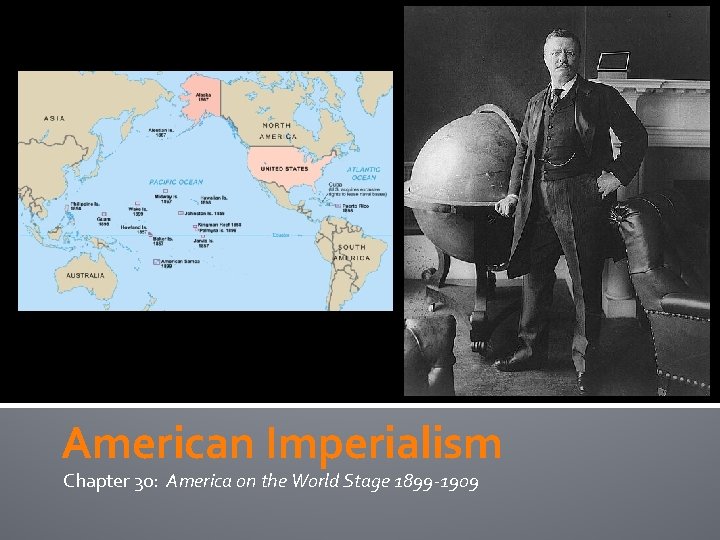
American Imperialism Chapter 30: America on the World Stage 1899 -1909
DVD/Videos �The Century: America’s Time Volume 1 ▪ Seeds of Change
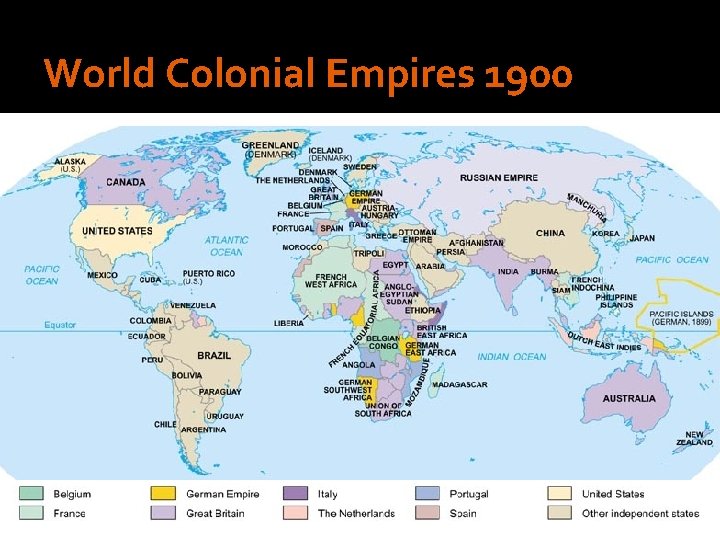
World Colonial Empires 1900
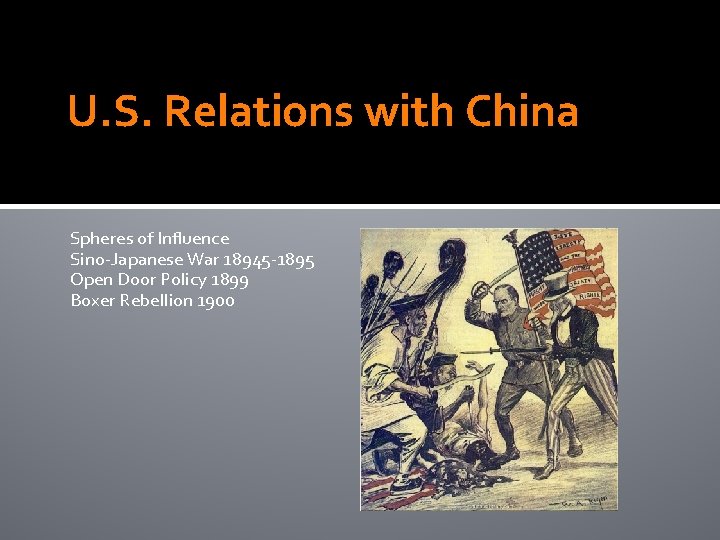
U. S. Relations with China Spheres of Influence Sino-Japanese War 18945 -1895 Open Door Policy 1899 Boxer Rebellion 1900
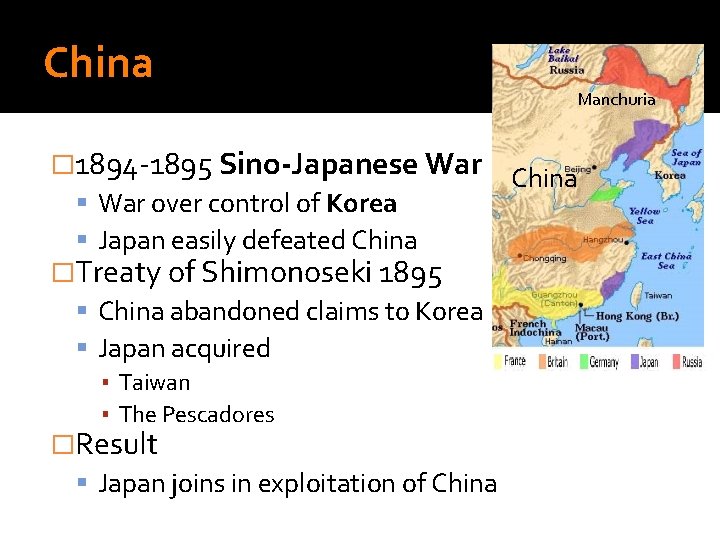
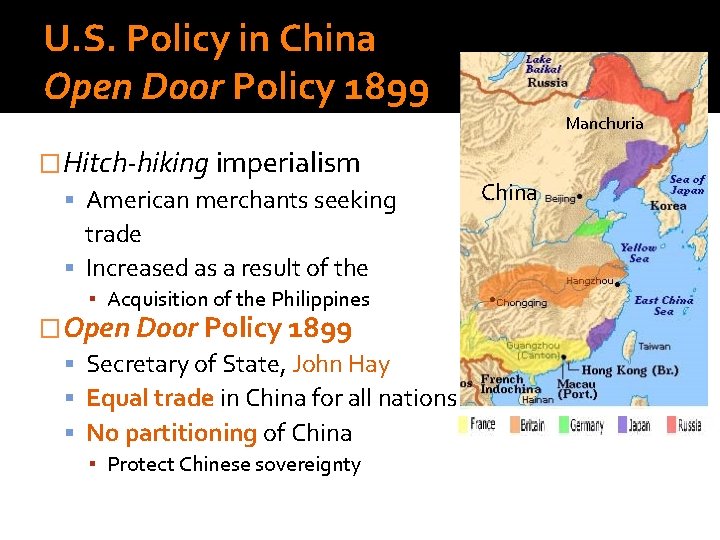
China � 1894 -1895 Sino-Japanese War over control of Korea Japan easily defeated China �Treaty of Shimonoseki 1895 China abandoned claims to Korea Japan acquired ▪ Taiwan ▪ The Pescadores �Result Japan joins in exploitation of China Manchuria China
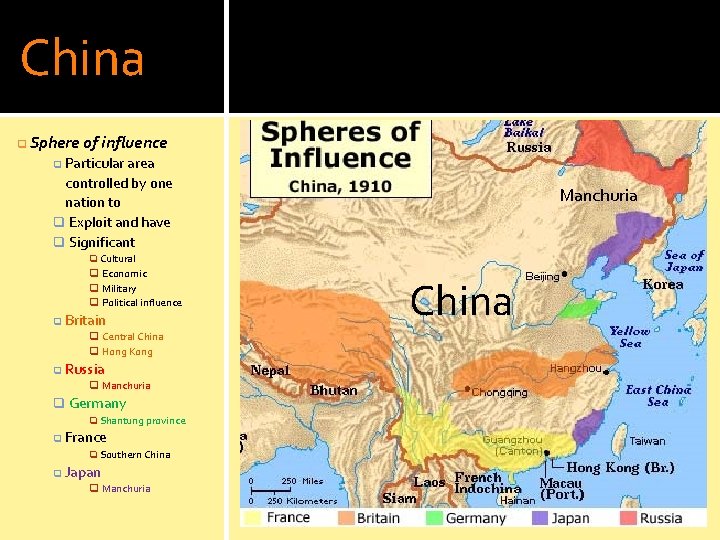
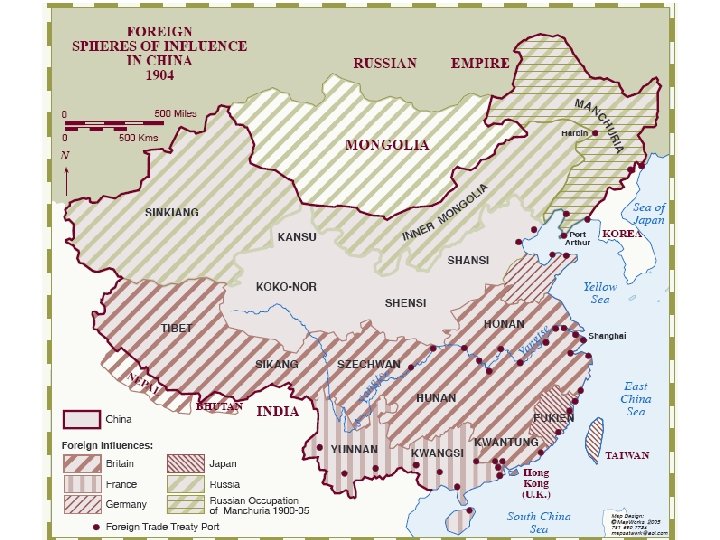
China q Sphere of influence q Particular area controlled by one nation to q Exploit and have q Significant Manchuria q Cultural q Economic q Military q Political influence q Britain q Central China q Hong Kong q Russia q Manchuria q Germany q Shantung province q France q Southern China q Japan q Manchuria China
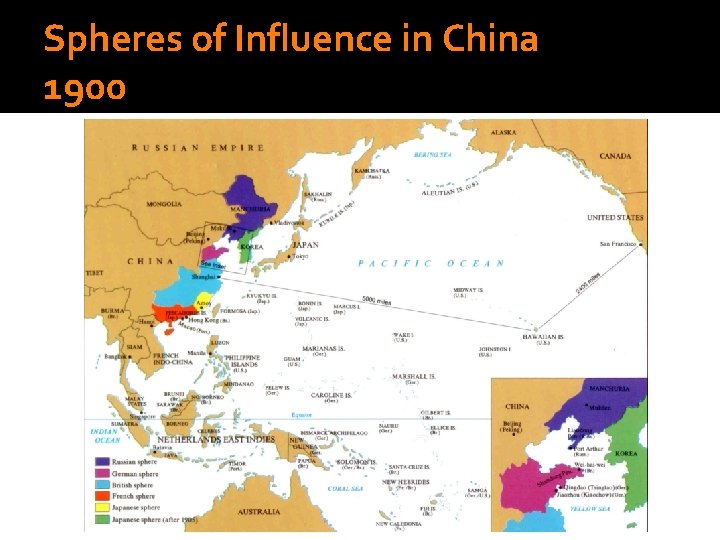
Spheres of Influence in China 1900
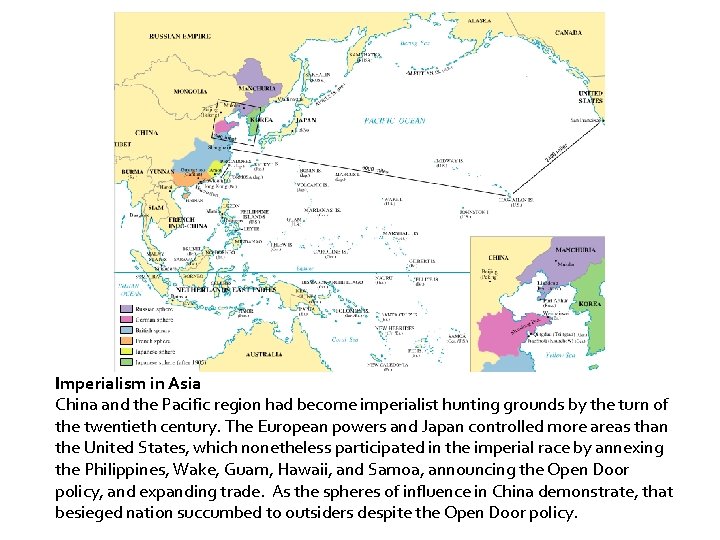
Imperialism in Asia China and the Pacific region had become imperialist hunting grounds by the turn of the twentieth century. The European powers and Japan controlled more areas than the United States, which nonetheless participated in the imperial race by annexing the Philippines, Wake, Guam, Hawaii, and Samoa, announcing the Open Door policy, and expanding trade. As the spheres of influence in China demonstrate, that besieged nation succumbed to outsiders despite the Open Door policy.
U. S. Policy in China Open Door Policy 1899 Manchuria �Hitch-hiking imperialism American merchants seeking trade Increased as a result of the ▪ Acquisition of the Philippines �Open Door Policy 1899 Secretary of State, John Hay Equal trade in China for all nations No partitioning of China ▪ Protect Chinese sovereignty China
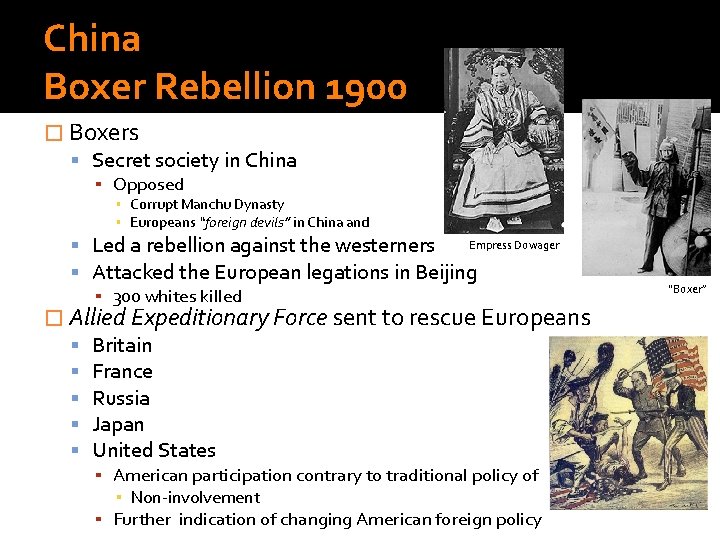
China Boxer Rebellion 1900 � Boxers Secret society in China ▪ Opposed ▪ Corrupt Manchu Dynasty ▪ Europeans “foreign devils” in China and Empress Dowager Led a rebellion against the westerners Attacked the European legations in Beijing ▪ 300 whites killed � Allied Expeditionary Force sent to rescue Europeans Britain France Russia Japan United States ▪ American participation contrary to traditional policy of ▪ Non-involvement ▪ Further indication of changing American foreign policy “Boxer”
Election of 1900 Mc. Kinley-Roosevelt
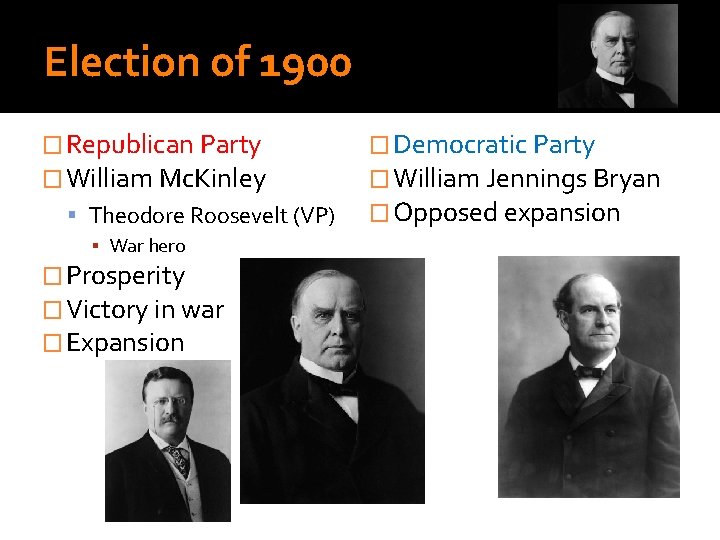
Election of 1900 � Republican Party � William Mc. Kinley Theodore Roosevelt (VP) ▪ War hero � Prosperity � Victory in war � Expansion � Democratic Party � William Jennings Bryan � Opposed expansion
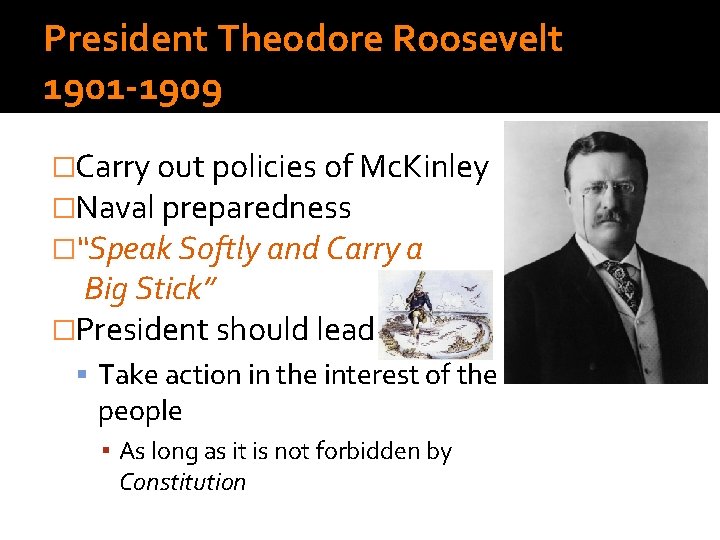
President Theodore Roosevelt 1901 -1909 �Carry out policies of Mc. Kinley �Naval preparedness �“Speak Softly and Carry a Big Stick” �President should lead Take action in the interest of the people ▪ As long as it is not forbidden by Constitution
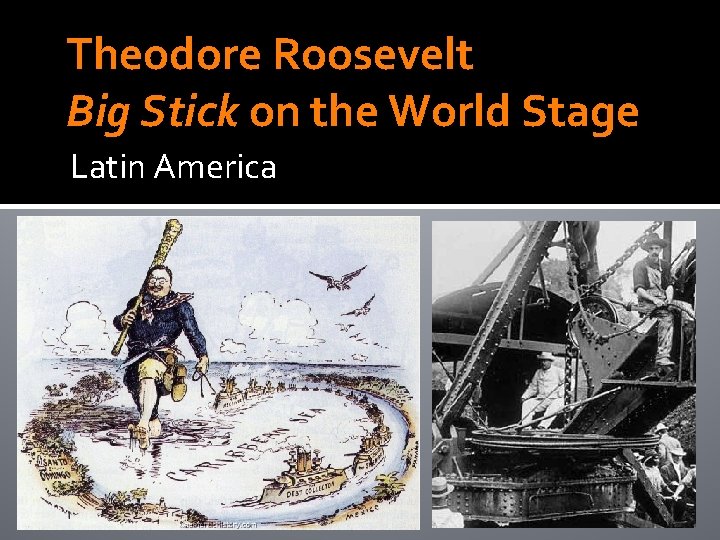
Theodore Roosevelt Big Stick on the World Stage Latin America
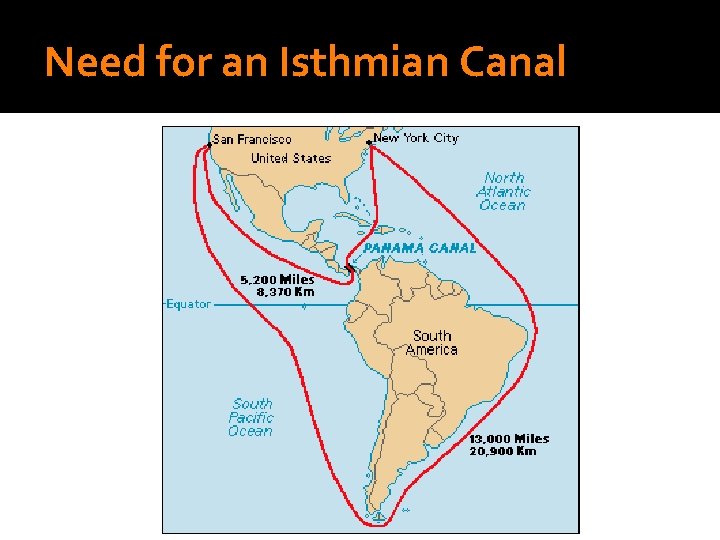
Need for an Isthmian Canal
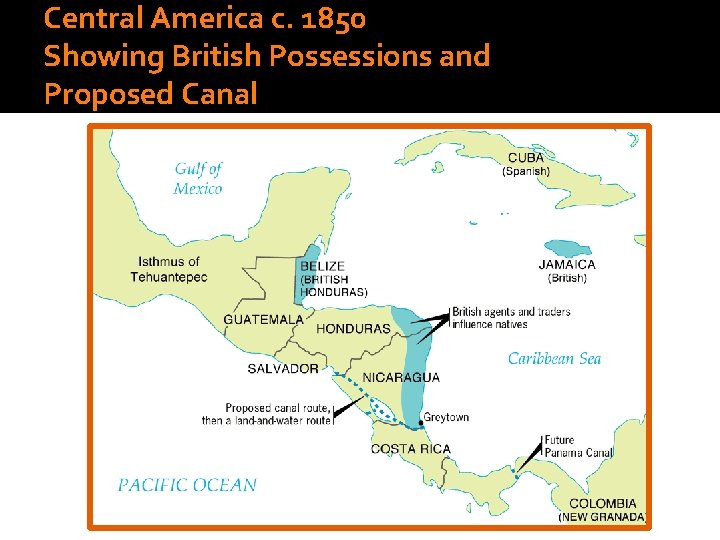
Central America c. 1850 Showing British Possessions and Proposed Canal
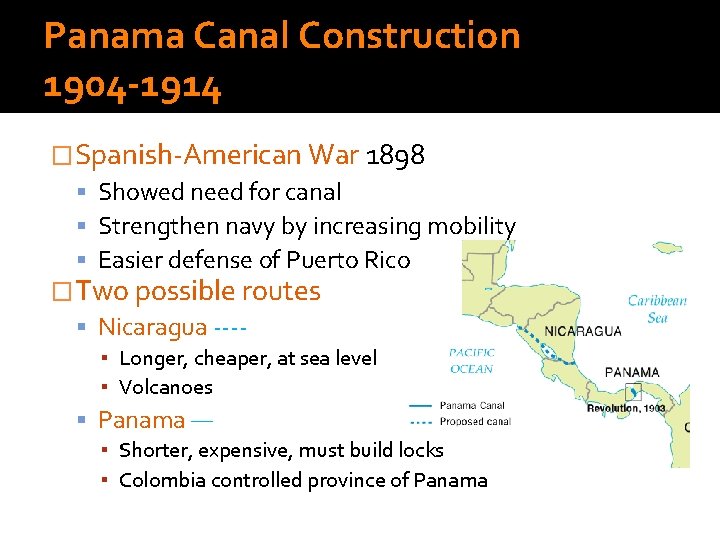
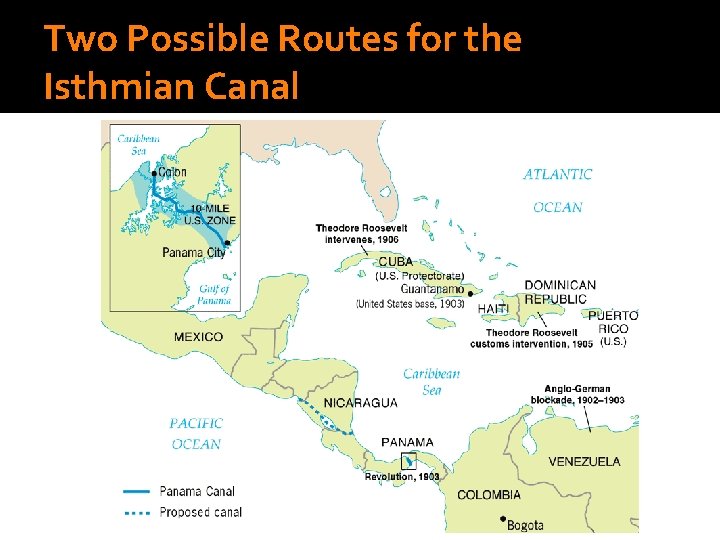
Panama Canal Construction 1904 -1914 �Spanish-American War 1898 Showed need for canal Strengthen navy by increasing mobility Easier defense of Puerto Rico �Two possible routes Nicaragua ---▪ Longer, cheaper, at sea level ▪ Volcanoes Panama — ▪ Shorter, expensive, must build locks ▪ Colombia controlled province of Panama
Two Possible Routes for the Isthmian Canal
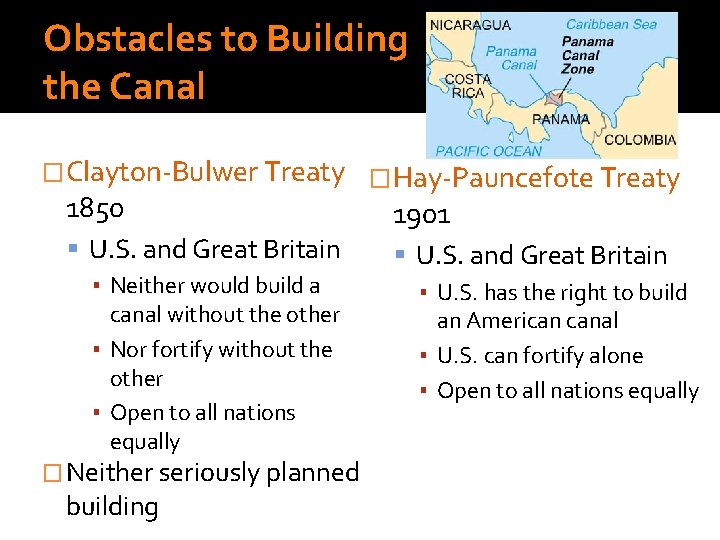
Obstacles to Building the Canal �Clayton-Bulwer Treaty �Hay-Pauncefote Treaty 1850 U. S. and Great Britain ▪ Neither would build a canal without the other ▪ Nor fortify without the other ▪ Open to all nations equally � Neither seriously planned building 1901 U. S. and Great Britain ▪ U. S. has the right to build an American canal ▪ U. S. can fortify alone ▪ Open to all nations equally
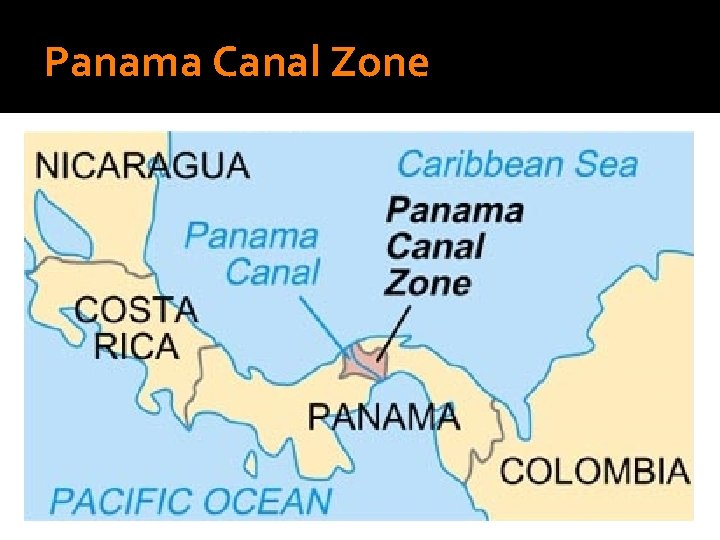
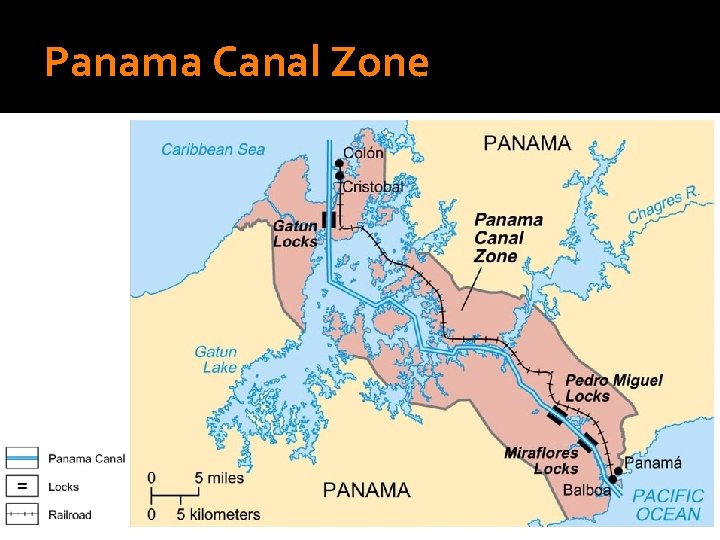
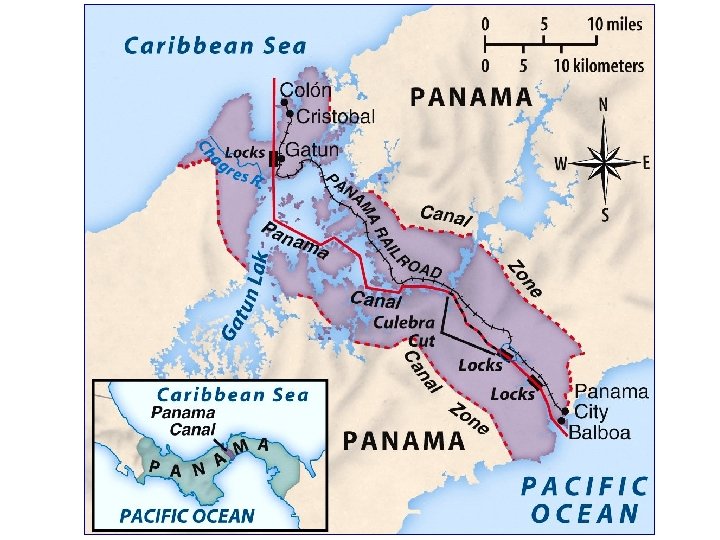
Panama Canal Zone
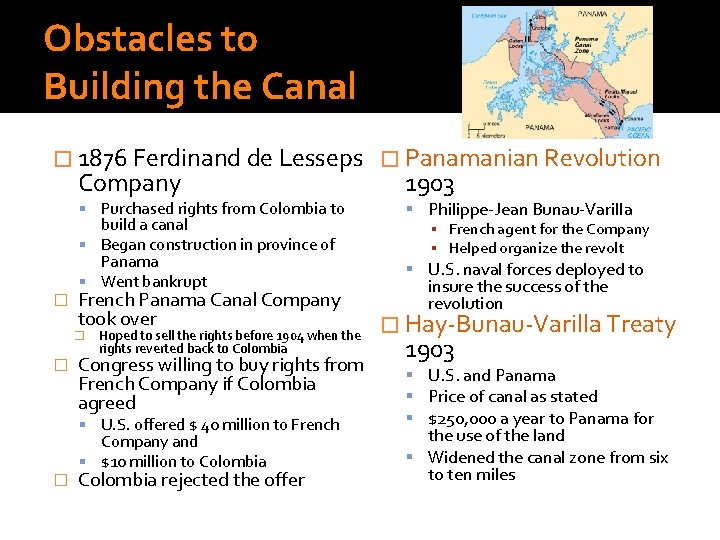
Obstacles to Building the Canal � 1876 Ferdinand de Lesseps � Panamanian Revolution Company Purchased rights from Colombia to � build a canal Began construction in province of Panama Went bankrupt French Panama Canal Company took over � � Hoped to sell the rights before 1904 when the rights reverted back to Colombia Congress willing to buy rights from French Company if Colombia agreed U. S. offered $ 40 million to French � Company and $10 million to Colombia rejected the offer 1903 Philippe-Jean Bunau-Varilla ▪ French agent for the Company ▪ Helped organize the revolt U. S. naval forces deployed to insure the success of the revolution � Hay-Bunau-Varilla Treaty 1903 U. S. and Panama Price of canal as stated $250, 000 a year to Panama for the use of the land Widened the canal zone from six to ten miles
Panama Canal Zone
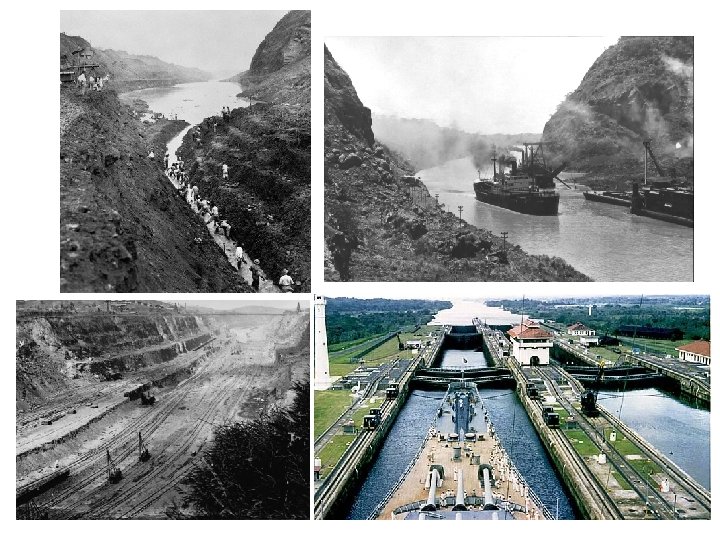
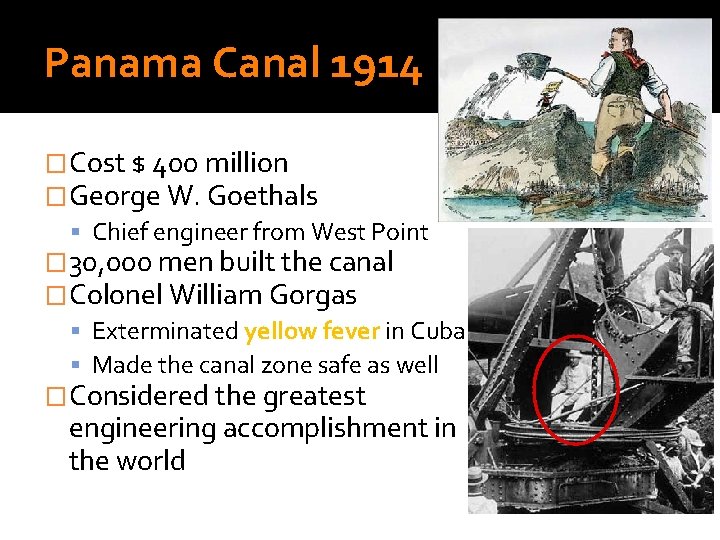
Panama Canal 1914 �Cost $ 400 million �George W. Goethals Chief engineer from West Point � 30, 000 men built the canal �Colonel William Gorgas Exterminated yellow fever in Cuba Made the canal zone safe as well �Considered the greatest engineering accomplishment in the world
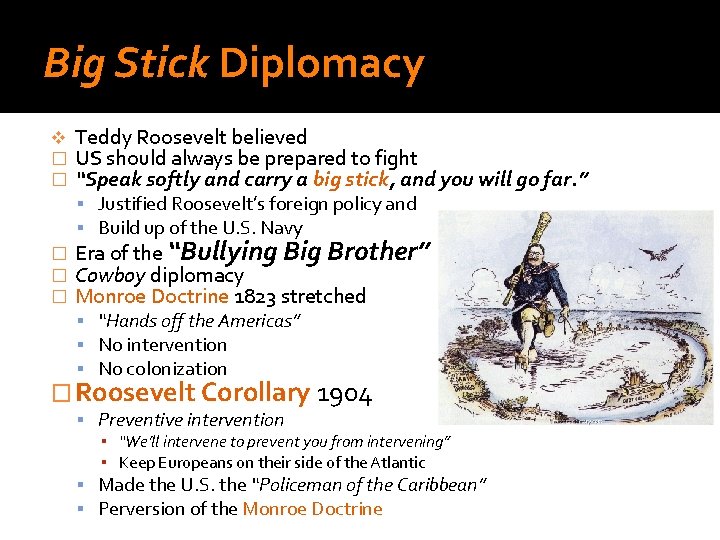
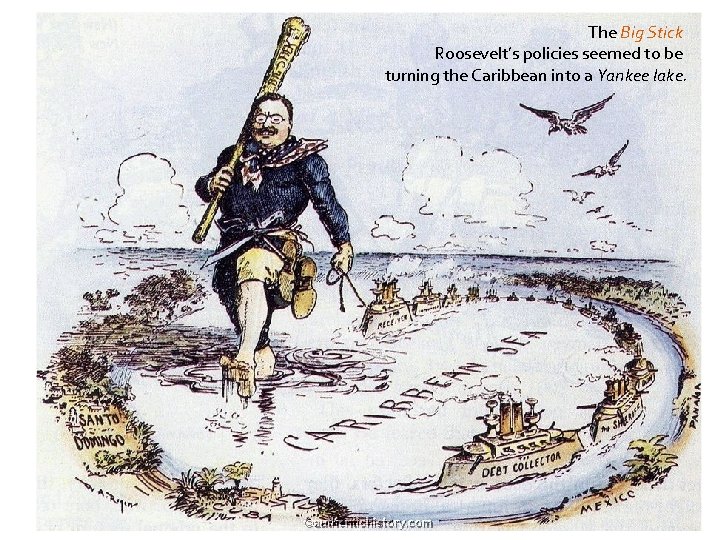
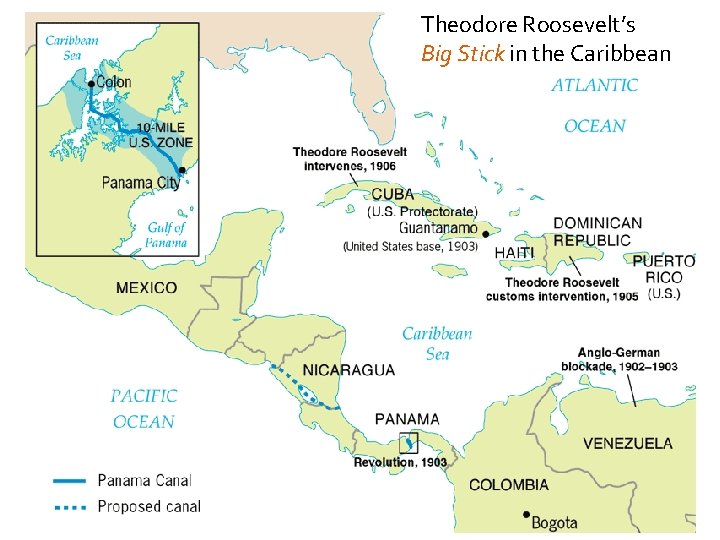
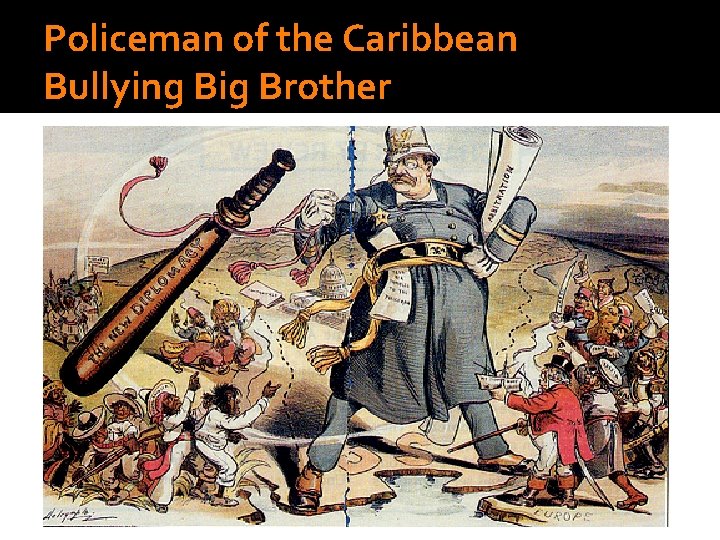
Big Stick Diplomacy v � � Teddy Roosevelt believed US should always be prepared to fight “Speak softly and carry a big stick, and you will go far. ” Justified Roosevelt’s foreign policy and Build up of the U. S. Navy � � � Era of the “Bullying Big Brother” Cowboy diplomacy Monroe Doctrine 1823 stretched “Hands off the Americas” No intervention No colonization � Roosevelt Corollary 1904 Preventive intervention ▪ “We’ll intervene to prevent you from intervening” ▪ Keep Europeans on their side of the Atlantic Made the U. S. the “Policeman of the Caribbean” Perversion of the Monroe Doctrine
The Big Stick Roosevelt’s policies seemed to be turning the Caribbean into a Yankee lake.
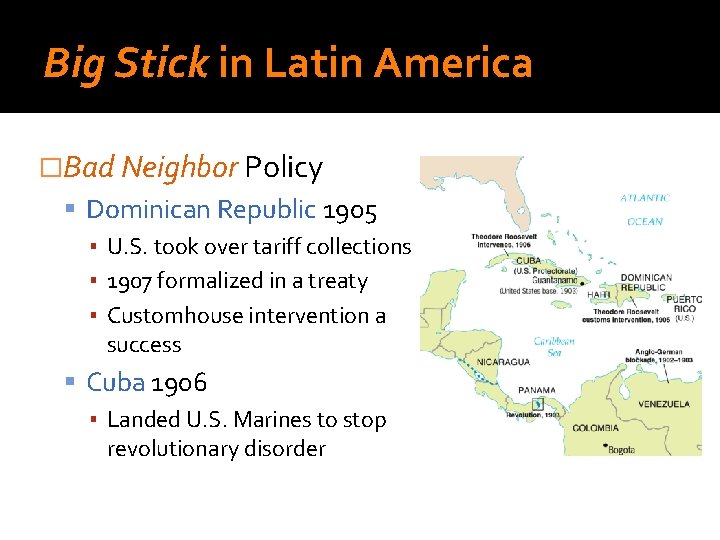
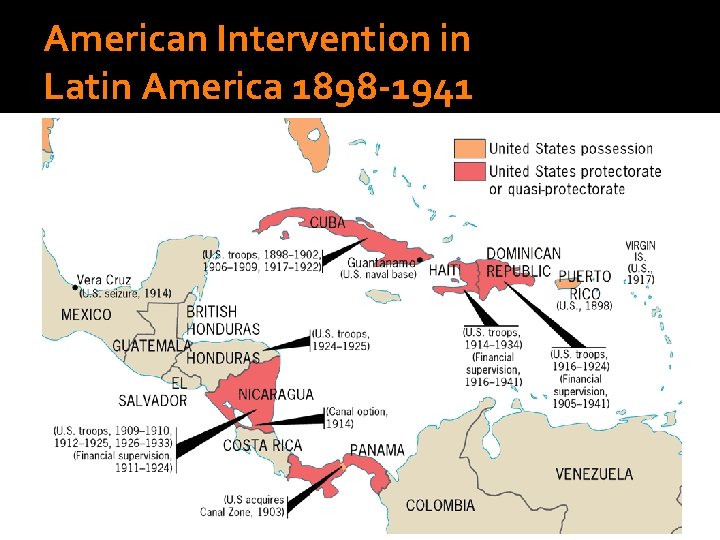
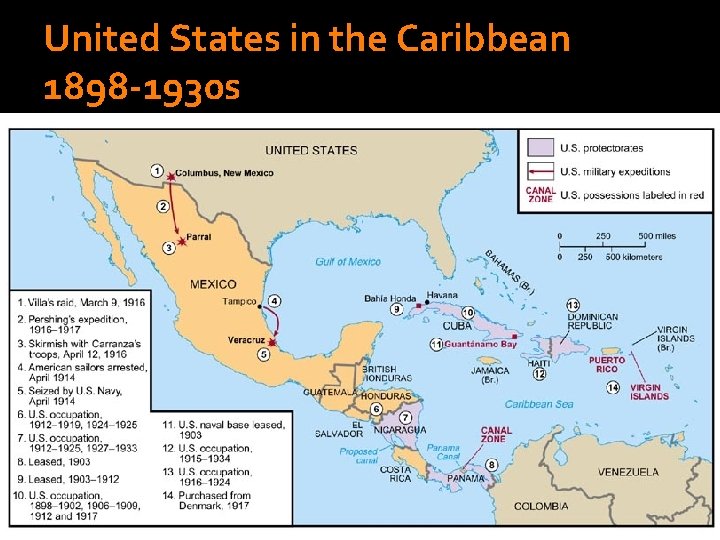
Big Stick in Latin America �Bad Neighbor Policy Dominican Republic 1905 ▪ U. S. took over tariff collections ▪ 1907 formalized in a treaty ▪ Customhouse intervention a success Cuba 1906 ▪ Landed U. S. Marines to stop revolutionary disorder
Theodore Roosevelt’s Big Stick in the Caribbean
American Intervention in Latin America 1898 -1941
United States in the Caribbean 1898 -1930 s
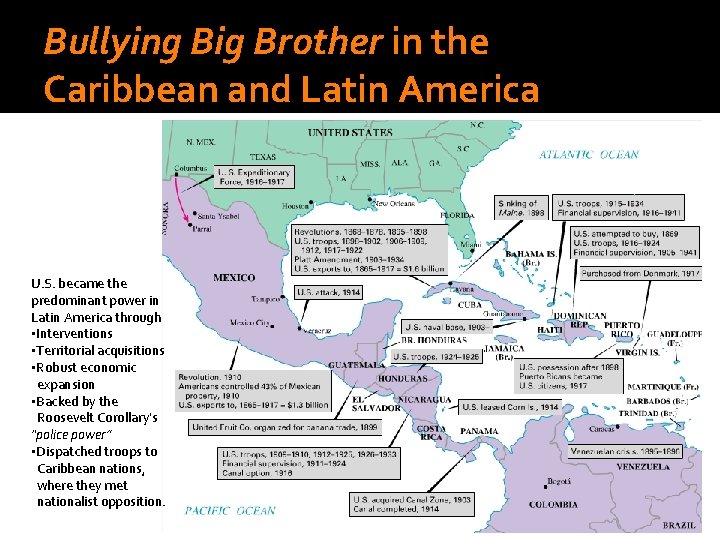
Bullying Big Brother in the Caribbean and Latin America U. S. became the predominant power in Latin America through • Interventions • Territorial acquisitions • Robust economic expansion • Backed by the Roosevelt Corollary's "police power” • Dispatched troops to Caribbean nations, where they met nationalist opposition.
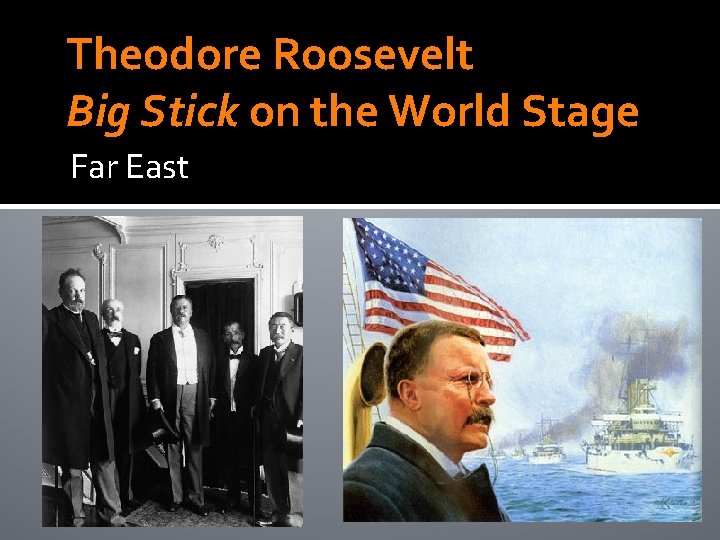
Theodore Roosevelt Big Stick on the World Stage Far East
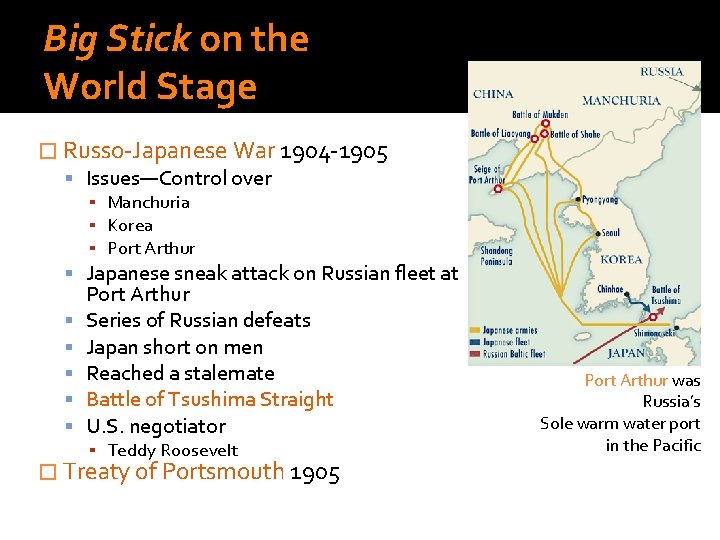
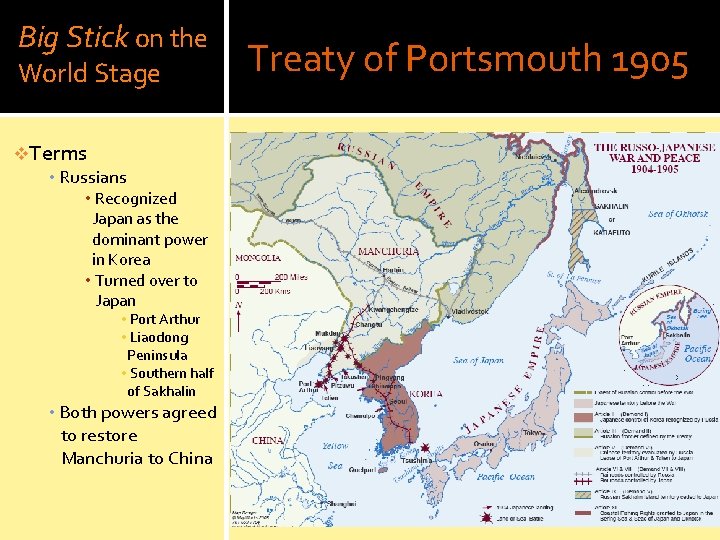
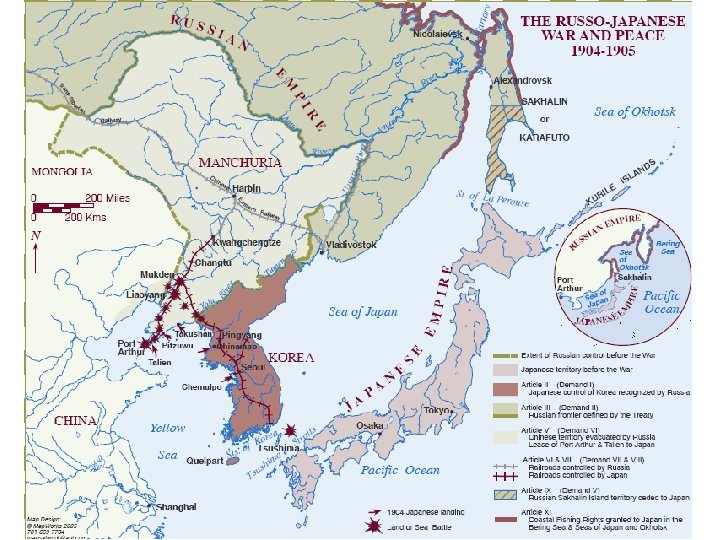
Big Stick on the World Stage � Russo-Japanese War 1904 -1905 Issues—Control over ▪ Manchuria ▪ Korea ▪ Port Arthur Japanese sneak attack on Russian fleet at Port Arthur Series of Russian defeats Japan short on men Reached a stalemate Battle of Tsushima Straight U. S. negotiator ▪ Teddy Roosevelt � Treaty of Portsmouth 1905 Port Arthur was Russia’s Sole warm water port in the Pacific
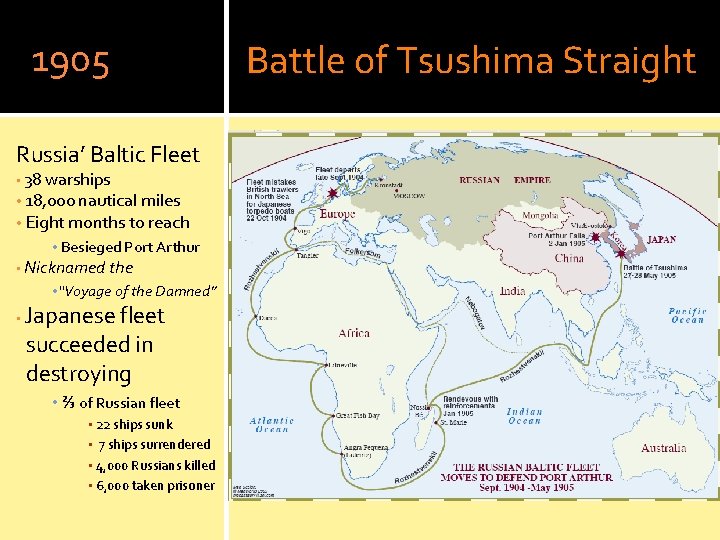
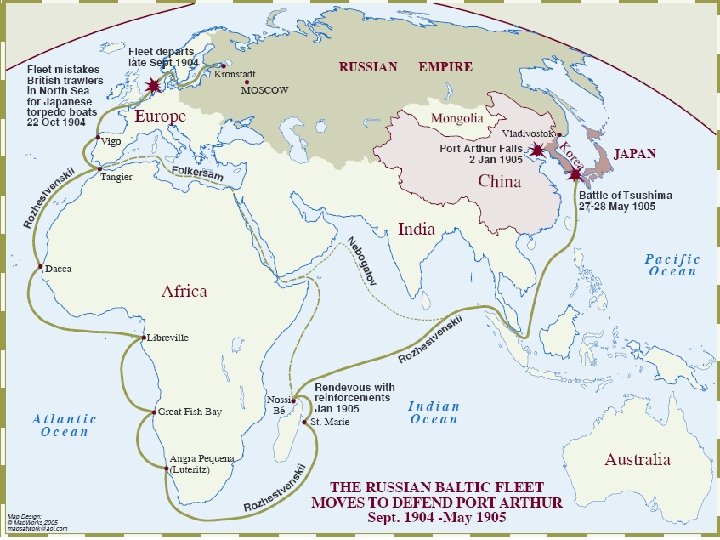
1905 Russia’ Baltic Fleet • 38 warships • 18, 000 nautical miles • Eight months to reach • Besieged Port Arthur • Nicknamed the • “Voyage of the Damned” • Japanese fleet succeeded in destroying • ⅔ of Russian fleet • 22 ships sunk • 7 ships surrendered • 4, 000 Russians killed • 6, 000 taken prisoner Battle of Tsushima Straight
Big Stick on the World Stage v. Terms • Russians • Recognized Japan as the dominant power in Korea • Turned over to Japan • Port Arthur • Liaodong Peninsula • Southern half of Sakhalin • Both powers agreed to restore Manchuria to China Treaty of Portsmouth 1905
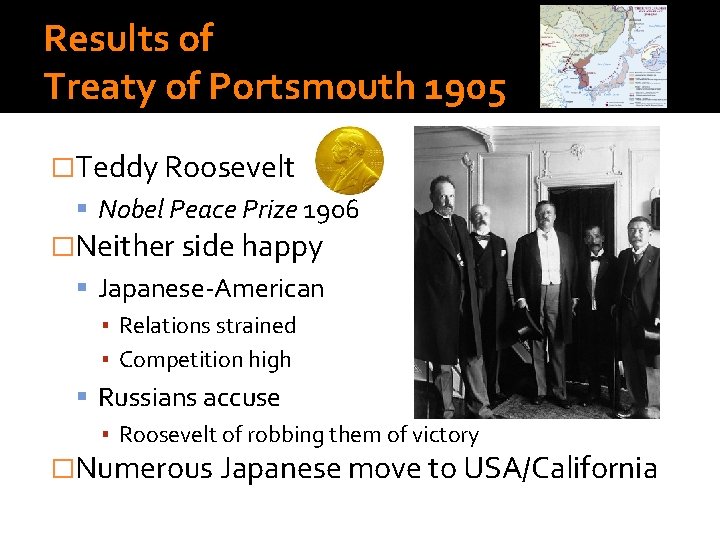
Results of Treaty of Portsmouth 1905 �Teddy Roosevelt Nobel Peace Prize 1906 �Neither side happy Japanese-American ▪ Relations strained ▪ Competition high Russians accuse ▪ Roosevelt of robbing them of victory �Numerous Japanese move to USA/California
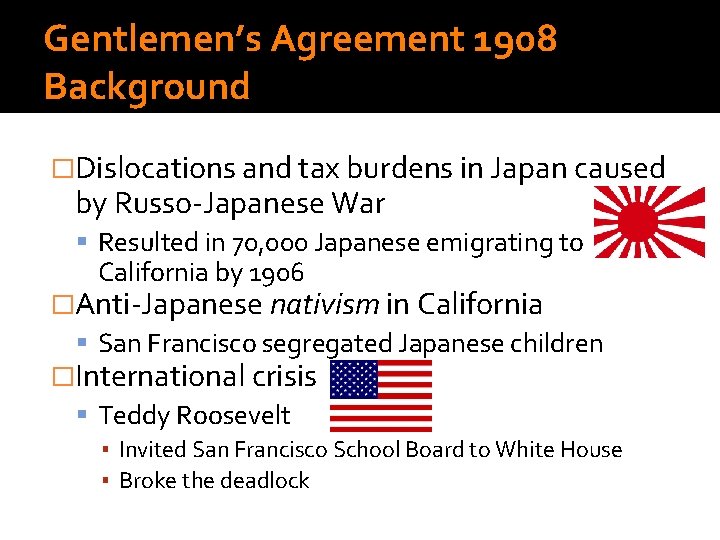
Gentlemen’s Agreement 1908 Background �Dislocations and tax burdens in Japan caused by Russo-Japanese War Resulted in 70, 000 Japanese emigrating to California by 1906 �Anti-Japanese nativism in California San Francisco segregated Japanese children �International crisis Teddy Roosevelt ▪ Invited San Francisco School Board to White House ▪ Broke the deadlock
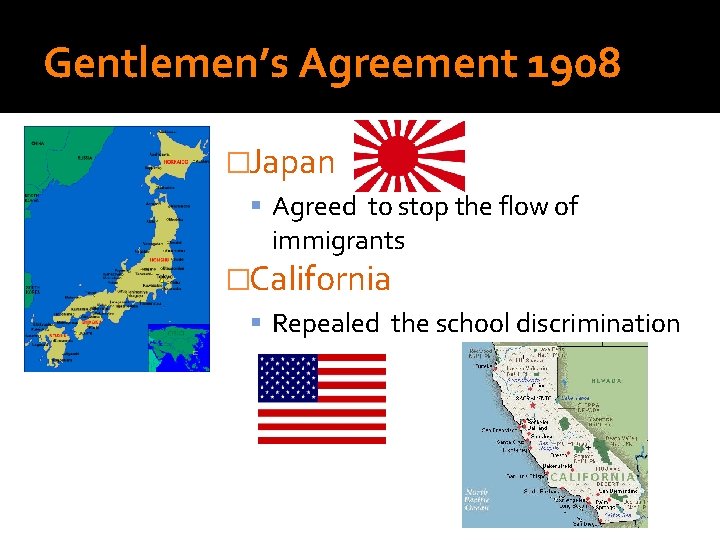
Gentlemen’s Agreement 1908 �Japan Agreed to stop the flow of immigrants �California Repealed the school discrimination
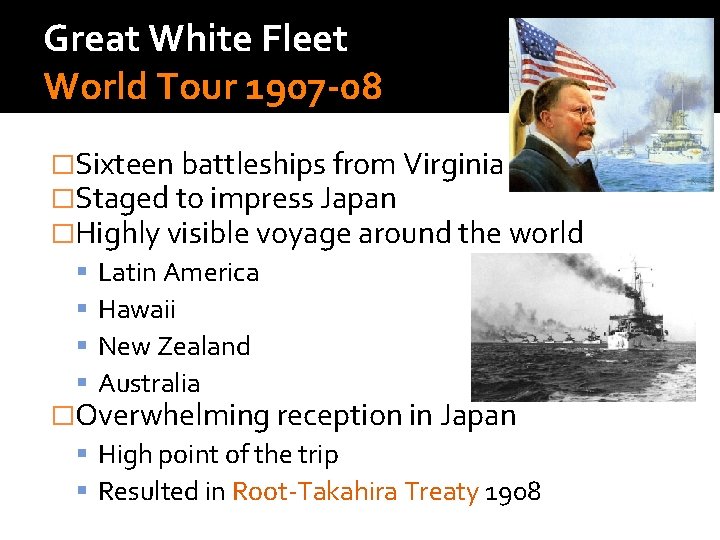
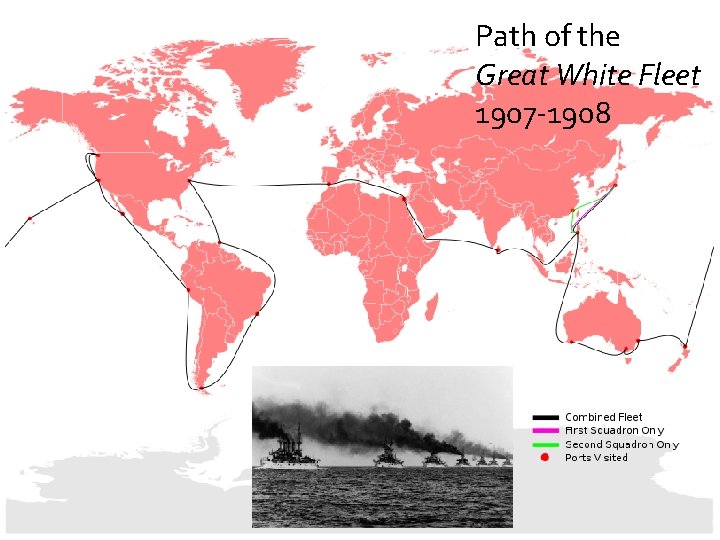
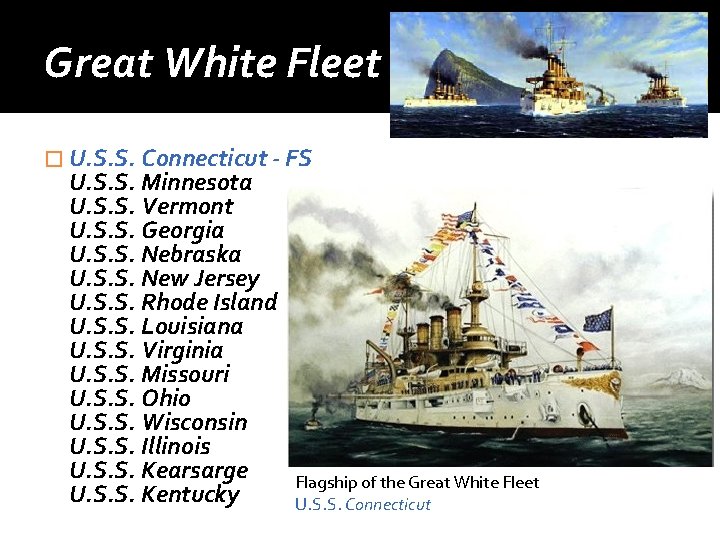
Great White Fleet World Tour 1907 -08 �Sixteen battleships from Virginia �Staged to impress Japan �Highly visible voyage around the world Latin America Hawaii New Zealand Australia �Overwhelming reception in Japan High point of the trip Resulted in Root-Takahira Treaty 1908
Path of the Great White Fleet 1907 -1908
Great White Fleet � U. S. S. Connecticut - FS U. S. S. Minnesota U. S. S. Vermont U. S. S. Georgia U. S. S. Nebraska U. S. S. New Jersey U. S. S. Rhode Island U. S. S. Louisiana U. S. S. Virginia U. S. S. Missouri U. S. S. Ohio U. S. S. Wisconsin U. S. S. Illinois U. S. S. Kearsarge U. S. S. Kentucky Flagship of the Great White Fleet U. S. S. Connecticut
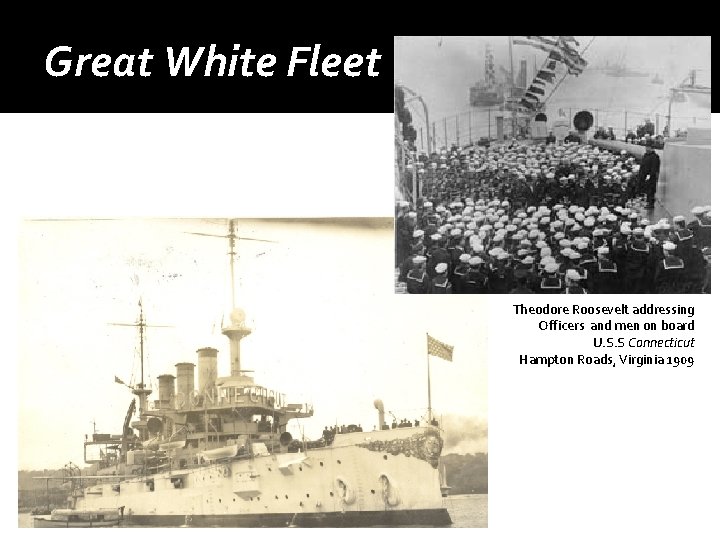
Great White Fleet Theodore Roosevelt addressing Officers and men on board U. S. S Connecticut Hampton Roads, Virginia 1909
Root-Takahira Treaty 1908 �Warm diplomatic atmosphere created by the visit of the Great White Fleet �U. S. and Japan agreed to Respect each other’s territorial possessions in the Pacific Uphold the Open Door in China
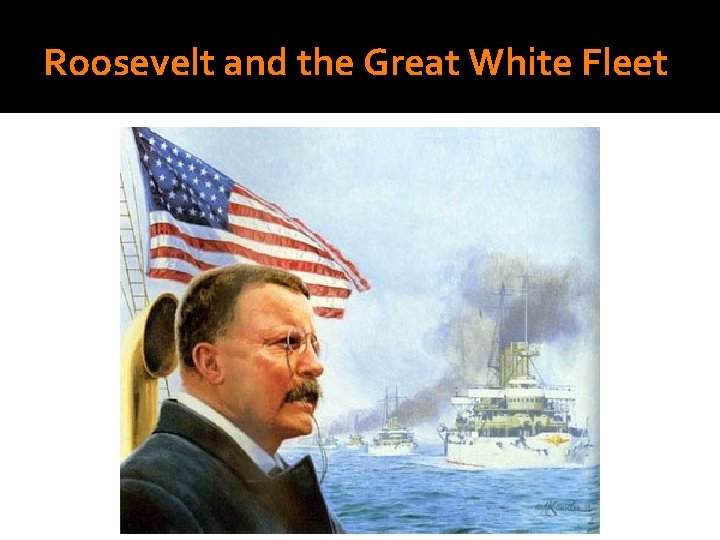
Roosevelt and the Great White Fleet
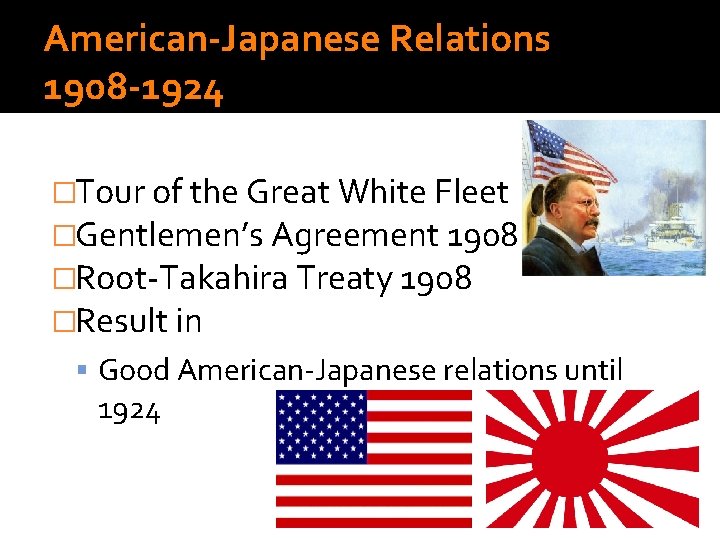
American-Japanese Relations 1908 -1924 �Tour of the Great White Fleet �Gentlemen’s Agreement 1908 �Root-Takahira Treaty 1908 �Result in Good American-Japanese relations until 1924
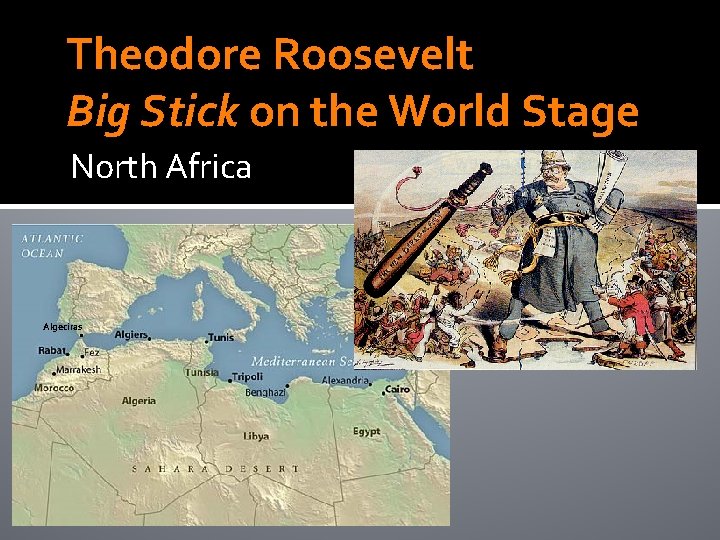
Theodore Roosevelt Big Stick on the World Stage North Africa Algeciras •
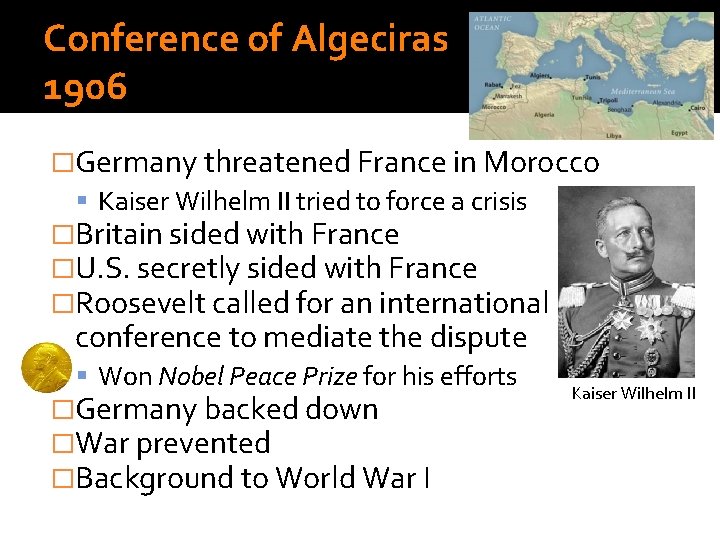
Conference of Algeciras 1906 �Germany threatened France in Morocco Kaiser Wilhelm II tried to force a crisis �Britain sided with France �U. S. secretly sided with France �Roosevelt called for an international conference to mediate the dispute Won Nobel Peace Prize for his efforts �Germany backed down �War prevented �Background to World War I Kaiser Wilhelm II
Policeman of the Caribbean Bullying Big Brother