
American History Unit 3 Rise of American Power
- Slides: 24
American History Unit 3: Rise of American Power and Progressivism Mr. Chortanoff Overview and Insights Chapters: 19, 20, 21
Key Learning Statements: 1. From 1865 until 1914, the United States emerged from isolation to become an imperial power. The United States gained power and territory through victory in war, annexation, purchase, and economic influence. 2. Progressivism was a call for political, economic, and social reform by the gov’t and society for greater equality. Unit Essential Questions: 1. How would you describe American Imperialism? 2. How would you summarize the Progressive reform era?
3 Concepts: E. Qs. A. Domestic Turmoil and Overseas Expansion • What were the causes, nature, and effects of American Imperialism, especially in the Spanish-American War? • How would you describe the economic and social troubles as reflected in tension between labor, big businesses/capitalists, and the government? B. Theodore Roosevelt and the Progressive Reformers • What were some major changes in daily life in urban and rural areas for blacks, whites, and Native Americans? • What was the Progressive party’s agenda? C. Progressivism at High Tide • What are the similarities and differences between the leadership and policies of TR, Taft, and Wilson? • How effective was the Progressive party’s agenda in securing political, economic, and social changes?
OVERVIEW: A New Role for America • The Progressive Era – Definition: Political belief that with the assistance of gov’t reforms and programs that promote political, social, and economic equality, then of American society will benefit. – Progressive reformers – Presidents support reforms – Seeking equality • Booker T. Washington and W. E. B. Du Bois • Becoming a World Power – Expansion in the Pacific • Purchase of Alaska, Hawaii, Midway, Samoa • “Open Door Policy” in China (Boxer Rebellion) – Relations with Latin America • US gains Puerto Rico, Guam, Philippines • US supports a rebellion and builds the Panama Canal • Roosevelt Corollary to the Monroe Doctrine
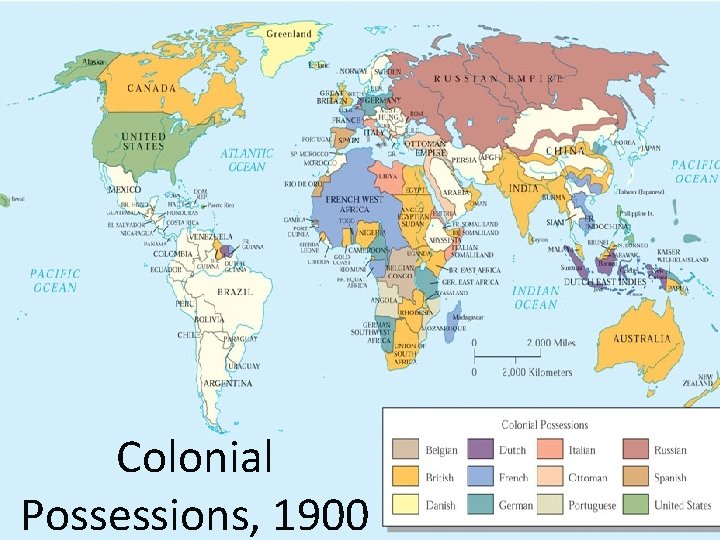
Colonial Possessions, 1900
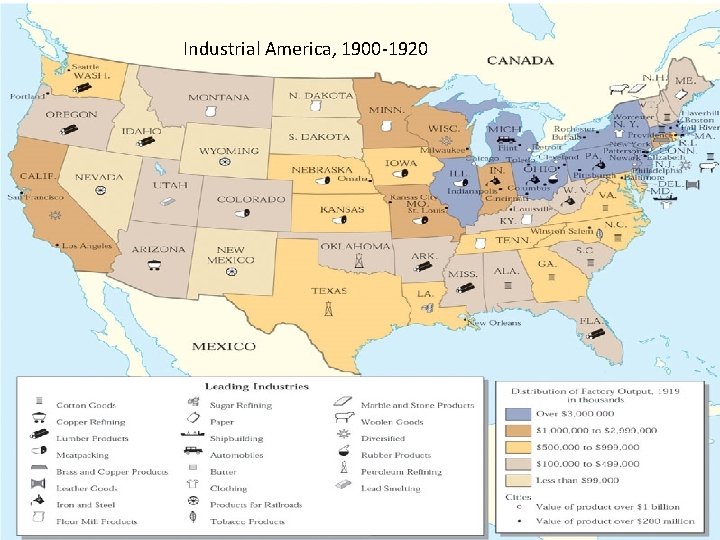
Industrial America, 1900 -1920
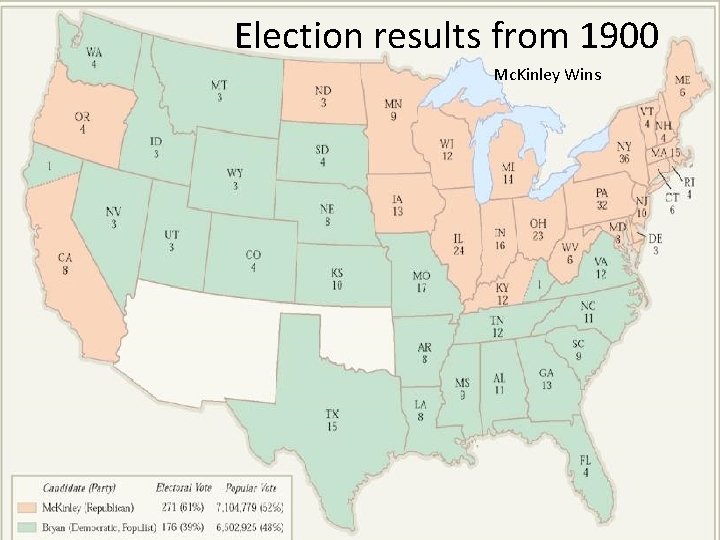
Election results from 1900 Mc. Kinley Wins
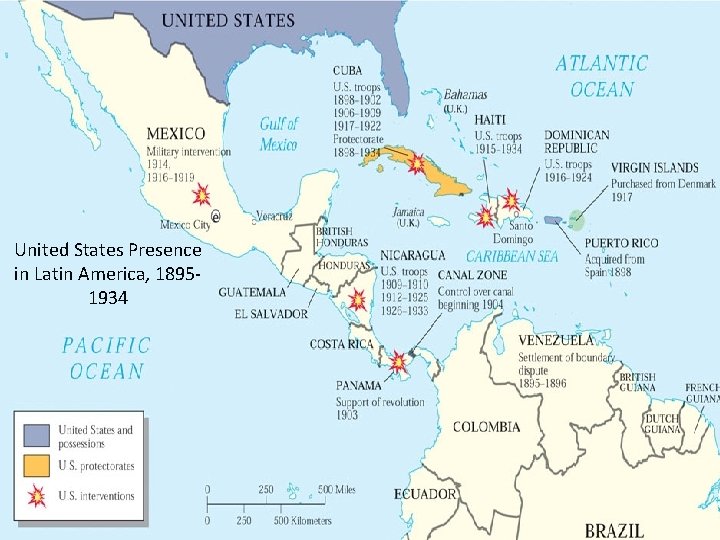
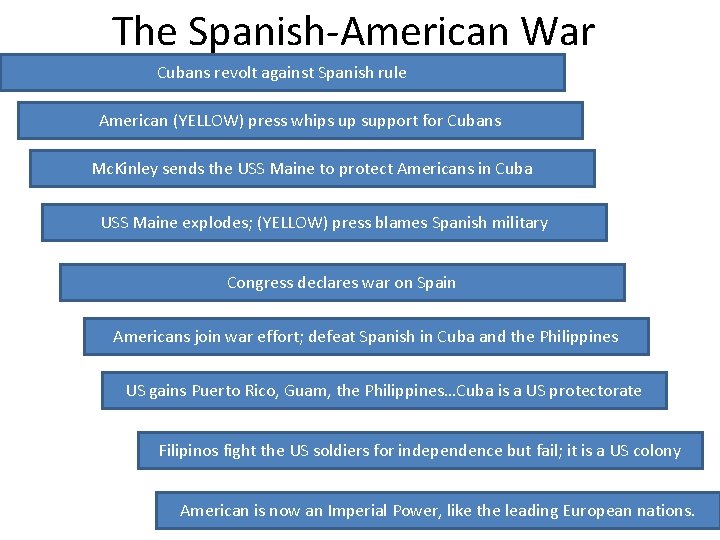
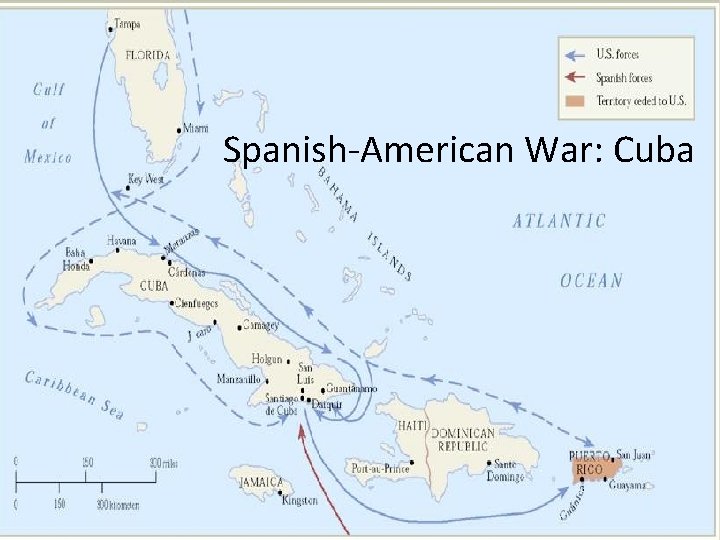
American Imperialism The Mc. Kinley Presidency: Achieving World Power Status • Spanish-American War most significant event of Mc. Kinley’s presidency (then his murder) – Causes include: sinking of the USS Maine, yellow journalism, and De Lôme letter – Americans appear eager for war (spread liberty or American economy and gain European prestige? ) – Peace treaty gives America territories: Cuba (temporary), Guam, Puerto Rico, and Philippines
United States Presence in Latin America, 18951934
The Spanish-American War Cubans revolt against Spanish rule American (YELLOW) press whips up support for Cubans Mc. Kinley sends the USS Maine to protect Americans in Cuba USS Maine explodes; (YELLOW) press blames Spanish military Congress declares war on Spain Americans join war effort; defeat Spanish in Cuba and the Philippines US gains Puerto Rico, Guam, the Philippines…Cuba is a US protectorate Filipinos fight the US soldiers for independence but fail; it is a US colony American is now an Imperial Power, like the leading European nations.
Spanish-American War: Cuba
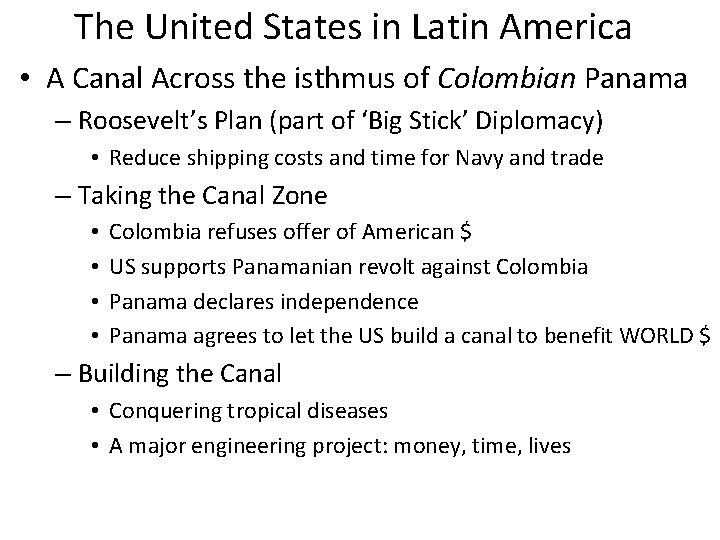
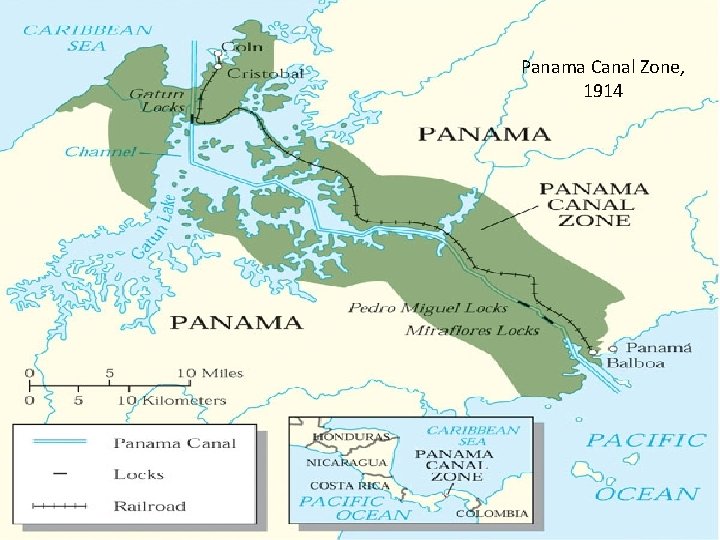
The United States in Latin America • A Canal Across the isthmus of Colombian Panama – Roosevelt’s Plan (part of ‘Big Stick’ Diplomacy) • Reduce shipping costs and time for Navy and trade – Taking the Canal Zone • • Colombia refuses offer of American $ US supports Panamanian revolt against Colombia Panama declares independence Panama agrees to let the US build a canal to benefit WORLD $ – Building the Canal • Conquering tropical diseases • A major engineering project: money, time, lives
Panama Canal Zone, 1914
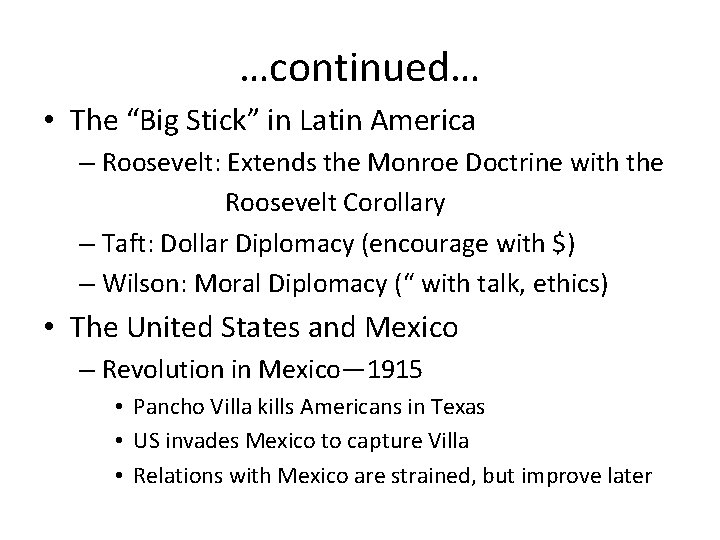
…continued… • The “Big Stick” in Latin America – Roosevelt: Extends the Monroe Doctrine with the Roosevelt Corollary – Taft: Dollar Diplomacy (encourage with $) – Wilson: Moral Diplomacy (“ with talk, ethics) • The United States and Mexico – Revolution in Mexico— 1915 • Pancho Villa kills Americans in Texas • US invades Mexico to capture Villa • Relations with Mexico are strained, but improve later
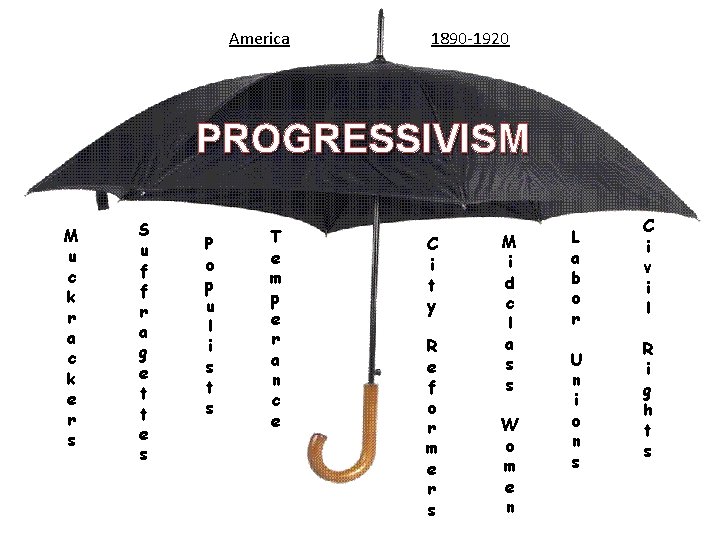
America 1890 -1920 PROGRESSIVISM M u c k r a c k e r s S u f f r a g e t t e s P o p u l i s t s T e m p e r a n c e C i t y R e f o r m e r s M i d c l a s s W o m e n L a b o r U n i o n s C i v i l R i g h t s
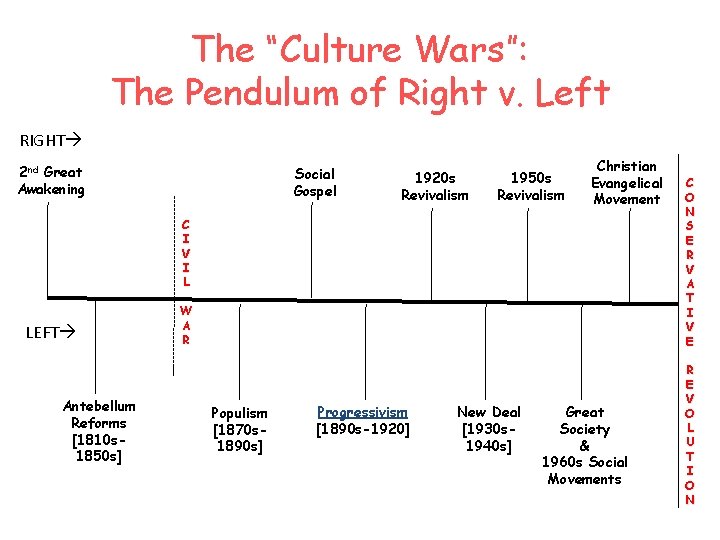
The “Culture Wars”: The Pendulum of Right v. Left RIGHT 2 nd Great Awakening Social Gospel 1920 s Revivalism 1950 s Revivalism Christian Evangelical Movement C I V I L LEFT Antebellum Reforms [1810 s 1850 s] W A R Populism [1870 s 1890 s] Progressivism [1890 s-1920] New Deal [1930 s 1940 s] Great Society & 1960 s Social Movements C O N S E R V A T I V E R E V O L U T I O N
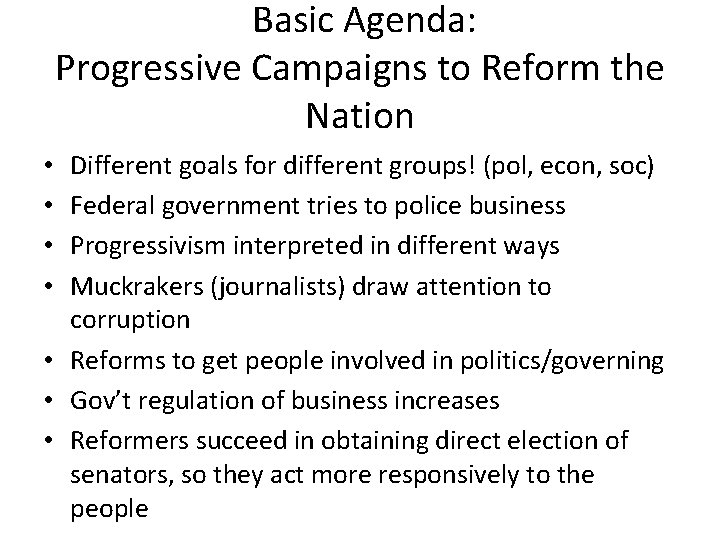
Basic Agenda: Progressive Campaigns to Reform the Nation Different goals for different groups! (pol, econ, soc) Federal government tries to police business Progressivism interpreted in different ways Muckrakers (journalists) draw attention to corruption • Reforms to get people involved in politics/governing • Gov’t regulation of business increases • Reformers succeed in obtaining direct election of senators, so they act more responsively to the people • •
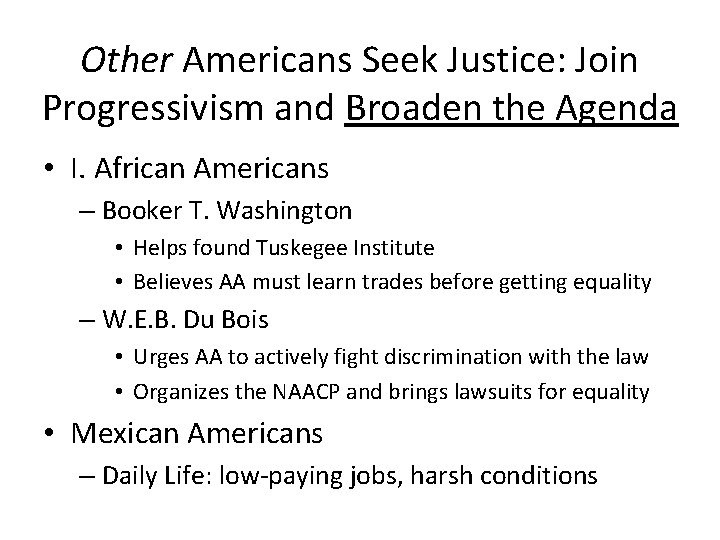
Other Americans Seek Justice: Join Progressivism and Broaden the Agenda • I. African Americans – Booker T. Washington • Helps found Tuskegee Institute • Believes AA must learn trades before getting equality – W. E. B. Du Bois • Urges AA to actively fight discrimination with the law • Organizes the NAACP and brings lawsuits for equality • Mexican Americans – Daily Life: low-paying jobs, harsh conditions
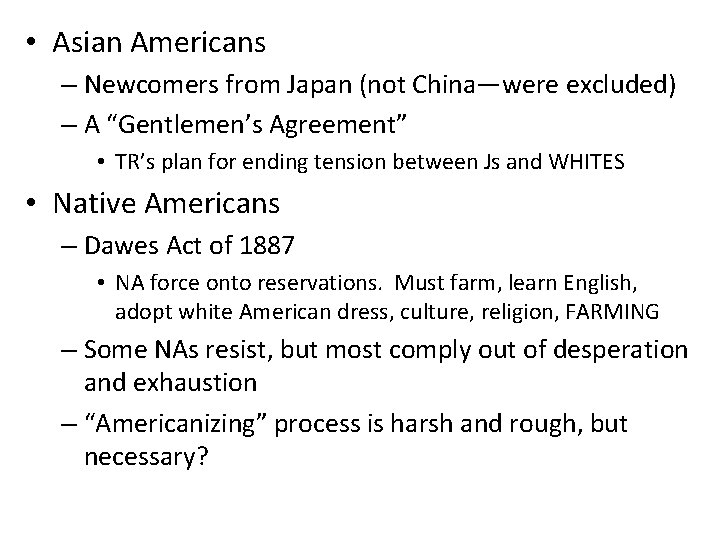
• Asian Americans – Newcomers from Japan (not China—were excluded) – A “Gentlemen’s Agreement” • TR’s plan for ending tension between Js and WHITES • Native Americans – Dawes Act of 1887 • NA force onto reservations. Must farm, learn English, adopt white American dress, culture, religion, FARMING – Some NAs resist, but most comply out of desperation and exhaustion – “Americanizing” process is harsh and rough, but necessary?
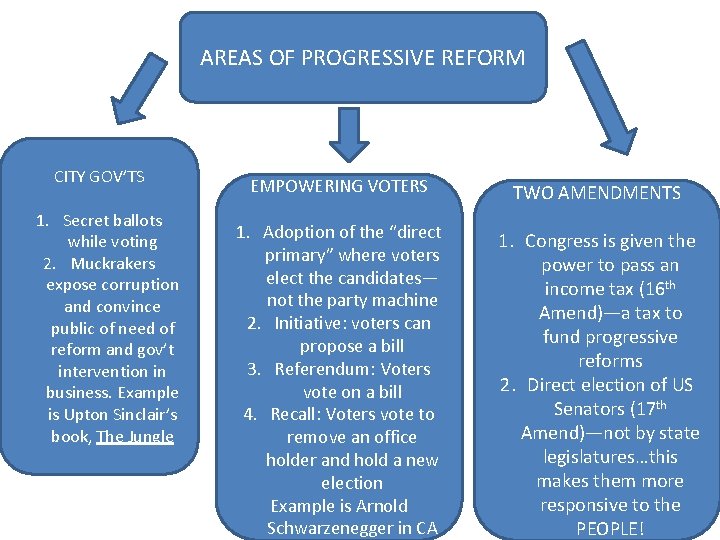
AREAS OF PROGRESSIVE REFORM CITY GOV’TS 1. Secret ballots while voting 2. Muckrakers expose corruption and convince public of need of reform and gov’t intervention in business. Example is Upton Sinclair’s book, The Jungle EMPOWERING VOTERS TWO AMENDMENTS 1. Adoption of the “direct primary” where voters elect the candidates— not the party machine 2. Initiative: voters can propose a bill 3. Referendum: Voters vote on a bill 4. Recall: Voters vote to remove an office holder and hold a new election Example is Arnold Schwarzenegger in CA 1. Congress is given the power to pass an income tax (16 th Amend)—a tax to fund progressive reforms 2. Direct election of US Senators (17 th Amend)—not by state legislatures…this makes them more responsive to the PEOPLE!
Women Win Reforms • Seneca Falls Convention of 1848 – Declaration of Sentiments…modeled on Dec of Indy • National Women Suffrage Association in 1869 • Women win right to vote in Wyoming, Utah, Colorado, and Idaho (why? ) • Carrie Chapman Catt leads NWSA with a plan for state by state suffrage • Women in the West and Midwest states win the vote • Women begin picketing the White House in 1917 • President Wilson agrees to support suffrage amendment in 1918 • Congress passes the 19 th Amendment in 1919; ratified by 3/4 th of the states in 1920
Progressives in the White House • THEODORE ROOSEVELT—Republican, 1900 -1908 – Attacks bad trusts – Sides with labor in coal miners strike – Gives the ICC the power to set RR rates – Brings more inspectors to meatpacking factories – Requires food and drug makers to list ingredients on packages – Tries to end false advertising and use of impure ingredients – Sets aside land for national parks (conservation)
• WILLIAM HOWARD TAFT—Republican 1908 -1912 – Sets up child labor office – Breaks up more trusts than TR – Favors graduated income tax (more you make, more the gov’t takes) – Approves of new safety rules for mines – Gives gov’t workers an 8 hour day (set the precedent for other businesses)
• WOODROW WILSON—Democrat, 1912 -1920 – Supports the Federal Trade Commission – Tries to break up trusts ( to increase completion) – Lowers the tariff – Signs graduated income tax into law – Regulates banking with the Federal Reserve Act (to control the money supply, lending and credit system, set interest rates) ***START OF WWI ENDS PROGRESSIVISM***