
American History Chapter 16 Section 3 Poverty Line


- Slides: 16
American History Chapter 16 Section 3
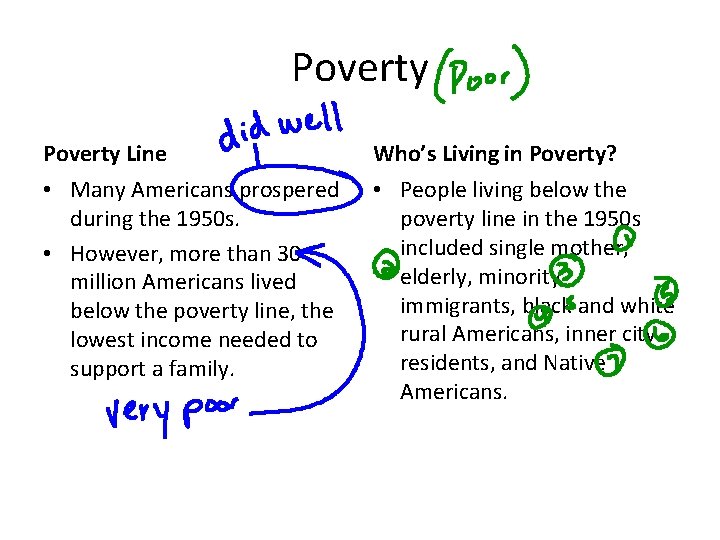
Poverty Line Who’s Living in Poverty? • Many Americans prospered during the 1950 s. • However, more than 30 million Americans lived below the poverty line, the lowest income needed to support a family. • People living below the poverty line in the 1950 s included single mother, elderly, minority immigrants, black and white rural Americans, inner city residents, and Native Americans.
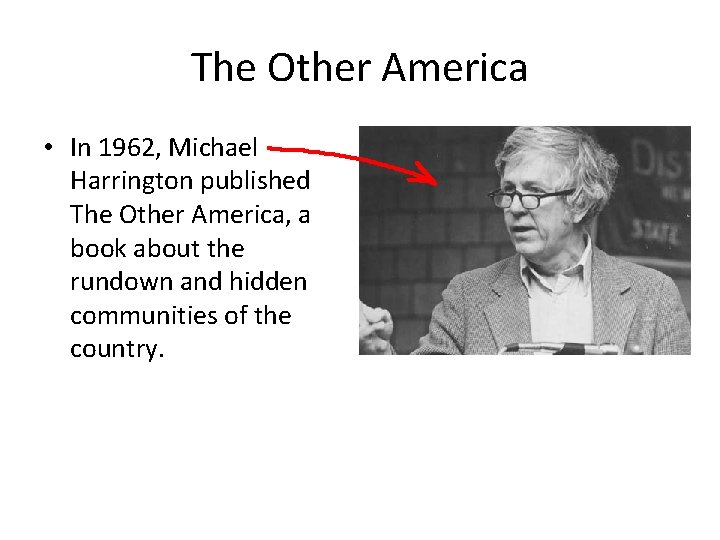
The Other America • In 1962, Michael Harrington published The Other America, a book about the rundown and hidden communities of the country.
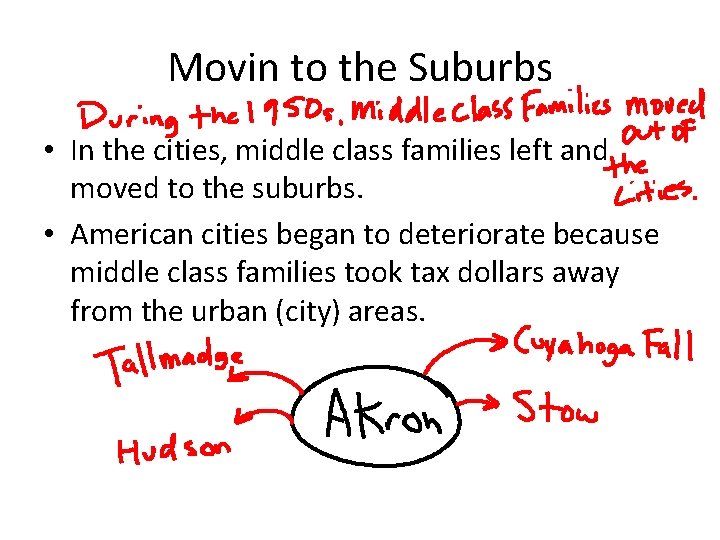
Movin to the Suburbs • In the cities, middle class families left and moved to the suburbs. • American cities began to deteriorate because middle class families took tax dollars away from the urban (city) areas.
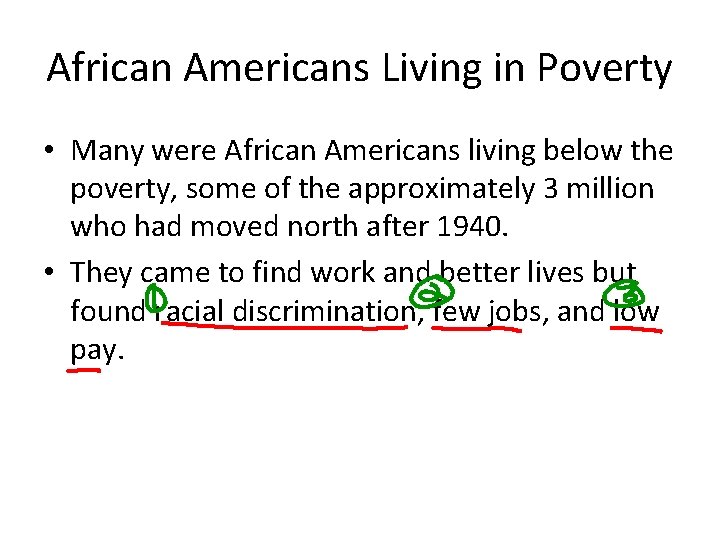
African Americans Living in Poverty • Many were African Americans living below the poverty, some of the approximately 3 million who had moved north after 1940. • They came to find work and better lives but found racial discrimination, few jobs, and low pay.
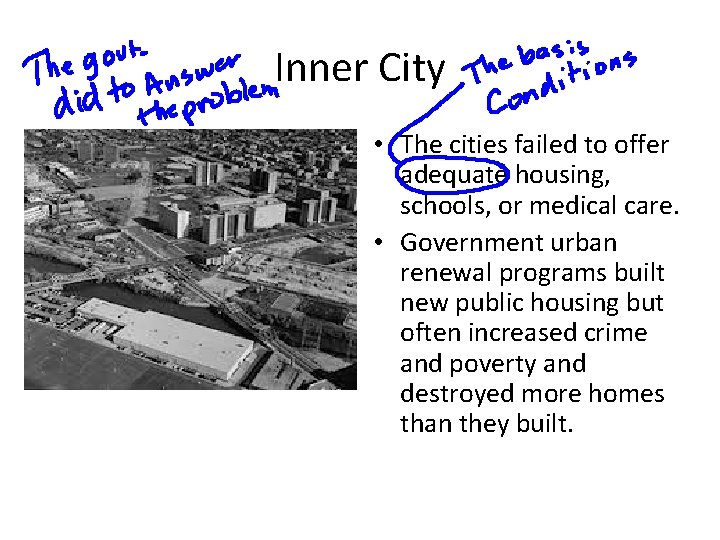
Inner City • The cities failed to offer adequate housing, schools, or medical care. • Government urban renewal programs built new public housing but often increased crime and poverty and destroyed more homes than they built.
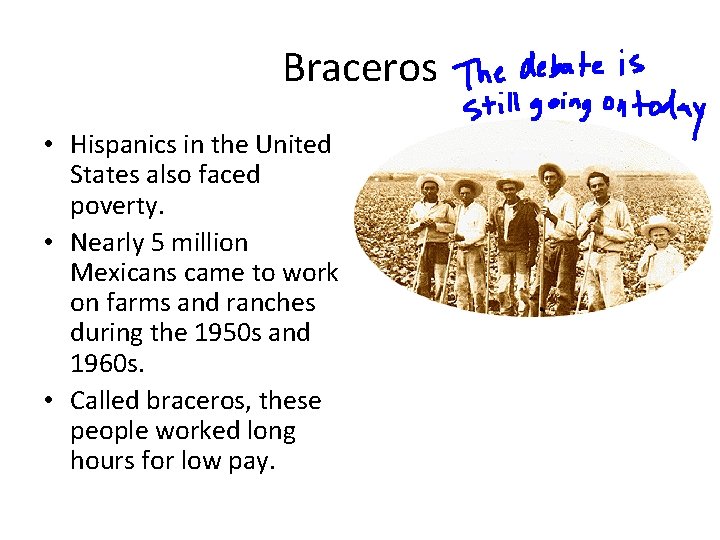
Braceros • Hispanics in the United States also faced poverty. • Nearly 5 million Mexicans came to work on farms and ranches during the 1950 s and 1960 s. • Called braceros, these people worked long hours for low pay.
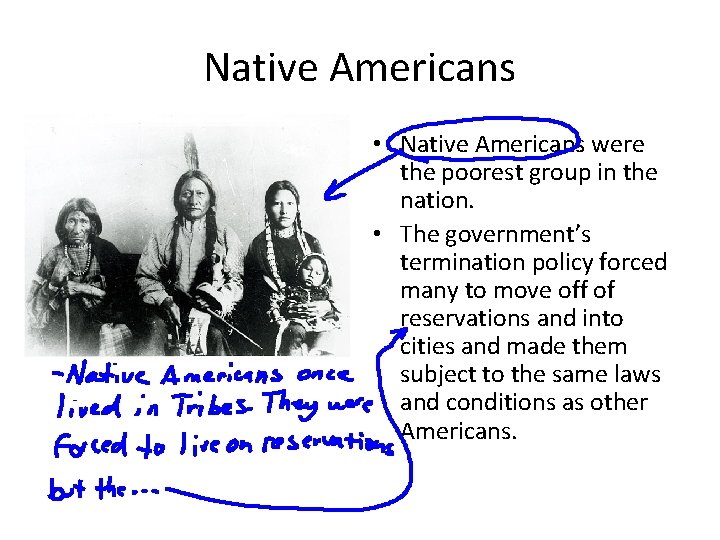
Native Americans • Native Americans were the poorest group in the nation. • The government’s termination policy forced many to move off of reservations and into cities and made them subject to the same laws and conditions as other Americans.
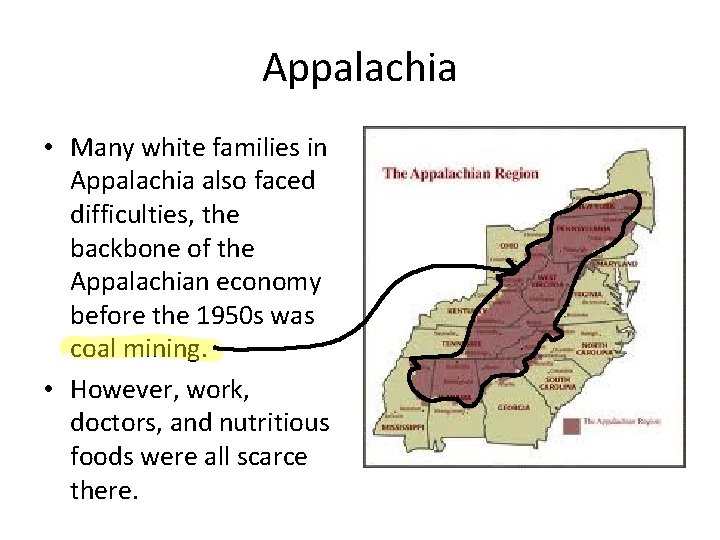
Appalachia • Many white families in Appalachia also faced difficulties, the backbone of the Appalachian economy before the 1950 s was coal mining. • However, work, doctors, and nutritious foods were all scarce there.
Delinquency • Another problem facing the nation was juvenile delinquency, or the antisocial and criminal behavior of young people. • Juvenile crime rose by 45 percent between 1948 and 1953. • A 1954 book titled 1, 000 Delinquents claimed that by 1955 one million young people would get into trouble. T • he book was correct. Americans searched for the causes.
Causes of Delinquency • Experts blamed juvenile delinquency on several causes. • They blamed it on a lack of religion and discipline. • Others claimed that television, movies, and comic books were the causes. • A number of experts pointed the finger at the rising divorce rate and fears of the military draft.
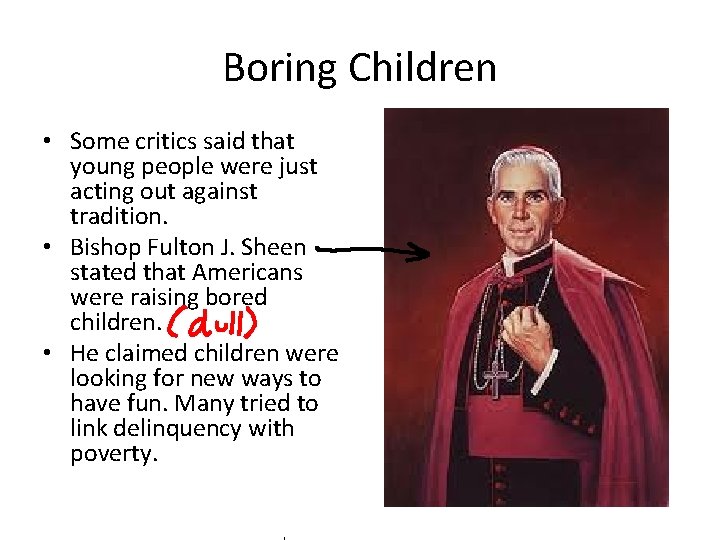
Boring Children • Some critics said that young people were just acting out against tradition. • Bishop Fulton J. Sheen stated that Americans were raising bored children. • He claimed children were looking for new ways to have fun. Many tried to link delinquency with poverty.
Who to Blame • However, delinquency involved children from all classes and races in American society. • Most teens were not involved in crime or drugs, but the public came to think of all young people as juvenile delinquents. • Many parents thought that improving the nation’s schools was the solution to delinquency.
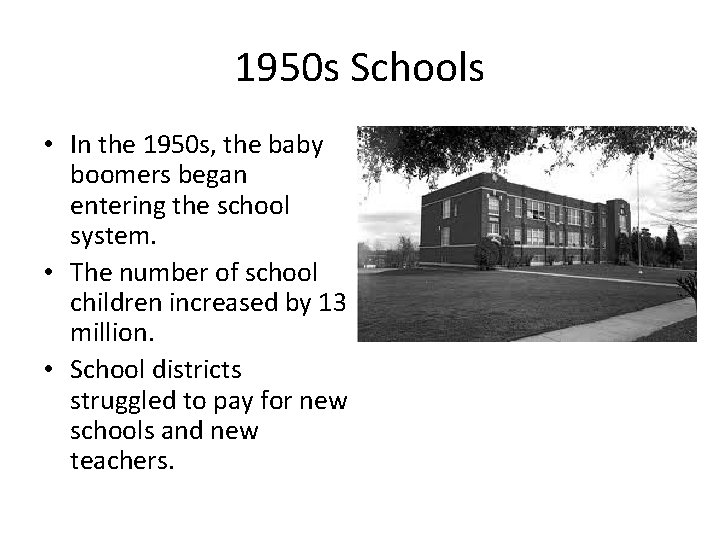
1950 s Schools • In the 1950 s, the baby boomers began entering the school system. • The number of school children increased by 13 million. • School districts struggled to pay for new schools and new teachers.
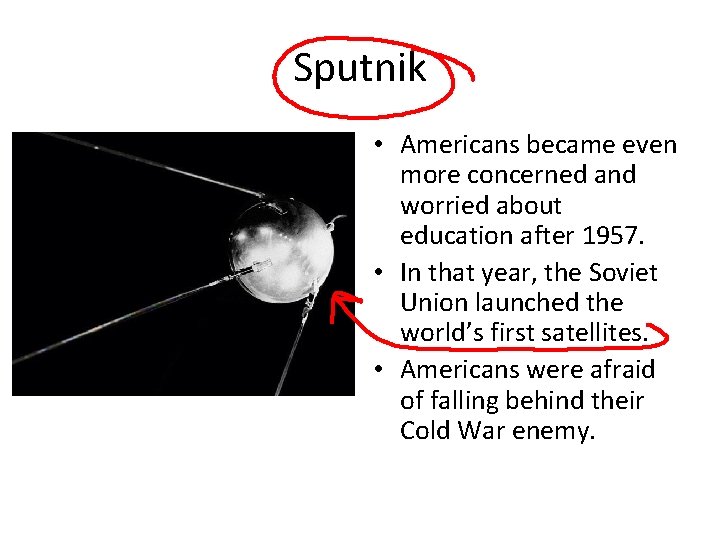
Sputnik • Americans became even more concerned and worried about education after 1957. • In that year, the Soviet Union launched the world’s first satellites. • Americans were afraid of falling behind their Cold War enemy.
Improving Math & Science • They believed that schools lacked technical education. • Improvements to the educational system included new efforts to improve math and science education.