
AMERICAN GOVERNMENT Chapter 11 CONGRESS Power Point Image





- Slides: 21
AMERICAN GOVERNMENT Chapter 11 CONGRESS Power. Point Image Slideshow
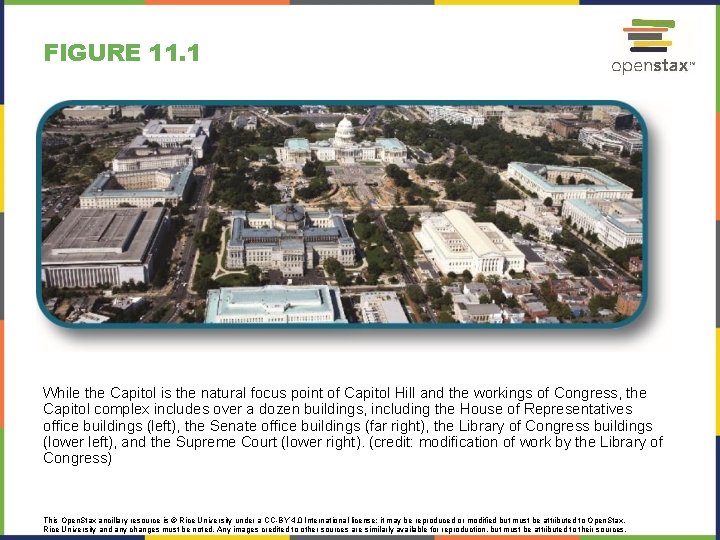
FIGURE 11. 1 While the Capitol is the natural focus point of Capitol Hill and the workings of Congress, the Capitol complex includes over a dozen buildings, including the House of Representatives office buildings (left), the Senate office buildings (far right), the Library of Congress buildings (lower left), and the Supreme Court (lower right). (credit: modification of work by the Library of Congress) This Open. Stax ancillary resource is © Rice University under a CC-BY 4. 0 International license; it may be reproduced or modified but must be attributed to Open. Stax, Rice University and any changes must be noted. Any images credited to other sources are similarly available for reproduction, but must be attributed to their sources.
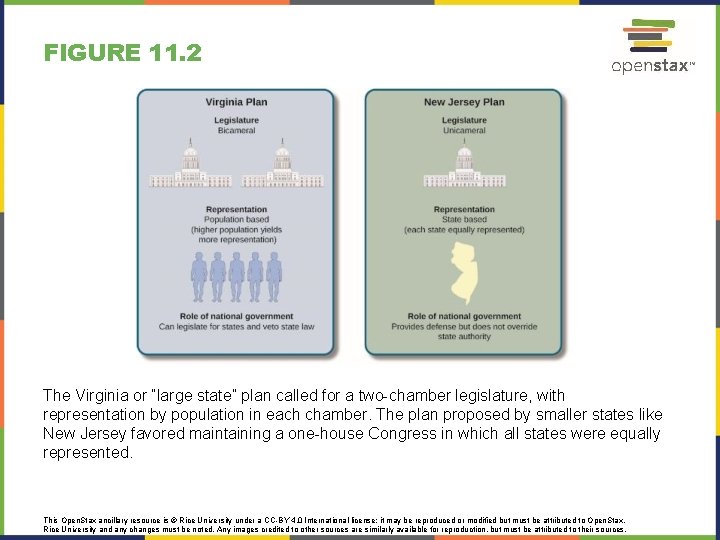
FIGURE 11. 2 The Virginia or “large state” plan called for a two-chamber legislature, with representation by population in each chamber. The plan proposed by smaller states like New Jersey favored maintaining a one-house Congress in which all states were equally represented. This Open. Stax ancillary resource is © Rice University under a CC-BY 4. 0 International license; it may be reproduced or modified but must be attributed to Open. Stax, Rice University and any changes must be noted. Any images credited to other sources are similarly available for reproduction, but must be attributed to their sources.
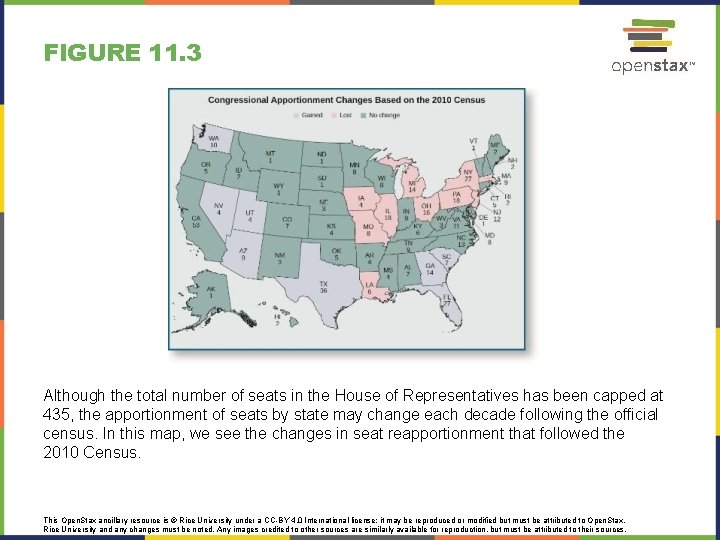
FIGURE 11. 3 Although the total number of seats in the House of Representatives has been capped at 435, the apportionment of seats by state may change each decade following the official census. In this map, we see the changes in seat reapportionment that followed the 2010 Census. This Open. Stax ancillary resource is © Rice University under a CC-BY 4. 0 International license; it may be reproduced or modified but must be attributed to Open. Stax, Rice University and any changes must be noted. Any images credited to other sources are similarly available for reproduction, but must be attributed to their sources.
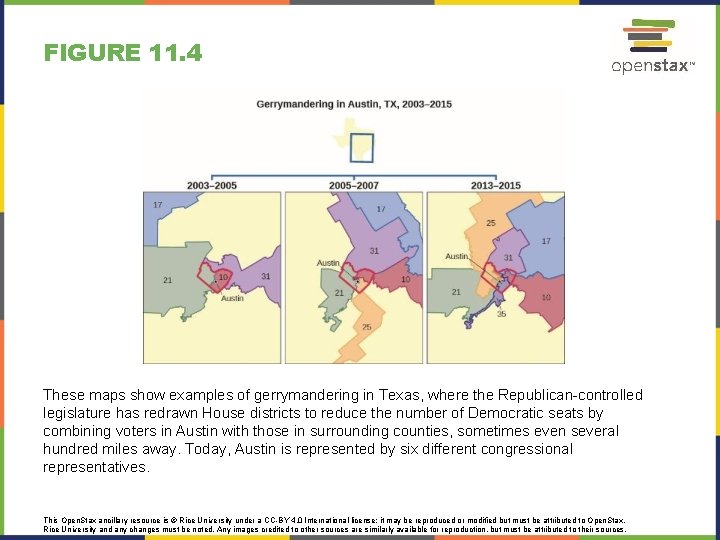
FIGURE 11. 4 These maps show examples of gerrymandering in Texas, where the Republican-controlled legislature has redrawn House districts to reduce the number of Democratic seats by combining voters in Austin with those in surrounding counties, sometimes even several hundred miles away. Today, Austin is represented by six different congressional representatives. This Open. Stax ancillary resource is © Rice University under a CC-BY 4. 0 International license; it may be reproduced or modified but must be attributed to Open. Stax, Rice University and any changes must be noted. Any images credited to other sources are similarly available for reproduction, but must be attributed to their sources.
FIGURE 11. 5 The ability to levy and collect taxes is the first, and most important, of Congress’s enumerated powers. In 2015, U. S. federal tax revenue totaled $3. 25 trillion. This Open. Stax ancillary resource is © Rice University under a CC-BY 4. 0 International license; it may be reproduced or modified but must be attributed to Open. Stax, Rice University and any changes must be noted. Any images credited to other sources are similarly available for reproduction, but must be attributed to their sources.
FIGURE 11. 6 President Truman did not think it necessary to go through Congress to prosecute the war in Korea. This action opened the door to an extended era in which Congress has been effectively removed from decisions about whether to go to war, an era that continues today. This Open. Stax ancillary resource is © Rice University under a CC-BY 4. 0 International license; it may be reproduced or modified but must be attributed to Open. Stax, Rice University and any changes must be noted. Any images credited to other sources are similarly available for reproduction, but must be attributed to their sources.
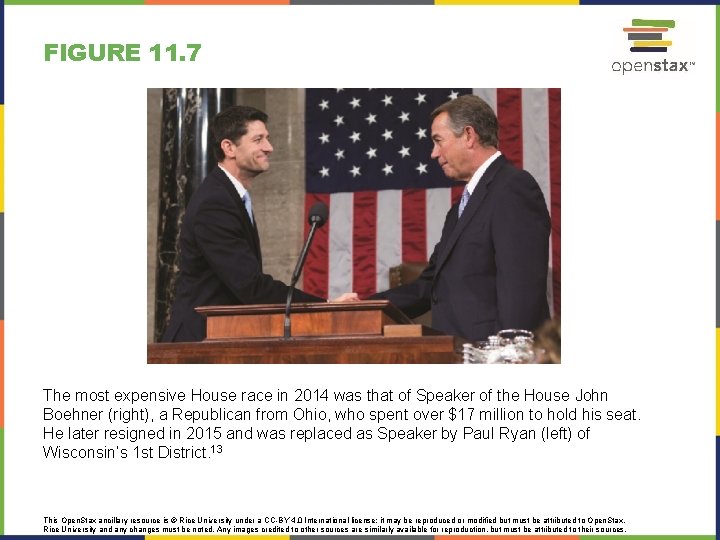
FIGURE 11. 7 The most expensive House race in 2014 was that of Speaker of the House John Boehner (right), a Republican from Ohio, who spent over $17 million to hold his seat. He later resigned in 2015 and was replaced as Speaker by Paul Ryan (left) of Wisconsin’s 1 st District. 13 This Open. Stax ancillary resource is © Rice University under a CC-BY 4. 0 International license; it may be reproduced or modified but must be attributed to Open. Stax, Rice University and any changes must be noted. Any images credited to other sources are similarly available for reproduction, but must be attributed to their sources.
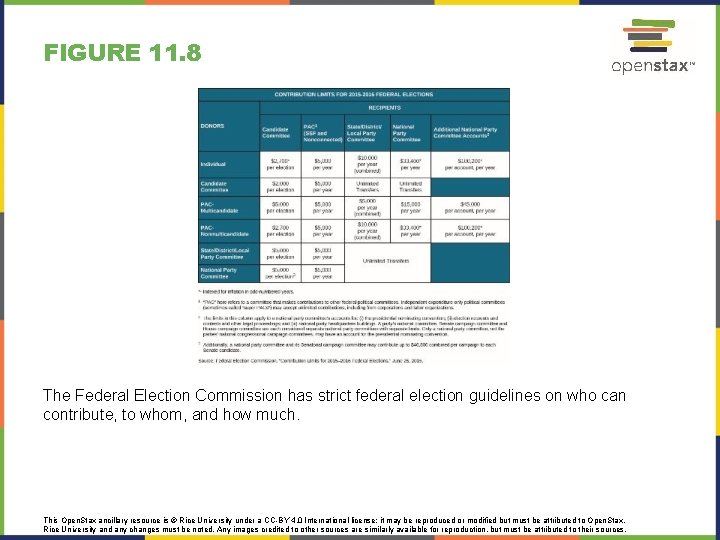
FIGURE 11. 8 The Federal Election Commission has strict federal election guidelines on who can contribute, to whom, and how much. This Open. Stax ancillary resource is © Rice University under a CC-BY 4. 0 International license; it may be reproduced or modified but must be attributed to Open. Stax, Rice University and any changes must be noted. Any images credited to other sources are similarly available for reproduction, but must be attributed to their sources.
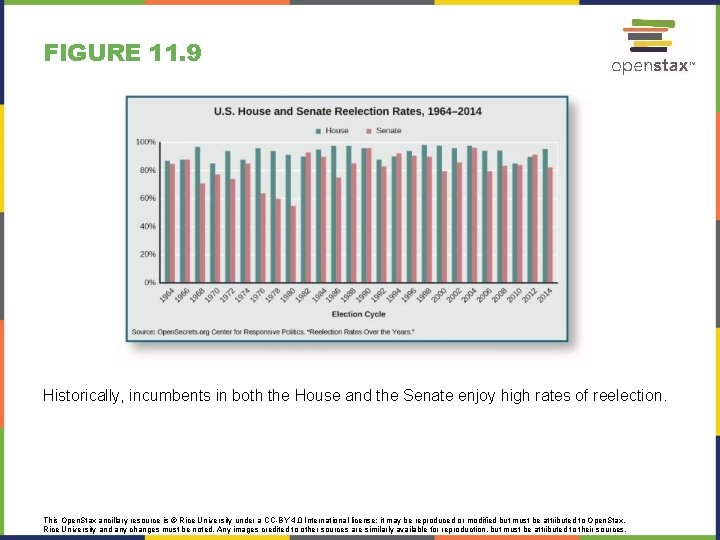
FIGURE 11. 9 Historically, incumbents in both the House and the Senate enjoy high rates of reelection. This Open. Stax ancillary resource is © Rice University under a CC-BY 4. 0 International license; it may be reproduced or modified but must be attributed to Open. Stax, Rice University and any changes must be noted. Any images credited to other sources are similarly available for reproduction, but must be attributed to their sources.
FIGURE 11. 10 Wars typically have the power to nationalize local elections. What makes the Iraq War different is that the overwhelming majority of voters had little to no intimate connection with the conflict and were motivated to vote for those who would end it. (credit: “Lipton sale”/Wikimedia Commons) This Open. Stax ancillary resource is © Rice University under a CC-BY 4. 0 International license; it may be reproduced or modified but must be attributed to Open. Stax, Rice University and any changes must be noted. Any images credited to other sources are similarly available for reproduction, but must be attributed to their sources.
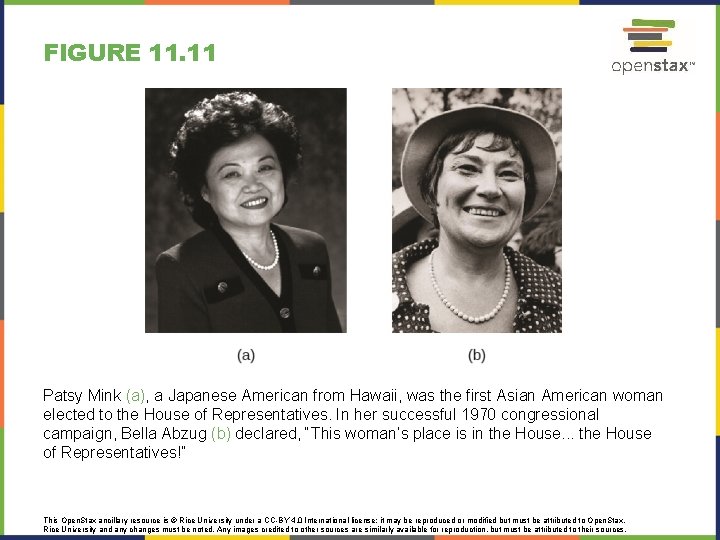
FIGURE 11. 11 Patsy Mink (a), a Japanese American from Hawaii, was the first Asian American woman elected to the House of Representatives. In her successful 1970 congressional campaign, Bella Abzug (b) declared, “This woman’s place is in the House. . . the House of Representatives!” This Open. Stax ancillary resource is © Rice University under a CC-BY 4. 0 International license; it may be reproduced or modified but must be attributed to Open. Stax, Rice University and any changes must be noted. Any images credited to other sources are similarly available for reproduction, but must be attributed to their sources.
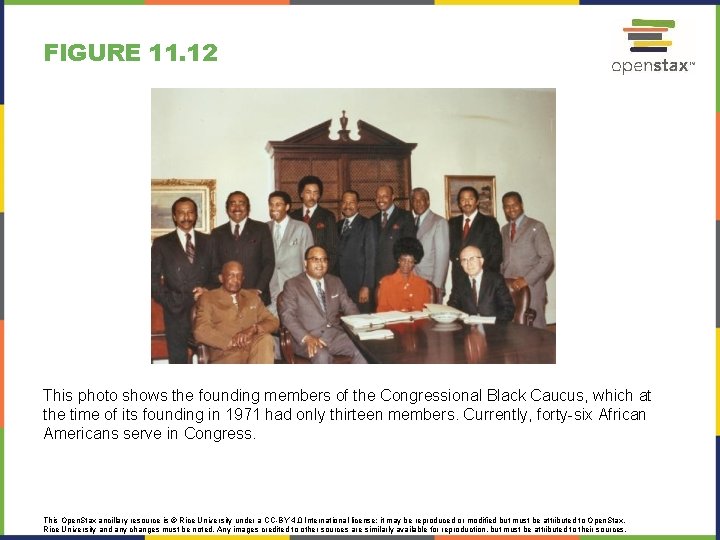
FIGURE 11. 12 This photo shows the founding members of the Congressional Black Caucus, which at the time of its founding in 1971 had only thirteen members. Currently, forty-six African Americans serve in Congress. This Open. Stax ancillary resource is © Rice University under a CC-BY 4. 0 International license; it may be reproduced or modified but must be attributed to Open. Stax, Rice University and any changes must be noted. Any images credited to other sources are similarly available for reproduction, but must be attributed to their sources.
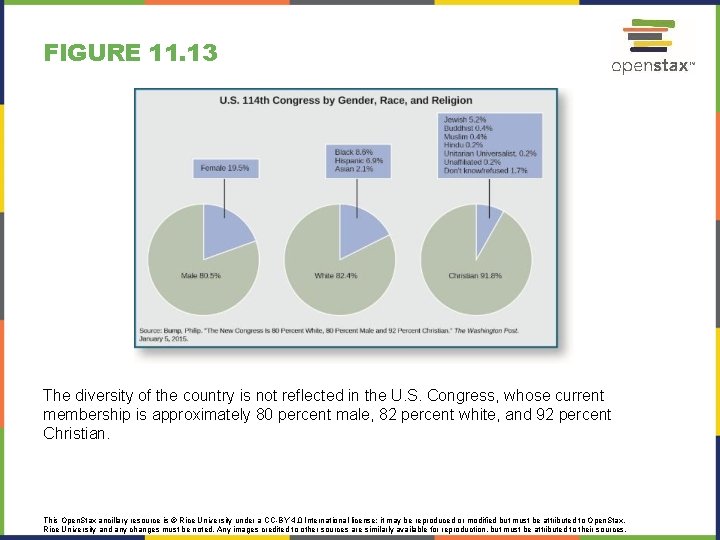
FIGURE 11. 13 The diversity of the country is not reflected in the U. S. Congress, whose current membership is approximately 80 percent male, 82 percent white, and 92 percent Christian. This Open. Stax ancillary resource is © Rice University under a CC-BY 4. 0 International license; it may be reproduced or modified but must be attributed to Open. Stax, Rice University and any changes must be noted. Any images credited to other sources are similarly available for reproduction, but must be attributed to their sources.
FIGURE 11. 14 In 2009, the extended debates and legislative maneuvering in Congress over the proposed health care reform bill triggered a firestorm of disapproval from the Republicans and protests from their supporters. In many cases, hyperbole ruled the day. (credit: “dbking”/Flickr) This Open. Stax ancillary resource is © Rice University under a CC-BY 4. 0 International license; it may be reproduced or modified but must be attributed to Open. Stax, Rice University and any changes must be noted. Any images credited to other sources are similarly available for reproduction, but must be attributed to their sources.
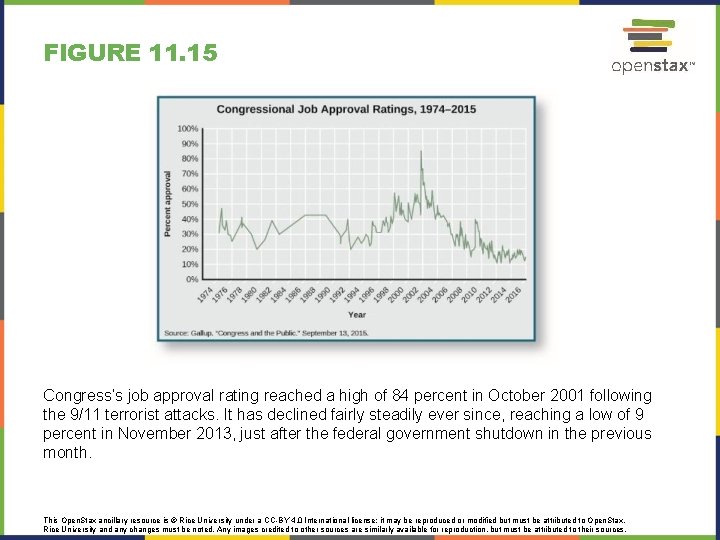
FIGURE 11. 15 Congress’s job approval rating reached a high of 84 percent in October 2001 following the 9/11 terrorist attacks. It has declined fairly steadily ever since, reaching a low of 9 percent in November 2013, just after the federal government shutdown in the previous month. This Open. Stax ancillary resource is © Rice University under a CC-BY 4. 0 International license; it may be reproduced or modified but must be attributed to Open. Stax, Rice University and any changes must be noted. Any images credited to other sources are similarly available for reproduction, but must be attributed to their sources.
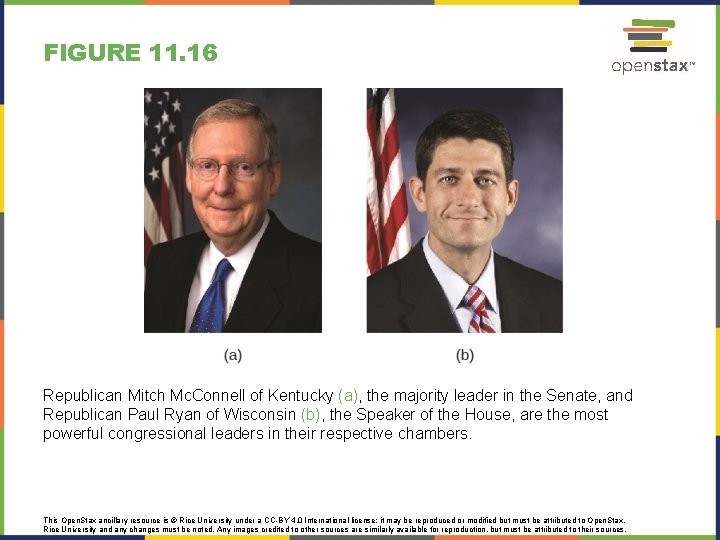
FIGURE 11. 16 Republican Mitch Mc. Connell of Kentucky (a), the majority leader in the Senate, and Republican Paul Ryan of Wisconsin (b), the Speaker of the House, are the most powerful congressional leaders in their respective chambers. This Open. Stax ancillary resource is © Rice University under a CC-BY 4. 0 International license; it may be reproduced or modified but must be attributed to Open. Stax, Rice University and any changes must be noted. Any images credited to other sources are similarly available for reproduction, but must be attributed to their sources.
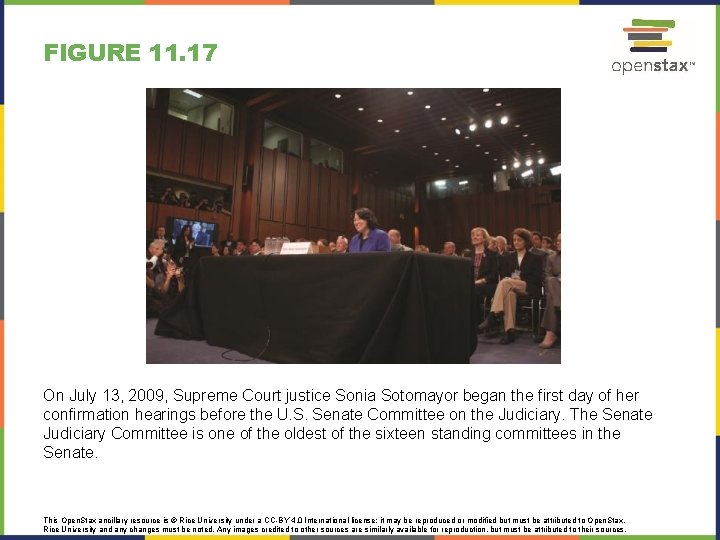
FIGURE 11. 17 On July 13, 2009, Supreme Court justice Sonia Sotomayor began the first day of her confirmation hearings before the U. S. Senate Committee on the Judiciary. The Senate Judiciary Committee is one of the oldest of the sixteen standing committees in the Senate. This Open. Stax ancillary resource is © Rice University under a CC-BY 4. 0 International license; it may be reproduced or modified but must be attributed to Open. Stax, Rice University and any changes must be noted. Any images credited to other sources are similarly available for reproduction, but must be attributed to their sources.
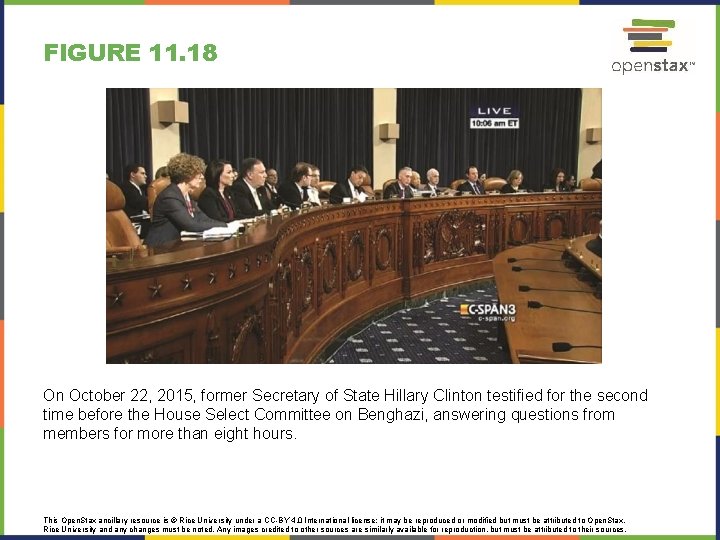
FIGURE 11. 18 On October 22, 2015, former Secretary of State Hillary Clinton testified for the second time before the House Select Committee on Benghazi, answering questions from members for more than eight hours. This Open. Stax ancillary resource is © Rice University under a CC-BY 4. 0 International license; it may be reproduced or modified but must be attributed to Open. Stax, Rice University and any changes must be noted. Any images credited to other sources are similarly available for reproduction, but must be attributed to their sources.
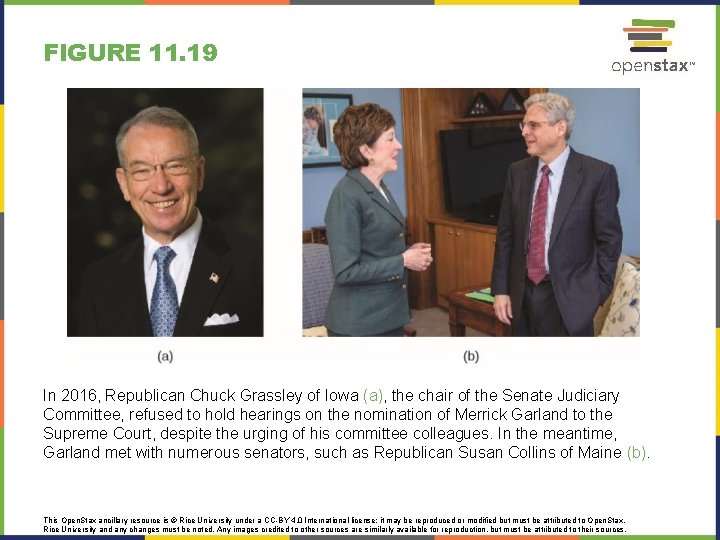
FIGURE 11. 19 In 2016, Republican Chuck Grassley of Iowa (a), the chair of the Senate Judiciary Committee, refused to hold hearings on the nomination of Merrick Garland to the Supreme Court, despite the urging of his committee colleagues. In the meantime, Garland met with numerous senators, such as Republican Susan Collins of Maine (b). This Open. Stax ancillary resource is © Rice University under a CC-BY 4. 0 International license; it may be reproduced or modified but must be attributed to Open. Stax, Rice University and any changes must be noted. Any images credited to other sources are similarly available for reproduction, but must be attributed to their sources.
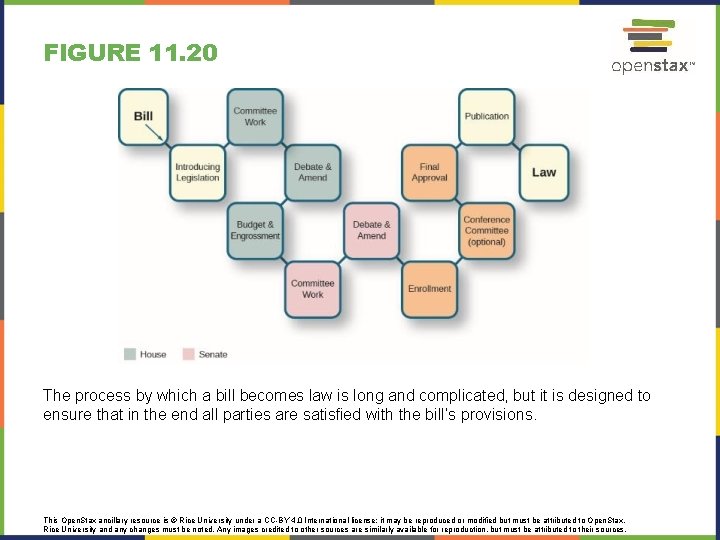
FIGURE 11. 20 The process by which a bill becomes law is long and complicated, but it is designed to ensure that in the end all parties are satisfied with the bill’s provisions. This Open. Stax ancillary resource is © Rice University under a CC-BY 4. 0 International license; it may be reproduced or modified but must be attributed to Open. Stax, Rice University and any changes must be noted. Any images credited to other sources are similarly available for reproduction, but must be attributed to their sources.