
America variety of cultures Assimilation Pluralism Robin Williams
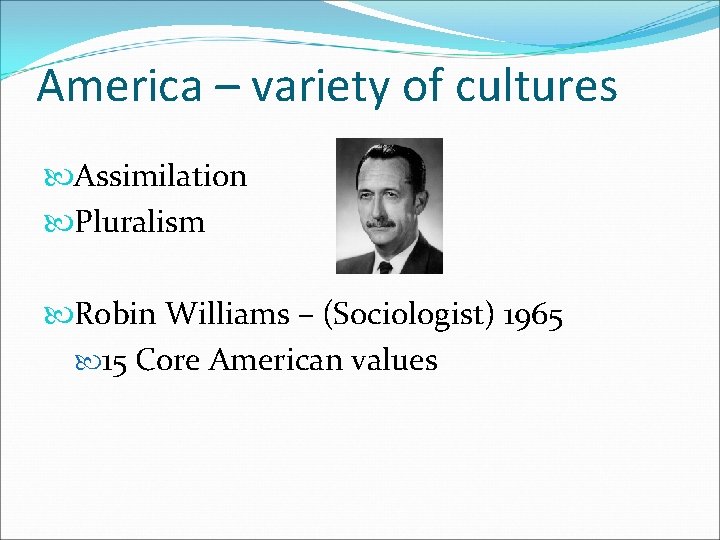
America – variety of cultures Assimilation Pluralism Robin Williams – (Sociologist) 1965 15 Core American values
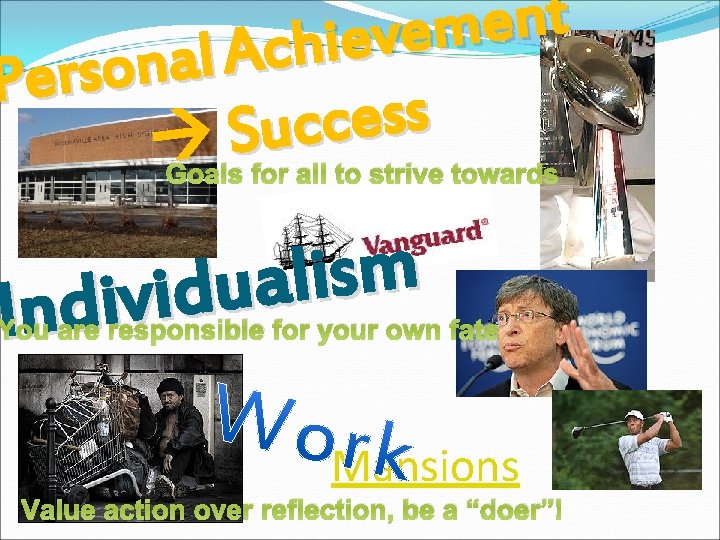
t n e m e v e i h c A l a n o s r Pe s s e c c u S Goals for all to strive towards m s i l a u d i Indiv You are responsible for your own fate Mansions Value action over reflection, be a “doer”!
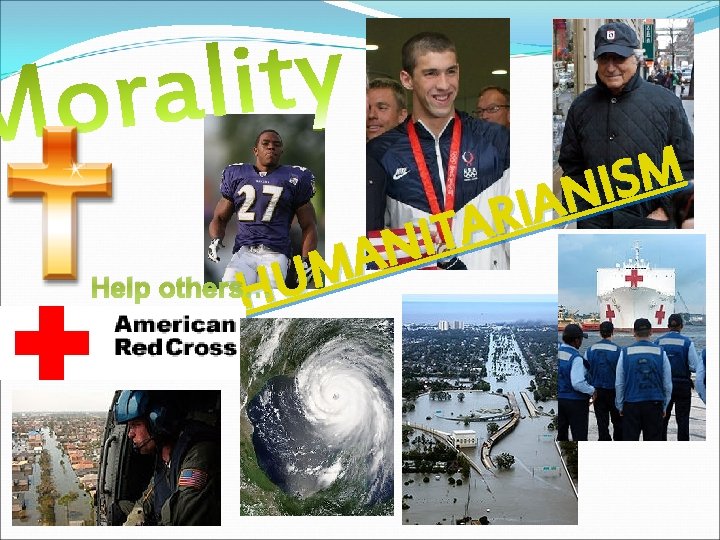
M S I N A I R A T I N A M Help others… U H
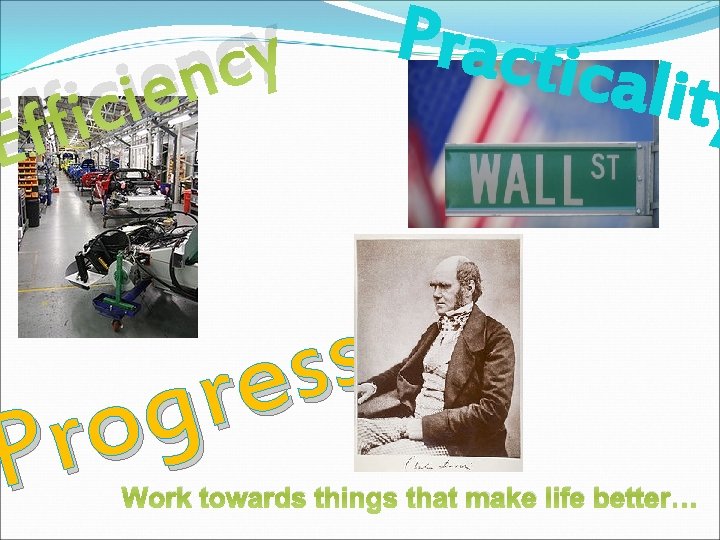
y c n e i c i f Ef s s e r g o r P Practi cality Work towards things that make life better…
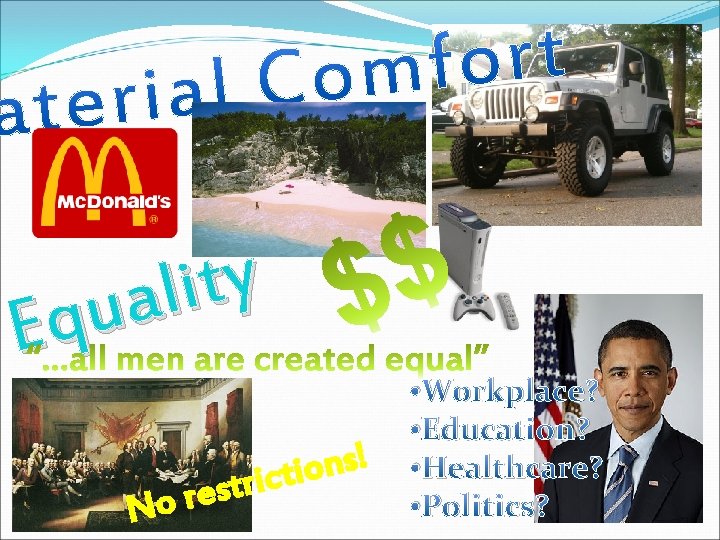
y t i l a u q E e r o N ! s n o i t c i r t s • Workplace? • Education? • Healthcare? • Politics?
y c a r c o m e D * * m o d e e r F * * • Freedom of Choice • Freedom from Government

Other Core Values T n h ec g o ol c S y/ e c n e i
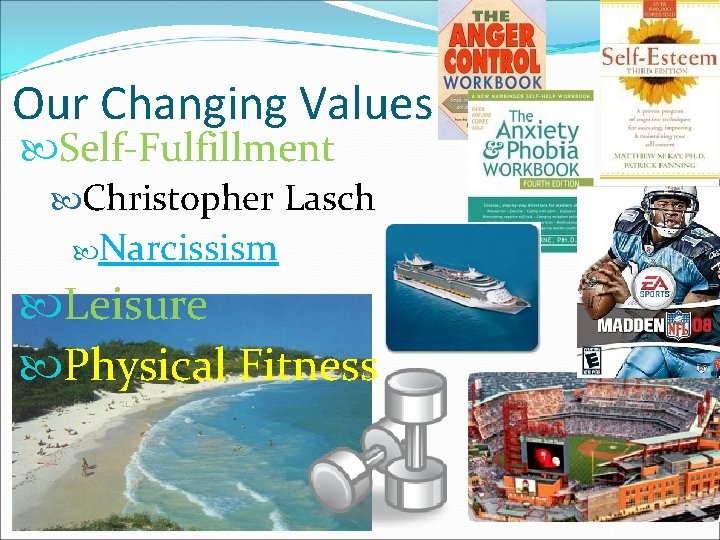
Our Changing Values Self-Fulfillment Christopher Lasch Narcissism Leisure Physical Fitness
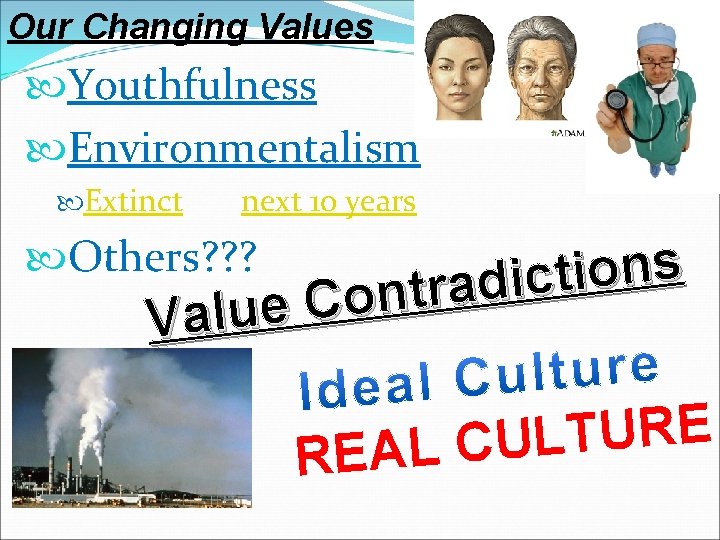
Our Changing Values Youthfulness Environmentalism Extinct next 10 years Others? ? ? s n o i t c i d a r t n o C e Valu E R U T L U C L A RE
Value Cluster SUCCESS! James Henslin – Other Values Romantic Love Education Religion
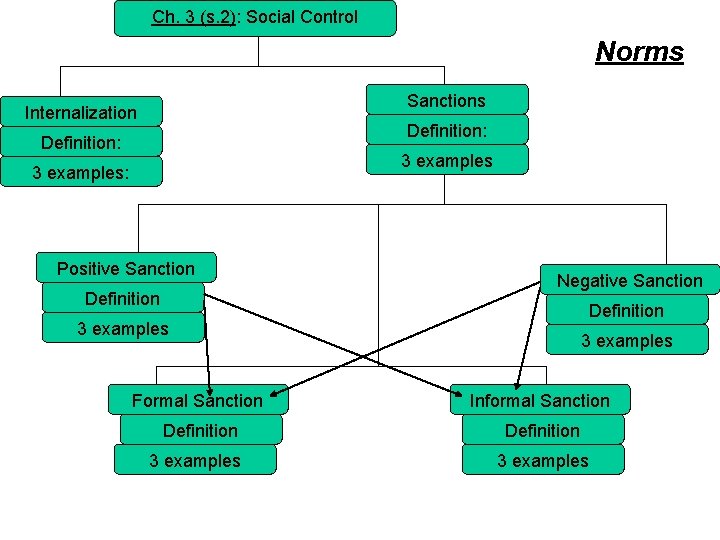
Ch. 3 (s. 2): Social Control Norms Sanctions Internalization Definition: 3 examples: Positive Sanction Definition Negative Sanction Definition 3 examples Formal Sanction Informal Sanction Definition 3 examples
Why do you drive on the right side of the road? 1. Define internalization • Process by which a norm becomes part of one’s behavior patterns/personality e. g. : Stopping at stop signs, putting a napkin on your lap, putting your seatbelt on, driving the speed limit
2. Define sanctions • Rewards for good behavior • Punishment for bad behavior • e. g. - Honor Roll at school; getting a speeding ticket
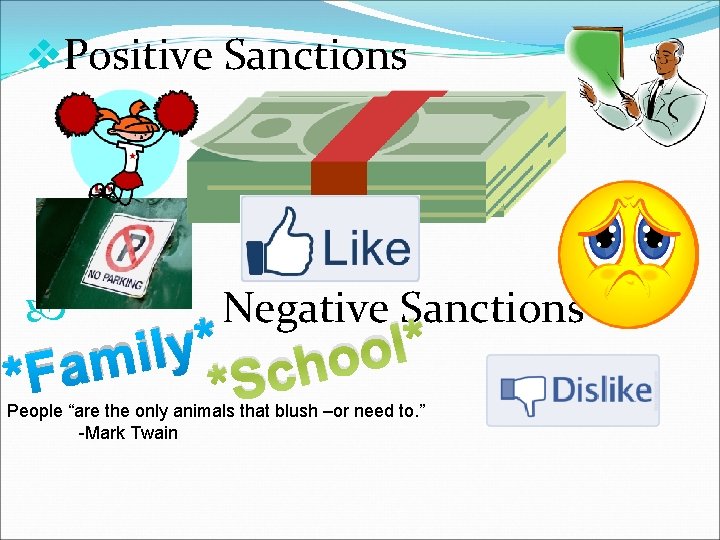
v. Positive Sanctions Negative Sanctions * * l y l o i o m h a *F *Sc People “are the only animals that blush –or need to. ” -Mark Twain
3. What are positive/negative sanctions? Positive Sanction – a reward for good behavior e. g. : praise from family, teachers, bonuses/pay raises at work, awards and trophies for various accomplishments Negative Sanction – a punishment for bad behavior e. g. : being grounded by your parents; being frowned at, ridiculed, and rejected by your peers; being fined and/or imprisoned by law enforcement
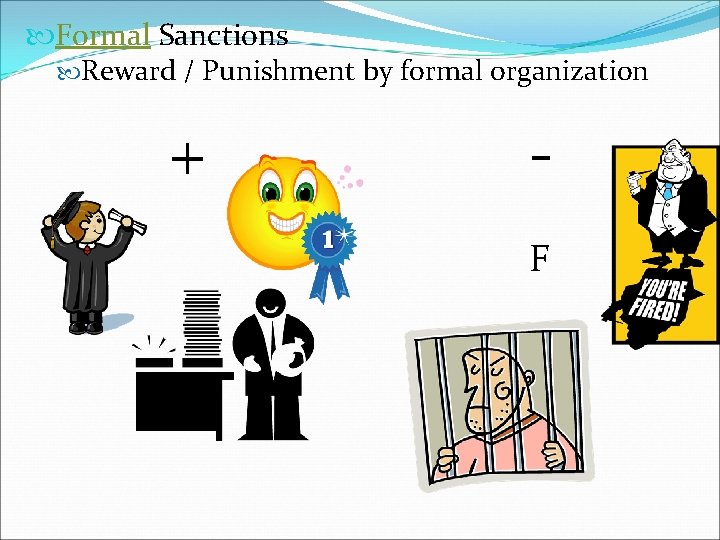
Formal Sanctions Reward / Punishment by formal organization + F
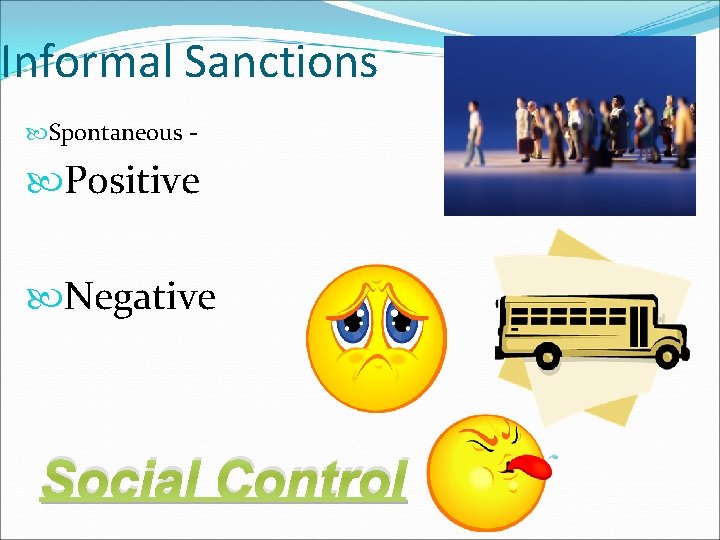
Informal Sanctions Spontaneous - Positive Negative Social Control
Physical and Psychological Sanctions v Shaming and Degradation Ceremonies v. Can Be Centerpiece of Public Ritual v Degradation Ceremony 18
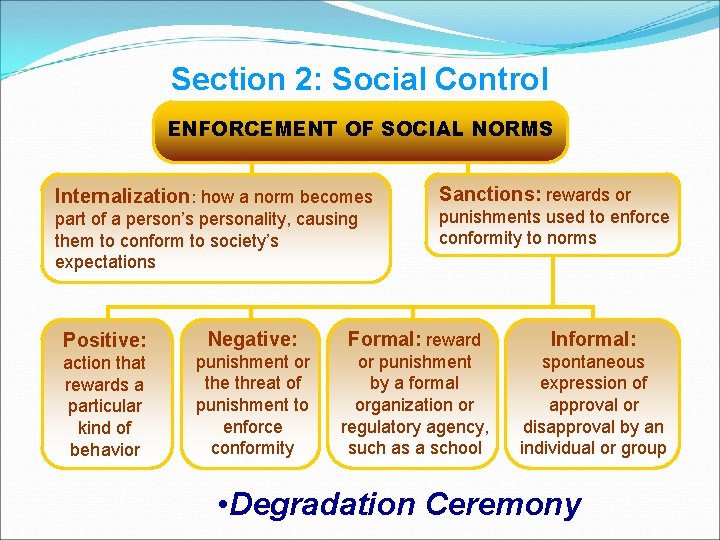
Section 2: Social Control ENFORCEMENT OF SOCIAL NORMS Internalization: how a norm becomes part of a person’s personality, causing them to conform to society’s expectations Sanctions: rewards or punishments used to enforce conformity to norms Positive: Negative: Formal: reward Informal: action that rewards a particular kind of behavior punishment or the threat of punishment to enforce conformity or punishment by a formal organization or regulatory agency, such as a school spontaneous expression of approval or disapproval by an individual or group • Degradation Ceremony
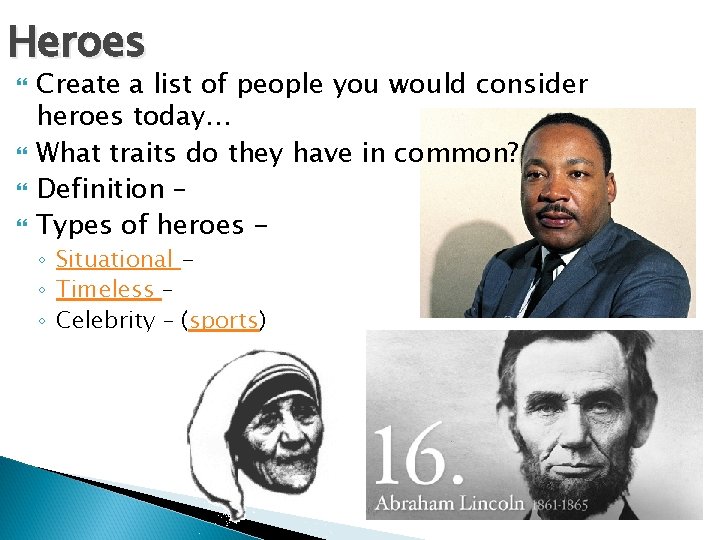
Heroes Create a list of people you would consider heroes today… What traits do they have in common? Definition – Types of heroes ◦ Situational ◦ Timeless – ◦ Celebrity – (sports)
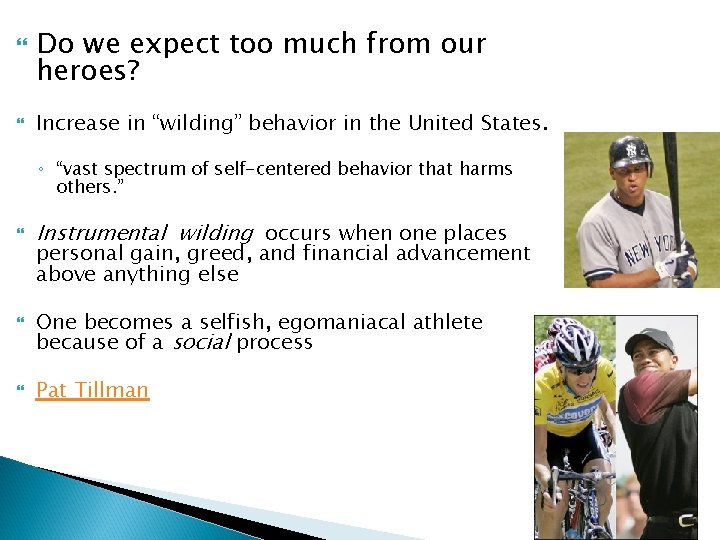
Do we expect too much from our heroes? Increase in “wilding” behavior in the United States. ◦ “vast spectrum of self-centered behavior that harms others. ” Instrumental wilding occurs when one places personal gain, greed, and financial advancement above anything else One becomes a selfish, egomaniacal athlete because of a social process Pat Tillman
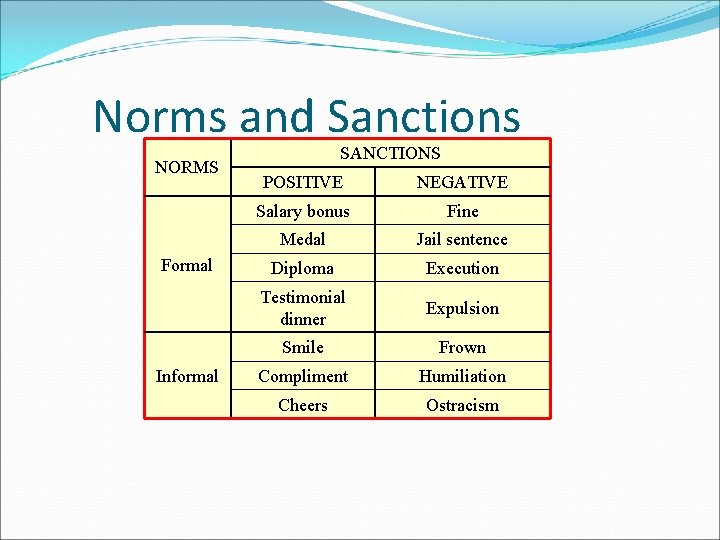
Norms and Sanctions NORMS Formal Informal SANCTIONS POSITIVE NEGATIVE Salary bonus Fine Medal Jail sentence Diploma Execution Testimonial dinner Expulsion Smile Frown Compliment Humiliation Cheers Ostracism
Name a device invented in your lifetime that has changed the way you do something—communicate with others, listen to music, obtain news, do your homework, or do some other activity.
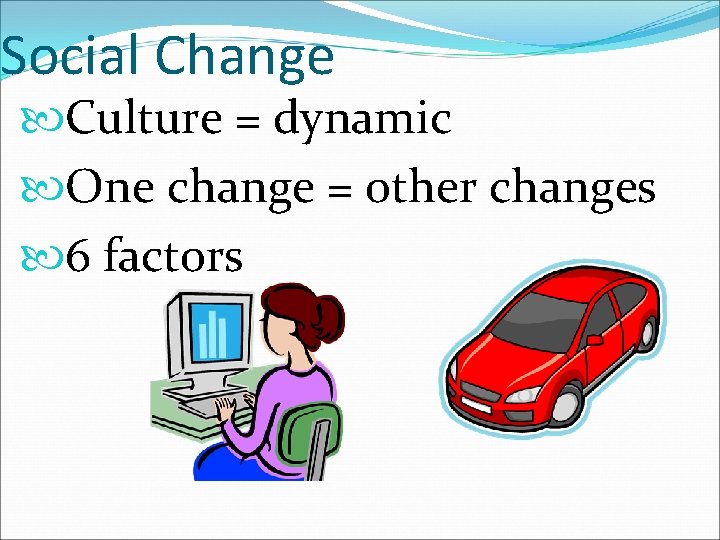
Social Change Culture = dynamic One change = other changes 6 factors
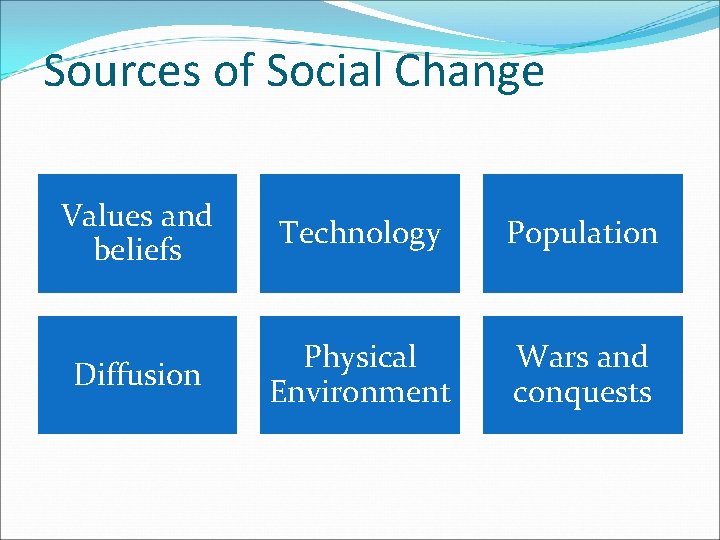
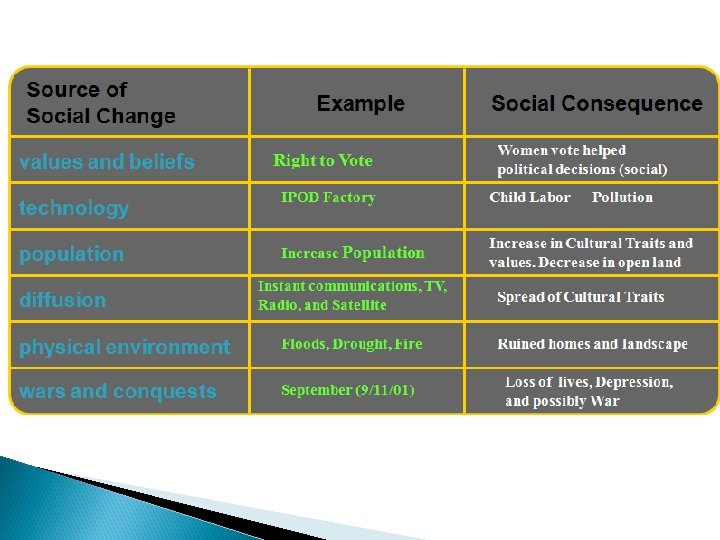
Sources of Social Change Values and beliefs Technology Population Diffusion Physical Environment Wars and conquests
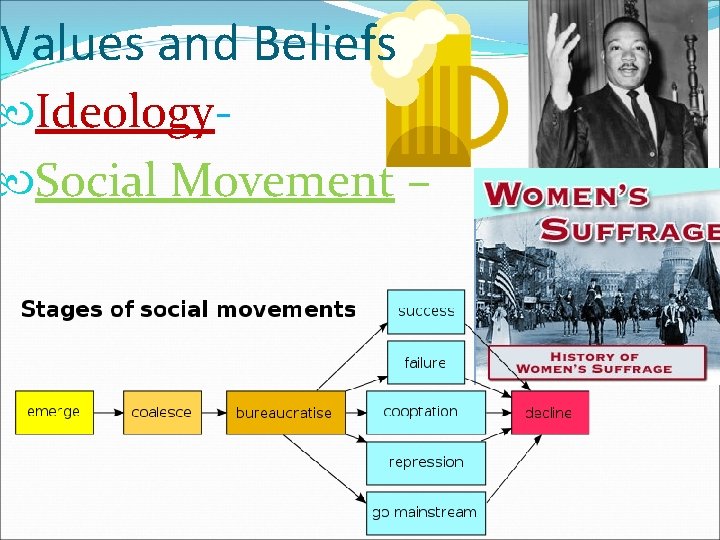
Values and Beliefs Ideology- Social Movement –
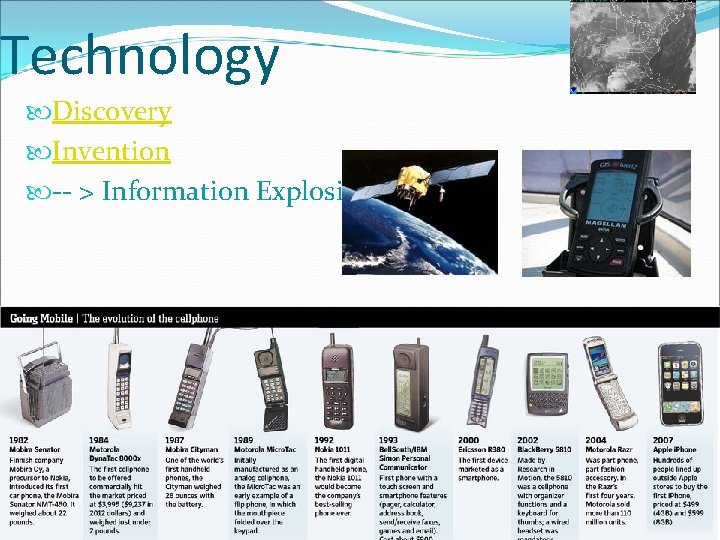
Technology Discovery Invention -- > Information Explosion!
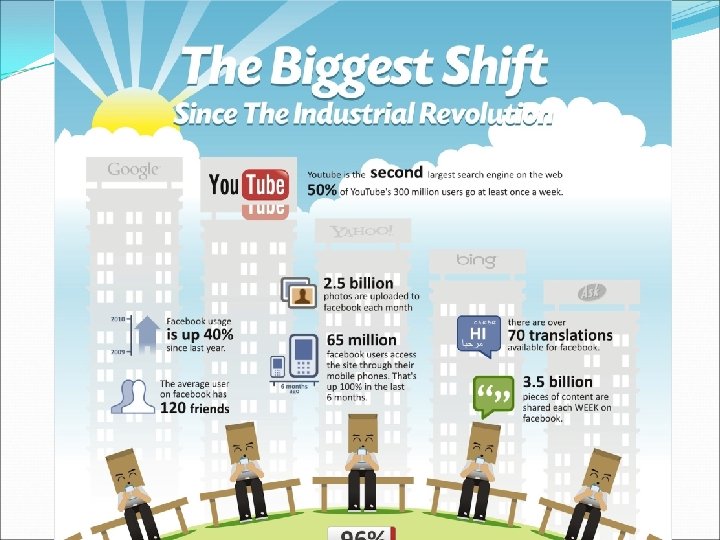
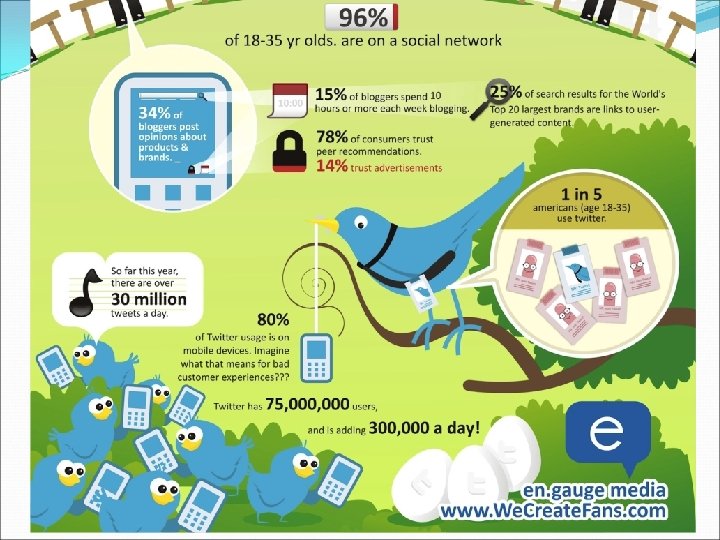
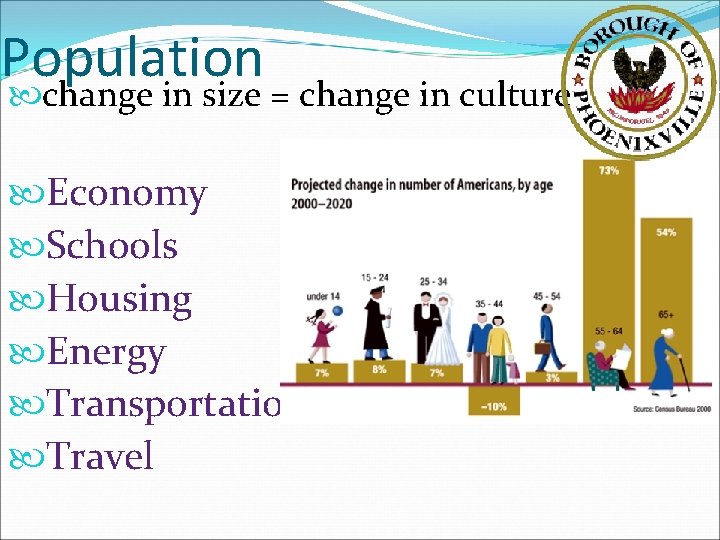
Population change in size = change in culture Economy Schools Housing Energy Transportation Travel
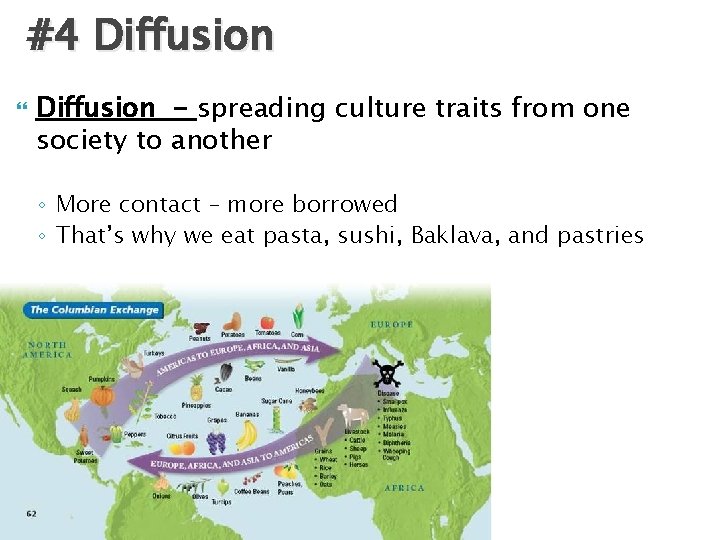
#4 Diffusion - spreading culture traits from one society to another ◦ More contact – more borrowed ◦ That’s why we eat pasta, sushi, Baklava, and pastries
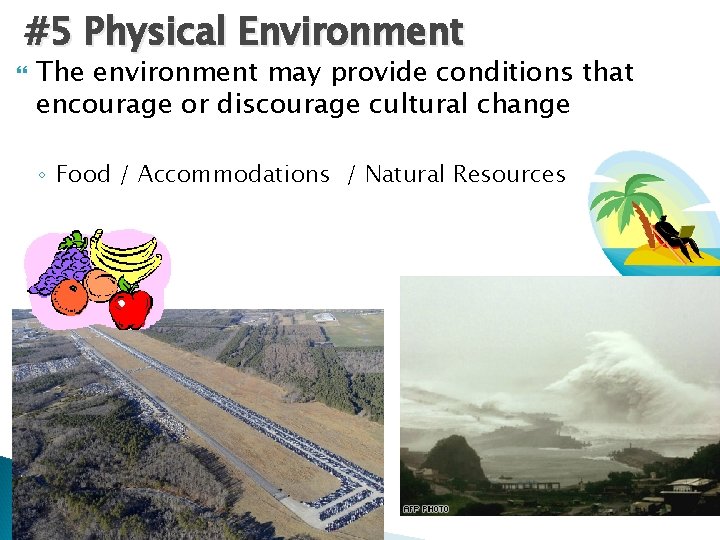
#5 Physical Environment The environment may provide conditions that encourage or discourage cultural change ◦ Food / Accommodations / Natural Resources
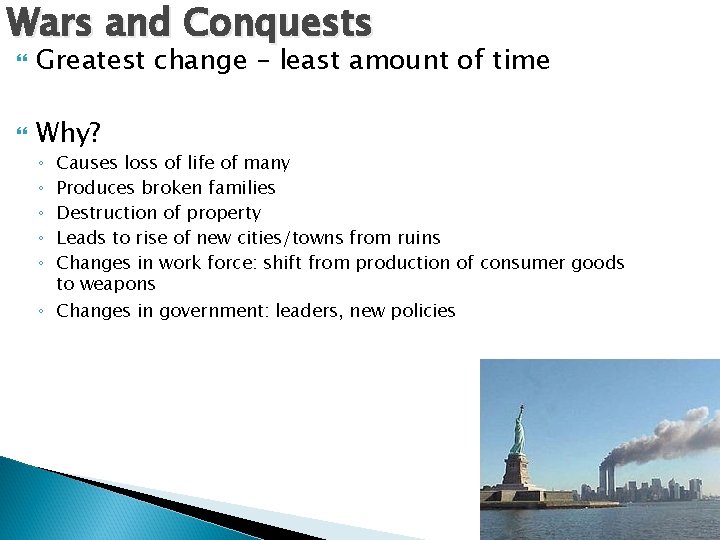
Wars and Conquests Greatest change – least amount of time Why? Causes loss of life of many Produces broken families Destruction of property Leads to rise of new cities/towns from ruins Changes in work force: shift from production of consumer goods to weapons ◦ Changes in government: leaders, new policies ◦ ◦ ◦
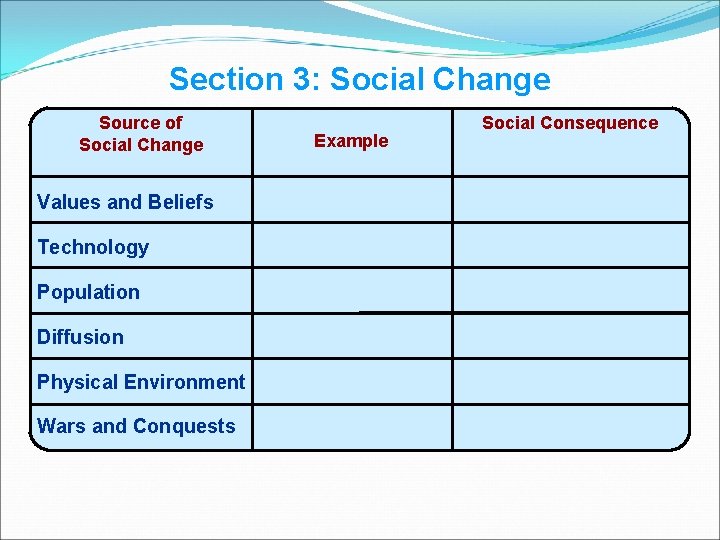
Section 3: Social Change Source of Social Change Values and Beliefs Technology Population Diffusion Physical Environment Wars and Conquests Example Social Consequence
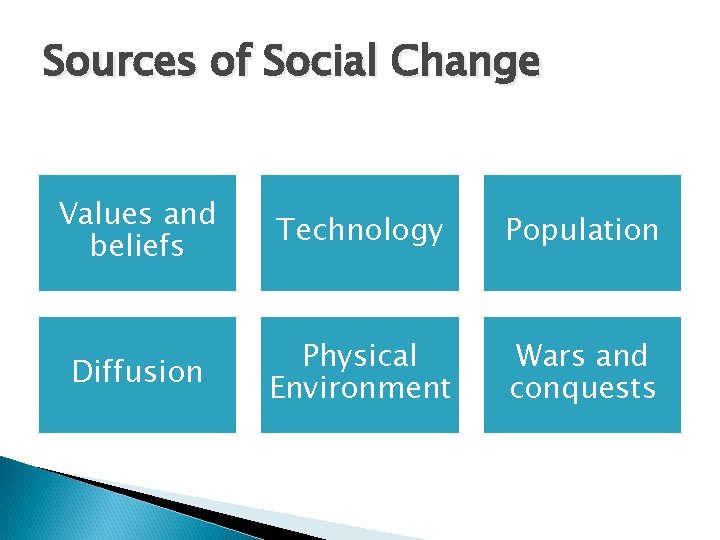
Sources of Social Change Values and beliefs Technology Population Diffusion Physical Environment Wars and conquests
Resistance to Change: Three factors why 1. Ethnocentrism: believe they are superior so might lead to segregation, no compromises -why some don’t buy foreign cars
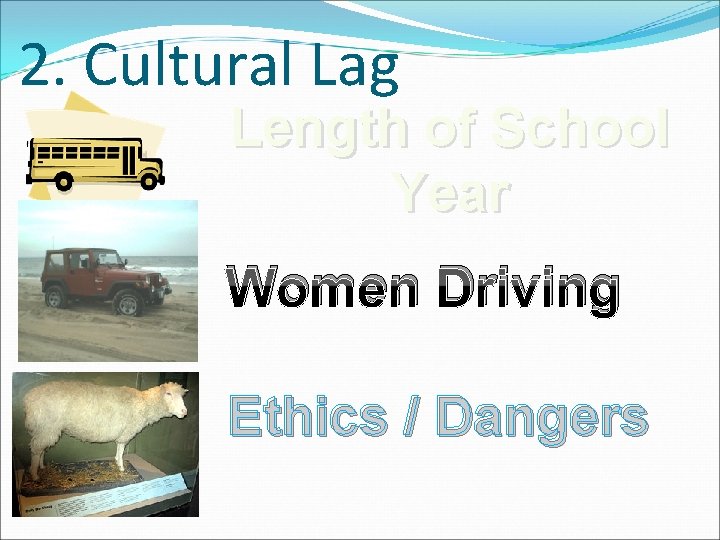
2. Cultural Lag Length of School Year Women Driving Ethics / Dangers
3. Vested interests: people might be benefiting or are comfortable with how things are so they don’t want change ◦ Ex: workers might resist new machinery that can do the work of 10 people because it might cost them their jobs ◦ Voting against a policy because it might reduce the amount of profit you make
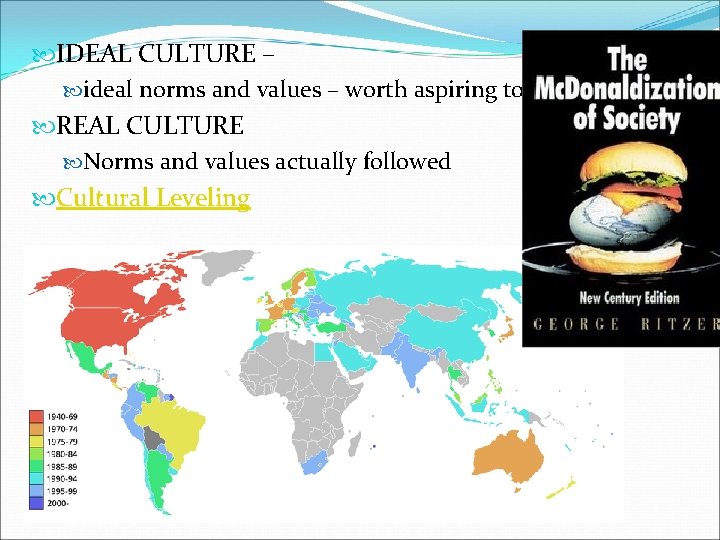
IDEAL CULTURE – ideal norms and values – worth aspiring to REAL CULTURE Norms and values actually followed Cultural Leveling
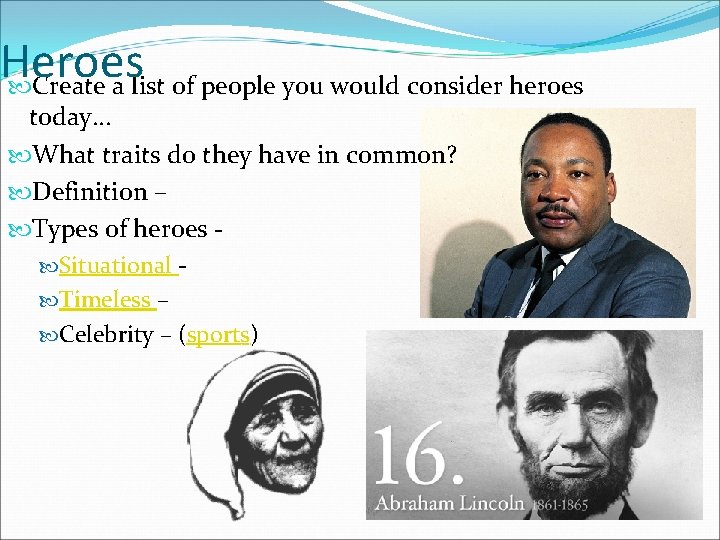
Heroes Create a list of people you would consider heroes today… What traits do they have in common? Definition – Types of heroes Situational Timeless – Celebrity – (sports)
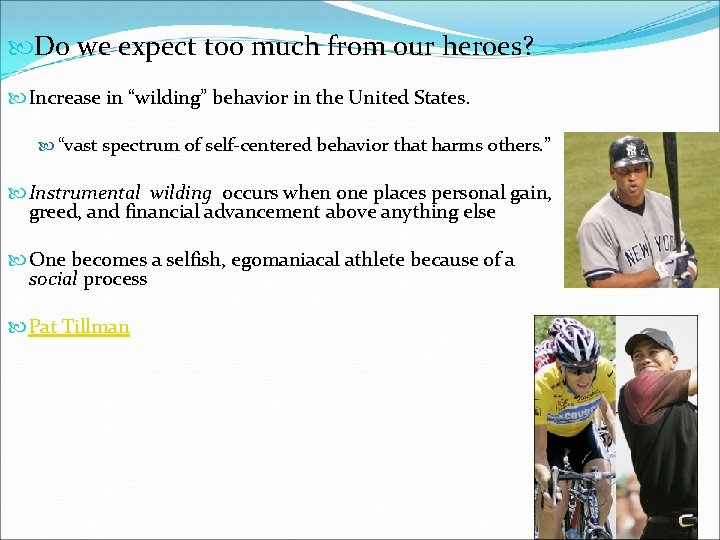
Do we expect too much from our heroes? Increase in “wilding” behavior in the United States. “vast spectrum of self-centered behavior that harms others. ” Instrumental wilding occurs when one places personal gain, greed, and financial advancement above anything else One becomes a selfish, egomaniacal athlete because of a social process Pat Tillman
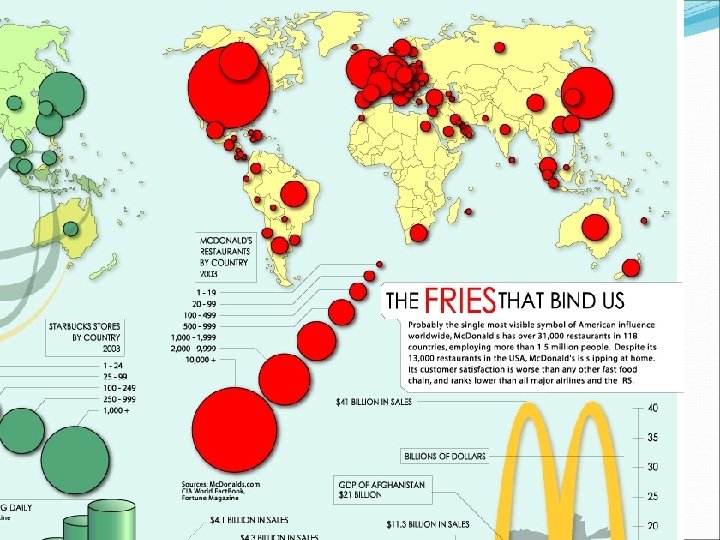
Thinking Critically • How have immigrant groups influenced American culture? • What are some examples of how food, business practices, and advertising have changed because of immigration?
Chapter Wrap-Up Understanding Main Ideas 1. What are the core American values outlined by Robin M. Williams and James M. Henslin? 2. What new American values have emerged in recent years? 3. Identify the two basic methods through which society enforces norms. 4. Explain the difference between positive sanctions and negative sanctions by giving an example of each. 5. What role do government policies play in enforcing cultural values and social norms? 6. How are the civil rights movement and the women’s rights movement examples of social change? 7. How has cultural diffusion changed eating habits in the United States? 8. For what reasons do people resist change?
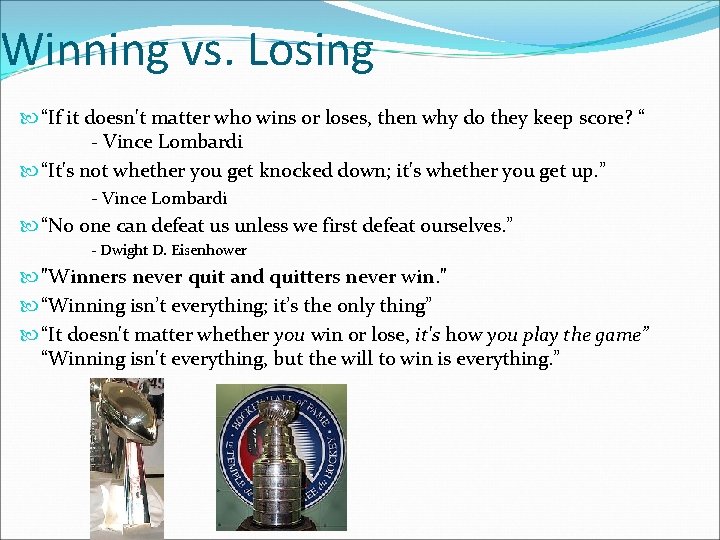
Winning vs. Losing “If it doesn't matter who wins or loses, then why do they keep score? “ - Vince Lombardi “It's not whether you get knocked down; it's whether you get up. ” - Vince Lombardi “No one can defeat us unless we first defeat ourselves. ” - Dwight D. Eisenhower "Winners never quit and quitters never win. " “Winning isn’t everything; it’s the only thing” “It doesn't matter whether you win or lose, it's how you play the game” “Winning isn't everything, but the will to win is everything. ”
Culture of Cheating Why do students cheat? "Everybody does it. " “Unrealistic demands for academic achievement by state education boards" “The easy way out"
Culture of Cheating Looking at another student's paper during an exam Looking at your notes when prohibited Taking an exam out of the classroom when prohibited Giving someone answers to exam questions during the exam Having someone take your test for you
- Slides: 48