
America in WWII Memories of WWI Losses of
- Slides: 24
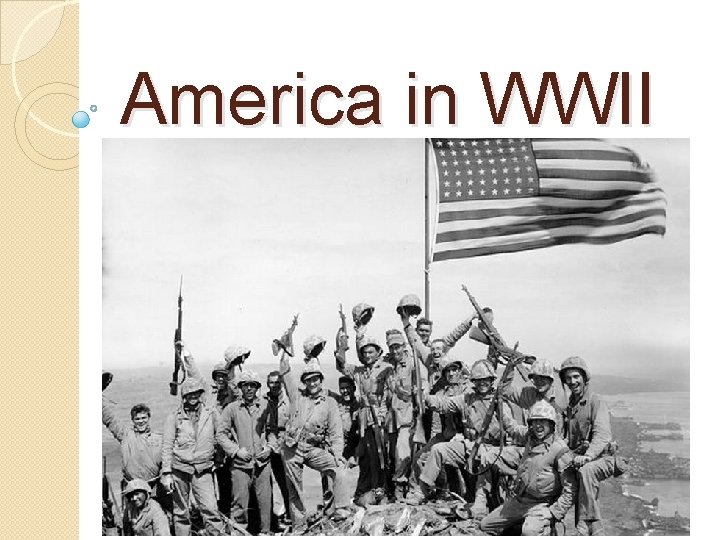
America in WWII
Memories of WWI �Losses of WWI (and perceived lack of gain) led to large contingency of isolationists in US �Nye Committee 1934 -37 ◦ Found many corporations benefited greatly from WWI �Counter arguments ◦ Hitler/Mussolini were unlike previous European wars over nationalism ◦ They were perhaps threats to civilization Neutrality Acts – 1937, 1938, 1939
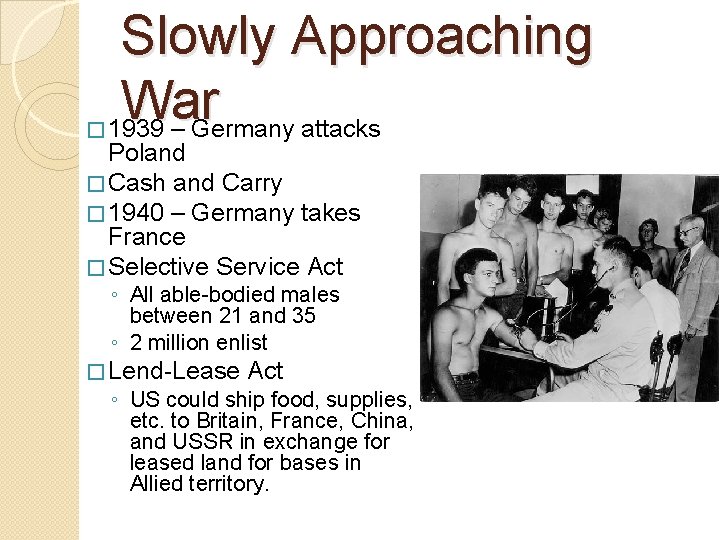
� Slowly Approaching War 1939 – Germany attacks Poland � Cash and Carry � 1940 – Germany takes France � Selective Service Act ◦ All able-bodied males between 21 and 35 ◦ 2 million enlist � Lend-Lease Act ◦ US could ship food, supplies, etc. to Britain, France, China, and USSR in exchange for leased land for bases in Allied territory.
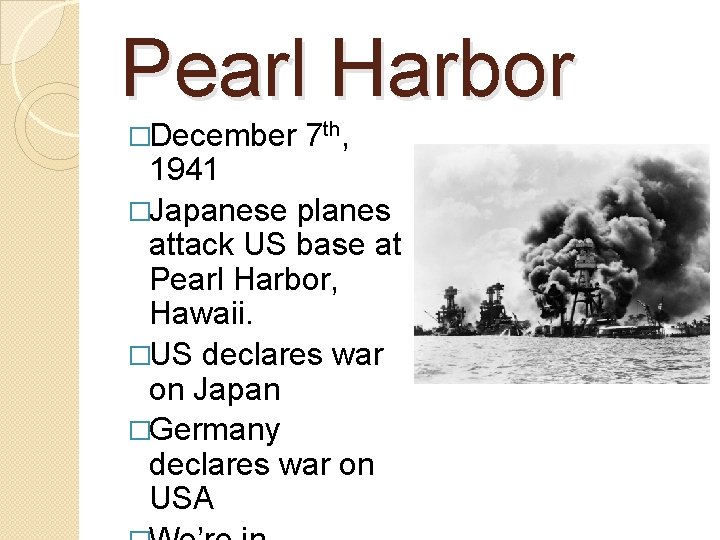
Pearl Harbor �December 7 th, 1941 �Japanese planes attack US base at Pearl Harbor, Hawaii. �US declares war on Japan �Germany declares war on USA
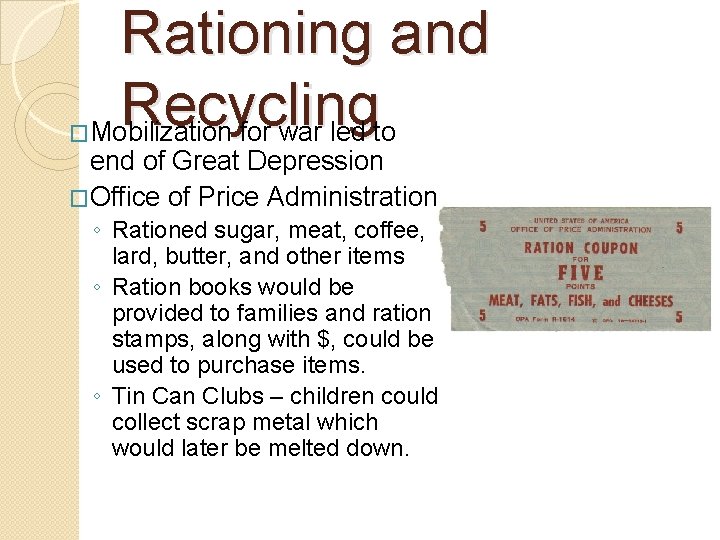
� Rationing and Recycling Mobilization for war led to end of Great Depression �Office of Price Administration ◦ Rationed sugar, meat, coffee, lard, butter, and other items ◦ Ration books would be provided to families and ration stamps, along with $, could be used to purchase items. ◦ Tin Can Clubs – children could collect scrap metal which would later be melted down.
War Production �Almost overnight, in Dec. 1941, the US needed to produce high numbers of weapons and war supplies �War Production Board ◦ Converted many factories from civilian production to war production �Labor shortages due to high numbers enlisted in army �Labor unions agreed not to strike during war
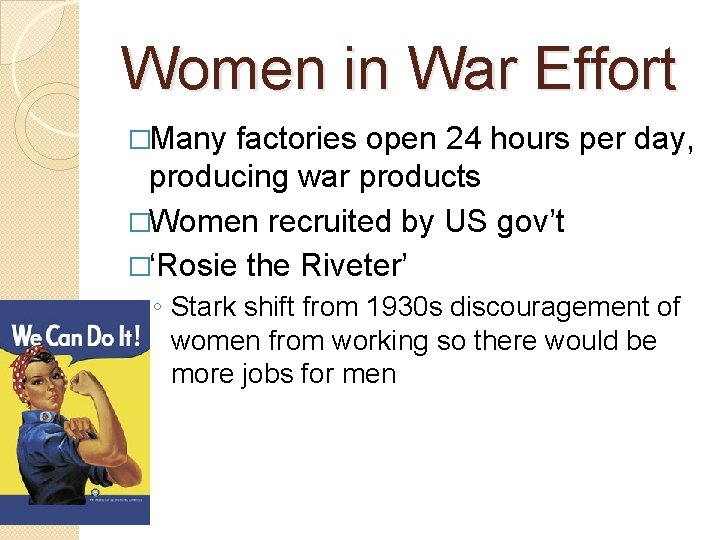
Women in War Effort �Many factories open 24 hours per day, producing war products �Women recruited by US gov’t �‘Rosie the Riveter’ ◦ Stark shift from 1930 s discouragement of women from working so there would be more jobs for men
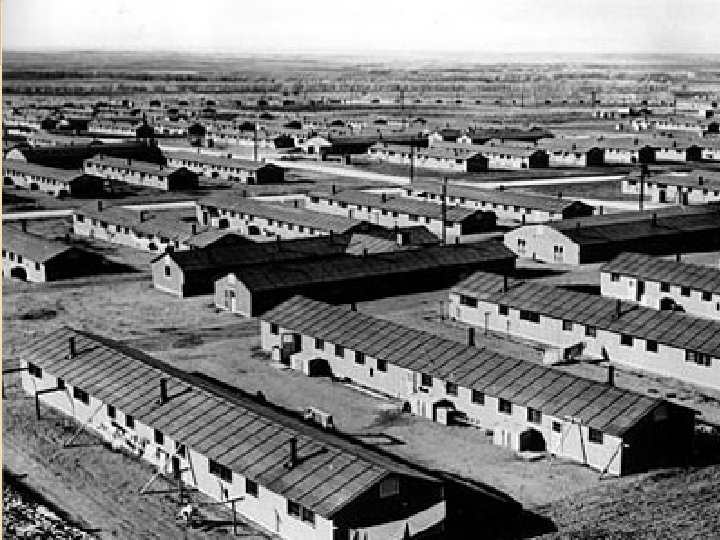
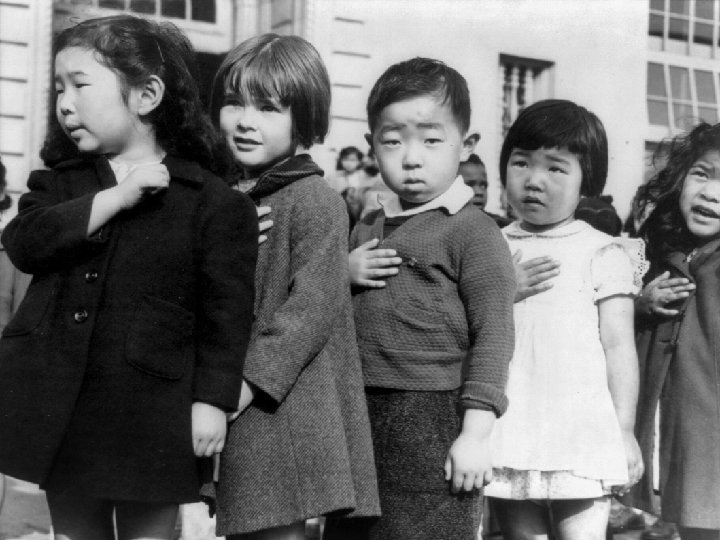
Japanese Relocation 1942 – Executive Order 9066 � �President Roosevelt authorized over 100, 000 Japanese to be moved to internment camps in Arizona �Personal property confiscated by gov’t �Korematsu v. United States (1944) ◦ Supreme Court upheld internment on grounds of national security. 1988 – reparations to all survivors of $20, 000 each
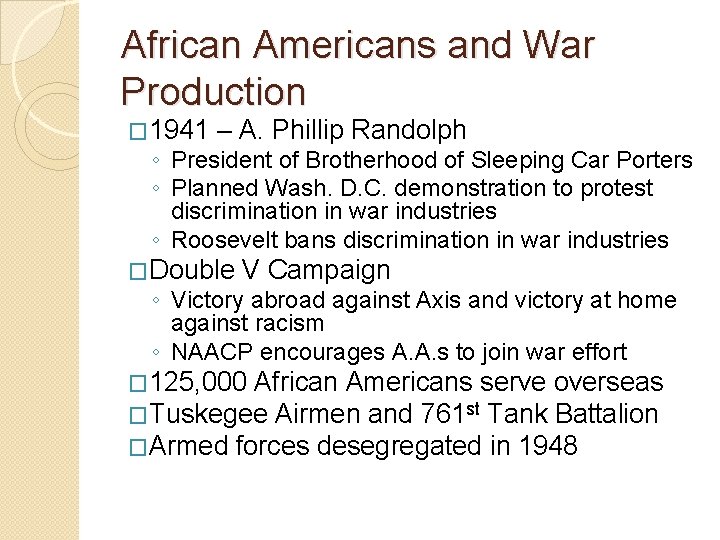
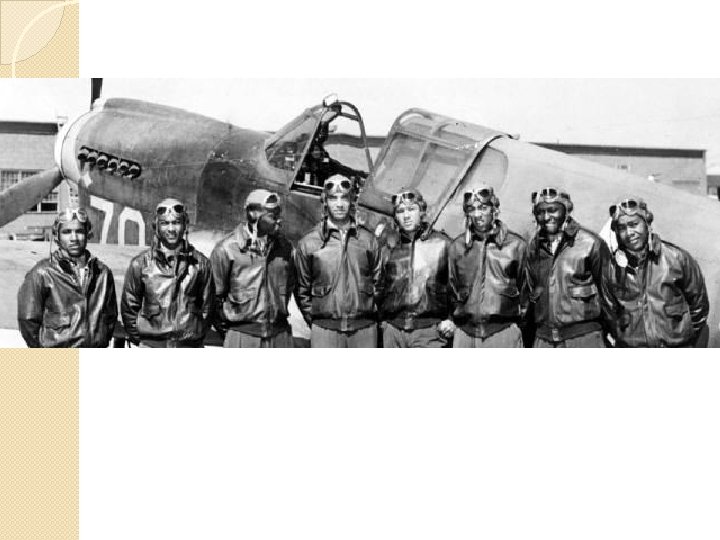
African Americans and War Production � 1941 – A. Phillip Randolph ◦ President of Brotherhood of Sleeping Car Porters ◦ Planned Wash. D. C. demonstration to protest discrimination in war industries ◦ Roosevelt bans discrimination in war industries �Double V Campaign ◦ Victory abroad against Axis and victory at home against racism ◦ NAACP encourages A. A. s to join war effort � 125, 000 African Americans serve overseas �Tuskegee Airmen and 761 st Tank Battalion �Armed forces desegregated in 1948
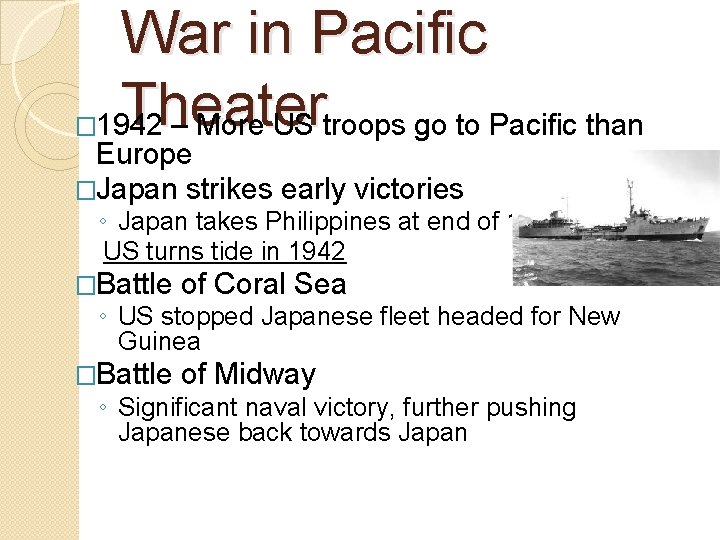
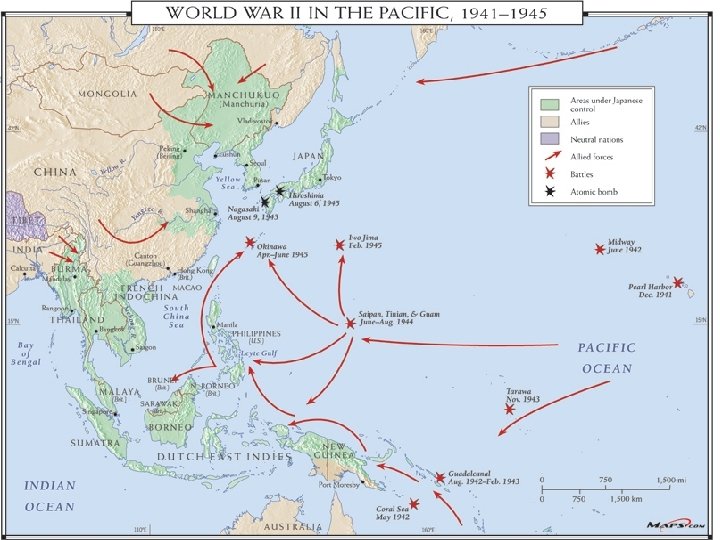
War in Pacific Theater � 1942 – More US troops go to Pacific than Europe �Japan strikes early victories ◦ Japan takes Philippines at end of 1941 US turns tide in 1942 �Battle of Coral Sea �Battle of Midway ◦ US stopped Japanese fleet headed for New Guinea ◦ Significant naval victory, further pushing Japanese back towards Japan
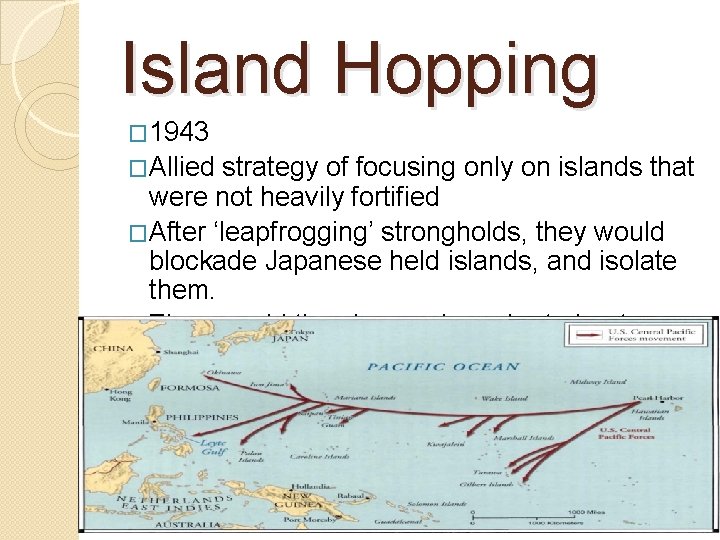
Island Hopping � 1943 �Allied strategy of focusing only on islands that were not heavily fortified �After ‘leapfrogging’ strongholds, they would blockade Japanese held islands, and isolate them. �They would thus be much easier to beat
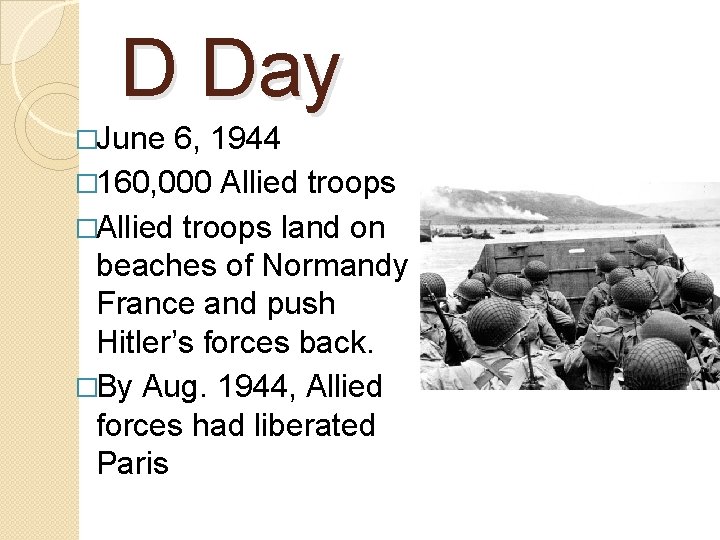
D Day �June 6, 1944 � 160, 000 Allied troops �Allied troops land on beaches of Normandy France and push Hitler’s forces back. �By Aug. 1944, Allied forces had liberated Paris
V-E Day �Battle of Bulge – winter 1944 -45 ◦ German forces drive Allied forces back into Belgium �Ultimately stopped by Allied forces �Britain and US approach Germany from west, Russia from east �April 1945 – Berlin surrounded (Apr. 30, Hitler kills self) �May 7 th, 1945 – German surrenders
Victory in Pacific �Iwo Jima and Okinawa �Two heavily fortified islands separating Allies from Japanese home islands � 1945 ◦ Feb/March – Iwo Jima – 6 week battle 7, 000 Americans die ◦ April – mid June – Okinawa – 12, 000 Americans die and 140, 000 Japanese ◦ US turns to atomic bomb to finish Pacific front
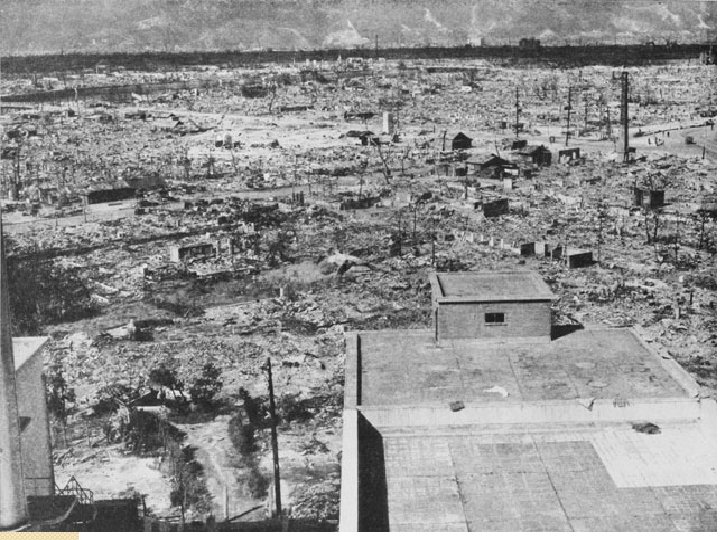
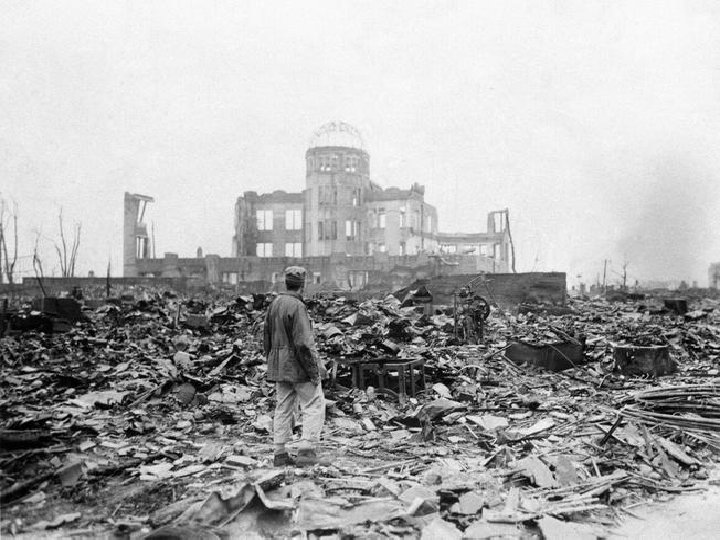
Atomic Bomb Drop � 1945 – Manhattan Project – successfully tests nuclear bomb �J. Robert Oppenheimer – lead physicist �August 6 th, 1945 - Hiroshima �August 9 th, 1945 – Nagasaki �Very little debate over morality of dropping bomb in 1945 (war had already taken 50 million lives) �Debate has increased in years since
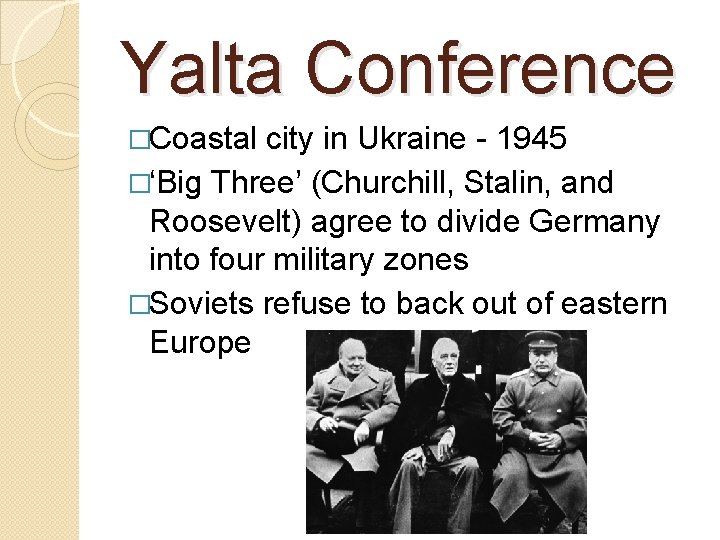
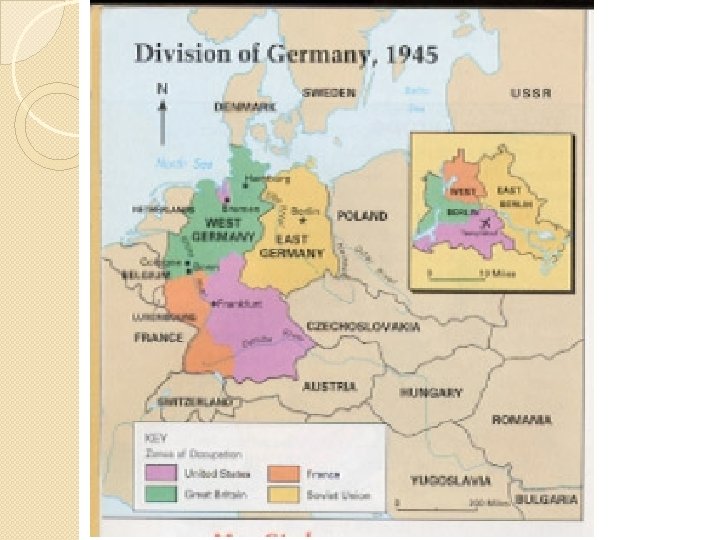
Yalta Conference �Coastal city in Ukraine - 1945 �‘Big Three’ (Churchill, Stalin, and Roosevelt) agree to divide Germany into four military zones �Soviets refuse to back out of eastern Europe
Potsdam Conference � 1945 – Potsdam Germany �Truman, Stalin, and British PM Clement Atlee discuss terms for end of war �‘denazification’ of Germany �Nuremberg War Crimes Trials