
Amendments to the US Constitution What changes have
- Slides: 11
Amendments to the US Constitution What changes have been made to the Constitution since it was ratified in 1788 and how have these changes affected the citizens of the USA?
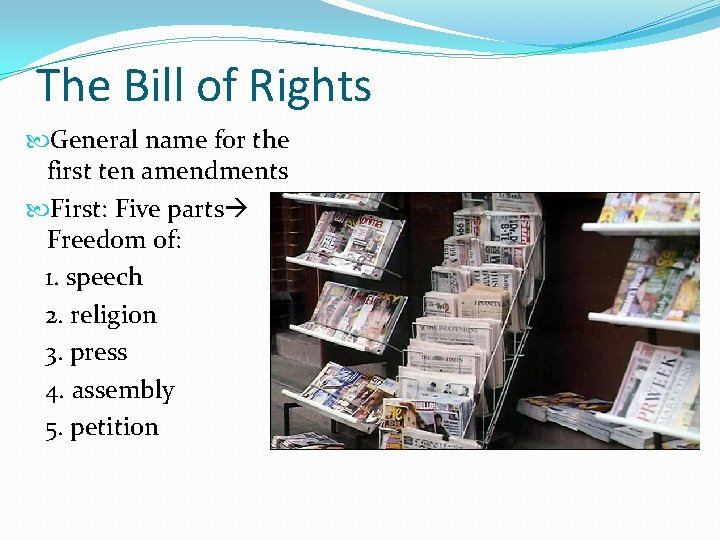
The Bill of Rights General name for the first ten amendments First: Five parts Freedom of: 1. speech 2. religion 3. press 4. assembly 5. petition
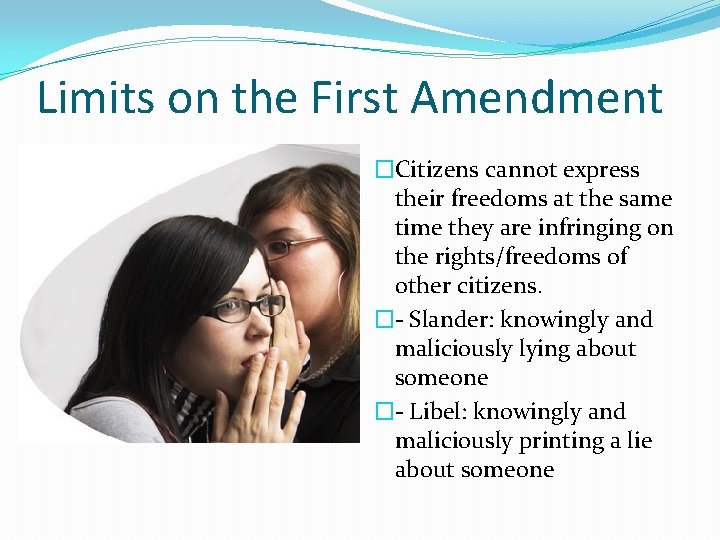
Limits on the First Amendment �Citizens cannot express their freedoms at the same time they are infringing on the rights/freedoms of other citizens. �- Slander: knowingly and maliciously lying about someone �- Libel: knowingly and maliciously printing a lie about someone
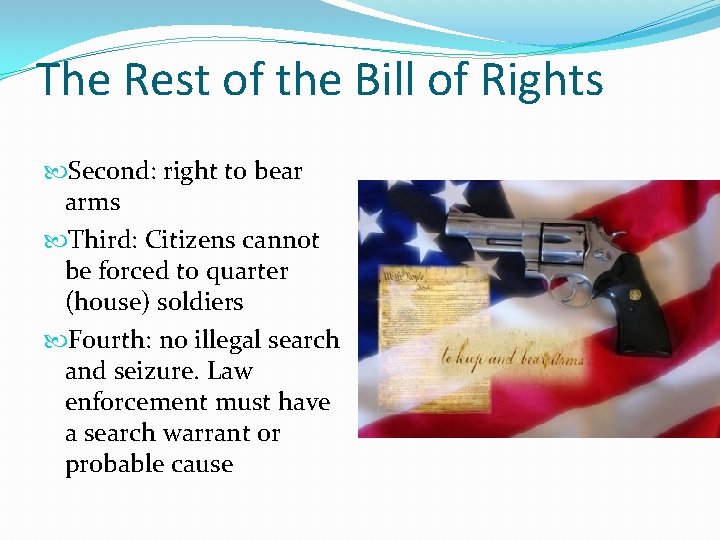
The Rest of the Bill of Rights Second: right to bear arms Third: Citizens cannot be forced to quarter (house) soldiers Fourth: no illegal search and seizure. Law enforcement must have a search warrant or probable cause
Fifth Amendment �Rights of the Accused: 1. No one can be tried for a felony unless indicted by a grand jury 2. No double jeopardy 3. Protection against selfincrimination 4. Due Process: accused must receive all parts of legal process 5. Eminent Domain: government must compensate citizens for taking their land
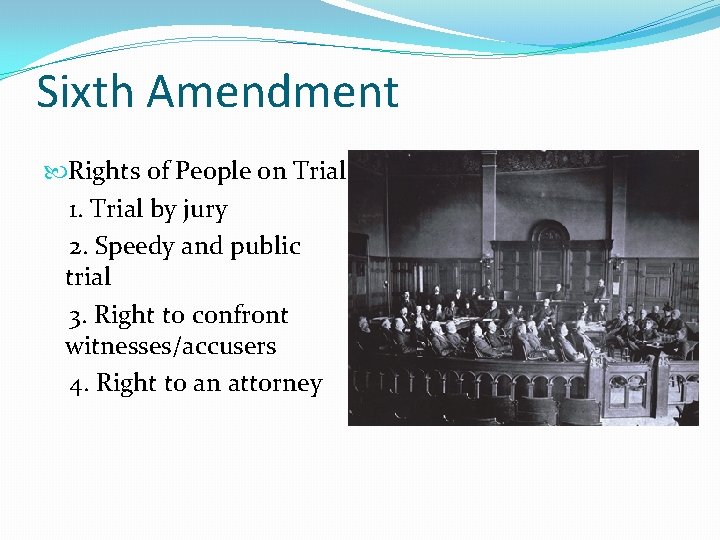
Sixth Amendment Rights of People on Trial 1. Trial by jury 2. Speedy and public trial 3. Right to confront witnesses/accusers 4. Right to an attorney
Seven Through Ten Seventh: in civil cases worth more than $20, you have the right to a jury Eighth: no cruel and unusual punishment and no excessive bail Ninth: Rights not specifically taken away from the people by the Constitution are automatically given to the people Tenth: Powers not specifically given to the Federal govt. are given to state governments
Other Amendments Eleventh: Sets the official jurisdiction of the Federal courts Twelfth: President and Vice President run for office as a team instead of individuals
Slavery/Civil War Amendments Thirteenth: abolition of slavery Fourteenth: all persons born or naturalized in the US are citizens and are guaranteed equal protection under the law Fifteenth: no person can be denied the right to vote based on race
More Amendments Sixteenth: allows the income tax Seventeenth: direct election of senators by the people Eighteenth: Prohibition of alcohol Nineteenth: Women’s suffrage (vote) Twentieth: The Presidential inauguration was moved to January 20 Twenty-first: repealed Prohibition Twenty-second: The President can only serve two consecutive terms or 10 consecutive years
More Amendments �Twenty-third: Citizens of Washington, DC can vote in Presidential elections �Twenty-fourth: outlawed the poll tax �Twenty-fifth: Sets Presidential succession � (Who becomes President if the President dies/leaves office? ) �Twenty-sixth: voting age decreased to 18 years �Twenty-seventh: Congress cannot pass a pay raise for themselves that will take effect in the same session as its passage