
Amendment process shows the flexibility of the Constitution
Amendment process shows the flexibility of the Constitution as a “living document” Amendments to the U. S. Constitution Page 6 -8 in your review packet!
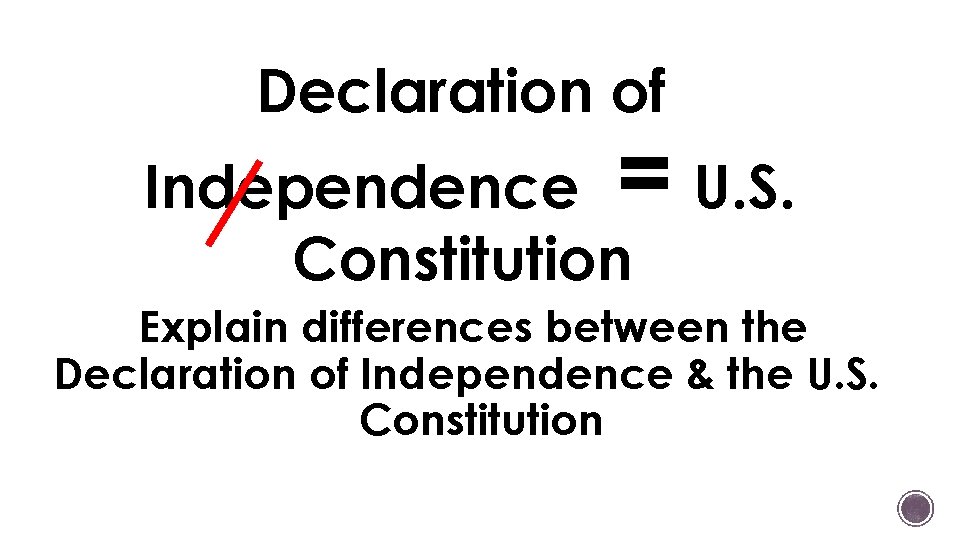
Declaration of = U. S. Independence Constitution Explain differences between the Declaration of Independence & the U. S. Constitution
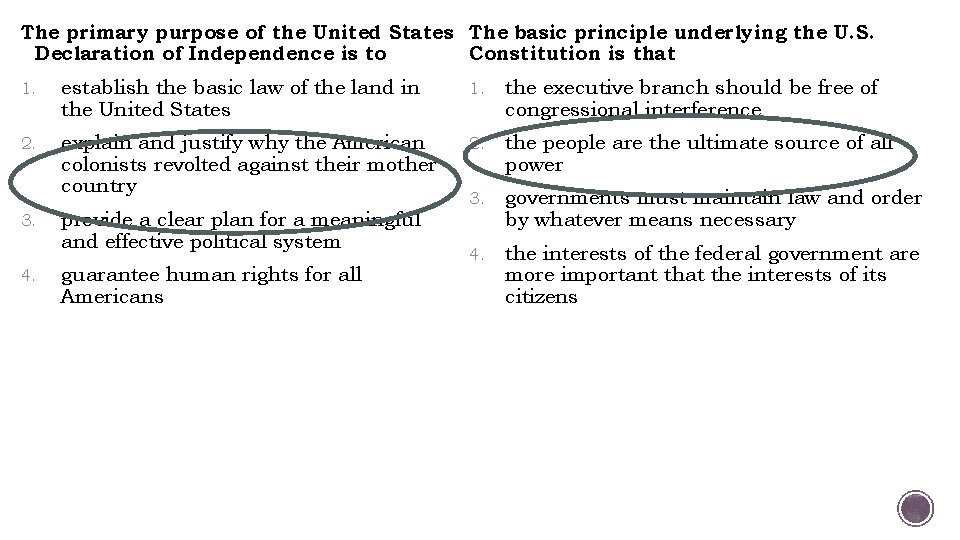
The primary purpose of the United States The basic principle underlying the U. S. Declaration of Independence is to Constitution is that 1. establish the basic law of the land in the United States 1. the executive branch should be free of congressional interference 2. explain and justify why the American colonists revolted against their mother country 2. the people are the ultimate source of all power 3. governments must maintain law and order by whatever means necessary 4. the interests of the federal government are more important that the interests of its citizens 3. 4. provide a clear plan for a meaningful and effective political system guarantee human rights for all Americans
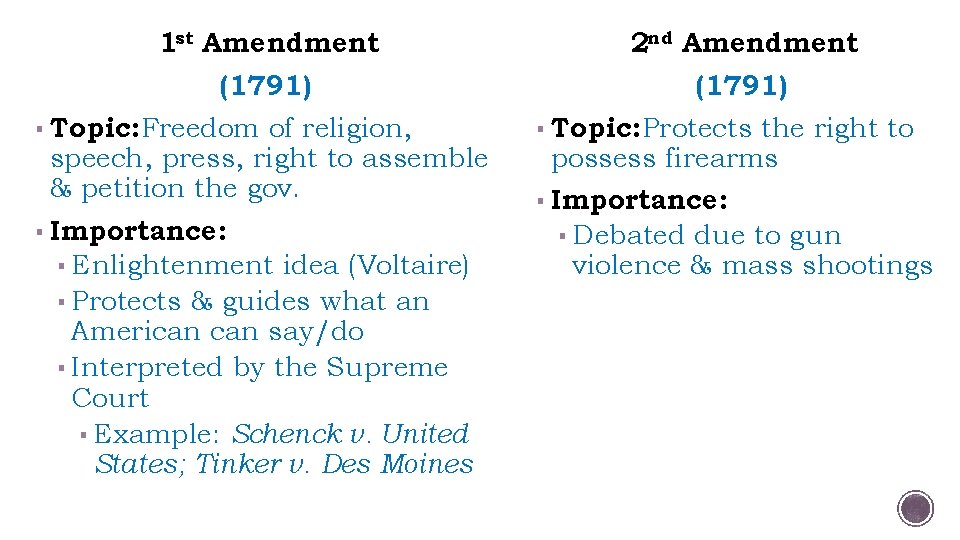
1 st Amendment 2 nd Amendment (1791) ▪ Topic: Freedom of religion, speech, press, right to assemble & petition the gov. ▪ Importance: ▪ Enlightenment idea (Voltaire) ▪ Protects & guides what an American say/do ▪ Interpreted by the Supreme Court ▪ Example: Schenck v. United States; Tinker v. Des Moines ▪ Topic: Protects the right to possess firearms ▪ Importance: ▪ Debated due to gun violence & mass shootings
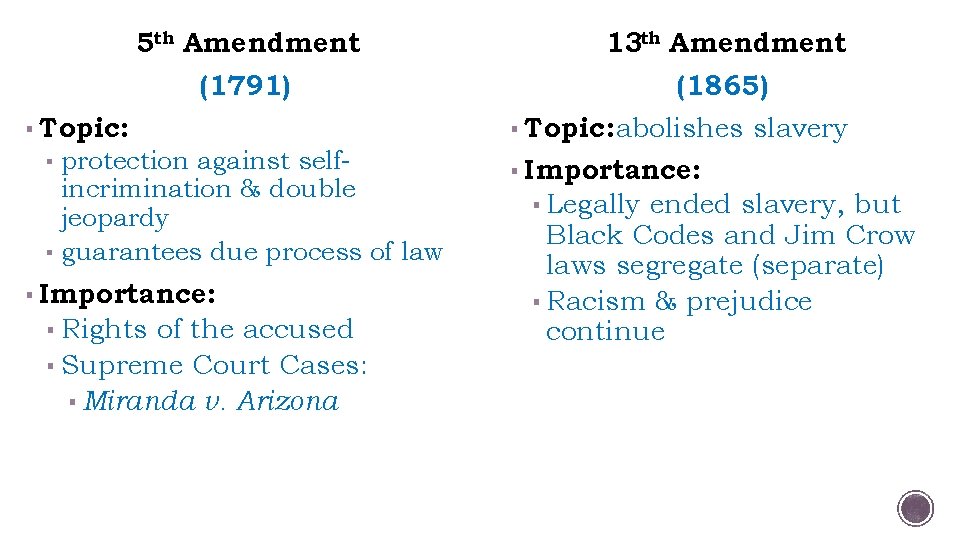
5 th Amendment 13 th Amendment (1791) (1865) ▪ Topic: ▪ protection against self- incrimination & double jeopardy ▪ guarantees due process of law ▪ Importance: ▪ Rights of the accused ▪ Supreme Court Cases: ▪ Miranda v. Arizona ▪ Topic: abolishes slavery ▪ Importance: ▪ Legally ended slavery, but Black Codes and Jim Crow laws segregate (separate) ▪ Racism & prejudice continue
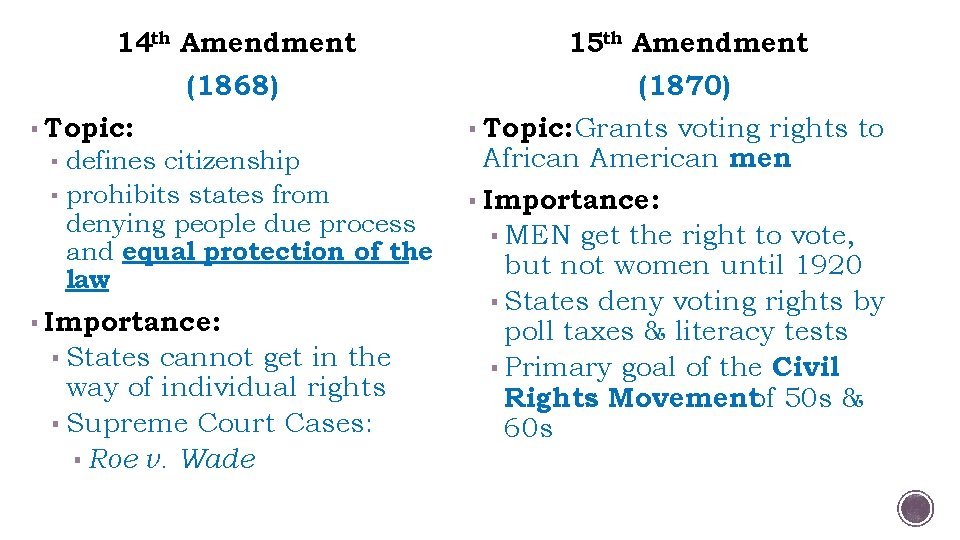
14 th Amendment 15 th Amendment (1868) (1870) ▪ Topic: ▪ defines citizenship ▪ prohibits states from denying people due process and equal protection of the law ▪ Importance: ▪ States cannot get in the way of individual rights ▪ Supreme Court Cases: ▪ Roe v. Wade ▪ Topic: Grants voting rights to African American men ▪ Importance: ▪ MEN get the right to vote, but not women until 1920 ▪ States deny voting rights by poll taxes & literacy tests ▪ Primary goal of the Civil Rights Movementof 50 s & 60 s
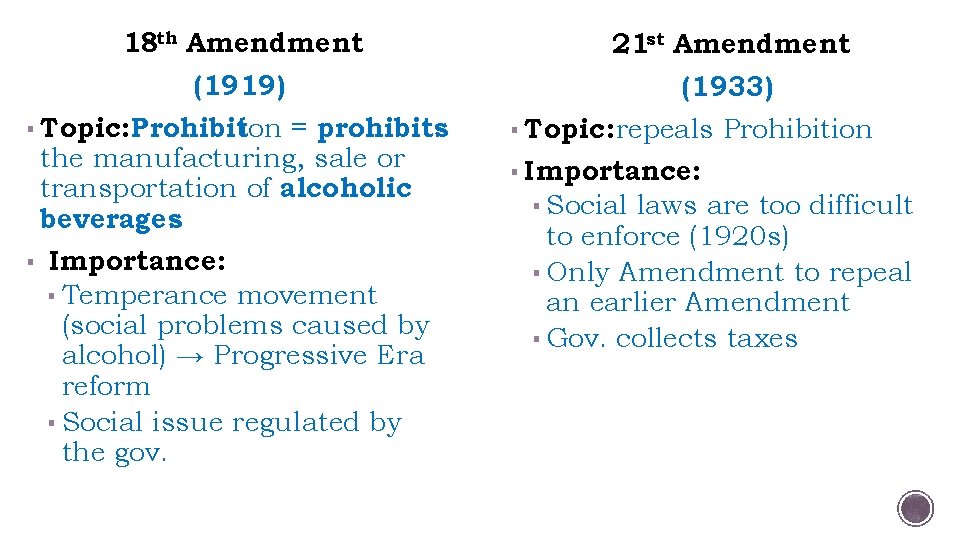
18 th Amendment 21 st Amendment (1919) (1933) ▪ Topic: Prohibition = prohibits the manufacturing, sale or transportation of alcoholic beverages ▪ Importance: ▪ Temperance movement (social problems caused by alcohol) → Progressive Era reform ▪ Social issue regulated by the gov. ▪ Topic: repeals Prohibition ▪ Importance: ▪ Social laws are too difficult to enforce (1920 s) ▪ Only Amendment to repeal an earlier Amendment ▪ Gov. collects taxes
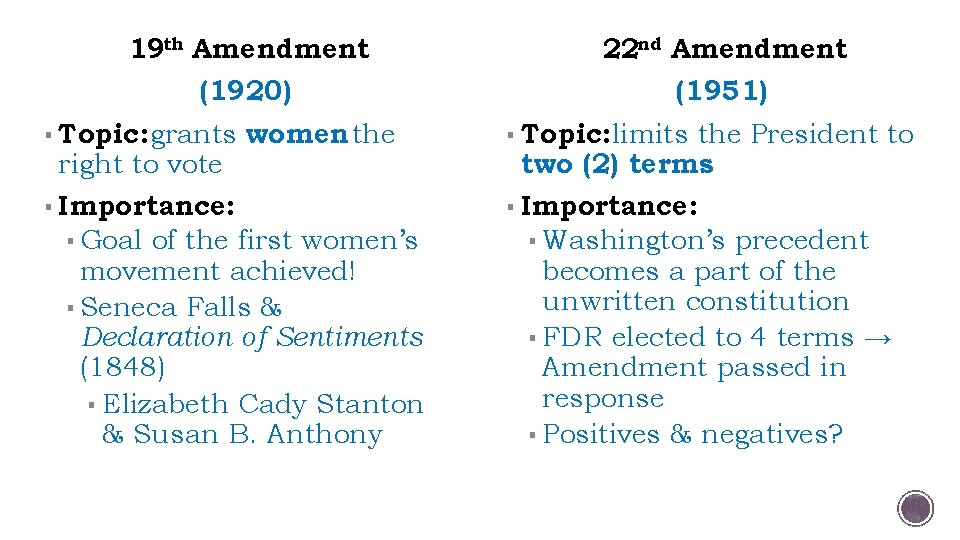
19 th Amendment 22 nd Amendment (1920) (1951) ▪ Topic: grants women the ▪ Topic: limits the President to ▪ Importance: ▪ Goal of the first women’s ▪ Importance: ▪ Washington’s precedent right to vote movement achieved! ▪ Seneca Falls & Declaration of Sentiments (1848) ▪ Elizabeth Cady Stanton & Susan B. Anthony two (2) terms becomes a part of the unwritten constitution ▪ FDR elected to 4 terms → Amendment passed in response ▪ Positives & negatives?
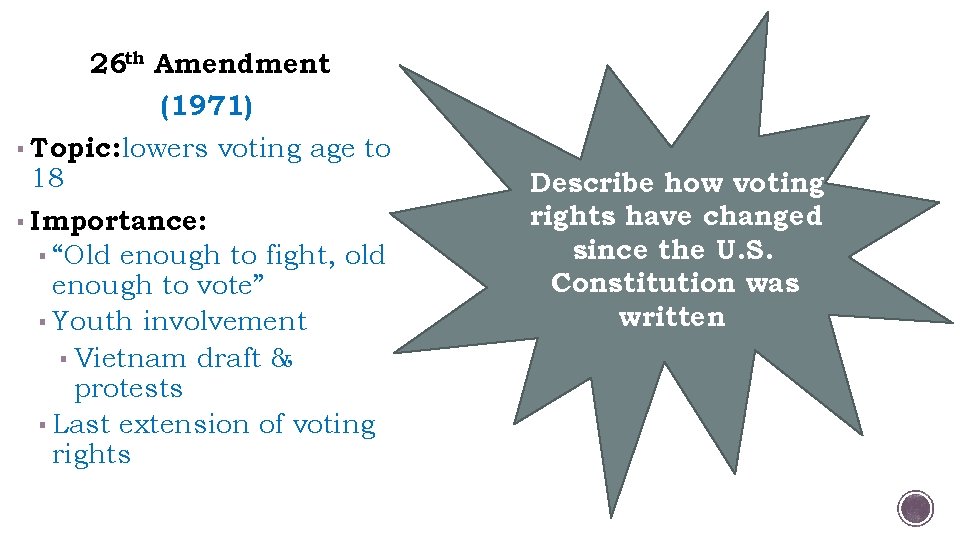
26 th Amendment (1971) ▪ Topic: lowers voting age to 18 ▪ Importance: ▪ “Old enough to fight, old enough to vote” ▪ Youth involvement ▪ Vietnam draft & protests ▪ Last extension of voting rights Describe how voting rights have changed since the U. S. Constitution was written
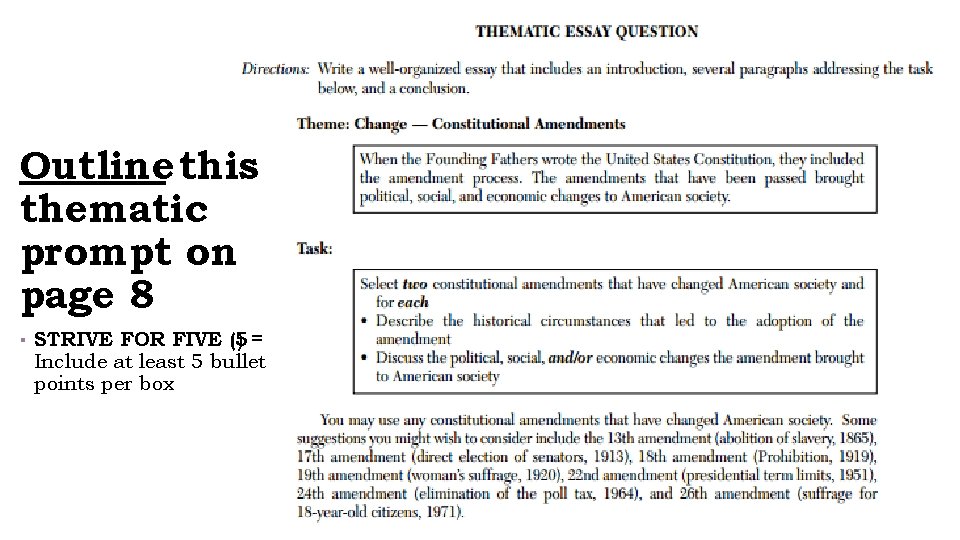
Outline this thematic prompt on page 8 ▪ STRIVE FOR FIVE (5 )= Include at least 5 bullet points per box
- Slides: 10