
Amendment Process Formal Amendments Formal Amendment Change or
- Slides: 9
Amendment Process
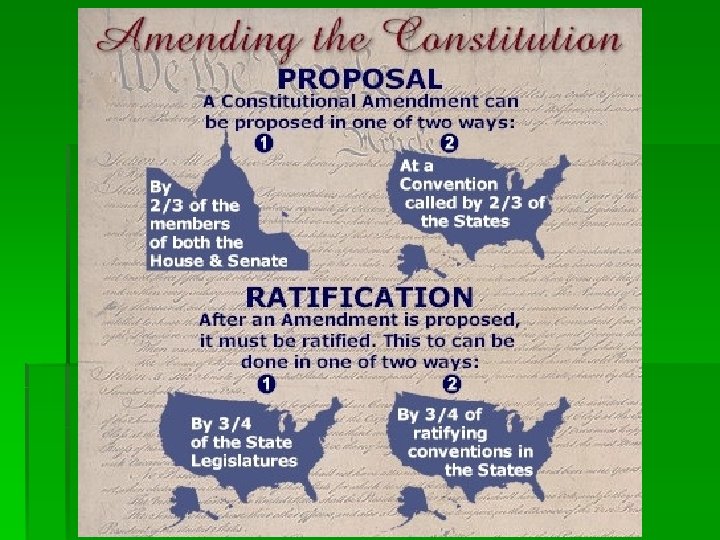
Formal Amendments § Formal Amendment – Change or addition that becomes part of the written language of the Constitution itself through one of four methods set forth in the Constitution
Formal Amendments § First Method – an amendment may be proposed by a two-thirds vote in each house of Congress and be ratified by three-fourths of the State Legislators § 26 of the 27 Amendments were adopted in this manner
Formal Amendments § Second Method – an amendment may be proposed by Congress and then ratified by conventions, called for that purpose, in three-fourths of the States § Only the 21 st Amendment was adopted in this way
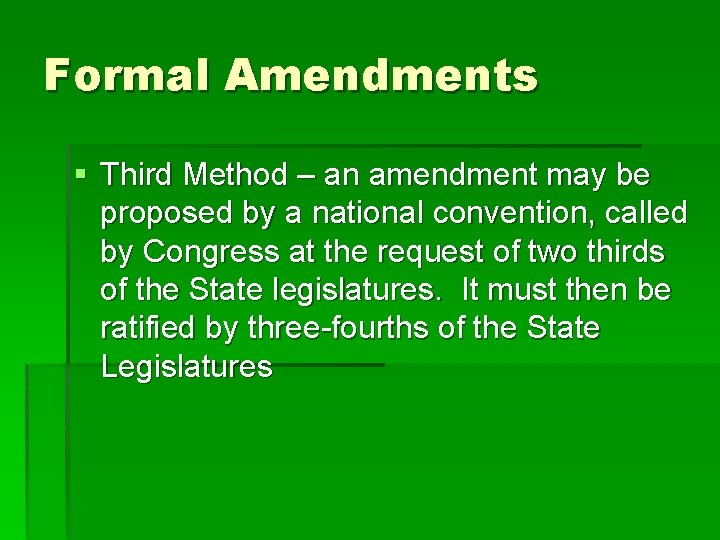
Formal Amendments § Third Method – an amendment may be proposed by a national convention, called by Congress at the request of two thirds of the State legislatures. It must then be ratified by three-fourths of the State Legislatures
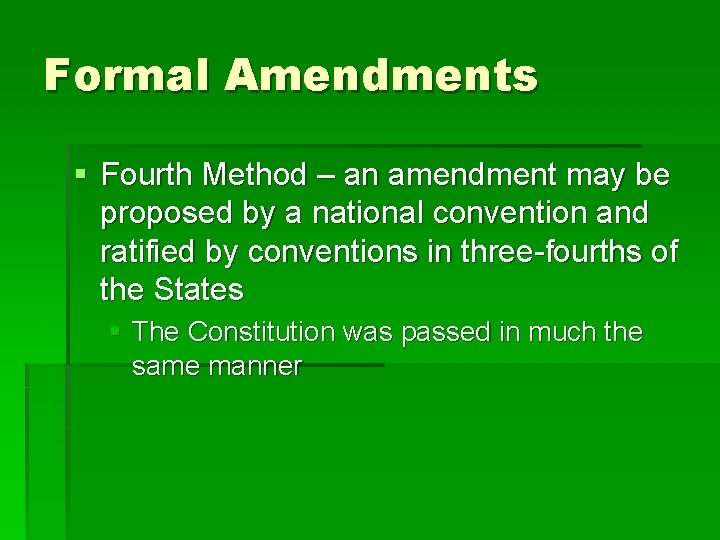
Formal Amendments § Fourth Method – an amendment may be proposed by a national convention and ratified by conventions in three-fourths of the States § The Constitution was passed in much the same manner
Informal Amendments § Informal Amendment – a change made in the Constitution not by actual written amendment, but by the experience of government
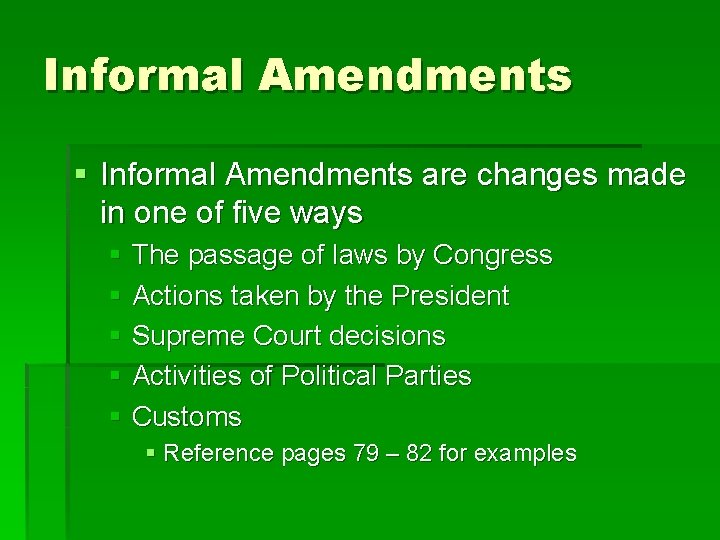
Informal Amendments § Informal Amendments are changes made in one of five ways § The passage of laws by Congress § Actions taken by the President § Supreme Court decisions § Activities of Political Parties § Customs § Reference pages 79 – 82 for examples