
Ambulatory Medication Reconciliation Caroline Keogh MS RN Patient
Ambulatory Medication Reconciliation Caroline Keogh, MS RN Patient Safety Center for Clinical Excellence Dermatology Clinical Faculty Meeting March 27, 2014

Why is medication reconciliation important? • Intended to identify and resolve medication discrepancies • Standardized process of comparing a patient’s prescribed medications to those medications the patient is actually taking 1 Meaningful Use NPSG ACO Medication reconciliation is critical to preventing adverse drug reactions which can lead to patient harm P 4 P 1. The Joint Commission. Medication reconciliation sentinel event alert, Issue 35. 2006. Available at: http: //www. jointcommission. org/sentinel_event_alert_ issue_35_using_medication_reconciliation_to_prevent_errors/

What do providers need to do? • Focus on visits with a medication change – Medication change: • addition of a new med • discontinuation of an existing med • change in the dose or frequency of an existing med • Reconcile medications which they prescribe – All medications on the medication list should be reviewed for drug-drug interactions – PCPs and Specialists have the same standard – Ideally, all meds should be assessed/ reconciled
BWH Ambulatory Med Rec Measurement • % of visits with a medication change where all medications originally prescribed by the provider are reconciled • Numerator: # of visits with 100% of the medications originally prescribed by the provider reconciled • Denominator: # of visits with a medication change

Sample Scenarios At every visit you should review the full medication list routinely to confirm that what you are prescribing does not interact with what the patient is already taking Scenario What you need to do in addition to reviewing the med list Med rec metric You don’t prescribe, discontinue or edit any meds at the visit Nothing N/A You renew 1 medication and don’t prescribe, discontinue or edit any others. Nothing N/A You prescribe 1 new medication Nothing 100% You are seeing the patient in follow-up and have prescribed pain med in past; today you prescribe abx • Step 1: Write the new abx script • 0% • Step 2: Click “Reconcile” in LMR and click “taking” if the patient is still taking the pain med and sign • 100%
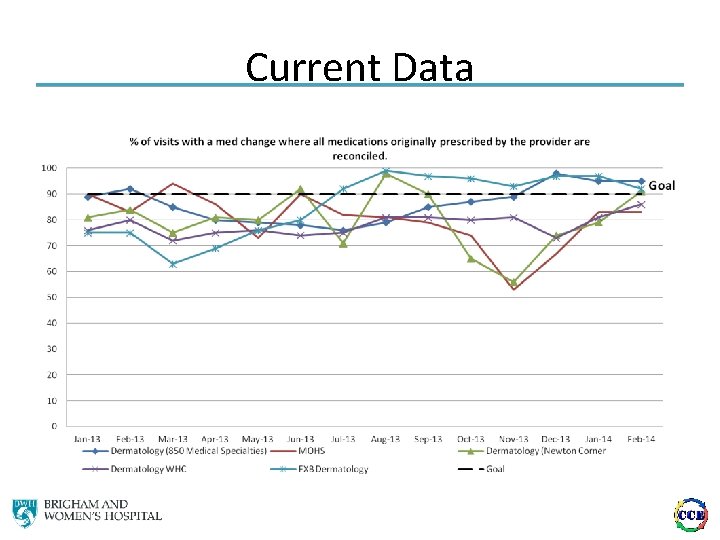
Current Data
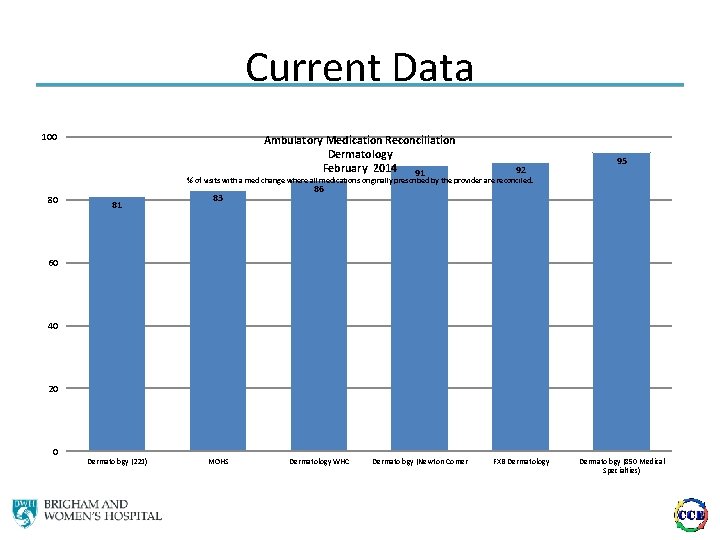
Current Data 100 Ambulatory Medication Reconciliation Dermatology February 2014 91 92 95 % of visits with a med change where all medications originally prescribed by the provider are reconciled. 80 81 83 86 60 40 20 0 Dermatology (221) MOHS Dermatology WHC Dermatology (Newton Corner FXB Dermatology (850 Medical Specialties)
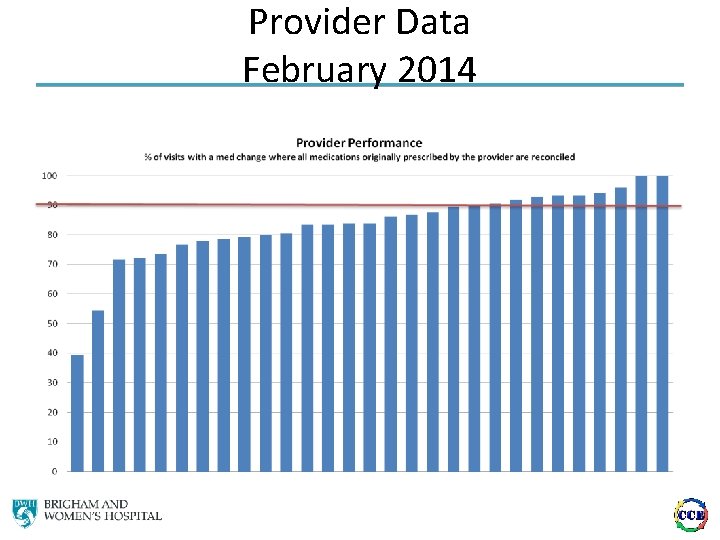
Provider Data February 2014

A few examples… • Patient seen for an annual visit; patient is no longer taking Zofran – Med change = discontinue Zofran – 10 other medications on the med list • 7 originally prescribed by the provider (0 acted on) • 3 prescribed by others (0 acted on) • Needed to click Taking/Not Taking/Taking Differently/Discontinue/Edit/Renew on all 7 originally prescribed meds to get full credit for the visit • Patient seen for follow up visit; 2 new medications prescribed. Diltiazem had been prescribed in the past. – Med change = 2 new prescriptions – Diltiazem was the only other medication on the patient’s medication list prior to the new prescriptions, and was originally prescribed by the provider. • Was not reconciled during the visit • No credit for the visit (needed to click “Taking” to get full credit)
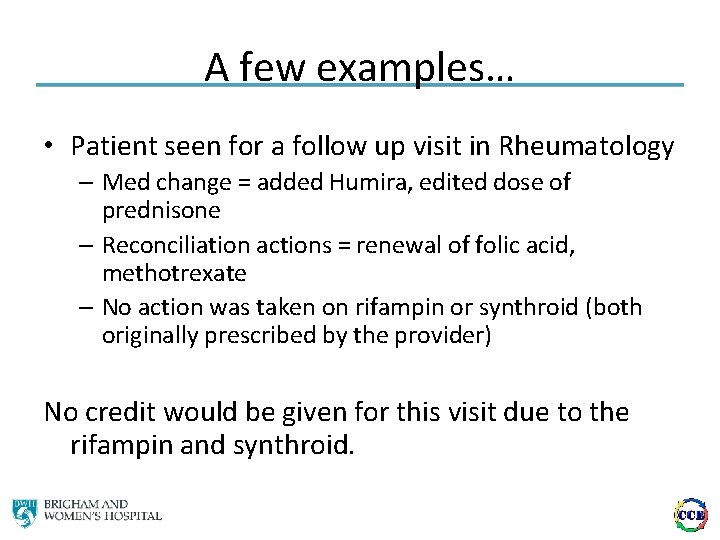
A few examples… • Patient seen for a follow up visit in Rheumatology – Med change = added Humira, edited dose of prednisone – Reconciliation actions = renewal of folic acid, methotrexate – No action was taken on rifampin or synthroid (both originally prescribed by the provider) No credit would be given for this visit due to the rifampin and synthroid.
Summary • Process of Med Rec required only for visits with a medication change • You are only responsible for Med Rec on what you prescribe • Practice-wide implementation of a standardized med rec process • LMR Med Rec module has been configured to help make this process easier • Patients are getting their current med lists through the VSR for MU • Practices can determine the specific roles of who will participate in the process of Med Rec • If all practices/ depts participate in the process of Med Rec, the lists will improve over time – this is the right thing to do for our patients
Appendix

How does this work in LMR?
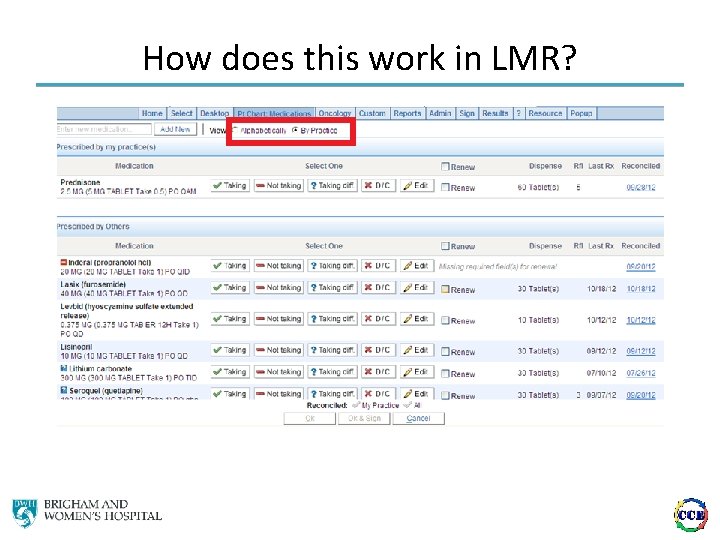
How does this work in LMR?
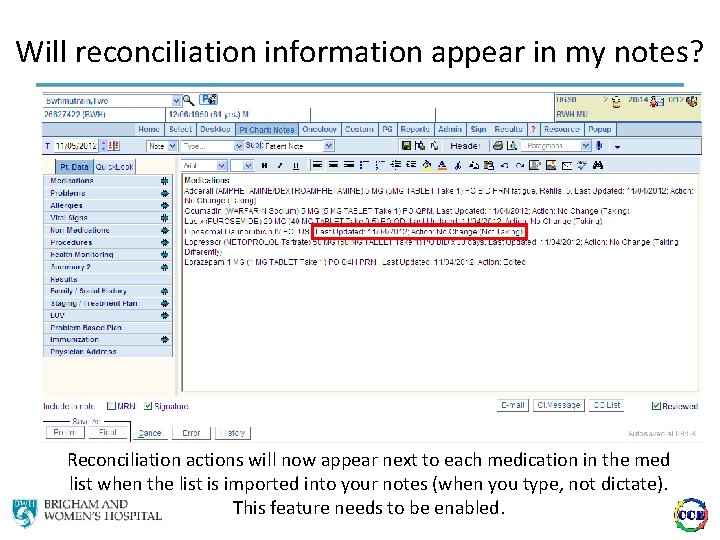
Will reconciliation information appear in my notes? Reconciliation actions will now appear next to each medication in the med list when the list is imported into your notes (when you type, not dictate). This feature needs to be enabled.

What about entering medications I did not originally prescribe? If a medication is entered using these fields in the Rx Pad, or edited by clicking these fields, the medication will appear in the “Prescribed by Others” sort
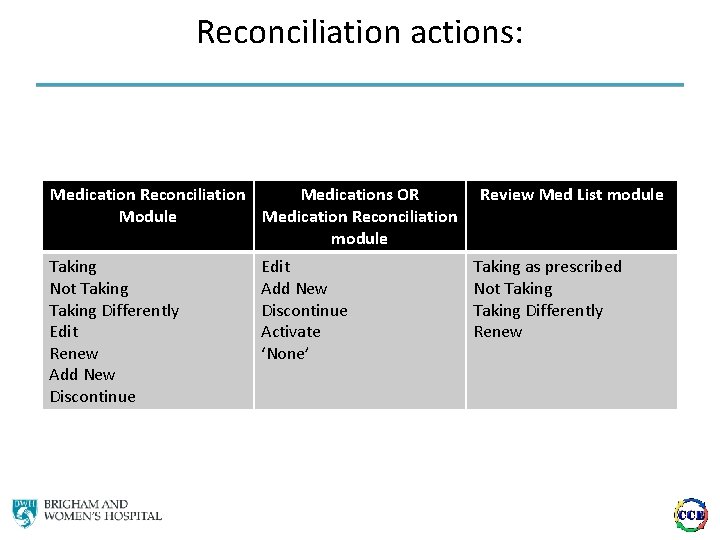
Reconciliation actions: Medication Reconciliation Medications OR Module Medication Reconciliation module Taking Not Taking Differently Edit Renew Add New Discontinue Edit Add New Discontinue Activate ‘None’ Review Med List module Taking as prescribed Not Taking Differently Renew
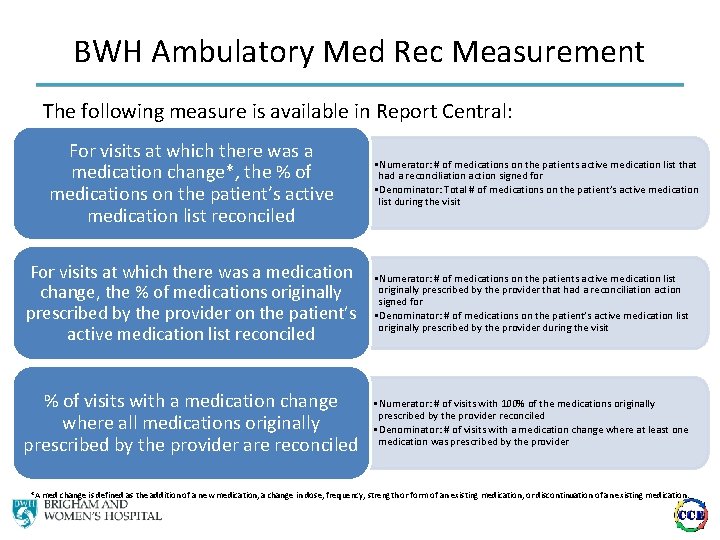
BWH Ambulatory Med Rec Measurement The following measure is available in Report Central: For visits at which there was a medication change*, the % of medications on the patient’s active medication list reconciled • Numerator: # of medications on the patients active medication list that had a reconciliation action signed for • Denominator: Total # of medications on the patient’s active medication list during the visit For visits at which there was a medication change, the % of medications originally prescribed by the provider on the patient’s active medication list reconciled • Numerator: # of medications on the patients active medication list originally prescribed by the provider that had a reconciliation action signed for • Denominator: # of medications on the patient’s active medication list originally prescribed by the provider during the visit % of visits with a medication change where all medications originally prescribed by the provider are reconciled • Numerator: # of visits with 100% of the medications originally prescribed by the provider reconciled • Denominator: # of visits with a medication change where at least one medication was prescribed by the provider *A med change is defined as the addition of a new medication, a change in dose, frequency, strength or form of an existing medication, or discontinuation of an existing medication.
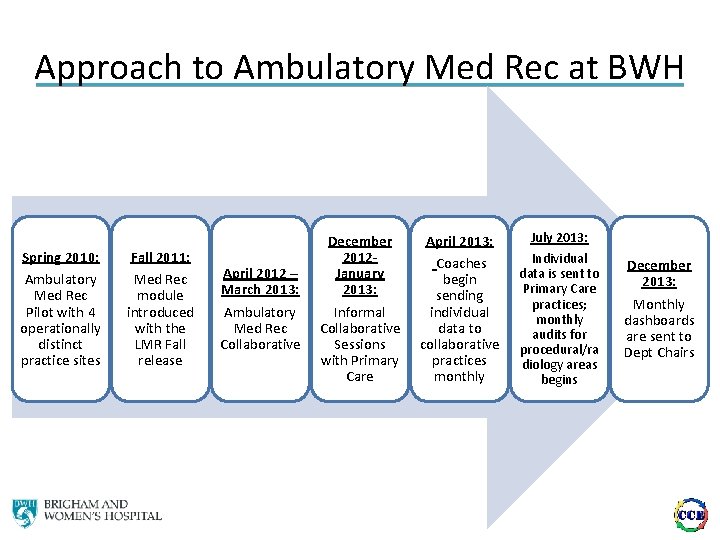
Approach to Ambulatory Med Rec at BWH Spring 2010: Ambulatory Med Rec Pilot with 4 operationally distinct practice sites Fall 2011: Med Rec module introduced with the LMR Fall release April 2012 – March 2013: Ambulatory Med Rec Collaborative December 2012 January 2013: Informal Collaborative Sessions with Primary Care April 2013: Coaches begin sending individual data to collaborative practices monthly July 2013: Individual data is sent to Primary Care practices; monthly audits for procedural/ra diology areas begins December 2013: Monthly dashboards are sent to Dept Chairs
- Slides: 19