
AMBULATORY AIDS AND GAIT TRAINING Dr Osama Neyaz
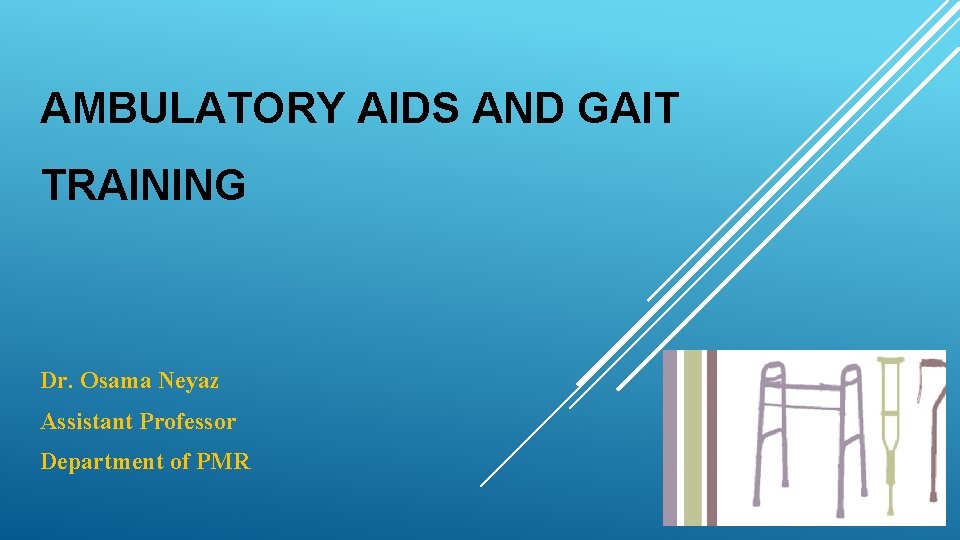
AMBULATORY AIDS AND GAIT TRAINING Dr. Osama Neyaz Assistant Professor Department of PMR
Ambulatory Aids Assistive Provide devices for mobility/ambulation. support and transmit body weight.
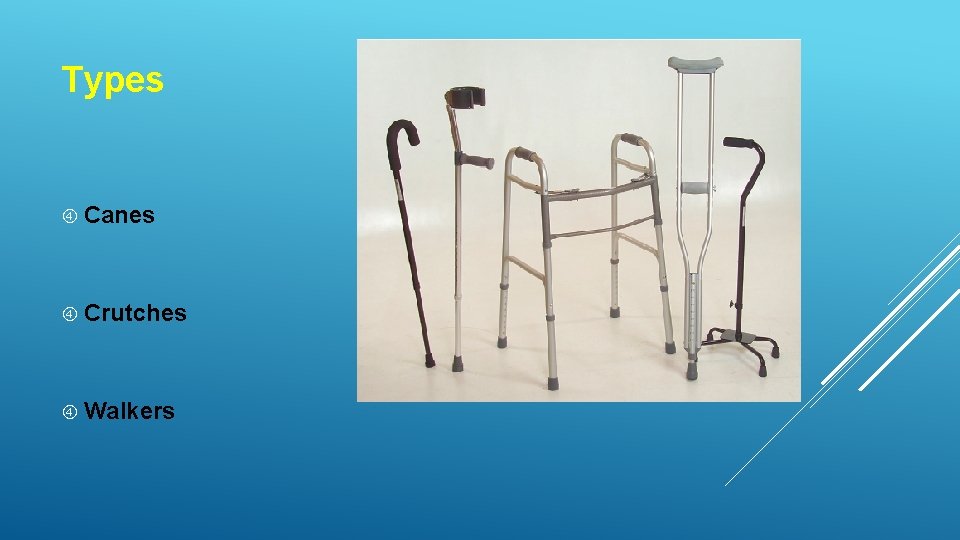
Types Canes Crutches Walkers
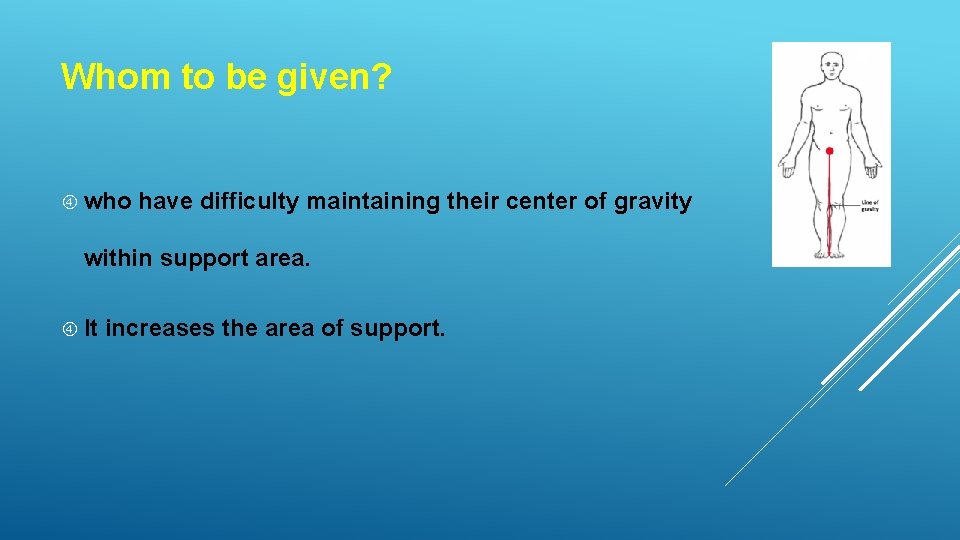
Whom to be given? who have difficulty maintaining their center of gravity within support area. It increases the area of support.
How it works? Improve balance Redistribute and extend the weight-bearing area Reduce lower limb pain Provide small propulsive forces Provide sensory feedback. They should be considered an extension of the upper limb.
Pre-requisite for use Adequate upper limb strength and coordination Endurance Stability An exercise program for the upper limbs and a supervised period of training program is recommended.
Which type of aid needed ? Depends on how much balance and weight-bearing assistance is required. The body weight transmission - Unilateral cane - 20% to 25% Forearm or Arm cane - 40% to 50% Bilateral crutches - up to 80%.
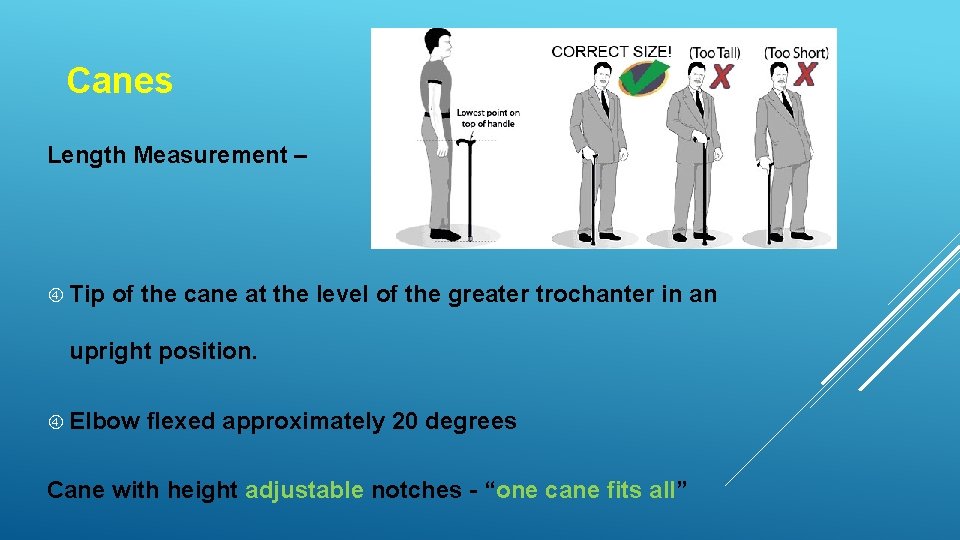
Canes Length Measurement – Tip of the cane at the level of the greater trochanter in an upright position. Elbow flexed approximately 20 degrees Cane with height adjustable notches - “one cane fits all”
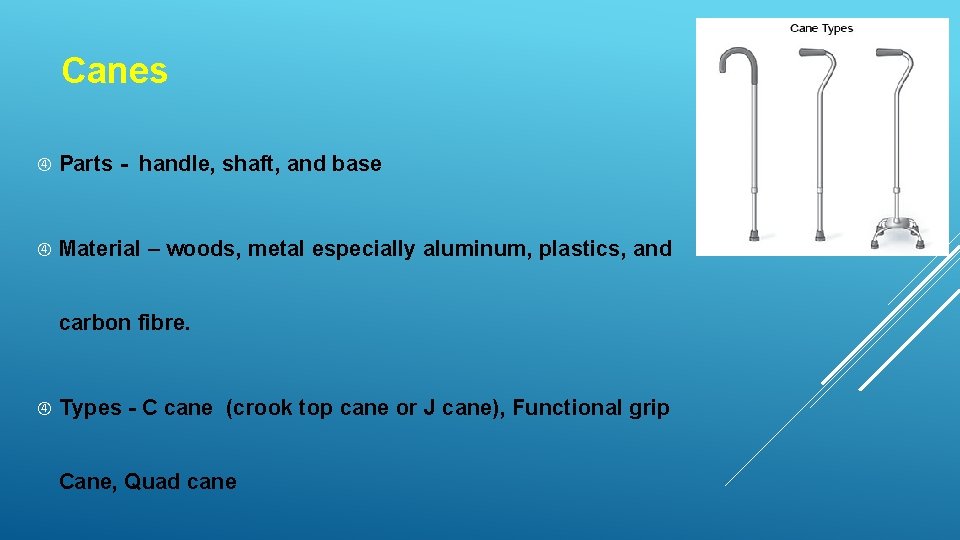
Canes Parts - handle, shaft, and base Material – woods, metal especially aluminum, plastics, and carbon fibre. Types - C cane (crook top cane or J cane), Functional grip Cane, Quad cane
Canes The cane usually is held on the side opposite the affected leg. The patient advances the cane and the affected foot, then moves the unaffected foot.
Crutches Types Underarm Forearm (Lofstrand) Canadian Forearm (Axillary) (Triceps crutch) support (Platform crutch)
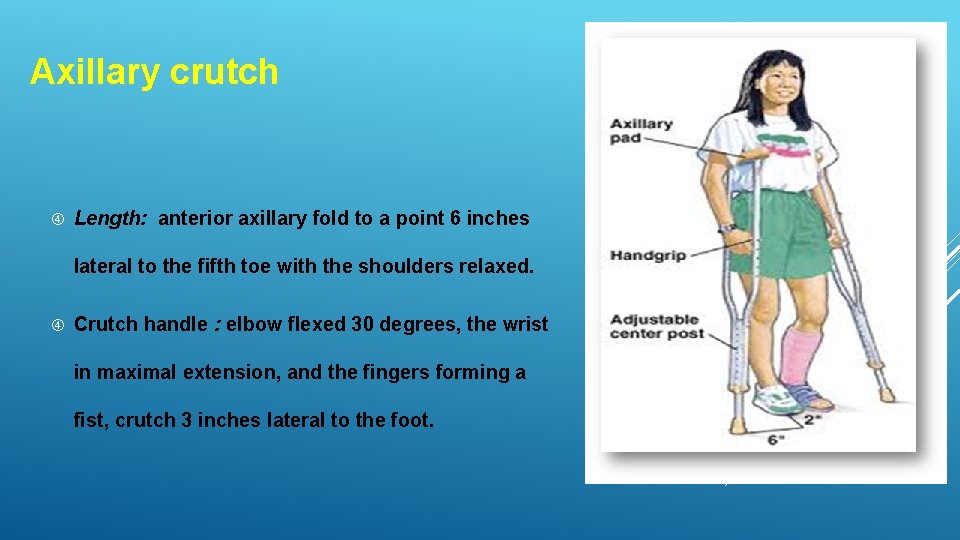
Axillary crutch Length: anterior axillary fold to a point 6 inches lateral to the fifth toe with the shoulders relaxed. Crutch handle : elbow flexed 30 degrees, the wrist in maximal extension, and the fingers forming a fist, crutch 3 inches lateral to the foot.
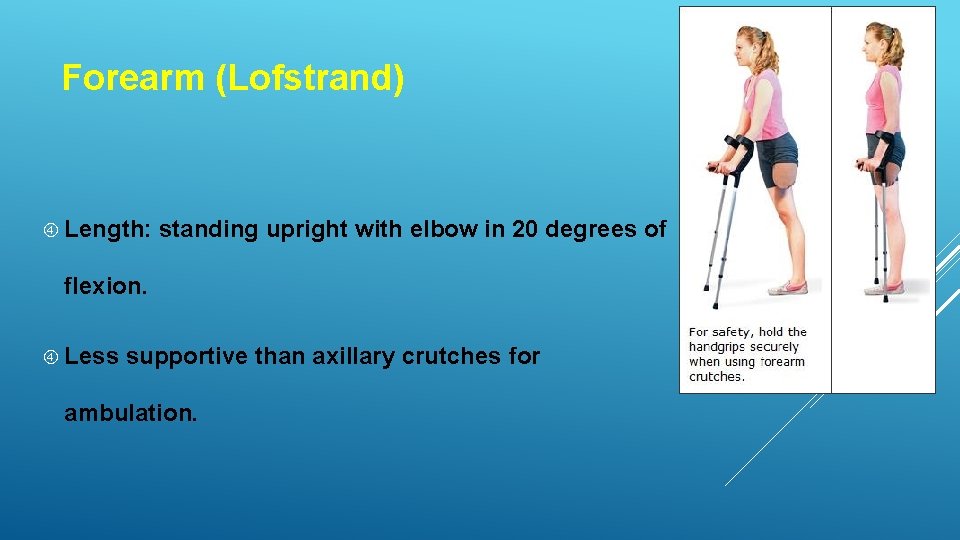
Forearm (Lofstrand) Length: standing upright with elbow in 20 degrees of flexion. Less supportive than axillary crutches for ambulation.
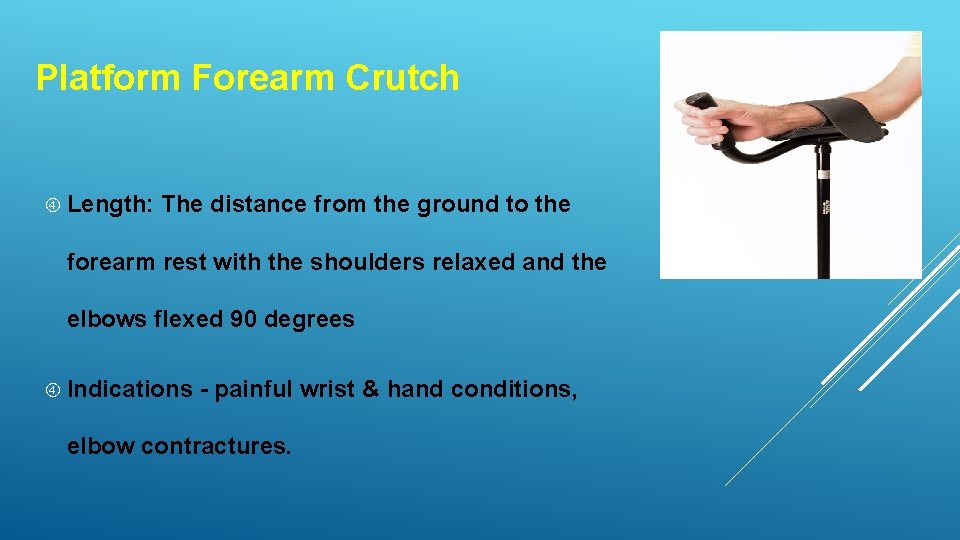
Platform Forearm Crutch Length: The distance from the ground to the forearm rest with the shoulders relaxed and the elbows flexed 90 degrees Indications - painful wrist & hand conditions, elbow contractures.
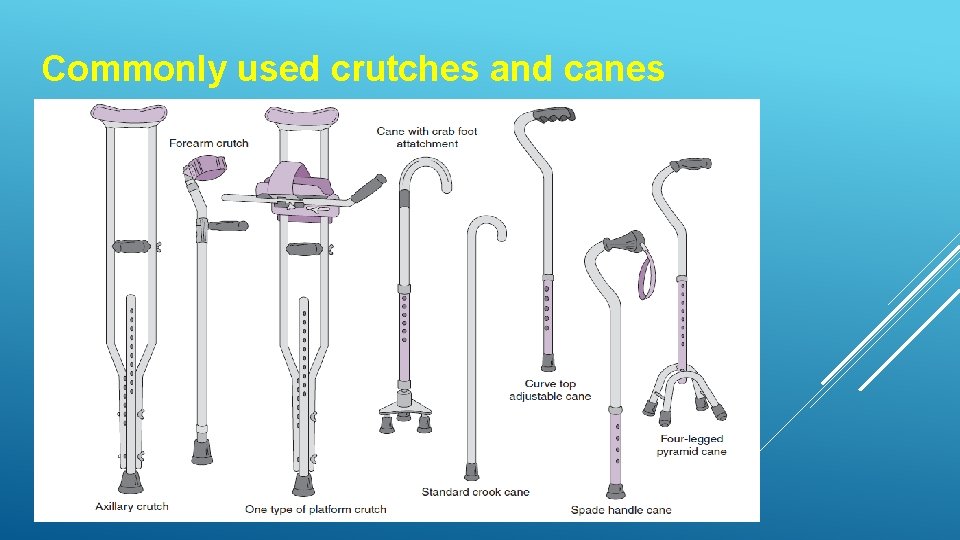
Commonly used crutches and canes
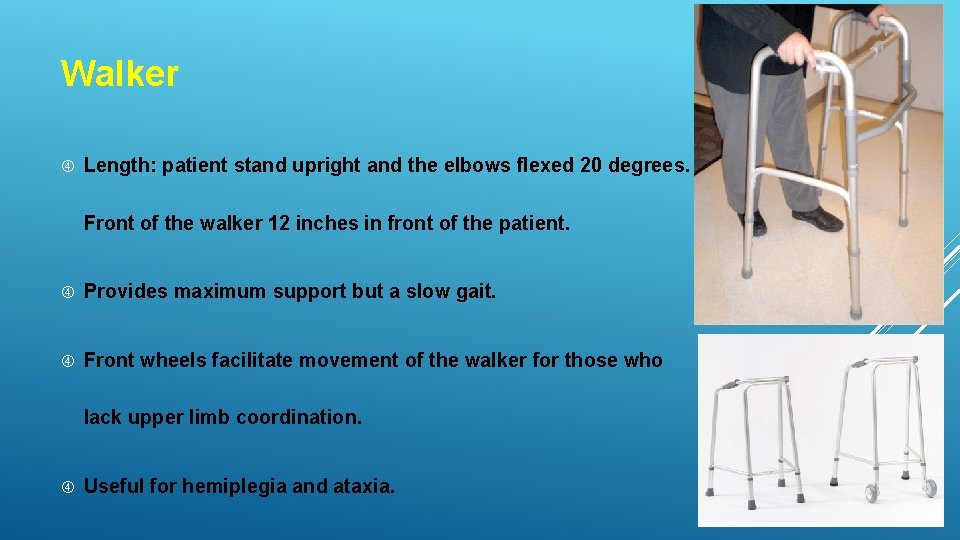
Walker Length: patient stand upright and the elbows flexed 20 degrees. Front of the walker 12 inches in front of the patient. Provides maximum support but a slow gait. Front wheels facilitate movement of the walker for those who lack upper limb coordination. Useful for hemiplegia and ataxia.
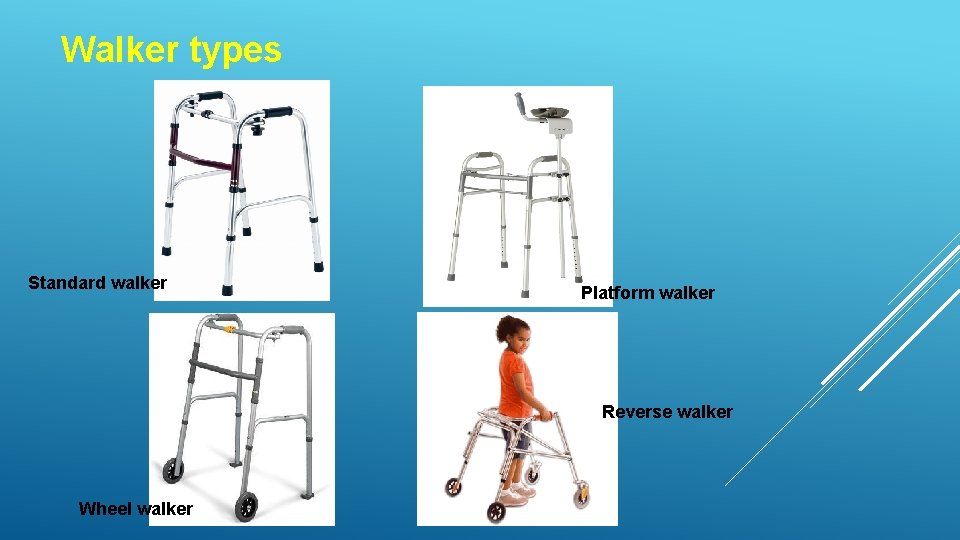
Walker types Standard walker Platform walker Reverse walker Wheel walker
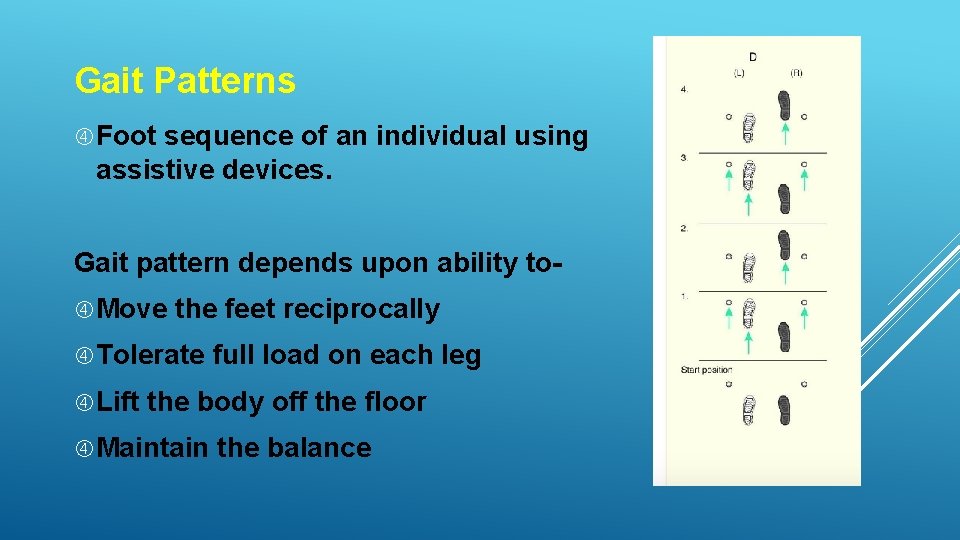
Gait Patterns Foot sequence of an individual using assistive devices. Gait pattern depends upon ability to Move the feet reciprocally Tolerate Lift full load on each leg the body off the floor Maintain the balance
Gait Patterns q Alternating (reciprocal) gait pattern Four-point gait Two-point gait Three-point gait q Swinging (simultaneous) gait pattern Swing-to gait Swing-through gait
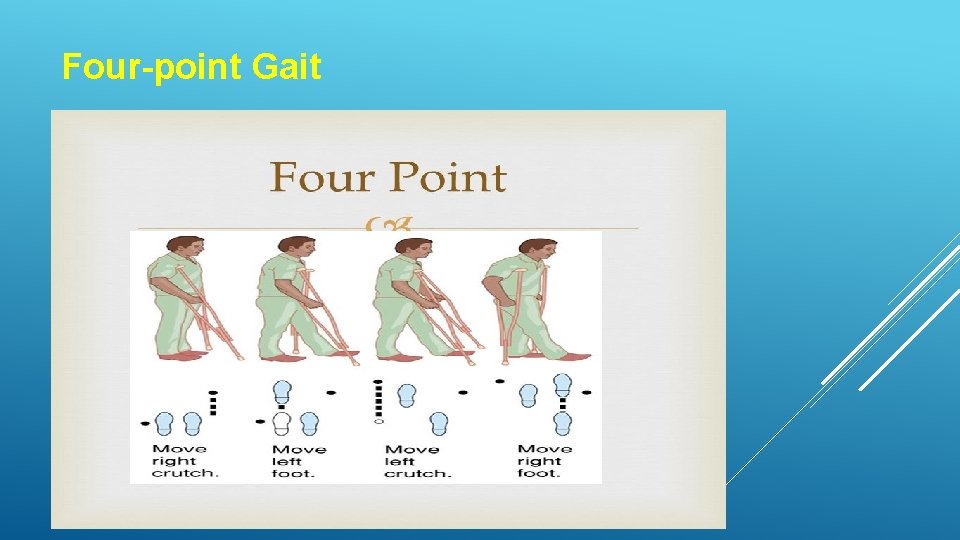
Four-point Gait
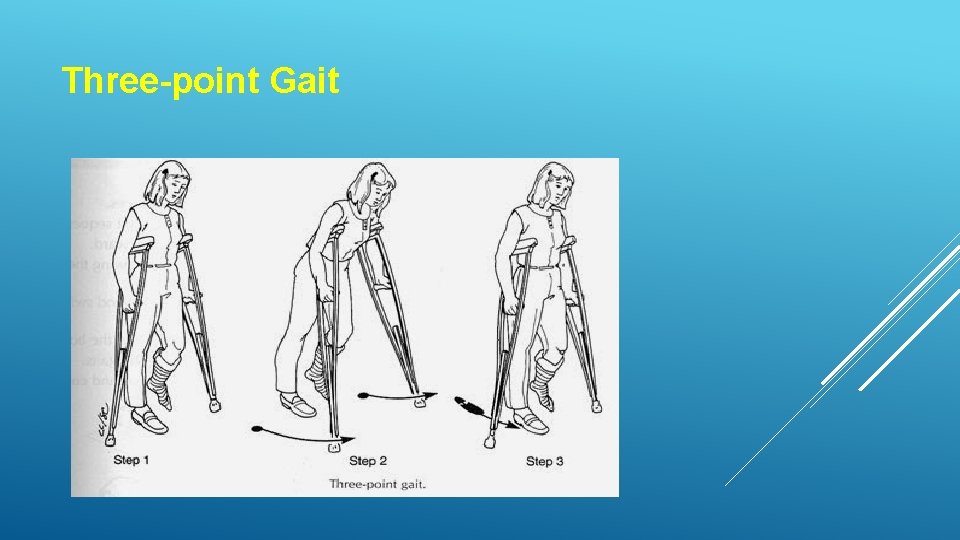
Three-point Gait
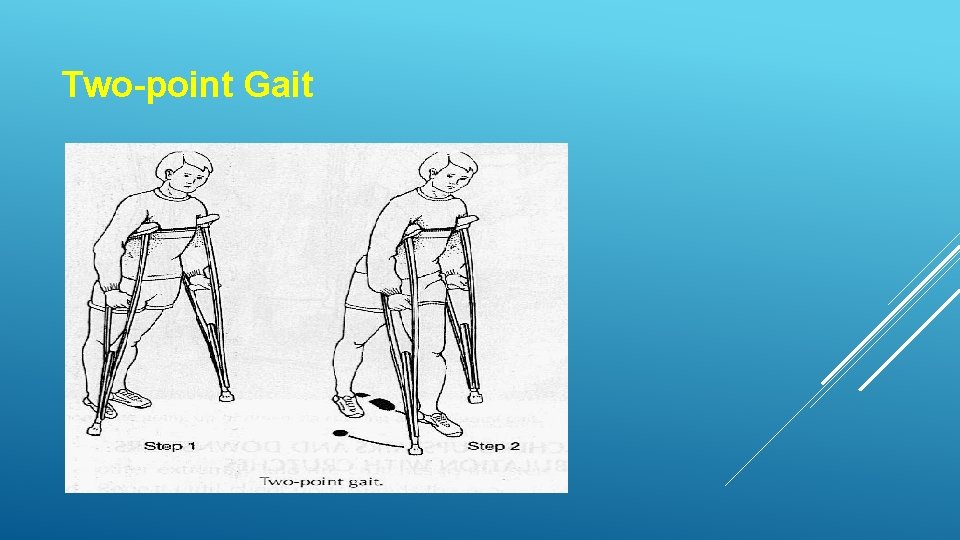
Two-point Gait
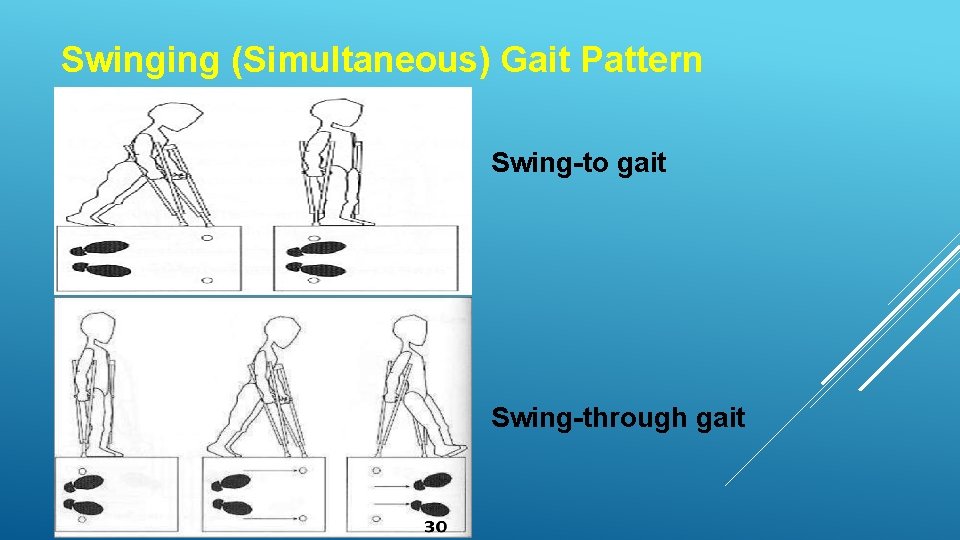
Swinging (Simultaneous) Gait Pattern Swing-to gait Swing-through gait
AMPUTATION - GAIT TRAINING
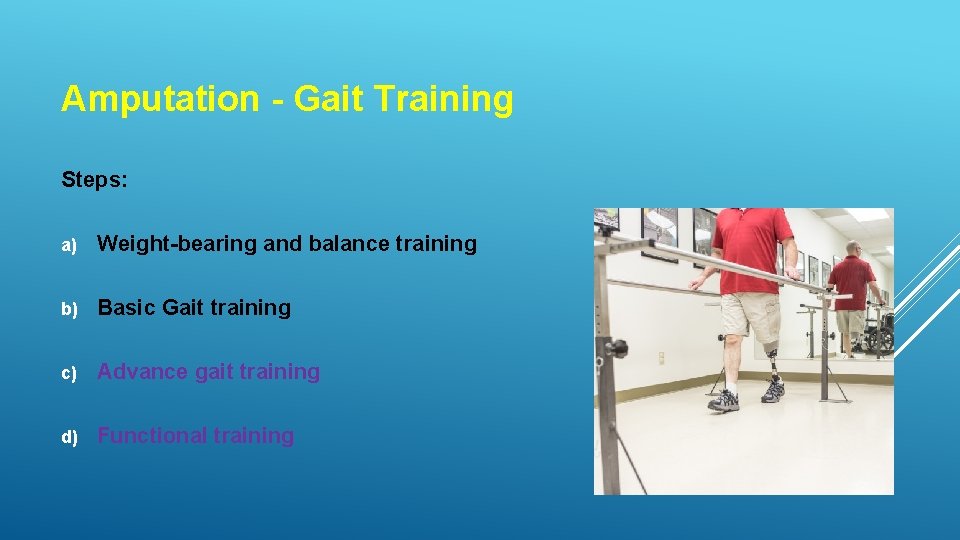
Amputation - Gait Training Steps: a) Weight-bearing and balance training b) Basic Gait training c) Advance gait training d) Functional training
Weight Bearing and Balance 1. Partial weight bearing (with & without support) 2. Partial weight shift (with & without support) 3. Pelvic rotation training 4. Sideward walking (two-hand support) 5. Full weight shift (with & without support) 6. Heel strike (with or without support) 7. Handball (with or without support)

Partial Weight Bearing

Partial Weight Shift
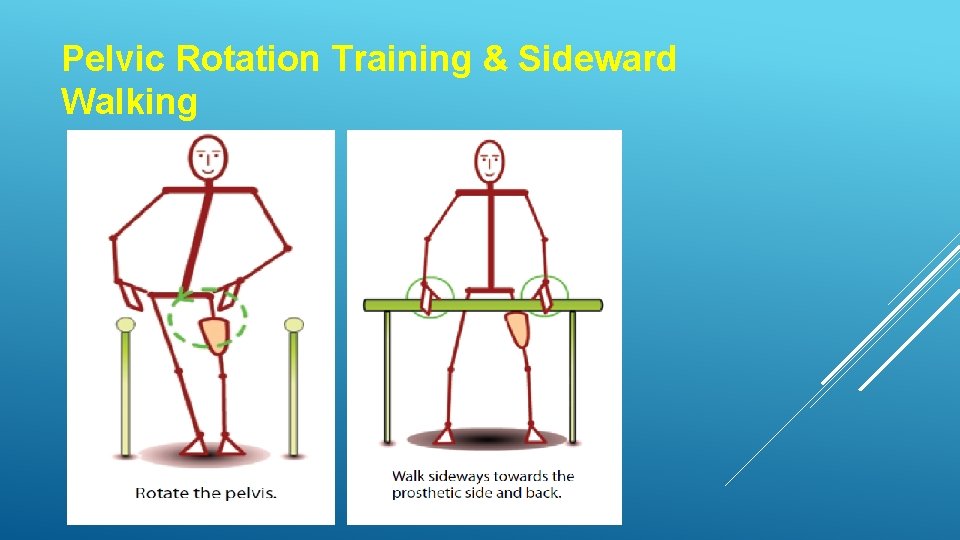
Pelvic Rotation Training & Sideward Walking
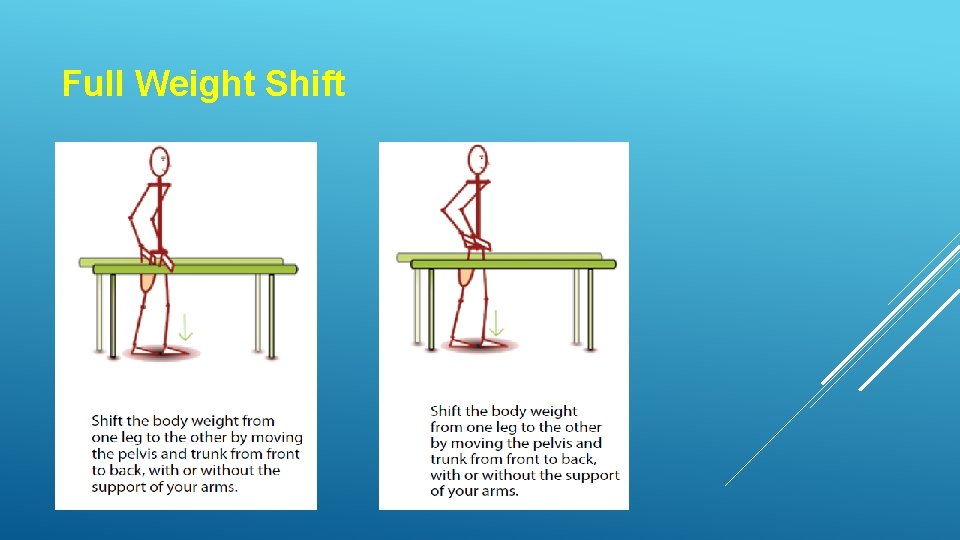
Full Weight Shift
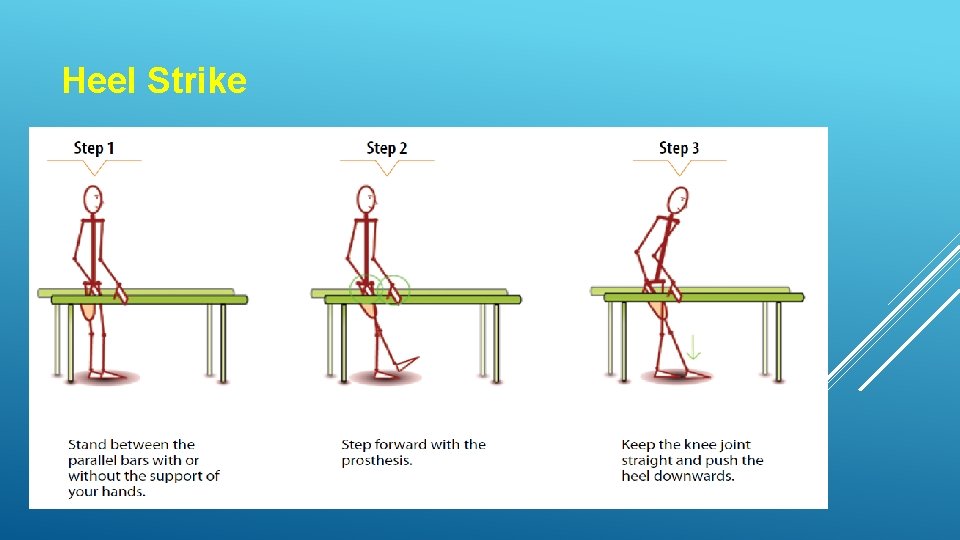
Heel Strike
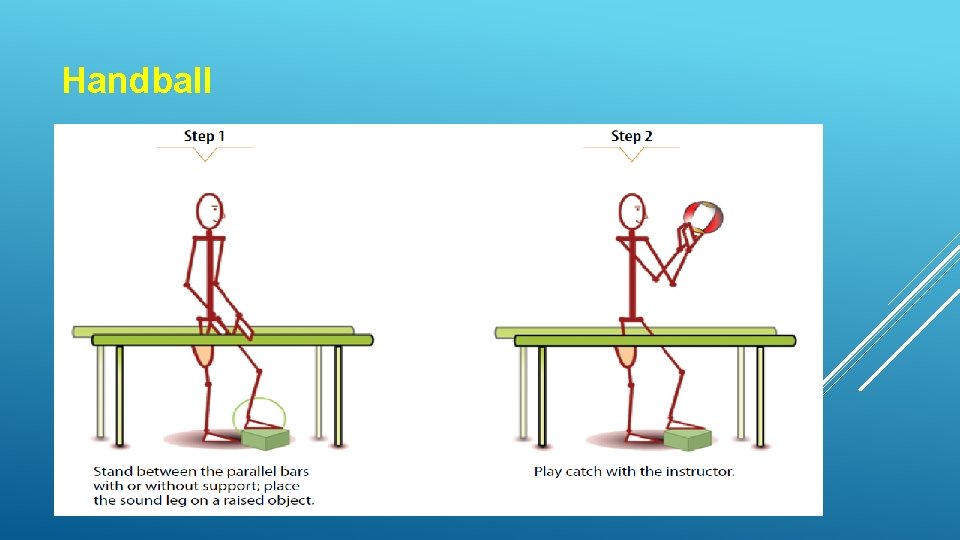
Handball
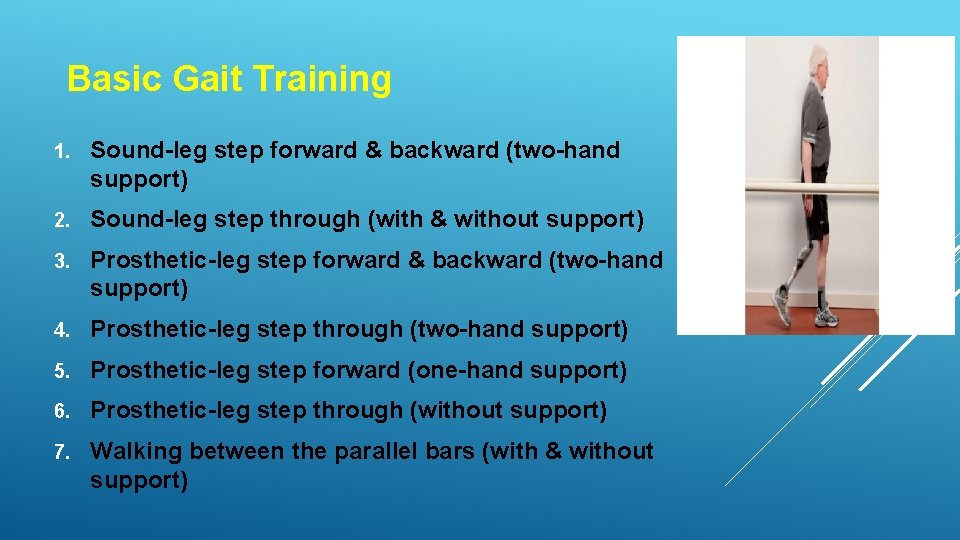
Basic Gait Training 1. Sound-leg step forward & backward (two-hand support) 2. Sound-leg step through (with & without support) 3. Prosthetic-leg step forward & backward (two-hand support) 4. Prosthetic-leg step through (two-hand support) 5. Prosthetic-leg step forward (one-hand support) 6. Prosthetic-leg step through (without support) 7. Walking between the parallel bars (with & without support)
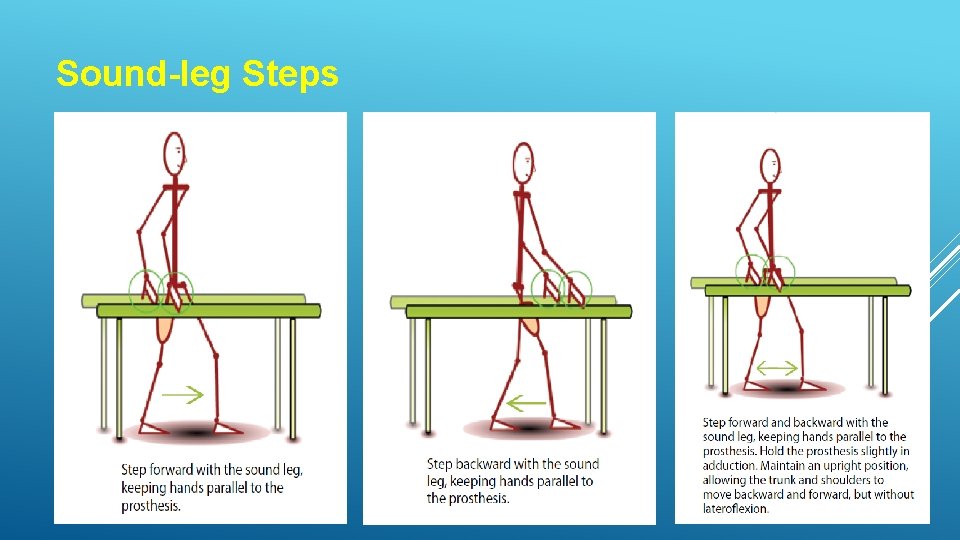
Sound-leg Steps
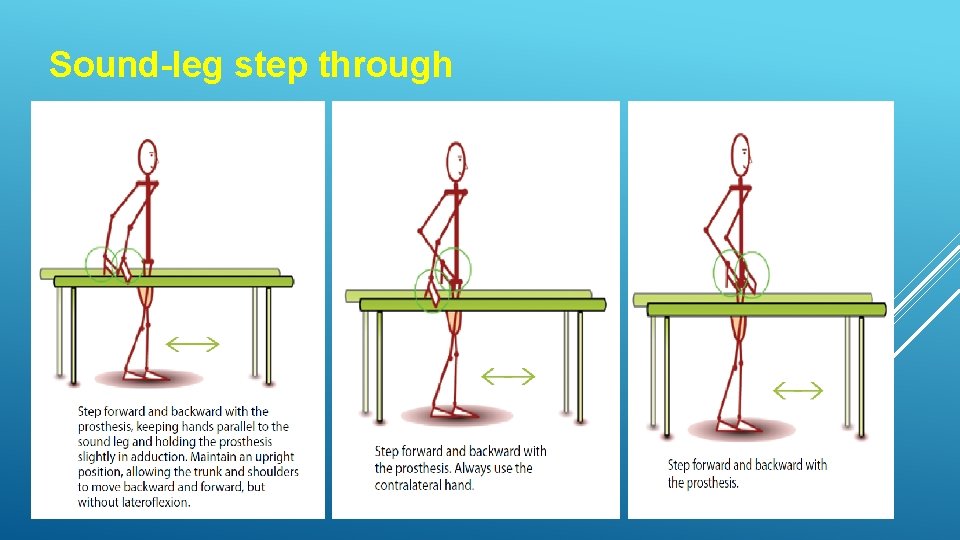
Sound-leg step through
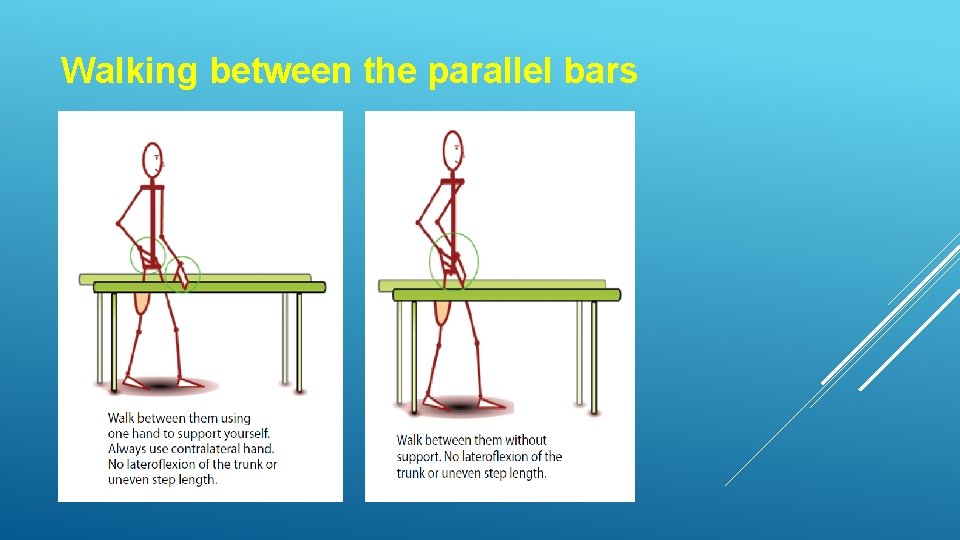
Walking between the parallel bars

Thank You
- Slides: 37