
Amazing Properties of Water Answer Key 1 a

- Slides: 11
Amazing Properties of Water Answer Key
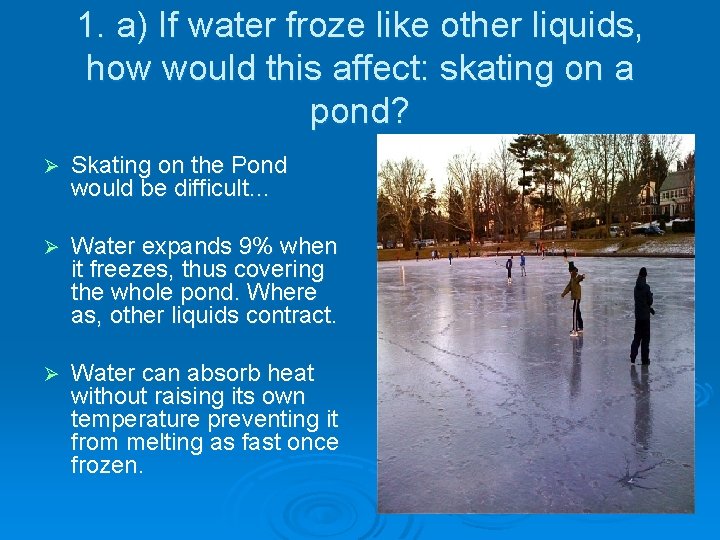
1. a) If water froze like other liquids, how would this affect: skating on a pond? Ø Skating on the Pond would be difficult… Ø Water expands 9% when it freezes, thus covering the whole pond. Where as, other liquids contract. Ø Water can absorb heat without raising its own temperature preventing it from melting as fast once frozen.
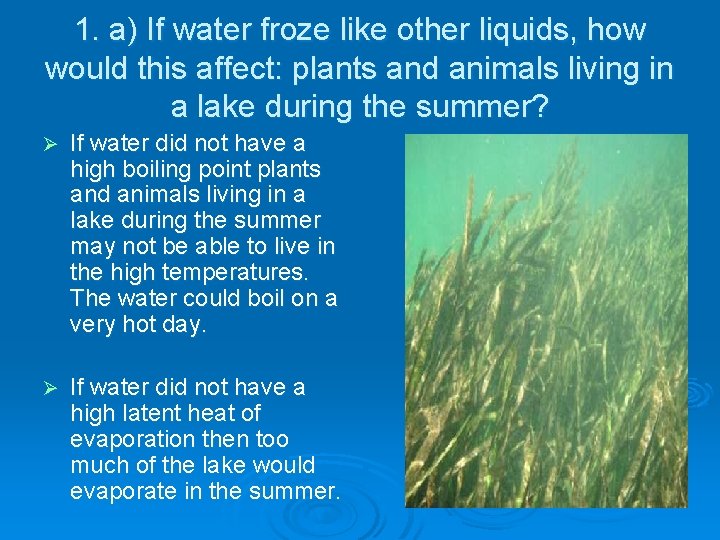
1. a) If water froze like other liquids, how would this affect: plants and animals living in a lake during the summer? Ø If water did not have a high boiling point plants and animals living in a lake during the summer may not be able to live in the high temperatures. The water could boil on a very hot day. Ø If water did not have a high latent heat of evaporation then too much of the lake would evaporate in the summer.
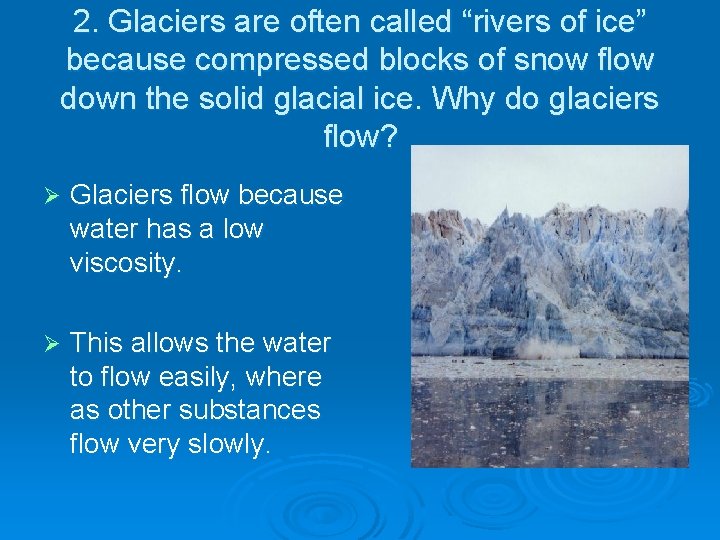
2. Glaciers are often called “rivers of ice” because compressed blocks of snow flow down the solid glacial ice. Why do glaciers flow? Ø Glaciers flow because water has a low viscosity. Ø This allows the water to flow easily, where as other substances flow very slowly.
3. Why is the temperature of the water near the bottom of a very deep, ice-covered lake as warm as 4 degrees Celsius? Ø Pure water has a maximum density of 4 degrees Celsius and further cooling decreases the density even at the bottom of a very deep, ice covered lake. Ø If it warms up or cools down it becomes less dense as it approaches its freezing point.
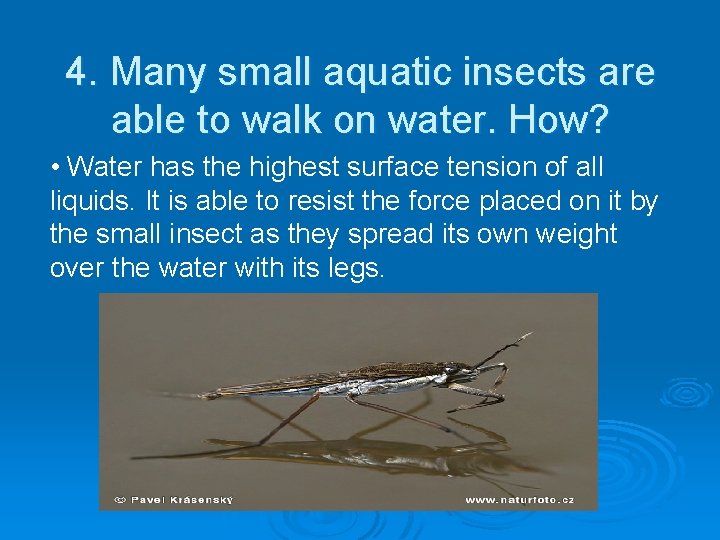
4. Many small aquatic insects are able to walk on water. How? • Water has the highest surface tension of all liquids. It is able to resist the force placed on it by the small insect as they spread its own weight over the water with its legs.
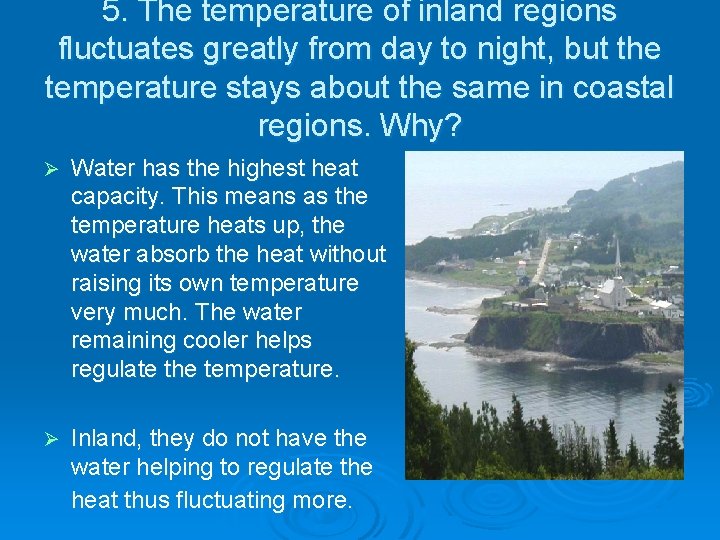
5. The temperature of inland regions fluctuates greatly from day to night, but the temperature stays about the same in coastal regions. Why? Ø Water has the highest heat capacity. This means as the temperature heats up, the water absorb the heat without raising its own temperature very much. The water remaining cooler helps regulate the temperature. Ø Inland, they do not have the water helping to regulate the heat thus fluctuating more.
6. On a very hot summer day, the sand at the beach feels very hot on your feet, while shallow pools feel much cooler. Why? Water remains cool because it has the highest heat capacity of all substances. Ø It can absorb tremendous amounts of heat without raising it owns temperature, where as sand cannot. Ø
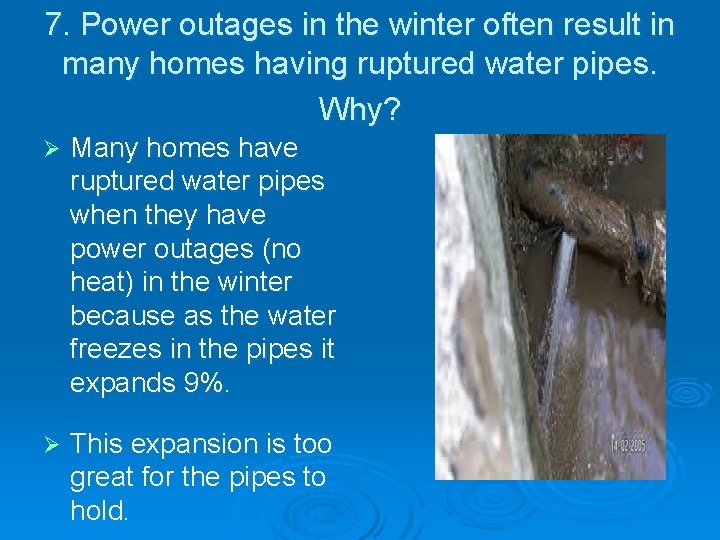
7. Power outages in the winter often result in many homes having ruptured water pipes. Why? Ø Many homes have ruptured water pipes when they have power outages (no heat) in the winter because as the water freezes in the pipes it expands 9%. Ø This expansion is too great for the pipes to hold.
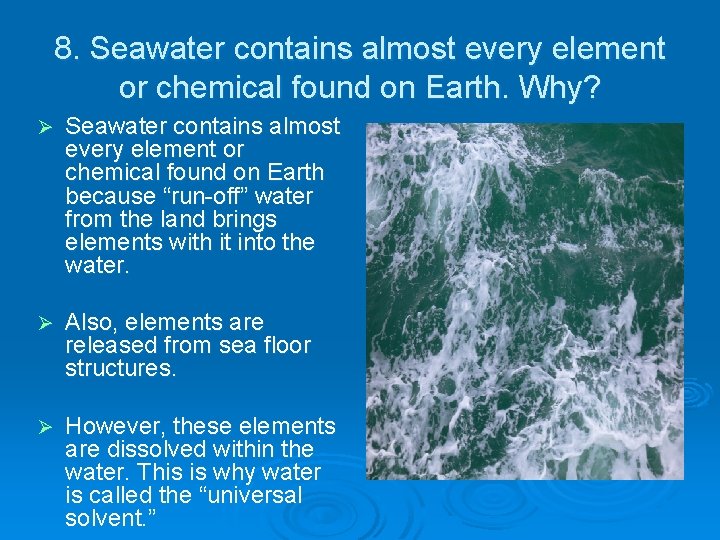
8. Seawater contains almost every element or chemical found on Earth. Why? Ø Seawater contains almost every element or chemical found on Earth because “run-off” water from the land brings elements with it into the water. Ø Also, elements are released from sea floor structures. Ø However, these elements are dissolved within the water. This is why water is called the “universal solvent. ”
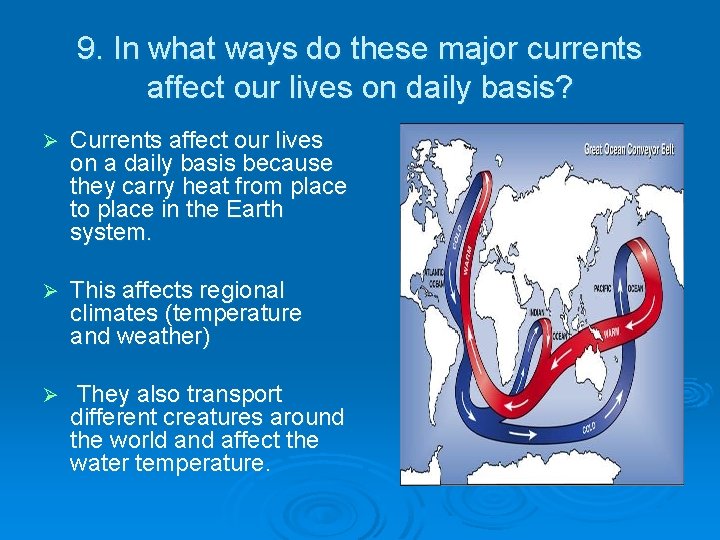
9. In what ways do these major currents affect our lives on daily basis? Ø Currents affect our lives on a daily basis because they carry heat from place to place in the Earth system. Ø This affects regional climates (temperature and weather) Ø They also transport different creatures around the world and affect the water temperature.