
Amanita muscaria from which muscarine is isolated Chapter

- Slides: 25
Amanita muscaria from which muscarine is isolated Chapter 7 Cholinoceptor-activating Drugs Cao Yongxiao 曹永孝 Department of Pharmacology 医学院药理学系 yxy@xjtu. edu. cn; 029 -82655140 科教楼 805 http: //pharmacology. xjtu. edu. cn 1
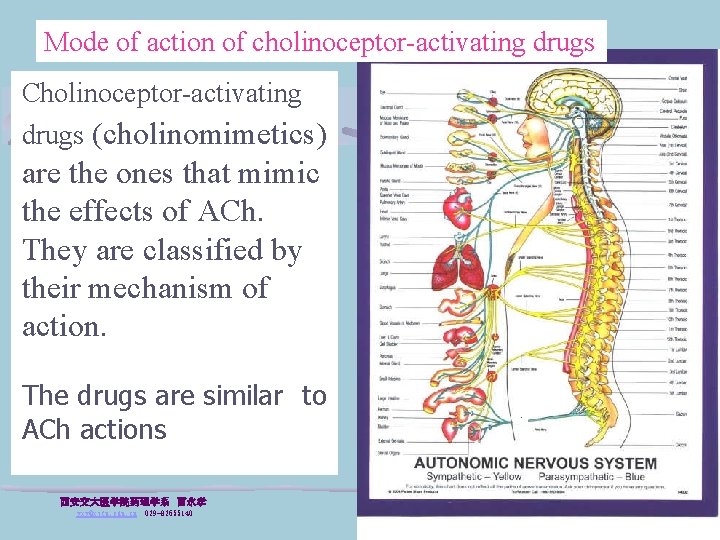
Mode of action of cholinoceptor-activating drugs Cholinoceptor-activating drugs (cholinomimetics) are the ones that mimic the effects of ACh. They are classified by their mechanism of action. The drugs are similar to ACh actions 西安交大医学院药理学系 曹永孝 yxy@xjtu. edu. cn; 029 -82655140 .
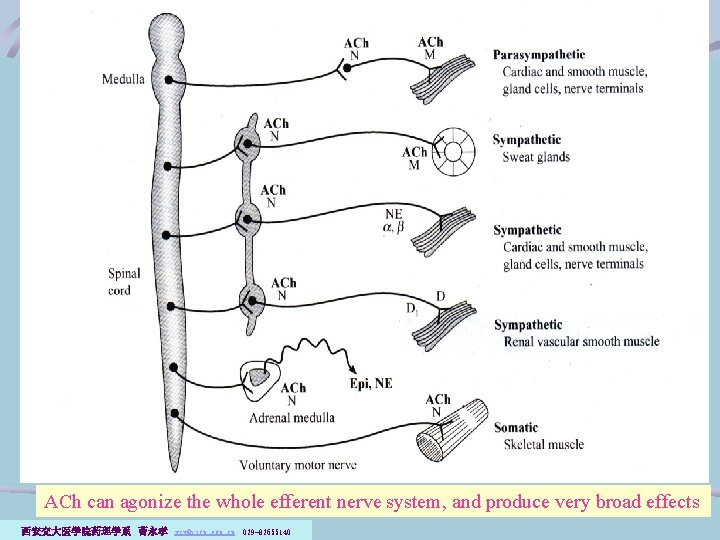
ACh can agonize the whole efferent nerve system, and produce very broad effects 西安交大医学院药理学系 曹永孝 yxy@xjtu. edu. cn; 029 -82655140
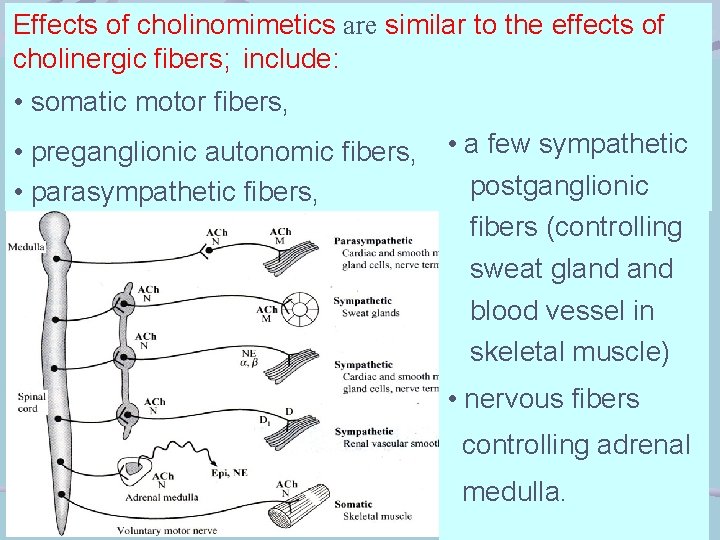
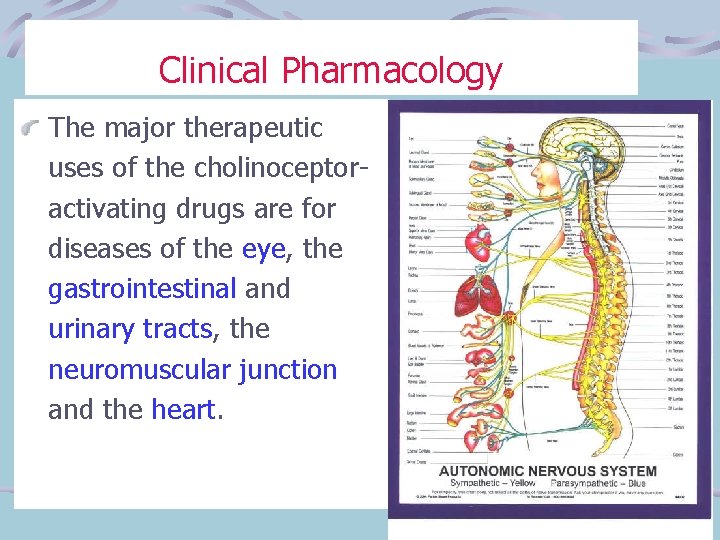
Effects of cholinomimetics are similar to the effects of cholinergic fibers; include: • somatic motor fibers, • preganglionic autonomic fibers, • parasympathetic fibers, • a few sympathetic postganglionic fibers (controlling sweat gland blood vessel in skeletal muscle) • nervous fibers controlling adrenal medulla.
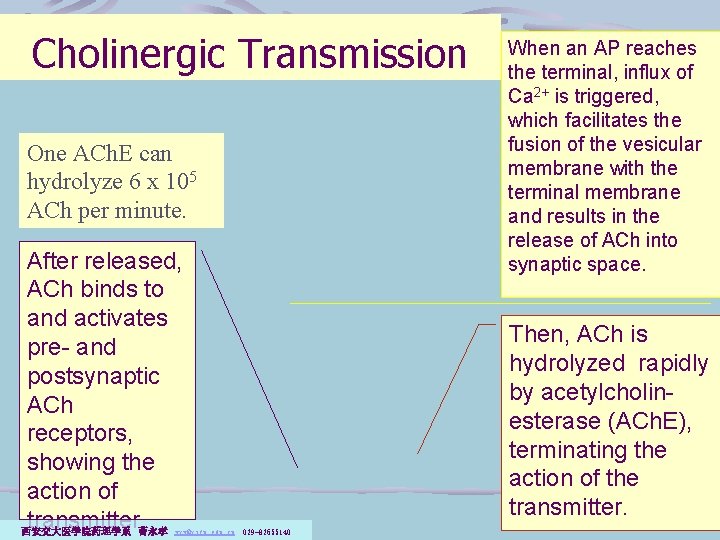
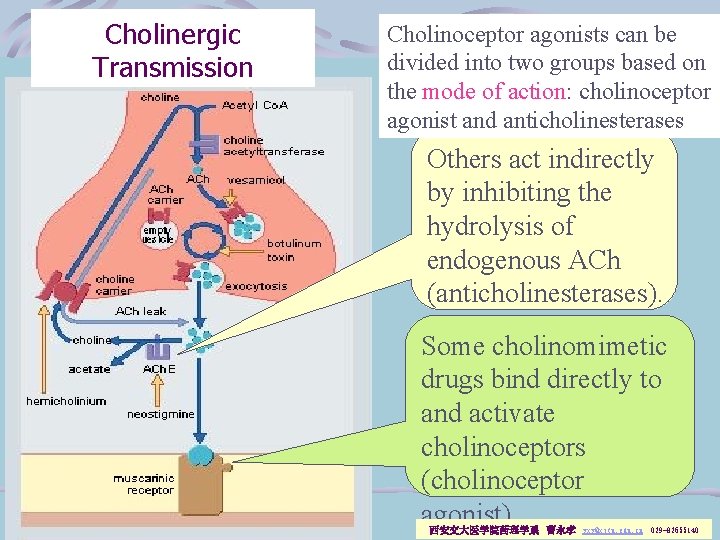
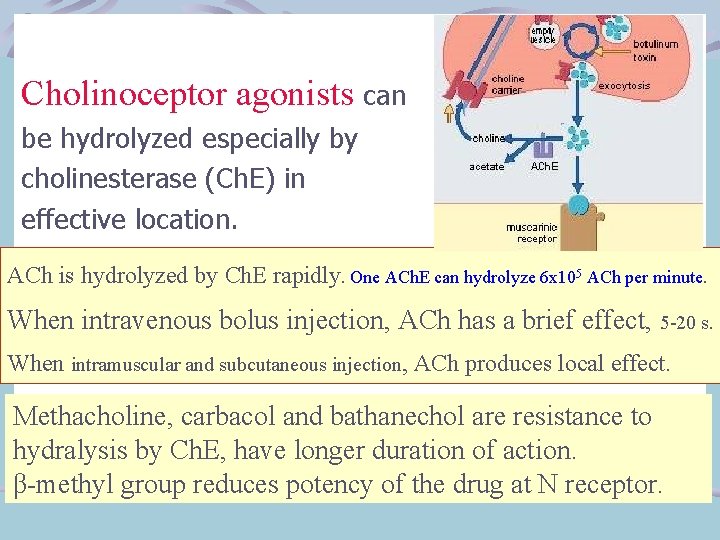
Cholinergic Transmission One ACh. E can hydrolyze 6 x 10⁵ ACh per minute. After released, ACh binds to and activates pre- and postsynaptic ACh receptors, showing the action of transmitter. 西安交大医学院药理学系 曹永孝 yxy@xjtu. edu. cn; 029 -82655140 When an AP reaches the terminal, influx of Ca 2+ is triggered, which facilitates the fusion of the vesicular membrane with the terminal membrane and results in the release of ACh into synaptic space. Then, ACh is hydrolyzed rapidly by acetylcholinesterase (ACh. E), terminating the action of the transmitter.
Cholinergic Transmission Cholinoceptor agonists can be divided into two groups based on the mode of action: cholinoceptor agonist and anticholinesterases Others act indirectly by inhibiting the hydrolysis of endogenous ACh (anticholinesterases). Some cholinomimetic drugs bind directly to and activate cholinoceptors (cholinoceptor agonist) 西安交大医学院药理学系 曹永孝 yxy@xjtu. edu. cn; 029 -82655140
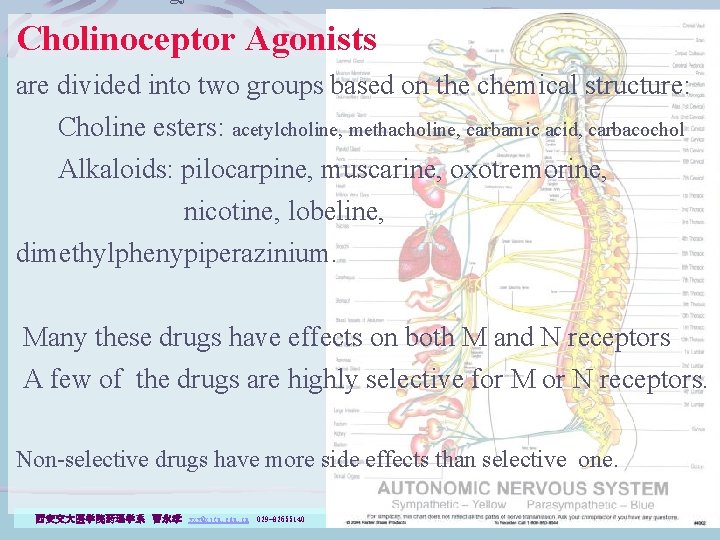
Basic Pharmacology of Cholinoceptor Agonists are divided into two groups based on the chemical structure: Choline esters: acetylcholine, methacholine, carbamic acid, carbacochol Alkaloids: pilocarpine, muscarine, oxotremorine, nicotine, lobeline, dimethylphenypiperazinium. Many these drugs have effects on both M and N receptors A few of the drugs are highly selective for M or N receptors. Non-selective drugs have more side effects than selective one. 西安交大医学院药理学系 曹永孝 yxy@xjtu. edu. cn; 029 -82655140
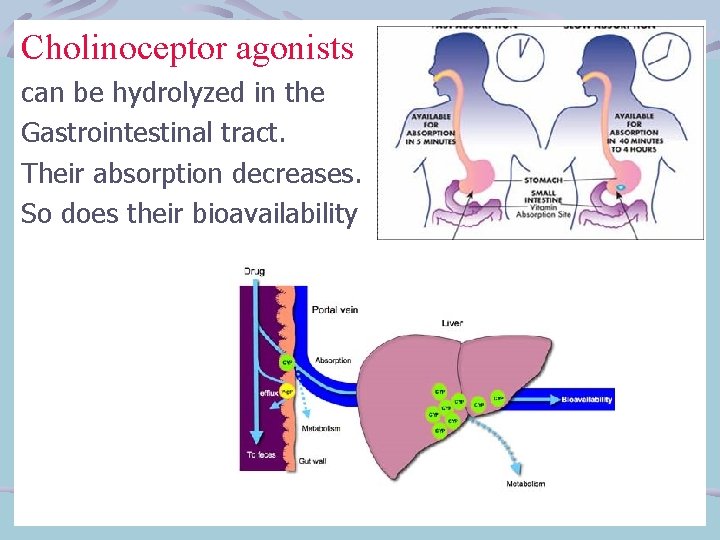
Cholinoceptor agonists can be hydrolyzed in the Gastrointestinal tract. Their absorption decreases. So does their bioavailability
Cholinoceptor agonists can be hydrolyzed especially by cholinesterase (Ch. E) in effective location. ACh is hydrolyzed by Ch. E rapidly. One ACh. E can hydrolyze 6 x 10⁵ ACh per minute. Acetylcholiesterase (ACh. E): true, indeed Ch. E; When intravenous bolus injection, ACh has a brief effect, 5 -20 s. Pseudocholinesterase When intramuscular and subcutaneous injection, ACh produces local effect. Methacholine, carbacol and bathanechol are resistance to hydralysis by Ch. E, have longer duration of action. β-methyl group reduces potency of the drug at N receptor.
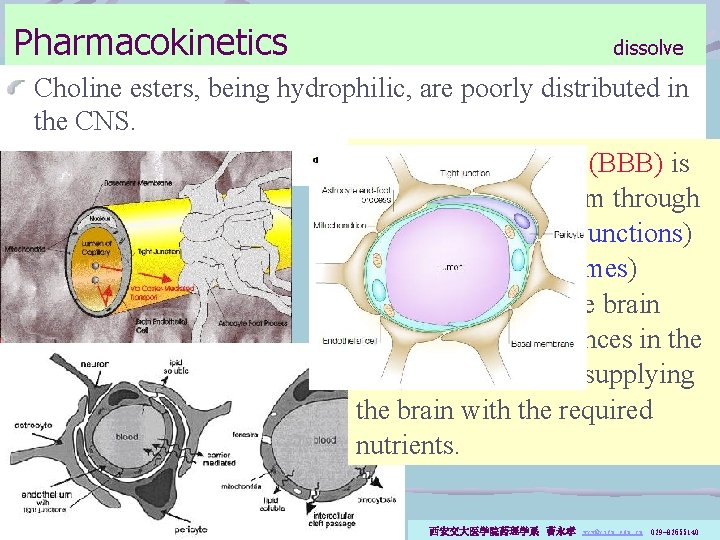
Pharmacokinetics dissolve Choline esters, being hydrophilic, are poorly distributed in the CNS. Water-soluble Blood-Brain Barrier (BBB) is the specialized system through both physical (tight junctions) and metabolic (enzymes) barriers to protect the brain from harmful substances in the blood stream, while supplying the brain with the required nutrients. 西安交大医学院药理学系 曹永孝 yxy@xjtu. edu. cn; 029 -82655140
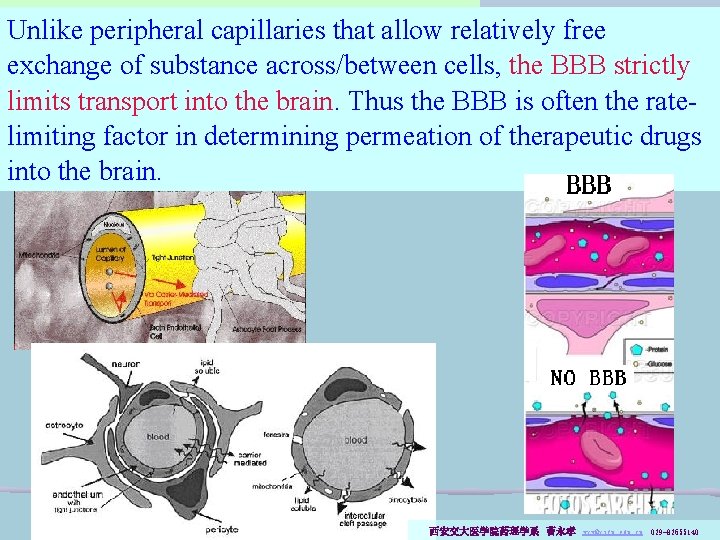
Unlike peripheral capillaries that allow relatively free Pharmacokinetics exchange of substance across/between cells, the BBB strictly Choline esters, hydrophilic, are ispoorly limits transport into being the brain. Thus the BBB often the ratedistributed indetermining the CNS. permeation of therapeutic drugs limiting factor in into the brain. 西安交大医学院药理学系 曹永孝 yxy@xjtu. edu. cn; 029 -82655140
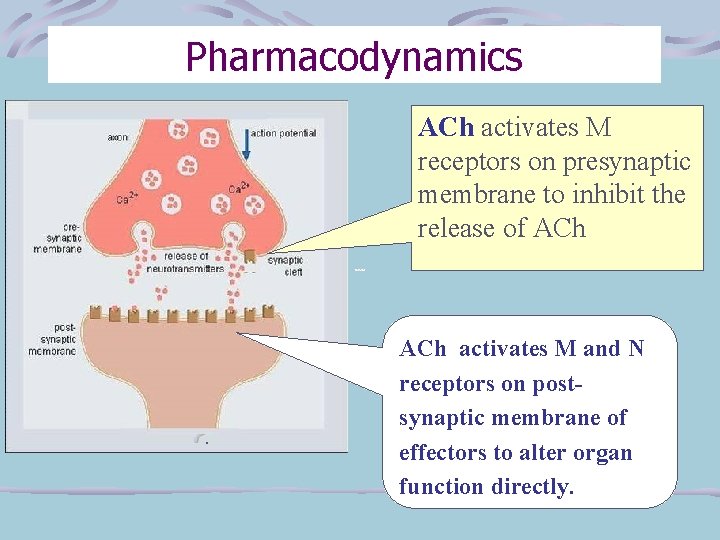
Pharmacodynamics ACh activates M receptors on presynaptic membrane to inhibit the release of ACh activates M and N receptors on postsynaptic membrane of effectors to alter organ function directly.
Clinical Pharmacology The major therapeutic uses of the cholinoceptoractivating drugs are for diseases of the eye, the gastrointestinal and urinary tracts, the neuromuscular junction and the heart.
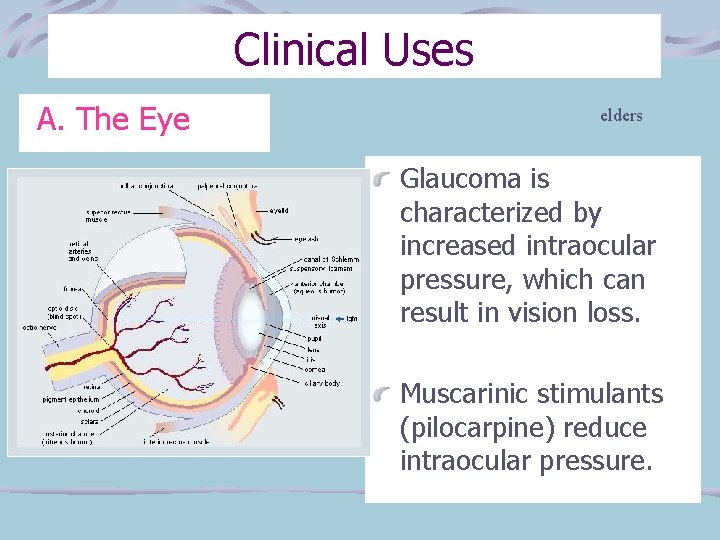
Clinical Uses A. The Eye elders Glaucoma is characterized by increased intraocular pressure, which can result in vision loss. Muscarinic stimulants (pilocarpine) reduce intraocular pressure.
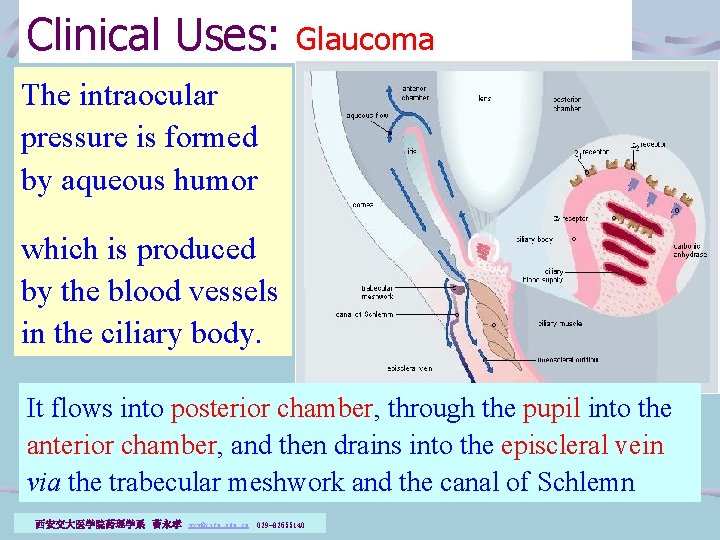
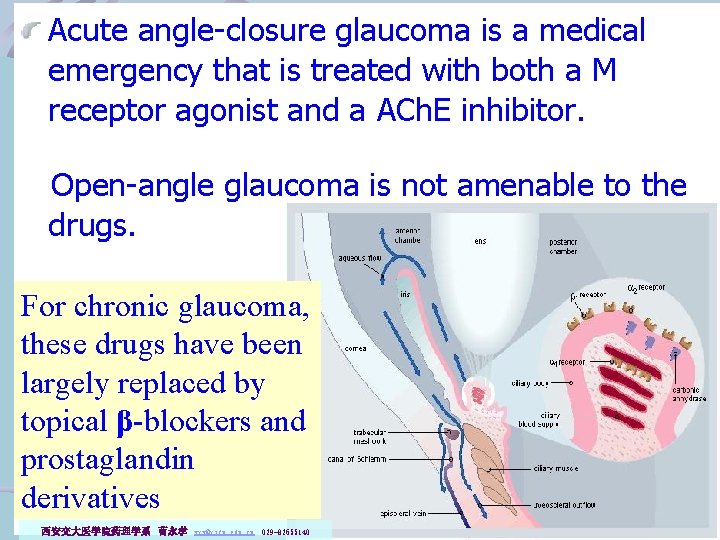
Clinical Uses: Glaucoma The intraocular pressure is formed by aqueous humor which is produced by the blood vessels in the ciliary body. It flows into posterior chamber, through the pupil into the anterior chamber, and then drains into the episcleral vein via the trabecular meshwork and the canal of Schlemn 西安交大医学院药理学系 曹永孝 yxy@xjtu. edu. cn; 029 -82655140
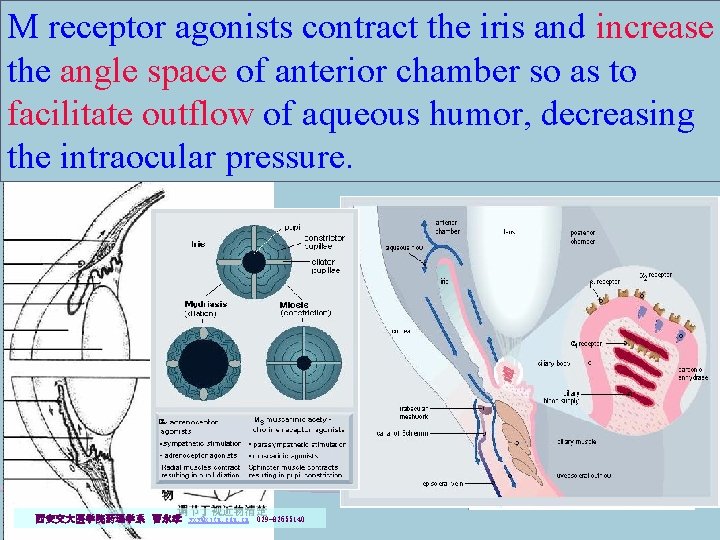
M receptor agonists contract the iris and increase the angle space of anterior chamber so as to facilitate outflow of aqueous humor, decreasing the intraocular pressure. 西安交大医学院药理学系 曹永孝 yxy@xjtu. edu. cn; 029 -82655140
Acute angle-closure glaucoma is a medical emergency that is treated with both a M receptor agonist and a ACh. E inhibitor. Open-angle glaucoma is not amenable to the drugs. For chronic glaucoma, these drugs have been largely replaced by topical β-blockers and prostaglandin derivatives 西安交大医学院药理学系 曹永孝 yxy@xjtu. edu. cn; 029 -82655140
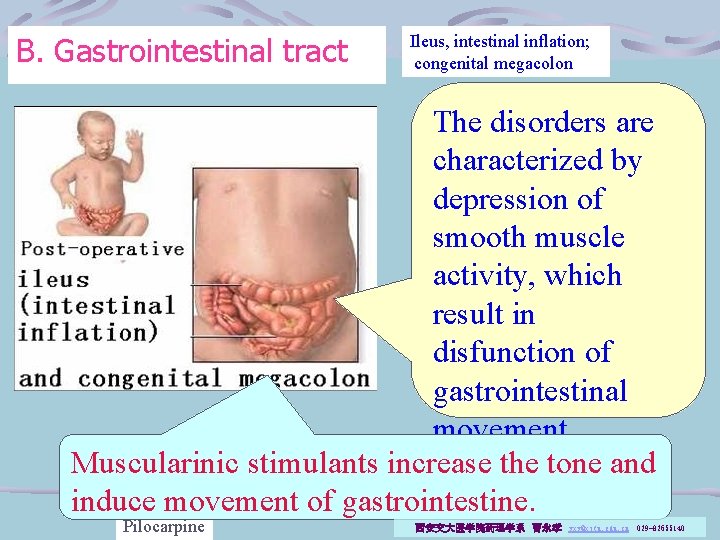
B. Gastrointestinal tract Ileus, intestinal inflation; congenital megacolon The disorders are characterized by depression of smooth muscle activity, which result in disfunction of gastrointestinal movement. Muscularinic stimulants increase the tone and induce movement of gastrointestine. Pilocarpine 西安交大医学院药理学系 曹永孝 yxy@xjtu. edu. cn; 029 -82655140
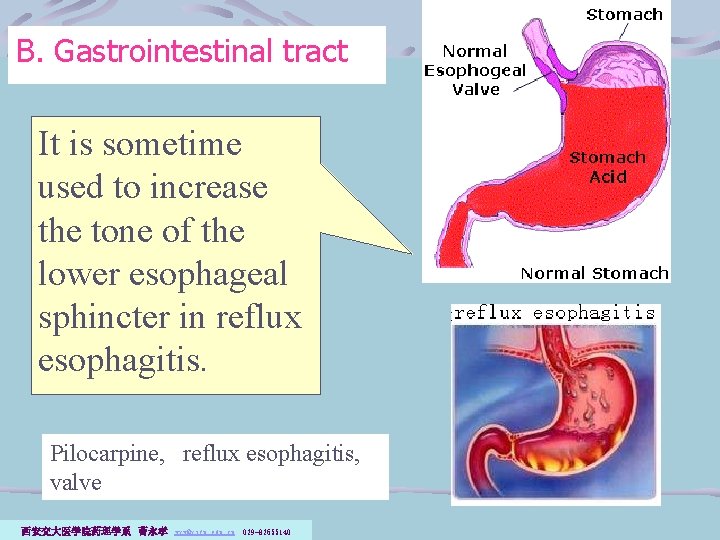
B. Gastrointestinal tract It is sometime used to increase the tone of the lower esophageal sphincter in reflux esophagitis. Pilocarpine, reflux esophagitis, valve 西安交大医学院药理学系 曹永孝 yxy@xjtu. edu. cn; 029 -82655140
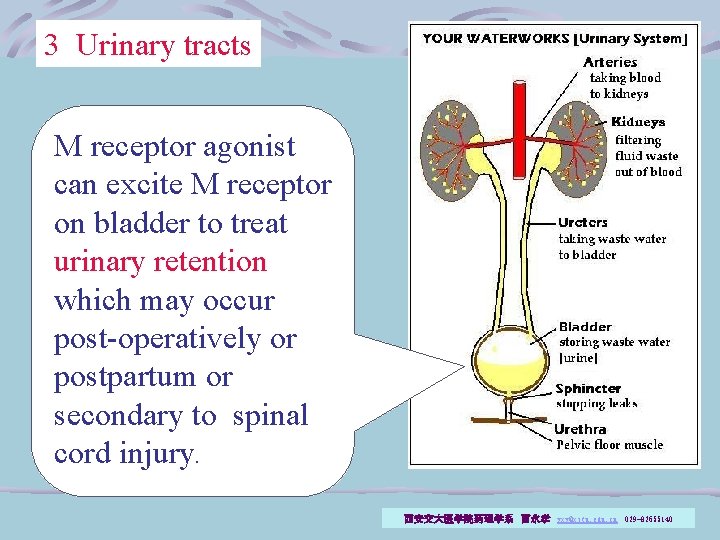
3 Urinary tracts M receptor agonist can excite M receptor on bladder to treat urinary retention which may occur post-operatively or postpartum or secondary to spinal cord injury. 西安交大医学院药理学系 曹永孝 yxy@xjtu. edu. cn; 029 -82655140
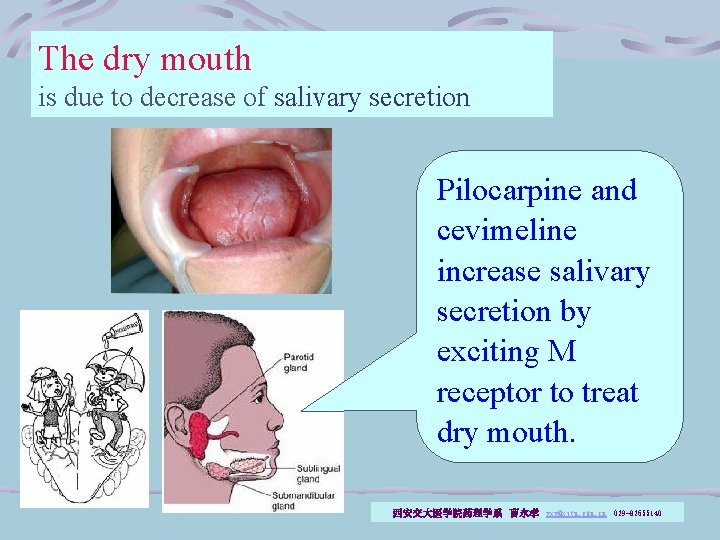
The dry mouth is due to decrease of salivary secretion Pilocarpine and cevimeline increase salivary secretion by exciting M receptor to treat dry mouth. 西安交大医学院药理学系 曹永孝 yxy@xjtu. edu. cn; 029 -82655140
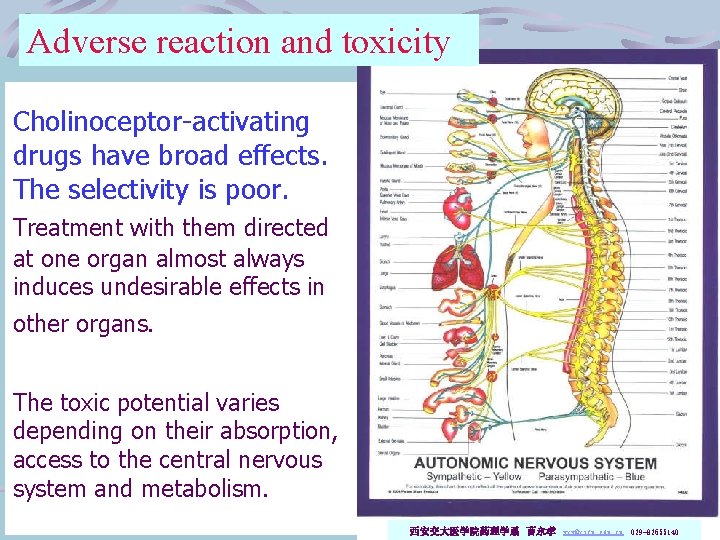
Adverse reaction and toxicity Cholinoceptor-activating drugs have broad effects. The selectivity is poor. Treatment with them directed at one organ almost always induces undesirable effects in other organs. The toxic potential varies depending on their absorption, access to the central nervous system and metabolism. 西安交大医学院药理学系 曹永孝 yxy@xjtu. edu. cn; 029 -82655140
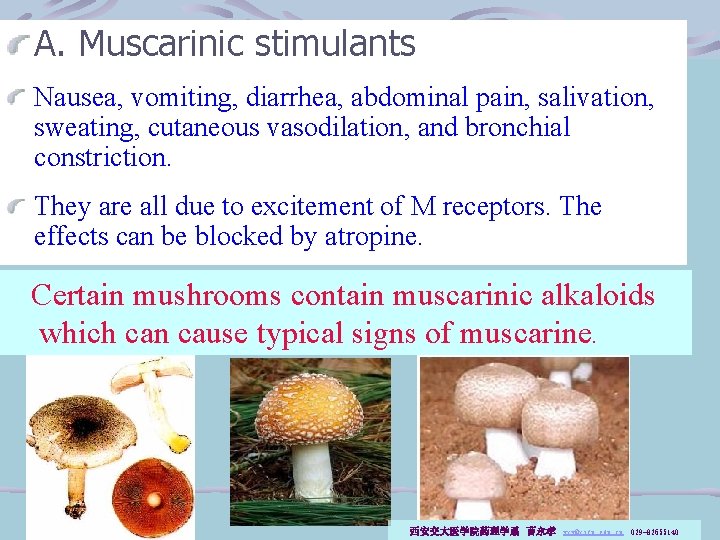
A. Muscarinic stimulants Nausea, vomiting, diarrhea, abdominal pain, salivation, sweating, cutaneous vasodilation, and bronchial constriction. They are all due to excitement of M receptors. The effects can be blocked by atropine. Certain mushrooms contain muscarinic alkaloids which can cause typical signs of muscarine. 西安交大医学院药理学系 曹永孝 yxy@xjtu. edu. cn; 029 -82655140
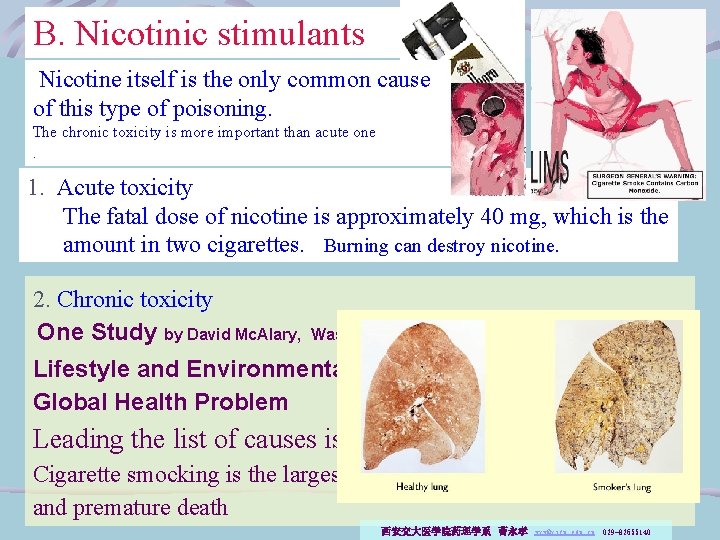
B. Nicotinic stimulants Nicotine itself is the only common cause of this type of poisoning. The chronic toxicity is more important than acute one. 1. Acute toxicity The fatal dose of nicotine is approximately 40 mg, which is the amount in two cigarettes. Burning can destroy nicotine. 2. Chronic toxicity One Study by David Mc. Alary, Washington, 17 Nov. 2005 Lifestyle and Environmental Factors Cause One-Third of Global Health Problem Leading the list of causes is smoking. Cigarette smocking is the largest single preventable cause of illness and premature death 西安交大医学院药理学系 曹永孝 yxy@xjtu. edu. cn; 029 -82655140
I am glad to share my knowledge with you, and I want you to become a master of the subject, pharmacology Thanks a million for your attention