
Amanda Heringer Tara Gentry Christy Jeffery Back handspring
Amanda Heringer Tara Gentry Christy Jeffery
� Back handspring: an acrobatic move in which a person executes a complete revolution of the body by lunging headfirst from an upright position into a handstand then pushing off (i. e. , "springing") from the floor with the hands so as to leap back to an upright position. � Back tuck: Gymnastics flips are acrobatic moves in which a person executes a complete rotation of the body while in mid air, with hips passing over the head, without hands touching the floor. � TUCK: legs together, with knees fully bent and drawn to the chest.

Slow Motion Back handspring Slow Motion Back tuck Full Speed Round-off Back handspring Tuck
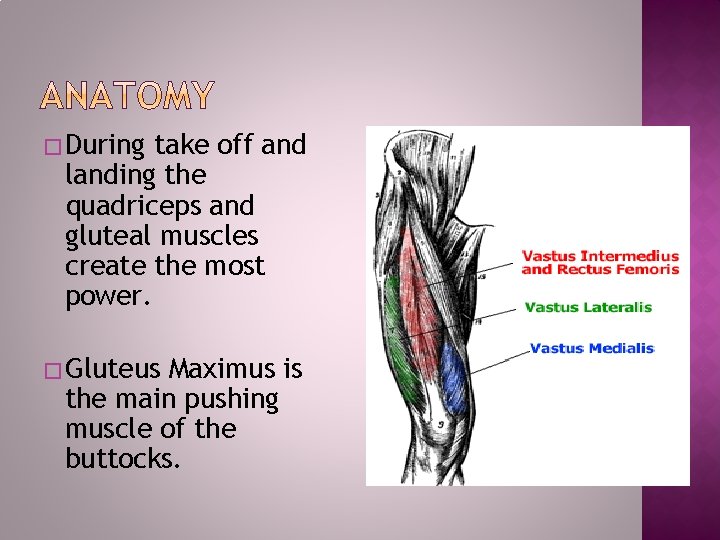
�During take off and landing the quadriceps and gluteal muscles create the most power. �Gluteus Maximus is the main pushing muscle of the buttocks.
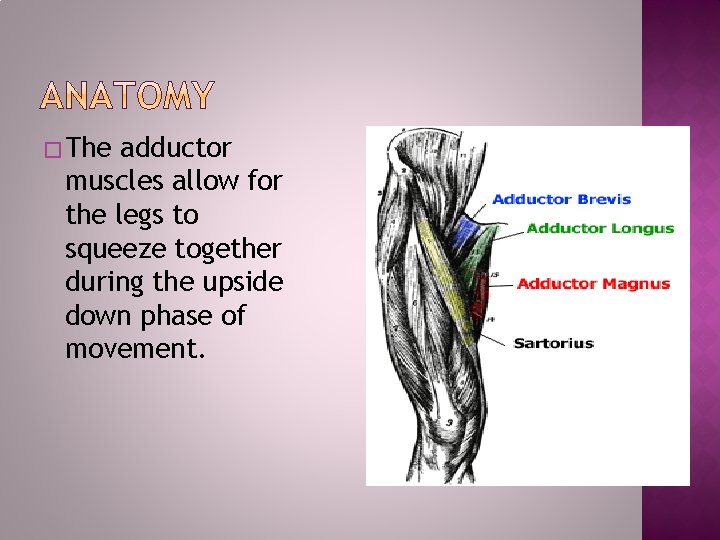
�The adductor muscles allow for the legs to squeeze together during the upside down phase of movement.
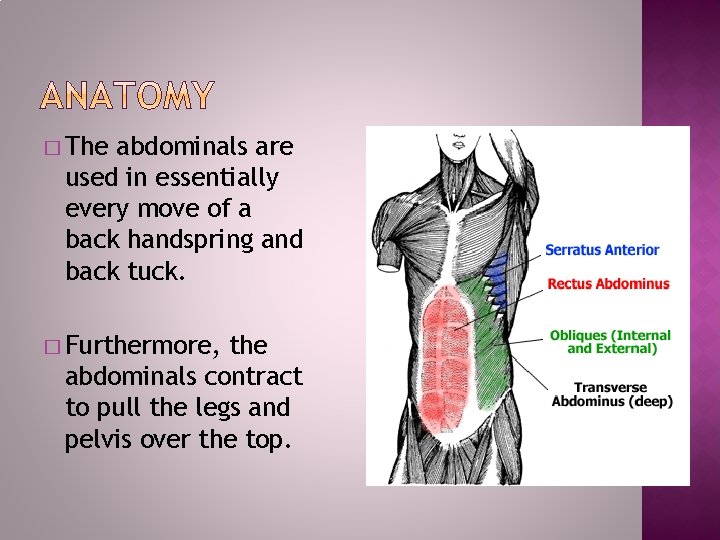
� The abdominals are used in essentially every move of a back handspring and back tuck. � Furthermore, the abdominals contract to pull the legs and pelvis over the top.
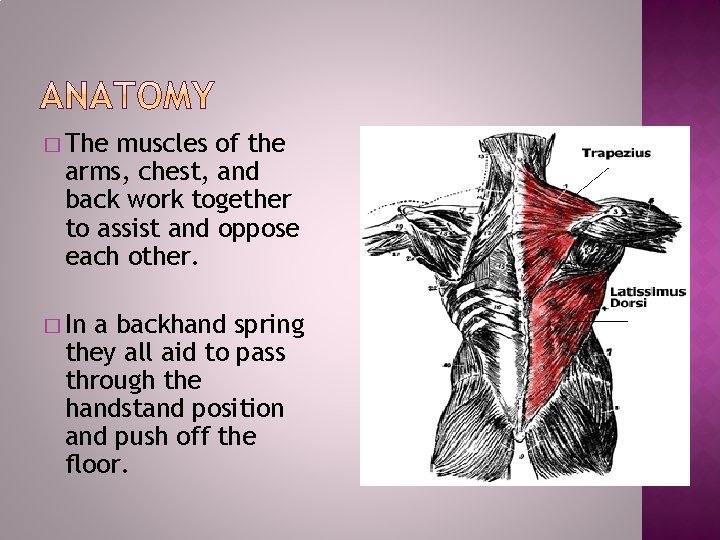
� The muscles of the arms, chest, and back work together to assist and oppose each other. � In a backhand spring they all aid to pass through the handstand position and push off the floor.
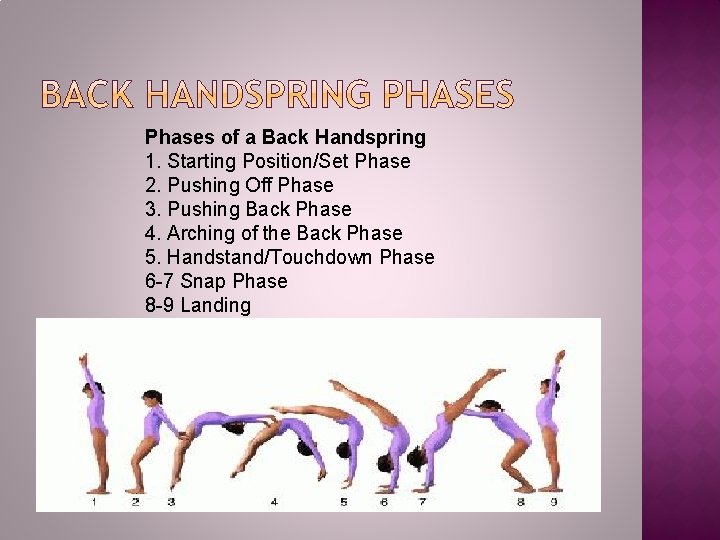
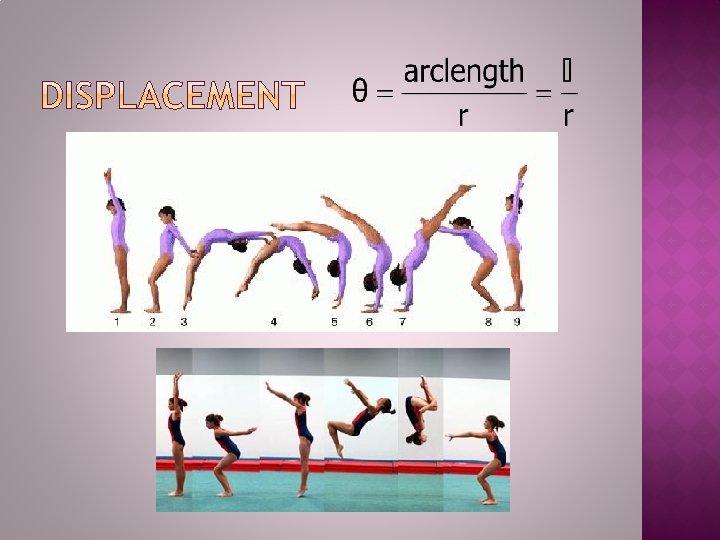
Phases of a Back Handspring 1. Starting Position/Set Phase 2. Pushing Off Phase 3. Pushing Back Phase 4. Arching of the Back Phase 5. Handstand/Touchdown Phase 6 -7 Snap Phase 8 -9 Landing
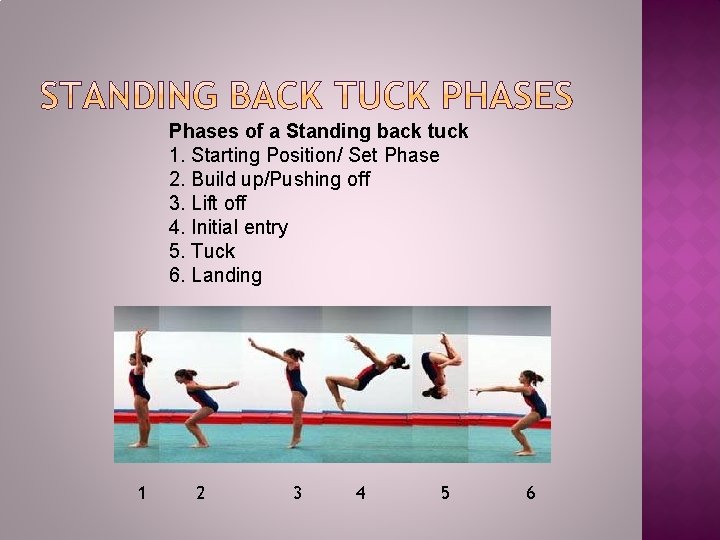
Phases of a Standing back tuck 1. Starting Position/ Set Phase 2. Build up/Pushing off 3. Lift off 4. Initial entry 5. Tuck 6. Landing 1 2 3 4 5 6
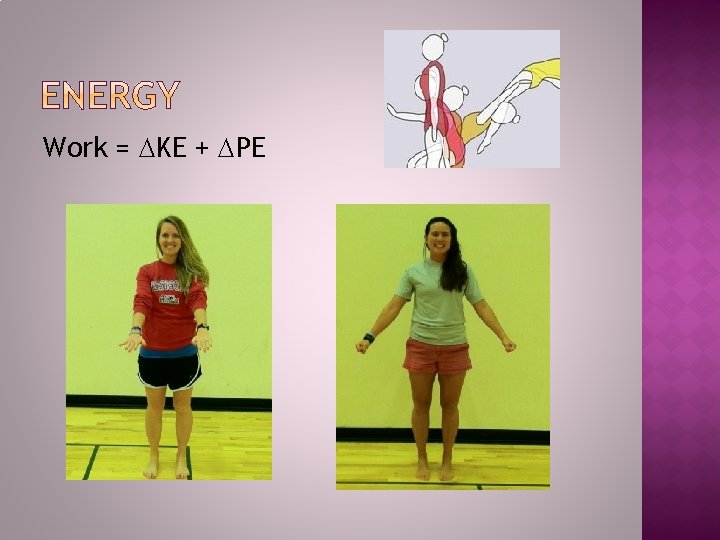
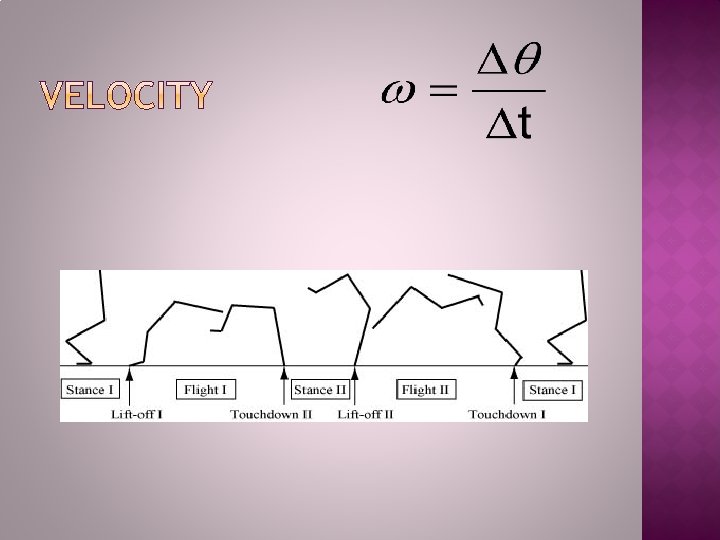
Work = KE + PE
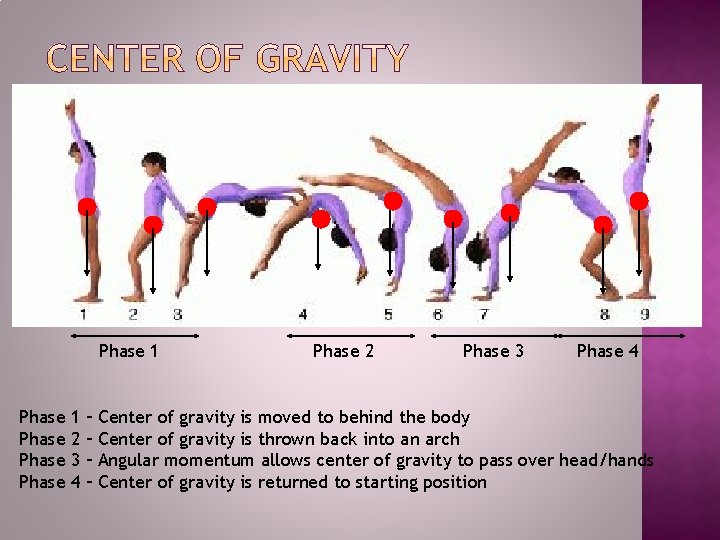
Phase 1 Phase 1 2 3 4 – – Phase 2 Phase 3 Phase 4 Center of gravity is moved to behind the body Center of gravity is thrown back into an arch Angular momentum allows center of gravity to pass over head/hands Center of gravity is returned to starting position
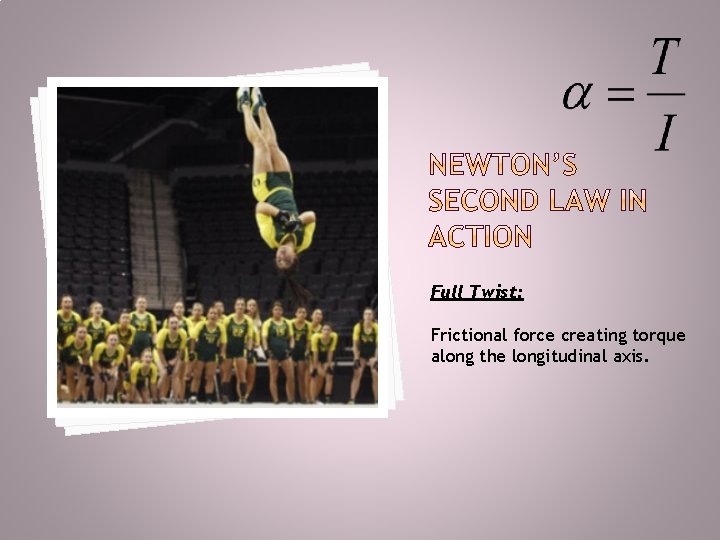
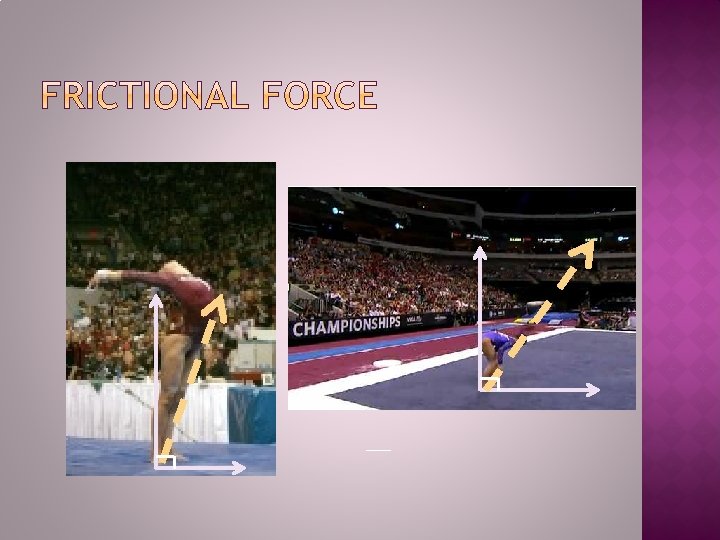
Full Twist: Frictional force creating torque along the longitudinal axis.
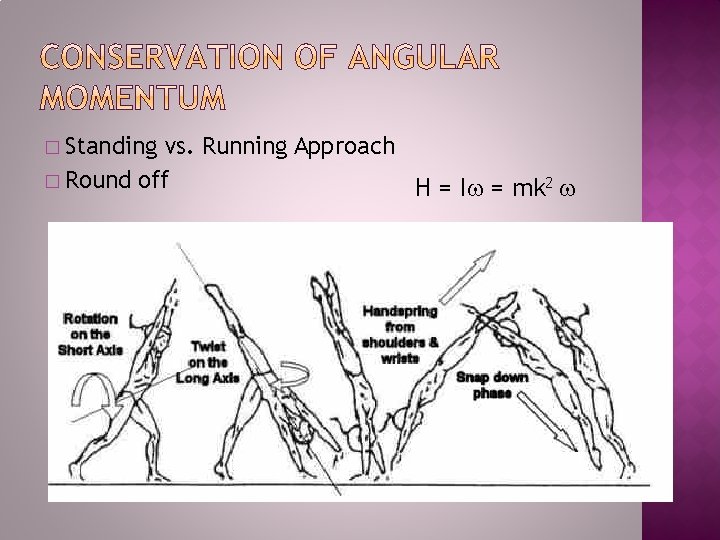
� Standing vs. Running Approach � Round off H = I = mk 2
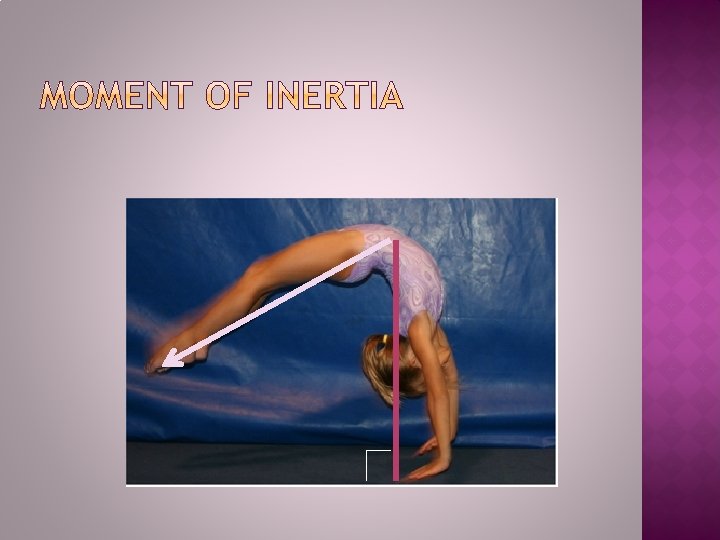
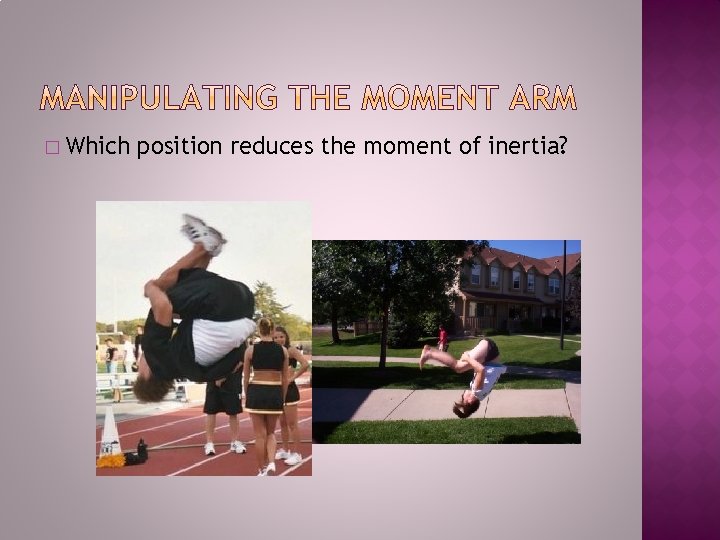
� Which position reduces the moment of inertia?
- Slides: 20