
ALWAYS LOOK FOR THE POSTIVE When it is




- Slides: 29
ALWAYS LOOK FOR THE POSTIVE “When it is dark enough, you can see the stars. ” -Persian proverb
Diseases of Digestive System Oral cavity Esophagus Stomach Small Bowel Large Bowel Liver Pancreas Rectum Anus Chapter 2
GI system l GI tract: mouth -> anus l Accessory structures ¡Teeth, tongue, _______, liver, pancreas, _______
Diseases Oral cavity Esophagus Stomach Small Bowel Large Bowel Liver Pancreas Rectum Anus
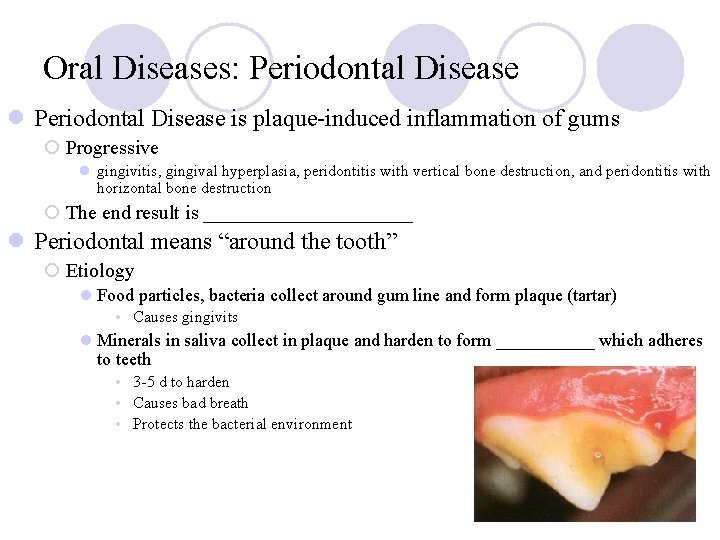
Oral Diseases: Periodontal Disease l Periodontal Disease is plaque-induced inflammation of gums ¡ Progressive l gingivitis, gingival hyperplasia, peridontitis with vertical bone destruction, and peridontitis with horizontal bone destruction ¡ The end result is ___________ l Periodontal means “around the tooth” ¡ Etiology l Food particles, bacteria collect around gum line and form plaque (tartar) • Causes gingivits l Minerals in saliva collect in plaque and harden to form ______ which adheres to teeth • 3 -5 d to harden • Causes bad breath • Protects the bacterial environment
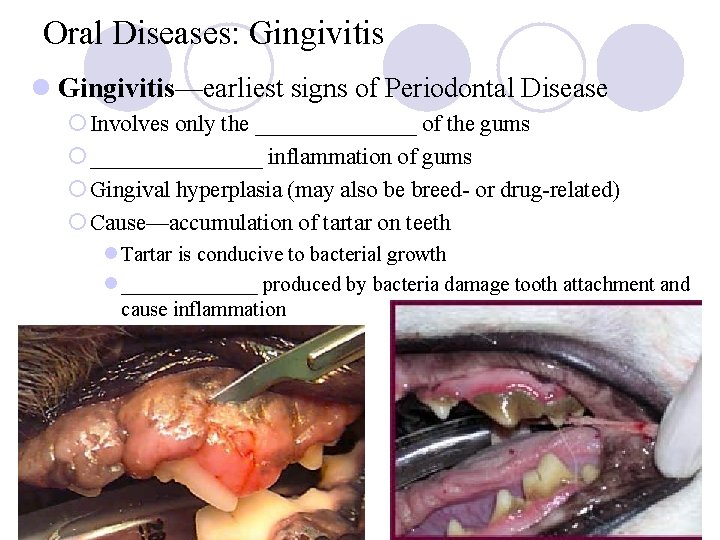
Oral Diseases: Gingivitis l Gingivitis—earliest signs of Periodontal Disease ¡ Involves only the _______ of the gums ¡ ________ inflammation of gums ¡ Gingival hyperplasia (may also be breed- or drug-related) ¡ Cause—accumulation of tartar on teeth l Tartar is conducive to bacterial growth l _______ produced by bacteria damage tooth attachment and cause inflammation
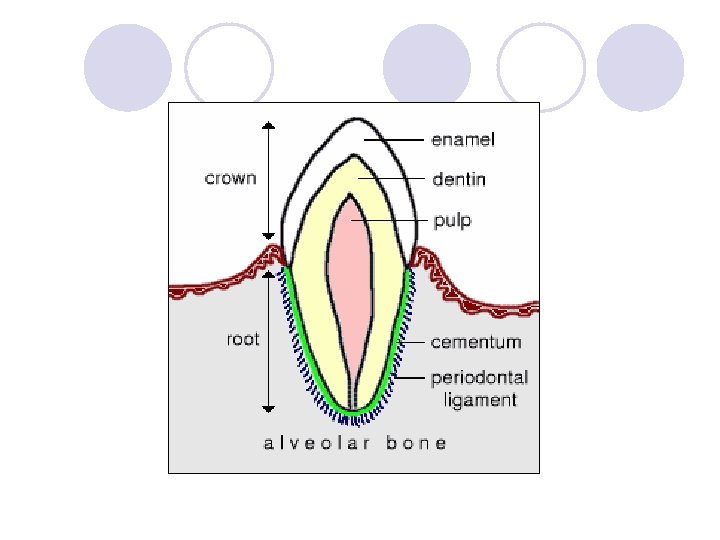
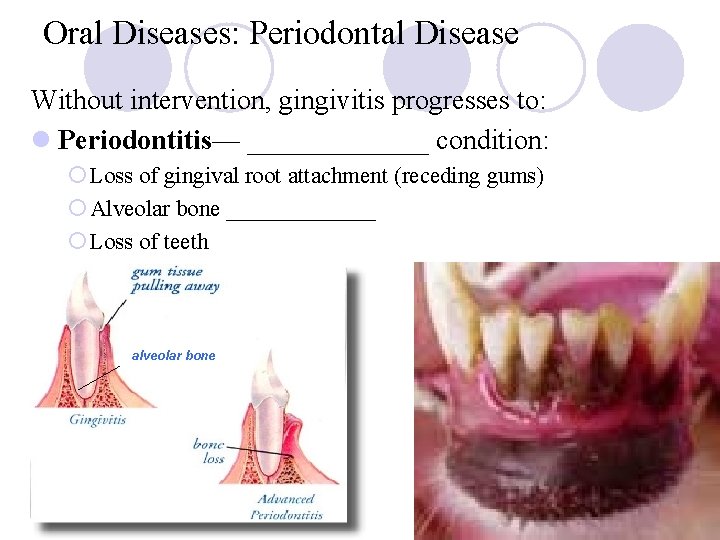
Oral Diseases: Periodontal Disease Without intervention, gingivitis progresses to: l Periodontitis— _______ condition: ¡ Loss of gingival root attachment (receding gums) ¡ Alveolar bone _______ ¡ Loss of teeth alveolar bone
Normal Gingiva
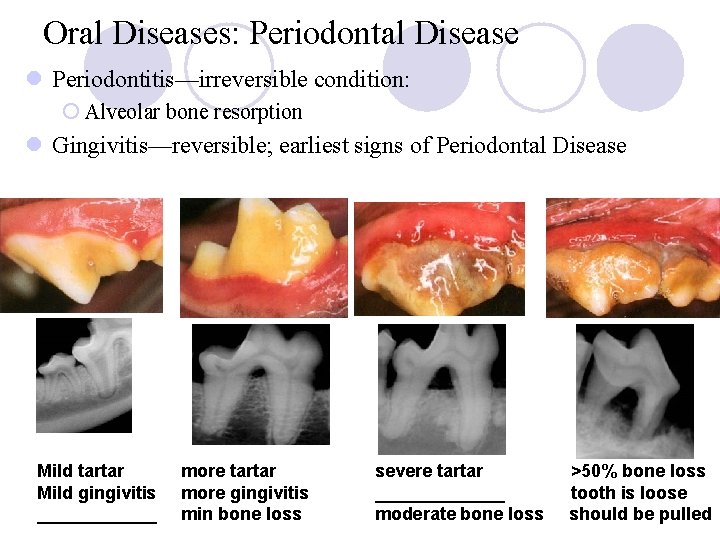
Oral Diseases: Periodontal Disease l Periodontitis—irreversible condition: ¡ Alveolar bone resorption l Gingivitis—reversible; earliest signs of Periodontal Disease Mild tartar Mild gingivitis ______ more tartar more gingivitis min bone loss severe tartar _______ moderate bone loss >50% bone loss tooth is loose should be pulled
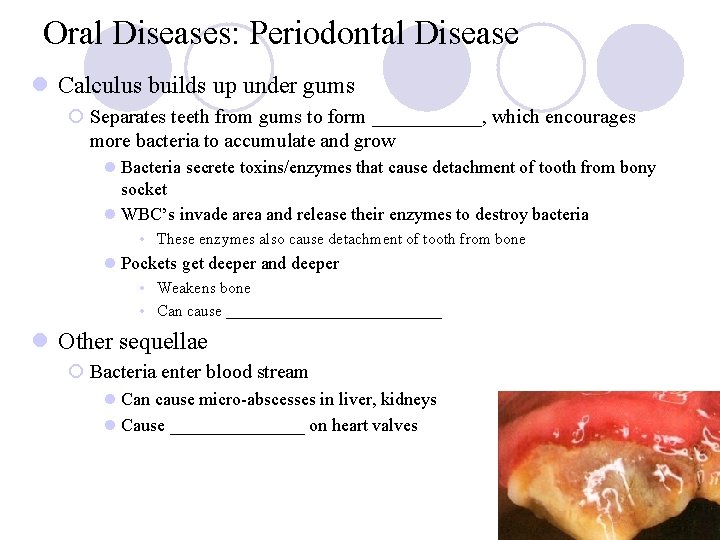
Oral Diseases: Periodontal Disease l Calculus builds up under gums ¡ Separates teeth from gums to form ______, which encourages more bacteria to accumulate and grow l Bacteria secrete toxins/enzymes that cause detachment of tooth from bony socket l WBC’s invade area and release their enzymes to destroy bacteria • These enzymes also cause detachment of tooth from bone l Pockets get deeper and deeper • Weakens bone • Can cause ______________ l Other sequellae ¡ Bacteria enter blood stream l Can cause micro-abscesses in liver, kidneys l Cause ________ on heart valves
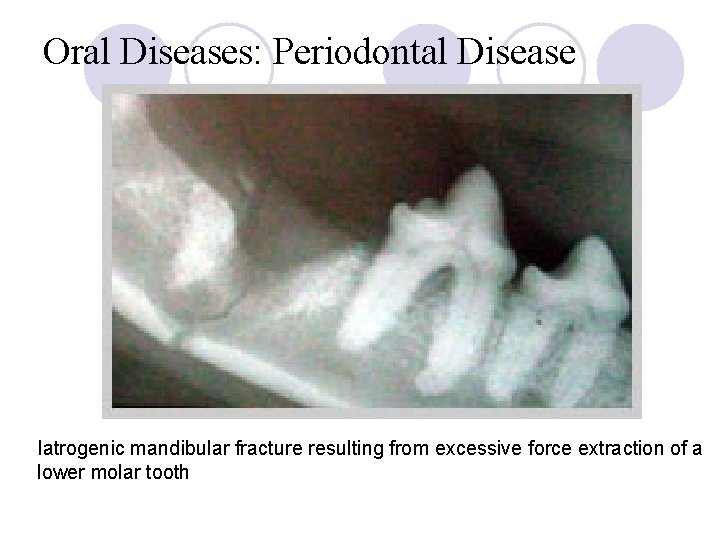
Oral Diseases: Periodontal Disease Iatrogenic mandibular fracture resulting from excessive force extraction of a lower molar tooth
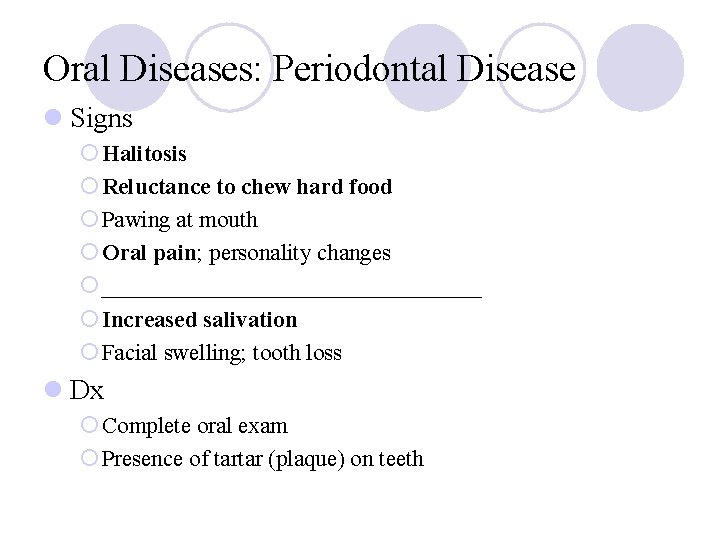
Oral Diseases: Periodontal Disease l Signs ¡ Halitosis ¡ Reluctance to chew hard food ¡ Pawing at mouth ¡ Oral pain; personality changes ¡ _________________ ¡ Increased salivation ¡ Facial swelling; tooth loss l Dx ¡ Complete oral exam ¡ Presence of tartar (plaque) on teeth
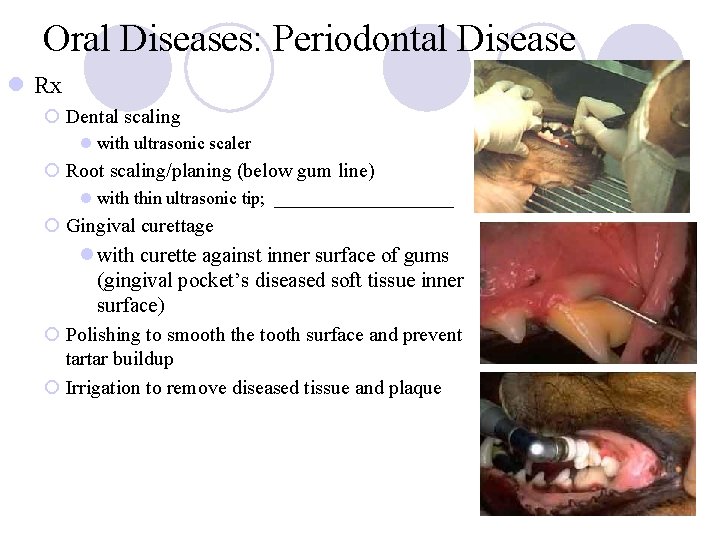
Oral Diseases: Periodontal Disease l Rx ¡ Dental scaling l with ultrasonic scaler ¡ Root scaling/planing (below gum line) l with thin ultrasonic tip; __________ ¡ Gingival curettage l with curette against inner surface of gums (gingival pocket’s diseased soft tissue inner surface) ¡ Polishing to smooth the tooth surface and prevent tartar buildup ¡ Irrigation to remove diseased tissue and plaque
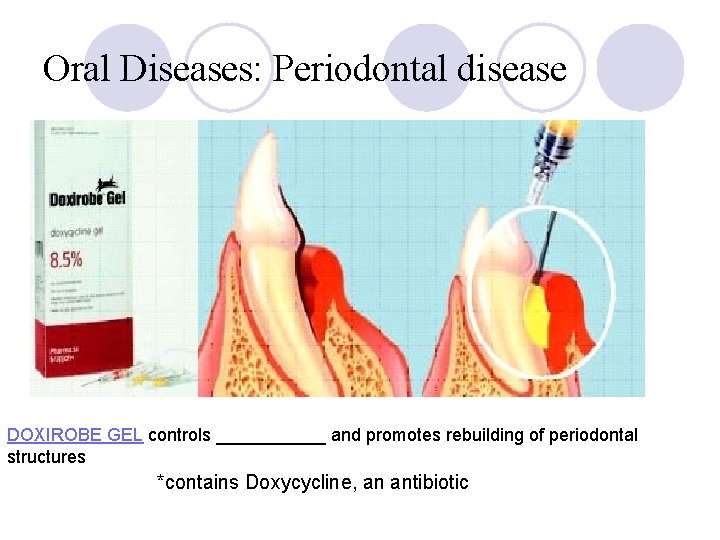
Oral Diseases: Periodontal disease DOXIROBE GEL controls ______ and promotes rebuilding of periodontal structures *contains Doxycycline, an antibiotic
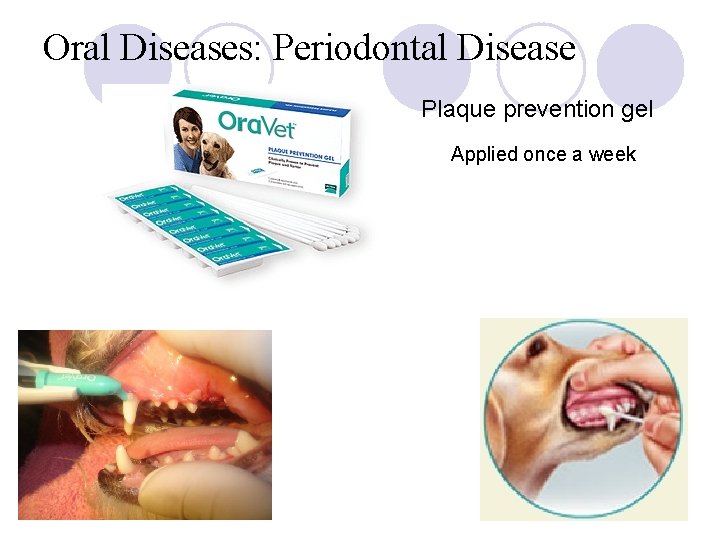
Oral Diseases: Periodontal Disease Plaque prevention gel Applied once a week
Oral Diseases: Periodontal Disease l Client info ¡ Good oral hygiene is necessary for all pets l _______________ l Routine dental cleanings performed at veterinarian’s l Treat gingivitis early before irreversible lesions occur ¡ Extractions are sometimes necessary to clear up infections ¡ ________ food may promote better dental health by removing tartar before it calcifies l Once it calcifies, tartar must be removed professionally http: //www. youtube. com/watch? v=qnb. JZWycdg&feature=Play. List&p=480 B 67 A 7 E 8907594&playnext _from=PL&playnext=1&index=5
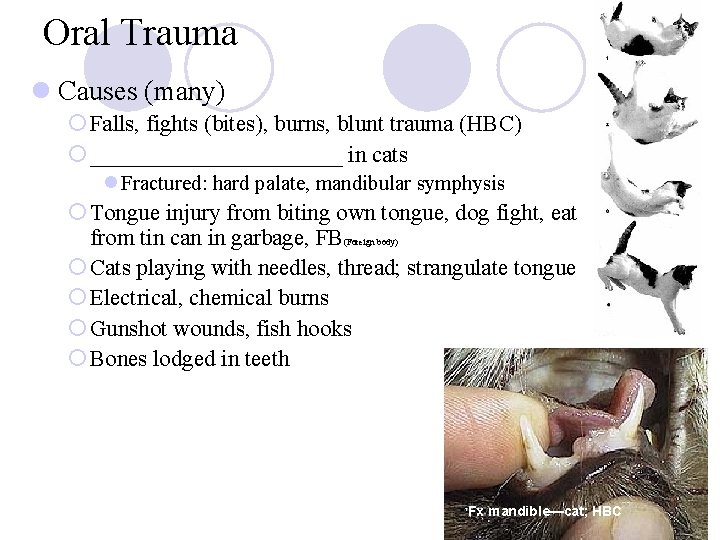
Oral Trauma l Causes (many) ¡ Falls, fights (bites), burns, blunt trauma (HBC) ¡ ___________ in cats l Fractured: hard palate, mandibular symphysis ¡ Tongue injury from biting own tongue, dog fight, eat from tin can in garbage, FB ¡ Cats playing with needles, thread; strangulate tongue ¡ Electrical, chemical burns ¡ Gunshot wounds, fish hooks ¡ Bones lodged in teeth (Foreign body) Fx mandible—cat; HBC
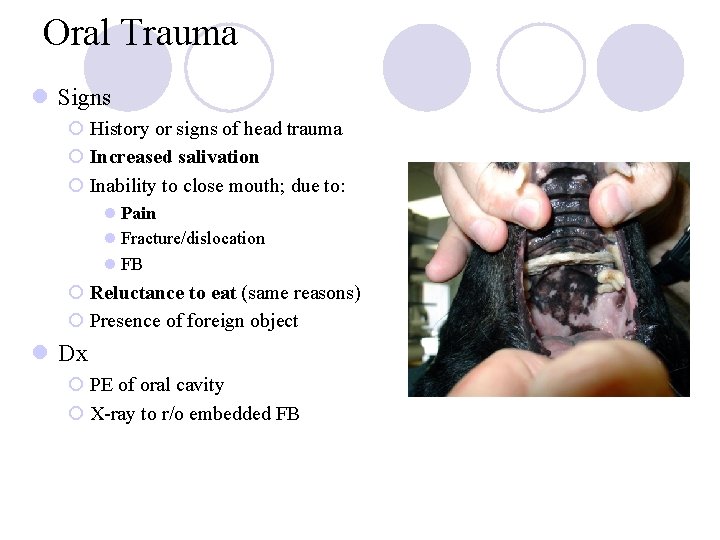
Oral Trauma l Signs ¡ History or signs of head trauma ¡ Increased salivation ¡ Inability to close mouth; due to: l Pain l Fracture/dislocation l FB ¡ Reluctance to eat (same reasons) ¡ Presence of foreign object l Dx ¡ PE of oral cavity ¡ X-ray to r/o embedded FB
Oral Trauma l Rx ¡ Depends on type of trauma ¡ Control bleeding ¡ Provide ____________ l IV fluids l pain relief ¡ Insure adequate airway ¡ Repair/extract damaged teeth, fracture l Client info ¡ Like kids, if animals can get into trouble, they will l Discourage chewing on electric cords l Don’t leave caustic/toxic chemicals out l Keep pets in fenced yard or on leash when outside l Animals still eat well without entire tongue
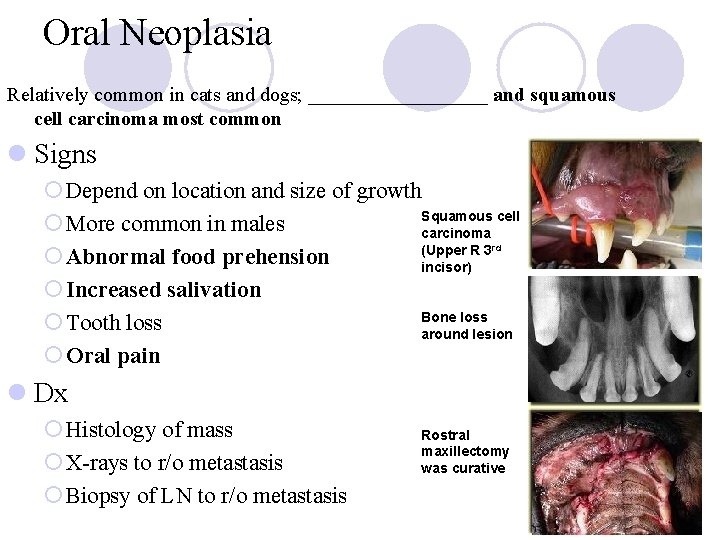
Oral Neoplasia Relatively common in cats and dogs; _________ and squamous cell carcinoma most common l Signs ¡ Depend on location and size of growth Squamous cell ¡ More common in males carcinoma (Upper R 3 ¡ Abnormal food prehension incisor) ¡ Increased salivation Bone loss ¡ Tooth loss around lesion ¡ Oral pain rd l Dx ¡ Histology of mass ¡ X-rays to r/o metastasis ¡ Biopsy of LN to r/o metastasis Rostral maxillectomy was curative
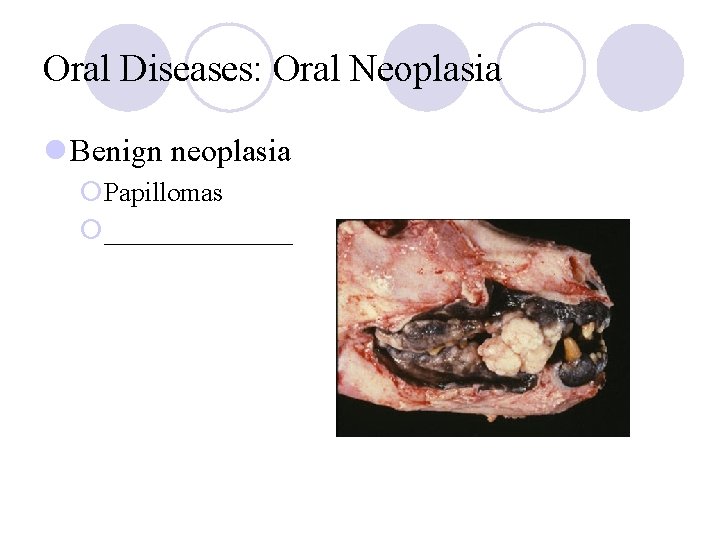
Oral Diseases: Oral Neoplasia l Benign neoplasia ¡Papillomas ¡_______
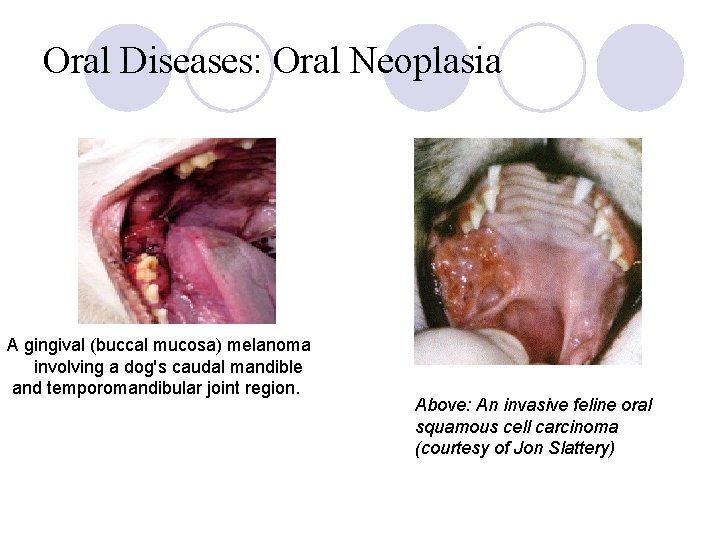
Oral Diseases: Oral Neoplasia A gingival (buccal mucosa) melanoma involving a dog's caudal mandible and temporomandibular joint region. Above: An invasive feline oral squamous cell carcinoma (courtesy of Jon Slattery)
Oral Neoplasia l Rx ¡ Surgical excision ¡ Partial removal of mandible/maxilla if bone is involved ¡ Radiation therapy ¡ Chemotherapy l Client info ¡ Px for malignant tumors is ________ even with aggressive therapy ¡ Benign lesions have good Px ¡ Animals (esp cats) with bone removed may need nutritional support (feeding tube)
Oral Diseases http: //veterinarydentistry. posterous. com/
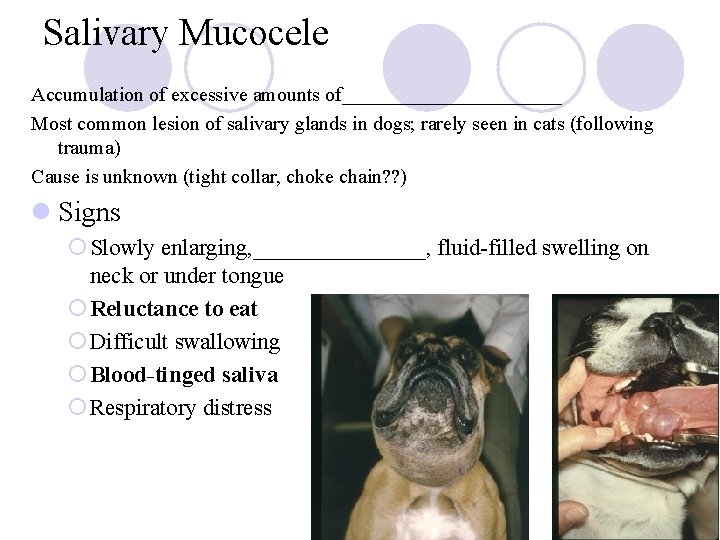
Salivary Mucocele Accumulation of excessive amounts of___________ Most common lesion of salivary glands in dogs; rarely seen in cats (following trauma) Cause is unknown (tight collar, choke chain? ? ) l Signs ¡ Slowly enlarging, ________, fluid-filled swelling on neck or under tongue ¡ Reluctance to eat ¡ Difficult swallowing ¡ Blood-tinged saliva ¡ Respiratory distress
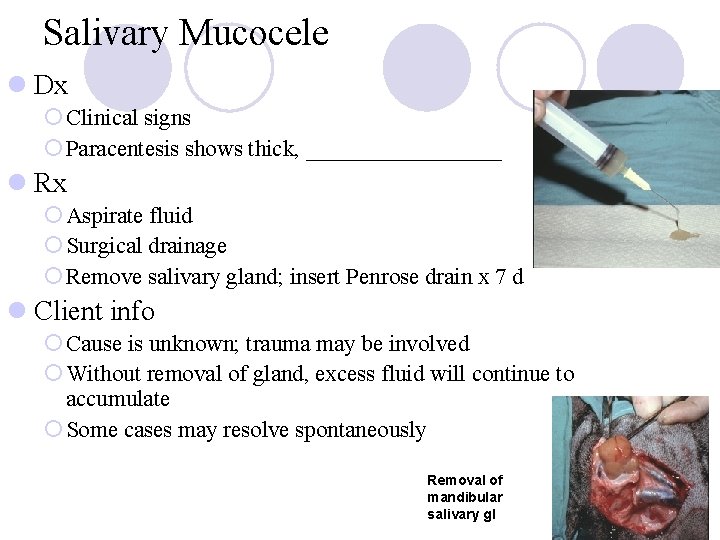
Salivary Mucocele l Dx ¡ Clinical signs ¡ Paracentesis shows thick, _________ l Rx ¡ Aspirate fluid ¡ Surgical drainage ¡ Remove salivary gland; insert Penrose drain x 7 d l Client info ¡ Cause is unknown; trauma may be involved ¡ Without removal of gland, excess fluid will continue to accumulate ¡ Some cases may resolve spontaneously Removal of mandibular salivary gl
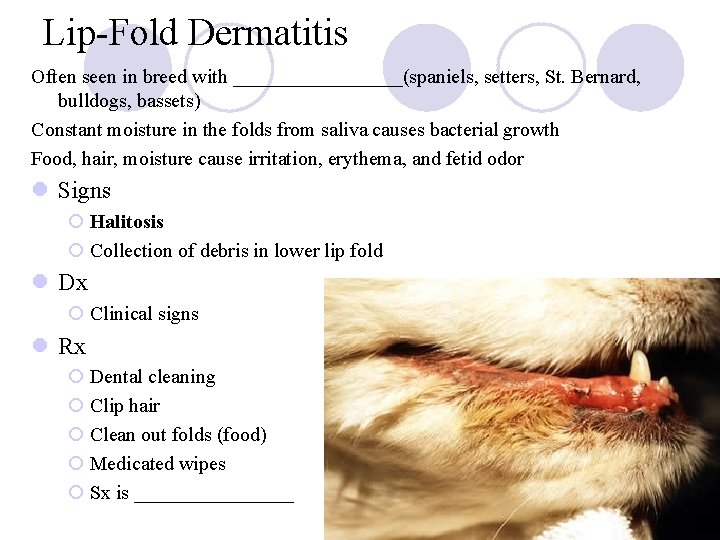
Lip-Fold Dermatitis Often seen in breed with _________(spaniels, setters, St. Bernard, bulldogs, bassets) Constant moisture in the folds from saliva causes bacterial growth Food, hair, moisture cause irritation, erythema, and fetid odor l Signs ¡ Halitosis ¡ Collection of debris in lower lip fold l Dx ¡ Clinical signs l Rx ¡ Dental cleaning ¡ Clip hair ¡ Clean out folds (food) ¡ Medicated wipes ¡ Sx is ________
Lip-Fold Dermatitis l Client info ¡ Keep lip folds _______ (for the rest of animal’s life!!) ¡ Flush/clean lip folds l with 2. 5% benzoyl peroxide shampoo l chlorhexidine l malaseb pledgets (chlorhexidine + miconazole) ¡ Drying agents like corn starch several times a day ¡ Good dental hygiene will help prevent it